Renting in Canada's federal capital takes careful preparation and a working understanding of how the local market behaves. This guide walks you through it step by step: reading the market, picking the right district and signing your lease without a misstep.
Get the app
What nobody tells you.
Real prices, hidden costs and the traps to check before you commit.
What renting an apartment in Ottawa really means for daily life
Scroll
What renting an apartment in Ottawa really means for daily life
Renting in Canada's federal capital takes careful preparation and a working understanding of how the local market behaves. This guide walks you through it step by step: reading the market, picking the right district and signing your lease without a misstep.
Written by the ting.ad editorial team ·
Elgin Street, Ottawa in Street View: drag to look around.
Beyond these broad balances, it is your own profile that will decide how well your move into the capital goes.
Renting an apartment in Ottawa is not just a matter of signing a lease and dropping boxes in an empty room. Canada's federal capital sets its own rhythm, dictated by the severity of its winters, the shape of its transit network and strong rental demand in the central districts. Contrary to the received idea of a sleepy administrative town, the housing market here is extremely tight and demands a level of planning that many people underestimate when they arrive. Understanding these basic mechanics from the outset saves you serious disappointment and lets you point your search at the right areas without losing precious time.
An administrative city with a reputation for being calm and predictablevsA rental market under permanent strain, where listings are gone within hours
The presence of federal institutions draws a continuous flow of civil servants, diplomats and students, which keeps constant pressure on rents and sharply narrows the choice available to newcomers.
The promise of easy access to nature and wide open spacevsThe need to accept real compromises on floor area and on the age of the building
To live within easy reach of the busy corridors and the services, you often have to settle for older construction or a smaller unit, since new-build housing is rarer and markedly more expensive.
A transit network well knitted together by light railvsHarsh winters that transform journey times and demand a station within easy reach
When temperatures drop sharply and the snow piles up, real distance is measured in how much cold you can tolerate, or in direct access to underground and sheltered infrastructure.
Easy cultural coexistence between French and English speakersvsSpecific administrative requirements and rental practices tightly governed by the province
The Ontario market follows strict rules on residential leases, deposits and rent increases, and you have to master them if you are not to find yourself in a weak position facing a landlord.
What kind of tenant are you against the demands of the Ottawa market?
Matching your profile to a district gets harder still when you arrive with habits formed on the other side of an ocean.
In Ottawa, choosing an apartment depends less on your aesthetic mood of the moment than on your working situation, your relationship with transit and your tolerance for the local pace of life. Whether you are arriving to work at the heart of the institutions, to study on a campus or to find a more residential setting, the constraints are not the same. Every profile has to deal with particular limits of distance, budget and services, which make some districts essential and others completely unsuitable.
City worker focused on a career
Your absolute priority is to keep the daily commute short, above all when the weather turns in winter. You should favour the most central areas such as Centretown or the ByWard Market, even if that means accepting a more compact unit in an older building. Being close to transit lines and to everyday shops more than makes up for the loss of living space. This is the choice of efficiency and immediacy, for settling quickly into the life of the city.
Family looking for stability
Your search should point towards well-established residential districts such as the Glebe, Westboro or parts of Old Ottawa South. You will find larger homes there, often with parks nearby and a respected choice of schools. In exchange, rents are markedly higher and the competition to land a townhouse or a large family apartment is ferocious. A car often becomes necessary for the bigger shopping runs, even though neighbourhood life stays very pleasant once the weather warms up.
Student or researcher on the move
Your main aim is to find something affordable while staying connected to the campuses of the University of Ottawa or Carleton University. The options cluster around Sandy Hill and the neighbouring areas well served by buses and light rail. Shared flats and small furnished studios make up most of what is available. You have to be extremely quick off the mark as soon as a listing appears, because the student market goes through intense peaks of pressure as the September term approaches.
Outdoor and culture enthusiast
You will find what you are after in the districts bordering the Rideau Canal or around Hintonburg, where the mood is more artistic and relaxed. These areas let you make full use of the cycle paths in summer and the natural skating surfaces in winter without giving up urban life. Rents there reflect that sought-after quality of life, combining heritage character with cultural energy. It is the ideal option for anyone who refuses to choose between Canadian nature and city bustle.
What changes sharply for a tenant arriving from abroad
Ottawa's river-lined green spaces, seen from above — Photo: Harleyd613 · CC BY-SA 4.0 · Wikimedia Commons
Once you have absorbed these reference points, the central question becomes where in the city you drop anchor.
Moving to Canada comes with a cultural gap on housing that is often underestimated. Building standards, the way leases are drafted, the guarantees demanded and even the way interior space is conceived differ deeply from what you may be used to at home. Ignoring those divergences means exposing yourself to repeated refusals from landlords, or to misunderstandings at the move-in inspection. Here is a direct comparison so you can gauge what awaits you from your first meeting with an Ontario agent or landlord.
From abroad
The tradition, common in many countries, of a parental guarantor or a cash security deposit
Ottawa
Careful checking of credit history and of local professional references
Arriving with no Canadian credit history complicates renting. You often have to prove your income with a solid employment letter, or offer months of rent in advance, although provincial law places strict limits on those practices.
From abroad
A housing stock often dominated by older buildings in cut stone
Ottawa
A high proportion of recent condominium buildings and construction in wood or light framing
Sound and thermal insulation vary greatly from one building to the next. It is essential to ask how the building is managed and whether heating costs are included in the advertised rent or not.
From abroad
Residential leases tightly governed by a national tenancy statute back home
Ottawa
Use of the Ontario standard lease, which specifically protects tenants' rights
Every rental agreement has to go through the official provincial form. Be wary of landlords offering non-compliant private contracts that would strip you of your legal remedies.
From abroad
Floor area measured to the exact square metre under a national measurement rule
Ottawa
An often approximate figure in square feet, filled out by how the rooms are laid out
Do not rely on the stated floor area alone. Always view the unit to judge the light, the ceiling height and how well the living space really works.
How to choose between Ottawa's main residential areas for your rental
These lifestyle choices translate straight into your finances and call for a clear-eyed read of the prices on the local market.
Ottawa's geography is organised around the Ottawa River and the Rideau Canal, creating micro-markets with sharply different characters. Choosing your district means accepting a permanent trade-off between urban energy, available budget and travel time. The cards below sum up the features of the areas newcomers look at most, to help you target your viewings without scattering your effort across a sprawling metropolitan area.
Centretown and downtown
A firmly urban pace, set by civil servants passing through on weekdays and constant activity along Elgin Street.
Suits
People who want to do everything on foot or by transit and avoid driving altogether.
Trade-off
High rents for small units, and noticeable traffic noise at peak hours.
The Glebe and Old Ottawa South
The atmosphere of a comfortable, peaceful village, with its older houses, independent shops and the canal right there.
Suits
Families and professionals after an attractive, safe setting with excellent schools.
Trade-off
An extremely competitive market where what is available is scarce and goes at a premium.
ByWard Market and Sandy Hill
A vibrant, multicultural and historic area, mixing food markets, lively nightlife and a student population.
Suits
Young workers and students who want to live at the heart of Ottawa's cultural and food scene.
Trade-off
Coexistence that is sometimes awkward around certain thoroughfares, and night-time noise at the weekend.
Westboro and Hintonburg
A stylish, family-minded spirit facing west, dotted with speciality cafes, craft breweries and riverside parks.
Suits
Fans of design, outdoor sport and active, engaged neighbourhood communities.
Trade-off
A relative distance from the strictly institutional core that lengthens the commute for some jobs.
What does an apartment in Ottawa really cost to rent today?
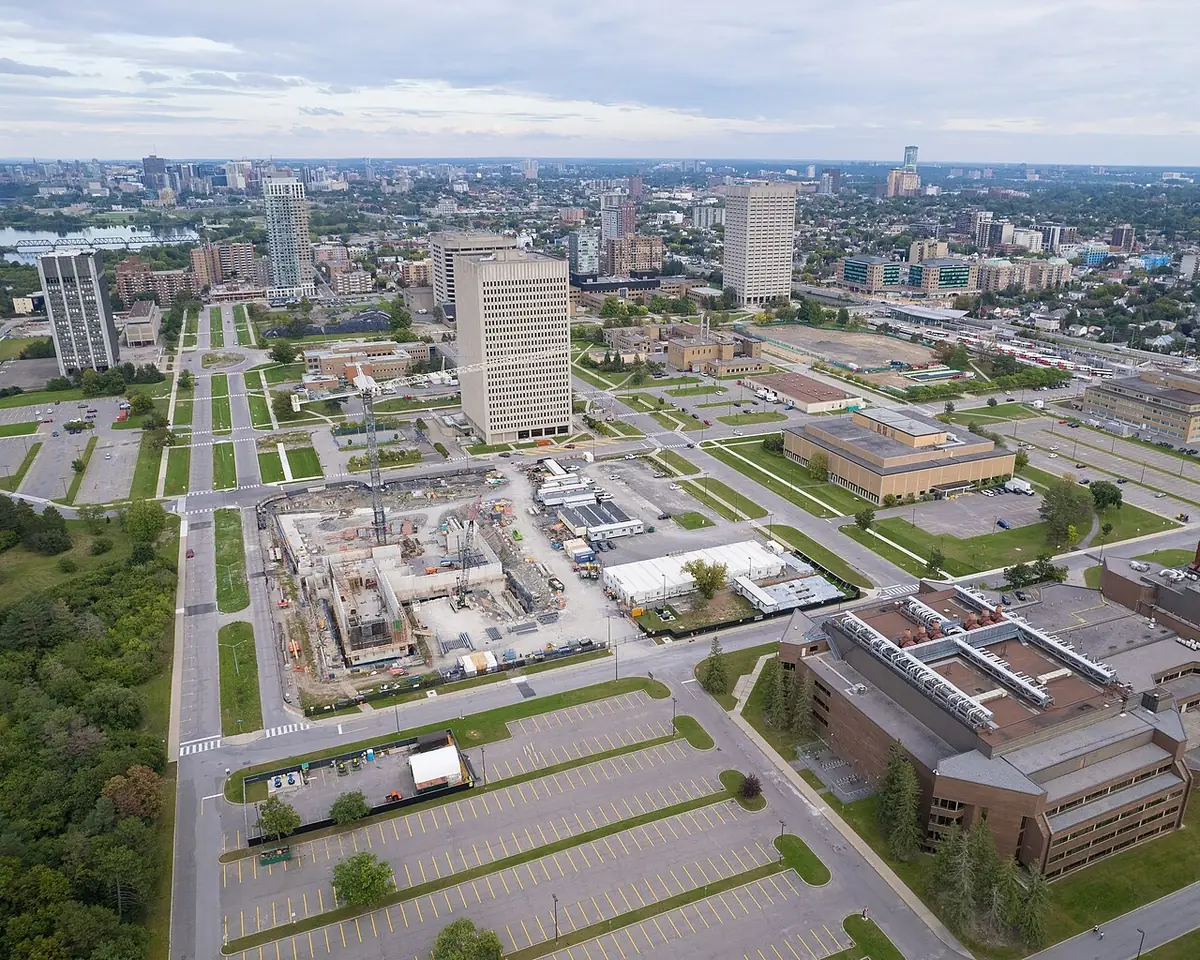
A quiet Ottawa neighbourhood, seen from the air — Photo: Harleyd613 · CC BY-SA 4.0 · Wikimedia Commons
Beyond the headline rent, the legal nature of what you are renting deserves your full attention if your lease is to be secure.
The Canadian rental market has been under clear upward pressure for several years, and Ottawa is no exception. Rents vary considerably with the age of the building, whether utilities are included and, of course, the precise location. To avoid unpleasant surprises when you put your financial file together, here is a realistic view of the price ranges seen for the most common types of unit, without forgetting the extra costs you cannot skip.
ottawaTo rentApartmentestimate
Median price / m²CA$25Half the apartments sell below this
Median priceCA$2.15kthe average is 14% higher — a few very large properties pull it up
Most common2 bedrooms45 % of listings
Average size83 m²
By number of bedrooms
Bedrooms
Share of market
Avg price
Price / m²
Avg size
1
34 %
CA$1.79k
CA$30 +15 %
60 m²
2most common
45 %
CA$2.21k
CA$26
85 m²
3
17 %
CA$2.66k
CA$24 −8 %
110 m²
4
4 %
CA$3.28k
CA$23best value / m²
140 m²
Each row is an average, compared against the area average of CA$26 / m². These are indicative estimates of a typical local market, not a measured sample of live listings. Check current listings before relying on them.
Managed building or independent landlord: what you can actually rent
That distinction between types of home leads straight to the rules that govern the signing of your contract.
On the Ottawa rental market you will mainly choose between two kinds of arrangement: on one side, apartment buildings run end to end by professional property companies; on the other, condominium units or individual houses let by private owners. Each of these choices carries legal and practical advantages and constraints that are worth weighing carefully before you commit for twelve months.
Multi-unit building run by a professional company
These large complexes offer centralised management, responsive on-site maintenance and obvious administrative stability. The rules of the building are clearly set out for every occupant, and the risk of the owner suddenly reclaiming the unit for personal use is close to nil. In exchange, the common areas can lack character, the allocation procedures are rigid, and rent increases follow the annual legal limits to the letter with no room to negotiate.
What it changesYou are opting for institutional calm and administrative predictability, at the price of a certain standardisation of your surroundings.
Condominium unit or house rented from a private owner
Renting an apartment in a condominium tower or a townhouse through a private individual often brings higher-end features: careful finishes, recent appliances, sometimes access to a pool or a well-appointed shared terrace. You do, however, depend directly on how quickly the owner responds when something breaks, and you have to comply with the condominium corporation's strict rules on pets, moving days and noise.
What it changesYou gain in comfort and residential character, but you take on a closer and potentially more complicated contractual relationship.
The golden rule to understand before you hand over a penny for your lease
A waterfront restaurant along Ottawa's riverside — Photo: SpaceplaneSus · CC0 · Wikimedia Commons
Once you have these legal points straight, all that remains is to orchestrate the exact timing of your move.
Ontario's rental law protects tenants firmly, but it imposes strict rules that many newcomers learn about the hard way. Unlike the practice in other countries, local legislation defines very precisely what a landlord may ask for at signing. Understanding this chain of protections and obligations keeps you from giving in to improper demands while making sure your tenancy is valid.
The apartment search finally ends in an offer accepted by the owner or the property manager.
The landlord sends you the mandatory Ontario standard lease form, the single document that puts the terms of your tenancy on the record.
You are asked to pay only a deposit equal to the last month's rent, meant to cover the final period of occupancy.
The first month's rent is paid on the exact day you actually move in, not weeks in advance.
No damage deposit and no pet deposit may legally be demanded by a landlord in Ontario.
You occupy your home entirely lawfully, protected by the provisions the province's Landlord and Tenant Board enforces.
How a rental deal in Ottawa unfolds, step by step
Renting from a distance, or settling into a new city, calls for a disciplined method. The Ottawa market rewards applicants who are prepared and quick, with a complete file ready to go. From the first viewing, virtual or in person, to the handover of the keys, every party in the process plays a defined role that is worth anticipating so you can stay ahead of the competition and move in on the best possible terms.
The tenantPutting the financial file togetherGather your proof of income, employment letters, references from previous landlords and your Canadian credit report from the outset, if you already have one.
The agent or the landlordShortlisting and targeted viewingsPlan your viewings around two or three districts at most so you do not spread yourself thin. Ask straight away whether heating and water are included in the advertised rent.
The tenantSubmitting the rental offerFill in the rental application promptly and attach every supporting document, to demonstrate that you are serious and financially reliable.
The landlordBackground checksThe landlord reviews your file, contacts your employers and checks your credit history before formally approving your application.
Both partiesSigning the standard leaseConfirming the terms on Ontario's official form, the lawful payment of the last month's rent deposit and setting the date you take possession.
The tenantSetting up utilities and insuranceOpening electricity accounts with the local suppliers and taking out the required tenant liability insurance before moving day.
Both partiesMove-in inspection and key handoverA careful inspection of the apartment on arrival, a written record of any existing defects and the formal collection of the keys to begin your new life.
Renting a house or an apartment in Ottawa: weighing upkeep against the freedom of a managed building
Once that first trade-off between the type of building and your way of living is settled, the unavoidable question of the overall budget and the real running costs takes over.
Choosing between a house and an apartment to rent in Ottawa depends directly on your relationship with free time, with the Canadian winter and with day-to-day upkeep. Central districts such as Centretown, the ByWard Market and the Glebe are dominated by condominium units, whether in converted heritage buildings or modern glass and concrete towers. Renting an apartment in Ottawa means shedding any responsibility for clearing snow off the roof, mowing lawns or repairing facades, all of them heavy demands on time and money between November and April.
Renting a detached house in areas such as Westboro, Alta Vista or Kanata, by contrast, means accepting a significant weekly workload to keep the property in shape against the extreme temperature swings of the Ottawa Valley. Canadian winters put foundations, gutters and drainage systems through a hard test, and a house lease often makes the tenant responsible for the routine side of that, with no building management standing between you and the problem.
The money question also runs through the monthly running costs. An apartment may be advertised at a rent per square metre slightly below or comparable to a house of the same size on the edge of town, but what counts is what the rent includes. Where the owner's condo fees cover common areas, the building's overall insurance and often the heating or water, your monthly outgoings become far more predictable, while a rented house tends to leave every utility bill in your name.
Finally, flexibility differs noticeably between the two. Apartment rentals in Ottawa attract a young population, federal civil servants in transition and people who need a base they can leave at the end of a term. Rented houses, meanwhile, draw steady demand from settled families looking to be near the best public schools and neighbourhood parks, which means fewer of them come free, they are held for longer, and you need to start looking much further ahead.
What budget should you really plan for renting and living in an apartment in Ottawa?
With the budget set, let us look concretely at how daily life in the federal capital works across the seasons.
Building a budget for renting an apartment in Ottawa means looking well beyond the advertised rent alone. Between the deposit due at signing, utilities driven by a continental climate, tenant insurance and parking, the monthly gaps can surprise newcomers. This transparent breakdown lets you model what you will really spend, with no blind spots.
Monthly cost lines for renting an apartment in Ottawa (70-90 m2)
Cost line
Estimated range (CAD)
Frequency
What moves the figure
Monthly rent
$1,800 to $3,200
Monthly
Central district (Centretown, the Glebe) vs. the near suburbs
Rent by unit size, one to four bedrooms
$1,790 to $3,280
Monthly
One bedroom at the low end, four bedrooms at the top; smaller units cost more per m2
Last month's rent deposit
$1,800 to $3,200
Once, at signing
Equal to one month's rent; Ontario allows no separate damage or pet deposit
Electricity and heating (Hydro Ottawa)
$120 to $250
Monthly
Building insulation, orientation and use of air conditioning in summer
The rent figures here are the ranges observed on the Ottawa rental market and set out in the market table above, and are in Canadian dollars (CAD). The purchase-side costs in the French source (condo fees and municipal property tax) are the owner's bill, not the tenant's, and have been replaced with the rent-side lines that apply to you.
One-off and secondary costs of moving in
Type of cost
Indicative amount (CAD)
Period
Notes
First month's rent, due on move-in day
$1,800 to $3,200
Once, on moving in
Paid the day you actually take possession, not weeks in advance
Tenant insurance
$400 to $800
Annual
Covers your liability and your own belongings; it excludes the building structure
Underground or outdoor parking
$150 to $250
Monthly
Often billed on top where it is not written into the lease
Always keep a reserve equivalent to three months of fixed costs to absorb the administrative or technical surprises.
Health, schools, transport: what an ordinary Tuesday looks like in an Ottawa apartment
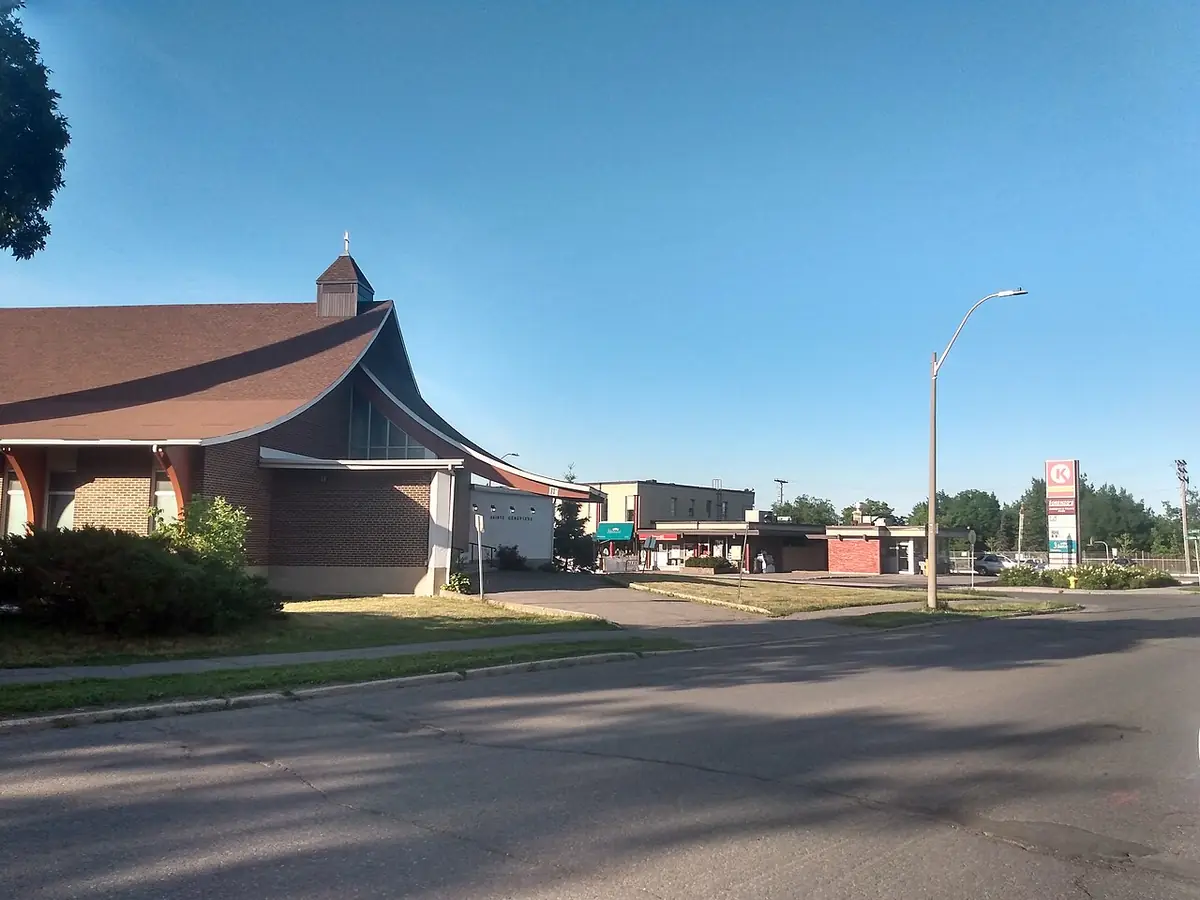
A neighbourhood church along an Ottawa street — Photo: Earl Andrew · CC BY-SA 4.0 · Wikimedia Commons
Beyond that well-oiled routine, the Ottawa rental market has regulatory quirks and hidden details the brochures leave out.
To judge whether a location in Ottawa suits you, nothing beats walking through a typical day, from the morning departure to the return home. Between the light rail network (the O-Train), access to front-line health services and how close the local shops are, every logistical detail shapes your quality of life. This hour-by-hour walkthrough brings out the practical points and the real journey times in the capital.
07:30O-Train station (Line 1)An early start to stay ahead of the rush towards the main federal employment centres. The reliability of the light rail network gives real structure to north-south and east-west commuting across the city.
08:45Office or shared workspace (downtown)Settling into the administrative or technology districts. The concentration of government services and technology firms in Ottawa makes it possible to cut daily use of a private car right down.
12:30Neighbourhood medical clinic or pharmacyDealing with routine health appointments. Getting care in Ottawa means registering with a family doctor as soon as you arrive, because of the structural waiting lists across Ontario.
17:30Local market or corner grocery (ByWard or the Glebe)Picking up fresh food for dinner. Renting an apartment in Ottawa's central districts lets you do everything on foot, which cuts the need to own a car for last-minute shopping.
19:00Riverside park or the Rideau CanalWinding down at the end of the day along the banks or the Rideau Canal. In summer as in winter, these natural spaces woven into the urban fabric make for an exceptional setting, well suited to walking and outdoor sport.
What the listing will not tell you about renting an apartment in Ottawa
These administrative grey areas explain why some tenants sour on a place within months of moving in.
Agency descriptions naturally play up the light, the modern finishes and how close the shops are. Yet renting an apartment in Ottawa means decoding structural details that photographs never reveal. Here are the technical and administrative realities you absolutely have to investigate before you commit.
What the advertised rent actually includes
Heating, water and air conditioning are covered by the owner's condo fees in some buildings and billed straight to you in others, which is enough to make two listings at the same rent cost very different amounts over an Ottawa winter. Ask the question at the viewing and get the answer written into the standard lease rather than agreed verbally.
The strict rules on subletting and on use of the space
Many Ottawa condominiums ban short-term letting of the Airbnb kind, or place tight limits on keeping pets and on using a barbecue on the balcony. If you were counting on subletting, or you have animals, these internal rules bind you as a tenant and take precedence over general municipal bylaws.
The noise of winter and of overnight snow clearing
The sound of municipal crews during intensive overnight snow clearing, the winter parking bans, can seriously disturb sleep for residents on the ground floor and the lower storeys. The quality of the sound insulation and double glazing on the windows becomes a vital criterion in the federal capital.
The real cost and availability of parking
Renting a central apartment in Ottawa without an assigned parking space makes daily life considerably harder, above all when the city bans on-street parking overnight from November to April so the snow ploughs can get through. Check whether your lease includes a heated indoor space.
The misjudgements tenants discover six months after moving to Ottawa
Knowing these classic traps lets you work out whether this kind of move really fits your profile.
Looked likeAn ultra-central, lively location a step from the busy shopping streets
Turned outA source of constant noise from heavy traffic corridors and municipal emergency services, making it hard to open the windows once the weather turns fine.
Would have caught itViewing the unit at different times of the week and of the night, and checking which way the living rooms face relative to the main boulevards.
Looked likeA rent noticeably below the average for the area
Turned outA chronically neglected building where the common areas had degraded fast and repairs were slow to arrive once the lease was signed.
Would have caught itAsking how the building is managed, who handles maintenance calls, and speaking to current tenants about how quickly problems actually get fixed.
Looked likeAn easy switch from the car to transit and walking
Turned outA logistical ordeal during major snowstorms, when the pavements are not cleared quickly enough by the city for you to reach the train station.
Would have caught itChecking that the pedestrian routes join up, and how effective the local snow clearing plan is on the specific street you are targeting.
Looked likeA lease you assumed you could renew year after year at roughly the same rent
Turned outAn increase applied to the annual legal maximum at every renewal, on top of steady demand from federal employment that keeps central rents firm.
Would have caught itBudgeting for the maximum annual increase permitted in Ontario at each renewal, and asking what the rent has done over the past three years.
Who should think twice before renting an apartment in Ottawa
Once you have looked clearly at these counter-indications, it is time to decide.
Renting an apartment in a central district is not a universal answer, and it can be quite unsuited to some situations or to a stay that is simply too short. Given the twelve-month commitment of the standard lease and the relative rigidity of condominium living, some profiles are far better off with a different arrangement. Here are the cases where holding back is the more rational decision.
Someone whose stay in the region will run to less than a year
→Take a furnished short-term let or a room share instead of a standard lease
The standard lease commits you for twelve months, and the last month's rent deposit plus the first month due on moving day tie up cash for a stay too short to make the arrangement worthwhile.
A family with young children who need a large enclosed private garden
→Look for a house to rent on the outskirts (Kanata, Barrhaven or Orleans)
Urban apartments in Ottawa rarely run beyond three bedrooms, and access to secure private outdoor space for children is extremely limited or non-existent.
The tenant who will not live under condominium rules and owners' meetings
→Rent in a purpose-built apartment block run by a management company
Renting a condominium unit in Ontario puts you under the corporation's governance, which follows the province's condominium legislation with strict formal rules and no way to opt out of them unilaterally.
So, are you ready to sign a lease on an apartment in Ottawa?
A calm end to the day beside the water in Ottawa — Photo: ContribQC · CC BY-SA 4.0 · Wikimedia Commons
Deciding to rent an apartment in Ottawa means weighing the advantages of urban living, free of heavy upkeep, coolly against the financial and regulatory realities of Ontario tenancy. If your plans point to staying put for a good while, if you value having services close by, and if you have checked carefully how the building you are eyeing is run, the signs are good for going ahead.
The rental market in the federal capital rests on solid fundamentals, supported by a stable employment base and a growing population. Rushing, though, remains a tenant's worst enemy. Take the time to read the standard lease line by line, to work out what you will really spend once utilities and parking are counted, and to check that the location fits your daily routine in winter as well as in summer.
In the end, a rental that works out in Ottawa does not rest on a fleeting attraction to a nice interior, but on a proper fit between your personal situation, what you can afford over the length of the lease and the setting the district offers. If those three pillars line up, you have everything you need to settle into Canada's federal capital with confidence.
Related questions
What does it cost on average to rent an apartment in Ottawa?
Advertised rents generally run from about $1,790 a month for a one bedroom to $3,280 for a four bedroom, with a median of roughly $2,150 CAD, depending on floor area, the age of the building and how close it sits to downtown or a transit station.
Are condo fees something a tenant has to pay in Ottawa?
Monthly condo fees of $400 to $900 CAD are paid by the owner, not by you, but they explain why two similar listings differ: fees cover services such as heating, water and air conditioning, so where they are generous the rent often includes utilities, and where they are lean you will be billed separately.
Do tenants pay municipal property tax on an apartment in Ottawa?
No. Municipal property tax, generally $3,500 to $6,000 CAD a year for a standard apartment based on the city's assessed value, is the owner's bill. It is priced into the rent you are quoted, which is why landlords facing rising Ontario taxes tend to apply the full annual increase allowed.
Is it easy to find a rental in Ottawa if you are not ready to buy?
The Ottawa rental market is busy, driven by the presence of federal institutions and universities. That said, steady demand in the central districts can make competition fierce and rents high.
How does public transport work in Ottawa?
The municipal network, run by OC Transpo, is built around the O-Train light rail line and an extensive connecting bus network, which makes daily travel from the main residential districts possible without a car.
Which neighbourhoods are most sought after for renting an apartment in Ottawa?
Centretown, the ByWard Market, the Glebe and Westboro are among the most prized areas for their lively street life, local shops and transit access.
What is the Ontario standard lease?
It is the mandatory provincial form that any residential tenancy has to be written on. It sets out the agreed terms, the rent, what is included and each party's obligations, and using it is what preserves your legal remedies as a tenant.
Are pets allowed in Ottawa apartments?
It depends entirely on each condominium's internal rules, its bylaws, which apply to tenants as well as owners. Some buildings ban animals outright or cap their weight, even though the general law frames what owners may impose.
How does parking work in winter in Ottawa when you rent an apartment?
The City of Ottawa bans on-street parking during snowstorms so the ploughs can get through. Making sure a private underground space is written into your lease is therefore strongly advised.
What do you have to pay up front when signing a lease in Ontario?
A deposit equal to the last month's rent, and the first month's rent on the day you actually move in. Ontario landlords cannot legally require a damage deposit or a pet deposit on top of that.
Property review of ting
No ting properties in Ottawa yet
Be the first — share it on ting and it shows up right here.