Settling in India's capital calls for a close understanding of how the city works locally, of its infrastructure and of the particular features of its rental market. This guide walks you step by step through choosing the neighbourhood that suits the way you live, planning your budget and securing your move with confidence.
Get the app
What nobody tells you.
Real prices, hidden costs and the traps to check before you commit.
What renting an apartment in Delhi actually involves day to day
Scroll
What renting an apartment in Delhi actually involves day to day
Settling in India's capital calls for a close understanding of how the city works locally, of its infrastructure and of the particular features of its rental market. This guide walks you step by step through choosing the neighbourhood that suits the way you live, planning your budget and securing your move with confidence.
Written by the ting.ad editorial team ·
Delhi in Street View: drag to look around.
Renting an apartment in Delhi is about far more than finding a roof in a dynamic megacity. Every neighbourhood sets its own rhythm, its own infrastructure demands and its own unwritten rules, and all of that reshapes your daily life. The gap between what you expect from an international standard of living and the reality of local services is often striking. Each constraint deserves to be weighed if you want to avoid disappointment once the lease is signed.
The modern comfort of gated residential complexesvsThe reality of water and electricity supply
Recent residential complexes have backup generators, which are essential during frequent power cuts, but running water is still subject to strict schedules set by the municipality or the residents' associations.
The promise of a central, well-connected locationvsUnavoidable noise and air pollution
Living near major roads or metro stations makes getting around easier, but it exposes you to heavy traffic and particulate pollution peaks that call for air purifiers in every living space.
The appeal of a competitive rent for a large amount of spacevsUnexpected upkeep and maintenance costs
The floor areas on offer are far larger than what the same budget buys in Europe, but maintaining the equipment, heavy air conditioning use and the upkeep of shared areas all require a significant monthly budget.
Easy integration into an international communityvsThe risk of being cut off from authentic local life
Settling in the enclaves favoured by expats guarantees Western standards and efficient concierge services, but it keeps you at a distance from traditional neighbourhood life and the cultural mix of the capital.
What kind of life are you looking for when you move to the capital?
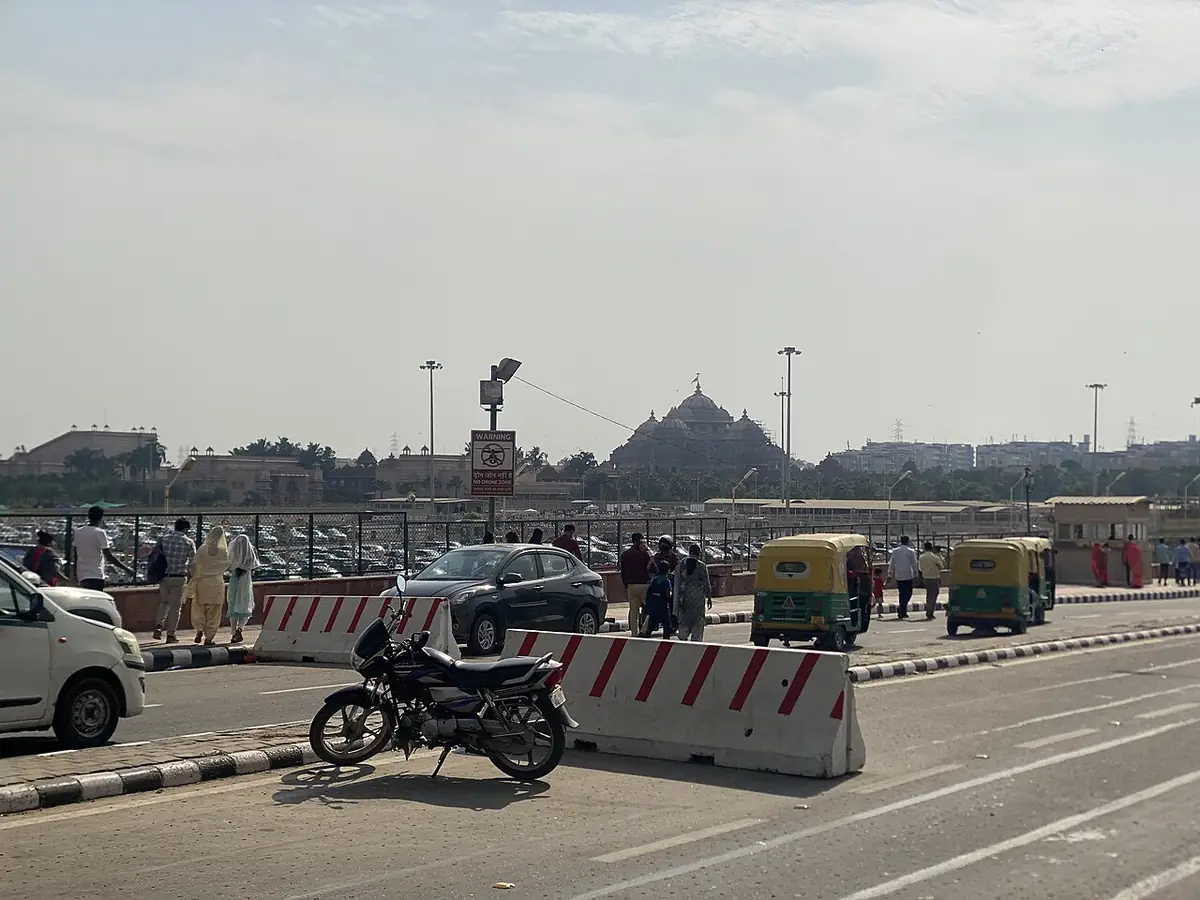
Everyday traffic on a wide Delhi road near Akshardham — Photo: Immanuelle · CC BY 4.0 · Wikimedia Commons
Choosing your area of Delhi depends entirely on how much noise you can tolerate, how much space you need and how you get around. Residents differ in how they balance time, work and leisure in this vast urban area. Looking closely at your own situation lets you pinpoint straight away the part of town that suits you best.
Choosing quiet, secure residential neighbourhoods
If you mostly work from home, you will need surroundings sheltered from constant horns and building sites. Low-rise residential areas and leafy enclaves offer the quiet you need to concentrate, along with stable fibre broadband. You will certainly pay slightly more in rent, but your sleep and your productivity will improve noticeably over the months.
Choosing to live close to campuses and parks
For households with children, the school run is the critical factor that decides the ideal location. Settling right next to the major schools and protected green spaces cuts the time spent in daily traffic considerably. These areas also have reliable local shops, easy-to-reach paediatric clinics and safe play areas inside gated residential complexes.
Choosing lively urban hubs connected to the network
If you care most about a social life, discovering the food scene and getting around easily without a car of your own, aim for the central neighbourhoods served by the metro lines. You will enjoy constant activity, restaurants within walking distance and a dense social network. In return, you will have to accept smaller living spaces and more traffic noise in the evening.
Which reference points need a complete reset when you move here from abroad?
The change of scene goes well beyond the climate or the food; it reaches the most basic mechanics of running a household and dealing with paperwork. What you take for granted back home calls for methodical planning here, and for accepting particular local practices. Understanding these cultural and logistical gaps from the moment you move in will spare you a great deal of frustration.
From abroad
Centralised waste collection and recycling run by the municipality
Delhi
Daily rounds by building staff or independent collectors
You have to fit in with your building's collection times and sort your waste according to the society's own instructions, which are often more pragmatic but less formal than in Europe.
From abroad
Routinely calling in qualified tradespeople at regulated rates
Delhi
Cleaning and maintenance staff attached to the building
Small plumbing or electrical repairs are usually sorted within a few hours by technicians living on site or sent by the building manager, which changes how you think about call-out times.
From abroad
Doing the food shopping at out-of-town hypermarkets
Delhi
Ultra-fast home delivery by app and neighbourhood markets
Your shopping habits shift to a mix of instant delivery platforms for everyday top-ups and local traders for carefully chosen fresh produce.
From abroad
Signing rigid leases governed by long, protective tenancy law
Delhi
Direct negotiations based on local custom and renewable leases
The terms of the rental agreement are discussed directly with the landlord or their representative, which makes a careful read of every clause on security deposits essential.
How do you choose between the different types of residential neighbourhood?
Delhi's urban fabric is a mosaic of planned colonies, diplomatic enclaves and areas in full renewal. Each zone has its own architectural identity, level of security and accessibility. To make the right choice, you need to weigh the atmosphere you want against the practical constraints of your work journeys.
The South Delhi enclaves
Relative calm, streets lined with mature trees and a high concentration of well-appointed gated residences.
Suits
Families and professionals looking for green surroundings, accessible parks and comfort close to Western standards.
Trade-off
Some of the highest rents in the capital and a real distance from the historic central business district.
The central and institutional areas
Busy administrative and cultural life, wide orderly avenues and immediate proximity to the centres of power.
Suits
People who put cutting their commute to the minimum first, with direct access to institutions and the major cultural venues.
Trade-off
A limited supply of rental properties, strong pressure on housing and traffic restrictions during official events.
The large complexes of the neighbouring National Capital Region
Modern residential towers with built-in sports clubs, swimming pools and self-contained shopping centres at the foot of the buildings.
Suits
Those looking for modern, well-planned floor space, easy underground parking and a self-contained, secure community life.
Trade-off
A very long daily commute to reach the heart of Delhi at rush hour and a very concrete-heavy urban landscape.
What budget should you plan to rent an apartment, by neighbourhood and size?
Delhi's rental market shows a considerable price range depending on the exact location, the age of the building and the quality of the services included in the society. The amounts shown exclude regular maintenance charges and energy use. It is essential to build all of these items into your initial budget.
DelhiTo rentApartmentestimate
Median price / m²₹276Half the apartments sell below this
Median price₹34kthe average is 14% higher — a few very large properties pull it up
Most common2 bedrooms38 % of listings
Average size120 m²
By number of bedrooms
Bedrooms
Share of market
Avg price
Price / m²
Avg size
1
18 %
₹18.8k
₹313 +8 %
60 m²
2most common
38 %
₹30.5k
₹290
105 m²
3
32 %
₹40k
₹276
145 m²
4
12 %
₹53.4k
₹267best value / m²
200 m²
Each row is an average, compared against the area average of ₹290 / m². These are indicative estimates of a typical local market, not a measured sample of live listings. Check current listings before relying on them.
Owning or renting: what do you need to weigh up for your plans?
For foreign nationals and newcomers, buying property runs into strict regulations and specific tax implications. Renting remains the preferred way in, letting you adjust to the pace of the city without tying up capital. Looking at both options shows the real risks and opportunities.
The flexibility of renting a home
Choosing a lease gives you the freedom to try out a neighbourhood, adjust your living space as your work situation changes and leave major repairs to the landlord. You limit your exposure to swings in the local property market and to the difficulty of reselling if you have to leave suddenly.
What it changesYou get somewhere to live straight away with no long-term ownership burden, while keeping your capital free for other, more liquid investments.
The regulatory complexity of buying as a non-resident
Buying property as a non-resident foreign national, or without the right tax status, is subject to severe restrictions set by India's central bank. The process requires complex administrative approvals, rigorous proof of the source of funds and specialist legal advice at every stage of the transaction.
What it changesBuying outright should be left to long-standing, well-established residents, while renting remains the universal, smooth and secure way to settle in.
The golden rule to understand before signing a lease or paying a deposit
Renting in Delhi follows precise customs that should be respected to the letter to avoid any later dispute. From the first viewing to the handover of the keys, every document carries legal and financial responsibility. Following a rigorous method keeps the transaction with your landlord transparent.
Finding the right property and a thorough first viewing in person
Carefully checking the original title deeds presented by the landlord or their accredited representative.
Negotiating the specific clauses of the rental agreement, in particular the amount of the security deposit and the terms for early termination.
Drafting and signing the rental deed (Leave and Licence Agreement), registered with the relevant authorities.
Carrying out a detailed joint inventory inspection, with photographs of all the household appliances.
Paying the funds securely and the official handover of the keys so you can move in
How does the rental transaction actually unfold, step by step?
From your first contact with a local estate agency to actually moving into the apartment, several parties need to be coordinated. Knowing each one's role lets you steer the process efficiently and keep a relationship of trust with your landlord throughout your lease.
The prospective tenantSetting the criteria and shortlisting propertiesYou decide your maximum budget, your security requirements and your neighbourhood preferences by consulting local professionals.
The estate agentArranging viewings and narrowing down the optionsThey present a selection of available properties that strictly match your brief and arrange the viewings on site.
The landlordApproving your profile and agreeing the termsThey review your references, discuss the length of the lease and approve the specific clauses on maintenance and charges.
The legal adviser / notaryDrafting and checking the leaseThey make sure the document is legally sound and prepare the official registration of the rental agreement with the relevant offices.
The housing societyRegistering access and residentsThe building management records your arrival, issues your secure access passes and gives you the house rules.
The tenant and the landlordMove-in inspection and handover of the keysYou check the condition of the home and its equipment together before the keys are finally handed over and you move in.
Renting an apartment or a house in Delhi: which suits your daily life?
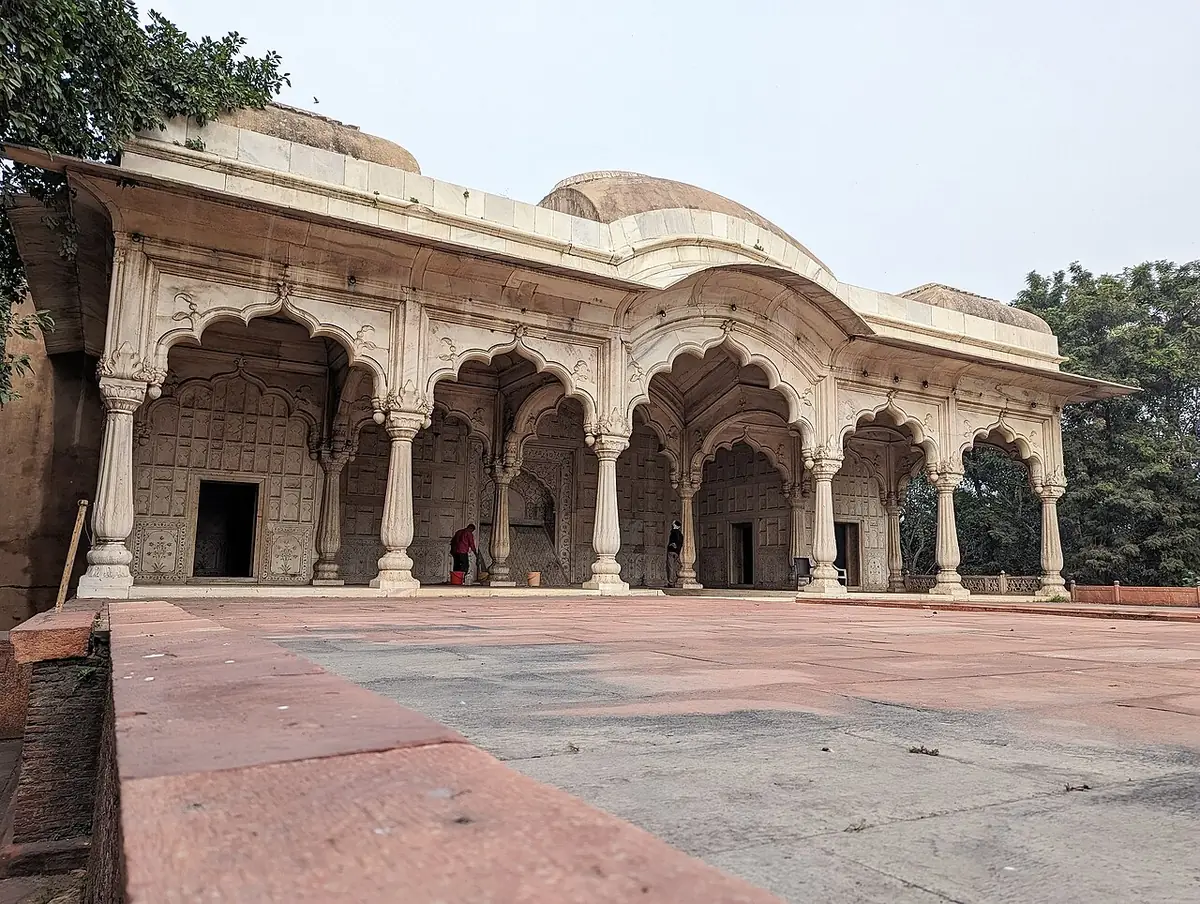
The Shah Burj pavilion inside the Red Fort in Old Delhi — Photo: Sourabh.biswas003 · CC BY-SA 4.0 · Wikimedia Commons
Once you have settled on the type of property, the crucial question of your overall budget and how it breaks down comes next.
In Delhi, the housing question is first a matter of security, water management and access to services. Renting an apartment in a guarded complex or a high-rise development, often called a 'society', brings considerable peace of mind. Backup generators take over during frequent power cuts, and the water is filtered or stored upstream. It is the preferred option for a quick move without major technical surprises, and it particularly suits expats and professionals arriving in the Indian capital for the first time.
By contrast, choosing a detached house or a single floor of a villa, known as a 'builder floor', offers unmatched independence and architectural freedom. These properties are usually found in sought-after residential neighbourhoods such as Greater Kailash, Defence Colony or Vasant Vihar. Tenants enjoy private terraces, generous proportions and complete freedom from the strict rules of society management committees. That freedom comes at a price, though: dealing with power failures, maintaining the water pump and security are entirely the tenant's responsibility.
The choice between the two therefore depends directly on how well you tolerate local logistical hiccups. If you want a predictable cocoon where every service simply works, the modern housing society is the obvious answer. If you value the charm of a leafy neighbourhood, high ceilings and being able to entertain without being overlooked, a 'builder floor' will meet your expectations, provided you accept overseeing the day-to-day maintenance yourself.
It is also worth looking at the ratio between living space and budget. Apartments in housing societies carry maintenance charges that are often high but justified by swimming pools, gyms and guards on duty 24 hours a day. Detached houses, though sometimes cheaper per square metre, require extra spending on sophisticated air purification, which is essential to get through the winter pollution peaks with peace of mind.
Finally, lease flexibility and relations with landlords differ noticeably depending on the option you choose. Owners of detached houses often manage their property directly, which allows tailored arrangements but can sometimes mean rigidity at renewal time. In large developments run by institutional companies, contracts are standardised and transparent, but leave little room for informal negotiation if something unexpected happens financially.
What monthly budget do you need to live comfortably as a tenant in Delhi?
Keeping your budget under control is not enough; you also need to understand how a typical day in the capital actually fits together.
Drawing up a budget for renting an apartment in Delhi means looking well beyond the rent shown on the property portals. Society maintenance charges, energy bills driven by heavy air conditioning use and domestic help make up a substantial share of monthly spending. Planning for these variable items ensures a lasting move and avoids unpleasant financial surprises by the end of your first three months.
Monthly cost items for a 120 m² apartment in Delhi
Cost item
Estimated range (INR)
Estimated equivalent (EUR)
Comments and variability
Monthly rent (residential neighbourhood)
INR 65,000 to INR 150,000
EUR 720 to EUR 1,650
Varies widely with proximity to the metro and the reputation of the housing society.
Society charges (maintenance)
INR 5,000 to INR 15,000
EUR 55 to EUR 165
Covers 24/7 security, upkeep of the shared areas and outdoor lighting.
Electricity (air conditioning and backup)
INR 8,000 to INR 20,000
EUR 90 to EUR 220
A sharp peak between May and July because the air conditioning runs constantly.
Domestic staff (cleaning and cooking)
INR 15,000 to INR 30,000
EUR 165 to EUR 330
Depends on the number of staff and the weekly hours required.
High-speed internet and subscriptions
INR 2,000 to INR 4,000
EUR 22 to EUR 45
A stable fibre connection is essential for remote work.
The amounts shown reflect rates observed for homes of international standard in central and south Delhi.
Upfront costs and deposits when you move in
Type of payment
Usual amount
Refund terms
Security deposit
2 to 3 months' rent
Returned at the end of the lease, subject to a satisfactory move-out inspection.
Estate agency commission
1 month's rent
Earned outright when the rental agreement is signed.
Lease registration (stamp duty)
1% to 2% of the total annual rent
Compulsory administrative fees paid to the local authorities.
The security deposit can be negotiated, but two months is the minimum standard required by institutional landlords.
Healthcare, schools, transport: what does an ordinary Tuesday look like when you rent in Delhi?
Beyond this well-oiled routine, several realities on the ground often go unmentioned in agency brochures.
Picturing your daily rhythm in Delhi helps you choose the right location for your apartment. Between rush-hour traffic, proximity to leading medical facilities and access to rapid transit, every minute counts. A typical Tuesday highlights how crucial it is to cut journey times to keep your personal balance.
07:30Home in South DelhiWake up and check the readings on the indoor air purifiers before starting the day.
08:45Magenta Line or Yellow Line metro stationWalk or take an electric rickshaw to the station to avoid the morning road congestion.
10:00Workspace or central officeArrive at the office after a smooth ride on the air-conditioned metro, far from the stress of road traffic.
13:00Neighbourhood lunchA meal in a local café, or an order delivered straight to the office through local apps.
16:30Leading medical centre (Max Healthcare or Fortis)A routine check-up or paediatric appointment at one of the hospitals run to international standards.
19:00Local organic market or supermarket (Nature's Basket)Buying fresh produce for dinner, favouring shops that offer rigorous traceability.
20:30Back at the apartmentUnwinding quietly in the secure housing society, away from the bustle of the major roads.
What property listings will never tell you about renting in Delhi
These frequent omissions sometimes lead to bitter regrets that only become clear after six months on the ground.
Behind flattering photographs and idyllic descriptions, Delhi's rental market hides major technical and environmental subtleties. Knowing these unwritten aspects lets you approach viewings with a critical eye and negotiate protective clauses in the lease.
The real indoor air quality and the lack of natural ventilation
During the winter months, the air quality index deteriorates sharply. A poorly insulated apartment without central filtration will turn your home into a polluted zone, making high-capacity air purifiers an essential purchase from the day you arrive.
The strict rules of Resident Welfare Associations (RWA)
Renting in a housing society means accepting house rules that can be fussy about delivery times, guest access or a ban on keeping pets without prior written permission from the committee.
Exactly where the water comes from and how much the tanks hold
Municipal water is often intermittent in Delhi. If the building has no shared reverse osmosis plant or regular tanker supply in the dry season, you will have to install and maintain your own filters or face recurring shortages.
The real state of the electrical wiring and the contracted power load
Running several air conditioners, a water heater and kitchen appliances at once in an older building can trip the circuit breakers repeatedly if the individual electricity connection has not been sized for a high modern load.
Late-night noise from local celebrations
Delhi is an extremely festive city where weddings and religious festivals punctuate the year. An apartment near a wedding venue or a major road will be exposed to high noise levels late into the night, however good the window insulation.
The classic traps you discover six months after signing your lease in Delhi
These disappointments raise the question of who this rental market simply does not suit.
Looked likeAn extremely quiet, leafy neighbourhood during a viewing on a sunny Sunday afternoon.
Turned outA road turned into a congested bypass full of lorries and two-wheelers from Monday to Friday, from seven in the morning.
Would have caught itAlways visit the property at weekday rush hours, between 8am and 10am and again between 5pm and 7pm, to judge the real level of noise and traffic.
Looked likeA friendly landlord offering an informal verbal agreement to keep the lease registration fees down.
Turned outA flat refusal to return the security deposit on departure, citing pre-existing damage that was never recorded.
Would have caught itInsist on an extremely detailed photographic inventory, countersigned by both parties, and make every payment by traceable bank transfer.
Looked likeA state-of-the-art central air conditioning system listed as brand new in the inventory.
Turned outOutdated units using an astronomical amount of electricity and needing major repairs at the tenant's expense.
Would have caught itHave every air conditioner and household appliance tested in the landlord's presence before the rental agreement is finally signed.
Looked likeSociety charges supposedly included in the advertised overall rent.
Turned outA surprise quarterly bill from the residents' association for unplanned facade renovation work.
Would have caught itWrite into the contract in black and white that the rent includes all ordinary and extraordinary maintenance charges.
Who should not rent an apartment in Delhi without thorough preparation?
It is time to pull these points together so you can make your decision with full knowledge of the facts.
Settling in India's capital demands real psychological flexibility and the ability to adapt to local administrative and environmental complexities. Some professionals and families will find the experience particularly trying if their expectations do not match the reality on the ground.
The remote worker who needs absolute silence and a flawless internet connection at all times
→An isolated home on a side street with no backup equipment or network redundancy.
Unexpected power cuts and the neighbourhood noise that comes with dense city life are likely to seriously disrupt their daily work.
The first-time expat who refuses to hand logistics over to local service providers
→To handle the plumbing, dealings with tradespeople and registration formalities alone.
The cultural barrier and local ways of working quickly frustrate people attached to rigid Western notions of efficiency.
The family with young children who are very sensitive to changes in air quality
→An older, poorly insulated property with single glazing and no filtered ventilation.
Exposure to winter pollution peaks without an adequate physical barrier directly threatens the respiratory health of the youngest members of the household.
The tenant on a very tight budget who wants European standards without compromise
→A luxury housing society in a highly sought-after area, cutting into their financial safety margins.
The costs of energy, services and upkeep will quickly outstrip their cash flow, pushing them into avoidable financial hardship.
So, are you ready to take the plunge and rent in Delhi?
Committing to rent an apartment in Delhi is an exciting step that radically transforms your relationship with one of the most dynamic cities on the planet. Far from simplistic clichés, a successful move rests on methodical preparation, a clear-eyed assessment of your real budget and an informed choice of neighbourhood that suits your professional and personal goals.
If you have taken on board the need to plan for the changing seasons, budget for the extra charges and surround yourself with reliable service providers, you already have everything you need to make the transition a success. The difficulties that come with life in a major Indian megacity then become opportunities for exceptional cultural and personal enrichment.
Take the time to view several properties on weekdays, insist on transparency for every clause in the contract and never compromise on the security of your home. Your future home in Delhi is waiting, ready to become the starting point of an unforgettable adventure in the heart of contemporary India.
Related questions
What is the best neighbourhood to rent an apartment in Delhi as an expat?
South Delhi neighbourhoods such as Vasant Vihar, Greater Kailash, Defence Colony and Hauz Khas have long been the most popular with expats. They offer direct access to international facilities, well-kept green spaces and housing societies with rigorous security.
Do you have to register your rental agreement with the Delhi authorities?
Yes, registering the lease through a notarised deed or official registration is strongly recommended and often required to make your residence official. It protects the rights of both landlord and tenant if a legal dispute arises.
How does the security deposit work for rentals in Delhi?
The standard security deposit is generally equal to two or three months' rent, excluding charges. It is paid to the landlord when the lease is signed and must be returned in full at the end of the agreement, minus any repair costs recorded in the move-out inspection.
Which months are worst for air quality in Delhi?
The period from October to January traditionally brings the poorest air quality readings, because of weather conditions and regional farming practices. That makes it essential to fit effective air purifiers in every living space.
Are pets allowed in apartments in Delhi?
That depends entirely on the rules of each building's Resident Welfare Association (RWA). Some buildings strictly ban pets from shared areas, while others allow them under conditions. Check this point before you sign anything.
What does electricity typically cost for an air-conditioned apartment?
In the summer months, between May and August, heavy use of air conditioning can push the electricity bill to between INR 8,000 and INR 20,000 a month, depending on the size of the home, its insulation and how many appliances run at the same time.
Should you use an estate agent to find a home in Delhi?
Going through a reputable estate agent makes the transaction much safer. Agents know reliable landlords, understand how leases are drawn up and smooth the negotiations, for a standard commission of one month's rent.
How is water supplied in Delhi apartments?
Most large complexes have shared tanks fed by the municipal network or topped up by water tankers. Upmarket apartments also include reverse osmosis filtration systems to make the water fully safe to drink.
What are the most efficient ways to get around from residential areas?
The Delhi Metro is without question the fastest and most reliable way to cross the city while avoiding road congestion. Electric rickshaws and ride-hailing apps cover the last mile efficiently.
What precautions should you take during the move-in inspection?
Photograph every room carefully, record in writing the working condition of the appliances, bathroom fittings and air conditioners, and have the landlord countersign that document when the keys are handed over, so as to avoid any later dispute.