Settling into a house in Brisbane means getting to grips with the particular features of Australia's subtropical rental market. From choosing a neighbourhood and working out a realistic budget to understanding the local legal rules, this guide takes you step by step through the whole process of moving in.
Get the app
What nobody tells you.
Real prices, hidden costs and the traps to check before you commit.
What you really get when you rent a house in Brisbane
Scroll
What you really get when you rent a house in Brisbane
Settling into a house in Brisbane means getting to grips with the particular features of Australia's subtropical rental market. From choosing a neighbourhood and working out a realistic budget to understanding the local legal rules, this guide takes you step by step through the whole process of moving in.
Written by the ting.ad editorial team ·
Brisbane in Street View: drag to look around.
Beyond the floor area, it is how well your profile matches the local way of life that will decide whether your move works out.
Renting a house in Brisbane is not simply a matter of swapping inner-city square metres for a higher rent further out. It is a lifestyle choice that reshapes your relationship with the subtropical climate, with outdoor space and with the very structure of your daily routine. Tenants quickly discover that extra living space comes with responsibility for looking after the grounds and a longer distance from the heart of the city. Understanding this basic trade-off helps you avoid disappointment in the first months of a lease in a demanding climate. Weighing up these compromises honestly helps you target the right neighbourhood from the moment you arrive.
Generous space and a private gardenvsRegular upkeep of the grounds and the greenery
Having your own green space improves everyday quality of life, but it means constantly keeping on top of the lawn and the edges, which grow fast after the summer rains.
Complete independence and privacyvsGreater reliance on the road network to get around
Detached houses are mostly located in residential areas, which puts them further from the tram and fast train lines and lengthens the journey into the business district.
Open architecture designed for natural ventilationvsHigh electricity bills when the air conditioning runs hard
Traditional timber houses on stilts let the air flow through, but they need modern equipment to keep temperatures bearable during the heat peaks of the southern summer.
Does this place suit your lifestyle and your work expectations?
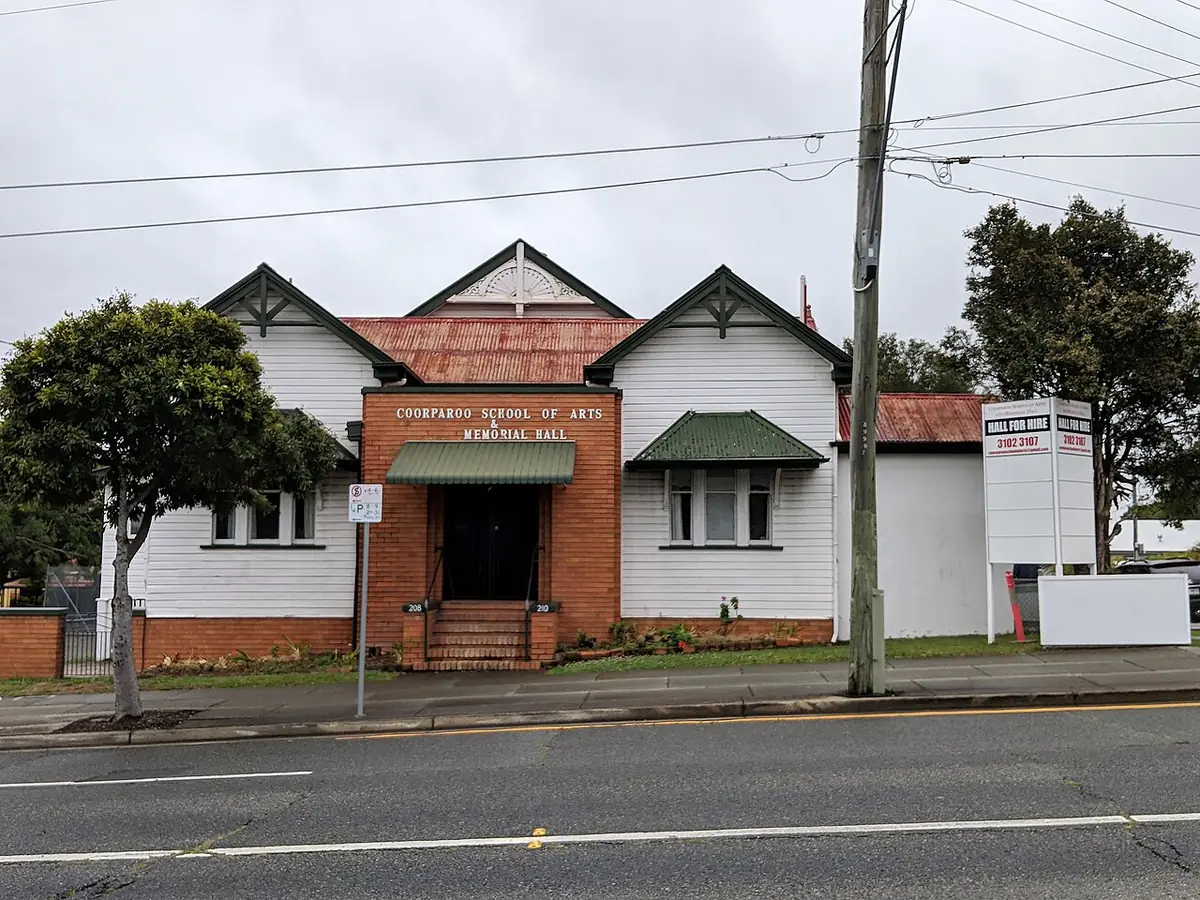
The heritage School of Arts hall on a Coorparoo street — Photo: Nickw25 · CC BY-SA 4.0 · Wikimedia Commons
How you judge distances and housing standards will also be shaped by the cultural reference points you bring with you from back home.
Brisbane's rental market plays out very differently depending on whether you arrive alone to work in the central district, as a couple looking for a balance between nature and activity, or as a family with school-age children. Each profile runs into its own constraints on transport, budget and proximity to schools or medical services. Assessing your situation against these local realities will save you from choosing the wrong location. Let us look at how the different profiles fit into the fabric of Queensland's capital.
Finding the balance between commuting time and living space
Professionals working in the heart of Brisbane have to choose between being right next to the office towers and the comfort of a detached house. Renting a house generally means accepting thirty to forty minutes of daily travel by train or ferry. The in-between suburbs cut that time while still offering the character people look for, but competition for properties there is particularly fierce. It is wise to factor in how congested the main roads get at rush hour before signing a lease a little too far out.
The decisive importance of school catchments and parks
For families, renting a house in Brisbane is inseparable from the catchment system for state schools. Living in a specific area guarantees access to the best schools in the region, which directly affects rent levels. Parents also look for easy access to well-equipped parks and sports facilities, which set the rhythm of family weekends. A secure garden then becomes a non-negotiable requirement for the wellbeing of younger children.
Adapting to the local rental market and its demands
New international arrivals discover an extremely tight rental market where speed is absolutely key. Renting a house requires a flawless application with solid financial guarantees and references that can be checked. It is often recommended to take temporary accommodation for the first few weeks so you can view properties in person and understand what sets each neighbourhood apart. Never sign a lease remotely without having someone you trust on the ground acting for you.
Living here when you come from abroad: what changes about housing
Once these reference points have sunk in, choosing the neighbourhood becomes the step that shapes your whole housing plan.
Leaving the rental system you know back home to settle in Brisbane means unlearning many legal and practical reflexes. Building standards, the way applicants are selected and the day-to-day management of properties all follow well-established Anglo-Saxon logic. A tenant arriving from abroad has to quickly grasp the importance of photographic condition reports and the relative flexibility of leases. Here are the main differences to take on board so your move to Australia goes smoothly and securely.
From abroad
Strict rent controls and multi-year leases that strongly protect the tenant
Brisbane
A more liberal market where leases generally run for six to twelve months and can be renewed
You should expect more frequent rent reviews and possible uncertainty over renewal when the lease ends, if the owner wants to sell or adjust the rent.
From abroad
Condition reports carried out by a bailiff or following highly standardised checklists
Brisbane
A very detailed entry condition report that you fill in yourself, with hundreds of time-stamped photos
The care you put into this first document will determine whether you get your full bond back when you leave. No detail, however small, should be overlooked when you move in.
From abroad
Solid thermal insulation and central heating almost everywhere in winter
Brisbane
An open design that favours natural ventilation, with air conditioning essential in summer
Homes can be surprisingly cool on southern winter nights and need heavy use of air conditioning as soon as temperatures climb, which changes your energy budget.
From abroad
Paying a security deposit equal to one or two months' rent excluding charges
Brisbane
A regulated bond held by an official body (the Residential Tenancies Authority)
The money does not sit in the owner's account but is secured by the state, which simplifies things if there is a dispute, provided you follow the move-out rules to the letter.
Which neighbourhood should you choose for your pace of life and your priorities?
Looking at the different locations leads naturally to a close look at the rents actually charged on the market.
Brisbane is shaped by the bends of its river, and each area has its own identity, its own mix of amenities and its own atmosphere. From the busy shopping streets of the inner suburbs to the leafy calm of the outer suburbs, the neighbourhood you pick defines your everyday life. Travel times, local cafés and access to the landscaped riverbanks weigh heavily in the balance. Here is an overview of the residential options most in demand among tenants settling in the area.
New Farm and Teneriffe
A lively, trendy urban setting right on the river
Suits
Working people without children and anyone who loves a buzzing neighbourhood life
Trade-off
Some of the highest rents in the city, and apartments far outnumber detached houses.
Paddington and Red Hill
Green hills, steep streets and heritage houses
Suits
Those looking for architectural character close to the centre
Trade-off
Heavy traffic at rush hour and sometimes narrow streets where parking is tricky.
St Lucia and Indooroopilly
An academic, quiet, tree-lined feel close to the campuses
Suits
Families and academics looking for green space and good schools
Trade-off
A fair distance from the city centre's nightlife, and bridges that can be jammed in the morning.
Coorparoo and Camp Hill
Family residential suburbs going through a retail revival
Suits
A balanced compromise between living space and a moderate budget
Trade-off
A more conventional streetscape that lacks the picturesque charm of the heritage hills to the west.
What does renting a house in Brisbane really cost?
Beyond the budget itself, Australia's legal framework strictly defines what a tenant can change in their home or expect from it.
Queensland's property market has changed noticeably in recent years, driven by sustained demand and a limited supply of rentals. Drawing up a budget means separating the advertised rent from the unavoidable extra costs such as water usage, garden upkeep and service subscriptions. The figures below reflect the ranges seen for detached houses according to their size and their location relative to the centre. These benchmarks help you align your search criteria with what you can genuinely afford.
BrisbaneTo rentHouseestimate
Median price / m²A$25Half the apartments sell below this
Median priceA$4.82kthe average is 14% higher — a few very large properties pull it up
Most common2 bedrooms42 % of listings
Average size184 m²
By number of bedrooms
Bedrooms
Share of market
Avg price
Price / m²
Avg size
2most common
42 %
A$3.9k
A$26
149 m²
3
39 %
A$5.23k
A$25
210 m²
4
20 %
A$7.18k
A$24best value / m²
298 m²
Each row is an average, compared against the area average of A$26 / m². These are indicative estimates of a typical local market, not a measured sample of live listings. Check current listings before relying on them.
What you can actually change or set up in your home
Following these rules is part of a rigorous rental process in which every step has its own requirements.
Freedom to change things in an Australian rental is far more regulated than people often imagine from abroad. Queensland's legislation has evolved to give tenants more rights over pets and small cosmetic changes, but the principle that everything must be reversible remains absolute. Any change made to the property must be undone at the end of the lease without leaving a trace. Understanding where this legal line sits prevents major disputes at the exit condition report.
Changes that need prior approval
Hanging pictures on the walls, putting up heavy hooks, changing paint colours or planting permanent beds in the garden all require the prior written consent of the owner or the managing agency. Even for pets, a formal request has to be made under a precise legal framework that protects the owner while limiting unreasonable refusals.
What it changesPut every request in writing and keep the replies, so there can be no later argument over the condition of the walls or floors.
Routine jobs that fall to the tenant
Day-to-day care of the outdoor areas, regular mowing of the lawn, weeding the paths and periodically cleaning the air conditioning filters are strictly the tenant's responsibility, unless the lease explicitly says otherwise. Failing to meet these upkeep obligations can be held against you by the agency when your bond is assessed at the end of the tenancy.
What it changesBuild the time or cost of garden maintenance into your overall rental budget so the property stays in its original condition.
The rule to understand before paying a deposit on a lease
Anticipating this sequence lets you approach the different administrative stages of your move with confidence.
Securing and contracting a rental property follows a very strict sequence that leaves no room for improvisation. Once the owner accepts an application, the initial funds have to be paid within a very short window to lock in the property for good. Ignoring these mechanisms means the home can go to the next application on the list. Let us break down the chain of events that leads to getting the keys.
You spot a house that matches your criteria and view it at an 'inspection' open to the public.
You submit your complete application online through the dedicated platforms within hours of the inspection.
The agency checks your employment references, your rental history and your financial standing against the relevant databases.
If you are accepted, you receive an offer in principle together with a request to pay a holding deposit.
You sign the lease (residential tenancies agreement), checking all the special terms and the exact length of the tenancy.
You pay the official bond and the first rent in advance before completing the entry condition report and collecting the keys.
How a rental transaction unfolds, step by step
By following these steps carefully, you turn a complicated relocation into a well-managed transition to your new surroundings.
Renting successfully in Brisbane means coordinating several key players, from the first search through to actually moving in. Each of them has a precise role in approving your application and making sure Queensland's regulations are respected. Knowing who is responsible for what keeps communication smooth and prevents administrative misunderstandings. Here is the detailed sequence of roles and actions to move in under the best possible conditions.
The prospective tenantPreparing the applicationGather proof of income, identity documents and contact details for previous landlords, and write a compelling cover letter.
The property managerScreening and assessing applicationsAssess applicants' ability to pay, organise group inspections and present the shortlisted applications to the owner.
The owner (landlord)Final approval of the tenantApprove the applicant put forward by the managing agency, based on the guarantees offered and the terms of the lease.
The regulator (RTA)Securing the bondOfficially lodge the bond paid by the tenant in a dedicated state account so the funds are held transparently.
The tenant and the agencyCompleting the entry condition reportInspect every room carefully, record the general condition with dated photographs and sign the official report.
The energy providerConnecting the essential servicesSet up the electricity, gas and internet contracts so the home is fully functional from day one.
Detached house or apartment in Brisbane: the trade-offs for your daily life
Now that the type of property is clearer, let us turn to the financial reality of moving in.
Choosing between a detached house and an apartment in Brisbane directly shapes how you live in the subtropics. Houses, often built on stilts in the traditional Queensland timber style, offer welcome natural ventilation and private outdoor space, but they demand regular upkeep of the grounds and a bigger budget. They are generally found in the residential rings, which means using a car to reach the job centres of the CBD. This is the option preferred by families looking for independence and a large block for the children.
Apartments, by contrast, are concentrated in lively neighbourhoods such as New Farm, Fortitude Valley and South Bank. Their appeal lies in their relative affordability, shared facilities such as pools and barbecues, and maintenance handled externally by the body corporate. However, strata fees can grow heavier over the years, and living close to others in the city means a higher tolerance for noise and usually less indoor living space.
The choice depends mainly on your work situation and your long-term family priorities. If you mostly work remotely or in the heart of the city, a well soundproofed apartment will dramatically cut your daily travel time. If you value quiet nights, architectural freedom and room to park several vehicles, a house in Brisbane remains the benchmark asset despite its upkeep demands.
You also need to factor in the climate specific to South East Queensland. Houses enjoy excellent airflow but call for extra vigilance during the wet season, both for drainage and for protection against termites. Newer apartments are built to high thermal insulation standards and have central air conditioning that smooths out summer heat peaks without major maintenance on your part.
What realistic budget do you need to live comfortably in Brisbane?
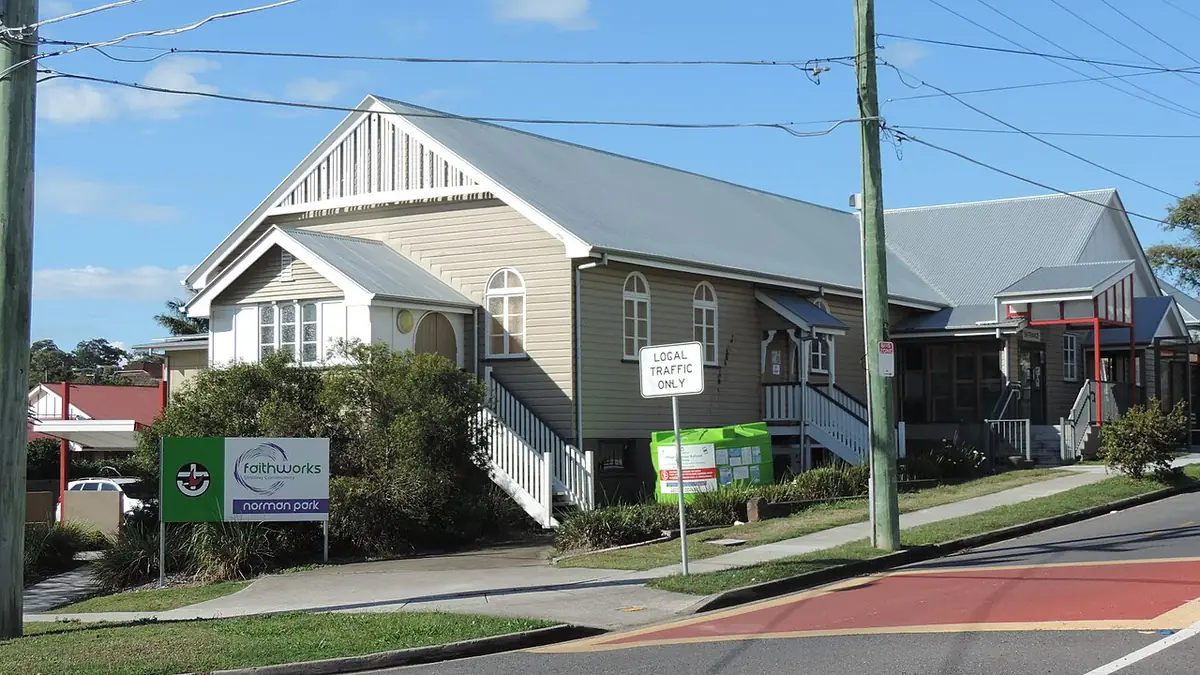
Timber buildings and quiet streets in Norman Park, Brisbane — Photo: Kerry Raymond · CC BY 4.0 · Wikimedia Commons
Now let us look at how a typical day plays out, to measure the effect your location has on your schedule.
Budgeting for Brisbane goes well beyond the rent or the mortgage repayment. You have to include all the unavoidable costs of local living, including council rates or strata fees, home insurance suited to the region's weather risks, and transport costs. Prices vary significantly with the distance between your future home and the central business district, which radically changes the calculation of your overall return.
Estimated monthly household expenses in Brisbane
Expense item
Two or three bedroom apartment
Detached house
Budget comment
Housing (rent or mortgage)
AUD 1,800 to AUD 2,600
AUD 2,600 to AUD 4,200
Varies widely with proximity to the river and the CBD.
Charges and insurance
AUD 350 to AUD 600
AUD 200 to AUD 450
High strata fees for apartments; heavier weather-risk insurance for houses.
Transport and getting around
AUD 150 to AUD 300
AUD 300 to AUD 600
More use of public transport in central areas, versus fuel and parking costs for a house.
Figures are in Australian dollars and are indicative averages observed on the Brisbane property market.
Upfront costs of buying or renting
Type of cost
Estimate for renting
Estimate for buying
Bond / deposit
4 to 6 weeks' rent
5% to 20% of the purchase price
Administrative and legal costs
Condition report fees included
Transfer duty and inspections
Always keep a safety buffer equal to three months of fixed costs to absorb the unexpected.
Health care, schools and transport: an ordinary Tuesday in Brisbane
Beyond what you can see, some crucial details often slip past property inspections.
How an ordinary day in Brisbane runs depends closely on how well you anticipate traffic on the main roads and on the bridges across the Brisbane River. Between taking the children to school, commuting to the business hubs and getting to health services, every minute counts. A well-chosen location will save you hours of unnecessary travel and give you a welcome balance in life under a demanding climate.
07:00 - 07:45Home and early departureGetting ready and leaving before rush hour to avoid the jams on the bridges into the city centre.
08:00 - 08:30The local schoolDropping the children at the local state or private school, often within walking distance or a short bus ride away.
08:45 - 17:00Workplace in the CBD or a business parkThe working day, helped by the flexible hours that are deeply rooted in Queensland's working culture.
17:30 - 18:30After-school activities and grocery shoppingA stop at the local supermarket or a council park to enjoy the end of the day outdoors.
19:00Back homeDinner at home and a relaxed evening getting ready for the next day in a quiet residential setting.
What the property listing will not tell you about Brisbane
These invisible factors sometimes lead to bitter regrets that only become clear after several months of living there.
Property listings naturally highlight natural light, nearby parks and modern interior fittings. Yet they often leave out major environmental and structural issues that directly affect your comfort and the future value of your investment. Knowing these local subtleties spares you financial setbacks and unpleasant surprises once everything is signed.
Sun orientation and summer heat
A west-facing facade with no shade from trees or the building itself turns your home into an oven in the afternoon, pushing up your air conditioning bills significantly over the summer months.
The history of flood-prone areas
Brisbane's river has a record of major floods. Checking the official maps of the 2011 and 2022 floods is essential to avoid sky-high insurance premiums or serious risks.
Active termites
The subtropical climate encourages timber pests. Without a recent inspection certificate and a working termite barrier, a timber structure is exposed to considerable damage.
Strict strata by-laws
Some buildings impose tight restrictions on pets, short-term letting or any change to the outside appearance of your balcony.
The purchase mistakes you discover six months after settling in Brisbane
Traps aside, this market does not suit everyone, and some profiles should clearly stay away.
Looked likeA charming old house full of character, tucked away among the greenery.
Turned outA money pit of constant renovation costs, overrun by damp and mosquitoes in the wet season.
Would have caught itInsist on a full building inspection report and budget a twenty per cent safety margin for bringing the property up to standard.
Looked likeAn ultra-modern apartment right next to a major road, for a quick trip to work.
Turned outConstant noise that makes sleeping with the window open impossible, and air pollution that is unbearable day to day.
Would have caught itVisit the property at different times during peak traffic and check the soundproofing and double glazing on the large windows.
Looked likeAn affordable investment in an outer suburb in the middle of development.
Turned outMarked social isolation, a severe lack of local shops and commuting times that double at rush hour.
Would have caught itTest the commute at the exact peak times before signing and explore the services you can genuinely reach on foot.
Looked likeA quick unconditional purchase to beat other buyers in a tight market.
Turned outThe discovery of major hidden defects in the plumbing and wiring that the seller had not disclosed.
Would have caught itNever give up the building and legal inspection conditions, however intense the competition on the market.
Who really should not buy or settle in Brisbane as things stand?
It is time to pull these elements together to work out exactly where you stand on this life plan.
Queensland's economic appeal and quality of life draw people in large numbers, but a poorly calibrated property plan can quickly become a financial and personal dead end. Some buyers and tenants would do better to postpone their decision or to point their search towards other Australian cities with different dynamics.
Investors looking for high, immediate rental yields
→Stay away from investing in inner Brisbane.
The recent rise in purchase prices has squeezed gross yields, making rental returns less attractive compared with current financing costs.
Buyers on a strictly fixed budget with no emergency savings
→Postpone their property purchase.
Rising maintenance costs and interest rate increases weigh heavily on households with no financial breathing room if something unexpected happens.
People attached exclusively to a very dense, walkable way of life
→Choose Sydney or Melbourne instead.
Brisbane still has pronounced urban sprawl and a strong car culture, which makes life without a car of your own difficult outside the very few central neighbourhoods.
So, are you ready to make your move into a Brisbane home a reality?
Committing to a housing plan in Brisbane means weighing the promise of a bright, balanced lifestyle against the financial discipline needed to put down lasting roots in Queensland. If you have accepted that a car remains a central tool for exploring the region, set aside the margins you will need for upkeep, and based your choice of neighbourhood on real needs rather than a whim, you have solid foundations for success.
Take the time to confirm each step methodically: view properties at rush hour, go through building inspection reports without giving in to market pressure, and work out your total outgoings to the last dollar. Haste is the worst adviser in a subtropical property market where the particular climate and terrain call for constant vigilance.
If your work situation is stable, your time horizon stretches beyond five years and you want a pace of life rooted in nature while staying connected to a thriving job market, Brisbane offers remarkable opportunities. It is now up to you to weigh these facts against your personal aspirations and take the step with complete peace of mind.
Related questions
What is the best neighbourhood for family life in Brisbane?
Residential suburbs in the inner ring such as Paddington, Ashgrove and Indooroopilly are especially sought after for the quality of their schools and their quiet streets, while staying a reasonable distance from the city centre.
Do you really need a car to live in Brisbane?
The public transport network of buses, trains and ferries works well in the inner city, but owning a car remains essential if you want to make the most of the suburbs and the nearby beaches of the Gold Coast or the Sunshine Coast.
How can you protect yourself effectively against flooding in Brisbane?
It is vital to check the official historical flood maps published by the council before buying or renting, and to find out whether the property in question was affected by the major flood events of 2011 or 2022.
What conveyancing and government costs apply when buying property in Brisbane?
In Australia, and in Queensland specifically, the tax on transferring ownership, known as transfer duty, varies with the value of the property and with whether you are a resident or a first home buyer, and it generally comes to several thousand dollars.
Is it easy to rent a property in Brisbane before buying?
Brisbane's rental market is under heavy competitive pressure. It is best to prepare a complete application, with proof of income and references, before you go to inspections, so you give yourself the best chance of securing a home quickly.
What kind of climate should you expect when moving to Brisbane?
Brisbane enjoys a subtropical climate with hot, humid summers and heavy thunderstorms, and particularly mild, sunny winters that encourage outdoor living all year round.
Are timber houses on stilts hard to maintain?
These traditional Queensland homes, known as Queenslanders, offer excellent natural ventilation but need regular checks for damp, ground movement and attacks by destructive termites.
How do strata fees work for apartments in Brisbane?
Apartment owners pay quarterly contributions known as body corporate fees, which cover the upkeep of shared areas, pools, lifts and building insurance, and the amount can rise as the building ages.
What job opportunities are there in the Brisbane area?
Brisbane's economy is especially strong in health, education, engineering, financial services and construction, and it is also benefiting from the preparations for the major sporting events coming up.
How long does it usually take to complete a property transaction in Brisbane?
Once the offer has been accepted and contracts exchanged, the standard settlement period for completing a purchase is generally between thirty and sixty days, during which the legal and building checks are carried out.
Property review of ting
No ting properties in Brisbane yet
Be the first — share it on ting and it shows up right here.