Buying a house in Brisbane calls for a close understanding of local conditions, the subtropical climate and Queensland's legal rules. This guide unpacks how the market works so you can carry through your plan to settle here with complete peace of mind.
Get the app
What nobody tells you.
Real prices, hidden costs and the traps to check before you commit.
Why house hunting in Brisbane means looking beyond the architecture
Scroll
Why house hunting in Brisbane means looking beyond the architecture
Buying a house in Brisbane calls for a close understanding of local conditions, the subtropical climate and Queensland's legal rules. This guide unpacks how the market works so you can carry through your plan to settle here with complete peace of mind.
Written by the ting.ad editorial team ·
Sale House Brisbane in Street View: drag to look around.
Before you set out to find the ideal property, it is vital to measure your buyer profile against local realities.
Buying a house in Queensland's capital is not simply a matter of buying square metres of buildable land in a tropical setting. Buyers face a market where the Queenslander tradition collides with strict modern requirements on thermal performance and planning. What looks at first like a leafy haven with a breezy veranda can hide major structural problems linked to termites or historic flood zones. Understanding the reality of this housing stock helps you set realistic budget expectations and avoid disappointment during the essential inspections.
The timeless charm of timber houses on stiltsvsThe maintenance and pest-treatment demands
These traditional homes offer remarkable natural ventilation thanks to being raised off the ground, but they need constant monitoring of the timber stumps and of painted surfaces exposed to heavy summer rain.
Being right next to the parks and the Brisbane RivervsExposure to climate hazards and periodic flooding
Settling along the waterways guarantees an exceptional setting and quick access to green space, but it also means checking the flood history of each individual lot with great care.
The generous lot sizes in the outer suburbsvsDistance from the main job centres and reliance on the car
Owning a large leafy block at a reasonable price comes at the cost of long daily commutes to the central business district, despite ongoing efforts to modernise public transport.
The layout flexibility of large open-plan spacesvsThe high cost of upgrading energy efficiency and insulation
Spacious open-plan living areas are a real asset for family life, but they often mean completely overhauling the air conditioning and double glazing to cope with the summer heat.
What kind of buyer are you, given the particular features of Brisbane's property market?
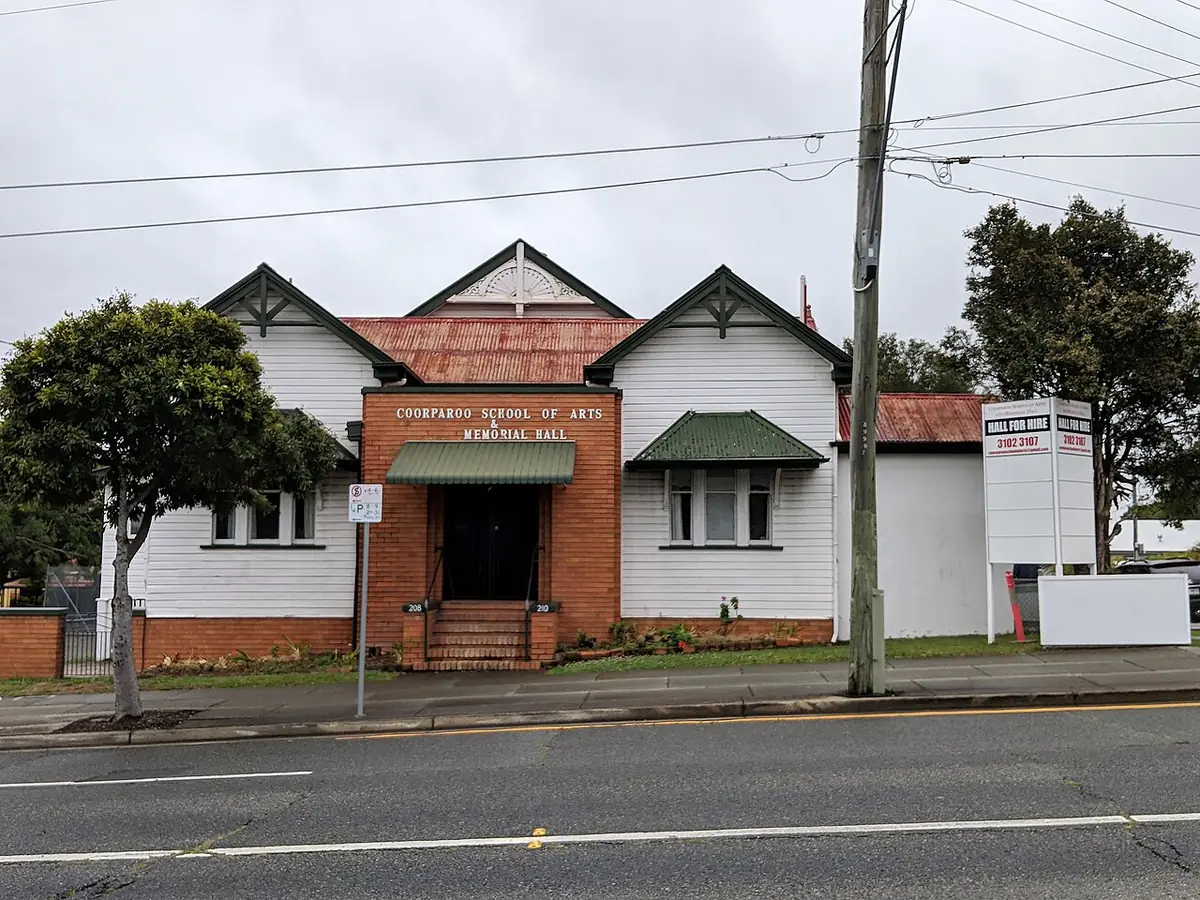
The heritage School of Arts hall on a Coorparoo street — Photo: Nickw25 · CC BY-SA 4.0 · Wikimedia Commons
This range of profiles highlights the cultural and practical gap between buying a home back home and the way things are done in Queensland.
Brisbane's residential market does not follow the same logic depending on whether you arrive looking for a long-term investment, a lively city base or a stable family home. The layout of neighbourhoods, proximity to well-regarded schools and access to major roads completely redefine what return and comfort mean. Each situation involves specific trade-offs on living space, the age of the building and the level of renovation needed to move straight in without an unpleasant financial surprise.
The family looking for a stable home
Buyers with children generally favour quiet residential suburbs where the size of the block allows for a safe outdoor space. In these areas, proximity to top state schools and private colleges directly affects resale value. It is worth studying school catchment areas carefully before signing, because demand there consistently far exceeds the supply available. This stability limits the risk of losing value but calls for a larger initial budget to buy a four-bedroom home.
The urban professional or agile investor
If your daily life revolves around being close to the CBD and the technology or hospital hubs, your search will lean towards more compact properties in inner neighbourhoods that are gentrifying fast. Here, the scarcity of vacant land pushes buyers towards renovated terraces or low-maintenance urban villas. These properties have traditionally been very easy to resell, which protects you in the medium term, but competition at public auctions is fierce. You need to be ready to make quick decisions based on rigorous technical inspection reports.
The buyer seeking calm and single-level living
For buyers looking to slow down, the search tends to focus on coastal or green areas offering single-level access and moderate upkeep costs. Large tropical gardens demand paid help or a significant physical effort that should not be underestimated in the Queensland climate. Choosing neighbourhoods with accessible health services and active community groups ensures a fulfilling life over the long term. The compromises then lean more towards giving up floor area in exchange for a recent, well-insulated build.
From back home to Queensland: what fundamentally changes when you buy
Once these cultural differences are absorbed, the question of location becomes the real crux of the matter.
Leaving your home country's property market for Brisbane's means letting go of many legal, cultural and technical reference points. Back home, buying may rest on a protective, notary-led system and cooling-off periods firmly set in law. In Australia, property sales are run by agents and often go through public auctions, where the commitment is immediate and binding the moment the hammer falls. This culture of fast transactions calls for flawless advance preparation of your financing and your technical checks.
From abroad
A centralised notary-led process with a statutory ten-day cooling-off period after the preliminary contract
Brisbane
A process run by real estate agents with standard contracts, often subject to conditions negotiated case by case
You need to appoint your own legal and technical advisers before making a firm offer, because the standard cooling-off right is extremely short or non-existent depending on the method of sale.
From abroad
Buildings mostly made of stone, concrete blocks or brick with standardised thermal insulation
Brisbane
Timber structures, lightweight walls and open designs built to maximise natural ventilation are everywhere
Acoustic and thermal comfort is completely different from what you are used to, so you need to budget for installing or upgrading reverse-cycle air conditioning.
From abroad
A tax system built around high transfer duties and local taxes proportional to the assessed rental value
Brisbane
Transfer duty calculated on a sliding scale by price band, and local rates managed by the council
Your overall calculation of return or annual cost of ownership must account precisely for these specific local charges, which vary from one administrative area to another.
From abroad
A property search often centred on a single national portal, with prices shown net to the seller
Brisbane
A fragmented market where flagship properties are often sold by tender with no price shown, making comparable-sales analysis essential
You should rely on recent sales histories published by official state registers rather than displayed estimates to judge a property's true value.
Mapping the residential areas: how to find your way among the city's different faces
These different ways of living translate into price realities that deserve an unflinching look.
Brisbane spreads across a vast hilly area where each part has its own identity, microclimate and social rhythm. From the leafy bends of the river to the inner neighbourhoods buzzing with local cafés, choosing the right area shapes the quality of your commute and how your investment grows over time. There is no universally perfect neighbourhood, only carefully considered compromises between proximity to jobs, a peaceful environment and the affordability of land.
The historic inner north
A controlled urban buzz, instant access to parks and heritage architecture much sought after by senior executives.
Suits
Working people who want to keep commutes to the business district short and enjoy walkable neighbourhood life.
Trade-off
Very high prices for the space you get and fierce competition when properties come up for sale.
The riverside inner south
A fine balance between cultural energy, well-known educational institutions and relaxed waterside living.
Suits
Families looking to be near the best schools and first-class sports facilities.
Trade-off
Greater exposure to rush-hour traffic on the bridges across the river.
The green outer-west suburbs
Wide wooded spaces, the complete calm of the hills and properties with large family gardens.
Suits
Those who put nature, living space and tranquillity away from the urban bustle first.
Trade-off
Near-total reliance on the car and longer journeys to the city centre.
Budget benchmarks and the real price ranges in the residential market
Beyond the raw price tag, the legal nature of the title you are about to acquire deserves your full attention.
Working out the budget you need to buy a detached house in Brisbane means relying on verified sales data rather than advertising promises. The market has undergone significant structural change driven by Queensland's population growth. The ranges below reflect the medians observed for sound properties needing little or no major work straight away, excluding transfer duty and professional fees.
BrisbaneFor saleHouseestimate
Median price / m²A$6,699Half the apartments sell below this
Median priceA$1.3mthe average is 14% higher — a few very large properties pull it up
Most common2 bedrooms42 % of listings
Average size184 m²
By number of bedrooms
Bedrooms
Share of market
Avg price
Price / m²
Avg size
2most common
42 %
A$1.05m
A$7,052
149 m²
3
39 %
A$1.41m
A$6,699 −5 %
210 m²
4
20 %
A$1.93m
A$6,488best value / m²
298 m²
Each row is an average, compared against the area average of A$7,052 / m². These are indicative estimates of a typical local market, not a measured sample of live listings. Check current listings before relying on them.
Land ownership and title: what you can actually own
This legal vigilance reaches its peak during the crucial stage of finalising the purchase and paying the deposit.
The Australian land system rests on strict legal distinctions that determine your rights and your long-term maintenance obligations. Confusing a freehold title with a strata scheme or a shared community title can turn your purchase into a source of complex disputes with neighbours or the management body. It is essential to check the exact nature of the title before making any firm offer.
Freehold (full independent ownership)
You own both the building and the entire block of land it stands on, with no collective levies and no major shared structure. This gives you complete freedom to extend or alter the house, provided you respect Brisbane City Council's local planning schemes.
What it changesYou bear full responsibility for maintaining services, the roof and the grounds, with no way of sharing costs with other owners.
Community Title / Strata (shared ownership or managed estate)
Your property sits within a development or private estate where some areas, roads or leisure facilities are managed collectively by a body representing all the resident owners. This legal framework keeps the estate visually consistent and the common areas regularly maintained, but it imposes strict by-laws on pets, exterior works and parking.
What it changesYou must factor the regular strata levies into your long-term borrowing capacity calculation.
The essential timeline of a successful property purchase
To manage all these steps calmly, let us sum up the key professionals and their respective roles in the process.
Buying property in Queensland follows a strict sequence in which each step carries irreversible legal and financial consequences. Unlike other jurisdictions where conditions are easy to obtain, the Brisbane market demands that buyers act quickly from the inspection stage onwards. Arranging the technical experts early and securing your financing before signing ensures you avoid losing the deposit held in trust for good.
Identifying the target property after a comparative analysis of recent sales in the neighbourhood.
Making a written offer using the agent's standard form, stating the conditions you want included.
Negotiating the terms and formal acceptance by the seller, which starts the contractual countdown.
Immediately appointing an independent inspector to carry out the essential checks (termite and structural inspection).
Satisfying the finance and building conditions once your advisers have approved the technical reports.
Paying the deposit (usually 10%) and final signing of the contract, leading to the actual transfer of ownership.
Who does what: the professionals and their responsibilities throughout your purchase
In short, buying a house in Brisbane is a structured process that rewards methodical preparation and a realistic budget.
Settling successfully into property in Brisbane means surrounding yourself with qualified professionals whose roles are strictly defined by local regulation. The buyer does not deal directly with the seller but through licensed agents, while the legal security of the transaction rests on conveyancers or specialist solicitors. Knowing what each one is responsible for avoids confusion and protects every dollar you put into your plans.
The real estate agentRepresenting the seller and handling negotiationThey run inspections, manage tenders or auctions and present offers to their client, while making sure property consumer law is strictly applied.
The conveyancer or solicitorLegal protection and transfer of titleThey check the title against the land register, draft or amend the clauses of the sale contract and manage the flow of funds on settlement day.
The building and pest inspectorTechnical and pest audit of the propertyThey go over the load-bearing structure and the roof in detail and detect any termites or rising damp invisible to the untrained eye.
The mortgage brokerStructuring your home loanThey negotiate with Australian lenders for the best loan terms suited to your profile as a resident or non-resident investor.
The local tax accountantTax planning and ownership structureThey advise you on the most suitable legal structure to hold your investment and help you plan for your annual reporting obligations.
House or apartment in Brisbane: which is right for your plans?
Once you have made this basic choice between a house and an apartment, the crucial question of financing and real costs comes straight to the fore.
In Brisbane, the choice between a detached house with a garden and a modern strata apartment completely reshapes your daily life, depending on your buyer profile. The city sprawls along the Brisbane River and into the surrounding hills, traditionally favouring detached homes on their own fenced blocks. Houses offer complete independence and outdoor living space that is highly valued in Queensland's subtropical climate, but they demand constant upkeep outside and are often far from the dense urban centres.
Apartments, by contrast, are concentrated in lively neighbourhoods such as New Farm, Fortitude Valley and the Central Business District, offering immediate access to transport, cafés and shared swimming pools. This option appeals to young professionals and investors who want to keep property management to a minimum, although strata fees can weigh heavily on the annual budget and private space is more limited.
The climate also plays a decisive role in this decision, because Brisbane's hot, humid summers make air conditioning essential and add a great deal of value to pools and shaded decks. A house makes it easy to create breezy outdoor spaces, while a modern apartment guarantees high-performance insulation and a central cooling system that is often more efficient in newer towers.
Financially, the long-term growth path differs markedly between these two types of property in Queensland's capital. Houses on their own land have historically captured the largest share of capital growth because land near the centre is scarce, while apartments often show higher gross rental yields but face stiffer competition whenever new developments are completed.
Your final decision therefore depends on your time horizon, your tolerance for strata rules and your family lifestyle. If you prioritise space and residential calm, Brisbane's green suburbs will be the natural choice, whereas a walkable, trend-conscious lifestyle will steer your search straight towards the city's high-rise districts.
What overall budget should you plan for to live and settle long term in Brisbane?
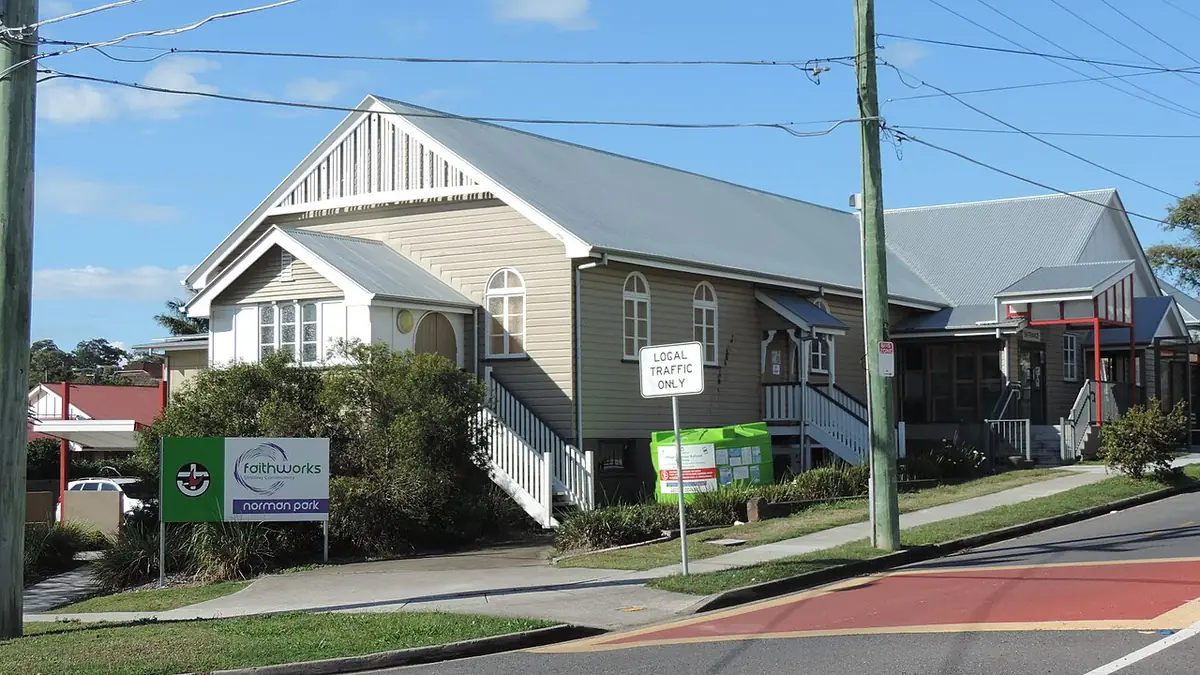
Timber buildings and quiet streets in Norman Park, Brisbane — Photo: Kerry Raymond · CC BY 4.0 · Wikimedia Commons
Knowing the theoretical budget is not enough; you need to understand how a typical day actually unfolds in this subtropical city.
Buying a property in Brisbane is not limited to the initial loan amount or the headline price on the listing portals. You need to factor in all local charges, insurance against climate risks and running costs to avoid any unpleasant financial surprise. This table sets out the unavoidable expenses every owner faces in Queensland's capital.
Monthly and annual cost items in Brisbane
Cost item
Estimated range in Australian dollars
Frequency
Effect on the overall budget
Average mortgage repayment
$2,500 to $4,500
Monthly
Depends heavily on your deposit and on the Reserve Bank of Australia's cash rate.
Local council rates
$400 to $700
Quarterly
Collected by Brisbane City Council to fund infrastructure and roads.
Strata fees
$800 to $2,000
Quarterly
Only apply to apartments and townhouses, and include upkeep of the common areas.
Comprehensive home insurance
$1,500 to $3,500
Annual
Premium varies according to the potential flood zone identified by the mapping services.
The amounts shown are averages observed across the Brisbane metropolitan market and may vary depending on exact location and size.
Additional costs linked to the initial purchase
Transaction cost
Indicative rate or amount
When due
Regulatory notes
Transfer duty
Varies according to Queensland's sliding scale
On signing
Calculated on the market value of the property, with specific concessions for first-home buyers.
Technical and legal inspection fees
$600 to $1,500
Before firm commitment
Essential for detecting termites and structural defects and for verifying title.
Bank application and broker fees
$0 to $1,000
When funds are released
Varies with the lender chosen and the complexity of the loan structure.
These purchase costs generally amount to between 4% and 6% of the total purchase price of the property in Queensland.
Health, schools and transport: what does an ordinary Tuesday look like in Brisbane?
Beyond this seemingly smooth routine, a close look at the details reveals aspects the brochures often ignore.
Daily life in Brisbane relies on a multimodal transport network combining buses, urban trains and the famous CityCat river ferries. For a family settled in the middle-ring residential suburbs, the week calls for careful travel planning to avoid rush-hour slowdowns on the bridges across the river. Here is how a typical Tuesday unfolds, to give you a sense of the local logistics.
07:15Residential neighbourhood of Paddington or AshgroveWaking up and getting ready while making the most of the relative cool of the subtropical dawn before temperatures rise.
08:00Local school or Brisbane State High SchoolDropping the children at school, often in the same residential area or reachable by dedicated school bus routes.
08:45Nearest train station or CityCat terminalCommute to the Brisbane CBD, made easy by the Translink contactless transport card.
12:30Central business district or South BankOutdoor lunch break along the city parks or in the lively pedestrian areas of the city centre.
17:30Local supermarket (Coles or Woolworths)Last-minute shopping for dinner on the way home, made easy by nearby neighbourhood shopping centres.
19:00Family homeA quiet evening in the garden or on the veranda, enjoying the evening breeze typical of Queensland's climate.
What Brisbane's glossy property listings will never tell you
These grey areas explain why some buyers voice bitter regrets only a few months after moving in.
Marketing photos always play up a property's bright light and lush tropical gardens, but they deliberately leave out the structural and environmental constraints specific to the region. Anticipating these hidden realities helps you avoid heavy financial setbacks after final settlement. Here are the critical points that agents generally do not mention of their own accord.
The aggressive presence of subterranean termites in Queensland
Brisbane's hot, humid climate is an ideal habitat for these wood-eating insects, which can destroy the timber frame of a house within a few months. A specialist inspection is absolutely essential before making any firm offer.
The risk of partial flooding linked to the Brisbane River
Some low-lying lots have been through memorable historic floods, notably in 2011. It is essential to consult the Council's official maps to check the exact flood history of the street you are considering.
Noise from flight paths and traffic
The expansion of Brisbane International Airport and the nearness of major motorways create noise that varies from one neighbourhood to another. Visiting the property at peak times is essential to judge how quiet it really is.
Poor thermal insulation in older houses
Many traditional houses on stilts (Queenslanders) lack modern wall insulation, making temperature control difficult without heavy use of air conditioning, which pushes electricity bills up considerably.
Strict planning restrictions (Character Housing)
If you buy an older house protected for its heritage character, Brisbane City Council prohibits any major exterior alteration or demolition. This makes future renovation or extension plans considerably more complicated.
The buying mistakes you only discover after six months of living in Brisbane
Given these risks of taking a wrong turn, it is worth deciding honestly whether this property market really suits your personal situation.
Looked likeA great opportunity in an up-and-coming, very affordable neighbourhood
Turned outAn outlying area poorly served by public transport, turning every daily journey into a real ordeal. Over the months, the geographical isolation ends up weighing heavily on social and family life.
Would have caught itTest the rush-hour journey yourself on a Monday morning before signing, and check the real frequency of local buses or trains.
Looked likeA beautiful, lush tropical garden that seemed to need little upkeep
Turned outAn invasive jungle growing at breakneck speed in the subtropical humidity, demanding a Herculean pruning effort every weekend. The cost of professional gardeners turns out to be very high.
Would have caught itAsk for a detailed assessment of the garden and judge honestly how much of your own time you can devote to regular clearing and weeding.
Looked likeA modern apartment with a stunning view of the city from its balcony
Turned outA full west-facing aspect that turns the living room into a furnace on summer afternoons, making constant air conditioning a necessity and a drain on your wallet.
Would have caught itCheck the exact orientation of the property and whether it has sun shades or high-performance glazing.
Looked likeA strata building with moderate, attractive starting levies
Turned outFacade restoration and lift compliance works voted through at an extraordinary general meeting, triggering massive special levies. The building's sinking fund was completely inadequate.
Would have caught itInsist on a specialist legal adviser carefully reviewing the minutes of the last three strata general meetings.
Who really should not buy property in Brisbane right now?
Once these warnings have been taken in and weighed up, it is time to make a final call on whether your plan makes sense.
Investing in property in Queensland's capital offers solid long-term security, but it is not at all suited to every life situation or time horizon. Buying too early or without a clear view of your career exposes you to outright losses if you have to sell in a hurry. Here are the buyer profiles for whom purchasing property in Brisbane is currently a major strategic mistake.
The expatriate worker on a short-term temporary visa
→Postpone buying and favour flexible renting
High transfer duty and resale times do not guarantee you will recoup the initial costs if your work posting lasts less than five years. The potential volatility of interest rates adds to this risk of loss.
The investor looking for a very high immediate rental yield
→Explore other regional markets or other asset classes
Gross yields in Brisbane are settling at moderate levels because of the recent rise in purchase prices, which calls for a very long-term wealth-building view rather than a search for immediate income.
The young couple without solid emergency savings
→Build up a financial safety cushion before committing
Maintaining a detached house or covering unexpected strata costs requires cash that is available immediately. Borrowing to the limit with no reserve exposes you to financial ruin at the first setback.
So, are you ready to take the plunge and buy property in Brisbane?
Deciding to buy property in Brisbane means balancing the appeal of a subtropical lifestyle with absolute financial discipline. Queensland's capital offers an exceptional setting, driven by real economic momentum and ambitious urban development plans ahead of the major sporting events to come. However, the market forgives neither improvisation nor ignorance of local particularities such as climate constraints and strict planning rules.
If your career is firmly anchored for several years and you accept the responsibilities that come with owning land, Brisbane's market offers remarkable opportunities to build long-term wealth. Take the time to visit your target neighbourhoods carefully at different times of day, check every technical inspection report and surround yourself with independent local professionals to confirm your purchase without rushing.
Your investment in this region is not just a financial transaction; it is the foundation of your everyday life for years to come. By avoiding the classic traps of polished listings and planning for the real costs of ownership, you will turn your move to Brisbane into a lasting, worry-free success for you and your loved ones.
Related questions
What is the average amount of transfer duty in Brisbane?
Transfer duty in Queensland is calculated on a sliding scale based on the purchase price of the property. For a standard owner-occupied home it generally comes to between 3% and 4.5% of the price, with partial or full concessions set aside specifically for first-home buyers.
Is a termite inspection compulsory before you buy?
Although the law does not formally require it in every case, it is strongly recommended to include a condition in the purchase contract making the sale subject to a termite and structural inspection. Brisbane's subtropical climate is very favourable to these wood-destroying pests.
How do strata fees work for an apartment in Brisbane?
Shared ownership charges, known as strata fees or body corporate fees, are paid quarterly by owners of apartments and townhouses. They fund the upkeep of shared areas, the building's collective insurance and contributions to the sinking fund for major future works.
Which neighbourhoods are most sought after for buying a house in Brisbane?
The most prized areas have traditionally been in the inner north and inner east, notably around New Farm, Paddington, Ascot and Hawthorne. These neighbourhoods offer remarkable historic character, leafy streets and immediate proximity to the city centre.
Can non-resident foreigners buy property in Brisbane?
Yes, but non-resident foreign investors must obtain prior approval from the FIRB (Foreign Investment Review Board) before signing a purchase contract. Additional duties also apply to purchases by non-residents in Queensland.
How long does it usually take to complete a property purchase in Brisbane?
The standard period between the exchange of contracts and final settlement generally ranges from 30 to 60 calendar days. That window allows solicitors and banks to complete title searches and release the funds.
How easy is it to get from the residential suburbs to the CBD?
The metropolitan transport network run by Translink combines fast suburban train lines, an extensive network of frequent buses and the CityCat river ferries. A contactless card or a smartphone is all you need to travel on every one of these modes.
What are the main climate risks to consider when buying?
The main climate risks in Brisbane are flooding along the river during heavy summer monsoon rains and exposure to violent hailstorms. Checking the official flood maps before you commit to a property is essential.
Do older Queenslander-style houses need a lot of maintenance?
Yes, traditional timber houses on stilts need regular upkeep, notably exterior painting, checks on the stumps and preventive termite treatment. Their unique architectural character does, however, come with a high cost of preservation.
Where can you see Brisbane's future urban development plans?
Brisbane City Council provides detailed mapping portals on its official website covering all zoning plans, transport infrastructure projects and upcoming development areas across the city.
Property review of ting
No ting properties in Brisbane yet
Be the first — share it on ting and it shows up right here.