Buying an apartment in Abu Dhabi is a major financial decision, combining economic appeal with specific regulatory requirements. This practical guide takes you through understanding the local market, identifying the right district and securing the purchase with full transparency.
Get the app
What nobody tells you.
Real prices, hidden costs and the traps to check before you commit.
Why the promise of investing in Abu Dhabi deserves close examination
Scroll
Why the promise of investing in Abu Dhabi deserves close examination
Buying an apartment in Abu Dhabi is a major financial decision, combining economic appeal with specific regulatory requirements. This practical guide takes you through understanding the local market, identifying the right district and securing the purchase with full transparency.
Written by the ting.ad editorial team ·
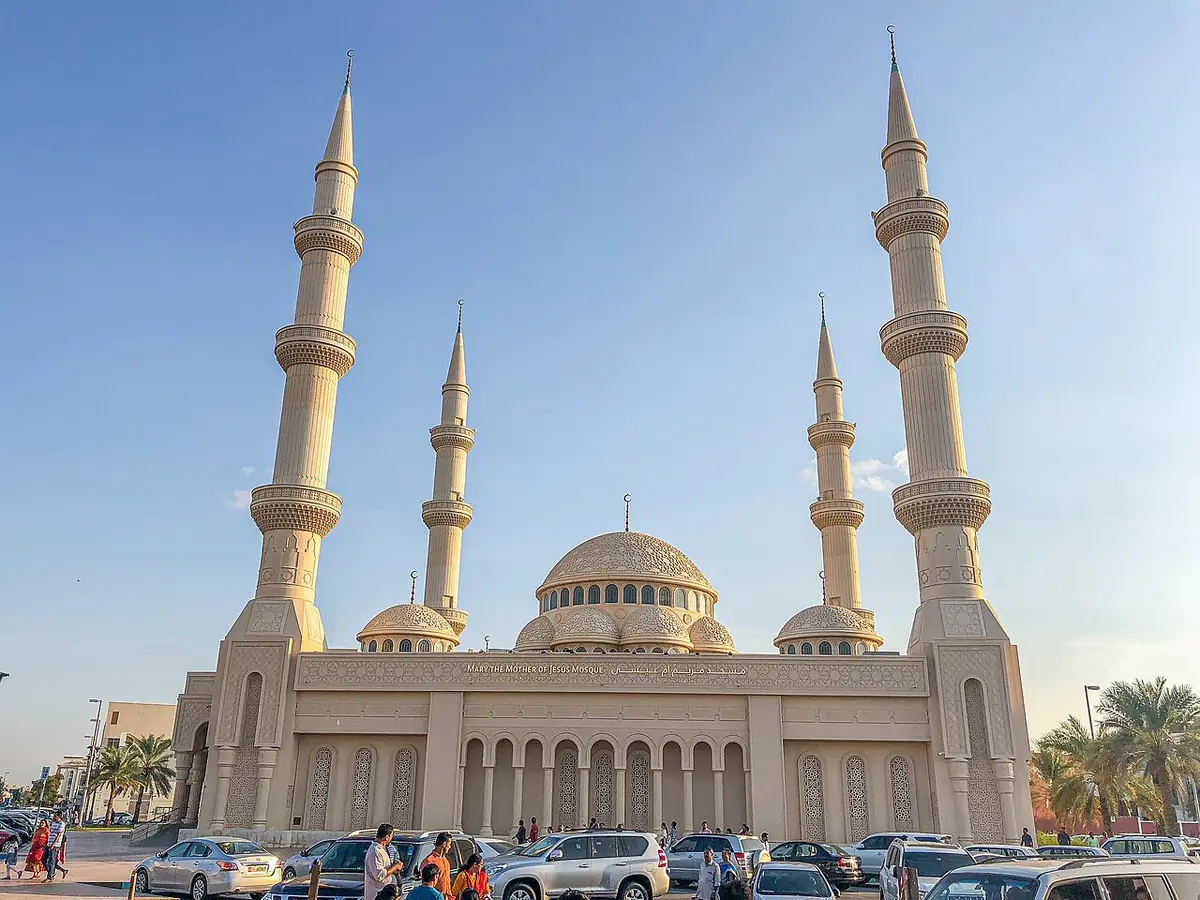
The minarets and courtyard of Mary, Mother of Jesus Mosque in Abu Dhabi — Photo: Clintonrebeiro · CC BY-SA 4.0 · Wikimedia Commons
Buying an apartment in Abu Dhabi is usually presented as an attractive proposition, with no direct tax on rental income. That first impression, relayed enthusiastically by developers, conceals a more nuanced economic reality in which the net return depends on specific structural factors. It pays to look beyond the advertised gross yields to understand how long-term value is actually composed in this market. The promise of quick gains gives way to demanding asset management, which requires a clear-eyed analysis of the charges and of how liquid these properties really are.
A particularly attractive local tax positionvsSignificant up-front transaction costs
No income tax and no capital gains tax appeals immediately to international investors. The registration duty levied by the Department of Municipalities and Transport is nonetheless a substantial initial cost that has to be recovered over several years of ownership.
An active, well-supported rental marketvsRapid turnover of expatriate tenants and leases
Demand for well-located apartments stays strong thanks to a constant inflow of qualified professionals. That mobile population also brings potential void periods, which belong in your annual financial forecast.
New developments with luxury finishesvsHigh maintenance and service costs
Modern buildings offer superior facilities that attract demanding tenants. The associated service charges can nonetheless weigh heavily on the net return if they are not anticipated at purchase.
What kind of buyer are you?
Every buyer approaches Abu Dhabi's market with their own objectives and constraints, whether this is a long-term relocation or a purely financial investment. The shape of your purchase has to match your personal situation, or disappointment follows once you have the keys. The city's districts answer radically different needs depending on whether you want urban energy or coastal calm.
Remote investor
Your aim is regular income rather than personal occupation. Favour studios and one-bedroom apartments in the business districts or close to universities and major economic hubs. These generally see high turnover and durable demand from younger professionals. Delegated management then becomes a key line to budget for, if you want to protect the net return.
Expatriate resident
You want a comfortable setting for yourself and your family in the heart of the capital. Your attention will naturally turn to larger properties with direct access to parks, international schools and healthcare. Proximity to your workplace and how easily the roads flow at peak hours will weigh heavily. Buying in this context anchors you locally and protects you against rising rents.
Seasonal resident
You want to enjoy Abu Dhabi's mild winter while keeping an independent base. Apartments with hotel services, or in secure coastal complexes, suit this pattern particularly well. You get comfort and a property that is easy to close up and maintain in your absence. Examine the management fees and any restrictions on short-term letting carefully.
Arriving from abroad: the administrative and practical assumptions that change
Buying an apartment in Abu Dhabi bears little resemblance to buying at home, because the procedures and conventions differ so much. Legal guarantees, the role of intermediaries and the pace of transactions follow specific local regulation worth learning quickly. Where many European systems protect the buyer with strict cooling-off periods and tightly regulated technical surveys, the Abu Dhabi market relies on speed of execution and clarity of title.
From abroad
A statutory cooling-off period after signing the preliminary contract
Abu Dhabi
A memorandum of understanding that binds almost immediately, with no cooling-off period
You must have verified every financial and technical aspect before signing anything, because withdrawing unilaterally means losing the deposit.
From abroad
A notary systematically authenticating the sale
Abu Dhabi
Contracts registered directly with government land services and developers
Transfer is often faster than in Europe, but it demands absolute rigour in verifying the chain of title and that the agencies are licensed.
From abroad
Exhaustive compulsory technical surveys
Abu Dhabi
Condition checks usually delegated to independent experts the buyer appoints
Because local standards differ, you need to commission a specialist firm yourself to inspect the plumbing, the air-conditioning and the structure.
From abroad
Rent increases tightly governed by official national indices
Abu Dhabi
Rent regulation that varies by zone and with supply and demand
The rental return on your apartment can move faster than you are used to, following local economic cycles and new supply arriving on the market.
Which district fits your plans and your daily journeys?
Abu Dhabi's geography is shaped by islands and coastal extensions, each with its own identity and property dynamics. Where to buy depends as much on proximity to work as on whether you want an urban or an island setting. With public transport thinner than in Europe, where you live dictates directly how easily you move around.
Al Reem Island
A lively island-urban atmosphere, with plenty of shops, coastal parks and modern residential towers.
Suits
Younger professionals and families wanting recent apartments with excellent sports facilities and quick access to the business district.
Trade-off
Congestion at peak hours on the bridges to the mainland, which means planning your journeys.
Al Maryah Island
An ultra-modern, prestigious business district of international-standard towers, luxury hotels and high-end malls.
Suits
Senior executives and investors targeting an affluent tenant base looking for a genuinely exclusive address.
Trade-off
A smaller pool of available apartments and prices per square metre among the highest in the emirate.
Corniche and downtown
The character of the older city alongside the waterfront, with immediate access to public beaches and traditional shops.
Suits
Those who value walking, being beside the sea and a city life rooted in the capital's history.
Trade-off
Often older buildings, sometimes needing significant renovation, and recurring parking difficulties.
Saadiyat Island
An exceptional cultural and coastal setting, where luxury homes sit beside world-renowned museums and protected sand beaches.
Suits
Those drawn to art, nature and quiet, wanting an exclusive setting oriented towards wellbeing.
Trade-off
A particularly high purchase budget and a greater distance from the administrative and commercial centre.
What budget should you plan for, by district?
Estimating the budget for an apartment in Abu Dhabi is not limited to the headline price shown by developers or agencies. You must include every incidental cost, from government registration duty to the fees of each professional in the transaction. Price ranges vary considerably with the age of the building, the quality of the shared facilities and above all the location.
abu-dhabiFor saleApartmentestimate
Median price / m²AED 12,350Half the apartments sell below this
Median priceAED 1.55mthe average is 14% higher — a few very large properties pull it up
Most common2 bedrooms38 % of listings
Average size120 m²
By number of bedrooms
Bedrooms
Share of market
Avg price
Price / m²
Avg size
1
30 %
AED 1.07m
AED 14,300 +10 %
75 m²
2most common
38 %
AED 1.43m
AED 13,000
110 m²
3
22 %
AED 1.98m
AED 12,350best value / m²
160 m²
4
10 %
AED 2.86m
AED 13,000
220 m²
Each row is an average, compared against the area average of AED 13,000 / m². These are indicative estimates of a typical local market, not a measured sample of live listings. Check current listings before relying on them.
What kind of ownership are you actually buying?
The legal status of the property is fundamental for any foreign investor intending to settle here. Contrary to a common assumption, non-nationals can acquire solid ownership rights, but those follow strict geographic and contractual limits. Understanding the difference between the permitted zones and the forms of tenure gives you incontestable long-term security.
Freehold
This allows foreign nationals to acquire full ownership of the property and of the land it stands on, within zones specifically designated by the government. You hold a perpetual title registrable with the official land authorities, giving complete freedom to sell, let or pass the property to your heirs regardless of nationality.
What it changesYou get legal security equivalent to the strictest Western standards, provided you invest exclusively within the designated investment zones.
Musataha or usufruct
In certain areas or for specific projects, the purchase can take the form of a usufruct right or a long lease, frequently set between 30 and 99 renewable years. The right gives full enjoyment of the property and the ability to make structural changes, but ownership of the underlying land stays with a third party or a public body.
What it changesCheck the remaining term and the renewal conditions before signing, since both bear directly on what your apartment will be worth as the expiry approaches.
The key steps to securing the purchase without a misstep
Completing a purchase in Abu Dhabi follows a methodical sequence in which each stage commits the buyer legally and financially. From the initial choice through to final registration of title with the Department of Municipalities and Transport, the process demands attention throughout. Anticipating the technical checks and preparing the proof of funds the regulations require makes everything run considerably more smoothly.
Choosing the property and preparing to commit.
Targeted viewings and checks on the general condition of the building, the air-conditioning and the shared facilities.
Drafting and signing the Memorandum of Understanding between buyer and seller, with a secured deposit held in escrow.
Obtaining the No Objection Certificate from the master developer, confirming no service charges are outstanding on the property.
Releasing the funds and signing the final transfer at the official counters or approved digital platforms.
Registration of the title in your name.
Who is involved, and what each professional actually does
A successful purchase in Abu Dhabi means surrounding yourself with qualified people recognised by the local regulators. Between licensed agents, technical inspectors and legal advisers, each has a precise role in securing a different part of the transaction. Knowing what each is responsible for keeps you clear of unofficial intermediaries.
The licensed estate agentIntroduction and negotiationThey must hold a professional licence issued by the local regulator. Their role is to present properties matching your criteria, negotiate the terms of sale and draft the initial memorandum in line with current law.
The independent inspectorTechnical auditAppointed by you, they examine the structure, the state of the air-conditioning, the plumbing and the waterproofing. Their written report gives an objective view of the property's real condition before you commit.
Your bankCompliance and transfer of fundsThey apply the strict anti-money-laundering and know-your-customer procedures, arrange the international transfers needed to pay the price, and ensure the funds are fully traceable.
The developer's representativeIssuing the No Objection CertificateThey confirm the current owner is up to date on all service charges. That document is essential before the land services will register the transfer of title.
The land services officerOfficial registrationA sworn official of the Department of Municipalities and Transport validates and authenticates the final transfer. Their seal is what gives your purchase full legal effect under Emirati law.
Apartment or villa in Abu Dhabi: which choice fits your situation?
The choice between an apartment high in a tower and a spacious villa on the outskirts or the residential islands is not a matter of taste. It bears directly on your daily life, on your service charges over the long term and on how liquid the investment proves. On one side, the modern towers of the Corniche, Reem Island and Maryah Island concentrate a dense urban offer, with integrated services, rooftop pools, gyms and immediate proximity to the business districts. That suits working professionals, couples without children and investors seeking to maximise gross rental yield from constant demand among younger expatriates.
Choosing a villa or townhouse in a planned community such as Al Reef, Saadiyat Reserve or Khalifa City changes the equation entirely. You trade the panoramic view over the Gulf or the mangroves for a private garden, considerably more floor area and the quiet families with school-age children look for. That type of property does demand a heavier purchase budget, real maintenance costs and greater dependence on a car to reach the centre at peak hours. The shared infrastructure in these districts also requires rigorous management by owners' associations, whose annual contributions vary noticeably between communities.
Financially, an apartment generally offers a more accessible entry point and pooled charges that simplify management from a distance. Fluctuations in rental demand are cushioned by the variety of people looking for an urban base. A villa functions more as a long-term store of value, where scarcity of land on the more sought-after islands supports capital preservation through economic cycles. Your decision has to weigh the immediate comfort of private space against the operational flexibility and better liquidity of a well-located apartment.
It is also worth examining the ownership regimes applying to different parts of the emirate. While some plots remain reserved for Emirati citizens, the designated investment zones permit freehold purchase by foreign nationals. Apartments in those zones carry the same legal guarantees as villas, though the clarity of land title on individual houses sometimes gives international buyers a stronger sense of security when they are thinking in terms of generations.
What budget do you really need to buy and live here?
A rigorous financing plan for Abu Dhabi cannot stop at the headline price on the sale document. It has to take in local administrative fees, regulated transaction costs, annual community contributions and the structural costs of daily living. The tables below set out the orders of magnitude currently seen in the market so you can plan each line without surprises.
Acquisition costs and recurring charges for an apartment
Cost
Estimated range (AED)
How it is calculated, and when
Land registration fee (DMT)
2% of the purchase price
Paid once, on transfer of ownership at the Department of Municipalities and Transport
Estate agency fee
2% of the purchase price
Standard commission paid to the licensed agent on signature of the final agreement
Service charges
AED 12 to 25 per square foot per year
Paid annually or quarterly for upkeep of common areas, lifts and pools
Home insurance
AED 1,500 to 4,000 per year
Annual premium covering material damage, theft and the owner's liability
Amounts exclude any applicable taxes and vary with the standard of the development and the complexity of the services provided.
Indicative living costs for a resident household
Category
Average monthly amount (AED)
What it covers, and seasonal variation
Electricity, water and cooling (ADDC)
AED 600 to 1,800
Heavily dependent on air-conditioning use through the summer months
Broadband and telephone
AED 350 to 700
A residential fibre package with TV options and household mobile plans
Food and essentials
AED 2,500 to 5,000
Weekly supermarket shopping for a household of two to four, by habit
Transport (fuel and vehicle upkeep)
AED 800 to 2,000
Fuel, any tolls and periodic servicing for daily car use
These estimates reflect averages observed for households living permanently in the emirate.
Health, schools, transport: an ordinary Tuesday in Abu Dhabi
The daily rhythm in Abu Dhabi is built around modern infrastructure, a road network that flows well off-peak but congests at specific points, and a city organised for resident comfort. From the morning school run to professional appointments and healthcare, each stage reflects the emirate's standards of efficiency.
07:00Leaving home for the school runFamilies set off to drop children at one of the international schools on Reem Island or in Khalifa City, using the still-clear early traffic before the eight o'clock peak.
08:30Arriving in the business district (Al Maryah Island / Corniche)Settling into an office in a LEED-certified tower with secure underground parking, which means starting work without losing time to parking.
12:30Lunch and local servicesLunch in one of the malls or the dining areas built into the residential and commercial complexes, which also puts banking and administrative services within reach.
16:00After-school activities and health appointmentsVisits to JCI-accredited medical centres for routine consultations, or taking children to sports and academic clubs.
19:00Home, and the eveningThe journey back on the interconnected main roads, followed by time beside the building's pool or a walk along the illuminated Corniche.
What the listing will never tell you
Listings published online invariably show properties from their best angle, leaving out structural details that matter greatly to an owner's peace of mind. Between noise varying with which way the façade faces, the real state of the central cooling and the complexity of internal building rules, several areas deserve clarifying before any deposit is paid.
Orientation and its direct effect on the cooling bill
A west-facing apartment takes intense solar gain through the afternoon, which works the air-conditioning compressors hard and pushes up your monthly ADDC bills considerably. Checking the glazing and when the equipment was installed is essential if you want to avoid a permanent extra cost.
Strict rules on internal alterations
Buying in a building run by a major developer does not mean you are free to remove a wall or change the layout. Many owners' associations require prior approval, deposits and strict limits on working hours.
How the common areas are really maintained
A pool that gleams in the marketing photographs may suffer recurring failures if the facility management company lacks rigour. Asking for the minutes of the last general meetings is the only reliable way to judge the building's financial and operational health.
Visitor parking nearby
Your apartment may have an allocated space underground, but a shortage of parking for guests or contractors in the adjacent streets quickly turns every visit into a daily frustration.
What buyers discover six months after signing
Looked likeAn uninterrupted waterfront view from the living-room balcony at a spring viewing
Turned outA new tower under construction opposite, permanently blocking the sea view and cutting the natural light.
Would have caught itAsk the municipality or the local planning office for the area's master plan and the status of the surrounding plots before committing.
Looked likeA calm residential district with quick, direct access to the main roads into the centre
Turned outIntense early-morning noise from adjacent development work, and long queues at the slip roads at peak hours.
Would have caught itVisit the area at different times of day and week, particularly at the school run and at the end of the working day.
Looked likeModerate service charges, as quoted by the agent at first contact
Turned outA sharp revaluation voted at a general meeting to fund compulsory façade works and to bring the lifts up to standard.
Would have caught itReview the full history of levies and charges paid by previous owners over the last three consecutive years.
Looked likeAn 8% gross rental yield promised in the brochure
Turned outHigh tenant turnover, extended void periods and repeated reinstatement costs that ate into the real net return.
Would have caught itAssess the genuine rental pressure in that micro-district and use prudent assumptions, including a month of vacancy each year.
Who should not be buying property in Abu Dhabi right now
Property investment in Abu Dhabi is a significant commitment of capital that calls for stability, a long-term view and a firm grip on your own finances. Not everyone benefits from owning here. For some, renting offers essential flexibility and avoids needless exposure to market risk.
An expatriate professional on a temporary assignment of under three years
→To stay a mobile tenant with no local asset.
The initial costs — 2% registration duty, agency commission and bank arrangement fees — cannot be recovered over so short a period, exposing the buyer to a net loss on a rushed resale.
An investor without an adequate cash reserve
→To borrow to the limit of their capacity to seize what looks like a unique opportunity.
With no cash cushion for an unexpected void period or major structural repairs to the cooling or plumbing, the owner is immediately exposed to default.
A household in professional transition, unsure where they will be based
→To buy a family property fixed in one specific district.
A change of school or a move to another part of Abu Dhabi, or another emirate, quickly turns the property into a geographic constraint that is difficult to sell quickly on good terms.
So are you ready to buy in Abu Dhabi?
Reaching the end of this analysis shows that buying an apartment or a villa in Abu Dhabi is neither an impulse guided by a brochure nor a speculative bet. It is a considered act requiring a proper fit between how long you expect to be here, your financial strength and your capacity to take on the operational realities of owning property in the emirate. If your plans are genuinely rooted in the region and you have accounted for the hidden charges, the market offers remarkable prospects.
Take the time to validate each point: view at unusual hours, work through the minutes of the owners' meetings, check the state of the cooling equipment, and make sure your own capital carries a comfortable margin. Haste is the worst adviser in property. A good purchase here is built on method, rigorous verification of title and complete clarity about what you want from your personal and working life.
Becoming an owner in this fast-growing capital is a powerful way to build stability and an asset, provided you approach each stage clearly. If your situation meets the stability required and you accept the constraints of life in a managed building or community, you now have what you need to decide for yourself, knowing exactly what you are taking on.
Related questions
What registration and transfer fees apply when buying in Abu Dhabi?
Land registration is generally 2% of the total purchase price, paid directly to the Department of Municipalities and Transport. Add the agency fee, most often 2% as well, plus any arrangement fees charged by a lending bank.
Can foreign nationals buy freehold property in Abu Dhabi?
Yes, but only within investment zones specifically delimited and approved by the emirate's government, such as Reem Island, Saadiyat Island, Yas Island and Maryah Island.
How are service charges calculated?
They are based on the total area of the property in square feet, multiplied by a unit rate set by the manager and approved by the regulator. The amount covers upkeep of common areas, security, cooling of shared spaces and building administration.
Can a non-resident get a mortgage in Abu Dhabi?
Some local and international banks based in the UAE offer mortgages to non-residents. Conditions generally require a larger deposit, frequently between 25% and 50% of the property's value, and a thoroughly audited credit file.
Which documents must I check before signing a reservation contract?
Insist on the original Title Deed, the No Objection Certificate from the developer or owners' association confirming no outstanding charges, the official cadastral plans and the building's internal regulations.
How much does air-conditioning affect electricity bills?
Cooling is the dominant part of a household's electricity use, particularly through the summer when outside temperatures are very high. Poor insulation or an unfavourable orientation can double the monthly ADDC bill.
What are the main differences between buying an apartment and a villa?
An apartment offers a more accessible entry price, pooled services and simpler management through the building. A villa gives more floor area, a private garden and greater independence, but brings direct maintenance costs and markedly higher acquisition costs.
How do I check a developer's reputation?
Look at their record of past completions, their official registration with the Department of Municipalities and Transport, and their use of the compulsory regulated escrow accounts for off-plan projects.
Which districts are most sought after for a rental investment?
The most active are Al Reem Island for its proximity to the business centre, Al Maryah Island for its premium positioning, and Yas Island and Saadiyat Island for their residential, cultural and international appeal.
Should I allow for void periods in a yield calculation?
Yes. Any prudent investor should build in an estimated one to two months of vacancy a year, plus re-letting commission, to account for natural tenant turnover in this market.