Buying a detached house or villa in Abu Dhabi is a major financial decision that calls for method, legal clarity and a close understanding of local particularities. This guide sets out the essential mechanics of the capital's property market, from choosing a residential district through to official registration of your ownership.
Get the app
What nobody tells you.
Real prices, hidden costs and the traps to check before you commit.
What buying a house in Abu Dhabi really changes for you
Scroll
What buying a house in Abu Dhabi really changes for you
Buying a detached house or villa in Abu Dhabi is a major financial decision that calls for method, legal clarity and a close understanding of local particularities. This guide sets out the essential mechanics of the capital's property market, from choosing a residential district through to official registration of your ownership.
Written by the ting.ad editorial team ·
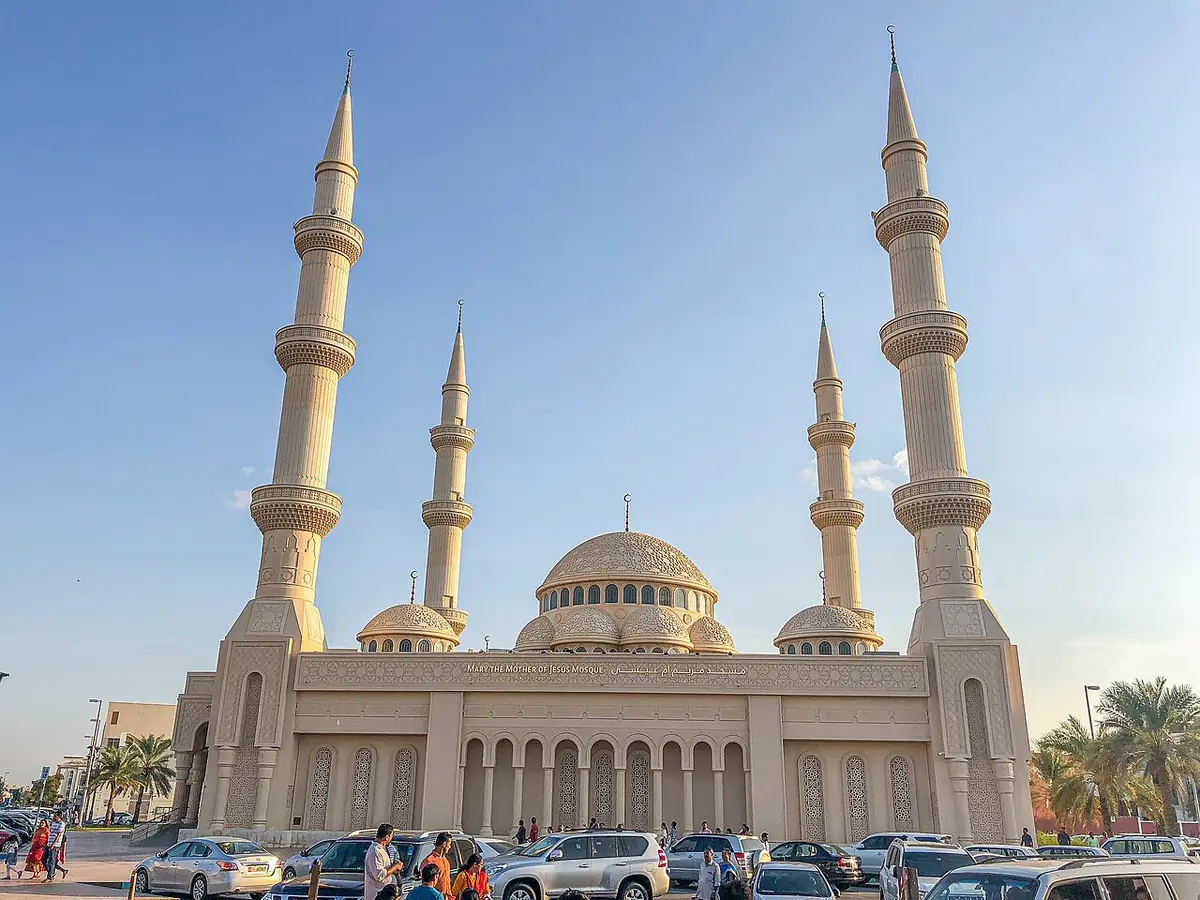
The minarets and courtyard of Mary, Mother of Jesus Mosque in Abu Dhabi — Photo: Clintonrebeiro · CC BY-SA 4.0 · Wikimedia Commons
Buying a residential property in the UAE capital changes your relationship with where you live at a deep level. Dubai's restless energy is often set against Abu Dhabi's institutional calm, but that simple contrast hides something more subtle. Here, property belongs to a logic of long-term stability and of putting down roots in an island city that keeps expanding. Understanding what you are really buying, beyond the square metres and the interior finishes, is the first necessary step to avoid disappointment once the deed is signed.
A promise of immediate, high rental returnsvsA long-term asset in an area still changing shape
The gross yields quoted on paper hide management costs and seasonal variation that should not be ignored. Buying here is more about building a durable asset, and gaining long-stay entitlements, than short-term speculative return.
The impression of a purely coastal, relaxed way of lifevsA daily routine shaped by main roads and administrative centrality
The emirate has an extensive coastline and spectacular natural islands, but Abu Dhabi's urban form favours wide gridded boulevards. Your day runs between planned residential areas and air-conditioned business clusters.
Complete freedom to alter and extendvsStrict regulation of external changes and community rules
Owning a villa in a gated community means respecting rigorous landscaping and architectural charters. You cannot do as you please with the façade or the immediate surroundings, which guarantees visual consistency but limits personal expression.
Which kind of resident does buying a house here actually suit?
Property does not behave the same way depending on whether you are arriving with school-age children, coming alone to start a business, or simply diversifying an international portfolio. Requirements on floor area, proximity to schools and healthcare, and contractual flexibility differ radically between those profiles. Looking honestly at where you are now tells you quickly whether buying a villa or a townhouse beats a long-term tenancy.
A family looking for stability
For households with children, buying in an established residential area such as Khalifa City or Al Raha Gardens offers a secure and durable setting. You avoid the repeated moves that rent increases force, and guarantee stable access to the major schools. The main challenge is managing peak-hour journeys into the island centre. In exchange you get private outdoor space that simply does not exist in central apartments.
The distant asset investor
If you are managing from abroad with no short-term intention of living here, a detached house demands more logistical attention than an apartment in a tower. Maintaining the garden, the pool and the fabric of the building means appointing a rigorous management company. Net returns can run slightly below those of well-located studios or small apartments, but resale benefits from steady demand among affluent local and expatriate families.
Rooted for the long term
For an executive or founder whose presence is assured beyond five years, buying converts a sunk cost into an asset. You get full visibility on your monthly outgoings, aside from community charges. Do fold the initial transaction costs, and the eventual costs of selling, into the calculation: a rushed resale within three or four years would wipe out the advantage over renting.
Which assumptions do you have to leave behind when you arrive from abroad?
Buying property abroad inevitably brings a collision of methods and timescales. Between the long-established notarial guarantees of many European systems and the contractual fluidity of the Emirates, familiar reference points disappear quickly unless you take the measure of the differences. Taxation, the role of intermediaries and the very nature of land ownership follow distinct legal logics worth absorbing before committing capital.
From abroad
Strong tenant protection and long eviction timescales
Abu Dhabi
A liberal contractual framework where the negotiated lease terms apply strictly
Letting is more direct and predictable, but it demands real care in drafting the clauses initially, to avoid disputes at the end of the term.
From abroad
A notary acting as the public officer guaranteeing legality
Abu Dhabi
Centralised registration of ownership through official land departments
Transfer runs through direct, digitised administrative procedures, which shortens processing but calls for specialist legal support to secure the funds.
From abroad
Dense, walkable historic city centres
Abu Dhabi
Urban design built around the car, in large blocks and urban motorways
Your choice of house has to account for distance from the main routes, because the absence of heavy public transport changes how distance actually feels.
From abroad
Recurring local property taxes and progressive income tax
Abu Dhabi
No income tax and no conventional property tax
Your net disposable income is structurally stronger, which makes the initial acquisition cost and the community service fees easier to absorb.
How to navigate Abu Dhabi's residential districts
The market for houses and villas in Abu Dhabi is not one homogeneous block. Each area has its own identity, its distance from the central business district and its level of community service. Between the developing coastal islands and the more established mainland areas, the trade-offs between price, accessibility and quality of life vary completely.
Yas Island
Constant activity, oriented towards leisure, theme parks and major retail.
Suits
Buyers wanting an active lifestyle centred on entertainment, with excellent access towards Dubai.
Trade-off
Prices per square metre among the highest in the emirate, and recurring visitor activity at weekends and school holidays.
Saadiyat Island
An exclusive cultural atmosphere, with superb natural beaches and museums of international standing.
Suits
Those who value architectural prestige, immediate proximity to the sea and a refined, high-end setting.
Trade-off
A restricted supply of available property and a particularly high financial threshold for individual houses.
Khalifa City
A large mainland residential district, family-oriented, with all the local shops and well-regarded schools.
Suits
Families wanting substantial built area, a calm environment and an excellent ratio of space to price.
Trade-off
A pronounced distance from the historic waterfront and longer daily journeys into the financial centre on Abu Dhabi island.
Al Raha Gardens
A mature gated community, green, with architecture drawing on modernised Arabic tradition.
Suits
Buyers who want a secure village feel, well-kept shared spaces and a close-knit expatriate community.
Trade-off
Mostly older properties, sometimes needing interior renovation to meet contemporary expectations.
What do prices and budgets for a house in Abu Dhabi actually look like?
Approaching the budget means separating the headline value of the property from the costs that registration and upkeep bring. Prices for individual houses vary considerably with whether the location is on an island or the mainland, the size of the plot and the age of the community. Rather than relying on misleading averages, looking at the ranges observed in the main segments lets you plan your financing realistically.
abu-dhabiFor saleHouseestimate
Median price / m²AED 10,127Half the apartments sell below this
Median priceAED 2.24mthe average is 14% higher — a few very large properties pull it up
Most common2 bedrooms54 % of listings
Average size210 m²
By number of bedrooms
Bedrooms
Share of market
Avg price
Price / m²
Avg size
2most common
54 %
AED 2.05m
AED 10,660
193 m²
3
31 %
AED 2.84m
AED 10,127best value / m²
280 m²
4
14 %
AED 4.1m
AED 10,660
385 m²
Each row is an average, compared against the area average of AED 10,660 / m². These are indicative estimates of a typical local market, not a measured sample of live listings. Check current listings before relying on them.
What ownership rights can you actually hold here?
Freehold ownership for foreign nationals is one of the most frequent questions in any property project in the Emirates. Contrary to a common assumption, the current legislative framework offers solid guarantees provided you target the designated areas. Distinguishing the applicable regimes protects you from the frequent confusion between a long-term right of use and definitive acquisition of land and building.
Freehold
Permitted in areas specifically delimited by the Abu Dhabi government — Yas Island, Saadiyat Island and parts of Reem Island among them — this regime allows foreign nationals to acquire full ownership of the property and the associated land with no time limit. You hold an official land title issued by the competent municipal department, guaranteeing your right to pass on, sell or let the property freely.
What it changesYou get complete legal security comparable to Western standards, which opens the way to substantial and durable investment.
Leasehold
This grants an exclusive right of use and enjoyment for a long period, generally between 30 and 99 years. It remains common in certain older or specific developments, but it does not confer perpetual ownership of the underlying land. Transactions are possible during the term, but the residual value of the title falls as the expiry approaches.
What it changesEstablish precisely how many years remain before signing, or your asset will lose value quickly over the medium term.
The critical steps before paying any deposit
Buying property in Abu Dhabi follows a precise chronology, formalised through standard contracts and validated by the competent authorities. Committing without checking each milestone exposes a buyer to financial complications or the loss of the deposit. From the initial memorandum to the final transfer of title, each party has a defined role that has to be followed to the letter.
Agreeing terms with the seller.
Drafting and signing a preliminary memorandum — often called Form F or its local equivalent — setting the agreed price and the conditions.
Paying a deposit, generally 10 per cent of the total, into escrow with a licensed agent or an authorised law firm.
Obtaining the No Objection Certificate from the developer or community administrator, confirming no service charges are outstanding.
Transferring the balance and registering the transaction officially with the municipality's land department.
An official title issued in your name.
Who is involved at each stage
A successful transaction in Abu Dhabi rests on transparent coordination between regulated professionals. Unlike informal markets, the local ecosystem requires strict accreditation for brokers and agencies. Knowing exactly what each does keeps you clear of unmandated intermediaries.
You, the buyerSetting the budget and the criteriaYou fix your requirements on location and size, and prepare the evidence of source of funds that banks and regulators require.
The accredited estate agentTargeted search and negotiationHolding an official licence issued by the economic development department, they select compliant properties and arrange viewings.
The developer or community managerIssuing the No Objection CertificateThey confirm the property carries no community charge debt and formally authorise the change of ownership in the community's records.
The legal adviserAuditing the contractThey review every term of the sale memorandum to ensure no one-sided or ambiguous clause penalises the buyer if there is a delay.
The municipal land departmentFinal registration and issue of titleThe public authority validates the definitive legal transfer, collects the registration duty and issues the tamper-proof title in your name.
Why choose a detached house in Abu Dhabi's residential districts?
Choosing a detached house in Abu Dhabi, whether a waterfront villa on Saadiyat Island or a spacious property in the gated complexes of Khalifa City, answers an absolute demand for space, privacy and independence. Unlike the towers of the Corniche or Reem Island, where vertical living imposes strict building rules and close neighbours, a villa offers private land, multiple parking spaces and complete freedom over the outdoor layout. It appeals first to families with children who want to combine the security of an enclosed residential district with generous living space, frequently more than three or four hundred square metres.
That single-family life carries a direct cost in daily management and upkeep. Owning a house in Abu Dhabi means taking on the pool, the central air-conditioning under severe strain in summer, and irrigation and maintenance of the private grounds. Where a building manager handles common areas and external security in an apartment, a villa owner has to direct their own contractors — which requires organisation and a recurring budget if the building is not to deteriorate quickly.
Financially, buying a house is a markedly higher entry point than an equivalent apartment. Properties on the main islands such as Yas or Saadiyat carry high valuations, given the scarcity of land and strong international demand. Moving out to the mainland buys considerably more space for comparable money, at the cost of a longer daily journey to the business districts, the ministries and the economic zones.
The choice between apartment and house here comes down to urban centrality against residential calm. If you value walking, being close to good cafés and simpler maintenance, living high makes sense. If you want a private garden, open living space with nobody above you and complete autonomy, a house is the only option that satisfies those requirements over the long term.
What total budget should you plan for buying and running a house?
Buying a house in Abu Dhabi is not limited to the headline price from the developer or the seller on the secondary market. You must build in the compulsory administrative fees required by the Department of Municipalities and Transport, the intermediary agency fees, and the structural costs of maintaining a property in a desert climate. Rigorous planning avoids unwelcome surprises at signature.
Acquisition costs and initial fees
Cost
Rate or estimated amount
Terms and timing
Registration fee (DMT)
2% of the purchase price
Payable on the day of transfer, and often shared 50/50 between buyer and seller by convention.
Estate agency fee
1% to 2% of the purchase price
VAT of 5% applies to the commission, due on signature of the agreement or the deed.
Arrangement and valuation fees
AED 3,000 to 7,000
Fixed amounts required by the bank where a mortgage is used, and by the emirate for the valuation.
Compulsory home insurance
0.2% to 0.5% of value per year
Covers fire, water damage and liability, and is required by any lender.
These incidental costs average 3 to 5 per cent of the total price and must be funded from your own capital, since local banks rarely lend against transaction fees.
Annual maintenance budget for a villa
Item
Recommended frequency
Estimated annual budget (AED)
Air-conditioning (HVAC) maintenance contract
3 to 4 preventive visits a year
AED 5,000 to 10,000, depending on the size of the villa and the number of units.
Pool and garden maintenance
Weekly
AED 6,000 to 12,000 for work contracted out to professionals.
Community charges (HOA / service charges)
Quarterly or annual
AED 3,000 to 15,000, depending on the standard of the gated community.
Water and electricity (ADDC)
Monthly
AED 15,000 to 35,000 a year, driven by intensive cooling and irrigation.
The cost of running a villa in Abu Dhabi correlates directly with how well energy consumption is controlled, particularly through the summer when the air-conditioning runs continuously.
An ordinary Tuesday living in a house in Abu Dhabi
Settling into a detached house in Abu Dhabi transforms daily organisation compared with life in a dense European city. The rhythm is set by the climate, by modern road infrastructure and by school and working hours specific to the emirate. To judge what your investment really means, it helps to picture a weekday for an established resident.
06:30Waking and breakfast in a bright kitchenThe day begins in a villa full of natural light, in the quiet of the district before the heat builds. Night-time cooling has held an ideal temperature, and a kitchen open to the garden makes preparing to leave easy.
07:30The school run to the international campusesLeaving by car from the private garage. Children are dropped within minutes at one of the many high-quality international schools on Saadiyat Island, in Khalifa City or in Mohammed Bin Zayed City.
08:30Arriving at the office in the business districtThe journey to the centre, Al Maryah Island or ADGM runs on wide, free-flowing roads. Unlike congested Western capitals, traffic stays predictable if you anticipate the peak, which means arriving unhurried.
13:00Lunch and local shoppingThe midday break is a chance to use the modern malls or air-conditioned cafés near the residential areas. Supply of fresh produce from around the world is remarkably straightforward in every part of the emirate.
17:30Sport and time outdoorsBack home in the late afternoon, the temperature starts to fall. Children use the garden or the private pool, while adults can run in the community's landscaped parks or use the local clubhouse.
20:00Family dinner and preparing for tomorrowThe evening passes quietly in generous living space, with no noise from neighbours. No one directly overlooking you and good sound insulation in recent construction make for proper rest.
What the brochures leave out
The Abu Dhabi market is regulated and transparent, but developers' marketing naturally leads with the idyllic and stays quiet about the practical and regulatory constraints. Understanding the less visible aspects is essential to avoid disappointment after purchase and to anticipate the obligations that apply specifically to foreign owners.
The strict distinction between investment zones and restricted areas
As a foreign buyer you can only acquire freehold within areas precisely delimited by the government — Saadiyat Island, Yas Island, Reem Island and Al Raha Beach among them. Buying outside those boundaries leaves you with long leases whose renewal and resale conditions follow specific local rules you need to understand.
Thermal insulation and its direct effect on energy bills
Not every villa performs equally. Older construction can have poor insulation at the glazing and the roof, which drives chronic over-consumption to hold a comfortable interior temperature through summer months when the outside temperature regularly passes 40 degrees.
Strict owners' association rules in gated communities
If your villa sits inside a community run by a major developer, you will be subject to rigorous rules on external appearance. Changing the façade colour, installing a satellite dish visible from the street or undertaking an extension all require formal technical approval first.
Movement in rental supply and resale over the medium term
The emirate follows economic cycles tied to the energy sector and to international investor appetite. Selling a villa quickly in a downturn can prove difficult if the property is unusual or sits in an outlying area poorly served by new infrastructure.
The need for annual preventive maintenance contracts
Desert dust, coastal humidity and intense heat accelerate wear on technical equipment. Neglecting annual servicing of the air-conditioning ducts and plumbing leads inevitably to major, expensive failures in August — exactly when qualified technicians are most in demand.
The mistakes buyers only discover six months in
Looked likeA villa ideally placed in a quiet, developing area with strong prospects for appreciation.
Turned outA district under permanent construction for years, with early-morning noise, constant dust on the cars and unpredictable road diversions.
Would have caught itAsk the developer or the municipality for the overall planning framework and the real status of the undeveloped plots nearby before signing.
Looked likeA large bright house with superb full-height glazing and an open outlook.
Turned outSerious overheating from mid-spring, turning the living room into a greenhouse and driving the monthly cooling bill up sharply.
Would have caught itCheck for high-performance double glazing, solar film on the windows and an orientation that shields the living space from direct afternoon sun.
Looked likeA very attractive price for a spacious villa in an outlying district away from the main island.
Turned outMore than an hour each way daily to take children to school and reach work, turning the dream of space into exhausting logistics.
Would have caught itDrive the route yourself at peak times — a Tuesday morning and a Thursday afternoon — before committing to somewhere outlying.
Looked likeMinimal community charges, as quoted by the intermediary for upkeep of the shared spaces.
Turned outA sudden unilateral increase as soon as the developer's warranty period ended, to meet the real cost of bringing the shared infrastructure up to standard.
Would have caught itReview the history of owners' meetings and audit the financial health of the reserve fund that handles long-term maintenance.
Who should not buy a house in Abu Dhabi
Residential property in Abu Dhabi is a highly relevant strategy for many expatriates and international investors, and completely unsuited to other personal or professional situations. Knowing which profiles face major financial or organisational risk is a necessary discipline before committing substantial savings.
An expatriate on a short assignment, or whose permanence is uncertain within five years
→Buying a villa on the argument that rent is money lost.
Initial costs of 4 to 5 per cent of the price cannot be recovered in under five years. Selling in a hurry into a moving market leads almost invariably to a net overall loss.
An investor with no appetite for technical and letting management at a distance
→Buying a large isolated house to let without a certified agency.
Running a villa in this climate demands regular intervention, close monitoring of air-conditioning failures and immediate response to a leak — none of which is compatible with amateur management from abroad.
A city dweller who walks everywhere and dislikes daily driving
→Settling in a villa in the emirate's large outer residential developments.
Abu Dhabi's urban design, particularly in the villa districts, is built around the car. Expecting to walk out to a theatre, a restaurant or the shops in those areas is an illusion that leads to isolation.
A buyer whose capital only just covers the price, with no cash reserve
→Committing every available saving on the assumption that later costs will come out of income.
With no financial cushion for maintenance, movements in mortgage rates or a period of vacancy, the buyer is left critically exposed.
So are you ready to buy in Abu Dhabi?
Buying a house in Abu Dhabi is far more than a financial transaction: it is a decision that roots your household in one of the most stable, safe and dynamic capitals in the Middle East. On this analysis, success rests not on a speculative coup but on the fit between your investment horizon, your tolerance for the local climate and how your family actually lives. If your presence here runs to the medium or long term, ownership is an effective defence against rising rents and a strong way to build an asset.
From here it is a matter of method. Start by auditing your total financing capacity, including not only the deposit and the loan but the safety margin needed to absorb transaction costs and recurring upkeep. View several properties at different times of day, test real journey times at peak hours from the districts you like, and never compromise on build quality or thermal insulation.
The Abu Dhabi market consistently rewards patience, legal rigour and the support of professionals accredited by the local authorities. By using neutral experts to audit the technical condition of a property and by verifying title carefully within the permitted investment zones, you turn a complex decision into a purchase you can be confident in.
What remains is to formalise the plan, confirm your financing with a well-established bank, and go and find the house itself. It is a good moment to act on those ambitions and to give your family the setting you want for them in the capital of the United Arab Emirates.
Related questions
What are the conditions for a foreign national to buy a house in Abu Dhabi?
Foreign nationals can buy freehold property exclusively within government-designated areas such as Saadiyat Island, Yas Island and Reem Island. No prior residence is required to buy within those boundaries, which considerably simplifies matters for international investors.
What registration fees apply?
Registration with the Department of Municipalities and Transport is generally 2 per cent of the purchase price. It is most often shared equally between buyer and seller, though that depends on what is negotiated when the offer is accepted.
Can a non-resident get a mortgage in Abu Dhabi?
Several local and international banks in the UAE offer mortgages to non-residents. Conditions generally require a larger deposit, most often between 25 and 50 per cent of the property's value, alongside a rigorous assessment of your finances.
Which districts are most sought after for buying a villa?
Saadiyat Island is particularly prized for its cultural setting and first-rate beaches, while Yas Island attracts those drawn to leisure and entertainment. For more measured budgets or larger family space, Khalifa City and Mohammed Bin Zayed City on the mainland are very popular.
How does air-conditioning work in houses here, and what does it cost?
Almost every villa has ducted central air-conditioning or independent split units. Given the summer heat, running them continuously is the largest single element of the electricity bills settled with the public utility, ADDC.
What is a gated community in Abu Dhabi?
A private residential development with secure access control, permanent security staff and shared facilities such as pools, parks, gyms and play areas. These are run by an owners' association responsible for upkeep and for enforcing the community rules.
How long does buying a house take from start to finish?
For a secondary-market transaction between individuals, the full process generally takes four to six weeks from acceptance of the offer. That covers drafting the memorandum, satisfying any mortgage conditions and the official transfer of title.
Is there tax on rental income or on capital gains?
Abu Dhabi currently levies no personal income tax, no capital gains tax on property and no recurring annual property tax. Only the initial administrative registration fees and VAT on services apply.
Do I have to use an estate agent to buy a villa?
It is not strictly compulsory, but the complexity of the regulatory procedures, the verification of title and the drafting of standard contracts make working with a DMT-accredited agent strongly advisable.
What warranties apply when buying a new house off-plan?
For off-plan purchases, Emirati law requires regulated escrow accounts for payments and generally provides a ten-year structural warranty on the building plus a one- or two-year warranty on fittings and finishes.