Buying an apartment in San Diego is a major long-term investment in a market that is both dynamic and tightly constrained by its coastal geography. This guide sets out the financial realities, the specifics of California condominium ownership and the steps you cannot skip if you want the purchase to go through safely.
Get the app
What nobody tells you.
Real prices, hidden costs and the traps to check before you commit.
What you are really getting when you buy an apartment in San Diego
Scroll
What you are really getting when you buy an apartment in San Diego
Buying an apartment in San Diego is a major long-term investment in a market that is both dynamic and tightly constrained by its coastal geography. This guide sets out the financial realities, the specifics of California condominium ownership and the steps you cannot skip if you want the purchase to go through safely.
Written by the ting.ad editorial team ·
San Diego in Street View: drag to look around.
That tension between long-term value and running costs leads straight to the question of what kind of buyer you are.
Investing in a San Diego apartment is not simply a matter of acquiring square meters under a favorable climate. It means choosing a market marked by strong resilience and by rental demand that structurally outstrips the supply available. Between the scarcity of buildable land wedged between the ocean and the canyons, and the permanent pull of the California coast, the purchase price carries a scarcity premium that deserves to be measured objectively. Buyers have to live with strict condominium rules and high running costs that reshape what the deal actually returns.
Long-term value underpinned by geographic scarcityvsHomeowners association dues that are unusually heavy and inflexible
San Diego's natural setting limits urban expansion, which has historically kept prices firm over the long run. In exchange, monthly HOA fees weigh heavily on an owner's recurring budget and cut the room for maneuver whenever a unit sits empty.
An exceptional setting that skilled professionals actively seek outvsA very high entry cost relative to local median incomes
A dynamic employment base, particularly in biotech and tech, supports demand for well-located property. The savings effort required up front and the size of the down payment asked for, however, call for solid financial footing before you can secure a purchase.
Reasonable liquidity on property in the coastal neighborhoodsvsStrong sensitivity to shifts in mortgage rates
Apartments near the beaches or the downtown core have traditionally resold quickly thanks to their constant appeal. But the cyclical nature of the American market makes transactions very sensitive to the cost of credit, which can stretch out resale times.
Does San Diego really suit your way of life and your plans as a buyer?
Once you have placed yourself, you need to measure the gap between the market you know and the way things actually work in California.
How well a property plan fits your real daily life is the single biggest factor in a successful purchase in San Diego. Between the busy central neighborhoods, the quieter residential areas and the immediate proximity of the coast, every buyer has to work out their own daily priorities. A purchase works when it is consistent with how you travel, how you feel about neighbors and what you intend to do with the property as the seasons turn.
Working professional or urban investor
Central neighborhoods such as Downtown or East Village offer walkable street life, transit close at hand and direct access to the business districts. Rental demand is strong if you let the property out, but you have to accept city noise, density and the frequent absence of any generous private outdoor space. This is the option that puts centrality ahead of floor area.
Resident after a gentler coastal pace
Heading for areas such as Pacific Beach or La Jolla changes daily life completely, with the ocean minutes away and a more relaxed atmosphere. In return, prices per square meter reach the top of the range and parking is a permanent challenge. You also have to live with heavy tourist traffic through the summer, which disturbs the quiet of these areas.
Long-term buyer
Outlying residential neighborhoods and neighboring municipalities offer larger condominium units, well-regarded schools and greener surroundings. Gross rental yields there are sometimes a little more modest, but tenants turn over less often and values have historically held up better. This is the choice for security and for putting down roots that last.
Living here when you have come from abroad: what actually changes
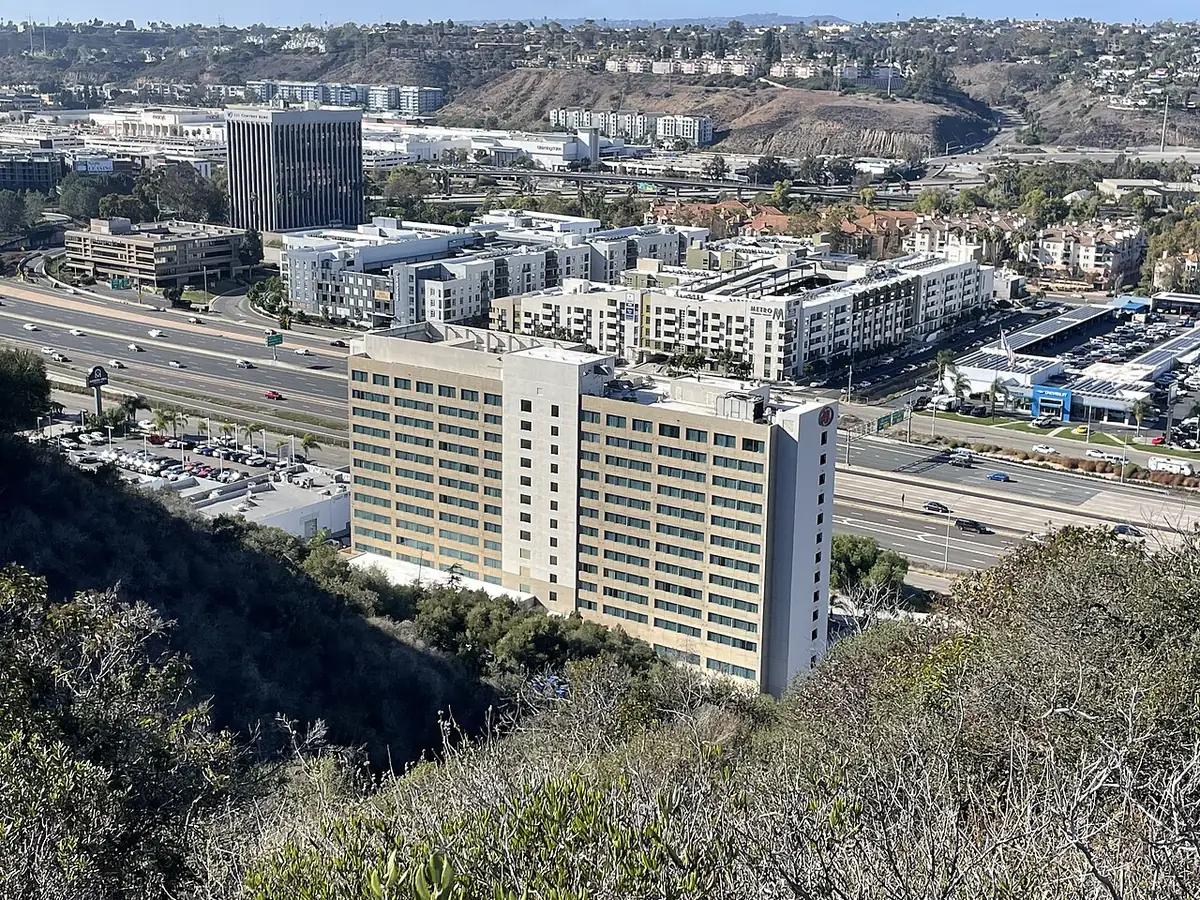
Mission Valley's mid-rise buildings, framed by hills and highway — Photo: Blervis · CC0 · Wikimedia Commons
These administrative and financial features apply differently depending on which area you settle on.
Buying property in the United States when your reference points come from another market means taking apart a lot of assumptions. The legal system, the way a building is managed, the recurring charges and the mechanics of negotiation all work differently. Understanding those structural divergences saves you from financial surprises and lets you approach the purchase with the right expectations from the very first viewing.
From abroad
A single national rulebook that is highly protective of the buyer
San Diego
Property law that is decentralized and set at the level of the State of California
Transaction rules, required disclosures and cancellation windows follow strict local logic that you must confirm with a qualified agent or attorney.
From abroad
Building charges that are capped and moderate on average
San Diego
High HOA fees covering common-area upkeep and sometimes substantial shared amenities
Monthly dues can eat significantly into what you are able to repay, and should be read against several years of board and association meeting minutes.
From abroad
Local taxation based mainly on a conventional property levy
San Diego
A property tax pegged to the original purchase price and governed by Proposition 13
The rules partly protect owners by capping the annual increase, but the base rate remains higher than what buyers arriving from many other countries are used to.
From abroad
A standardized, centralized offer of home loans
San Diego
A highly segmented mortgage market with specialist brokers
Getting financing as a non-resident or a recent arrival calls for a flawless file, substantial cash and precise proof of income.
Which San Diego neighborhood should you target, given what you want from the purchase?
A clear view of the neighborhoods makes it possible to face the actual numbers behind local prices.
San Diego is a mosaic of neighborhoods with sharply distinct identities, where the atmosphere, the proximity of amenities and the kind of property on offer vary enormously. Choosing the right area depends as much on your budget as on the life you are after, whether the plan is a pure rental investment or a primary residence. Each micro-market has its own rules of valuation and its own planning constraints.
Downtown and East Village
A dense urban rhythm, contemporary high-rise architecture and a heavy concentration of services within walking distance.
Suits
Investors after a lively rental market and working people who want to get by without a car.
Trade-off
Constant city noise, visible hardship on some adjacent streets and HOA dues that are often very heavy.
La Jolla and the northern coastline
A privileged coastal atmosphere, quiet residential buildings and exceptional scenery facing the Pacific.
Suits
Buyers with a substantial budget who are after asset security and seaside quality of life.
Trade-off
Prices per square meter among the highest anywhere in Southern California and liquidity that is sometimes limited to the very top of the market.
North Park and Hillcrest
A hip village feel, tree-lined streets, a rich cultural offer and buildings on a human scale.
Suits
Those after older character brought up to date, lively street life and a tight-knit local community.
Trade-off
An older housing stock that often needs bringing up to code, and parking that can be hard to come by.
What does an apartment in San Diego actually cost today?
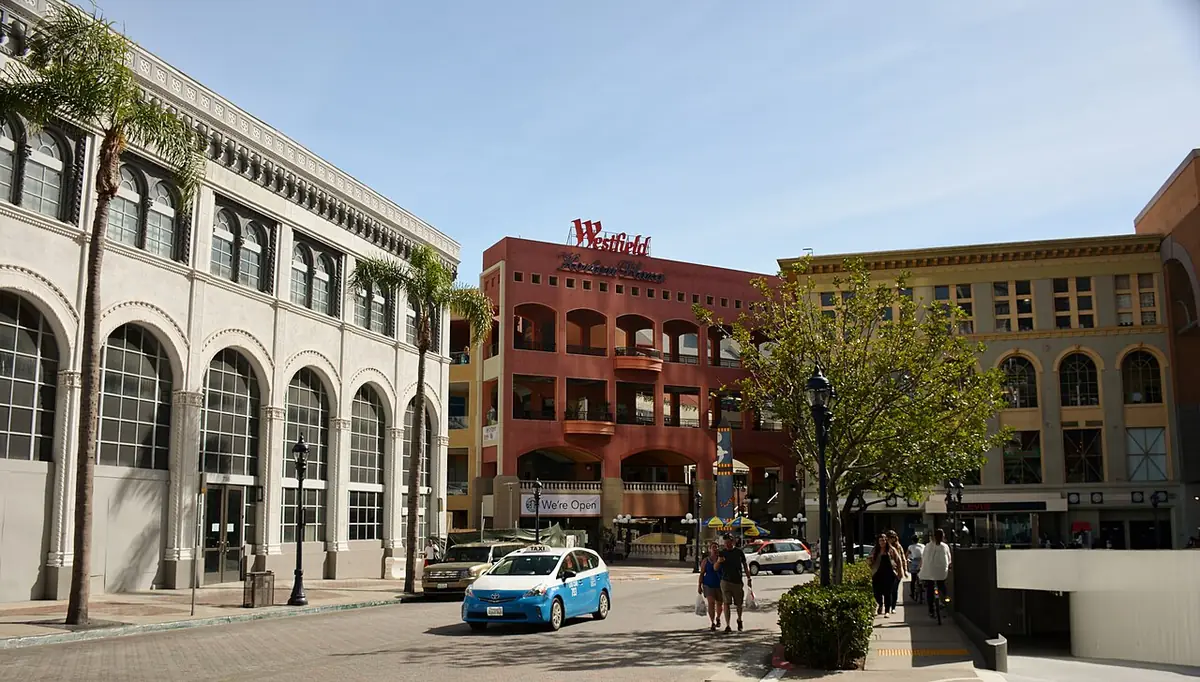
A landmark corner in San Diego's historic Gaslamp Quarter — Photo: Roman Eugeniusz · CC BY-SA 3.0 · Wikimedia Commons
Beyond the financial capacity required, what you legally own deserves particular attention.
The San Diego property market shows high price levels, sustained by the scarcity of land and the demographic pull of the region. There is no single price, but a multitude of sub-markets in which location and the amenities of the building dictate value. Reading the current ranges lets you set your overall budget before you start booking viewings.
san-diegoFor saleApartmentestimate
Median price / m²US$6,460Half the apartments sell below this
Median priceUS$625kthe average is 14% higher — a few very large properties pull it up
Most common2 bedrooms42 % of listings
Average size92 m²
By number of bedrooms
Bedrooms
Share of market
Avg price
Price / m²
Avg size
1
38 %
US$508k
US$7,820 +15 %
65 m²
2most common
42 %
US$646k
US$6,800
95 m²
3
17 %
US$799k
US$6,392 −6 %
125 m²
4
3 %
US$979k
US$6,120best value / m²
160 m²
Each row is an average, compared against the area average of US$6,800 / m². These are indicative estimates of a typical local market, not a measured sample of live listings. Check current listings before relying on them.
What you can actually hold: condominium ownership and share ownership
The legal structure you choose is only one step before committing to the practical process of the transaction.
Buying an apartment in the United States means understanding the legal subtleties that govern collective ownership. Between condominium arrangements and cooperative structures, an owner's rights over the building and the land are not always the same. That distinction directly shapes your freedom to alter the place, your maintenance obligations and how the property resells later.
Condominium status (condo)
You buy outright ownership of the interior of your apartment along with an undivided share of the common areas and the land underneath. A homeowners association (HOA) runs the building, votes the maintenance budgets and imposes rules covering matters such as renting out and pets.
What it changesYou hold a property that resells easily and is recognized by every lender, while having to respect the collective constraints set out in the association's governing documents and CC&Rs.
Cooperative status (co-op)
You are not a property owner in the strict sense but a shareholder in a corporation that owns the entire building, which gives you an exclusive right of occupancy over your unit through a long-term lease. This arrangement is rarer in San Diego but exists in some older buildings.
What it changesThe admission criteria applied by the cooperative's board are often severe, which can complicate and lengthen a future sale.
The rule to understand before you put down a deposit
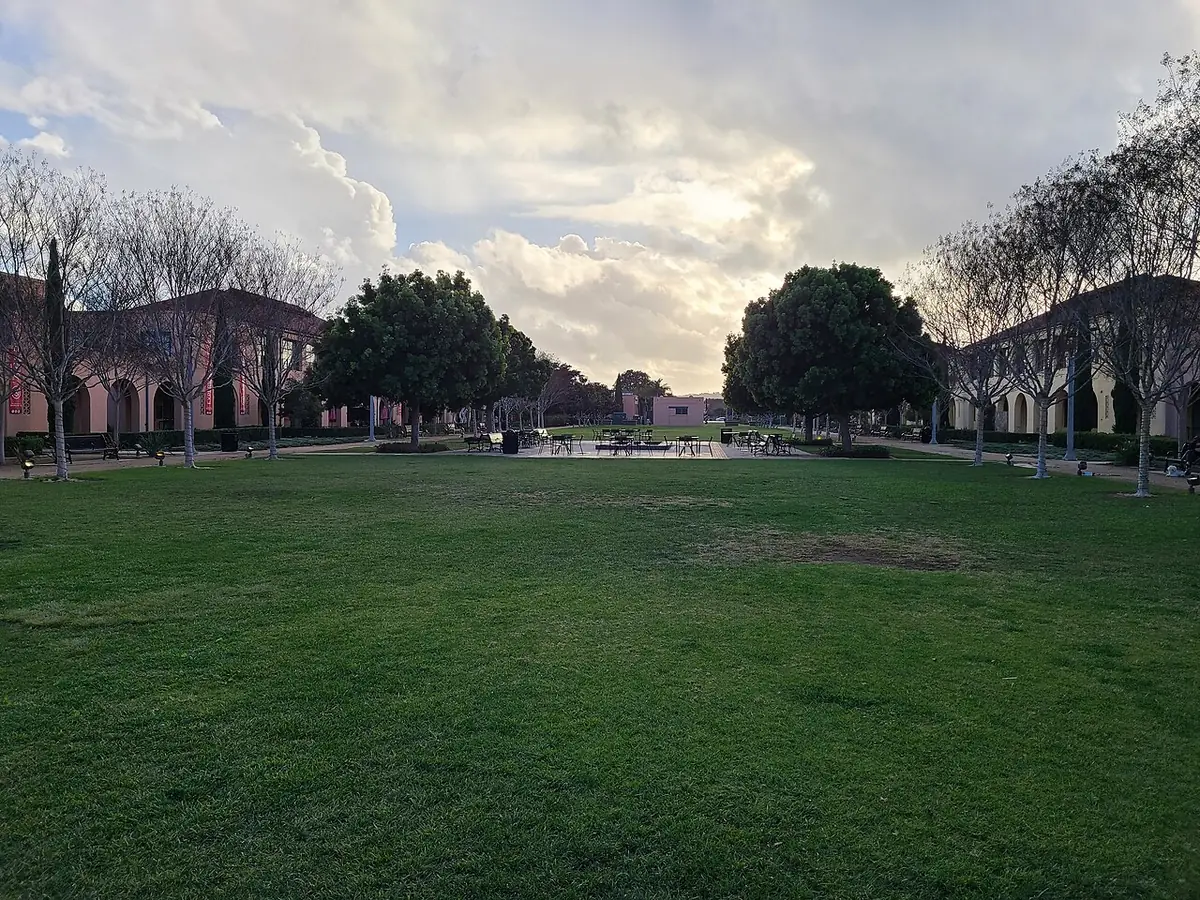
A grand green promenade at Liberty Station — Photo: Alan Islas · CC BY-SA 4.0 · Wikimedia Commons
Getting these contractual steps straight lets you approach the timeline of a purchase with a clear head.
The California buying process runs on standardized contracts that become extremely binding the moment both parties have committed. How the earnest money deposit is handled and how the contingencies are managed determine your protection if circumstances turn. Neglecting those contractual mechanisms exposes a buyer to losing the initial deposit outright.
Drafting the purchase agreement
Submitting a formal offer accompanied by an earnest money deposit (generally 1% to 3% of the purchase price) held by an independent escrow company.
Opening a detailed physical inspection period (the home inspection) to check the real condition of the structure, the plumbing and the electrical system.
Releasing or maintaining the contingencies tied to bank financing and to the formal appraisal of the property's value.
Signing the final transfer documents at closing, once title has been checked for undisclosed encumbrances.
Official recording of the transaction with San Diego County.
How a San Diego property transaction unfolds, step by step
Together these steps keep your purchase secure inside a rigorous legal framework.
A successful transaction in San Diego draws on several professionals with clearly defined roles, from the initial search to the handover of keys. Where many countries put a civil-law notary at the center of the deed, here a neutral title and escrow company holds and releases the funds. Following that sequence carefully is what keeps your California purchase legally sound.
The buyer and their agentSearching and shortlistingSetting the budget precisely, obtaining a bank pre-approval letter and viewing a targeted set of apartments.
The buyer and the sellerNegotiating and signing the offerDrafting the purchase agreement, settling the price and the contingencies, and paying the earnest money deposit into the escrow account.
The independent inspectorTechnical survey of the homeProducing a full report on the condition of the property and identifying any hidden defects or code work required.
The appraiserFormal valuationConfirming for the lender that the purchase price matches local market realities, so the mortgage amount can be secured.
The escrow and title companyTitle search and preparation for closingSearching the record to guarantee there are no undisclosed liens or mortgages attached to the property.
All partiesClosing the saleSigning the final transfer documents, wiring the remaining funds and recording the deed publicly with the county.
Apartment or house in San Diego: weighing horizontal upkeep against vertical living
Once that fundamental choice is settled, it is worth mapping precisely the financial effort required to settle in the city for the long haul.
Choosing between a single-family house and an apartment in San Diego commits not only your daily way of life but the very structure of your finances. In coastal neighborhoods such as La Jolla or Pacific Beach, houses are scarce, extremely expensive and subject to heavy competition. Apartments, usually grouped as condominiums or in complexes run by a homeowners association, offer a more accessible way to settle near the ocean without carrying the full burden of the building's structure. Vertical living does, however, mean association rules that can be strict, fixed monthly charges that never go away, and shared walls that change the experience of having neighbors entirely.
Buying a house instead, whether in more inland areas such as Clairemont or Serra Mesa or out toward the eastern hills, gives you complete autonomy over the land. You own the ground and the walls, which removes the friction of collective decision-making among co-owners. That freedom carries a direct operating cost: the roof, the outdoor plumbing, the air conditioning and the lot itself all fall entirely to you and to your budget. In San Diego, where summers are dry and fire and drought risk weigh on vegetation, keeping a garden takes either time or regular spending on professional landscapers.
On resale and liquidity, the two types behave differently across the cycles of the California market. Single-family houses with their own land have historically held value more robustly, because available land is structurally limited by the geography of the region, hemmed in by the ocean, the canyons and the Mexican border. Apartments and condos, though cheaper to buy in the first place, sometimes swing more sharply when interest rates rise, as potential buyers calculate carefully the combined weight of the loan and the monthly association dues.
Your final decision should therefore rest on a cold assessment of your tolerance for manual work and paperwork. If you refuse to spend Saturdays supervising roof repairs or trimming thirsty hedges, a condominium apartment is the rational answer. If, on the contrary, you want a fully independent space with nobody living above your ceilings and the freedom to alter your home without asking permission, buying a single-family house is what your long-term peace of mind requires.
What overall budget do you really need to put together to live in San Diego?
Beyond the raw numbers on paper, it is the concrete rhythm of daily life and getting around that will test where you choose to settle.
Buying an apartment in San Diego is not just about repaying capital and bank interest. You have to build in a set of unavoidable costs, including California property tax, HOA dues and the insurance specific to local natural hazards. This table summarizes the monthly and up-front expense lines observed in the market for a standard property, so that nothing about the budget comes as a surprise after closing.
Recurring monthly expenses for an apartment
Expense line
Estimated range (USD)
Adjusting factors and local reality
Mortgage payment
$3,500 - $5,500
Varies considerably with the size of the down payment and the interest rates prevailing on the American mortgage market.
Homeowners association dues (HOA)
$400 - $900
Covers common-area upkeep, the pool and sometimes water and refuse collection, but rises regularly.
Property tax
$600 - $1,000
Based on roughly 1.1% to 1.2% of the original purchase price, with annual increases capped by California law.
Homeowner insurance
$120 - $250
Rising noticeably across California because of broader climate risk and the cost of rebuilding.
These amounts are calculated for a two-bedroom apartment in a standard residential neighborhood of San Diego, with an average down payment of 20%.
Up-front and transaction costs on purchase
Type of cost
Percentage or amount
Notes on when it falls due
Down payment
10% - 25% of the purchase price
Required by American lenders before a mortgage application can be approved.
Closing costs
2% - 3% of the purchase price
Include the escrow company's fees, title searches and transfer taxes.
Reserve fund for initial work
$5,000 - $15,000
Essential for immediate refreshing and any code work that turns out to be needed.
Closing costs are split or negotiated according to local custom, but in a tight market they broadly fall to the buyer.
What does an ordinary Tuesday actually look like in San Diego, between commuting, schools and errands?
Hillside homes above the bay, a classic San Diego view — Photo: A Guy Named Nyal · CC BY-SA 2.0 · Wikimedia Commons
But that well-oiled routine hides legal and structural realities that the sales brochures carefully leave out.
To judge whether a purchase makes sense, you have to test the physical reality of a typical day in the metro area. Between traffic flows on the interstates and the way local services are organized, each neighborhood imposes its own timing. Here is how an ordinary Tuesday unfolds for someone living in a residential San Diego neighborhood.
07:15Leaving home and dealing with morning trafficThe early start coincides with congestion building on Interstate 5 or Interstate 15. Allowing for journey times is essential to reach employment areas such as Downtown or UTC.
08:00Dropping the children at a public or charter schoolNeighborhood schools within the unified school districts run to strict hours. Parking around them is often saturated for one very specific quarter of an hour.
09:00Settling in at the office or a local coworking spaceFlexible working hours are common in tech and local services, which lets people protect their best stretches of concentration before the afternoon meetings.
12:30A neighborhood lunch break and quick errandsLocal shopping centers and commercial streets make it easy to pick up fresh local and organic produce, a strong marker of California culture.
17:30Heading home and end-of-day errandsThe evening peak calls for patience on the main routes. This is when residents get a brief spell of the climate outdoors before nightfall.
19:30Winding down and running the householdThe evening passes quietly in the neighborhood, set to the relative calm of residential areas away from the busy nighttime boulevards.
What the sales brochures and the agencies carefully avoid telling you
These blind spots explain why some buyers are badly disillusioned only a few months after moving in.
The San Diego market has its own unwritten codes and regulatory complexities that polished agency photographs never reveal. Behind the promise of an idyllic setting sit technical, administrative and environmental constraints that you absolutely must identify before signing a firm offer.
The real state of the association's finances (HOA reserves)
Plenty of associations show low monthly dues on the surface while hiding a serious shortfall in the reserves needed for major mandatory work. If the roof or the main pipework has to be replaced urgently, every owner receives an extraordinary bill of several tens of thousands of dollars, known as a special assessment.
The strict limits on short-term rentals
The city of San Diego enforces extremely rigorous short-term rental rules to protect the permanent rental stock. If you buy expecting to defray your costs through seasonal tourism, you risk running into hard quotas, waiting lists that run for years and administrative fines designed to deter.
The complexity of easements and rights of way
In California, many parcels carry easements allowing electricity or water utilities, or neighbors, to reach part of the land. Overlooking those clauses at purchase can stop you putting in a pool, building an extension or planting mature trees where you had intended.
Mandatory energy upgrades and the cost of compliance
State requirements on energy efficiency and the gradual phasing out of natural gas equipment are pushing many owners into very large outlays. Replacing an aging air conditioning system or installing compliant solar panels is a heavy up-front investment that weighs on medium-term returns.
The regrets buyers typically discover six months after signing
Against these structural risks, it matters just as much to recognize whether you are simply one of the people who should not be buying at all.
Looked likeA golden opportunity in an up-and-coming neighborhood with fast, guaranteed capital growth.
Turned outAn area where nighttime noise, saturated parking and the absence of green space spoil daily life, making resale far harder than expected because demand there is volatile.
Would have caught itVisiting the neighborhood at varied hours, particularly on a Friday evening and at the weekend, and asking several residents directly how quiet the place really is.
Looked likeA bright apartment with an open view and a large west-facing private terrace.
Turned outAn unbearable furnace in summer without powerful air conditioning, generating enormous electricity bills, plus direct exposure to salt-laden sea air that accelerates rust and the decay of window frames.
Would have caught itChecking the exact solar orientation, the age of the air conditioning equipment, and insisting on a full independent survey of the facades and balconies.
Looked likeModerate association dues giving access to a heated pool and a maintained tennis court.
Turned outA unilateral 25% increase in dues voted at the first association meeting to plug a structural deficit in the building's finances, permanently raising the household's monthly budget.
Would have caught itReading the minutes of the last three association meetings closely to spot neighbor disputes and any dues increases voted or under discussion.
Looked likeA commute that seemed perfectly manageable by car thanks to the freeway being right there.
Turned outA daily ordeal at peak hours because of permanent roadworks and chronically clogged on-ramps, turning a theoretical thirty minutes into more than an hour of waiting.
Would have caught itDriving the actual route at exact peak times on a weekday before you submit an offer, and testing whatever public transit alternatives exist.
Which buyers should firmly give up on the idea of buying in San Diego?
It is time now to lay the groundwork for your own conclusion and gauge how ready you are for this commitment.
Buying property in California is a heavy, inflexible commitment that suits some situations and professional profiles poorly. Insisting on becoming an owner at any cost in this city can lead to a financial dead end or lock you out of moving. Here are the profiles that would gain from postponing or abandoning a purchase in the region.
The young professional whose next move, at home or abroad, is uncertain
→Postpone buying and stay with a flexible rental
The costs of buying and selling (agent commission, transfer taxes, closing costs) require holding the property for five to seven years before they are absorbed. Selling too soon risks losing a large part of your original down payment to those transaction costs.
The household whose savings barely cover the down payment, with no safety margin left
→Build a cash cushion before entering the market
In San Diego, a failed appliance, a plumbing leak or a special assessment from the association can swallow thousands of dollars overnight. Buying with no emergency reserve exposes a household directly to foreclosure if something goes wrong.
The investor looking for immediate, high net rental yield
→Look at other American markets with lower entry prices
The ratio between the high purchase prices in San Diego and the rents actually charged does not produce an attractive net yield once property tax and association dues are deducted. This market lends itself more to building long-term wealth than to positive rental cash flow.
So, are you ready to go ahead and buy in San Diego?
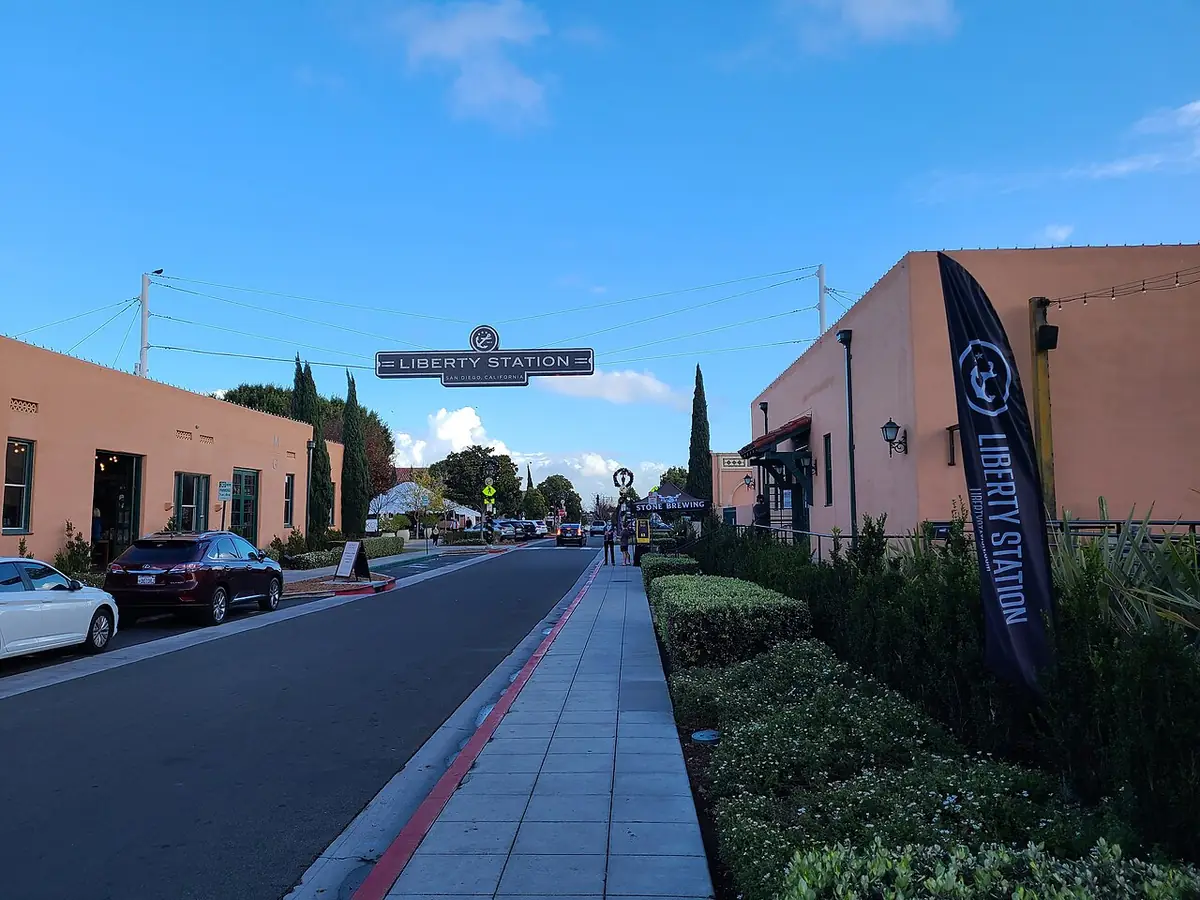
A relaxed shopping street at Liberty Station — Photo: Alan Islas · CC BY-SA 4.0 · Wikimedia Commons
At the end of this analysis, buying an apartment in San Diego stands revealed for what it is: a major financial decision that demands clear-headedness, financial discipline and full acceptance of the local trade-offs. This market forgives neither improvisation nor haste. If you have taken the measure of the association dues, built in the real cost of getting around every day and put aside a robust emergency fund able to absorb the unexpected, then you have the foundations you need to settle successfully in the city.
If, however, your plan rests on hoping for a quick gain or on an impulsive wish for a postcard setting without accepting what it demands in practice, the wise course is to wait. The San Diego market will keep offering opportunities to patient, well-organized buyers, while those who jump in unprepared expose themselves to lasting disappointment. Take the time to visit, to cost out every line of spending and to test your expectations against the reality on the ground before you commit your signature.
Related questions
What do homeowners association (HOA) dues typically cost for an apartment in San Diego?
HOA dues generally run between 400 and 900 dollars a month for a standard apartment. The figure varies with the amenities available to residents, such as a pool, a gym, a security service or an elevator, and with the state of the building's financial reserves.
Can a non-resident buy property in San Diego?
Yes, foreign buyers can acquire property in California with no restriction based on nationality. American banks do, however, often require a larger down payment, usually between 30% and 40%, along with a detailed and verifiable credit file.
How is property tax calculated in San Diego County?
Property tax comes to roughly 1.1% to 1.2% of the purchase price in the first year. Under California law (Proposition 13), increases are then capped strictly at a maximum of 2% a year for as long as the property does not change hands.
Which neighborhoods are most sought after for buying an apartment in San Diego?
Coastal neighborhoods such as La Jolla, Pacific Beach and Coronado are the most prized but carry the highest prices. For a more affordable balance between urban energy and a controlled budget, areas such as North Park, Hillcrest or University City attract a lot of buyers.
How long does a California property transaction usually take?
Once the seller has accepted the offer, the escrow and closing process generally takes between thirty and forty-five days. That window allows for the building inspections, the approval of bank financing and the verification of title.
What closing costs should you budget for when buying?
Closing costs generally represent between 2% and 3% of the purchase price. They cover the escrow officer's fee, local transfer taxes, loan processing charges and inspection fees.
Is it compulsory to have an apartment inspected before buying?
It is not strictly required by law, but hiring an independent home inspector is strongly recommended. It is how you uncover hidden defects and problems with the plumbing, the electrical system or the roof before you release your contingencies.
How do short-term rental rules such as those covering Airbnb affect a purchase?
The city of San Diego applies very restrictive rules to limit short-term rentals, requiring a specific license that is subject to quotas and a lottery. Buying with the intention of renting to holidaymakers therefore carries a very high regulatory risk.
How does the San Diego market hold up when interest rates move?
The market shows pronounced resilience because of a structural imbalance between strong demographic demand and a very limited supply of buildable land. Rising borrowing rates do, however, slow the pace of transactions and flatten prices.
What help or programs exist for first-time buyers in San Diego?
The State of California and the county occasionally offer down payment assistance programs for low and middle income residents buying a primary residence, subject to strict income limits.