Buying a home in the Californian city of San Diego calls for a close understanding of local conditions and of the legal procedures that govern a sale. This guide sets out the essentials for choosing your area, structuring your budget and securing your investment with confidence.
Get the app
What nobody tells you.
Real prices, hidden costs and the traps to check before you commit.
What buying a house in San Diego actually means day to day
Scroll
What buying a house in San Diego actually means day to day
Buying a home in the Californian city of San Diego calls for a close understanding of local conditions and of the legal procedures that govern a sale. This guide sets out the essentials for choosing your area, structuring your budget and securing your investment with confidence.
Written by the ting.ad editorial team ·
San Diego in Street View: drag to look around.
Understanding these basic trade-offs helps you place your own plans against the variety of local lifestyles.
Buying property here is not simply a matter of obtaining a title deed. It is a deep commitment to a fast-moving market in which every neighbourhood has its own unwritten rules. Buyers often discover that the perceived value of a home depends as much on its micro-climate as on how close it sits to the main roads. You have to look beyond the floor area to understand the real cost of upkeep and local taxation. The move takes methodical preparation if you want to avoid disappointment once escrow closes.
The apparent freedom to build as you pleasevsThe constraints imposed by homeowners associations
Owning your walls does not mean you can change everything. Association rules and subdivision covenants set strict limits on facades, colours and even the handling of outdoor planting, in order to preserve the visual harmony of the area.
The promise of a lasting investmentvsThe direct impact of property taxes and insurance
The region's history of capital growth attracts money, but the recurring tax burden and the rising cost of homeowners insurance policies redefine the real return on your capital over the years.
The gentle Mediterranean way of lifevsManaging local environmental risks
The exceptional climate of the California coast has a regulatory flip side. Fire prevention and water management requirements impose regular spending that a buyer needs to plan into the annual budget.
Beaches and services on your doorstepvsGridlocked traffic at peak hours
Choosing a central address to enjoy the buzz of the city instantly comes at the price of long daily journeys, which changes how accessible the place feels depending on the hour and the season.
Does this place really match your way of life and what you expect from it?
With your own profile clearer, the next step is to measure the cultural and regulatory gap with the system you already know.
The San Diego market serves very different profiles, from the remote worker looking for quiet to the senior executive who wants to be central. Each situation calls for its own approach in order to line up the location of the home with your daily obligations. Ignoring these factors often leads to regret soon after moving in. So it is essential to assess how much commuting you can tolerate, and how much space you genuinely need, before you commit to an offer.
Remote work and room to breathe
Neighbourhoods set slightly back from the coast, or out towards the inland valleys, offer more generous square footage for the same budget. You get a quieter environment, good for concentration and for family life. In return you have to accept a degree of isolation from the city's cultural and dining scene. Internet connections are generally excellent, but you become entirely dependent on the car for even the shortest trip.
Urban proximity and energy
Settling in the denser areas or close to the main hubs cuts the time you spend commuting each day dramatically. This option supports a walk-everywhere or cycle-everywhere life, particularly sought after in the coastal and trendier neighbourhoods. The trade-off is that living space shrinks considerably for the same financial outlay. Parking is also harder, and the surrounding activity generates a constant source of noise that you have to be able to live with.
End-of-career transition
For buyers free of the commute, priorities shift towards safety, the quality of healthcare and single-storey living. Planned communities and settled residential areas offer a reassuring setting and lasting relationships with neighbours. These areas do, however, call for particular care over how association dues evolve and over the availability of specialist medical facilities close to home.
Living here when you arrive from abroad: what fundamentally changes
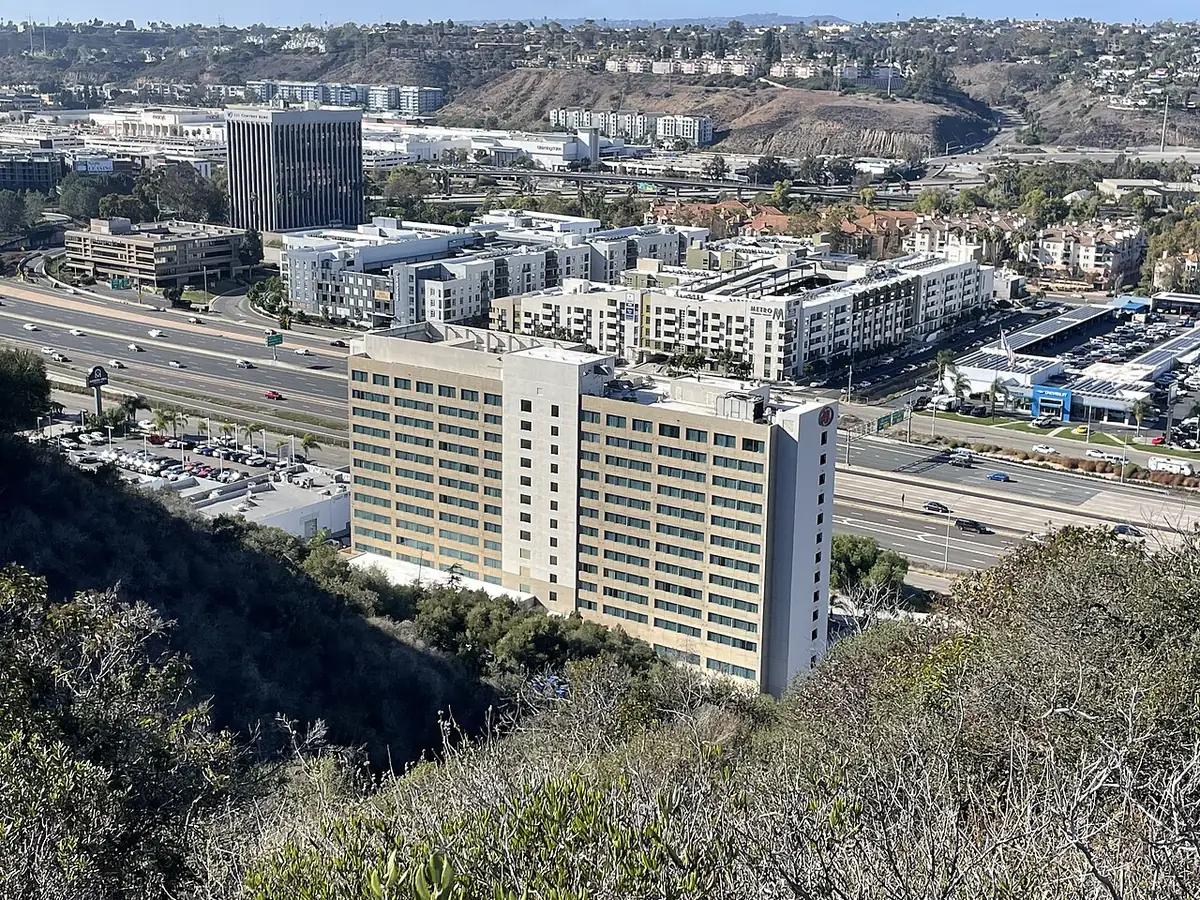
Mission Valley's mid-rise buildings, framed by hills and highway — Photo: Blervis · CC0 · Wikimedia Commons
Once these reference points are in place, choosing the micro-location becomes the single most decisive call for your daily life.
The American property system works on legal and financial logic that is radically different from what most buyers arriving from abroad are used to. It is a common mistake to project the habits of your home country onto a transaction in California. From the drafting of the offer to the structure of the guarantees, every stage follows specific rules that protect as much as they constrain. Learning to read these mechanisms is the key to a calm and secure purchase.
From abroad
A single state-appointed legal officer drafting and overseeing the whole sale
San Diego
A licensed real estate agent acting for you, and an escrow and title company holding the funds
In the United States the transaction is run by brokerage professionals and secured by a neutral financial third party. There is no single presiding officer: instead you get a strict contractual process in which every withdrawal window is timed to the day.
From abroad
Property tax that stays relatively stable, based on a national assessed value
San Diego
Proposition 13, and reassessment of the tax when the property changes hands
Your local property tax is calculated on your own purchase price and rises only very slightly each year. The amount you pay can nevertheless be far higher than what the previous owner has been paying for the last twenty years.
From abroad
A compulsory, universal builder's warranty covering structural defects for years after completion
San Diego
A thorough inspection at the point of purchase, with no equivalent statutory warranty
The buyer takes the property as it stands after a period of detailed technical investigation (the home inspection). It is up to you to negotiate repairs or a credit against the price before the contingencies are removed.
From abroad
All lending centralised through the bank adviser you already deal with
San Diego
A clear separation between the lender and the specialist mortgage broker
Obtaining a mortgage requires an extremely detailed creditworthiness file, assessing your local credit history, your income and your down payment in a highly formalised way.
Which neighbourhood to target, given your priorities and your budget
This map of the districts lays the ground for the financial thinking, which deserves a realistic look.
The city is a mosaic of neighbourhoods with strongly marked identities, where the atmosphere changes completely from one hillside to the next. There is no perfect neighbourhood in the abstract, only addresses that match precisely where you are in life. Between the cultural energy of the central areas, the quiet of the inland residential enclaves and the pull of the waterfront, choosing means analysing carefully which compromises you can accept. Here is an overview of the main options to steer your search.
The coastal and beach neighbourhoods
A relaxed atmosphere set by the tides, the passing surfers and heavy tourist numbers in summer.
Suits
People who love the outdoors, water sports and an easy-going life turned towards the ocean.
Trade-off
Some of the highest prices per square metre in the region, older homes that often need bringing up to code, and chronic parking difficulties.
The central, energetic urban districts
A brisk city rhythm, shaped by proximity to the technology hubs, the speciality coffee shops and the cultural venues.
Suits
Urban professionals who want to cut their commute and enjoy a rich social life without depending on a car.
Trade-off
High building density, few detached houses with a large private garden, and unavoidable urban noise.
The inland valleys and residential enclaves
A quiet, green, family setting where silence takes over after dark and life is organised around the parks.
Suits
Families with children who want larger plots, well regarded schools and a sense of residential security.
Trade-off
Distance from the beaches, meaning long drives at weekends, and noticeably higher summer temperatures.
What a property in this region really costs
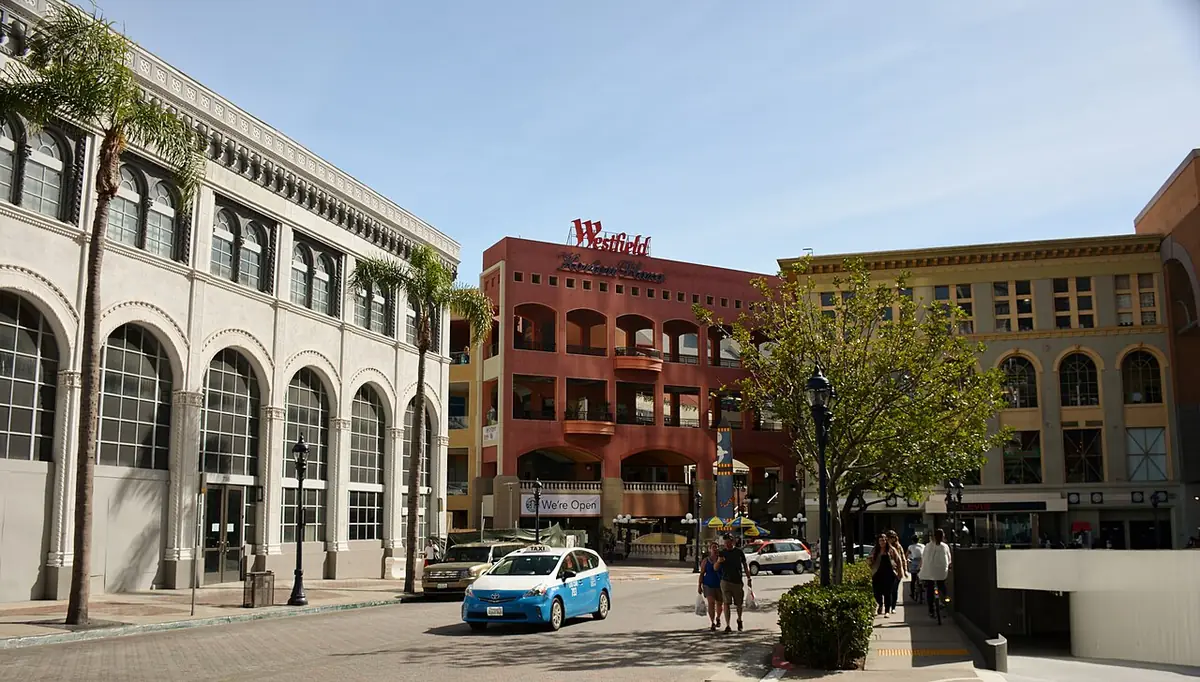
A landmark corner in San Diego's historic Gaslamp Quarter — Photo: Roman Eugeniusz · CC BY-SA 3.0 · Wikimedia Commons
Beyond the headline price, the legal nature of what you own deserves particular attention.
Approaching the San Diego market demands a clear-eyed reading of local economic realities. Prices vary considerably with distance from the ocean, the age of the building and the quality of the surrounding schools. Rather than chasing one illusory figure, it is better to work with the ranges actually observed for each type of property. This financial transparency will save you from wasting precious time on homes well beyond your budget.
san-diegoFor saleHouseestimate
Median price / m²US$5,297Half the apartments sell below this
Median priceUS$898kthe average is 14% higher — a few very large properties pull it up
Most common2 bedrooms68 % of listings
Average size161 m²
By number of bedrooms
Bedrooms
Share of market
Avg price
Price / m²
Avg size
2most common
68 %
US$927k
US$5,576
166 m²
3
27 %
US$1.15m
US$5,241 −6 %
219 m²
4
5 %
US$1.41m
US$5,018best value / m²
280 m²
Each row is an average, compared against the area average of US$5,576 / m². These are indicative estimates of a typical local market, not a measured sample of live listings. Check current listings before relying on them.
What you can actually own: full ownership versus shared ownership
With that legal framework understood, the next thing is to follow a transaction step by step, in order.
The legal status of your future purchase determines both your freedom of action and the nature of your recurring costs. In California, the distinction between owning land outright and sharing a collective structure is governed by strict rules. Understanding these mechanisms avoids unpleasant surprises stemming from decisions taken by owners' meetings. Each option strikes a different balance between autonomy and pooled services.
The detached house owned outright (single-family home)
You own both the building and the plot it stands on, with no compulsory collective charge of the HOA type in the older neighbourhoods. You keep full control over works, extensions and landscaping, subject to municipal planning codes. In return, the entire burden of maintenance, from the roof to the plumbing, falls on you alone.
What it changesYou get complete independence and direct exposure to land value growth, but you carry every financial risk tied to the upkeep of the building on your own.
Ownership within an association (HOA, homeowners association)
The home sits within a residential development run by an association that maintains the common areas, the landscaping and sometimes the sports facilities. Compulsory monthly dues fund those services and build a reserve for major collective works. This arrangement greatly simplifies day-to-day management of the outdoor space, but it imposes strict rules on how the property is used and can weigh lastingly on your fixed budget.
What it changesYou gain comfort and shared services, but you accept permanent oversight of your living environment and the possibility of rising dues.
The essential rule to grasp before you hand over a deposit
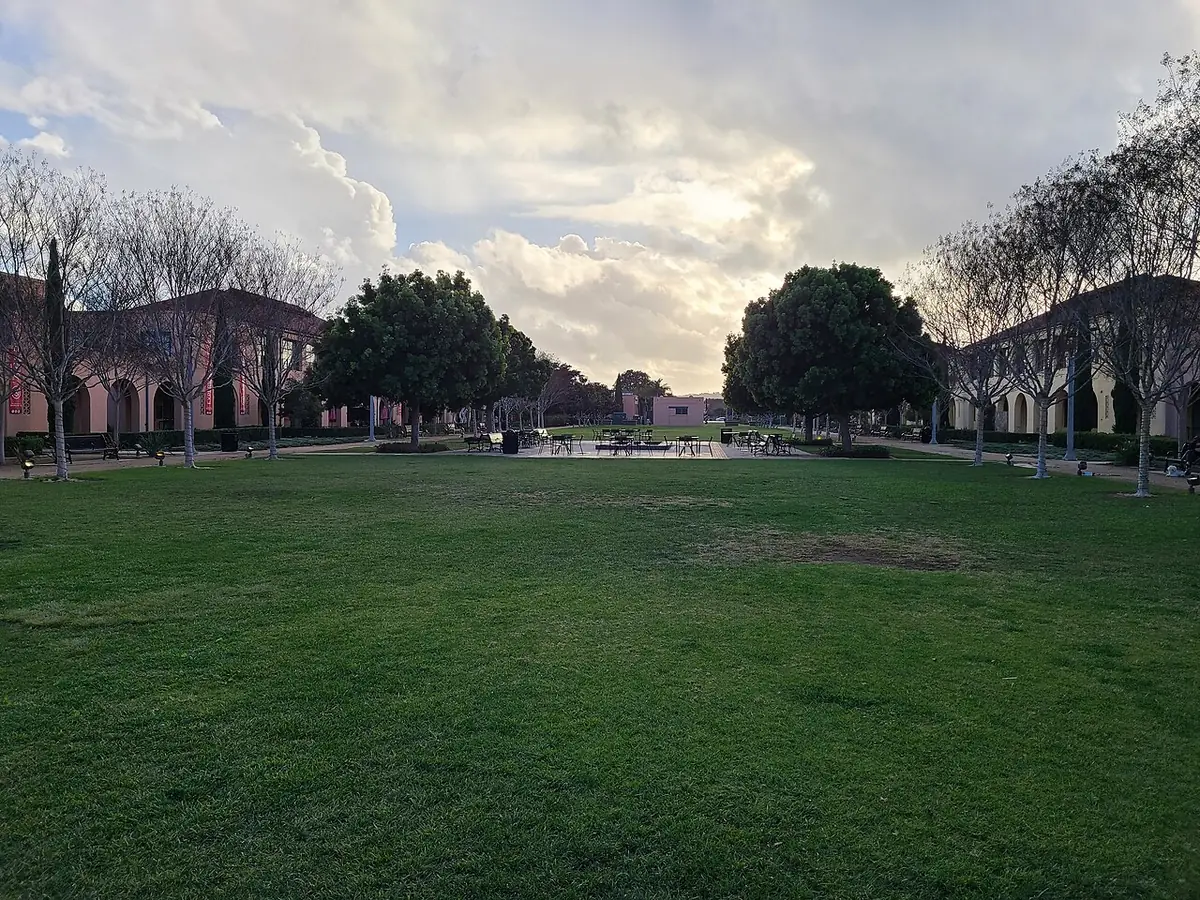
A grand green promenade at Liberty Station — Photo: Alan Islas · CC BY-SA 4.0 · Wikimedia Commons
To run that timeline without a false note, let us look at the role each professional plays in the transaction.
Signing a purchase contract in the United States does not immediately commit your money for good. The process includes a crucial due diligence period during which the buyer has strictly defined rights to withdraw. Neglecting this technical and financial verification phase risks the loss of the deposit held in escrow. Rigour in reading the inspection reports is your best protection against hidden defects.
The signing of the purchase offer accepted by the seller
The deposit of earnest money with the neutral escrow and title company.
Independent technical inspections to establish the real condition of the structure.
Any negotiation of works or offsetting credits on the basis of the inspection report.
The progressive removal of the financing and inspection contingencies within the contractual deadlines.
The final transfer of funds and the recording of the deed (closing)
How a property transaction unfolds, step by step
In closing, buying a house in San Diego means combining financial discipline, local analysis and respect for the procedures.
A successful property transaction rests on rigorous coordination between several professionals with clearly defined roles. Contrary to what many assume, no single presiding legal officer sits at the centre of the Californian system. Understanding what each party does lets you steer your project with confidence and know who to turn to at every critical moment of the purchase.
The mortgage brokerConfirming your borrowing capacityThey analyse your financial file and issue the pre-approval letter you need to make your offer credible to sellers in this market.
The buyer's agentFinding and negotiating on propertiesThey identify homes that match your criteria, view them with you and draft the offer while defending your financial interests.
The home inspectorThorough technical investigationThey work methodically through the structure, the electrics, the plumbing and the roof to produce a detailed report on the real condition of the home you want.
The escrow and title companyFinancial and legal safeguardingIt acts as the neutral third party, collects the deposit funds, checks that title is clear and orchestrates the final signatures.
The appraiserAssessing market valueInstructed by the lender, they certify that the market value of the property justifies the mortgage amount being advanced for the purchase.
Detached house or shared ownership in San Diego: weighing independence against shared upkeep
With that fundamental choice settled, it is worth looking at the financial reality of property investment in this Californian city.
Buying a detached house in San Diego means accepting the whole structural burden, from the roof to the foundations, while escaping the strict rules of homeowners associations, the well known HOAs. In neighbourhoods such as North Park or South Park, older houses charm buyers with their character but demand extra vigilance over plumbing and foundations, in a region where ground movement, rare though it is, serves as a reminder of California's seismic nature. You handle renovations at the pace your finances allow, without submitting every shutter colour to a committee of particular neighbours, which gives a freedom of organisation that families looking to put down lasting roots value highly.
Buying a condominium or a townhouse in the denser areas such as Downtown, Little Italy or along the shore in La Jolla shifts the balance instead towards daily comfort and shared services. The pool, the landscaping of the common areas, enhanced security and sometimes even water or waste collection are included in monthly dues that can be heavy but are at least predictable. Those association fees rise steadily because maintenance costs in California keep climbing and because state legislation requires reserve funds to be topped up, which weighs heavily on the long-term budget.
The question of how value will build over time also shapes this basic choice between the two types of property in San Diego County. Detached houses on their own plot have historically shown stronger appreciation in land value, as land grows scarce fast in the coastal areas and the built-up valleys. Condominiums, while offering a financially more accessible entry point into lively neighbourhoods, face stiffer competition on resale because of the steady volume of new and recent developments on the local market.
The decision therefore turns closely on how much collective administrative constraint you can tolerate on one hand, and how much time you have to supervise maintenance work on the other. If you travel often or would rather delegate the upkeep of the outside of your home, shared ownership makes itself the obvious answer despite its fixed costs. If you see your home as a long-term project to be customised endlessly, and you accept the technical surprises that come with any building, the detached house remains the benchmark in the San Diego market.
What buying and holding a house in San Diego really costs
With those figures set out, it helps to understand how a typical day comes together for a resident living this way.
Buying a detached house in San Diego is not just the headline price shown on the property portals. You have to factor in the local property tax governed by Proposition 13, the homeowners insurance premiums that are soaring because of fire risk in some of the hillier areas, and the closing and recording costs, which are modest but very real. The overall budget calls for careful anticipation of your monthly cash flow if you want to avoid an unpleasant surprise once escrow closes.
Up-front costs of buying a house in San Diego
Budget line
Estimated range
Impact and how it is calculated
Median purchase price (house)
$850,000 to $1,200,000
Varies considerably with proximity to the coast and the size of the plot.
Down payment
20% to 25% of the price
Required by most lenders to secure the best interest rates and avoid mortgage insurance.
Transaction and closing costs
1% to 2% of the purchase price
Includes the escrow agent's fees, title insurance and local transfer taxes.
Reserves required by the lender
3 to 6 months of payments
Proof of solvency required by American lenders before they approve the loan.
The amounts shown reflect median conditions observed in the San Diego residential market for standard properties.
Recurring annual and monthly costs for an owner
Type of cost
Indicative amount
What moves it
Property tax
About 1.1% to 1.2% of the purchase value
Governed by California law, it rises by at most 2% a year for as long as the property is not resold.
Homeowners insurance
$1,500 to $3,500 a year
Sharp recent increases in California, particularly in areas exposed to brush fire risk.
Upkeep and preventive maintenance
1% to 2% of the property value a year
Needed to cope with weathering and to maintain the value of the building.
These costs come on top of the monthly mortgage payment itself.
The daily rhythm and routine of a homeowner living in San Diego
Hillside homes above the bay, a classic San Diego view — Photo: A Guy Named Nyal · CC BY-SA 2.0 · Wikimedia Commons
Beyond that pleasant routine, buying property in San Diego carries realities less visible than the brochures let on.
Living in a detached house in San Diego means a daily logistics shaped by car journeys and the upkeep of outdoor space. Between the morning run to drop the children at school and rejoining the road network to reach the employment centres of UTC or Downtown, the day is organised around an outdoor way of life that an exceptional year-round climate makes possible.
07:00A residential neighbourhood (Clairemont or Tierrasanta, for example)Waking to sunlight across the garden, a quick look over the property and then off by car to stay ahead of the first slowdowns on the main routes.
08:00School or local nurseryDropping the children at the local public school or the chosen private one, a brief moment of contact with the neighbourhood's community of parents.
09:00Workspace or home officeSettling in for the morning's work, whether that is remote from the house or in one of the city's technology hubs.
12:30Nearby shopping centre or high streetA quick lunch break and a top-up grocery run at a local store to prepare the week's meals.
17:30Beach or city park (Balboa Park or Sunset Cliffs, for example)Winding down at the end of the day to enjoy San Diego's exceptional natural setting, a habit local residents have adopted for unwinding.
19:00The family homeBack home, dinner to prepare and the practical business of looking after the house and garden.
The hidden sides of the residential market that agencies do not advertise
These grey areas explain why some buyers sour on their purchase soon after closing.
The San Diego market has complex regulatory and geographic quirks that can catch an unwary buyer off guard. Behind the undeniable appeal of the climate and the quality of life sit major technical and planning constraints that directly affect the long-term value of your investment and your day-to-day comfort.
Rights of way and boundary rules
Many plots in San Diego carry easements that limit your right to extend or to landscape. Overlooking them at the point of purchase can block any future plan for a pool or an extension to the house.
The duty to bring a property up to energy and environmental standards
California imposes strict rules on the energy performance of older buildings. On a resale, or when carrying out major works, you will have to invest in insulation, double glazing or solar panels.
Subtle micro-climate variations between neighbourhoods
The famous morning overcast known as May Gray and June Gloom hits the coastal areas far harder than inland valleys such as El Cajon or Santee. Choosing a location without testing the real sunlight at different hours can prove disappointing.
Road network saturation and infrastructure plans
Some major routes such as Interstate 5 or Highway 805 suffer chronic congestion at peak times. Buying far from work while underestimating the real journey time quickly turns daily life into an endurance test.
The classic traps and common regrets of new owners six months on
Given these risks, it is fair to ask whether buying property in San Diego is genuinely for everyone.
Looked likeA charming older house full of character in an affordable historic neighbourhood
Turned outA thermally leaky building needing the electrical system and the original cast iron pipework replaced in full, leading to massive unplanned spending.
Would have caught itAlways instructing an independent building expert to carry out a full structural inspection before the contingencies are removed.
Looked likeA rental investment or second home that would be easy to manage from a distance
Turned outA property caught by very strict municipal rules on short-term letting, making the expected return illusory.
Would have caught itChecking the City of San Diego ordinances on short-term residential occupancy in advance, and reading the association's own rules.
Looked likeAn isolated house up on the heights with a sweeping view over the canyons
Turned outA homeowners insurance premium three times higher because the plot is classed in a Very High Fire Hazard Severity Zone.
Would have caught itAsking for firm insurance quotes from the very first viewing and checking the official Cal Fire hazard map.
Looked likeA quiet, up-and-coming residential neighbourhood with strong prospects for capital growth
Turned outA noisy area because of its proximity to the flight paths of San Diego International Airport or the naval air stations.
Would have caught itVisiting the neighbourhood at different times of day and night, and consulting the noise exposure maps for the local airports.
Buyer and investor profiles that should postpone or avoid buying in San Diego
It is time to draw these threads together and work out exactly where you stand on this purchase.
The San Diego market presents financial and regulatory barriers to entry high enough that it does not suit every plan. Rushing a purchase in this city without the job stability or the financial depth required exposes a buyer to the risk of losing capital quickly.
The first-time buyer with a down payment that only just covers it and no emergency savings
→Borrowing to the very limit of their capacity to secure whatever property is available
The smallest urgent repair to the roof or the air conditioning would immediately put the household budget in danger, with no financial cushion to absorb it.
The professional on an international posting or changing careers in the short term
→Buying quickly to avoid paying what looks like too high a rent in the local market
The costs of buying and then reselling in California (agency commissions and taxes in particular) wipe out any potential gain if the property is sold within five to seven years.
The investor looking for an immediate, high rental yield
→Buying single-family homes to let them on standard leases
The ratio of purchase prices to rents in San Diego has historically been unfavourable to pure investors, since high valuations are driven by quality of life and land scarcity rather than by gross yield.
The decision in the round: are you ready to buy property in San Diego?
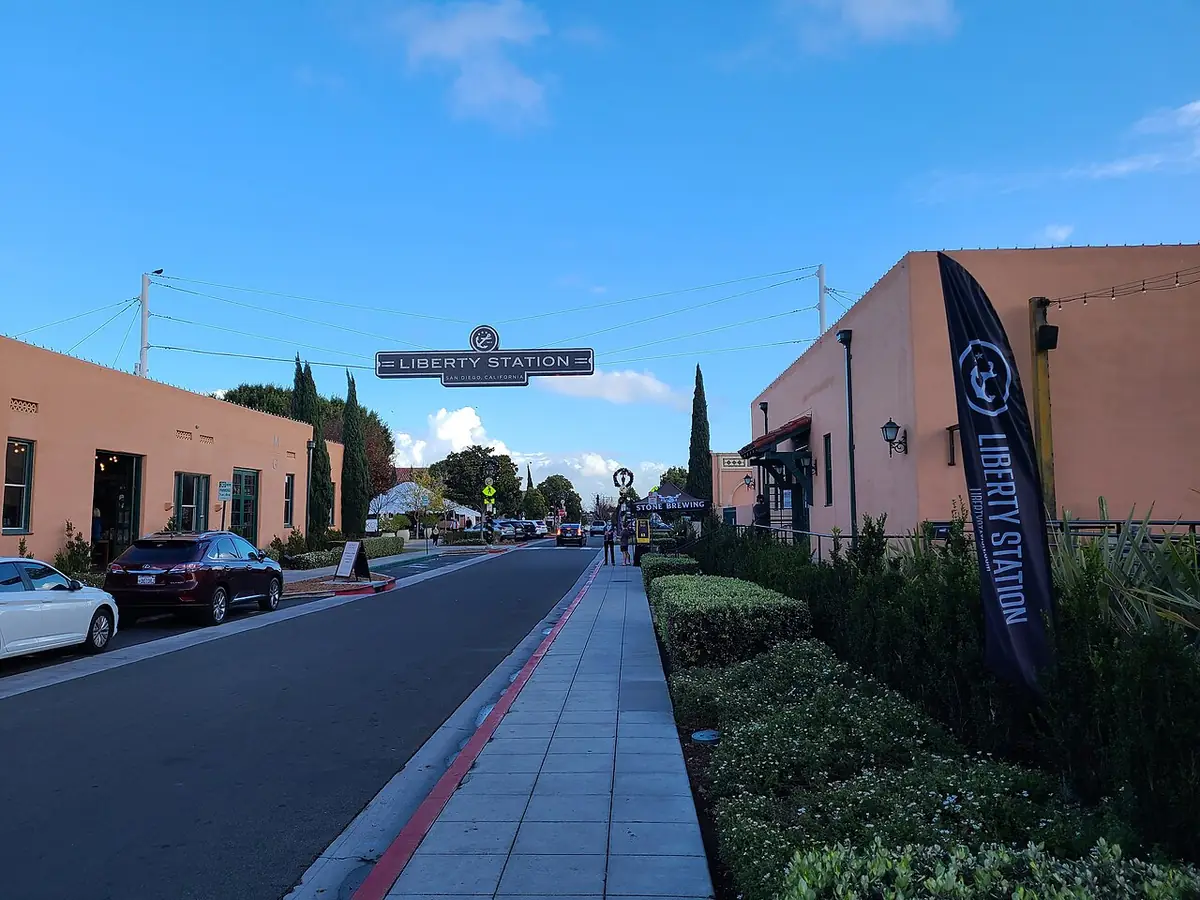
A relaxed shopping street at Liberty Station — Photo: Alan Islas · CC BY-SA 4.0 · Wikimedia Commons
Deciding to buy property in San Diego means looking past the postcards and the promise of perpetual sunshine. It is a heavy financial commitment, framed by strict legal and tax rules that reward patience, financial strength and a long view. If you have the down payment, a horizon beyond seven years and a proven tolerance for the demands of maintenance, the San Diego market offers a quality of life and a capacity to preserve capital that are hard to match anywhere in North America.
If, on the other hand, your working situation is in transition, or your savings leave you no margin for error against the technical surprises inherent in any property, renting with your eyes open is a perfectly respectable alternative. The local rental market is tight, but it gives you the flexibility to explore the city's different neighbourhoods, understand the subtleties of the micro-climates and refine your criteria without risking an irreversible investment mistake in a period of high interest rates.
Your approach should therefore rest on a cool analysis of your own priorities rather than on the fear of missing out or the pressure of the market. Take the time to visit your target neighbourhoods at different hours, to talk to residents who have been there for years and to check every line of your financing plan with a neutral, independent financial adviser. On those terms, and only on those terms, will buying your house in San Diego turn into a genuine success, both financially and in life.
Related questions
How much is property tax on a house in San Diego?
Property tax in California generally runs at around 1.1% to 1.2% of the purchase price of the home. Under Proposition 13, that assessed base cannot rise by more than 2% a year for as long as the property stays in the same hands, which protects owners from sudden jumps in the local assessment.
Do you have to use a real estate agent to buy in San Diego?
Using an agent is not strictly required by law in California, but it is strongly advised. The American transaction system rests on complex standardised contracts, and the help of a buyer's agent is funded entirely by the seller through the overall sale commission.
Which residential neighbourhoods are most sought after by families in San Diego?
Families often favour areas known for the quality of their schools and their green setting, such as Carmel Valley, Scripps Ranch, Poway or Del Mar. These neighbourhoods offer well developed leisure facilities and a strong sense of security, although prices there sit noticeably above the city median.
How do homeowners associations (HOAs) work in shared developments?
An HOA manages the common areas, security and exterior upkeep of a shared development in exchange for a monthly charge known as dues. Buyers must study the HOA's financial documents to check the health of the reserve fund and make sure no special assessment is being prepared.
What are the conditions for getting a mortgage as a foreign buyer in San Diego?
It is entirely possible for a non-resident to obtain a mortgage in the United States, but the terms are stricter. Lenders generally require a larger down payment, often between 30% and 40% of the purchase price, along with proof of sufficient liquid funds held with a recognised financial institution.
What natural risks should you anticipate when buying a house in California?
The main risks to weigh in San Diego County are brush fires in the hill and canyon areas, along with the seismic risk inherent to the state of California. A specific natural disaster policy is often needed to complete standard homeowners insurance cover.
How long does a property transaction take to complete in San Diego?
Once the seller accepts your offer, the closing process (the escrow period) generally takes between 30 and 45 calendar days. That window allows the required technical inspections to be carried out, the financing contingencies to be removed and the transfer documents to be prepared.
Are San Diego property prices likely to fall in the short term?
The San Diego market is supported by demand that structurally outstrips supply, because buildable land is scarce between the Pacific and the mountains. High interest rates slow the pace of transactions, but prices show remarkable resilience through national economic cycles.
What is the due diligence period in a property purchase?
Due diligence is the contractual window during which the buyer can inspect the property thoroughly in every respect: technical, legal and environmental. It is during this period that inspection reports are ordered and that you can negotiate repairs or walk away without penalty.
What costs should you budget for on top of the asking price?
Budget between 1% and 2% of the purchase price for closing costs (escrow fees, title insurance, transfer taxes), plus building inspection fees (roughly $500 to $1,000) and the first homeowners insurance premiums required by your lender.