Settling into the Californian metropolis of San Diego takes careful preparation, because the rental market here is demanding. This guide works through the criteria that matter when you pick an area, keep control of your budget and sign a lease with full visibility.
Get the app
What nobody tells you.
Real prices, hidden costs and the traps to check before you commit.
What renting an apartment in San Diego really means day to day
Scroll
What renting an apartment in San Diego really means day to day
Settling into the Californian metropolis of San Diego takes careful preparation, because the rental market here is demanding. This guide works through the criteria that matter when you pick an area, keep control of your budget and sign a lease with full visibility.
Written by the ting.ad editorial team ·
San Diego in Street View: drag to look around.
To work out whether this way of living suits you, let us look at how your own profile fits into the local urban fabric.
Renting an apartment in San Diego is not simply a matter of enjoying the sun and the Pacific beaches. The property market in this Californian metropolis imposes high financial requirements and strong competition between applicants. Each neighbourhood has its own rhythm, and that rhythm feeds straight into your transport budget and your daily routine. Working through the real trade-offs before you sign a long-term lease is essential.
Beaches and the ocean immediately on your doorstepvsA markedly higher rent per square metre, and often older buildings
Living near the coast exposes you to constant sea humidity and to heavy tourist traffic right through the summer season. Living space there is generally smaller for the same rent you would pay inland.
Exceptional weather all year roundvsA near-compulsory dependence on a car to reach employment centres and services
The weather may invite you to walk, but San Diego's urban sprawl makes daily journeys long and awkward without a personal vehicle. The public transport network stays limited compared with large metropolitan areas elsewhere.
Sustained economic and cultural energyvsA tight rental market that demands speed and a flawless application from the very first viewing
Rental demand far exceeds available supply in the sought-after areas. Landlords and property managers require strict financial guarantees, including multiple forms of income documentation.
A residential, secure settingvsRigorous building rules and side costs that can catch you out
Complexes often come with pools and gyms, but the association dues and the rules governing shared spaces put firm limits on your day-to-day freedom.
What kind of renter are you in the San Diego market?
That local adjustment is sharper still when you arrive with reference points formed somewhere else.
Choosing an apartment in San Diego depends closely on your work priorities, your family situation and how you feel about commuting time. Different renter profiles look for different amenities and experience the city in different ways. A professional working from home will not need what a family with school-age children needs, or what a young worker starting a career here needs.
City centre and activity
You want to keep travel time to the employment hubs as short as possible and enjoy a lively neighbourhood. Central areas such as Downtown or East Village offer recent buildings with amenities built in, at the cost of more pronounced city noise and outdoor space that is often no more than a balcony.
Residential, leafy neighbourhoods
Your absolute priority is the quality of the schools and safe places for children to play. Areas such as the residential neighbourhoods to the north or the surroundings of Mission Valley give you access to larger floor plans, sometimes with a shared garden or a private yard.
Right by the coast
You work from home and want to be able to surf or walk on the beach the moment your working day ends. Coastal areas such as Pacific Beach or Ocean Beach answer that, provided you accept more compact homes and a rental budget weighted towards location.
Moving to San Diego from abroad: what genuinely changes
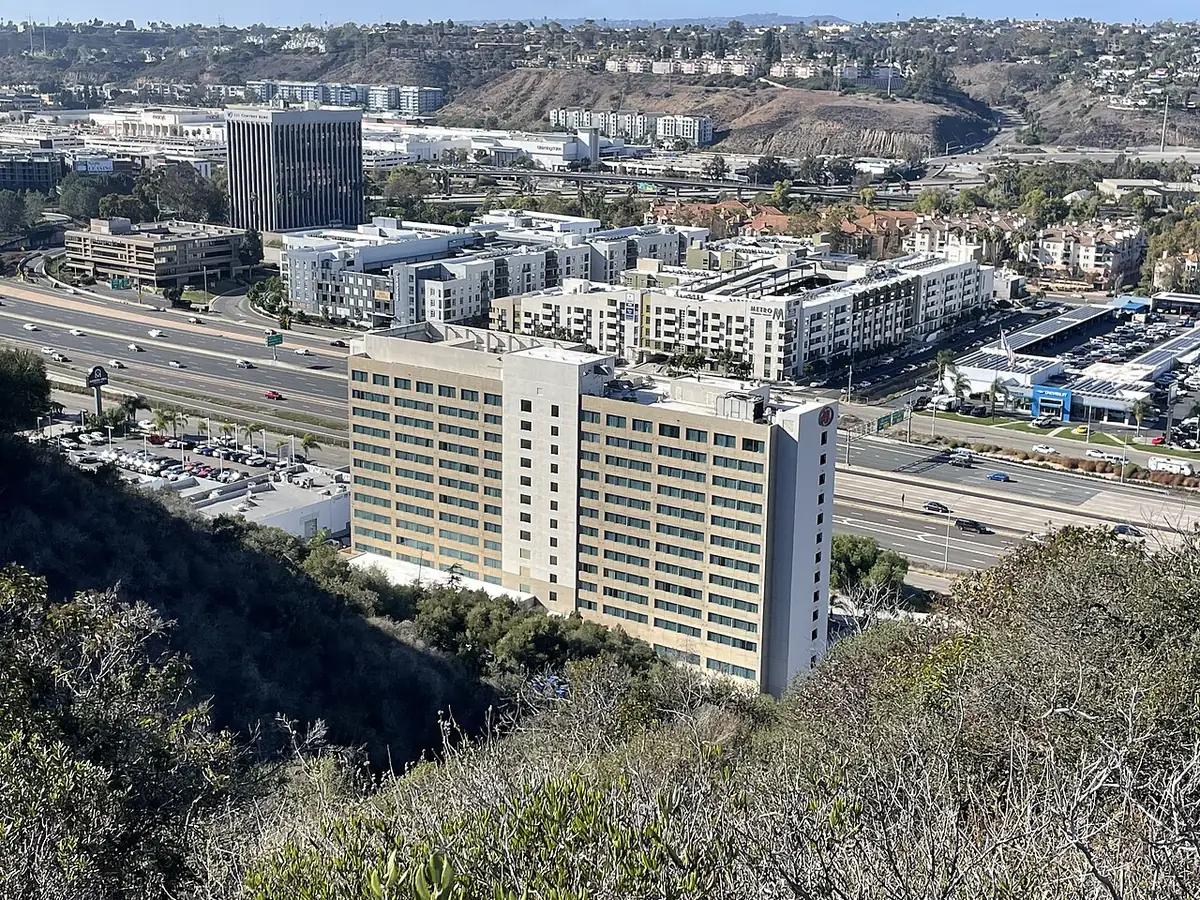
Mission Valley's mid-rise buildings, framed by hills and highway — Photo: Blervis · CC0 · Wikimedia Commons
Once those administrative differences have sunk in, choosing the area becomes your main concern.
Residential renting in the United States, and in California in particular, follows legal and practical rules that sit a long way from what most newcomers are used to. Tenant protection works differently, creditworthiness rests on specific credit scores, and property is managed almost exclusively by professional agencies or institutional management companies.
From abroad
Tightly capped rents and protective eviction procedures in many countries
San Diego
Specific Californian regulation, but a market broadly driven by supply and demand
Landlords have more room to adjust rent when an annual lease is renewed, so you need to anticipate potential increases.
From abroad
A security deposit capped at one month of rent by law
San Diego
A security deposit that can reach the equivalent of several months of rent depending on your local credit history
Without a US credit history (an SSN and a credit score), you will often be asked for additional financial guarantees or an increased deposit.
From abroad
Formal joint move-in and move-out inspections under heavy regulation
San Diego
Detailed photographic inspection reports handled by automated property management systems
You must document every last defect in the apartment yourself the day you move in, to avoid unjustified deductions from your security deposit when you leave.
From abroad
Recoverable service charges clearly itemised and reconciled once a year
San Diego
Variable extra costs covering water, refuse collection, electricity and sometimes upkeep of the shared areas
The advertised rent never reflects your real monthly outlay; you have to budget for significant variable utility costs.
Which San Diego neighbourhood should you settle in?
Those differences in atmosphere and location feed directly into the market's price bands.
San Diego is a mosaic of neighbourhoods with sharply drawn identities, separated by freeways and natural canyons. Where you live determines not only your surroundings but also how easily you settle in socially and how long your daily journeys take. Each area strikes its own balance between city energy, closeness to nature and the budget required.
Downtown and East Village
A dense city feel, set by high-rises, fashionable cafes and the bay right there.
Suits
Young professionals without children and anyone wanting a life lived on foot or by transit.
Trade-off
High city noise levels, visible homelessness on some streets, and small living spaces.
North Park and Hillcrest
A bohemian, artistic spirit, with tree-lined streets, craft breweries and independent shops.
Suits
Those after a lively neighbourhood, a strong creative community and residential architecture with character.
Trade-off
Street parking that is extremely hard to find, and rents climbing steadily because these areas are so popular.
La Jolla and the north coast
A prestigious, peaceful setting, marked by spectacular cliffs, lifeguarded beaches and immaculate green space.
Suits
Families and professionals with comfortable budgets who value quiet and natural beauty.
Trade-off
Rent among the highest anywhere in Southern California, and relative isolation from the business district.
Mission Valley and UTC
Functional planning built around major road corridors, modern shopping centres and recent residential complexes.
Suits
Those who want convenience, quick access to the main freeways and modern amenities built into the complex.
Trade-off
A hard-surfaced, car-centred environment with none of the historic charm or spontaneous walkability of older neighbourhoods.
What does renting an apartment in San Diego really cost?
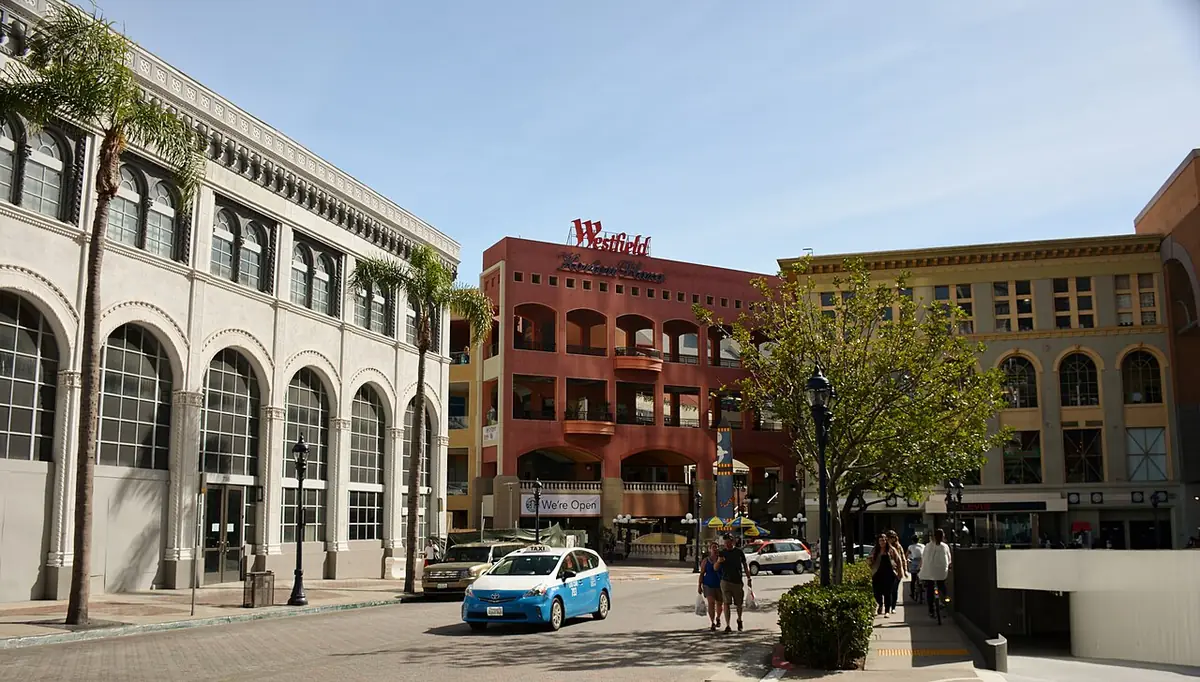
A landmark corner in San Diego's historic Gaslamp Quarter — Photo: Roman Eugeniusz · CC BY-SA 3.0 · Wikimedia Commons
Beyond the raw figures, the legal nature of the homes on offer deserves particular attention.
San Diego's rental market shows high price levels, driven by the scarcity of available land and strong demand from a growing population. Rents vary considerably with floor area, the age of the building and how far the home sits from the Pacific. Building in every compulsory expense is essential if you want to avoid unpleasant financial surprises in the first months.
san-diegoTo rentApartmentestimate
Median price / m²US$31Half the apartments sell below this
Median priceUS$2.65kthe average is 14% higher — a few very large properties pull it up
Most common2 bedrooms42 % of listings
Average size92 m²
By number of bedrooms
Bedrooms
Share of market
Avg price
Price / m²
Avg size
1
38 %
US$2.47k
US$38 +15 %
65 m²
2most common
42 %
US$3.14k
US$33
95 m²
3
17 %
US$3.88k
US$31 −6 %
125 m²
4
3 %
US$4.75k
US$30best value / m²
160 m²
Each row is an average, compared against the area average of US$33 / m². These are indicative estimates of a typical local market, not a measured sample of live listings. Check current listings before relying on them.
Renting a condo or renting from a managed community: what you need to know
Understanding those management structures prepares you for the contract details that matter before you hand over any money.
San Diego's rental stock splits mainly into two kinds of offer: large residential complexes run by institutional companies (apartment communities) and individually owned condos let through agents. Each of these choices carries operational advantages and legal constraints worth weighing before you commit.
Large managed residential complexes (apartment communities)
These developments often include shared amenities at the upper end: a heated pool, a gym open around the clock, coworking space, an on-site manager and sometimes a package concierge. Leasing procedures are standardised, transparent and quick for strong applications.
What it changesYou get an immediate response on maintenance, but you have to accept a strict rulebook, frequent rent increases pegged to market indices and a degree of sameness in the living spaces.
Privately owned condos
These homes belong to individual owners who often hand management to a local real estate agency. They offer more architectural character, locations that are sometimes more tucked away inside residential neighbourhoods, and a direct relationship with a single point of contact.
What it changesRepairs can take longer when something breaks, and the homeowners association (HOA) rules sometimes impose rigid restrictions on the use of shared areas and on parking.
The fundamental rule to understand before you pay any rental deposit
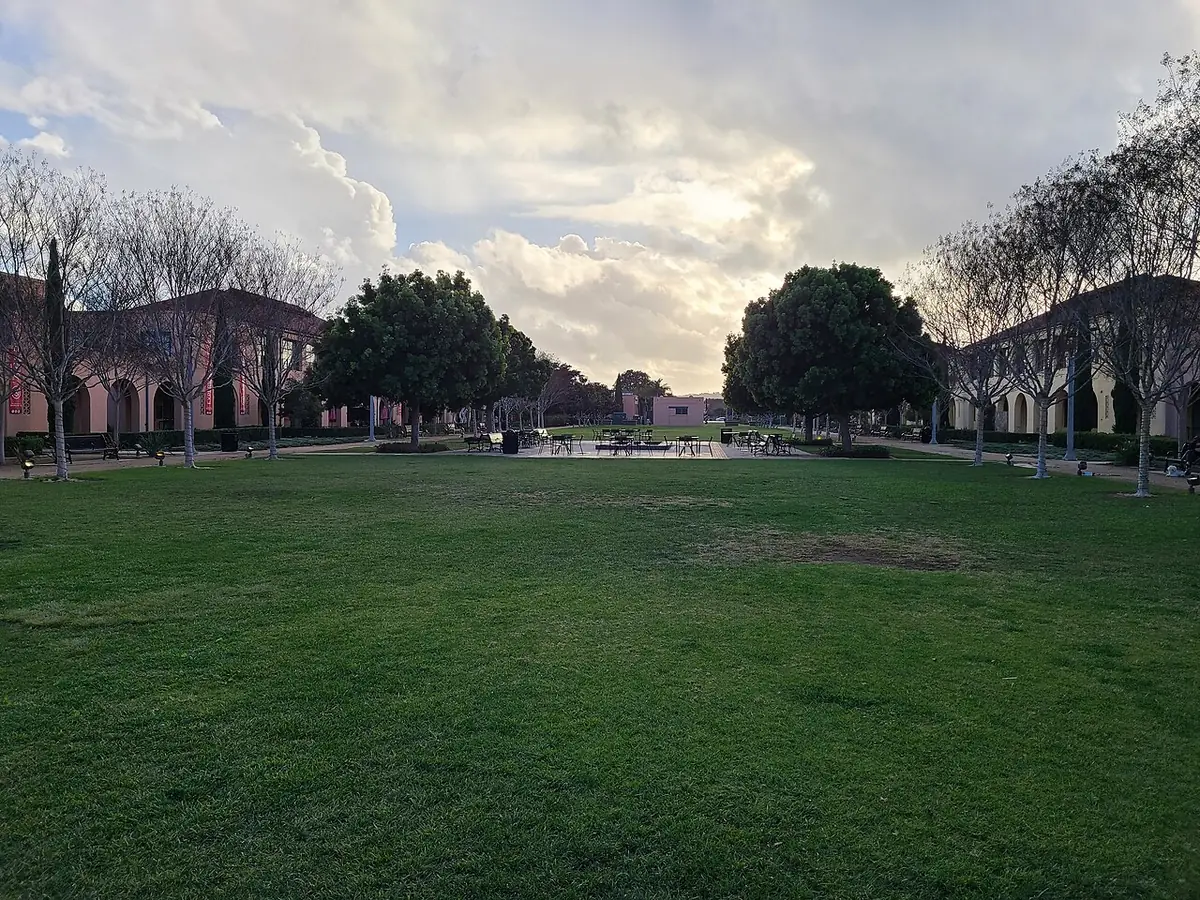
A grand green promenade at Liberty Station — Photo: Alan Islas · CC BY-SA 4.0 · Wikimedia Commons
Once those precautions are in place, the transaction itself follows a precise timetable you need to plan for.
The American rental market unfortunately attracts fraudulent practices aimed at newcomers unfamiliar with local custom. Securing your lease rests on a rigorous sequence of checks, from viewing the property in person through to transferring funds into an official escrow account.
You spot an attractive rental listing online for a well-located apartment in San Diego.
Insist on seeing the home in person, either yourself or through a trusted accredited representative, to confirm the property genuinely exists.
Verify the identity of the landlord or the agency by checking the professional registers of the State of California (the California Bureau of Real Estate).
Refuse, without exception, any payment by instant transfer, money order or cryptocurrency before the lease is formally signed.
Read carefully the clauses covering the return of the security deposit and the conditions for ending the lease early.
You sign a lease that complies with Californian law and pay the funds into the designated escrow account, securing your move-in.
How a rental transaction works in San Diego, step by step
Follow that method carefully and you lay calm foundations for your new Californian life.
Getting a lease in San Diego means following a rigorous, structured procedure. Everyone involved, from the prospective tenant to the property manager, plays a specific part in confirming that the application is solvent and compliant with Californian requirements.
The prospective tenantAssembling the financial fileGather your proof of income (pay stubs, tax returns), your recent bank statements and contact details for your previous landlords, to demonstrate that you are financially reliable.
The agency or property managerViewing and submitting the applicationView the property, complete the official application form and pay the standard application fee that covers the check on your background.
The screening serviceBackground and credit screeningThe landlord assesses your ability to pay, reviews your credit history and confirms there are no past tenancy incidents or court proceedings.
The landlordIssuing and signing the lease agreementReview the clauses of the standard Californian lease, negotiate any specific points if needed, then sign the document electronically.
The tenant and the property managerPaying the initial funds and the move-in inspectionPay the first month's rent and the security deposit by secure transfer, then carry out the photographic move-in inspection before you collect the keys.
Apartment or house in San Diego: weighing upkeep against space
Choosing between an apartment inside a large managed community and a single-family house with a small yard in San Diego depends entirely on how much day-to-day maintenance you are willing to take on and how you want to handle the local climate. Coastal neighbourhoods such as La Jolla or Pacific Beach lean heavily towards vertical, shared living, where the pool, the gym and the upkeep of the building envelope are covered collectively through monthly charges that can be substantial. In exchange you give up the privacy of your own plot and have to work within the strict rules of the homeowners associations, known as HOAs, which govern the use of shared areas, parking and sometimes even the colour of the blinds visible from the street. It is a choice in favour of urban comfort and operational calm, and it suits people working in tech or health care who have no wish to spend their weekends gardening or fixing a roof.
Renting a single-family house, by contrast, means accepting full responsibility for the property, from the lawn irrigation through to keeping an eye on the foundations and the plumbing. Residential areas such as Clairemont, Tierrasanta or the slopes around Mission Hills offer that much sought-after arrangement: a private plot, a closed two-car garage and complete freedom to arrange the outdoor space without a board picking over every detail. That independence, though, is expensive, not only in the rent itself but through the jump in water and electricity bills, especially over the summer months when the air conditioning runs flat out across large, poorly insulated volumes. The financial calculation is therefore not the figure on the lease alone, but the whole set of side effects that come with the lifestyle you want.
For newcomers discovering the Californian market, starting in an apartment gives you an ideal observation period in which to test different neighbourhoods without taking on heavy logistical commitments. You learn which routes clog at rush hour, which coastal microclimates hold morning damp that calls for a little extra heating, and which school zones perform best if you have children. That temporary flexibility avoids the classic mistake of renting or buying somewhere too large, too far out, or laid out in a way that does not match your actual working journeys. Once your bearings are firmly set and you have tested your tolerance for the local quirks, you can move on to a single-family house with real confidence.
What is a realistic budget for living comfortably in San Diego?
With the financial question settled, it is worth looking at how a typical day actually unfolds, to gauge the local logistics.
Building a budget for a move to San Diego means looking well beyond the monthly rent advertised on the listing portals. The local cost of living sits structurally above the American national average, pushed up by energy costs, local taxes and the price of health care. A household has to account for every point of financial friction to avoid running dry in the first months of a tenancy.
Common monthly spending ranges for a household in San Diego
Spending line
One-bedroom apartment
Three-bedroom house
Impact on the budget
Gross monthly rent
$2,200 - $2,800
$3,800 - $5,500
The main line, dictated by how close you are to the ocean.
Energy charges (SDG&E)
$150 - $250
$350 - $650
Among the highest electricity rates in the United States.
Food and groceries
$600 - $800
$1,200 - $1,600
Stores carry a high proportion of organic and local produce.
Renters and health insurance
$250 - $400
$500 - $800
Essential to cover the risks specific to the region.
The amounts shown reflect averages observed on the regular rental market and are in no way a guarantee of price.
Unavoidable extra costs and initial move-in fees
Type of cost
Estimated amount
Frequency
Explanatory comment
Rental security deposit
1 to 2 months of rent
One-off at move-in
Capped by Californian law depending on whether the home is furnished.
Transit pass (MTS)
$72
Monthly per person
A trolley and bus network serving the main corridors.
Parking and tolls
$0 - $200
Monthly
Varies with whether your building comes with an assigned space.
Always keep a reserve equal to three months of total spending before you take the plunge.
Health care, schools, transport: what does an ordinary Tuesday in San Diego look like?
Hillside homes above the bay, a classic San Diego view — Photo: A Guy Named Nyal · CC BY-SA 2.0 · Wikimedia Commons
Beyond that well-oiled routine, plenty of crucial parts of daily life never appear in the marketing brochures.
To judge whether a place will work for you, nothing beats walking through an ordinary weekday hour by hour. Between the commuter flows on Interstate 5 or Interstate 805, the school timetable and access to health care, each hour reveals the strengths and weaknesses of San Diego's urban fabric.
07:30The residential neighbourhood of South ParkAn early departure to avoid the crush on the main roads heading towards the employment centres of Downtown or Sorrento Valley.
08:15The local schoolDropping the children at a public school in the unified district, whose reputation varies sharply from one neighbourhood to the next.
09:00Coworking space or officeLogging on and starting the working day in an office environment that is often full of natural light.
12:30A neighbourhood shopping centre or North ParkA quick lunch break, and a chance to gauge how lively the local food scene and nearby services really are.
17:00Interstate 8 heading for the coastA return journey marked by recurring slowdowns at the major freeway interchanges around Mission Valley.
18:30Supermarket or farmers marketPicking up fresh food for dinner in the relaxed atmosphere typical of Californian life.
What rental listings will never tell you about San Diego
Knowing about those blind spots helps you avoid the disappointments that most often hit newcomers after a few months.
San Diego's rental market has a culture of its own, and unspoken rules that only long-standing residents fully absorb. Between the reality of noise, the subtleties of the coastal microclimates and the real weight of local regulation, several decisive factors are consistently left out of the sales copy.
The flight paths from the international airport
The airport sits a short distance from downtown, and its departure paths run directly over some highly prized residential neighbourhoods such as Bankers Hill or Mission Hills, producing a steady noise level you absolutely must test on site before you sign.
The widespread absence of air conditioning in older stock
Many buildings put up before the 1990s have no central air conditioning, relying instead on the sea breeze. Summer heat waves and rising indoor temperatures make those homes quickly unbearable without spending your own money.
How hard overnight parking is in the dense areas
In lively areas such as North Park, Hillcrest or Ocean Beach, finding somewhere to park after eight in the evening is a genuine ordeal, which makes a private garage absolutely non-negotiable for your peace of mind.
Strict limits on water use
Because of chronic drought in Southern California, municipalities impose irrigation quotas and steeply punitive tiered rates for households that fail to keep their daily water use in check.
The misjudgements you discover six months after moving in
Those hard lessons are a reminder that San Diego does not suit every profile, and that it demands complete clarity about your own requirements.
Looked likeAn ideal coastal location at a low price, with the beach available every day.
Turned outA dark apartment, permanently damp because of persistent morning fog, and overrun by salt air that corrodes anything metal.
Would have caught itAlways viewing homes early in the morning, to see how much light they really get and to check the insulation on the window frames.
Looked likeA central, lively neighbourhood you can reach on foot without using the car.
Turned outConstant night-time noise from the fashionable bars, and through traffic that becomes unbearable at weekends.
Would have caught itSpending a Friday evening on the street in question with the windows open, to gauge the real noise level before you commit.
Looked likeAn attractive rent slightly below market for a spacious home.
Turned outEnormous electricity bills caused by poor insulation and ageing appliances.
Would have caught itAsking the property manager or SDG&E for the energy bills covering the past twelve months.
Looked likeA peaceful building with superb green space and a shared pool.
Turned outA draconian set of association rules and unannounced increases in charges voted through by the HOA board mid-year.
Would have caught itGoing carefully through the minutes of the most recent homeowners association meetings before you sign the lease.
Who should think twice before moving to San Diego
It is time to draw the conclusions from this analysis and decide whether you hold the keys to a successful move to this city.
For all its idyllic climate and a setting envied around the world, San Diego is not a universal promised land. Some personal or professional plans run straight into the economic and structural realities of the region, turning the Californian dream into a permanent source of stress.
The freelancer on a very tight budget
→Renting right in the heart of the city with no savings buffer in place.
The volatility of the cost of living and the pressure on rents demand a solid financial base to absorb a quiet month of work without falling behind on rent.
Anyone wanting absolute rural quiet
→Renting a dense apartment while expecting the calm of a small country town.
Urban density, heavy road traffic and the proximity of major transport corridors create a constant background noise that can weigh heavily on people sensitive to it.
Anyone allergic to administrative constraints
→Ignoring the strict rules of the homeowners associations and the local environmental regulations.
Homeowners associations and local authorities apply rigorous compliance policies backed by immediate financial penalties when the rules are broken.
So, are you ready to make the move to San Diego?
A relaxed shopping street at Liberty Station — Photo: Alan Islas · CC BY-SA 4.0 · Wikimedia Commons
Moving to San Diego is an exciting decision, and it asks you to reconcile high expectations about quality of life with absolute financial discipline. If you have accepted that the sun and the ocean are earned through a substantial housing budget and well-drilled logistics, then the road is wide open. The difficulties that come with Californian city life, whether the cost of energy, the congestion on the road network or the intricacy of residential leases, are entirely manageable once you have seen them coming and planned for them.
Take the time to check your own priorities, separating what belongs to a tourist's daydream from the daily reality of someone working here. Visit several neighbourhoods at different times of day, talk to residents who are well settled, and make sure your finances leave you comfortable room to manoeuvre. San Diego offers an exceptional setting to those who come to it with their eyes open, ready to fit into its energetic rhythm rather than trying to recreate the way they lived somewhere else.
Your housing plan should sit inside a medium-term view, where every constraint you accept translates into a tangible gain in wellbeing and professional opportunity. If that prospect matches your deeper ambitions and your current situation, you now have all the factual material you need to start your rental search with confidence and see your Californian plan through in the best possible conditions.
Related questions
What is the average rent for an apartment in San Diego?
Rent on a standard San Diego apartment generally runs between $2,200 and $3,000 a month for a one or two bedroom unit. The figure swings widely with how far the home sits from the ocean and with the amenities included in the building.
Do you need a car to live in San Diego?
Some central neighbourhoods such as Downtown or Hillcrest have decent public transport connections, but owning or leasing a vehicle remains essential if you want to cover the wider region and reach the various employment centres easily.
Which neighbourhoods are most sought after for renting an apartment?
The most prized areas include La Jolla for its prestigious coastal setting, North Park for its lively cultural scene, and Mission Hills for its historic residential charm. Each neighbourhood has an identity of its own, and that identity sets the price level.
How do electricity charges work with SDG&E?
The utility San Diego Gas & Electric charges some of the highest rates in the United States. Building this line into your monthly budget is essential, particularly if you run air conditioning heavily through the warm season.
What does it take to sign a residential lease in California?
Landlords generally expect a complete file: proof of income equal to roughly three times the monthly rent, a verifiable US credit history, and a security deposit that can reach two months of rent.
Are there particular natural hazards to factor in?
The region carries moderate earthquake risk and pronounced summer drought periods that raise the danger of fire in the outlying hill and canyon areas. Suitable renters insurance is therefore strongly advised.
How do families with school-age children settle in?
The public school system runs on unified districts, and the quality of individual schools depends directly on where the home sits. Many parents study school ratings closely before choosing the neighbourhood they will live in.
Is the rental market tight in San Diego?
The rental market faces demand that structurally outruns available supply, which produces sharp competition for the best value homes and means you have to move immediately when a viewing comes up.
What extra costs should you plan for when moving in?
Beyond the security deposit, budget for the connection fees on water and electricity service, the renters insurance the lease may require, and the cost of transporting your furniture if you are moving from another state.
Can you negotiate the advertised rent?
In a market as tight as San Diego's, the room to negotiate directly on rent stays very narrow, unless the unit has sat vacant for a long stretch or has specific defects the landlord wants to offset.