Buying an apartment in San Diego calls for a clear grasp of how the California market works and of the legal rules that govern it. This guide sets out the essential steps, the price ranges and the criteria that will help you approach the purchase with confidence.
Get the app
What nobody tells you.
Real prices, hidden costs and the traps to check before you commit.
What buying an apartment in San Diego really means day to day
Scroll
What buying an apartment in San Diego really means day to day
Buying an apartment in San Diego calls for a clear grasp of how the California market works and of the legal rules that govern it. This guide sets out the essential steps, the price ranges and the criteria that will help you approach the purchase with confidence.
Written by the ting.ad editorial team ·
San Diego in Street View: drag to look around.
Beyond the purely financial side, the lifestyle question deserves a close look based on your own profile.
Buying property on the southern California coast is about far more than acquiring a certain amount of floor space. Behind the promise of near-permanent sunshine and immediate proximity to the Pacific sit complex market dynamics and strict financial trade-offs. Buyers have to work with high valuations and with running costs that are often underestimated, costs that reshape what returns on the asset really look like. Understanding these basic mechanics lets you approach the California market clear-eyed and avoid the disappointments that come from judging on looks alone.
Asset values supported by a genuine shortage of landvsHOA dues that run notably high
The geography of the city limits how far it can spread, which supports prices over the long term. In exchange, shared services and building maintenance weigh heavily on an owner's monthly budget.
An exceptional outdoor-facing way of lifevsResale liquidity sometimes squeezed by competition from new developments
The Mediterranean climate shapes a lifestyle built around balconies, terraces and shared spaces. That said, the fast turnover of newer stock means you have to stay focused on the intrinsic quality of the location.
Rental demand underpinned by technology and university employmentvsStrict rules on short-term letting
A skilled workforce guarantees a stable, creditworthy tenant base. Even so, city restrictions tightly control seasonal letting in order to protect the balance of neighborhoods.
What kind of buyer are you in the San Diego market?
This lifestyle choice marks a clear break with the housing norms buyers arrive with.
Matching a property purchase to the buyer's actual daily rhythm is the cornerstone of a successful investment. San Diego neighborhoods differ sharply from one another, running from the bustle of the business districts to the residential calm of the coastal enclaves. Looking honestly at your day-to-day situation is what pinpoints the area and the type of home that can absorb your professional and personal constraints without excessive compromise.
The remote worker after an easier pace
You want a bright space with a workable desk corner and quick access to the outdoors. Semi-residential neighborhoods slightly back from the core offer more generous floor areas for the same budget. That gives you a setting that supports concentration while keeping the beaches close for your breaks. This option prioritises the quality of the interior space and acoustic calm.
The city-life and easy-mobility buyer
Your absolute priority is cutting travel time and having culture and food on your doorstep. Apartments in the busier zones meet that requirement despite floor areas that are often more compact. You accept urban density in exchange for constant activity and excellent access to public transport. Resale and rental values tend to hold up better here.
The medium-term asset strategist
You are planning a gradual move to a sunnier setting while securing a tangible asset today. The emphasis is on building security, the quality of concierge services and proximity to healthcare. You hand off day-to-day management while keeping a base that works from the moment you arrive. This route means reading the HOA rules carefully to avoid restrictions on how you can use the home.
What changes fundamentally when you buy in San Diego rather than back home?
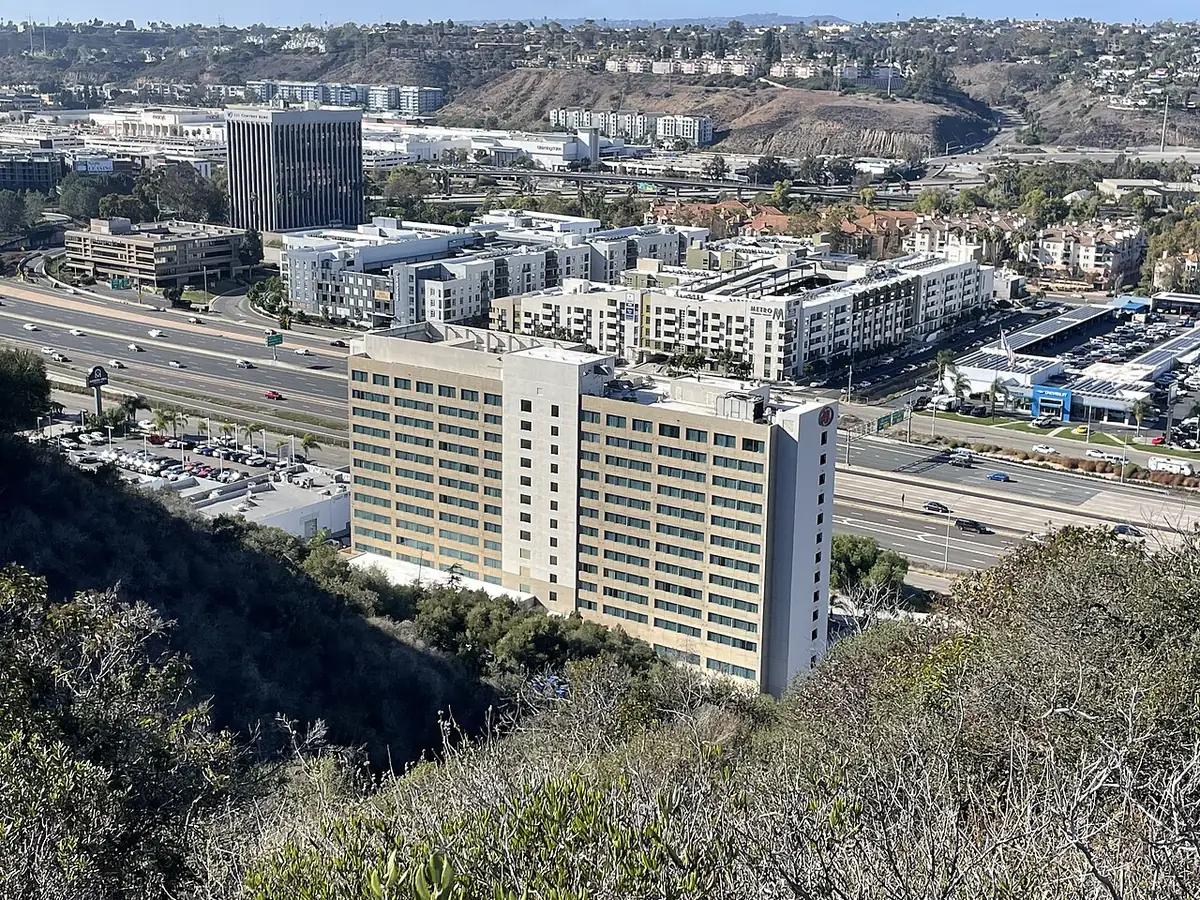
Mission Valley's mid-rise buildings, framed by hills and highway — Photo: Blervis · CC0 · Wikimedia Commons
That structural shift translates, in practice, into a careful choice between the different neighborhoods of the city.
The American property system rests on legal, financial and cultural rules that are deeply different from those most international buyers grew up with. Moving from a system built around a single official deed to the California model of escrow and recorded title unsettles familiar reference points. From local taxation to the fine print of purchase contracts, every stage calls for methodical adaptation if the transaction is to go through without unpleasant surprises.
From abroad
A legal framework built on one centralised official deed signed before a single public officer
San Diego
A process run through an independent escrow company, with title insured and guaranteed
The transaction does not rest on one person but on cross-checks of title and of prior debts, which makes the purchase safer while stretching out the administrative timeline.
From abroad
Transfer and closing fees set as a fixed percentage of the value of the property
San Diego
Closing costs split between the parties, plus local property taxes reassessed on the municipal valuation
The recurring cost of holding the property includes a significant local tax that funds public services and schools in the area directly.
From abroad
Rents and residential leases tightly controlled by national law
San Diego
Homeowners associations (HOAs) with wide regulatory power over daily life
The CC&Rs can impose strict limits on pets, letting and alterations, which changes an owner's freedom of use profoundly.
From abroad
Negotiation that is often informal and governed by tradition
San Diego
A formal offer made through a standardised binding contract with strict contingency clauses
Every financial and timing commitment is contractually binding, which is why specialist agents are involved from the very first proposal.
How do you compare the main residential neighborhoods objectively?
Once the area is settled, working through the real price ranges becomes essential to building your budget.
Greater San Diego is a mosaic of neighborhoods with strong individual identities, each answering specific expectations about lifestyle and budget. Between the cultural energy of the center, the relaxed feel of the coastal zones and the green calm of the inland heights, the area you pick determines your daily experience. Weighing the trade-offs particular to each zone is what aligns your personal requirements with the reality of the local market.
Downtown and Marina
A dense urban atmosphere, paced by the working day, cultural offerings and the bay right there.
Suits
Buyers after a walkable life, direct access to services and strong long-term rental demand.
Trade-off
A high price per square meter, significant density and a distinctly urban setting that brings noise and regulated parking.
Hillcrest and North Park
A creative, artistic village feel, defined by independent cafes, local shops and historic architecture.
Suits
Those who value neighborhood life, a social mix and a friendly, human-scale atmosphere.
Trade-off
Apartments often sit in older buildings that call for renovation budgets and carry specific maintenance charges.
La Jolla and the coastal areas
A spectacular natural setting facing the ocean, combining protected seascapes, residential calm and a high-end feel.
Suits
Buyers with substantial budgets seeking a first-rate asset backed by an exceptional environment.
Trade-off
Liquidity can be limited by how few homes come up, and taxes and HOA dues are very expensive.
What are the budget realities and the price ranges seen in the market?
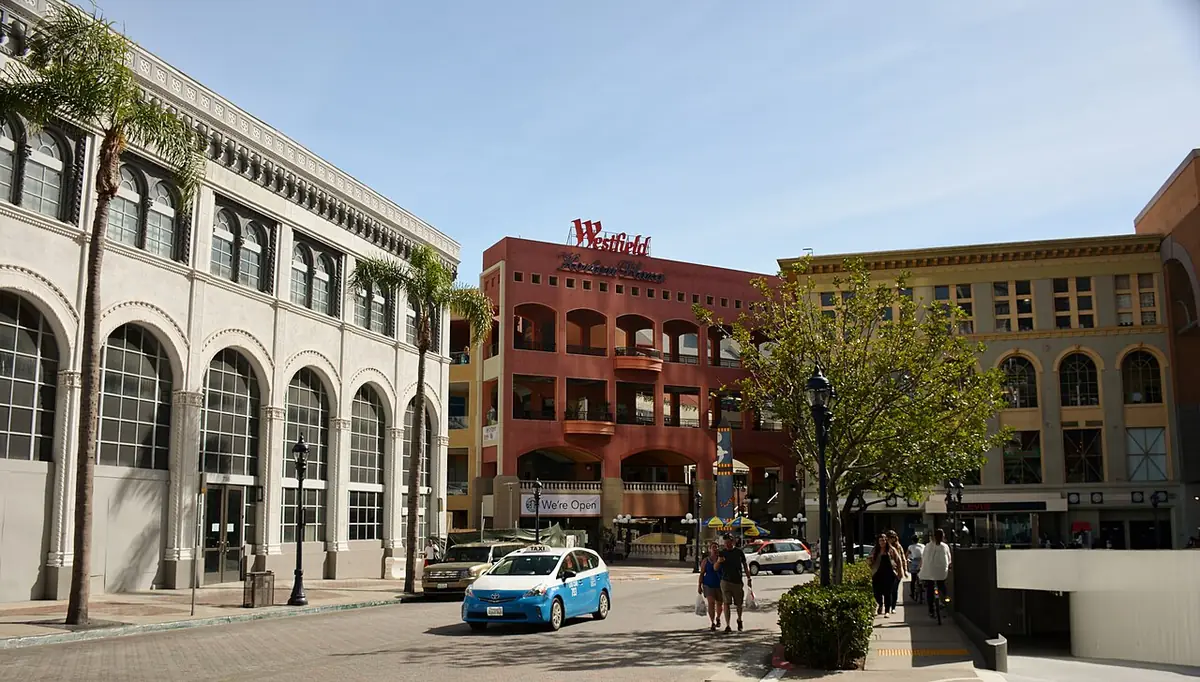
A landmark corner in San Diego's historic Gaslamp Quarter — Photo: Roman Eugeniusz · CC BY-SA 3.0 · Wikimedia Commons
Beyond the headline purchase price, the legal nature of the ownership rights deserves particular attention.
Pricing a purchase in San Diego accurately means cross-reading price per square foot against the types of homes on offer. Price variation is explained mainly by proximity to the coast, the age of the construction and the quality of the shared amenities the building provides. The figures below reflect observed market trends rather than a fixed price list.
san-diegoFor saleApartmentestimate
Median price / m²US$6,460Half the apartments sell below this
Median priceUS$625kthe average is 14% higher — a few very large properties pull it up
Most common2 bedrooms42 % of listings
Average size92 m²
By number of bedrooms
Bedrooms
Share of market
Avg price
Price / m²
Avg size
1
38 %
US$508k
US$7,820 +15 %
65 m²
2most common
42 %
US$646k
US$6,800
95 m²
3
17 %
US$799k
US$6,392 −6 %
125 m²
4
3 %
US$979k
US$6,120best value / m²
160 m²
Each row is an average, compared against the area average of US$6,800 / m². These are indicative estimates of a typical local market, not a measured sample of live listings. Check current listings before relying on them.
Which form of legal ownership should you favour for your purchase?
That legal structure sits inside a strict procedural calendar you need to master from the very first offer.
The American market offers two main legal structures for multi-unit housing: the classic condominium and the housing cooperative. Each brings its own governance, its own rules for transferring ownership and its own financial responsibilities. Knowing these distinctions helps you avoid getting stuck at resale or at the board approval stage.
The classic condominium
You own your interior unit outright plus an undivided share of the common areas. The HOA board manages general upkeep of the building through mandatory monthly dues. This model offers considerable flexibility for resale and for letting, subject to the building's rules.
What it changesYou keep full control over your own asset while taking part in the collective decisions that cover major structural work.
The cooperative (co-op)
You buy shares in a legal entity that owns the whole building, together with an exclusive occupancy lease on your unit. The cooperative board has final say over every new buyer and often imposes very strict financial and use criteria.
What it changesPurchase prices tend to be slightly lower, but you accept close scrutiny of your financial history and restrictions on letting the home out.
Which critical stages must you clear before committing to the purchase?
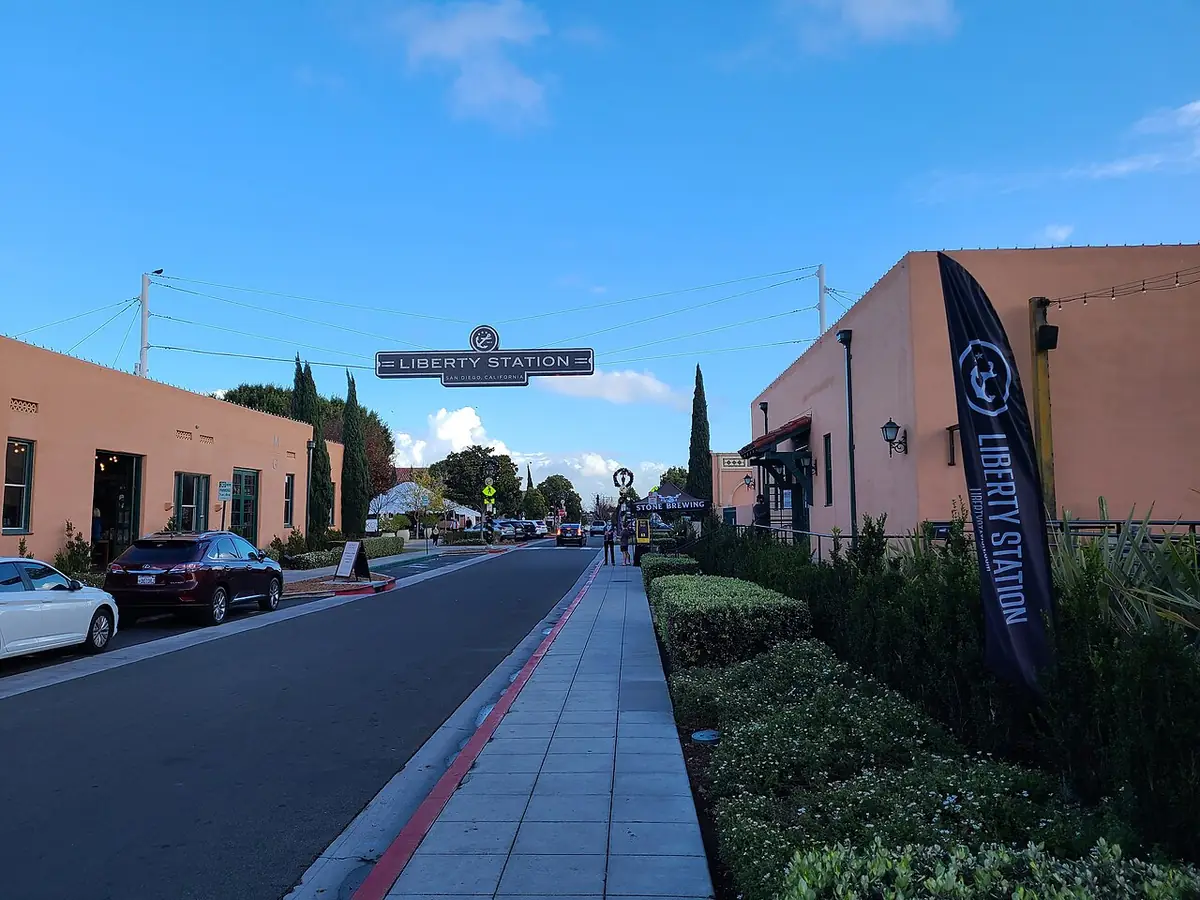
A grand green promenade at Liberty Station — Photo: Alan Islas · CC BY-SA 4.0 · Wikimedia Commons
Carrying that sequence through takes the coordinated involvement of several different professionals.
Completing a purchase in San Diego follows a precise procedural sequence designed to protect the interests of both buyer and seller. From the initial offer through to the final transfer of title, every stage carries contingencies you have to respect to the letter. Ignoring these deadlines exposes a buyer to losing financial protections or the earnest money deposit.
Drafting the formal purchase agreement
Opening the escrow account with an independent company and paying the initial earnest money deposit.
The period for technical and physical investigation of the property by certified experts (the home inspection).
A thorough review of the HOA documents, including financial statements and board meeting minutes.
Final mortgage approval and sign-off on the independent appraisal.
Signing the transfer documents and officially recording the title (closing).
Who is involved at each stage of your transaction, and what exactly do they do?
The regulatory complexity of the California market makes professional support with clearly defined roles essential. Rather than centralising everything with one office, an American transaction spreads responsibility across independent specialists. Understanding contracts, verifying title and arranging finance all rest on close collaboration between these players.
The buyer's agentAdvice and strategic negotiationThey act for you alone when the offer is drafted, analyse market comparables and negotiate the terms of the sale contract at your side.
The escrow officerNeutrality and handling of fundsThey centralise all the financial and legal paperwork, collect the funds and make sure every contingency is satisfied before the final transfer.
The home inspectorTechnical and structural auditThey carry out a full examination of the building's condition, the plumbing, the wiring and the roof to identify hidden defects or work that lies ahead.
The title companyLegal certainty and historyIt checks that there are no liens, debts or prior legal disputes attached to the property and issues the title insurance that guarantees clear ownership.
The loan officerPutting the mortgage togetherThey assess how much you can borrow, select the financing options that suit your tax profile and coordinate the release of funds.
Apartment or single-family house in San Diego: weighing shared ownership against owning outright
Once you have settled on a condo or a house, the unavoidable question of the total monthly cost of living arrives immediately.
Choosing between a condo apartment and a single-family house in San Diego is not settled by taste alone, nor by a quick comparison of floor areas. It commits you first to a way of living day to day, shaped by the particular urban layout of this California city, where the climate keeps outdoor space in use almost all year. Condominiums, often grouped into complexes with built-in services, appeal through the promise of outsourced maintenance, freeing owners from responsibility for roofs, facades and shared gardens. That formula suits buyers who prize a central location and immediate proximity to the coast or to the livelier districts, precisely where single-family houses are scarce and command considerable prices. In exchange, condo ownership brings monthly dues whose increases are largely outside any individual owner's control, along with rules that can be strict about exterior alterations and vehicle parking.
Going the other way, choosing a single-family house in San Diego, whether in the hilly residential districts or in the subdivisions of the inner ring, completely redefines your freedom to alter the property and to build up land as a lasting asset. Owning the parcel the building sits on removes any uncertainty tied to the decisions of an owners' meeting, but it shifts the entire financial and logistical burden of maintenance onto the owner alone. In a region with strict rules on water management and on preventing brush fires, looking after a garden and the exterior structure represents a substantial commitment of time and money that should never be underestimated when you run your first financial projections. Families with children, and buyers who want maximum freedom over energy upgrades and future extensions, consistently favour this option, accepting slightly longer journeys to downtown employment or to the region's technology hubs.
The final choice between these two types of property in San Diego therefore comes down to how long the buyer expects to stay in the city and how much tolerance they have for the uncertainties of collective management. If the horizon is five to seven years, the condo apartment generally offers better liquidity and an easier entry into the local market, thanks to buying and selling procedures that tend to be more standardised. For a plan spanning a decade or more, the single-family house is the sturdier hedge against local property inflation, backed by the sheer scarcity of available land inside the city limits. In either case, careful analysis of the recurring costs, whether HOA dues or local property taxes, remains the decisive test of whether the deal makes economic sense over the long run.
What total monthly budget should you plan for to live comfortably in your San Diego home?
To see how those costs fit into daily life, let us look at how an ordinary day in the city actually unfolds.
Buying an apartment in San Diego is not just about repaying the mortgage and paying the local property tax. You have to build in all the unavoidable expenses that make up the real cost of occupying the home month after month. The mild swings of the California coastal climate feed directly into energy bills, while shared building services weigh heavily on day-to-day cash flow. Here is a realistic breakdown of the monthly costs recorded for a standard two-bedroom apartment in the city's mid-range neighborhoods.
Estimated recurring monthly costs for an apartment in San Diego
Cost item
Estimated amount (USD)
Nature of the cost and how much it varies
HOA dues
$350 - $700
Varies with shared amenities, including pool and security staffing.
Property tax
$450 - $850
Based on the original purchase value, estimated at roughly 1.1% to 1.2% of the price.
Owner's insurance (HO6)
$60 - $120
Covers interior walls, liability and specific hazards.
Electricity, gas and water
$150 - $300
Heavily influenced by air conditioning use during the hot season.
Internet and connectivity
$70 - $110
Standard rates charged by local telecoms providers.
These amounts are indicative and depend on the age of the building, its precise location and the exact floor area of the home purchased.
Health, schools, transport: what does an ordinary Tuesday look like for an owner in San Diego?
Hillside homes above the bay, a classic San Diego view — Photo: A Guy Named Nyal · CC BY-SA 2.0 · Wikimedia Commons
Beyond that well-drilled routine, the local market has subtleties the sales brochures consistently leave out.
Grasping what a San Diego purchase really involves means picturing the logistics of an ordinary weekday. Between morning trips on congested freeways, everyday errands and access to healthcare or schooling, the location of the apartment directly determines quality of life. This timeline sets out the key moments and typical journeys of a resident settled in a busy residential neighborhood of the metro area.
07:30Residential neighborhood (for example North Park or Hillcrest)Leaving home after checking access to the building's secure parking and getting the working day organised.
08:15Main highway (I-5 or I-8)The morning drive towards the employment centers, subject to the usual California rush-hour slowdowns.
09:00Business park or office districtArriving at work, settling into the office and working through the morning's files.
12:30Local shops and quick, healthy lunch spotsA midday break in the neighborhood, scoping out what the local businesses offer and picking up a few things at a convenience store.
17:30School or after-school careCollecting the children within the strict hours the local providers set, which usually means a heavy drive home.
19:00Home and the shared outdoor spaceBack at the apartment, using the building's amenities such as the pool or the terrace, and winding down for the evening.
What listings leave out about apartments in San Diego
These blind spots regularly lead unprepared buyers into misjudgements they regret a few months after moving in.
The San Diego market is fiercely competitive, and marketing material naturally leads with the visual, light-filled qualities of the homes on offer. Even so, several major structural factors are routinely played down, or left out of the initial descriptions altogether. Knowing these realities in advance is what prevents heavy financial disappointments after the deal closes with the escrow and title company.
The state of the HOA finances and reserves
An association with unusually low monthly dues is often badly short of reserves for future major work. If the roof or the main pipework has to be replaced, owners face special assessments that can run into tens of thousands of dollars.
The strict limits on short-term letting
The City of San Diego enforces extremely tight rules on Airbnb-style short-term rentals. Buying an apartment expecting seasonal tourist income to cover part of the mortgage often turns out to be illegal, or dependent on a permit with a waiting list several years long.
Noise from transport corridors and flight paths
San Diego International Airport (SAN) and the major freeways sit close to many popular residential neighborhoods. A Sunday morning viewing tells you nothing about the real noise level on a weekday at rush hour or during commercial landing approaches.
The severe parking and neighbor rules
Many buildings allocate far too few parking spaces for households with two vehicles. Street parking is governed by weekly street-sweeping rules or by residential permit zones that are complicated to get into.
The most common regrets six months after buying in San Diego
These hard-won lessons show that buying in San Diego does not suit every kind of buyer.
Looked likeAn ideal financial opportunity, with modest HOA dues at the moment the deal closed.
Turned outA sharp rise in dues voted at the very first owners' meeting to cover a shortfall on elevator and pool maintenance.
Would have caught itInsisting on full access to the minutes of the last three HOA meetings before you release the purchase contingency.
Looked likeAn extremely calm, peaceful neighborhood on a first viewing one sunny Saturday afternoon.
Turned outA very noisy through road from Monday morning on, because of delivery trucks and a fire station nearby.
Would have caught itMaking at least three visits at different times and on different days, in particular on a weekday at rush hour and in the evening.
Looked likeA floor plan perfectly optimised to house a couple who both work from home.
Turned outA complete absence of sound insulation between the party walls, making daily remote work exhausting and stressful.
Would have caught itTesting the acoustics by making noise in the adjoining room, or by reading the independent inspection reports.
Looked likeA central location that would remove any need for a car to reach shops and everyday services.
Turned outHilly local terrain that makes walking or cycling far more tiring than expected during the summer heat.
Would have caught itWalking the various routes to essential amenities yourself to judge how workable they really are day to day.
Which buyers should be firmly advised against buying in San Diego?
With those warnings taken on board, it is time to take a final view of how ready you are for this purchase.
The general enthusiasm the California lifestyle inspires sometimes pushes poorly suited buyers into risky purchases. The San Diego market demands rock-solid finances and a flexibility that certain lifestyles or career paths simply cannot support. Here are the profiles for whom buying in this city is a highly hazardous decision.
Investors after immediate, high rental returns
→Buying an older condo apartment in order to let it out short term.
The ratio between high purchase prices and controlled or moderate rents does not deliver attractive gross yields, especially once taxes and HOA dues are deducted.
Households with very limited emergency savings
→Putting every last dollar of their own funds into the deposit and the closing costs, keeping no reserve.
The slightest equipment failure or increase in running costs pushes the household straight into a cash squeeze and a risk of missed payments.
Professionals whose work may move them on at short notice
→Buying with the idea of reselling easily at a profit within three years.
High transaction costs, including agency commissions and local transfer taxes, mechanically wipe out any potential gain over such a short period.
So, are you really ready to go ahead with buying in San Diego?
A relaxed shopping street at Liberty Station — Photo: Alan Islas · CC BY-SA 4.0 · Wikimedia Commons
Committing to an apartment or a house in San Diego is not a whim prompted by California sunshine; it is a carefully weighed decision that ties up your financial stability for years. If you have gone through the recurring HOA dues rigorously, accepted the logistical constraints of daily city life and built a cash cushion large enough to absorb the unexpected, then your plan rests on solid, durable foundations. The local market consistently rewards buyers who are patient, methodical and clear-headed, the ones able to look past the glossy promises of a listing and examine the technical and financial reality of a property.
Take the time to confirm your borrowing capacity with reputable lenders, and to view properties repeatedly at different hours of the week, before you put in any offer. Support from honest professionals who are independent of any sales pressure is likewise an essential shield for securing each legal step of the transaction. Do it that way and you will turn your move to San Diego into a lasting success, fully in step with your personal and professional plans in this remarkable city.
Related questions
What do HOA dues typically cost for an apartment in San Diego?
HOA dues generally run between $350 and $700 a month for a standard two-bedroom apartment, depending on the age of the building and on shared amenities such as a pool, a gym or a security service.
Do you need a large down payment to buy property in San Diego?
It is strongly advised to have a down payment worth at least 20% of the purchase price, plus a cash reserve equivalent to six months of dues and mortgage payments to absorb the unexpected.
Which neighborhoods are most sought after for buying an apartment in San Diego?
Downtown, North Park, Hillcrest and La Jolla are among the most popular areas, each striking a very different balance between urban buzz, beach access and residential quiet.
How is property tax calculated on a home in California?
Property tax is generally estimated at around 1.1% to 1.2% of the original purchase value of the home, with annual increases tightly capped by California state law.
Is it easy to rent your apartment out short term, Airbnb style, in San Diego?
No. The city applies extremely strict rules that sharply limit the number of short-term rental licenses, with long waiting lists and heavy fines for breaches.
How does the international airport affect the local property market?
The immediate proximity of San Diego International Airport brings significant aircraft noise to several central and coastal neighborhoods, a point you should check carefully before signing anything.
How long does it usually take to complete an apartment purchase in San Diego?
A standard transaction generally takes between 30 and 45 days from acceptance of the offer to the final transfer of title through the escrow officer.
Do you need specific insurance cover in a coastal area?
Yes. On top of the standard condo policy, some areas call for additional cover, in particular against specific natural hazards or damage linked to salt air and moisture.
How can foreign buyers finance a purchase in San Diego?
Non-resident buyers generally have to present a robust international credit file and should expect to put down a larger share themselves, often between 30% and 40% of the value of the property.
What should you watch for when reviewing the HOA accounts?
Check that reserves are sufficient to fund future major work, so that you are not hit with large special assessments within the first months after moving in.