Settling into a house in Birmingham means understanding its residential districts, handling a demanding rental market and anticipating the real day-to-day costs. This independent guide takes you step by step through structuring a move to the West Midlands.
Get the app
What nobody tells you.
Real prices, hidden costs and the traps to check before you commit.
What you actually get renting a house in Birmingham
Scroll
What you actually get renting a house in Birmingham
Settling into a house in Birmingham means understanding its residential districts, handling a demanding rental market and anticipating the real day-to-day costs. This independent guide takes you step by step through structuring a move to the West Midlands.
Written by the ting.ad editorial team ·
Avenue Road, Birmingham in Street View: drag to look around.
Renting a house in the West Midlands changes your daily life substantially against an urban flat or a cramped city-centre unit. Between the space available, maintaining the outside and the distance from the centre, the trade-offs are real.
Generous floor area and separate roomsvsLonger journeys to the business hubs
You finally get volumes that work for home working and storage, but you accept being further from the centre's immediate activity, or peak-hour traffic on the roads and railways.
Direct access to private outdoor spacevsRegular and unpredictable maintenance
A garden and a detached structure give families and pet owners incomparable freedom, but they bring responsibility for the state of the building and grounds that the tenancy usually places on the occupier.
A place in an established residential neighbourhoodvsGreater distance from the evening cultural offer
Living in these areas means joining a genuine, calm local community, at the cost of the spontaneity of walking to a concert or a restaurant from a central flat.
Does a house in Birmingham genuinely suit how you live?
Not every profile benefits equally from renting a house in this changing English city. Arriving alone for work, as a couple with long-term plans or with school-age children produces quite different answers.
Stability and space
Families find in Birmingham's residential districts the space to settle, with multiple bedrooms and parks within walking distance. Proximity to well-regarded schools usually drives the choice of location, frequently at the cost of being close to the centre. Plan for peak-hour journeys and for the cost of heating a larger property.
A dedicated study and quiet
Having a spare room that becomes an office changes the quality of working life considerably. The quieter outer rings support concentration, away from the noise of the main roads. In exchange, check the broadband quality carefully and how close the everyday essentials are, or the calm becomes isolation.
Settling in
A two- or three-bedroom terraced house in an established district gives you room to grow without committing to the outer suburbs. Check the EPC rating closely, since Victorian terraces are frequently expensive to heat.
Living here when you come from abroad
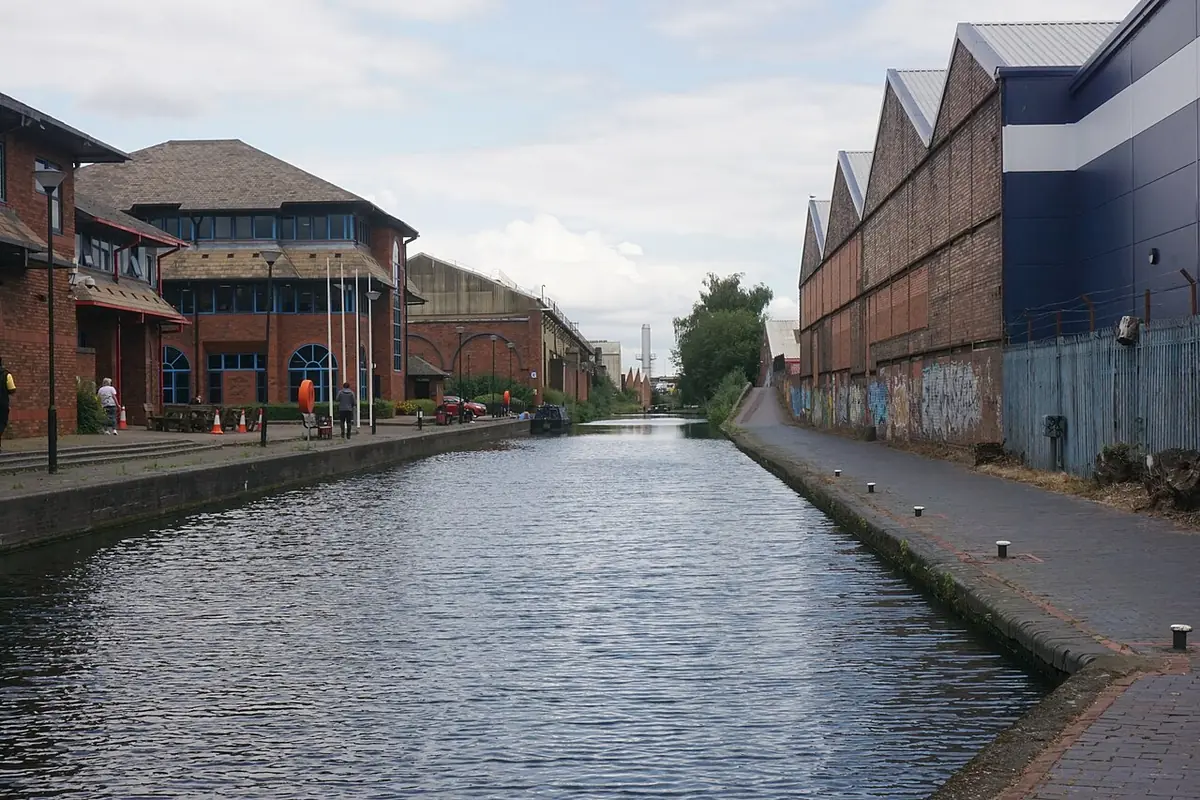
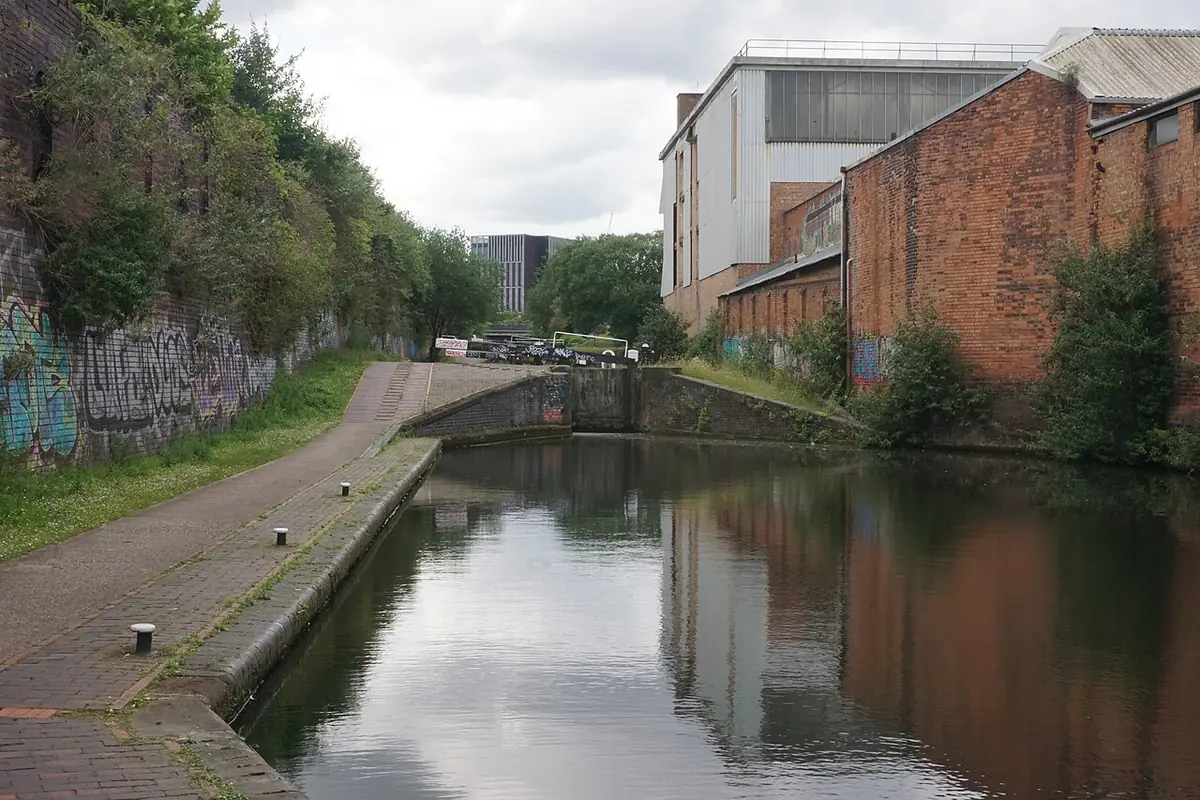
The canal towpath near Aston, part of daily life around the city's waterways — Photo: Bill Boaden · CC BY-SA 2.0 · Wikimedia Commons
Moving into an English house confronts anyone used to continental standards with distinctive building traditions and contractual practices. The letting system here runs on its own rules.
From abroad
Rental stock often managed by appointed property administrators
Birmingham
A relationship tightly framed by certified agencies and professional inventories
Every detail of the property is recorded in an exhaustive check-in report, and the rigour of that document directly determines whether your deposit comes back in full.
Older stock with highly variable energy performance, published as EPC ratings
Check the energy rating before committing, because heating costs can weigh heavily on your monthly budget through the long winter months.
From abroad
A residence tax paid by the occupier on national criteria
Birmingham
Council Tax, calculated by the local authority according to the property's assessed value
This local tax is a significant monthly cost that belongs precisely in your budget from the moment you shortlist a house.
From abroad
Utilities frequently bundled or managed collectively
Birmingham
Separate accounts for electricity, gas, water and broadband, all in your name
Budget for four or five separate monthly bills and set them up in the first week, since the supply does not transfer automatically.
Which district should you settle in?
Birmingham's urban geography is a mosaic of districts with strongly marked identities, moving between student energy, green residential calm and a village feel. Each offers a different balance.
Harborne
A pronounced village character, with independent shops, busy cafés and tree-lined streets close to the university.
Suits
Families and professionals wanting a good-quality, secure setting with genuine neighbourhood life.
Trade-off
Among the highest rents outside the centre, and strong competition for available property.
Moseley
A bohemian, creative atmosphere, paced by farmers' markets, remarkable green space and an active community life.
Suits
Couples and professionals drawn to alternative culture, historic parks and local sociability.
Trade-off
Public transport links to the centre that lack fluidity at peak road hours.
Sutton Coldfield
An exceptional semi-rural setting dominated by the vast Sutton Park nature reserve on the doorstep.
Suits
Those who need large green spaces, strong schools and a genuinely quiet environment for children.
Trade-off
The greatest distance from the centre, and a commute that lengthens noticeably at peak times.
What does renting a house here actually cost?
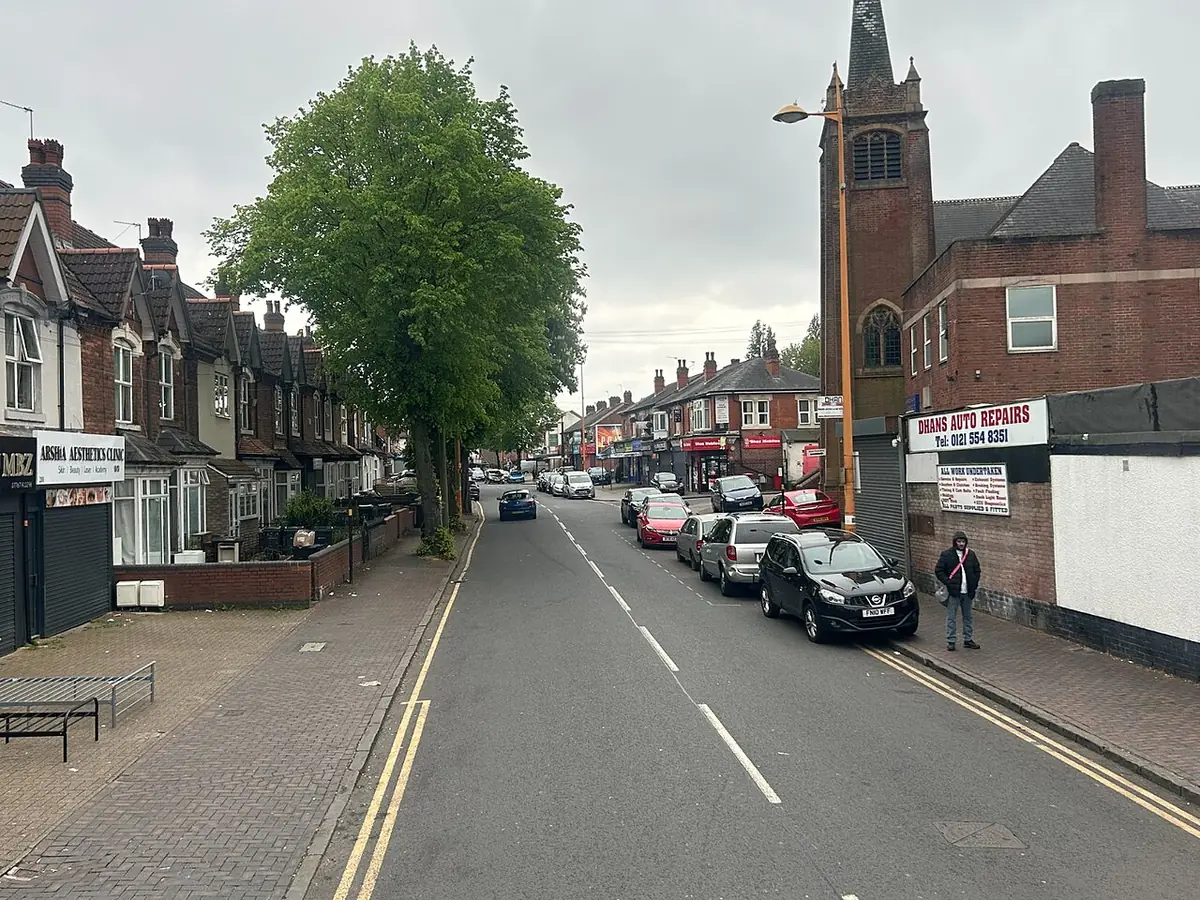
A typical Handsworth high street, shops below flats and houses nearby — Photo: Philip Halling · CC BY-SA 2.0 · Wikimedia Commons
The market for detached and terraced houses in Birmingham reflects the economic variation of the West Midlands. Beyond the advertised rent, your total budget must include the compulsory charges — the local tax and energy above all. Anticipating those makes the tenancy sustainable across its full term.
birminghamTo rentHouseestimate
Median price / m²£14Half the apartments sell below this
Median price£1.68kthe average is 14% higher — a few very large properties pull it up
Most common2 bedrooms69 % of listings
Average size114 m²
By number of bedrooms
Bedrooms
Share of market
Avg price
Price / m²
Avg size
2most common
69 %
£1.68k
£15
114 m²
3
26 %
£2.14k
£14best value / m²
154 m²
4
6 %
£2.73k
£14best value / m²
201 m²
Each row is an average, compared against the area average of £15 / m². These are indicative estimates of a typical local market, not a measured sample of live listings. Check current listings before relying on them.
What you can actually expect as a tenant
Renting in the UK confers precise rights while imposing a strict contractual framework that differs noticeably from continental practice. The standard agreement, generally an assured shorthold tenancy, defines both.
Quiet enjoyment and privacy
The landlord cannot enter the property without your express prior agreement, except in a genuine emergency threatening the structure. You have full autonomy to organise your domestic life and receive guests, within the rules applying to the estate or the neighbourhood.
What it changesYou have real legal security, provided you observe the clauses prohibiting subletting and requiring purely residential use.
Limits on alterations
Any notable change to the structure, the partitions, the floors or the wall coverings requires the landlord's prior written consent. Even repainting in neutral colours frequently needs formal approval, and reinstatement before you leave can be required at the check-out.
What it changesYou live with the decorative choices you inherit, so weigh them at the viewing rather than assuming you can change them.
The absolute rule before paying anything
The British rental market runs on a speed and an administrative rigour that surprise most new arrivals. The slightest hesitation, or an incomplete application, loses you the property.
Finding the house and viewing it.
Submitting a formal application to the agent handling the property.
Paying a holding deposit, capped by law at one week's rent.
The full affordability check and verification of your professional and personal references.
Signing the tenancy agreement, which sets out every financial obligation.
Tenancy agreement signed and the deposit protected.
How a tenancy runs, step by step
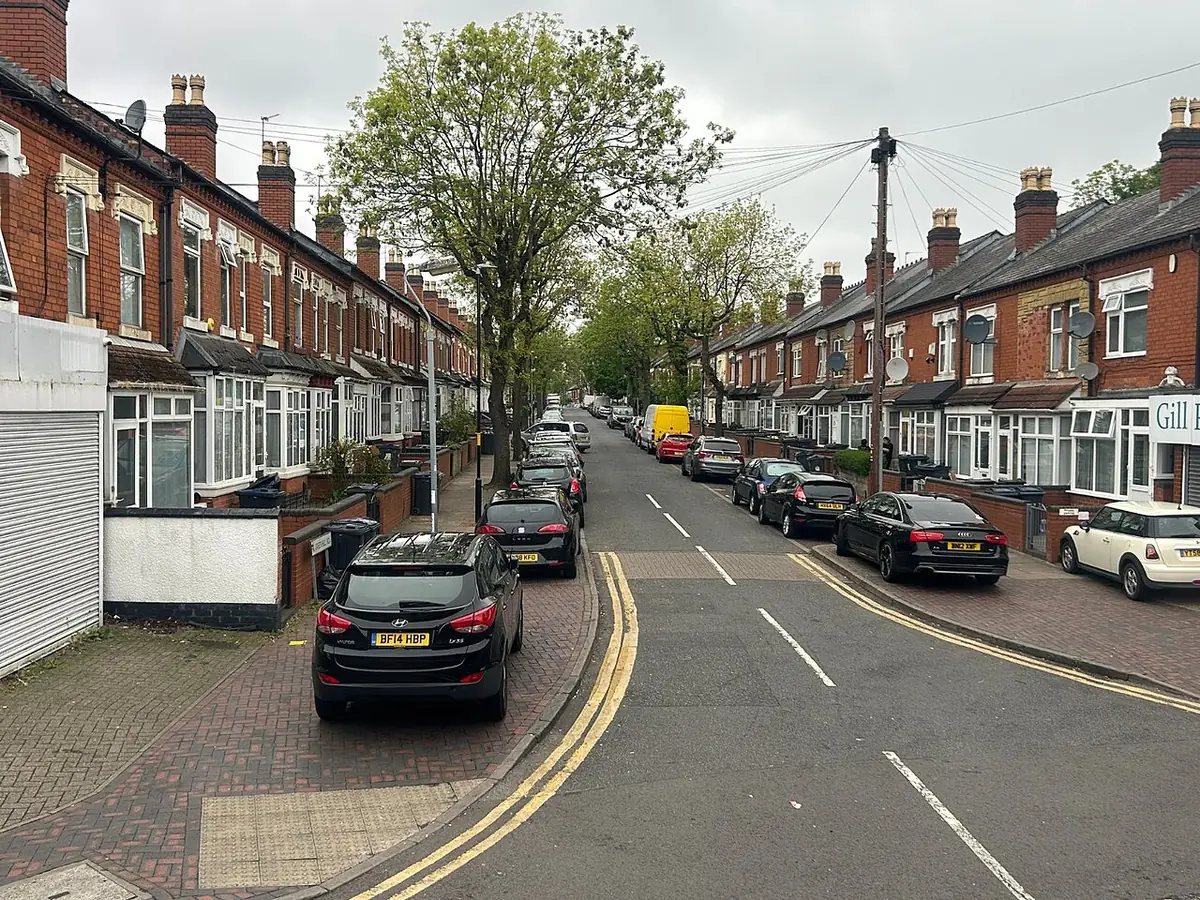
Terraced streets like this are the everyday housing stock across Birmingham — Photo: Philip Halling · CC BY-SA 2.0 · Wikimedia Commons
Settling into a house in Birmingham means coordinating several institutional and private parties on a tight timetable, from the initial online search through to the joint check-in.
You, the applicantSelection and viewingsYou identify properties matching your geographic and budget criteria on the portals and by contacting local agencies directly.
The estate agentThe offer and shortlistingThe agent puts your proposal to the landlord and gathers the documents needed to start the compulsory legal checks.
The referencing agencyThe affordability checkAn independent third party assesses your payslips, previous tenancies and financial history to confirm your profile to the landlord.
The landlordApproval and drafting the tenancyThe tenancy agreement is drawn up in line with current English law, setting the term, the rent and any special conditions.
The inventory clerkThe check-inA detailed report photographing the condition of every room and fitting, which becomes the reference against which your deposit is assessed at the end.
Renting a house in Birmingham: space or a central location?
Renting a house in Birmingham means choosing between residential space and urban centrality, because the local market does not offer both at once without a disproportionate budget. Outer districts such as Harborne or Sutton Coldfield offer spacious houses with private gardens and appreciable calm, at the cost of longer journeys.
Closer in, terraced houses in Moseley or Kings Heath compress the commute while keeping a garden, but they are older, frequently harder to heat, and street parking becomes a daily consideration. The centre itself offers essentially no houses at all.
The financial picture is less obvious than it looks. A larger house further out costs less in rent but more in energy, particularly on a poor EPC rating, and adds transport costs. A smaller, better-insulated property closer in can produce a similar monthly total for less space and less travel.
The honest test is how much of your week you are willing to spend driving, and whether outdoor space is a requirement or a preference. For families with children it is usually a requirement, and Birmingham's outer rings deliver it at prices that make the commute worth accepting.
What total budget do you need to live comfortably in a house here?
Building a budget for renting a house in Birmingham means going well beyond the monthly rent on the portals. The compulsory charges, local taxes and utility accounts all add up quickly.
Monthly and annual costs for a house in Birmingham
Cost
Estimated range
Frequency
Notes
Monthly rent (3-4 bedroom house)
£1,100 - £1,800
Monthly
Varies with proximity to transport links and to good schools.
Council Tax (bands D to E)
£160 - £220
Monthly
Local tax collected by Birmingham City Council, payable over 10 or 12 months.
Electricity and gas
£150 - £250
Monthly
Heavily dependent on the property's EPC rating and its insulation.
Water and sewerage
£40 - £60
Monthly
Managed by Severn Trent Water, usually on an individual meter.
Broadband
£30 - £50
Monthly
Fibre is available across most of the metropolitan area.
These ranges reflect the Birmingham rental market for standard property in good general condition, outside the immediate centre.
An ordinary Tuesday between school, work and travel
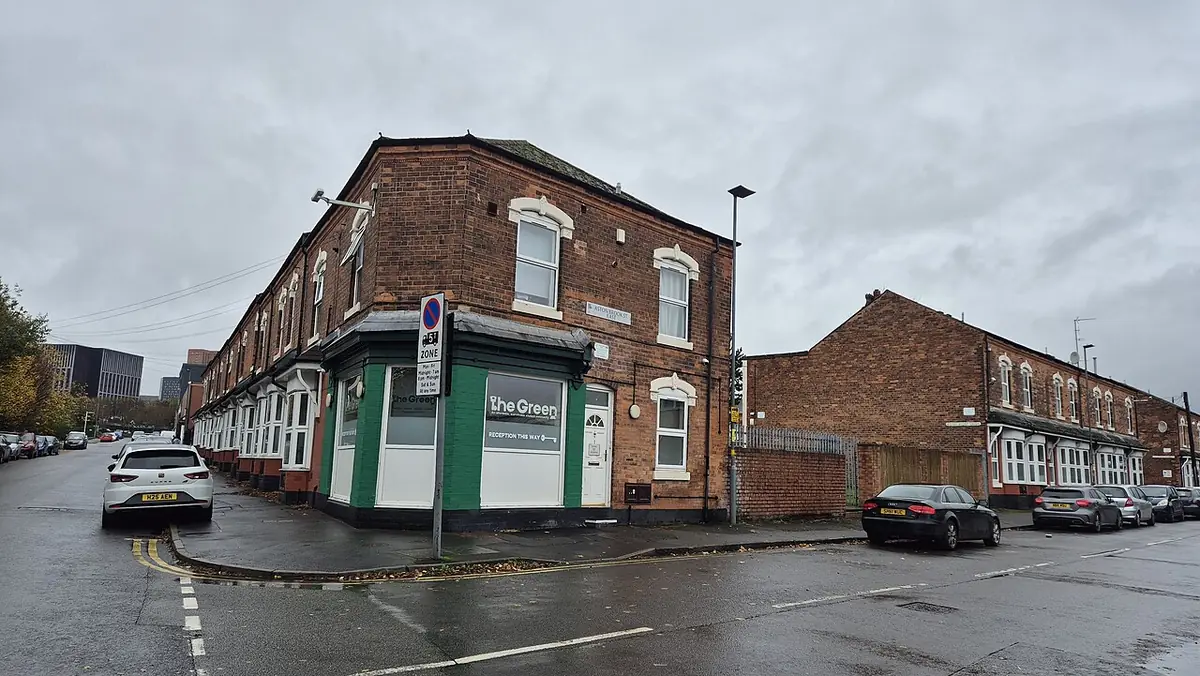
Corner pubs and terraced rows like this define Aston's streets — Photo: Paul Collins · CC BY-SA 2.0 · Wikimedia Commons
The rhythm of a day in Birmingham is dictated by the road layout and how saturated public transport becomes at peak times. Picturing the sequence of journeys is what tells you whether a district works.
07:30A residential district such as HarborneLeaving home after the morning routine. The side streets fill quickly with school journeys on foot and by car.
08:15School or nurseryDropping the children. Traffic around the local schools is dense but generally managed through speed-limited zones.
08:45The main road or local stationThe journey into central Birmingham. By car, the A38 or A456 frequently hold notable delays.
09:30Colmore Business DistrictArriving at work after a combination of walking and public transport, or parking in a secure car park.
17:30A local supermarketThe evening shop on the way home. Neighbourhood stores make the weekly supply run quick without crossing the city.
18:30HomeA quiet evening in the district, parking on the private drive or on the street depending on the property.
What the listing never tells you
The British rental market runs on strict conventions and technical realities that new arrivals frequently miss. Photographs emphasise light and decoration and omit the rest.
The actual EPC rating
Many older houses in Birmingham carry low EPC ratings of E or F, which translates into persistent draughts and very high gas bills through winter. Ask for the full certificate before committing, not the summary.
Residential parking rules
Owning a car in some districts requires a permit from Birmingham City Council, and the quotas and annual charges can limit how many vehicles a household may keep, or complicate having visitors.
Party walls and sound insulation
Victorian terraces and 1970s estates sometimes have inadequate acoustic separation between walls, which exposes you to neighbour noise unless the landlord has upgraded them.
Waste collection schedules
Recycling in Birmingham follows a precise rotation of coloured bins. Presenting them incorrectly on the pavement results in collections simply being refused.
Rent review clauses in the agreement
Check the indexation terms carefully, and whether the agreement allows the landlord to adjust the rent or recover possession at a particular point in the term.
What tenants discover six months in
Looked likeA charming Victorian house with real character at an attractive rent in a quiet district.
Turned outA property that leaks heat, hard to warm, with recurring damp on the uninsulated external walls.
Would have caught itAsk for the previous occupants' energy bills and inspect the window reveals carefully at the viewing.
Looked likeAn ideal position beside a main road for a quick drive to work.
Turned outPermanent noise from six in the morning, worsened by particulate pollution and windows that cannot be opened.
Would have caught itVisit at both the morning and evening peak to measure the real noise and traffic levels.
Looked likeNo dedicated parking, but easy street parking on the day of the viewing.
Turned outNo possibility of parking at all after seven in the evening, with spaces taken by residents and students.
Would have caught itTest the street parking on a Friday or Saturday evening before signing.
Looked likeA peaceful residential district with a large mature garden and no overlooking.
Turned outHeavy and costly weekly maintenance, plus blocked gutters and drains through the autumn leaf fall.
Would have caught itEstablish clearly in the tenancy who is responsible for the garden and the gutters — landlord or tenant — before you sign.
Who should not rent a house in Birmingham
Renting a house here is not the right answer for every situation. Some ways of working and living collide directly with what a house in this city requires.
A highly mobile professional with no geographic anchor
→A central flat or a flexible base
The commitments of a house tenancy, combined with garden maintenance and managing multiple utility accounts, weigh unnecessarily on a mobile life.
Someone without a driving licence who wants to walk everywhere
→A property in the immediate centre
Renting a house almost always means moving away from the tram and light rail lines, which makes daily journeys excessively long and complex without a car.
A household on a tight budget with no financial margin
→A flat with predictable charges included
Movements in gas and electricity prices, and the unplanned maintenance a house brings, can unbalance a budget calculated with no cushion.
So are you ready to rent a house in Birmingham?
Canal walks like this are part of daily routines near Aston — Photo: Bill Boaden · CC BY-SA 2.0 · Wikimedia Commons
Committing to a house tenancy in Birmingham is a structuring decision that should not be driven by a photograph or by the urgency of a job move. The city offers a rich, dynamic and genuinely multicultural setting, but it asks its residents to accept its logistics honestly.
Four checks decide how the tenancy goes: the EPC rating, which predicts your winter bills; the Council Tax band, which you pay directly each month; the parking situation tested at a realistic hour; and who is responsible for the garden and the gutters, written into the agreement rather than assumed.
Do those four and the rest follows. Birmingham gives you space, a garden and a genuine neighbourhood at rents that would be impossible further south — provided you go in with your referencing documents ready and your eyes open about the commute.
Related questions
What is the average rent for a three-bedroom house in Birmingham?
Monthly rents for a family house with three bedrooms generally run between £1,100 and £1,800 excluding bills, depending on proximity to good schools and to the main transport links.
What is Council Tax, and what should I budget?
Council Tax is a compulsory local tax collected by Birmingham City Council to fund municipal services. For a standard house in band D or E, allow between £160 and £220 a month.
Do I need a car to live in a house here?
Not strictly, if the house is immediately beside a railway station or a major bus route. In practice, a vehicle is strongly advisable for the outer residential districts where most houses are.
Which districts are most sought after for families?
Harborne, Sutton Coldfield and Edgbaston are particularly popular with families, for the quality of their schools and the green space nearby.
How does the EPC rating work?
The Energy Performance Certificate rates homes from A, very efficient, to G, very poor. A landlord must provide it, and it is the best available prediction of your heating costs.
What costs come on top of the rent?
Council Tax, electricity and gas, water and sewerage through Severn Trent, and broadband. Together these commonly add £380 to £580 a month to the rent on a family house.
Who maintains the garden?
It depends entirely on the tenancy agreement. On most house lets the tenant is responsible for routine garden upkeep, so establish it in writing before signing rather than discovering it in autumn.
How much deposit will I pay?
Deposits are capped at five weeks' rent where the annual rent is below £50,000, and must be protected in a government-approved scheme within thirty days of receipt.
Can an agency charge me fees?
No. Tenant fees are banned in England, so an agency cannot charge for referencing, the inventory or drawing up the agreement. Only the holding deposit and the tenancy deposit are permitted.
What are the parking rules?
Some districts operate residents' permit schemes run by the city council, with quotas and annual charges that can limit household vehicles and complicate visitor parking. Check the specific street before committing.
Property review of ting
No ting properties in Birmingham Gb yet
Be the first — share it on ting and it shows up right here.