Settling into a rental in Sydney takes careful preparation, because the property market here is demanding and fiercely competitive. From picking the right neighbourhood to putting together your application, every decision has a direct bearing on how well your new life in the Australian city gets off the ground.
Get the app
What nobody tells you.
Real prices, hidden costs and the traps to check before you commit.
What you really get when you rent an apartment in Sydney
Scroll
What you really get when you rent an apartment in Sydney
Settling into a rental in Sydney takes careful preparation, because the property market here is demanding and fiercely competitive. From picking the right neighbourhood to putting together your application, every decision has a direct bearing on how well your new life in the Australian city gets off the ground.
Written by the ting.ad editorial team ·
Sydney in Street View: drag to look around.
These early trade-offs set the overall frame for your move to the Australian city.
Renting an apartment in Sydney means dealing straight away with an extremely tight market, where demand structurally outstrips the supply available. Unlike many large European cities, where the rental stock tends to be more varied, Sydney forces quick choices between being close to the coast and having real living space. Every neighbourhood strikes a different balance between urban energy and residential calm, so a future tenant has to pin down their priorities before the search begins. Understanding these basic mechanics lets you approach the local market clear-eyed, without illusions about the floor space and the budget you will need. Weighing up the compromises is essential if you want to settle in for the long term without financial or practical setbacks in the first few months.
Being central and close to the main transport corridorsvsMoving further out to the residential suburbs
Living near the CBD or the famous beaches cuts daily travel time dramatically, but for the same budget you get roughly half the floor space. Moving further out brings generous living space and greenery, at the cost of relying much more on trains and ferries to reach the centre.
The flexibility of short-term leasesvsThe legal security of a long lease
The Australian market traditionally runs on renewable twelve-month leases, with rents reviewed often in line with the market. Temporary furnished options give you flexibility when you first arrive, but over the long run they cost considerably more overall.
Immediate access to modern amenitiesvsThe charm of renovated older buildings
Newer developments include much sought-after shared facilities such as pools, gyms and secure parking, often at the expense of architectural character. Older properties win people over with their proportions and character, but sometimes lack proper sound and thermal insulation.
Does this city suit your lifestyle and what you expect from daily life?
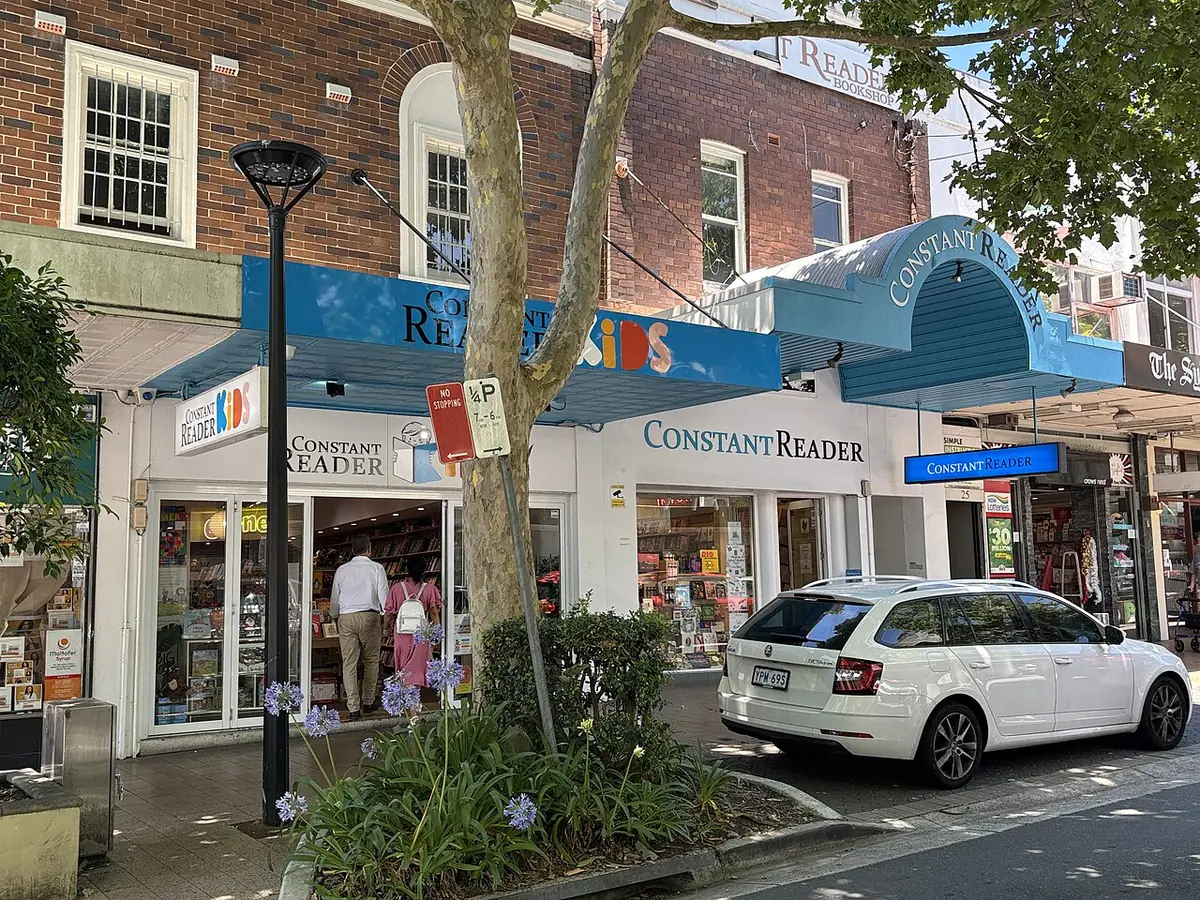
Independent shops like this line many of Sydney's lively local streets — Photo: Nick-D · CC BY-SA 4.0 · Wikimedia Commons
Moving from the way of life back home to the Australian reality means spotting clearly what changes in your everyday reference points.
Sydney sets a pace of life strongly geared towards the outdoors, sport and nature, which changes the daily experience radically compared with what many newcomers are used to. How well you settle in will depend largely on matching your home not only to your work but also to your personal routines, whether that means a morning run along the coast or the commute to the business hubs. Each type of tenant runs into specific challenges linked to the way the city is laid out and the shape of its transport network. Looking at your own situation against these local realities helps you avoid the classic mistake of choosing an area purely for its good looks. The aim is to find the right fit between your daily life and the very particular geography of this large coastal city.
Remote worker who needs space
If you split your time between an office in the business district and your home, you will need a dedicated workspace and a very reliable internet connection. The middle-ring neighbourhoods offer the balance you are after, quiet enough to concentrate and with quick access to the centre. You get a bright place to live without giving up any of your day-to-day productivity.
Urban professional centred on social life
For people whose lives revolve around restaurants, local cafés and cultural life, being right next to the main transport lines is non-negotiable. You will accept a more compact apartment in exchange for a few minutes' walk to your favourite spots. This option makes the most of your free time and removes the hassle of getting home late on public transport.
Family looking for calm and good schools
Moving with children calls for particular attention to nearby parks, safe streets and the reputation of local schools. Residential neighbourhoods a little further from the heart of the city come into their own here, with their townhouses and shared gardens. The compromise is accepting somewhat longer school and work journeys, which are more than made up for by the quality of the surroundings.
Living here when you arrive from abroad: what actually changes
Once these cultural reference points have sunk in, choosing the area you will live in becomes the central question of your rental search.
Leaving your home country to rent in Sydney triggers a series of immediate adjustments, both in the paperwork and in the way a home is organised. The Australian property market follows rules of transparency and speed that often surprise newcomers used to slower bureaucracy back home. From group inspections to the strict criteria agencies use to verify your income, every step calls for careful preparation. In return, relations with neighbours, public safety and the importance given to outdoor life redefine everyday comfort for the better. Getting to grips with these cultural and practical differences is the best way to make your move abroad without needless friction.
From abroad
The deposit and personal guarantor system common back home
Sydney
A regulated bond lodged with an independent government body
The deposit is tightly regulated by law and held in a public account, which protects both sides effectively but means you must have the cash available as soon as your application is accepted.
From abroad
The historic, dense city centres of many older cities
Sydney
A multi-centred city shaped by its transport network and its coastline
The idea of a single centre gives way to several business and leisure hubs, which makes your choice of neighbourhood decisive for your social life and your work journeys.
From abroad
The weight given to period architecture and the character of stone buildings
Sydney
A premium on natural light, balconies and modern amenities
Selection criteria quickly shift towards thermal comfort, ceiling fans or air conditioning, and access to private or shared outdoor space.
From abroad
Tenant and landlord relations often bound up in lengthy procedures
Sydney
Strict professionalism from property managers
Routine inspections of the property's condition are regular and thorough throughout the lease, so you need to keep the home in impeccable shape to avoid any dispute at renewal time.
Which neighbourhood should you choose for your goals and budget?
With the neighbourhood settled, it is time to look at the financial reality of the rents currently being asked on the market.
Sydney's geography is built around its magnificent harbour and its famous Pacific Ocean beaches, creating a patchwork of neighbourhoods with very distinct identities. Between the financial buzz of the Central Business District, the artistic energy of the Inner West and the relaxed seaside life of the eastern beaches, each area shows a radically different face. Your final decision will come from a careful calculation weighing your monthly budget, your tolerance for travel time and whether you are drawn to the sea or the city. This geographical variety is a large part of the city's charm, but it calls for a thorough look at the ground before you commit to a lease. Weighing up the strengths and weaknesses of each major area will spare you regrettable disappointments once you are there.
The Eastern Suburbs (Bondi, Coogee, Randwick)
A lifestyle energised by the waves, early-morning surfing and a lively, cosmopolitan atmosphere.
Suits
Working people and couples without children who put living right by the ocean at the top of their daily priorities.
Trade-off
Some of the highest rents in the city for often small floor areas, plus heavy traffic congestion at weekends.
The Inner West (Newtown, Marrickville, Glebe)
A bohemian, creative and multicultural spirit, set to the rhythm of independent cafés, craft breweries and local markets.
Suits
Artists, creatives and young professionals looking for lively neighbourhood life and a rich food scene.
Trade-off
Housing stock made up mainly of older properties, which sometimes means compromises on modern comfort and sound insulation.
The Lower North Shore (Neutral Bay, Mosman)
Upmarket residential calm, green parks overlooking the water and sweeping views of the harbour's famous skyline.
Suits
Families and established professionals looking for peace and quiet, safety and excellent schools.
Trade-off
A very substantial overall budget, and transport links heading south that can clog up in the morning rush hour.
The CBD and Pyrmont
Total immersion in the city's economic heartbeat, with gleaming glass towers and journeys you can make entirely on foot.
Suits
Committed workaholics and lovers of intense city life who flatly refuse to waste time commuting.
Trade-off
An atmosphere that fades in the evenings and at weekends, very high prices per square metre and a lack of quiet green spaces.
How much does renting an apartment here really cost?
Beyond the money itself, the legal structure of your lease deserves very close attention.
Tackling the financial side of renting in Sydney means facing weekly amounts that put the city among the most expensive in the world. Unlike the usual practice in many other countries, rents are almost always advertised and paid by the week, a crucial detail to factor in when you work out your annual budget. Ranges vary considerably depending on the exact location, the age of the building and upmarket features such as an underground parking space or a shared pool. Anticipating these costs will let you present a strong application to agencies from your very first inspection. Here is a realistic overview of the trends seen in the current rental market to guide your financial estimates.
SydneyTo rentApartmentestimate
Median price / m²A$40Half the apartments sell below this
Median priceA$3.5kthe average is 14% higher — a few very large properties pull it up
Most common2 bedrooms38 % of listings
Average size95 m²
By number of bedrooms
Bedrooms
Share of market
Avg price
Price / m²
Avg size
1
24 %
A$2.36k
A$45 +7 %
52 m²
2most common
38 %
A$3.36k
A$42
80 m²
3
26 %
A$4.47k
A$40
112 m²
4
12 %
A$6.18k
A$39best value / m²
160 m²
Each row is an average, compared against the area average of A$42 / m². These are indicative estimates of a typical local market, not a measured sample of live listings. Check current listings before relying on them.
What you can really hold: understanding leases and the rules
Sydney's harbour setting makes waterside living part of daily life — Photo: Dicklyon · CC BY-SA 4.0 · Wikimedia Commons
A firm grasp of the contract leads you straight on to decoding the finer points of how homes are allocated.
The Australian rental system rests on a very strict contractual balance between the landlord, represented by their agency, and the tenant. Unlike other legal systems where tenants enjoy near-permanent protection, local law allows regulated but regular rent reviews, as well as ending a lease subject to specific notice periods. Knowing exactly what you are committing to spares you unpleasant surprises at each annual renewal. It is the contrast between the apparent flexibility of the contract and the rigidity with which it is applied that defines the rental experience in Sydney. Let us look at both sides of this legal framework so you can secure your long-term move as well as possible.
Contractual flexibility and the power of agencies
Standard leases usually run for six or twelve months, which gives short-term certainty but opens the door to rent increases at the end of the term if the market stays tight. The agency has significant powers to carry out routine inspections every three months, checking the cleanliness and general upkeep of the property in its care. This constant oversight demands unfailing diligence from the tenant if they want to keep the landlord's trust.
What it changesYou should treat your tenancy as an active partnership, where scrupulously respecting the terms of the contract guarantees you can stay on in peace.
Legal protections and the tenant's options for recourse
Firm as the framework is, New South Wales law rigorously protects deposits through the Rental Bonds Board and strictly limits the grounds for eviction or early termination. In a serious dispute over urgent repairs that have not been carried out, mediation services and a specialist tribunal (NCAT) provide effective routes to recourse, though they demand thorough documentation. Knowing these procedures gives you essential independence when dealing with property managers.
What it changesKeep a record of every written exchange and carry out an ingoing condition report with surgical precision to protect your financial interests.
The rule to understand before paying a holding deposit or signing
Once this administrative process is clear, it is time to trace the chronological course of a typical rental transaction.
The path to signing a lease in Sydney is marked by essential steps where speed matters more than lengthy deliberation. The classic trap for newcomers is underestimating the fierce competition and failing to put together a flawless application before the very first inspection. A well-managed timeline stops you losing precious weeks in a city where temporary accommodation weighs heavily on your budget. From gathering your documents to collecting the keys, every link in the chain counts if you want to stand out from the other applicants. Here is the logical sequence of events leading to final approval of your future home.
Preparing your complete digital application in advance, with employment references and proof that you can pay the rent.
Shortlisting the properties available online and planning the group viewings (open for inspection), often held on Saturday mornings.
Submitting an online application straight away through the dedicated platforms (such as 1Form or Ignite) within hours of the inspection.
The property manager's close review of your application and careful checks on your rental or employment history.
The landlord's formal acceptance of your offer, followed by electronic signing of the lease and immediate payment of the first rent.
A detailed ingoing condition report, the official handover of the keys and the lodging of the bond with the regulatory body.
How a rental transaction unfolds, step by step
This methodical approach is your best protection for a successful move to the capital of New South Wales.
Committing to rent an apartment in Sydney means following a rigorous method involving several key players, from the real estate agent to the landlord, as well as the platforms that check whether you can pay. Each phase of the process runs to strict deadlines that you must meet if you do not want the property to go to another applicant. Being transparent about your finances and responding quickly on digital tools make all the difference in such a competitive market. By seeing clearly who is responsible for what at each stage, you turn a stressful search into a process you control. Here is the step-by-step breakdown of what happens on the way to your future home.
The tenantPutting together the applicationGather payslips, identity documents, references from previous landlords and cover letters into a digital file ready to send instantly.
The real estate agencyOrganising open inspectionsSchedule short viewing slots (often 15 minutes) on Saturdays, when dozens of prospective applicants view the property at the same time.
The tenantSubmitting the offer onlineSend your lease application through the dedicated apps within minutes of the inspection, possibly offering a higher rent to stand out.
The real estate agencyShortlisting and background checksCheck applicants' history against national tenancy databases (such as TICA) and put the shortlist of candidates to the landlord.
The landlordFinal approval of the applicationChoose the applicant offering the best balance between solid financial guarantees and the preferred lease length.
The tenant and the agencySigning and initial paymentsSign the Residential Tenancy Agreement electronically and pay the bond and the first weeks of rent in advance at the same time.
The tenantIngoing condition report and moving inComplete a thorough photographic inspection report within the first seven days to record every existing defect before settling in.
Renting an apartment or a house in Sydney: how to decide?
Once the type of property is decided, the central question of budget comes into sharp focus in one of the most expensive cities in the world.
In Sydney, the housing question is shaped from the outset by the city's unusual topography and the scarcity of central land. Renting an apartment in dense neighbourhoods such as Pyrmont, Surry Hills or Bondi lets you do without a car, live close to public transport and enjoy the city's energy right on your doorstep. Recent buildings often include sought-after features such as a pool, a gym and a building manager, which makes daily life much simpler for busy professionals. On the other hand, space is tight, street parking is complicated or paid, and living in a strata building comes with strict rules on noise, pets and the use of common areas.
Choosing a house, by contrast, changes your way of life radically, steering you towards green residential suburbs such as those of the Inner West or along the Northern Line. Renting a house in Sydney guarantees generous living space, a private garden that is often full of trees and complete independence from your immediate neighbours, a real asset for families with children or pet owners. That freedom comes at a high financial cost, however, and brings significant practical constraints, particularly the travel time to the Central Business District, not to mention the regular upkeep of outdoor areas, which usually falls to the tenant under Australian leases.
The choice between these two types of property therefore depends directly on your work situation, your tolerance for travel time and your priorities for your surroundings. If you have only just arrived in Sydney and want to get a feel for the city's rhythm without the burden of maintenance, an apartment is the ideal base for your first two years. If, on the other hand, you value calm, space and long-term roots in a neighbourhood community, a house is the obvious choice, provided you accept the compromises on distance and a greater reliance on roads or rail lines.
It is also worth looking at the regulatory framework for renting in New South Wales, because landlords' and tenants' obligations differ noticeably depending on the type of home. Residential leases strictly regulate rent increases and the conditions for returning the bond, but handling urgent repairs can prove more complicated in an old house than in a modern apartment managed by a central agency. Weighing up these factors in advance will spare you disappointments over money and relationships in the first months of your Australian move.
What real monthly budget do you need to live comfortably in Sydney?
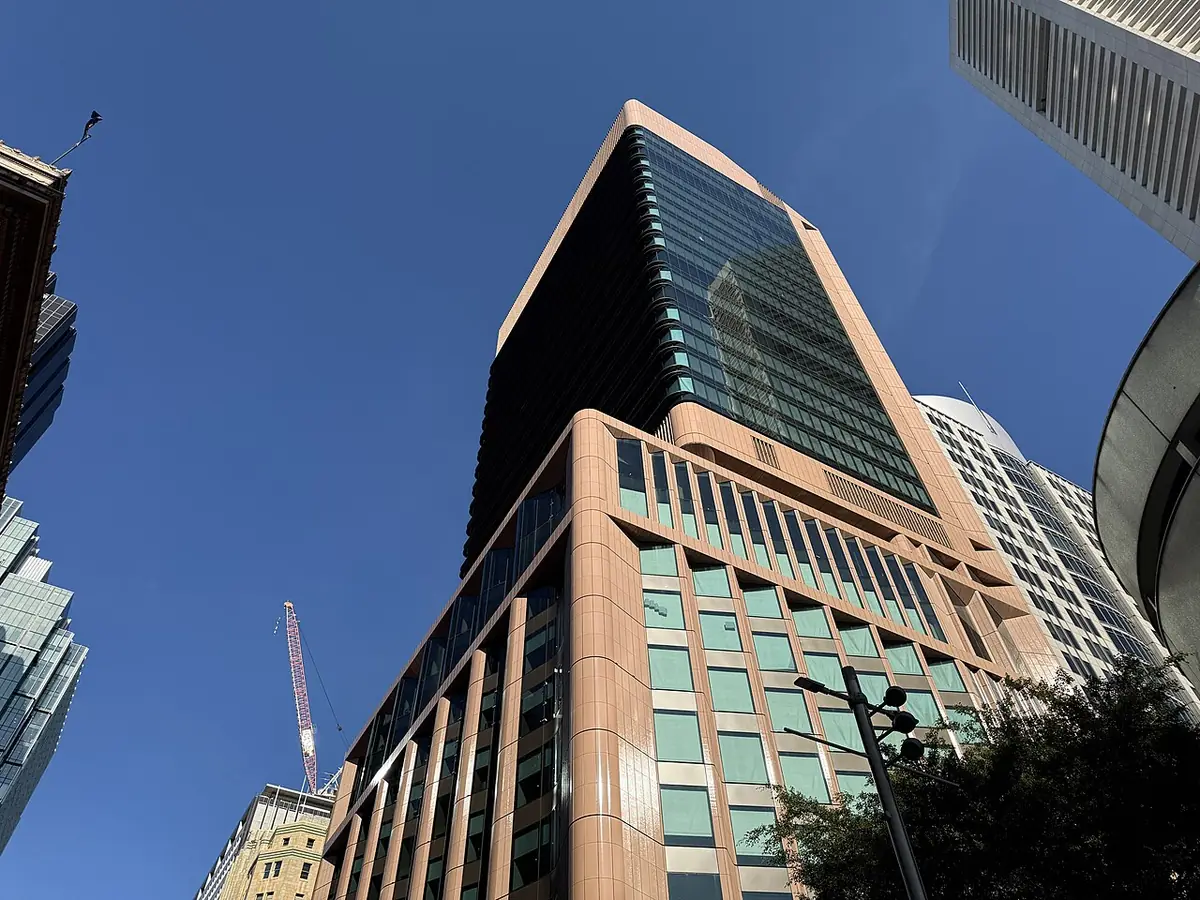
Martin Place sits at the heart of Sydney's financial district — Photo: Klauskazamias · CC0 · Wikimedia Commons
Understanding the raw figures is not enough; you also need to picture what a typical week looks like in a resident's daily life.
Drawing up a forecast budget for moving to Sydney means looking beyond the advertised weekly rent alone. The Australian rental market traditionally works on weekly payments, which calls for careful conversion to arrive at your real monthly outgoings. On top of that come electricity, water and internet bills, plus unavoidable travel on the Opal network, whose cost varies widely with the distance between your home and your workplace. Failing to anticipate these extra costs quickly throws your finances off balance within the first quarter.
Weekly rent ranges by property type and area in Sydney
Property type
Central area (CBD / East)
Middle ring (Inner West / North)
Outer suburbs
Studio / 1 bedroom
AUD 650 to AUD 850
AUD 500 to AUD 650
AUD 400 to AUD 500
2-bedroom apartment
AUD 950 to AUD 1,400
AUD 750 to AUD 950
AUD 550 to AUD 750
House, 3+ bedrooms
AUD 1,500+
AUD 1,100 to AUD 1,500
AUD 800 to AUD 1,100
These amounts reflect the medians seen on Sydney's regular rental market and depend on how close the property is to transport or the beaches.
Estimated regular monthly costs for a two-person household
Expense
Estimated monthly budget
What makes it vary
Electricity and gas
AUD 200 to AUD 350
Heavy air conditioning use in summer and the insulation of older homes.
Broadband internet
AUD 70 to AUD 110
NBN technology (Fibre to the Node or Premises) and data volume.
Public transport (Opal)
AUD 300 to AUD 500
Number of daily journeys and the network's weekly caps.
Food and household
AUD 800 to AUD 1,200
The share of fresh local produce and which supermarket chains you choose.
These figures exclude contents insurance and any school fees, which are budget items in their own right.
What is the real daily rhythm of life for a Sydney resident?
Beyond this well-oiled routine, the Sydney property market has contractual and structural subtleties that agents often fail to mention.
Quality of life in Sydney depends largely on keeping travel time down and on easy access to health and education services. The day starts early, driven by a deep-rooted morning culture in which outdoor exercise and speciality coffee open the day from dawn. Understanding how the key moments of the week fit together helps you see quickly whether a potential location will condemn you to hours lost in traffic or give you a balanced life.
07:00Local park or coastal walkA morning run or swim, an almost ritual habit for a large share of working Sydneysiders before they head to the office.
08:30Local train station or ferry wharfBoarding the multimodal transport network. The punctuality of trains and ferries determines whether you reach the business district on time.
12:30Local medical centre (GP)An appointment with a General Practitioner. It is essential to register as soon as you arrive in order to benefit from Medicare rebates.
17:30Woolworths or Coles supermarketLast-minute shopping for dinner. Stores often close at 9 or 10 pm, giving plenty of flexibility for long office hours.
19:00Home and residential neighbourhoodBack to the calm of a tree-lined street. Neighbours generally observe an unspoken curfew that makes for peaceful nights.
The hidden sides of the property market that agencies never mention
These grey areas explain why some newcomers run into serious setbacks during their first months in the Australian city.
Sydney's rental market is marked by fierce competition between prospective tenants, sometimes leading to unofficial bidding or very harsh screening of applications. Behind the superb photos on the property portals lie technical, legal and climatic realities that weigh heavily on everyday comfort. Knowing about these invisible aspects will keep you from signing a lease on a property that quickly turns out to be unliveable or a money pit.
No proper thermal insulation
Many older buildings put up between the 1960s and the 1990s have very thin walls, turning homes into ovens in summer and fridges in winter, which sends air conditioning bills soaring.
The group inspection system (Open for Inspection)
Viewings often last just ten to fifteen minutes, surrounded by dozens of competitors. You need your complete application ready in advance on the dedicated digital platforms if you hope to land an offer.
Restrictive clauses on pets and alterations
Although New South Wales legislation has changed to make keeping pets easier, many strata schemes still have fussy by-laws that require formal prior approval.
The real condition of the plumbing and the level of damp
Coastal humidity combined with sometimes poorly ventilated buildings encourages chronic mould, a major health problem that you should hunt for methodically during inspections.
The costly misjudgements people regret six months after moving in
With these mistakes in mind, it is fair to ask whether moving straight to Sydney makes sense for every kind of resident.
Looked likeAn ultra-modern apartment just a stone's throw from a very busy main road.
Turned outConstant noise hell from the endless stream of buses and lorries, impossible to soundproof without heavy-duty double glazing.
Would have caught itVisit the property with the windows open at rush hour and check exactly which way the bedrooms face relative to the city's main roads.
Looked likeA charming, affordable house a little further along the train line.
Turned outA daily commute doubled by unreliable connections, eating into every evening and taking a heavy toll on morale and energy.
Would have caught itActually test the journey at commuting times on a weekday before signing the lease, rather than trusting the apps' theoretical estimates.
Looked likeAn attractive rent negotiated directly without going through a recognised professional agency.
Turned outA fake online listing scam, or an unscrupulous landlord refusing to carry out essential structural repairs.
Would have caught itDeal only with licensed agencies that are members of the Real Estate Institute of New South Wales and insist on an extremely detailed photographic condition report.
Looked likeA tastefully furnished home you can move into straight away without buying anything.
Turned outUncomfortable, low-quality furniture that breaks in the first few weeks and causes endless disputes when the bond is returned.
Would have caught itFavour unfurnished properties so you can bring your own things, or insist on a detailed inventory countersigned by the property manager.
Who should seriously postpone or avoid a property move to Sydney?
If you clear all these hurdles with your eyes open, the final decision is yours, and it calls for a firm commitment.
Sydney's international appeal should not hide the fact that the city puts considerable financial and psychological pressure on those who move there. Some professional or personal profiles risk a painful failed move if they underestimate what the local market demands. Recognising these warning signs helps you avoid wasting substantial savings and the understandable disappointment of facing the Australian cost of living.
The freelancer with no financial visibility over the next six months
→Moving straight into an expensive private lease in the heart of Sydney.
Agencies require solid proof of income worth at least three times the rent, which makes getting a home almost impossible without a permanent local contract or very large savings.
The international remote worker on a tight budget
→Aiming for a large central apartment with harbour or ocean views.
The exorbitant cost of leases in the coastal and central areas will quickly wipe out your ability to save, with no real benefit if your work does not require you to be physically present every day.
The family with young children who have not got a handle on health and education costs
→Renting in a distant outer suburb without checking access to schools and childcare.
Waiting lists for schools and childcare services are full, and the associated fees weigh heavily on the overall family budget.
So, are you ready to take the step and settle in Sydney?
Settling in Sydney is not just a change of address; it is a defining life choice that reshapes your relationship with time, space and money. The Australian city offers an exceptional natural setting, a dynamic economy and a rare level of safety, but in return it demands absolute financial discipline and a clear-eyed acceptance of its costs and transport constraints. If your plans rest on solid professional foundations and a medium-term outlook, the effort you put into finding the right home will quickly pay off in the quality of your daily life.
Take the time to review your real priorities before signing any contract. Would you rather be right by the ocean at the price of less space, or have the green surroundings of a suburban house at the price of longer daily journeys? Each answer maps out your personal geography in this vast city. Never give in to panic at group inspections or to pressure from agents: the Australian market is demanding, but it always rewards those who approach the search with method, preparation and a realistic budget.
Ultimately, making a success of your move to Sydney means letting go of the illusion of the perfect compromise and choosing the option that exactly matches your current stage of life. Whether you go for a practical apartment in the thick of the action or a peaceful house in the Inner West, how well you settle in will depend on how well you anticipate the real costs and the local rules. If you are ready to embrace these demands with your eyes open, Sydney will offer you one of the most stimulating and memorable places to live in the world.
Related questions
What is the average rent for an apartment in Sydney?
The average weekly rent for a one-bedroom apartment in Sydney usually sits between AUD 500 and AUD 850, depending on how close it is to the central business district (CBD) and the eastern beaches, so you need to convert it carefully into a monthly figure for your budget.
How does the deposit system work for a rental in Sydney?
In New South Wales the deposit, known as the bond, is most often equal to four weeks' rent and must be lodged with the official Rental Bonds Online service, which gives it legal protection.
Do you need a permanent local job contract to rent a property?
A local employment contract makes dealing with agencies much easier, but it is possible to rent by showing proof of substantial savings that comfortably cover the length of the lease, along with solid bank guarantees.
What extra costs should you plan for when moving in in Australia?
You must budget for electricity and gas accounts, an NBN broadband connection, Opal public transport travel and contents insurance, which is often not included.
How do property viewings work in Sydney?
Viewings take the form of very short group inspections, and you need to have a complete digital application prepared in advance if you hope to be chosen by the property manager.
How much does the Opal transport network matter when choosing a neighbourhood?
The Opal network brings together Sydney's trains, metro, buses and ferries. Its distance-based fares and weekly caps mean the station or wharf you commute from has a direct effect on your transport budget.
Is it easy to find a home that accepts pets?
State legislation now protects pet owners better, but strata by-laws in apartment buildings still carry many restrictions, and you should check them formally before you sign.
Which neighbourhoods are best for a first move to Sydney?
Newcomers often choose the Inner West for its cultural energy, or areas close to the main train lines to make commuting to the CBD and the other employment hubs easier.
How do you get access to healthcare when you have just arrived?
Register quickly with a local General Practitioner and check whether your visa gives you access to Medicare, the public health system, or whether international private health insurance is compulsory.
What are the main mistakes to avoid when looking for a home?
The most common mistakes are choosing a home that is too noisy on a main road, underestimating commuting times and overlooking damp in older buildings.
Property review of ting
No ting properties in Sydney yet
Be the first — share it on ting and it shows up right here.