Buying a villa in Sydney is a major financial commitment, and it calls for a close understanding of how things work locally. This guide sets out the realities of the market, the traps to avoid and the criteria that matter most if your property purchase in the Australian metropolis is to succeed.
Tell us about your life. Ex: I’m relocating to Nice next year
Attach file
Get the app
Buy Villas Sydney
Buying a villa in Sydney is a major financial commitment, and it calls for a close understanding of how things work locally. This guide sets out the realities of the market, the traps to avoid and the criteria that matter most if your property purchase in the Australian metropolis is to succeed.
What you really get when you buy a villa in Sydney
Scroll
What you really get when you buy a villa in Sydney
Buying a villa in Sydney is a major financial commitment, and it calls for a close understanding of how things work locally. This guide sets out the realities of the market, the traps to avoid and the criteria that matter most if your property purchase in the Australian metropolis is to succeed.
Written by the ting.ad editorial team ·
Castlereagh Street, Sydney in Street View: drag to look around.
Understanding these basic trade-offs helps you judge whether this kind of property really fits your everyday life.
Buying a villa in Sydney is about more than a roof in the sunshine. It buys you into a way of life shaped by the ocean on your doorstep, generous outdoor space and a very particular urban layout. Buyers are often looking for a balance between the energy of a global city and the calm of leafy residential streets. Even so, the market forces you to work around the terrain and around densities that vary widely from one area to the next.
Space and privacyvsUpkeep demands
Owning a villa gives you a degree of independence that is rare in big cities. The flip side is that tropical gardens and swimming pools take either time or a regular maintenance budget, and neither should be underestimated.
Being close to the coastvsExposure to the elements
Living near the city's famous beaches guarantees an exceptional setting, but it leaves buildings exposed to sea winds and humidity. The materials need specific treatment to hold up over the long term.
Long-term valuevsMarket liquidity
Detached homes on their own land are a recognised safe haven with a record of stability. Still, the high entry price narrows the pool of potential buyers when you come to sell, which can stretch out the time a sale takes.
Does this way of life fit your daily routine in Sydney?
With your own situation clearer, it is worth measuring the cultural and practical gap with what you are used to back home.
Every buyer comes to the Sydney property market with different expectations about getting around, work and leisure. The shape of the city, stretched out between bays and national parks, makes the choice of location decisive if you want to avoid losing hours in transport. Working through your daily priorities helps you pin down the area that will spare you disappointment once you have moved in.
Calm residential neighbourhoods
If you do much of your work from home, quiet matters more than being right in the centre. Neighbourhoods set back from the main roads offer surroundings that help you concentrate while keeping local amenities within reach. You get more living space and a home office full of natural light, both big pluses for everyday wellbeing. Trips into the business district are occasional, which makes the travel time easier to accept.
Close to schools and parks
For households with children, life revolves around schools, safe green spaces and local sports clubs. Settling in a residential area with solid family infrastructure makes the weekly logistics far simpler. Villas usually have enclosed gardens where children can play safely, a real luxury in a big city. Life centres on the local community, which helps the whole family settle quickly into the neighbourhood.
Coastal and beachside areas
When surfing, swimming or running set the rhythm of your days, having the ocean close by becomes non-negotiable. Living a few minutes from the beach lets you build these activities into your routine before or after work. Homes in these coastal areas offer a relaxed lifestyle, but you have to adjust to the summer traffic. Parking and the crowds around popular spots call for patience on sunny weekends.
Moving to Sydney from abroad: what really changes
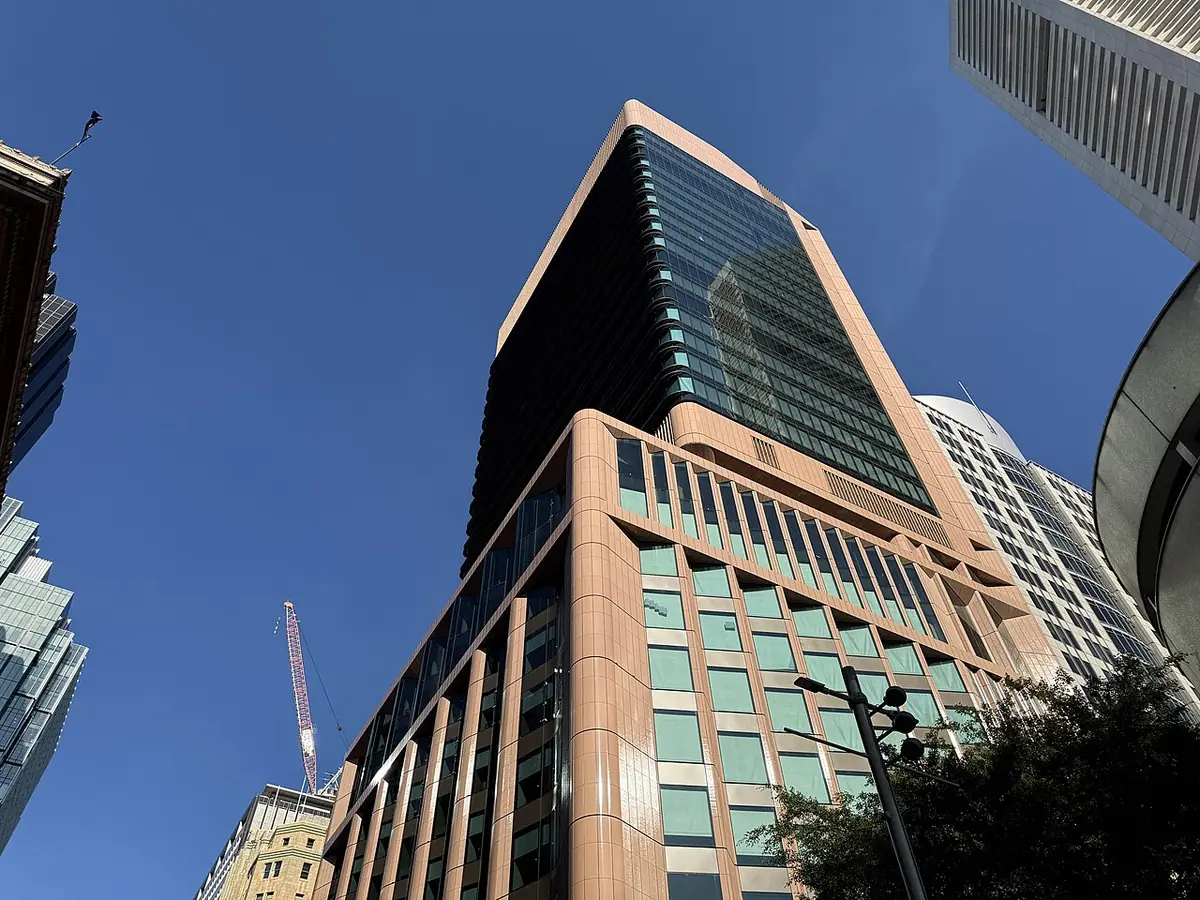
Martin Place sits at the heart of Sydney's financial district — Photo: Klauskazamias · CC0 · Wikimedia Commons
Once you have taken these differences on board, the central geographical question comes up: which neighbourhood should you choose?
Moving from a European-style property market to Sydney's puts the buyer in front of very different procedures, customs and timescales. The culture of the deal, the role of the intermediaries and relations with neighbours all follow well-established local codes. Anticipating these cultural and administrative differences will save you misunderstandings during the negotiation and when you sign the contract.
From abroad
Historic town centres and dense housing in the middle of the city
Sydney
Urban sprawl and a culture of detached houses with gardens
You have to accept longer journeys or rethink what you expect in living space. A car often becomes essential again for everyday shopping.
From abroad
Long, highly formal legal processes
Sydney
Agents who move quickly and frequent public auctions
Decisions have to be made fast and prepared in advance. Failing to put in a firm offer at the right moment means losing the property straight away to another buyer.
From abroad
Strict legal protection for tenants and owners
Sydney
A liberal market where contractual flexibility is the norm
The rules on occupying and managing a property call for a careful reading of leases and of strata or estate by-laws, which come with their own managing bodies.
From abroad
Regulated, standardised technical surveys
Sydney
Specialist inspections paid for by the buyer before committing
It is vital to hire independent experts to check the structure, look for termites and confirm that the electrical and plumbing installations comply.
Which Sydney neighbourhood should you settle in?
Knowing the neighbourhoods helps you narrow your search, but it is the price structure that will confirm whether your plan is financially realistic.
Sydney's geography is organised around its spectacular harbour and its ocean beaches, creating sharply contrasting micro-markets. Each area has its own atmosphere, its own level of amenities and its own style of housing. Comparing them lets you match your budget to the quality of life you want, whether that means cultural buzz or the complete calm of the surrounding nature.
The Eastern Suburbs
A constant beachside energy, busy cafés and the coast's famous beaches right on your doorstep.
Suits
People who want an active, ocean-focused lifestyle and have a substantial budget.
Trade-off
Density is higher, traffic is difficult at rush hour and the price per square metre is at the top of the market.
The North Shore
Quiet tree-lined streets, a high concentration of excellent schools and a relaxed family atmosphere.
Suits
Families with children and working people looking for an orderly residential setting close to national parks.
Trade-off
The mood is more conservative and prices stay high because of strong demand for large plots.
The Inner West
A creative, multicultural neighbourhood life, full of local markets, craft breweries and houses with character.
Suits
Buyers looking for architectural authenticity, culture close to home and some room in the budget.
Trade-off
Some streets suffer noise from transport corridors, and the housing stock often needs renovation.
How much does buying a villa in Sydney really cost?
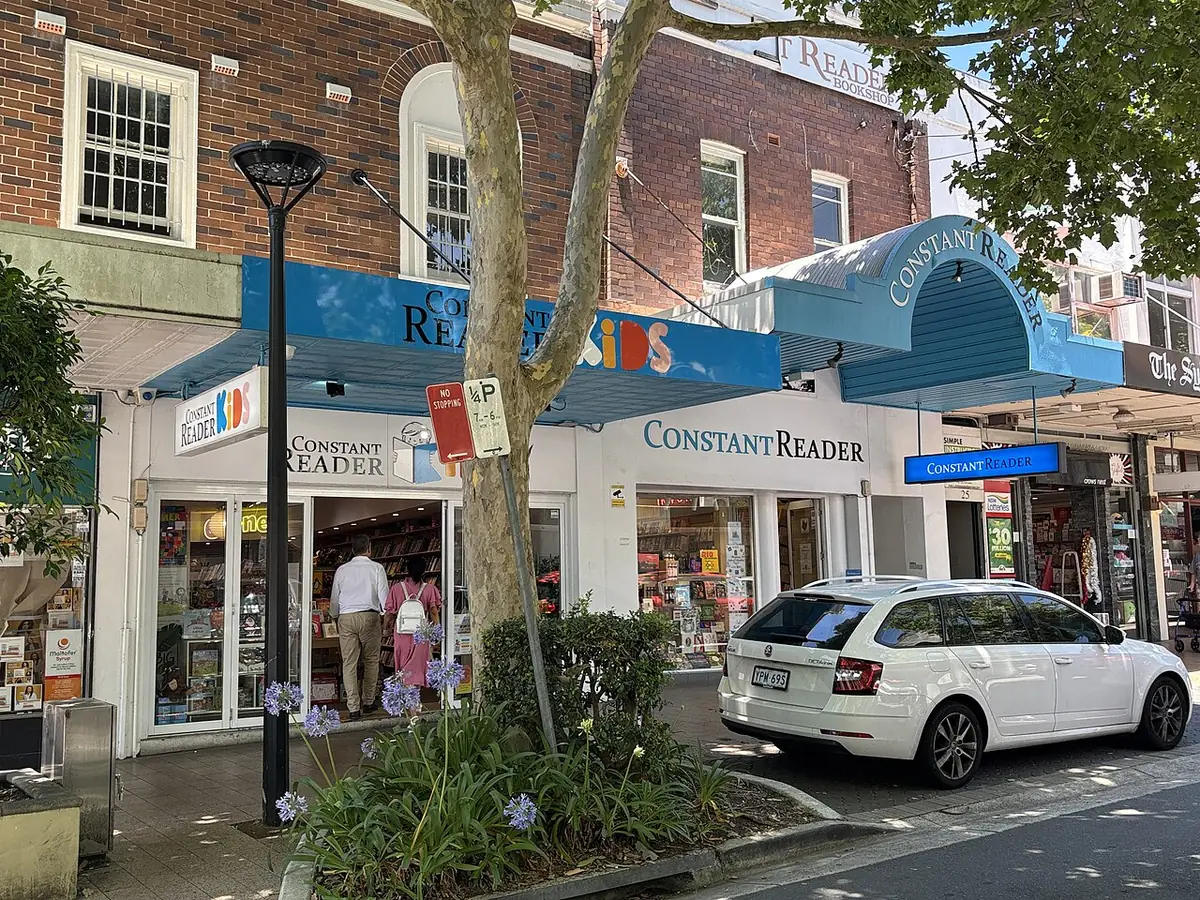
Independent shops like this line many of Sydney's lively local streets — Photo: Nick-D · CC BY-SA 4.0 · Wikimedia Commons
Beyond the headline purchase price, the kind of ownership rights you acquire deserves your full attention.
Sydney's property market shows high valuations, driven by sustained demand and a supply of land limited by geography. Prices vary considerably with distance from the central business district (CBD) and direct access to the beaches. Looking at the current ranges lets you go into negotiations with realistic expectations and avoid offers that are out of touch with the market on the ground.
SydneyFor saleVillaestimate
Median price / m²A$10,283Half the apartments sell below this
Median priceA$1.8mthe average is 14% higher — a few very large properties pull it up
Most common2 bedrooms50 % of listings
Average size166 m²
By number of bedrooms
Bedrooms
Share of market
Avg price
Price / m²
Avg size
2most common
50 %
A$1.52m
A$10,824
140 m²
3
34 %
A$2.02m
A$10,283
196 m²
4
16 %
A$2.79m
A$9,958best value / m²
280 m²
Each row is an average, compared against the area average of A$10,824 / m². These are indicative estimates of a typical local market, not a measured sample of live listings. Check current listings before relying on them.
Freehold or long-term leasehold: what you actually own
Once the legal structure is confirmed, the sequence of the transaction demands complete rigour from the very first offers.
The legal security of a property investment rests on how the land and the building are held. In Sydney, the vast majority of sales are freehold, giving you full control over your plot. Some properties on leased land, however, follow specific rules that you need to identify before signing any firm commitment.
Full ownership (Freehold / Torrens Title)
This form of title gives you exclusive rights over the land and the building on it, with no recurring ground rent beyond the usual local rates. It is the safest form and the one long-term buyers most want, because it gives you complete freedom over alterations and a value tied directly to the land market.
What it changesYou decide on maintenance, renovations and extensions within the local planning rules, without answering to a landowner.
Shared ownership schemes (Strata or Community Title)
Some villas within gated developments or estates share common areas, roads or leisure facilities managed by an owners' association. This means regular levies and by-laws covering things such as the external appearance of the buildings.
What it changesYou need to go through the scheme's accounts and the minutes of recent meetings to spot any major works already voted or disputes under way.
The one rule to understand before paying a deposit in Sydney
Mastering this sequence lets you deal calmly with the institutions and professionals who run the transaction.
Property buying in Australia has some distinctive mechanics, particularly around public auctions and conditions of sale. Committing without having understood the legal weight of each signature can mean losing your deposit for good. Knowing the order of the checks protects your capital and secures your investment from the very first days.
Finding the right property and getting pre-approval from the bank.
Carrying out the essential inspections (building, pests and compliance)
Having a specialist lawyer (conveyancer) review the sale contract in detail
Signing the contract and paying the deposit into trust (usually 10%)
Clearing the last conditions and preparing the paperwork for final settlement
Handover of the keys and official registration of the title with the state land registry.
How a property purchase in Sydney works, step by step
From the first viewing to the final transfer of funds, a property purchase follows a strict protocol involving several specialists. Knowing what each one does lets you coordinate the steps at the right moment and avoid damaging administrative delays. Every party has a clearly defined role that secures the legal and financial side of the deal.
The real estate agentPresenting properties and initial negotiationThe agent represents the seller while organising viewings and collecting offers. They pass on proposals and run the auction where there is one.
The conveyancer or solicitorChecking the title and drafting the contractThey review any charges on the land, make sure there are no hidden easements and draft or amend the clauses of the sale contract to protect the buyer.
The building inspectorAssessing the structure and conditionThe inspector writes a detailed report on the soundness of the foundations, whether the roof is watertight and whether there are timber pests such as termites.
The mortgage brokerPutting together the loan applicationThe broker negotiates loan terms with local lenders and makes sure the funds will be released on the agreed date for settlement.
The conveyancer or the revenue officePaying the taxes and final registrationThey calculate the exact amount of transfer duty (stamp duty), collect what is owed and confirm the official transfer of ownership on the land register.
You (the buyer)Signing off decisions and making the final callYou remain the ultimate decision-maker at every key stage, approving the trade-offs and signing documents after consulting your advisers.
A villa or an apartment in Sydney: the decision that shapes your daily life
Once that fundamental choice is made, the financial reality of the commitment deserves the closest scrutiny.
Choosing between a detached villa and an apartment in a residential building in Sydney has a lasting effect on your quality of life and on the shape of your wealth. Villas, particularly sought after in the leafy suburbs of the North Shore or the quiet neighbourhoods of the Northern Beaches, offer complete privacy, private land for families and total architectural freedom. That independence, however, comes with a considerable maintenance load and often a real distance from the city's main centres of activity.
An urban apartment, by contrast, whether in the buzz of Bondi, the density of Chatswood or the modern towers of Parramatta, changes your relationship with time and with the city. Shared facilities such as a pool, a gym or on-site security make daily life easier, while being close to the main transport lines removes the burden of long commutes. On the other hand, the lack of private outdoor space and having to go along with strata committee decisions call for a certain tolerance of communal living.
As an asset, a villa keeps an intrinsic scarcity tied to the shortage of land in the Sydney basin, which has historically underpinned strong growth in land values. Apartments face a larger supply of new developments, which can hold back resale prices in the short term, although their rental demand remains formidable for investors looking for a steady yield. Your final choice should not rest on a simple aesthetic preference, but on a rigorous look at your weekly routine and your tolerance for property risk.
In the end, if your plans include raising a family and you value the calm of a private garden, a villa is the obvious investment despite the initial financial effort. If you put efficiency first, want to cut your travel time drastically and have instant access to urban amenities without the chore of looking after outdoor space, a quality modern apartment will suit your Australian plans perfectly.
What budget do you really need to settle long term in a villa in Sydney?
With these figures in place, let's look at how a family's daily life actually works under these conditions.
Buying a villa in Sydney is not just a matter of the asking price shown on property portals. You have to factor in a host of compulsory extra costs, from government taxes to routine maintenance and the specific insurance needed for local climate risks. Market data shows wide variation depending on how far your property is from the central business district, with every kilometre translating into substantial savings or potential capital growth. Careful financial planning is therefore essential if you want to avoid a serious budget imbalance in your first year.
Up-front and recurring costs of buying a villa in Sydney
Cost item
Indicative range (AUD)
Type of cost
Purchase price (typical suburb)
1,500,000 to 2,500,000
Face value of the property depending on location
Transfer duty (stamp duty)
65,000 to 120,000
Compulsory state tax calculated on the purchase price
Conveyancing and legal fees
2,000 to 5,000
Conveyancer's fees for checking the title
Comprehensive home insurance
2,500 to 5,000 / year
Cover including storm and bushfire risks
Regular maintenance and gardening
3,000 to 8,000 / year
Upkeep of the structure, the roof and the outdoor areas
These estimates exclude the surcharges that apply to non-resident buyers, which add considerably to the initial bill.
What does an ordinary Tuesday actually look like when you live in a villa in Sydney's residential suburbs?
Behind this idyllic postcard lie practical realities that the brochures never mention.
Daily life for a villa owner in Sydney is a careful balance between the calm of a residential setting and the logistics of getting around the city. Living in a house with a garden often means accepting a longer commute if you work in the Central Business District. Every hour of the day shows how precisely a family has to organise itself to keep things running smoothly, between the children's school schedule and dealing with local services. This typical timeline reflects the experience of thousands of residents looking for the right compromise between nature and working life.
06:30The villa's gardenWaking to the sound of cockatoos and a first coffee on the terrace surrounded by tropical greenery.
07:45Local train station or bus stopWalking or driving to public transport to avoid paying for parking in the centre.
08:30Sydney's train networkA journey of around thirty minutes into the CBD, often used to catch up on work emails.
12:30Sydney's business districtA quick lunch in a local café or a break on the green lawns of Hyde Park.
17:30Woolworths or Coles supermarketA last-minute shop on the way home to restock the family kitchen.
19:00Barbecue in the private gardenCooking dinner outdoors and enjoying the mild Australian evenings.
What the glossy photos in Sydney property listings don't tell you about the real condition of villas
These technical setbacks lead straight to the regrets newcomers voice most often.
Buying a villa in Australia comes with building and environmental quirks that international buyers often know nothing about when they sign. Unlike the stone or reinforced concrete common elsewhere, many Australian houses rest on timber structures or lightweight frames that take a lot of punishment. Hidden defects are not necessarily the result of fraudulent workmanship, but rather of wear accelerated by the subtropical climate and the local wildlife. Identifying these blind spots before you commit financially will spare you huge and unexpected repair bills.
Thermal insulation and the widespread lack of double glazing
Many villas built before the 2000s trap the stifling summer heat and let in the damp cold in winter, leading to sky-high electricity bills for heating or air conditioning.
Aggressive termites and other timber pests
The New South Wales climate encourages wood-eating insects that can devour a roof frame within months if a certified preventive treatment is not renewed every year.
The poor state of drainage pipes and tree roots
Large eucalyptus trees planted in gardens go looking for water and often crack underground sewer lines, leading to excavation and plumbing work that costs a fortune.
The risk of flooding during torrential downpours
Some low-lying sloping plots or those close to minor watercourses fill up quickly with water in a tropical storm, turning the lower level into a swamp.
The misjudgements buyers bitterly discover six months after moving into their Sydney home
Given these demands, it is just as important to know when to walk away if your profile is not a good fit.
Looked likeA charming secluded house in the middle of lush bushland on the Northern Beaches, far from city stress
Turned outA daily logistical trap, with two hours of driving there and back to drop the children at school and get to work
Would have caught itDoing the exact journey at rush hour on a Tuesday morning before putting in a final offer.
Looked likeA great property bargain needing 'just a quick lick of paint'
Turned outMajor structural defects caused by damp in the load-bearing walls and asbestos in the original partitions
Would have caught itAlways hiring an independent expert for a Building and Pest Inspection report.
Looked likeA large, private tree-filled garden promising complete peace by the pool
Turned outA monumental maintenance chore with eucalyptus leaves falling constantly and a summer invasion of aggressive mosquitoes
Would have caught itBuilding the cost of a weekly professional gardener into your finances from the start.
Looked likeA peaceful, quiet and perfectly safe residential area to raise young children with complete peace of mind
Turned outAn area subject to strict road closures and a heightened bushfire risk during particularly dry summers
Would have caught itChecking the official natural hazard maps (Bushfire Prone Land) provided by the local council.
The buyers who make a serious mistake by investing in a villa in Sydney
It is time to wrap up and work out whether you have what it takes to make this move a success.
Buying a villa in Sydney is not the ideal answer for everyone planning to relocate or invest. Some lifestyles, time horizons and working arrangements run head-on into the rigid constraints of owning a house in Australia. Insisting on buying a detached home without the necessary flexibility or resources inevitably leads to financial and psychological exhaustion. Here are the profiles who would do better to postpone their plans or look at more flexible urban alternatives.
The young, mobile professional who wants international flexibility
→Goes for an isolated villa on the outskirts
The low liquidity of this kind of property and the time it takes to sell if a job moves them on quickly could tie up their capital for years.
The investor on a tight budget with no cash buffer for surprises
→Buys an older house that needs major work
Having no financial margin for urgent roof or plumbing repairs would immediately put their ability to pay at risk.
The dedicated fan of nightlife and a central cultural scene
→Settles in an outlying housing estate in Greater Sydney
The geographical isolation and early end of public transport services would quickly cut them off from the social life they love.
So, are you really ready to take the step and buy property in Sydney?
Buying a villa in Sydney is much more than a financial transaction: it anchors a life plan on the other side of the world, governed by unforgiving market rules and a demanding natural environment. If you have measured the real extra costs, accepted the constraints of travel times and checked the technical soundness of the building through rigorous inspections, you have the essentials in hand to settle successfully in the capital of New South Wales.
Never give in to auction panic or to the artificial pressure of local agents who wave the argument of a permanent shortage. Sydney's property market rewards patience, a cool analysis of the figures and the ability to turn down a property with even the slightest technical or location flaw. Your investment should serve your everyday peace of mind, not become a constant source of financial and logistical stress.
Take the time to rent for a few months in the area you are targeting before you sign any contract. Living there will let you confirm how the area really feels, see what the neighbours are like and test the transport links at rush hour. When all these pieces of the puzzle fall naturally into place, buying your villa in Sydney will prove to be one of the best decisions you ever make as a property owner.
Related questions
What legal fees and taxes should you plan for when buying a house in Sydney?
Conveyancing fees are generally moderate, but the biggest cost is stamp duty, a progressive state tax that can amount to between 4% and 7% of the total purchase price depending on the value of the property.
Can a foreign citizen or non-resident freely buy a villa in Sydney?
No. Purchases by non-residents are tightly regulated by the FIRB (Foreign Investment Review Board). They are generally limited to new or off-plan properties and come with additional federal taxes that are a strong deterrent.
How does buying at auction work in Australia?
Public auction is the dominant way property is sold in Sydney. A prospective buyer needs to have completed all inspections beforehand, have unconditional finance in place and pay a 10% deposit on the spot if they win.
Is a Building and Pest Inspection compulsory before you buy?
Although it is technically optional in some sales, this inspection is absolutely essential for spotting termites, damp and structural defects that would otherwise leave you financially exposed down the line.
What is the fundamental difference between Torrens Title and Strata Title in Sydney?
Torrens Title gives you full ownership of the land and the building with no shared levies, which is the case for detached villas. Strata Title covers shared ownership, whether in a block or a group of houses, with compulsory common charges (strata levies).
Which Sydney neighbourhoods offer the best balance of price and quality of life for a family?
Families looking for space often turn to the Upper North Shore (Turramurra, Wahroonga) for its well-regarded schools, or to parts of the Inner West for quicker access to the city centre.
How long does it usually take to complete a property purchase in Sydney?
Once a deal is agreed and contracts are exchanged, the standard settlement period generally runs between 30 and 42 days, during which the lawyers finalise the official transfer of ownership.
How do you protect yourself against bushfire risk in wooded suburbs?
Check the BAL (Bush Attack Level) rating of the plot, make sure the villa meets the strict fire-resistant building standards and take out home insurance that explicitly covers this climate risk.
Do current interest rates in Australia have a big effect on how much you can borrow?
Yes. Successive changes to the Reserve Bank of Australia's cash rate feed directly into the banks' lending calculations, reducing households' maximum borrowing capacity and requiring larger deposits.
Can you negotiate the asking price of a villa outside an auction?
Yes. In a private treaty sale there is often room to negotiate, although Sydney's lively market tends to favour sellers when a property is in a prime location.
Property review of ting
No ting properties in Sydney yet
Be the first — share it on ting and it shows up right here.