Settling into a house in Sydney takes careful preparation in a demanding and highly competitive market. This guide sets out what the neighbourhoods are really like, the budgets to plan for and the essential administrative steps, so you can see your property plans through with your eyes open.
Get the app
What nobody tells you.
Real prices, hidden costs and the traps to check before you commit.
Why the Sydney property market calls for a clear-eyed look before you commit
Scroll
Why the Sydney property market calls for a clear-eyed look before you commit
Settling into a house in Sydney takes careful preparation in a demanding and highly competitive market. This guide sets out what the neighbourhoods are really like, the budgets to plan for and the essential administrative steps, so you can see your property plans through with your eyes open.
Written by the ting.ad editorial team ·
Sydney in Street View: drag to look around.
To see whether this reality matches what you want from everyday life, let us look at the typical tenant profiles.
Renting a house in Sydney is about more than finding a roof under the Australian sun. The local market runs on fierce competition, where speed of decision often counts for more than negotiation. With strict administrative requirements and neighbourhoods that each have a very distinct identity, you need to understand how this coastal city really works. Behind the idyllic setting lies a demanding contractual reality that every tenant should prepare for to avoid disappointment.
An exceptional coastal lifestylevsA structural shortage of family homes
The strong pull of coastal areas runs up against a limited stock of detached houses, which keeps constant pressure on rents and inevitably narrows the choice for applicants.
Modern standards of comfortvsSometimes uneven thermal performance
Homes often have attractive finishes, but many traditional builds have insulation that falls short against damp Australian winters and scorching summers.
A highly digital selection processvsA heavy load of supporting documents
Real estate agencies use centralised platforms that demand a flawless application submitted straight away. The slightest hesitation or a missing document rules the application out instantly.
The promise of a settled home lifevsA very fast lease renewal cycle
One-year initial leases are the absolute norm and annual rent reviews track the market very closely, so occupants need to stay financially flexible at all times.
Who is renting a house in Sydney really right for?
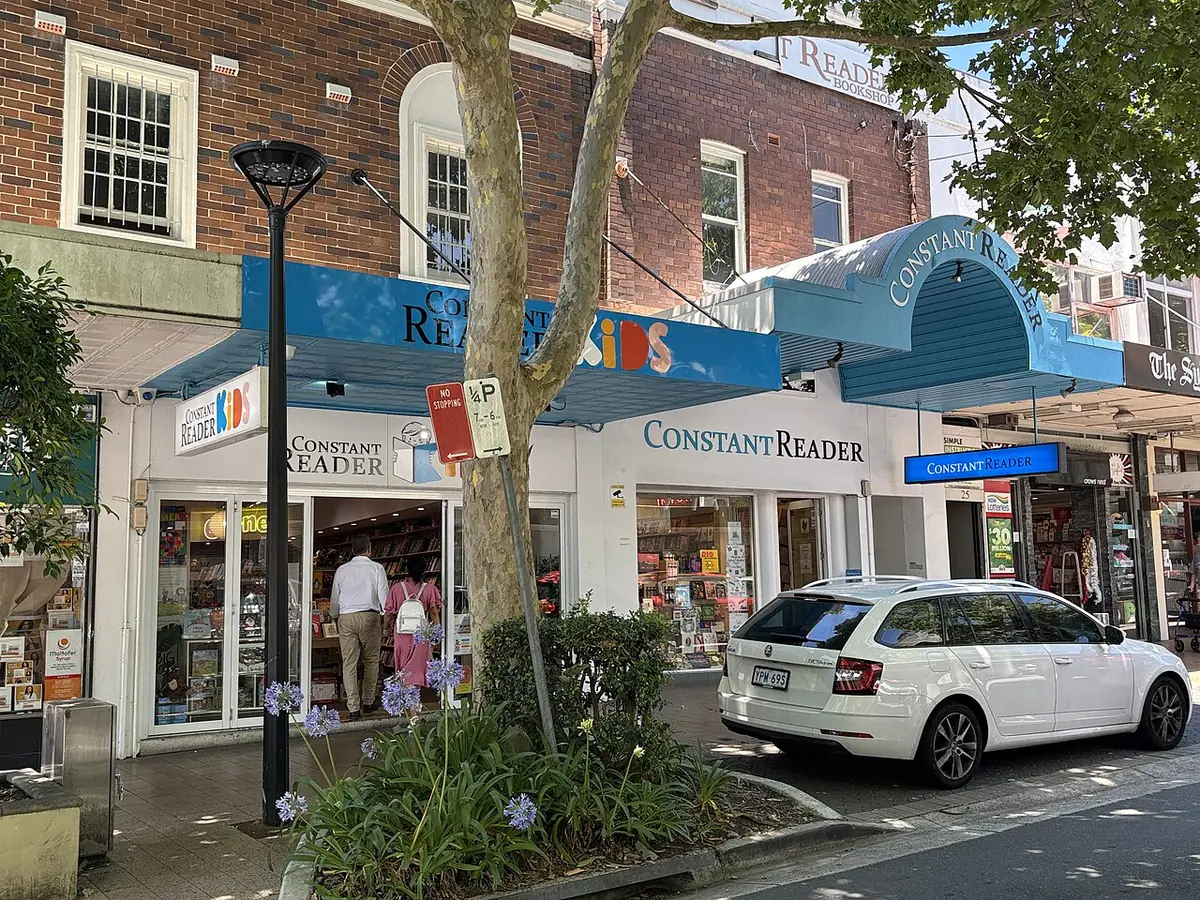
Independent shops like this line many of Sydney's lively local streets — Photo: Nick-D · CC BY-SA 4.0 · Wikimedia Commons
This move can also be read through the lens of the habits you bring with you, especially if you are arriving from overseas.
Choosing a detached house in Sydney involves significant logistical trade-offs, particularly in commuting time and upkeep. Whether you arrive as a family with children, as a remote worker on the move or looking to settle for good, the equation changes completely. Each life situation brings specific advantages but also constraints that are best weighed up before signing a long lease.
The search for space and schools
For a family, a house with a garden offers essential space and proximity to parks and well-regarded schools. However, this often means moving slightly further from the Central Business District, which lengthens daily commutes. You have to weigh living space against being close to where things happen to keep family life balanced.
Balancing quiet and connectivity
If you work hybrid or long hours, the space in a house lets you set up a genuinely comfortable home office. In return, looking after the outdoor areas and small household hassles generally falls to the tenant under the terms of an Australian lease. You also have less geographic flexibility than with a central apartment.
Settling in and learning the local ropes
Moving straight into a house calls for a good knowledge of the neighbourhoods and their microclimates. Setting up requires you to respond quickly to landlords who are demanding about financial guarantees. It is an ideal choice for putting down lasting roots, provided you do not underestimate the administrative adjustment period.
What changes fundamentally when you move to Sydney from abroad?
Once these reference points are in place, choosing the neighbourhood becomes the defining decision of your move.
The Australian rental system follows procedural rules very different from what many newcomers are used to. Where length of tenancy or strict rent controls traditionally protect tenants elsewhere, the Sydney market is built on contractual fluidity and immediate proof of ability to pay. Understanding these cultural and legal differences is the first step to avoiding a string of rejections after your viewings.
From abroad
Strict rent controls and protective notice procedures back home
Sydney
A market driven by supply and demand, with short one-year renewable leases
Expect regular rent rises at each renewal and accept far more contractual flexibility than you may be used to.
From abroad
A system of personal guarantors or traditional bank guarantees
Sydney
An absolute requirement for local proof of income and a verifiable rental history
Arriving without a local job or Australian rental references makes it considerably harder to secure the most sought-after properties.
From abroad
Formal check-in inventories, often handled by bailiffs or specialists
Sydney
A detailed photographic inspection report completed by the agency at move-in
Every detail counts from day one; any defect not recorded on the official form may be charged to you when you leave.
From abroad
Major works frequently covered by the landlord without discussion
Sydney
Routine upkeep tasks (garden, pool) often written into the contract
Read the additional lease clauses carefully: looking after gardens or outdoor equipment is very often the tenant's responsibility.
How to find your way around Sydney's main residential areas
This geographic overview translates into precise budget realities that deserve an unfiltered look.
Sydney is divided into very contrasting areas, separated by stretches of harbour and linked by a multimodal transport network. Choosing an area depends not only on your aesthetic preferences but on how much commuting you can tolerate and your overall budget. Each zone has its own microclimate, its own pace and its own dominant style of architecture.
The Eastern Suburbs
A prestigious, lively seaside setting, facing the ocean and its legendary beaches.
Suits
People who put being right by the sea and an active outdoor lifestyle first.
Trade-off
Some of the highest rents in the city and heavily congested roads at rush hour.
The Lower North Shore
Quiet, leafy residential streets overlooking the harbour with understated elegance.
Suits
Families looking for excellent schools and a particularly safe environment.
Trade-off
A sometimes conservative neighbourhood feel and a very substantial property budget for mid-sized houses.
The Inner West
A creative, multicultural and lively atmosphere, shaped by independent cafés and parks.
Suits
Working people and creatives looking for a buzzing neighbourhood life and quick connections to the centre.
Trade-off
A more mixed housing stock, with charming Victorian houses that sometimes need freshening up.
What does renting a house in Sydney really look like financially?
Beyond the raw figures, the nature of rental contracts deserves particular attention.
The Sydney rental market quotes and collects rent by the week, a habit that often surprises newcomers. On top of the base rent come compulsory charges and upfront move-in costs that need to be budgeted for carefully. The ranges below reflect trends observed for properties with standard features.
SydneyTo rentHouseestimate
Median price / m²A$33Half the apartments sell below this
Median priceA$5.73kthe average is 14% higher — a few very large properties pull it up
Most common2 bedrooms50 % of listings
Average size166 m²
By number of bedrooms
Bedrooms
Share of market
Avg price
Price / m²
Avg size
2most common
50 %
A$4.82k
A$34
140 m²
3
34 %
A$6.41k
A$33
196 m²
4
16 %
A$8.87k
A$32best value / m²
280 m²
Each row is an average, compared against the area average of A$34 / m². These are indicative estimates of a typical local market, not a measured sample of live listings. Check current listings before relying on them.
How to weigh a detached house against housing flexibility
Sydney's harbour setting makes waterside living part of daily life — Photo: Dicklyon · CC BY-SA 4.0 · Wikimedia Commons
To secure your rental journey, one critical administrative step must never be overlooked.
The type of property you choose shapes your daily life for many months. Renting a house offers unmatched independence and space, but comes with maintenance obligations and a heavy financial commitment. Weighing up the two approaches helps you avoid the classic mistake of signing a lease too quickly in the wrong neighbourhood.
The detached house with a garden
Choosing a house means complete freedom over your living space, with no neighbours directly above and private outdoor access. It is the choice of putting down roots and full family comfort, which in return demands careful organisation for looking after the grounds and a high fixed budget every week.
What it changesYou gain in everyday quality of life and personal space, at the cost of an initially rigid contract and a substantial overall cost.
A transition through an in-between option
Starting with a smaller or furnished home lets you try out different Sydney neighbourhoods without committing to a rigid long lease. This temporary approach makes it easier to explore the city and gives you time to build a solid local application before targeting the ideal house.
What it changesYou reduce the risk of picking the wrong area, even if it means accepting an extra move and temporary storage for your belongings.
What is the golden rule to master before paying a deposit in Sydney?
Let us now recap the overall timeline of the steps for a successful move.
The rental process in Australia is tightly governed by deposit protection laws, but it demands constant vigilance from the applicant. The slightest lapse in reading the termination clauses or maintenance responsibilities can turn a great move into a costly dispute. Following a strict sequence keeps your money safe.
Viewing the property and immediately submitting your complete digital application through the relevant platform.
Carefully reviewing the Residential Tenancy Agreement and its special conditions yourself.
Paying the bond, generally equal to four weeks' rent, directly into the official account of the state of New South Wales.
Completing the Condition Report together at move-in, with systematic photos of every room.
Setting up the compulsory energy and internet contracts in your name from the date the lease takes effect.
The official handover of the keys and the actual start of your occupancy, with full legal peace of mind.
How does the full timeline of a rental move in Sydney fit together?
In short, approaching the Sydney property market methodically is what ensures a successful move to your new home.
Planning ahead for the different phases of your property search lets you absorb the unavoidable administrative delays. From the first online search to the actual move, each party plays a specific role that needs to be coordinated methodically to stay ahead of the competition.
YouPreparing your digital applicationGather payslips, references from previous landlords, identity documents and proof of income, translated and ready to send.
Local agenciesShortlisting and group viewingsAttend the 'Open for Inspection' sessions scheduled on Saturday mornings; be on time, as viewing slots often last barely 15 minutes.
YouSubmitting your application onlineSubmit your application through the specialist portals within an hour of the viewing if the property meets your criteria.
LandlordReview and selectionThe agent checks your background and puts the chosen application to the landlord for final approval within 24 to 48 hours.
You and the agencySigning and paying the bondElectronic signature of the lease, payment of rent in advance and lodging of the bond with the relevant state body.
YouCondition report and moving inA thorough inspection of the property, reporting any pre-existing defects, and settling into your new home.
House or apartment in Sydney: weighing space against proximity
Now that the choice of property type is clear, let us look at the financial reality of your move.
Choosing between a detached house with a garden in Sydney's residential suburbs and a bright apartment in a modern building in the centre or the coastal neighbourhoods raises the central question of how you want to live day to day. Houses offer unmatched living space and complete freedom over how you arrange them, but they often involve very long commutes to the CBD employment hubs and considerable upkeep costs that build up over the years. An urban apartment, by contrast, makes daily life far simpler thanks to shared charges and building facilities, while placing you at the heart of the city's cultural buzz and its efficient transport networks.
The shape of the Sydney property market sharpens this divide between vertical urban living and the historic suburban sprawl. Recent apartments built along the main transport corridors or near stations offer upmarket features such as pools, gyms and shared terraces, but they sometimes come with neighbour issues and high strata fees that weigh on the recurring budget. On the other hand, houses in the Inner West or along the Northern Line have undeniable heritage character and private land, but their purchase prices reach heights that demand very heavy financial compromises or maximum borrowing over many years.
Your final decision should therefore rest on a clear-eyed analysis of your professional and family priorities over the medium term rather than on a passing crush. If your days are split between meetings in the financial district and evenings in Darlinghurst's restaurants, the time lost looking after a large lawn miles away will end up weighing heavily on your personal balance. If, on the other hand, you long for complete calm, easy parking and immediate outdoor space for your children, the house is the obvious choice, even if that means accepting compromises on living space and spending an hour a day on public transport.
What monthly and overall budget should you plan to live comfortably in Sydney?
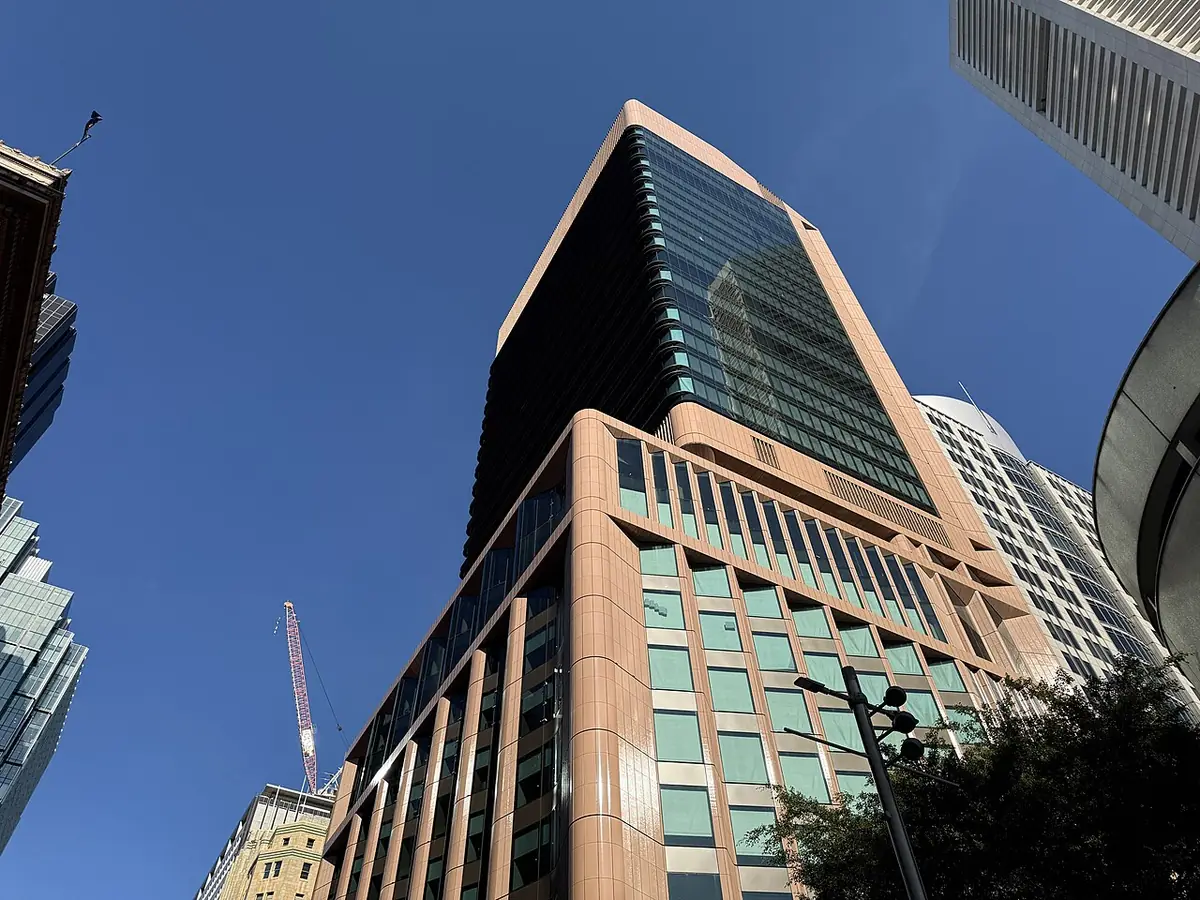
Martin Place sits at the heart of Sydney's financial district — Photo: Klauskazamias · CC0 · Wikimedia Commons
Understanding the raw figures is one thing, but living at Sydney's pace is another.
Drawing up a budget for Sydney is not limited to your monthly mortgage repayment or the initial rent. It includes a range of local taxes, strata or upkeep charges and essential services that make up the cost of living in this Australian city. Planning carefully for these costs will spare you unpleasant financial surprises in the first months and keep your move on a sustainable footing.
Estimated running costs and charges in Sydney
Expense item
Indicative monthly budget
Comments and variations
Strata fees
AUD 600 to AUD 1,200
Varies widely depending on the building's facilities (pool, lift, concierge) and the age of the structure.
Local council rates
AUD 250 to AUD 450
Collected by local councils for roads, waste management and local green spaces.
Home and contents insurance
AUD 120 to AUD 250
Essential to cover the risks of regular severe weather and major claims in the region.
Public transport (Opal Card)
AUD 180 to AUD 320
Based on regular daily travel combining trains, metro, buses and ferries across the network.
The amounts shown are averages observed on the market and may vary with the exact location and standard of the property.
Purchase price ranges and additional costs
Property type and area
Average purchase price
Legal fees and purchase taxes
2-bedroom apartment (Inner West / East)
AUD 850,000 to AUD 1,400,000
Stamp duty on a sliding scale according to value and buyer status.
Family house (middle-ring suburbs)
AUD 1,500,000 to AUD 2,500,000
Legal and agency fees included when calculating the required deposit.
Stamp duty in New South Wales accounts for a significant share of the cash needed at signing.
Health, schools and transport: what does an ordinary Tuesday look like in Sydney?
Beyond the visible side of daily life, some crucial details often escape future buyers.
To judge whether a future location makes sense, nothing beats carefully simulating an ordinary working day. Between early starts to beat the traffic on the iconic bridges, organising the children's schooling and access to healthcare, every minute counts. This timeline sets out the key moments that shape the day for Sydney residents, from getting up to going to bed.
07:15Home neighbourhoodGetting ready in the morning and leaving on schedule to stay ahead of the heavy traffic on the main routes into the city centre.
08:00Local schoolDropping the children at the local public school or chosen private school, often just a few minutes away by car.
08:45Main train station or ferry wharfBoarding public transport to reach Sydney's business district in the best conditions.
12:30CBD business districtLunch break in one of the many urban spaces or trendy cafés that bring the city's economic heart to life.
17:30Local medical centreA routine appointment or check-up at a local clinic operating within the Australian healthcare system.
19:00Back home to unwindEnding the day quietly at home, enjoying the calm of the neighbourhood after the bustle of the city.
What the property listing will not tell you about your future street in Sydney
Knowing about hidden defects helps you avoid the bitter regrets that surface a few months after moving in.
Agency marketing photos and glowing descriptions always show properties in their best light, skilfully glossing over local environmental and planning constraints. In Sydney, the reality on the ground often lies in subtle factors linked to microclimate, building rules or upcoming infrastructure projects. Here are the key things people usually only discover after signing the contract of sale.
Sun orientation and natural ventilation
Many recent apartments built in a hurry overheat badly in summer because of poor orientation and glazing left unprotected from direct sun, leading to sky-high air-conditioning bills.
Night-time noise and through traffic
A street that looks quiet on a Saturday afternoon can become a very busy rat run from 6 in the morning on weekdays, used by thousands of vehicles trying to avoid the congested main roads.
Strict council restrictions
Changing the facade, cutting down a tree on your land or installing solar panels requires extremely fussy council approvals that can hold up your renovation plans for many months.
History of weather damage and flood-prone areas
Some low-lying pockets of Sydney see water build up quickly during heavy tropical downpours, turning peaceful residential streets into temporarily flooded dead ends.
The buying mistakes you only discover after six months of living in Sydney
Faced with such demanding requirements, it is fair to ask whether this market is right for you.
Looked likeAn ideal opportunity thanks to an apparently very attractive price per square metre on the far outskirts.
Turned outA logistical nightmare with two hours of commuting a day there and back and the household gradually becoming socially isolated.
Would have caught itTest the exact journey at rush hour on a weekday before making a final purchase offer.
Looked likeA charming older apartment with period floorboards and unique architectural character.
Turned outA damp, poorly insulated home in winter, with little soundproofing and burdened by huge strata costs for facade repairs.
Would have caught itAsk for all the strata general meeting minutes from the past three years to spot works that have been approved or postponed.
Looked likeA rental investment or quick first purchase so as not to miss the rise in the Australian property market.
Turned outAn impulsive purchase made without checking plans for high-rise buildings right opposite your windows.
Would have caught itAlways check the local planning scheme and ask the council about development applications under assessment on the block.
Looked likeA small, intimate strata building with low monthly fees quoted by the agent.
Turned outNo reserve fund at all to cover urgent roof or foundation repairs, leading to massive special levies.
Would have caught itHave the strata accounts audited by an independent third party or an accountant specialising in property.
Unusual profiles: who really should not buy property in Sydney?
It is time to pull your thinking together and make the final decision with your eyes open.
Home ownership in Sydney is often presented as the ultimate sign of a successful life in Australia. Yet the rigidity of the local market, the size of the financial commitments and the cyclical nature of interest rates make buying property a completely counterproductive strategy for some residents. Recognising in time that you fall into one of these categories will spare you years of needless financial strain.
The mobile professional on a short-term assignment
→Opt for flexible renting in different parts of the city.
Upfront transaction costs (stamp duty, legal and agency fees) are hard to recoup over less than five to seven years of ownership.
The young professional without solid emergency savings
→Keep their capital in secure savings accounts and carry on renting a modest home.
Tying up all their savings in a deposit leaves the household exposed to the slightest change in interest rates or a setback at work.
Someone who craves total peace and rural space
→Settle in the semi-rural regions of New South Wales rather than in the city.
Sydney's urban density and constant bustle will never meet the expectations of people looking for the quiet of the countryside and wide open spaces.
So, are you really ready to take the step of buying in Sydney?
After this in-depth look at the realities of the Sydney property market, the final decision is entirely yours and should not rest on any outside pressure. Buying in this city demands a long-term commitment, a proven tolerance for economic swings and the ability to accept major geographic compromises to house your family well. If your career plans are secure for the coming years and your finances include a comfortable safety margin for the unexpected, then the buying journey makes full sense and gives you a solid footing.
Take the time to weigh every factor covered in this guide, from hidden strata fees to real commuting times at rush hour. The success of your property plans in Sydney lies in a close match between the lifestyle you want and the objective reality of the properties available on the market. If any doubt remains about your geographic stability or the durability of your budget, renting remains a wise and protective alternative that keeps your freedom of action without putting your financial peace of mind at risk.
Related questions
What additional costs should I expect when buying property in Sydney?
The main additional costs are stamp duty charged by the state of New South Wales, fees for legal advisers or conveyancers, and the cost of building inspections and valuations before the final signature.
Can I buy property in Sydney as a non-resident?
Yes, foreign non-resident investors can buy property in Sydney, but they must first obtain approval from the Foreign Investment Review Board (FIRB) and pay specific surcharges on buying and holding property.
How do strata fees work in Sydney?
Strata levies are paid quarterly by owners of apartments or townhouses to fund upkeep of the common areas, building insurance and a reserve fund for major future works.
Which Sydney neighbourhoods offer the best balance between price and access to the centre?
The Inner West suburbs, along with some areas in transition along the train and metro lines, offer interesting prospects for buyers looking for a balance between urban energy and budgets more accessible than in the East or the North.
How long does it usually take to complete a property transaction in Sydney?
A standard property transaction in Sydney generally takes four to six weeks between the exchange of contracts and settlement, the period during which the final legal checks are carried out.
Are auctions compulsory when buying a house in Sydney?
Public auctions are the dominant way houses are sold in Sydney's sought-after neighbourhoods, but it is also possible to buy by private treaty before the set date or for certain types of apartment.
How do Reserve Bank of Australia interest rates affect buyers?
The central bank's decisions on the cash rate directly affect how much commercial banks will lend, changing buyers' borrowing power and, in turn, the direction of prices in the residential market.
Do I have to have a property inspected before making an offer?
It is strongly recommended to have a Building and Pest Inspection carried out to identify hidden defects, termites or major structural faults before making any legal commitment.
How can I assess the quality of the public schools linked to an area?
The Australian public school system works on strict school catchments. Check the eligibility of the address you are targeting directly with the New South Wales Department of Education.
Is it better to buy off-the-plan or an established property in Sydney?
Buying off-the-plan offers potential tax advantages and construction warranties, but carries the risk of delivery delays and finishes that differ from what was promised, whereas the real condition of an established property can be assessed straight away.
Property review of ting
No ting properties in Sydney yet
Be the first — share it on ting and it shows up right here.