Finding an apartment to rent in Liverpool means understanding how the UK rental market works and how the city's districts differ from one another. This guide sets out realistic budgets, the administrative traps hidden in tenancy agreements, and the criteria that matter most when you choose where to live.
Get the app
What nobody tells you.
Real prices, hidden costs and the traps to check before you commit.
Why renting an apartment in Liverpool means looking past the old industrial cliches
Scroll
Why renting an apartment in Liverpool means looking past the old industrial cliches
Finding an apartment to rent in Liverpool means understanding how the UK rental market works and how the city's districts differ from one another. This guide sets out realistic budgets, the administrative traps hidden in tenancy agreements, and the criteria that matter most when you choose where to live.
Written by the ting.ad editorial team ·
High Street, Liverpool in Street View: drag to look around.
That mix of period character and modern comfort feeds straight into how well a given district matches your own profile.
Renting an apartment in Liverpool is not simply a matter of moving into a former port city reinventing itself around culture. Between the energy of the regenerated docks and the reality of the outer residential districts, the gap between the media image and daily experience is wide. Understanding that gap helps you avoid the disappointments that come with noise, poorly insulated historic buildings and longer-than-expected distances to the main employment areas. Local data shows that the rental market responds strongly to how close a property sits to public transport and to the way the building itself is laid out. The task is to work out precisely what you gain in space and what you lose in travel time depending on the area you pick.
The cultural energy of the city centre and the DocksvsLate-night activity and high running costs
Living at the heart of things gives you immediate access to amenities and cultural events, but it also means constant exposure to noise from the nightlife districts and often smaller floor areas for the same rent.
The quiet and the space of the residential districtsvsDistance from the main employment centres and reliance on transport
Settling in the outer areas guarantees a calmer setting and roomier homes, but it adds considerably to your transport budget and to the time you spend commuting each day.
The architectural appeal of the Georgian and Victorian buildingsvsPoor thermal insulation and higher maintenance costs
Older buildings are attractive for their proportions and period detail, yet they often carry mediocre energy ratings that push up the monthly bill for electricity and heating.
The modernity of the new developments along the MerseyvsUniform construction and a lack of historic character
Contemporary blocks guarantee good thermal comfort and modern fittings, sometimes at the cost of the authenticity and personality of the older districts.
Which part of Liverpool actually fits the way you organise your day?
Looking at your daily habits this way brings out the practical adjustments newcomers most often have to make.
Choosing an apartment in this city depends far less on aesthetic preference than on the real rhythm of your week. Someone working from home will not have the same requirements around connectivity and space as a professional commuting into the business district every morning. Equally, families looking for schools and green space need to target very specific areas if they are not to feel cut off. Every situation involves measured trade-offs on living space, on having shops within walking distance, and on access to the main road and rail routes.
Remote worker and freelancer
People working from home do particularly well in the semi-residential districts set slightly back from the busiest part of the centre. You will find more generous floor areas there, enough to set up a genuine separate office, which is essential for keeping work and home life apart. Fibre connections are now standard in most refurbished buildings, but it is worth checking eligibility for the specific address before you sign the tenancy agreement. Access to parks and neighbourhood cafes also makes it easy to take regular breaks without travelling far.
City centre professional
For employees and managers keeping a demanding professional schedule, being close to the stations and the business districts matters more than the size of the home. You will have to accept a higher rent per square metre and sometimes compact rooms, offset by the complete absence of commuting time. Neighbourhood life happens entirely on foot, which cuts the car budget to nothing. In exchange, you accept what comes with very dense areas: controlled parking and lively weekend nights.
Young household and family
Settling in for the longer term as a couple or with a child points naturally to the residential areas east and south of the city. These districts have a housing stock of terraced houses and spacious apartments, often with access to a shared or private garden. Well-regarded schools and local health services make the time you invest in the area worthwhile. The trade-off here is a longer journey to the cultural life of the centre, which means using public transport regularly.
What changes most when you arrive from abroad and settle in Liverpool
Strawberry Field's gates are one of Liverpool's best-known landmarks — Photo: Robertoalonsomen · CC BY-SA 4.0 · Wikimedia Commons
Once those administrative points are clear, the central question is still which district to choose.
The UK rental market runs on administrative, legal and cultural rules that are often very different from the ones newcomers are used to. There is no universal state-backed guarantee scheme, so applicants have to supply strict proof that they can afford the rent, usually based on a high annual net income threshold. Selection is handled by accredited letting agents and rests on thorough credit checks. Understanding these structural differences keeps your application from stalling.
From abroad
Strongly tenant-protective legislation with tightly controlled rents
Liverpool
The flexible Assured Shorthold Tenancy used for residential lettings
Rents adjust more freely to local market conditions, and annual reviews are negotiated directly with the landlord or the managing agent.
From abroad
A regulated deposit capped at one month's rent
Liverpool
A larger tenancy deposit, commonly equivalent to five weeks' rent
You have to tie up more cash at the outset, and by law it must be lodged with an official deposit protection scheme.
From abroad
Reliance on an individual or family member standing as guarantor
Liverpool
The requirement for a local institutional guarantor or several months of rent paid in advance
Newcomers with no UK credit history are often asked for six months' rent up front to reassure the landlord.
From abroad
A move-in condition report drawn up by a court officer or agreed between the parties
Liverpool
A detailed digital inventory carried out by an independent inventory firm
How carefully that check-in inventory is done directly determines whether you get your deposit back in full when you eventually leave.
From abroad
A local occupancy tax based on the rental value of the property
Liverpool
Council Tax, calculated according to bands reflecting the property's capital value
This compulsory monthly local tax comes on top of the rent and varies a great deal by area and by the energy rating of the building.
Which Liverpool district should you favour for your lifestyle?
Those sharp differences translate directly into budget and into the rent ranges you will be quoted.
Liverpool's urban geography is built around micro-districts with strikingly different identities, from the fashionable dockside to leafy residential streets. Each area strikes its own balance between accessibility, local activity and the kind of property on offer. Judging these options through the lens of daily life is what stops you making the classic mistake of choosing from photographs alone. The decisive criteria are the quality of public transport links and whether everyday services are close at hand.
The Docks and Ropewalks
A busy urban atmosphere, set by constant footfall, restaurants close by and cultural events along the waterfront. Getting around happens naturally on foot or by scooter.
Suits
Younger professionals, single people and couples without children who want full immersion in city life and the shortest possible journey to work.
Trade-off
Smaller living areas, no private outdoor space at all, and noise levels that can run high late at weekends.
Georgian Quarter
Striking architecture, tree-lined cobbled streets and a hushed atmosphere that suits unhurried walks, all a couple of minutes from the very centre.
Suits
Anyone drawn to period architecture, and households looking for character, generous ceiling heights and quiet neighbours.
Trade-off
An older housing stock with higher heating costs, tightly controlled parking, and rents among the highest in the city.
Sefton Park and Mossley Hill
A green, residential setting dominated by large city parks, with family-oriented street life and thriving independent shops.
Suits
Families with children, pet owners and anyone who puts greenery and quiet at the top of their daily priorities.
Trade-off
A longer daily journey into the business district and greater reliance on bus routes or suburban rail.
What does renting an apartment in Liverpool really cost?
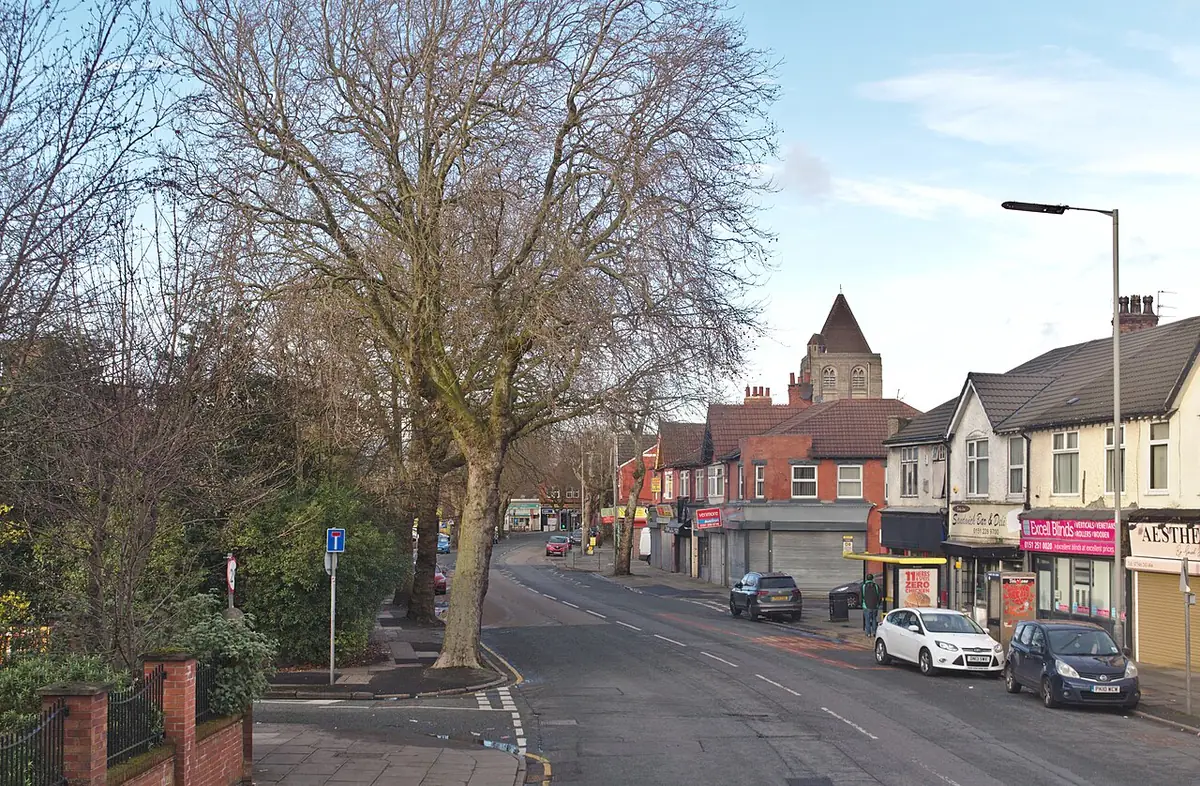
Streets like this mix shops and terraced homes under the trees — Photo: Rodhullandemu · CC BY-SA 4.0 · Wikimedia Commons
Beyond the headline rent, the exact nature of your tenancy agreement determines how much legal security you have.
Liverpool's rental market remains broadly more affordable than London or Manchester, though good-quality properties are under real pressure. Rents vary by a factor of three depending on floor area, the age of the building and the precise location. To build a realistic budget you must include the unavoidable extras, such as Council Tax, energy bills and contents insurance, which weigh heavily on the total monthly outlay.
liverpoolTo rentApartmentestimate
Median price / m²£12Half the apartments sell below this
Median price£900the average is 14% higher — a few very large properties pull it up
Most common2 bedrooms43 % of listings
Average size70 m²
By number of bedrooms
Bedrooms
Share of market
Avg price
Price / m²
Avg size
1
32 %
£710
£15 +15 %
48 m²
2most common
43 %
£910
£13
70 m²
3
19 %
£1.15k
£12best value / m²
95 m²
4
6 %
£1.46k
£12best value / m²
125 m²
Each row is an average, compared against the area average of £13 / m². These are indicative estimates of a typical local market, not a measured sample of live listings. Check current listings before relying on them.
What you can actually sign and control in your tenancy agreement
That contractual care needs to be matched by a clear grasp of the steps that lead to getting the keys.
Signing a tenancy agreement in the UK binds both parties on specific legal terms that are worth mastering if you want to avoid unpleasant surprises. The standard contract, most often an Assured Shorthold Tenancy, sets clear rules on the minimum commitment period and on how the rent can be reviewed. Telling the difference between the clauses you can change and the statutory provisions you cannot lets you negotiate calmly with the letting agent or the landlord.
Assured Shorthold Tenancy (AST) agreements
This standardised format governs the great majority of private lettings. It normally provides for a firm initial period of six or twelve months, known as the fixed term, during which neither tenant nor landlord can end the agreement unilaterally without serious grounds. When that initial period ends, the tenancy rolls automatically onto a monthly periodic basis if no new agreement is signed.
What it changesYou get short-term visibility, but you should expect the landlord to ask for a rent adjustment as soon as the first anniversary of your move-in comes round.
Break clauses and rent review provisions
Some agreements include what is called a break clause, allowing either party to end the tenancy early on two months' notice, often exercisable once the first six months have passed. Separately, the terms on which the rent may be increased must be set out clearly in writing from the start, so that no arbitrary review can be imposed mid-tenancy.
What it changesWith no explicit break clause, you are legally bound to pay the rent for the whole of the agreed fixed term, even if your work situation changes.
The rule to understand before you pay a holding deposit
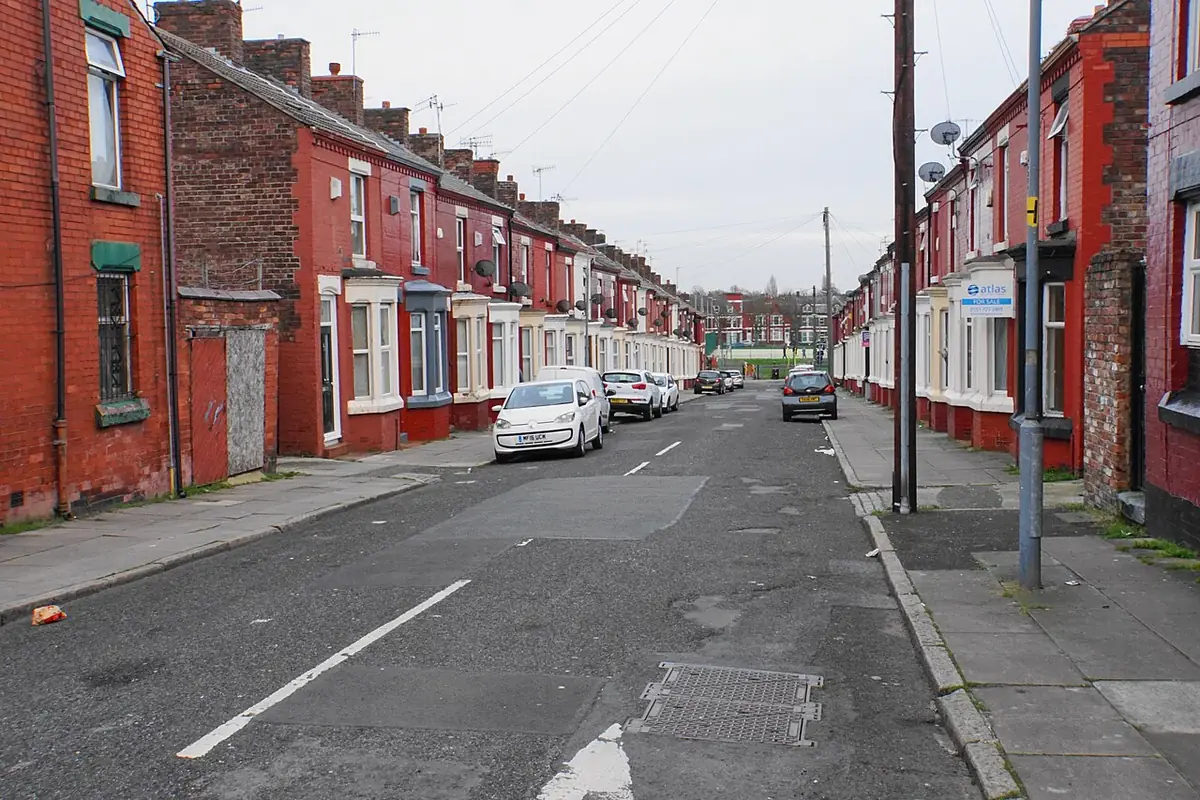
Terraced rows like this are the backbone of Liverpool's housing — Photo: Bill Boaden · CC BY-SA 2.0 · Wikimedia Commons
With that path mapped out, the transaction itself follows a fairly precise timetable.
The UK letting process has one critical step: paying a reservation sum known as a holding deposit. Capped by law at the equivalent of one week's rent, that money takes the property off the market temporarily while the agent runs affordability checks. Many applicants do not realise, though, that the holding deposit can be lost for good if the application contains inconsistencies or if the applicant withdraws without good reason.
Identifying the right property and viewing the apartment in person or virtually.
Submitting your offer to rent to the landlord through the letting agent.
Paying the holding deposit (one week's rent) to take the property off the market.
Starting the affordability, employment and previous-tenancy reference checks.
Approval of your application and issue of the draft tenancy agreement for review.
Signing the agreement electronically and paying the balance (the tenancy deposit and the first month's rent).
How the letting process unfolds, step by step
Taking on a tenancy in Liverpool means coordinating several parties with clearly defined roles: the managing agent, the landlord, the inventory clerk and the energy suppliers. Allowing for the administrative timescales, generally two to four weeks from first viewing to actually moving in, makes for a smooth transition into your new home.
The prospective tenantAssembling the full supporting fileGather your identity documents, your last three payslips or sets of accounts, and contact details for your previous landlords ahead of time, so the referencing check can run without delay.
The letting agentProcessing the application and checking referencesThe instructed agent verifies your documents through an external financial risk assessment platform, a process that usually takes between 48 and 72 working hours.
The independent inventory firmCarrying out the check-in inventoryA neutral clerk visits the property to record in writing and in photographs the exact condition of floors, walls, fittings and any furniture present before the keys are handed over.
The landlordFinal approval and signing of the tenancy agreementThe landlord countersigns the agreement once the tenancy deposit and the first month's rent are confirmed as received into the agent's client account.
The new tenantSetting up energy accounts and registering for Council TaxFrom your first day in the property, take water, gas and electricity meter readings so you can open accounts with the suppliers, and register with the council's tax office.
Renting an apartment or a house in Liverpool: weighing it against what you want
Once that fundamental choice is settled, it is worth looking closely at what the move will cost you.
Choosing between an apartment in the thick of Liverpool and a house in the outer residential districts is not a matter of taste but a genuine strategic judgement about how you want to live day to day. On one side, the city apartment, often in a lively district such as Ropewalks or along the regenerated docks at Liverpool Waters, drops you straight into the cultural and economic rhythm of the city. You are immediately close to public transport, coworking space, theatres and restaurants, which cuts your reliance on a car sharply while increasing how often you see people. It is the obvious choice for working professionals, young couples and anyone who values urban immediacy and easy upkeep over raw floor area.
Look instead at a house in a district such as Mossley Hill, Woolton or Aigburth and the balance of your life changes completely, with considerably more living space, often a private garden and easy parking. These residential areas, known for their quiet and for the quality of their schools, appeal particularly to families and to anyone who wants somewhere peaceful to come back to after an intense day at work. The obvious counterweight is the relative distance from the city centre, which means longer daily journeys by bus or train, together with more responsibility for maintaining the building and the outdoor space. So you need to weigh precisely what you are prepared to give up: time saved on travel, or the comfort of a home with room in it.
Financially, the cost structure differs significantly between these two options in Liverpool. City centre apartments generally carry a higher monthly rent per square metre, but sometimes include service charges that cover the upkeep of communal areas, security and occasionally even heating or water. Rented houses, on the other hand, though potentially more affordable for the same floor area once you move away from the very centre, tend to bring larger energy bills, because there is more volume to heat and because insulation varies with the age of the Victorian and Edwardian stock. A careful look at your own energy habits and budget priorities therefore becomes decisive if you want to avoid a financial shock a few months in.
Finally, flexibility and how easily a property changes hands is another deciding factor. Modern apartments, managed by institutional owners or by agencies specialising in the new waterfront developments, often come with standardised tenancy agreements and bundled services that make moving in and out simpler. Individual houses, frequently let through independent landlords or traditional local agents, sit within more settled neighbourhood patterns and sometimes more personal contractual relationships, though they call for extra care at the check-in inventory. In short, your final choice should follow from a realistic projection of your daily life over the next three to five years in this Merseyside city.
What total budget do you need to live comfortably in a Liverpool apartment?
To put those figures in context, here is what a resident's day actually looks like.
Building a forward budget for an apartment in Liverpool means allowing for all the fixed outgoings that make up the local cost of living. Beyond the headline rent quoted in the listing, local taxes, energy costs and subscriptions to essential services reshape what you will genuinely spend. Planning these items carefully makes for a settled move and keeps you from overstretching during the tenancy.
Monthly rent ranges for an apartment in Liverpool by property type and location
Property type
Outer and residential districts
City centre and waterfront
Factors that move the price
Studio / one room
GBP 600 to 750
GBP 800 to 1,000
Proximity to the universities and the stations
Two-room apartment (one bedroom)
GBP 750 to 950
GBP 1,000 to 1,350
A balcony and views over the Mersey
Three-room apartment (two bedrooms) and larger
GBP 950 to 1,250
GBP 1,400 to 1,900
The standard of the building and parking included
The figures shown exclude service charges and Council Tax.
Estimated additional monthly and annual costs for a renting household
Cost item
Estimated average amount
How it is calculated and how much it varies
Council Tax (local occupancy tax)
GBP 120 to 220 per month
Varies with the tax band (Band A to H) set by Liverpool City Council
Electricity and gas
GBP 110 to 180 per month
Depends heavily on the building's EPC rating and its floor area
Water and wastewater
GBP 35 to 55 per month
Charged either at a flat rate or by individual meter, billed by United Utilities
Broadband internet
GBP 25 to 45 per month
A standard fibre package from one of the main UK providers
These estimates reflect average rates seen in the Liverpool rental market for a typical household.
Health, schools and transport: how an ordinary Tuesday unfolds in Liverpool
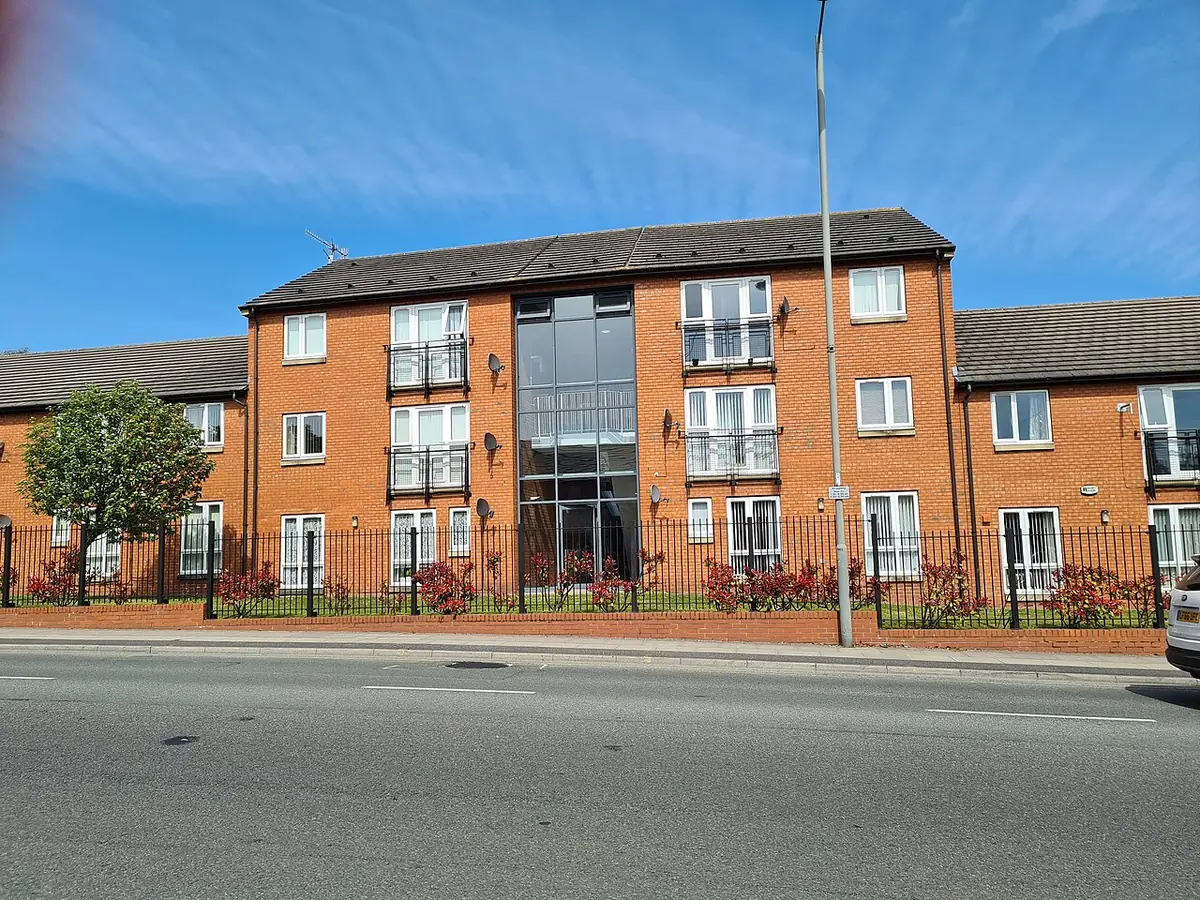
Newer apartment blocks like this add to Liverpool's housing mix — Photo: Frombowen · CC BY-SA 4.0 · Wikimedia Commons
Beyond that well-oiled routine, some less visible details deserve your full attention.
Nothing tells you more about how smoothly your future life will run than watching a typical day in detail. From the morning journey to the shops on your doorstep to how you reach healthcare, each part of the day tests the city's practical organisation. Following it hour by hour lets you spot the likely friction points and plan your move around them.
07:30Residential district and setting offWaking and getting ready in your apartment, with a quick check on traffic conditions along the main routes into the centre.
08:15Merseyrail station or local bus stopThe commute towards the business or university quarter, on a network that runs to a regular timetable and is broadly punctual at peak times.
09:00Arrival at workSettling into your office or coworking space in the central business district, where the working day begins.
12:30Lunch break and local shopsA quick meal or a few errands in the neighbourhood supermarkets or around Liverpool ONE, to make the most of the break.
17:30A stop at a health service or the local pharmacyA possible appointment with your NHS-registered GP, or collecting a prescription from a neighbourhood pharmacy.
19:00Home and time to unwindA quiet evening in your apartment, or a night out among the many independent pubs and restaurants the city is known for.
What the listing will not tell you about apartments in Liverpool
Ignoring these factors exposes a tenant to disappointments that are entirely avoidable.
Agency marketing copy naturally highlights the most flattering aspects of a property, pushing into the background technical and contextual factors that matter a great deal. Behind a spotless cosmetic refurbishment there are sometimes structural, regulatory or environmental realities that will weigh heavily on your comfort. Here are the crucial points you must check before you commit.
The actual EPC rating
Many older Liverpool buildings carry poor energy ratings (E, F or G). That translates into steep heating bills through the winter months and persistent damp that is hard to counter without adequate ventilation.
How strictly service charges and building rules are applied
In the new waterfront developments, service charges rise steadily year on year to cover lifts, concierge staff and communal areas. Those unforeseen increases can weigh heavily on your overall monthly budget.
The real sound insulation between flats and from neighbours
Acoustic separation between adjoining apartments varies enormously, particularly in converted historic warehouses and in 1960s blocks. Viewing at a busy time of day is the only way to gauge the real noise levels.
Nearby development plans
Liverpool's momentum brings construction sites right across the city. A patch of vacant land or a car park opposite your future window can quickly become a noisy building site for the next two years.
The real availability and cost of residents' parking
Keeping a car in the city centre without an allocated space is an ordeal. Residents' parking permits from the council are subject to strict quotas and lengthy waiting lists.
The classic traps people discover six months after moving to Liverpool
These disappointments lead naturally to the question of whether the plan really suits your profile.
Looked likeAn unusually cheap rental in an area said to be on the way up
Turned outA district poorly served by public transport in the evening, turning every late journey home into a slow and expensive taxi ride.
Would have caught itAlways test the real journey time by public transport on a Saturday evening before you sign the final agreement.
Looked likeA charming Victorian apartment with high ceilings and plenty of character
Turned outA property impossible to heat properly, producing persistent condensation and enormous energy bills.
Would have caught itAlways ask for the EPC (Energy Performance Certificate) and question the landlord about previous winter bills.
Looked likeAn ideal central location right beside the bars and live music venues
Turned outUnbearable night-time noise from Thursday to Saturday, making sleep impossible without earplugs.
Would have caught itCheck how well the double glazing seals and find out what late-opening venues sit below your windows or on the next street.
Looked likeA straightforward tenancy agreement signed quickly without a thorough check-in inventory
Turned outAn unfair deduction from the tenancy deposit held in the protection scheme at check-out, for defects that were there all along.
Would have caught itTake timestamped photographs of every corner of the apartment the day you get the keys, and record every mark in writing.
Who should not be renting an apartment in Liverpool right now?
It is time to draw these threads together so you can make your decision with your eyes open.
Moving to Liverpool is an excellent step for many working people and families, but the choice is not universally right. Certain profiles and certain constraints run directly against the economic and structural realities of the local housing market. A clear-eyed look at your own situation keeps you from committing too early to something with serious consequences.
The mobile worker with highly variable income
→A large modern city centre apartment with a high monthly rent
UK letting agents require strict income evidence (typically annual gross income of thirty times the monthly rent) and an established UK credit history, which makes access very difficult without a permanent local contract.
The family with young children who want space of their own straight away
→A small city apartment with no lift and no private outdoor space
The lack of a garden and the cramped floor areas in very central blocks quickly become stifling, particularly in a maritime climate that does not always encourage being outdoors.
The committed driver who will not use other forms of transport
→A home in the historic or main shopping heart of Liverpool
The city's transport policy heavily favours pedestrians, cyclists and public transport, which makes daily car use expensive in parking terms and awkward because of traffic restrictions.
So, are you ready to commit to your next home in Liverpool?
The Williamson Tunnels' brick passage, mid-restoration — Photo: Kyle J May · CC BY-SA 4.0 · Wikimedia Commons
Having worked through this close look at the Liverpool housing market, the final decision is entirely yours, and it should rest on an honest comparison between what you want and what the ground actually offers. Renting an apartment in this historic city in the north of England gives you a setting of unmatched cultural richness, supported by steady economic momentum and infrastructure that keeps improving. If your essential criteria (proximity to work, control over a total budget that includes Council Tax and energy costs, or your tolerance for the pace of city life) find a favourable answer in the sections above, then your plan is well founded and ready to act on.
If, however, doubts remain about the thermal performance of the property you have in mind, the stability of your income in the short term, or whether the type of home really matches your family's needs, do not rush into signing. Liverpool's rental market is large and varied enough to offer other opportunities in districts with strong identities of their own, from the creative energy of the regenerated docks to the green calm of the parks in the south of the city. Take the time to view several properties, to test journey times at peak hours, and to insist on seeing all the technical certificates before you commit yourself legally for months to come.
In the end, settling successfully in Liverpool means trading the guilty thrill of falling in love with a property for a methodical, clear-headed approach. By anticipating the hidden costs, checking the real condition of the building, and choosing your district on the basis of how you genuinely live rather than its marketing reputation, you turn the move into something lasting and rewarding. Your next home is waiting, provided you know exactly what you are looking for.
Related questions
Which parts of Liverpool are most sought after for renting an apartment?
The most in-demand areas include the waterfront, with Liverpool Waters and Ropewalks drawing younger professionals who want cultural life on their doorstep. For families and anyone after a quieter setting, Aigburth, Mossley Hill and Woolton offer an excellent balance, with large green spaces and well-regarded schools.
How does a tenant pay Council Tax?
Council Tax is a compulsory local charge owed by whoever occupies the property, owner or tenant. The amount is set by Liverpool City Council according to the property's assessed value (banded from A to H). It is usually paid by monthly direct debit spread over ten months.
What financial guarantees do Liverpool landlords ask for?
UK agencies and landlords routinely run a full financial background check (referencing), including proof of income normally equivalent to thirty times the monthly rent, along with a tenancy deposit capped at five weeks' rent.
Is it easy to get around Liverpool without a car?
Living in Liverpool without a car is entirely possible and arguably preferable. The Merseyrail suburban train network, combined with a dense web of bus routes and a fully pedestrianised city centre, makes it quick and easy to move around the whole conurbation.
How long does it typically take to find an apartment to rent in Liverpool?
The rental market moves fast and good properties are taken within a few days. Start searching actively two to three weeks before your intended move-in date, and have all your supporting paperwork ready before you enquire.
How are tenancy deposits handled in the UK?
In the UK, the deposit a tenant pays must by law be placed with a government-approved protection scheme, such as the Deposit Protection Service (DPS), which guarantees its safe return at the end of the tenancy subject to a satisfactory check-out inventory.
What is the EPC and why does it matter so much?
The Energy Performance Certificate (EPC) rates a property's energy efficiency on a scale from A to G. It is mandatory for any letting and tells you directly what to expect from your heating and electricity bills.
Are service charges the tenant's responsibility?
In the great majority of UK tenancy agreements, service charges and the upkeep of communal areas fall to the property owner. The tenant pays only the rent, their own energy and water use, and local taxes.
How do you register with a GP in Liverpool?
As soon as you move in, register with the NHS GP surgery nearest your home. You will need recent proof of address and photo identification to get access to primary healthcare.
What is distinctive about standard UK tenancy agreements?
The most common agreement is the Assured Shorthold Tenancy (AST), normally granted for an initial six or twelve months, often with a negotiable early termination provision (a break clause) that can be used after the first six months of occupation.
Property review of ting
No ting properties in Liverpool yet
Be the first — share it on ting and it shows up right here.