Buying a house in Liverpool appeals for its balance of generous proportions and affordability, provided you get to grips with the local legal and architectural quirks. This guide walks through every stage of the decision, from the neighbourhoods worth watching to the final signature with your conveyancing solicitor.
Get the app
What nobody tells you.
Real prices, hidden costs and the traps to check before you commit.
Why buying a house in Liverpool upends your assumptions
Scroll
Why buying a house in Liverpool upends your assumptions
Buying a house in Liverpool appeals for its balance of generous proportions and affordability, provided you get to grips with the local legal and architectural quirks. This guide walks through every stage of the decision, from the neighbourhoods worth watching to the final signature with your conveyancing solicitor.
Written by the ting.ad editorial team ·
High Street, Liverpool in Street View: drag to look around.
Beyond the brickwork and the floor area, it is your daily routine that has to fit the rhythm of the city.
Buying bricks and mortar on the banks of the Mersey does not follow the same logic as in large continental cities or in the south of England. The opening promise rests on more generous living space and a historically modest cost per square metre, but it comes with an architectural and structural reality that deserves a cool-headed look. Every neighbourhood has its own pace, its industrial or dockside past and its own demands when it comes to thermal upgrades. Understanding the paradox between an attractive purchase price and the cost of bringing a house up to standard is the first indispensable step towards a project with no unpleasant surprises later.
More living space and more land for the same budget than in the south of the countryvsEnergy upgrade and damp treatment costs that are sometimes underestimated
Victorian and Edwardian houses offer remarkable interior volumes but need close attention to wall insulation and the roof. What you save on the purchase often goes straight back into looking after an older building.
A constant cultural life and urban energy carried by the city's maritime heritagevsA sharp gap between highly prized streets and micro-areas still in transition
Values can shift from one street to the next depending on how close you are to the parks, to transport routes or to the council's regeneration programmes.
An accessible route into ownership for investors chasing rental yieldvsCareful handling of leasehold or freehold titles, which need auditing with your conveyancing solicitor
The distinction between outright ownership and a long-term right of occupation shapes the British market and has a direct bearing on your future resale.
What kind of buyer are you in the Liverpool housing market?
Leaving familiar surroundings behind to settle here for the long run means decoding a distinctive legal and cultural system.
Choosing a house in Liverpool is not simply a financial calculation or a hunt for square metres. Your own history, how much you work from home, your need for green space and your appetite for city noise will all decide the exact area where you put down roots. The market serves very different profiles, from the first-time buyer who wants to be near the waterfront to the family looking for greenery in a well-connected suburb. Looking clearly at your own situation avoids the most common wrong turn: buying a charming property that is completely disconnected from the journeys you actually make.
Choosing central Liverpool and the regenerated quarters
Settling near the city centre, in the Baltic Triangle or in the converted dockland areas drops you straight into the city's creative and artistic energy. Renovated terraced houses and characterful lofts are scarce and much sought after here, offering a fashionable setting that can be noisy at weekends. It suits working people without children, or investors betting on short and medium-term lets. What you give up is a large private garden, in exchange for restaurants, music venues and co-working spaces on the doorstep.
Choosing the residential districts and outer green belts
Turning towards areas such as Mossley Hill, Aigburth or the streets around Sefton Park changes the whole equation of daily life. Houses here have real gardens, period floorboards and proportions that suit family life. The quiet is unmistakable, offset by slightly longer journeys into the business district by public transport. This is the option favoured by people settling for the long term who want unquestionable stability in the value of what they own.
Choosing transitional areas and regeneration opportunities
Exploring the northern neighbourhoods or certain districts still being reinvented lets you buy a considerable amount of space for an outlay that looks modest on paper. It does demand a long-term view and a tolerance for risk, because wider urban change is slow. You need to look hard at the local dynamic, at whether infrastructure projects are actually planned and at how safe the surrounding streets feel before you commit. This is the natural territory of experienced investors, or of buyers ready to roll their sleeves up and renovate from top to bottom.
What changes fundamentally when you arrive from abroad and live in Liverpool
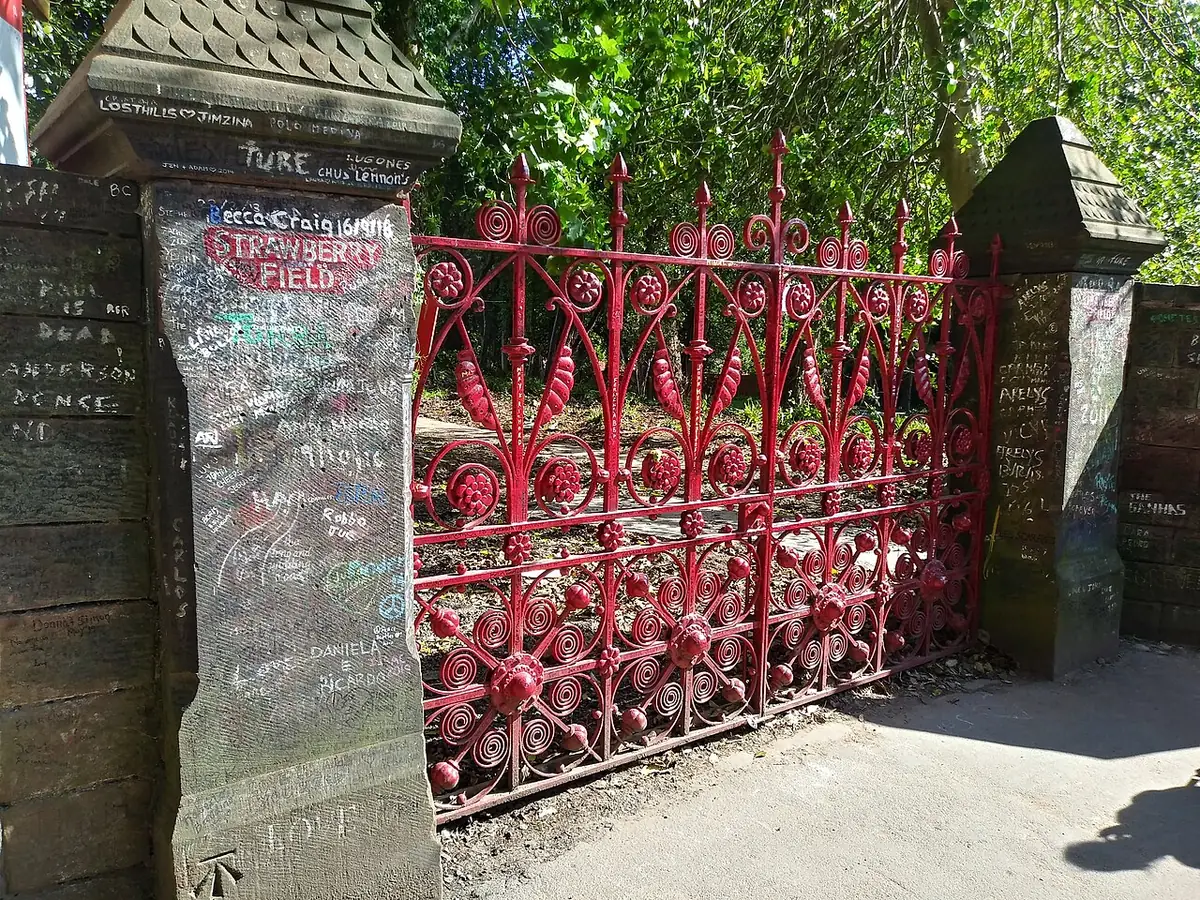
Strawberry Field's gates are one of Liverpool's best-known landmarks — Photo: Robertoalonsomen · CC BY-SA 4.0 · Wikimedia Commons
Each part of the city draws its own social and architectural map, worth charting carefully.
Moving here or investing from overseas means letting go of some deeply ingrained legal and architectural habits. The English property system runs on customary rules and conveyancing procedures whose timing and formality catch newcomers out. From how a household buys its energy to the way rooms are laid out and how neighbours relate to one another, daily life in an English home offers striking contrasts. Measuring those gaps before you commit will spare you a great deal of administrative disappointment.
From abroad
A centralised, notarised system with a rigid, binding preliminary sale contract
Liverpool
The purchase chain (conveyancing), run by specialist solicitors
English transactions rest on a verbal agreement right up to exchange of contracts, which means a buyer or a seller can walk away without any significant penalty for months on end. Arm yourself with patience and instruct a responsive solicitor to secure each milestone.
From abroad
Reinforced concrete and standardised dressed stone almost everywhere
Liverpool
Traditional red brick, specific double glazing and exposed timber
Local architecture relies on older construction methods where damp management and natural ventilation are decisive. A thorough survey (a HomeBuyer Report) is essential to spot cold bridging and water ingress that are invisible at first glance.
From abroad
A property tax calculated from a national cadastral rental value
Liverpool
Council Tax paid monthly and set against bands of property value
The amount of this local tax varies noticeably with the band the council has assigned to your house. Check the band in advance, because it weighs heavily on the household's annual running costs.
From abroad
The kitchen as the central, long-fitted room of the house
Liverpool
Kitchens that can be cramped or pushed to the back in an outrigger extension
Many Victorian houses have a compartmented layout that needs walls opening up to meet contemporary expectations. Always build the cost of reworking the kitchen into your initial funding plan.
How to choose between Liverpool's neighbourhoods according to your priorities
Once the right area is identified, your financial ambitions have to meet the hard numbers of the local market.
The success of your purchase depends above all on the fit between how you live and the character of the neighbourhood you pick. Between the cultural buzz of the docks, the settled calm of the southern parks and the student energy around the universities, the face of the city changes completely within a few streets. Each area strikes its own balance of accessibility, school quality and medium-term growth potential. Reading these micro-markets lets you point your search at the zone that matches what you are actually after.
Aigburth and Mossley Hill
A leafy, peaceful residential village atmosphere, dominated by handsome Victorian houses and with Sefton Park right on the doorstep.
Suits
Families who want quiet, tree-lined places to walk and a settled residential feel without moving too far from the centre.
Trade-off
Prices per square metre among the highest in the city and fierce competition for family houses with a garden.
Baltic Triangle and Ropewalks
A fast urban pulse, set by creative studios, independent cafes, craft breweries and industrial lofts.
Suits
Young professionals, investors chasing strong rental yields and anyone who wants nightlife and culture close at hand.
Trade-off
Noticeably more ambient noise, and very few detached houses with gardens, the stock leaning to flats and townhouses.
Wavertree and Smithdown
An area in full transition, lively and cosmopolitan, with a busy street life and a mix of students and working residents.
Suits
First-time buyers on a controlled budget and investors looking for decent-sized properties to renovate and maximise yield.
Trade-off
Marked differences from one street to the next in terms of upkeep and how quiet things stay.
Crosby and Waterloo (northern edge)
Sea air off the Mersey estuary, long sandy beaches, the cast-iron figures facing the water and a coastal mood people prize highly.
Suits
Those who want to combine city life in Liverpool with a daily escape to the seafront, backed by first-rate residential housing stock.
Trade-off
Longer daily journeys into the business district and an extremely tight housing market.
Budget benchmarks and the price ranges seen in the Liverpool market
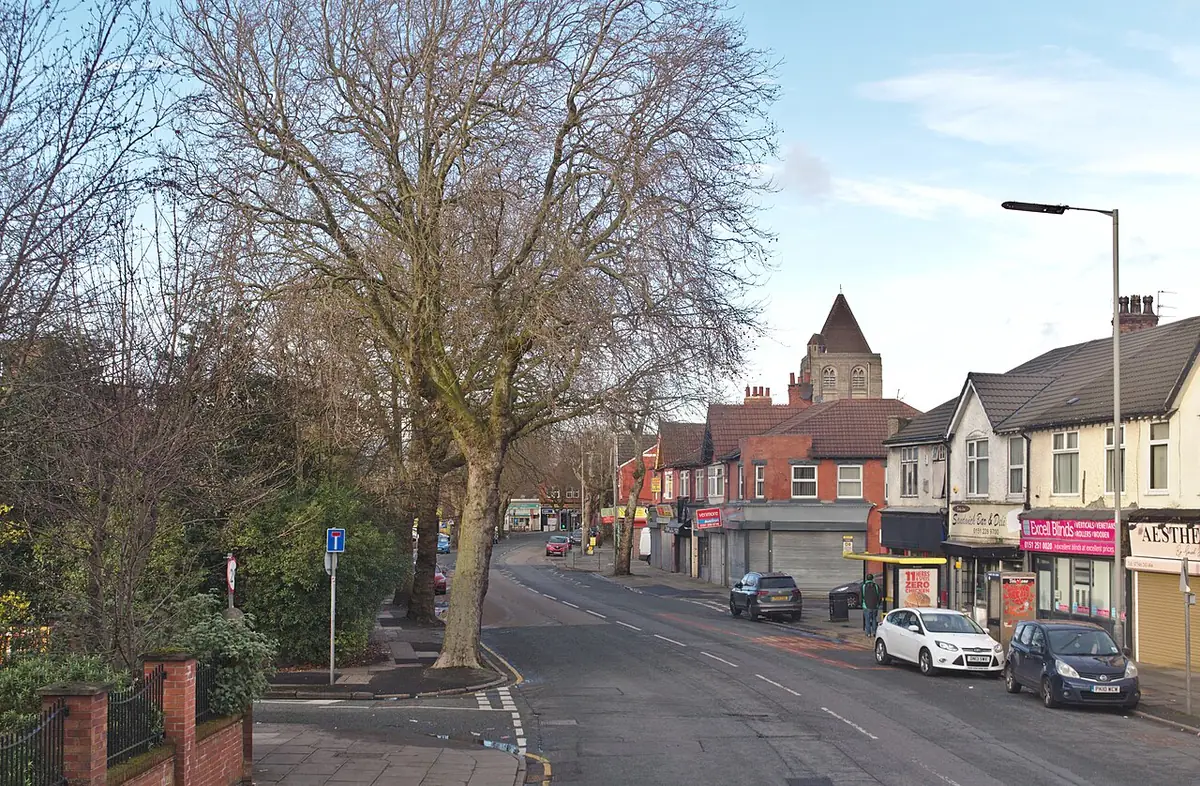
Streets like this mix shops and terraced homes under the trees — Photo: Rodhullandemu · CC BY-SA 4.0 · Wikimedia Commons
Looking at prices leads straight to a fundamental legal question: what form of ownership are you actually acquiring?
Liverpool's housing market stands out for its relative affordability compared with the larger British regional capitals, while showing striking contrasts between districts. There is no single price, but a spread of sub-markets driven by a property's condition, its energy performance and exactly where it sits in relation to the parks and transport. The figures below draw together the observed trends so you can calibrate your funding plan without falling for misleading listings.
liverpoolFor saleHouseestimate
Median price / m²£1,870Half the apartments sell below this
Median price£241kthe average is 14% higher — a few very large properties pull it up
Most common2 bedrooms63 % of listings
Average size123 m²
By number of bedrooms
Bedrooms
Share of market
Avg price
Price / m²
Avg size
2most common
63 %
£241k
£1,968
123 m²
3
28 %
£304k
£1,830 −7 %
166 m²
4
9 %
£387k
£1,771best value / m²
219 m²
Each row is an average, compared against the area average of £1,968 / m². These are indicative estimates of a typical local market, not a measured sample of live listings. Check current listings before relying on them.
Freehold against leasehold: what you can really own in Liverpool
Once the legal nature of the property is settled, the transaction itself follows a very strict sequence you need to master.
English property law draws a clear line between owning the land and the building outright and simply holding a temporary right of occupation. This distinction is often lost on international buyers used to systems where a single form of shared ownership governs almost every block of flats. Grasping exactly what each tenure means is vital if you are to avoid runaway management charges or difficulty reselling later. Both of the arrangements that shape the market call for close scrutiny when the title deeds are examined.
Outright ownership (freehold)
You own both the building and the land it stands on, with no perpetual ground rent and no need for a third party's consent before undertaking major works. This is the ideal arrangement and it covers most of Liverpool's classic detached and terraced houses. It gives you complete freedom in managing what you own and makes any future sale considerably simpler.
What it changesYou carry the full cost of maintaining the structure, the roof and the foundations, with no way to share it with neighbouring owners.
The long lease (leasehold)
You buy the right to occupy the house or flat for a fixed period (often 125, 250 or 999 years) while paying an annual ground rent and service charges to the owner of the land (the freeholder). This arrangement turns up more often on certain townhouses and on recent conversion schemes.
What it changesAudit the unexpired lease term with great care: below 80 years, extending it becomes complex and very expensive, and it drags heavily on the property's market value.
The purchase chain and the rule of the verbal agreement before contract
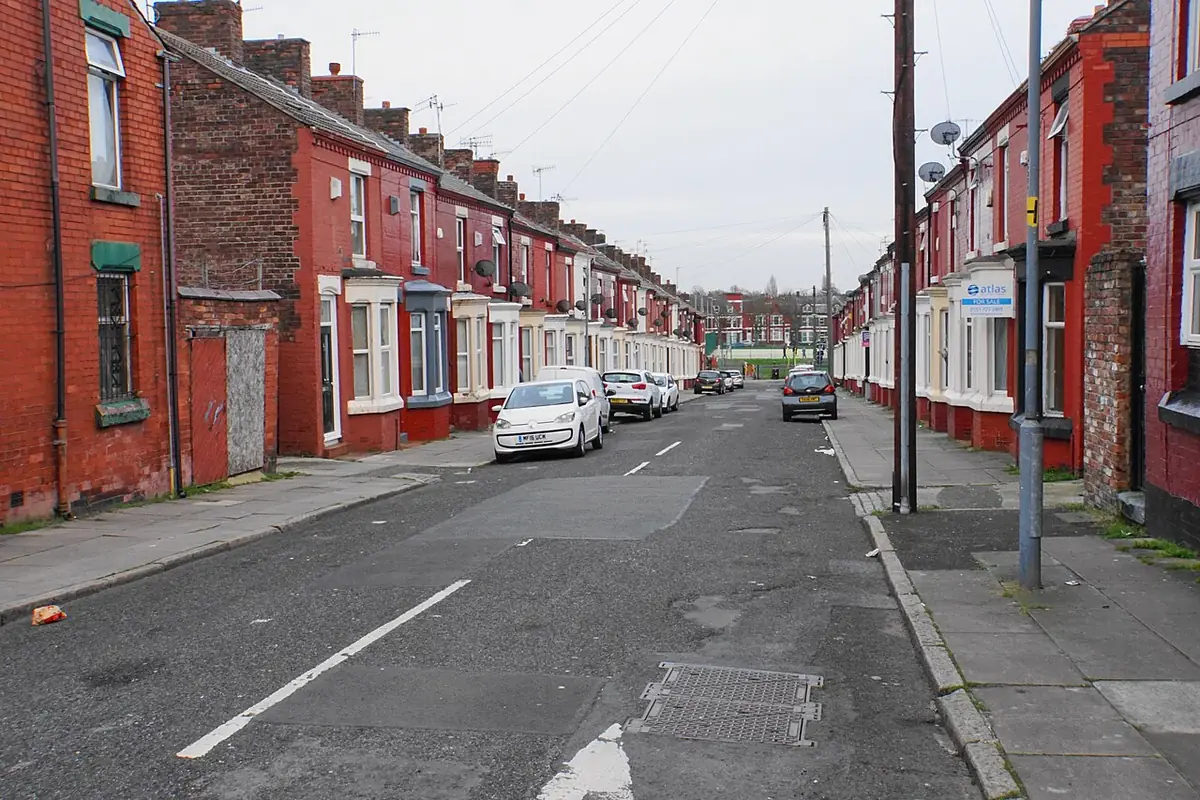
Terraced rows like this are the backbone of Liverpool's housing — Photo: Bill Boaden · CC BY-SA 2.0 · Wikimedia Commons
To steer that complex timeline, here is the detailed road map of who does what and when.
The most disconcerting feature of the English property market is the limbo between an accepted offer and the formal exchange of contracts. For several weeks the agreement between buyer and seller rests on nothing more than a given word, with no financial penalty if either side pulls out. That rule, a frequent source of real stress for buyers arriving from overseas, calls for methodical discipline and faultless legal support if you are to limit the risk of a last-minute collapse.
Making a written offer through the estate agent instructed by the seller.
The seller formally accepts the offer, which puts the property under offer but carries no binding contractual force.
You instruct an independent solicitor to run the land registry, environmental and legal searches.
Technical surveys and the building inspection report are carried out to identify hidden defects or urgent works.
Final negotiation of the contract terms, and formal confirmation of the mortgage offer if you are borrowing.
Exchange of contracts: the deposit (usually 10%) is paid and the transaction becomes legally binding.
How a property transaction in Liverpool unfolds, stage by stage
In short, a successful move into the Liverpool market takes method, clear eyes and respect for local procedure.
Running a purchase here means synchronising a number of people with clearly separated roles. Unlike systems where a single legal officer centralises the whole operation, the English model keeps the selling agent, the legal adviser and the surveyor firmly apart. The schedule below sets out what each of them does at every critical stage, so that progress towards the handover of keys stays methodical.
The buyerPutting the finance together and shortlisting propertiesGet an Agreement in Principle from a lender before you even start viewing, to prove to sellers that your finances stack up.
The estate agentViewings and negotiation on the asking priceThe agent acts for the seller; your offers should be backed by an analysis of recent sales on the same street.
The solicitorLegal due diligence and checks on the titleThey comb through easements and local planning proposals and confirm there is no dispute attached to the plot.
The surveyorCarrying out the HomeBuyer Report or Building SurveyNever skip this detailed inspection, which assesses the state of the roof timbers, the roof covering and the services.
The buyer and the solicitorExchange of contractsThis is the precise moment the sale becomes firm and final, with the deposit paid and held in escrow.
All partiesCompletion day and the handover of keysThe remaining funds are transferred, ownership passes to you and you can move into your new home.
House or flat in Liverpool: which suits the way you live?
With the type of home settled, it is worth looking closely at the money you need to put down roots in Liverpool.
Choosing between a Victorian house with a garden in Liverpool's residential districts and a modern waterfront flat near the Albert Dock shapes your daily life for years. Older houses offer fine proportions and valuable privacy, but they need regular structural attention, particularly to the roof and the insulation. Recent city-centre flats, by contrast, simplify day-to-day management through centralised service charges while cutting journey times to the employment hubs and cultural venues right down.
Parking and outdoor space weigh heavily in the balance in Liverpool. While most houses have a yard or a genuine private garden, city flats often mean buying a parking space separately or paying for a secure public car park. For a family or an owner with pets, the lack of direct access to the outside quickly turns into a daily constraint worth anticipating from the very start of the search.
On liquidity and resale, the Liverpool market behaves quite differently by property type. Family houses in sought-after school catchments are snapped up by a stable local buyer base, while new-build flats appeal more to young professionals and buy-to-let investors. That distinction feeds directly into medium-term value and into how easily you could sell if an unexpected job move came along.
Finally, the hidden costs differ sharply between the two. A flat means an annual service charge and a ground rent that tend to rise over time, whereas a house leaves you free to plan works at your own pace. So it is essential to weigh up how well you would cope with running a renovation project before committing to the older stock typical of Merseyside.
What budget do you really need to buy and live in Liverpool?
With those figures in place, picture a typical day to see how your location shapes the rhythm of your life.
Buying a property in Liverpool comes to a great deal more than the price shown on the listing portals. You have to fold in the local taxes, the legal fees and the fixed outgoings that make up the true cost of ownership in this Merseyside city. Prices vary considerably depending on whether you are aiming at the busy centre or the leafier outer neighbourhoods.
Estimated upfront purchase costs in Liverpool
Cost item
Standard property (GBP 150,000)
Higher-end property (GBP 300,000)
Analysis
Conveyancing and legal costs
GBP 1,200
GBP 2,000
Solicitors' fees and the compulsory land searches.
Stamp Duty Land Tax
GBP 0 (first-time buyer)
GBP 5,000
Varies with your buyer status and the rules in force.
Building survey report
GBP 400
GBP 900
Essential for detecting damp and structural defects.
Mortgage arrangement fees
GBP 1,000
GBP 1,500
Cost of setting up the loan with a UK lender.
The amounts shown are averages observed in the Liverpool market and can vary with the complexity of the transaction.
Monthly running costs for a household
Type of cost
Flat (city centre)
House (suburbs)
Effect on the overall budget
Council Tax
GBP 140 (Band B-C)
GBP 180 (Band D-E)
Compulsory local tax paid over 10 or 12 months.
Energy (gas and electricity)
GBP 120
GBP 200
Heavily dependent on how well the building is insulated.
Service charges
GBP 150
GBP 0
Covers maintenance of communal areas and buildings insurance.
Home insurance (buildings and contents)
GBP 25
GBP 45
Essential cover, usually including escape of water.
These estimates reflect standard consumption for a two-person household living in Liverpool.
Health, schools and transport: what does an ordinary Tuesday in Liverpool look like?
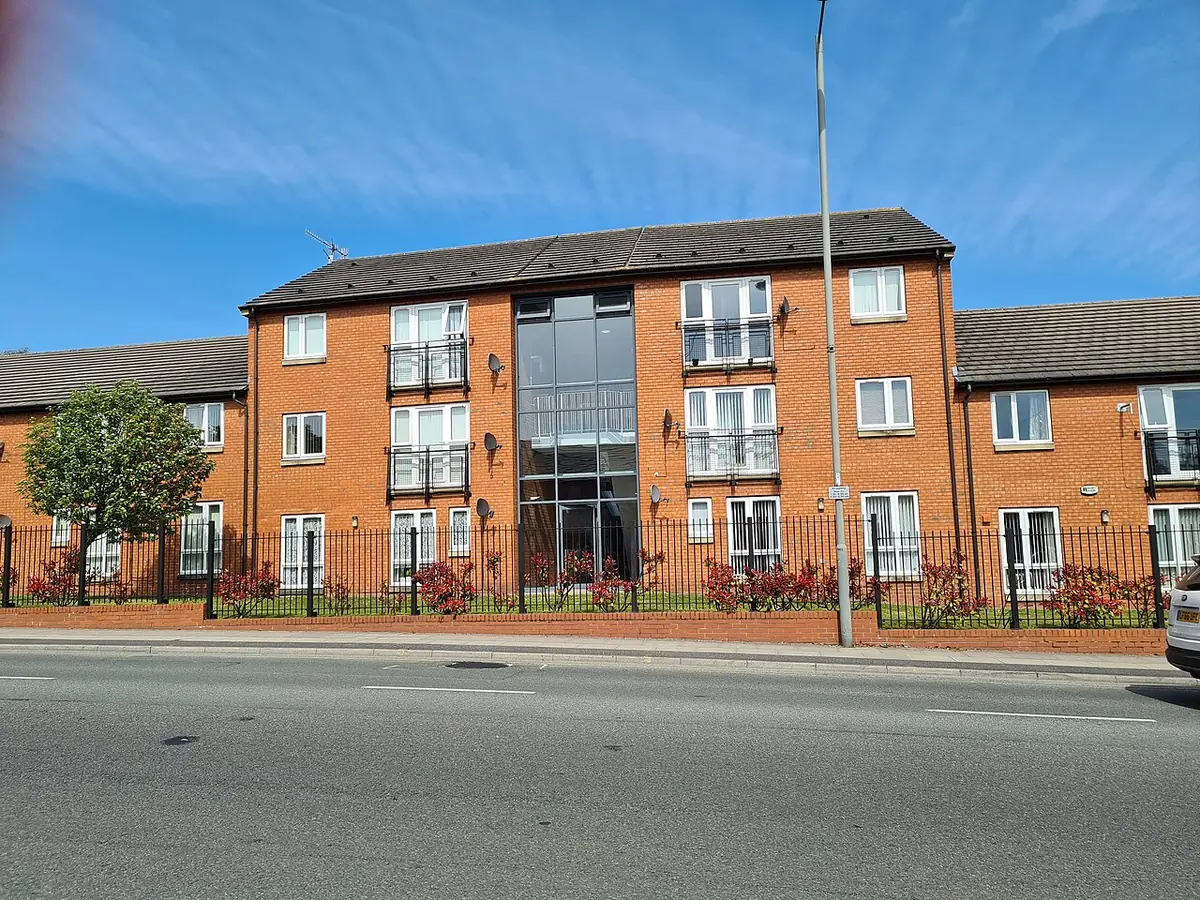
Newer apartment blocks like this add to Liverpool's housing mix — Photo: Frombowen · CC BY-SA 4.0 · Wikimedia Commons
Behind that apparent ease, some planning and regulatory realities deserve your full attention before you sign.
To judge whether a future home in Liverpool really works, nothing beats walking through an ordinary weekday hour by hour. From access to public transport to schools and medical services, each neighbourhood sets its own tempo and offers its own conveniences. Seeing the day in sequence lets you spot the pinch points in your future routine.
07:30Home, and the school runDropping the children off is usually done on foot within a kilometre if you live in a favoured area such as Mossley Hill or Aigburth.
08:30The commute into the business districtMerseyrail or the Arriva buses get you into Liverpool's financial centre from the suburbs in under twenty minutes.
12:30Lunch break and local servicesEasy access to pharmacies, GP surgeries and everyday shops woven into the life of the neighbourhood.
17:00School pick-up and after-school activitiesThe city's landmark parks, Sefton Park or Stanley Park, take the strain for end-of-day activities.
19:00Food shopping and local lifeA trip to the local markets or nearby shops for the evening's supplies, with no long drive required.
21:00Winding down in residential quietCalm returns on the residential side streets, well away from the night-time buzz of the main cultural strips.
What the polished listings will never tell you about Liverpool
With those blind spots in view, look next at the classic mistakes made by buyers in too much of a hurry.
Marketing photographs play up the light and the careful styling, but they tend to hide the structural and environmental constraints particular to Liverpool. Knowing about the things that never show up on glossy paper saves you unwelcome bills and protects the long-term value of what you buy.
The history of flooding and rising damp
Close to the Mersey estuary and exposed to a wet maritime climate, Liverpool demands extra vigilance about the condition of brick facades and the waterproofing of older foundations. Inadequate treatment runs up considerable repair costs very quickly.
Restrictions tied to conservation areas
Many Victorian and Georgian neighbourhoods are protected, which sharply limits what you may change outside, such as replacing sash windows with modern double glazing or fitting solar panels.
The complexity of long leases (leasehold)
Flats and some houses are sometimes sold leasehold, which means paying an annual ground rent to the freeholder along with strict restrictions on subletting or keeping pets.
The real level of night-time noise
Liverpool's cultural and night-time energy is legendary, but it translates into significant noise if your property sits right next to a student thoroughfare or an entertainment quarter.
The impact of future development schemes
The large regeneration projects run by the council can permanently change traffic flows, remove parking or disturb the peace of a quiet street for several years.
The classic traps you only discover after six months in Liverpool
For all those pitfalls, not every buyer faces the same urgency or the same goals in this market.
Looked likeA charming old Victorian house full of character at a very attractive price per square metre.
Turned outAn energy sieve that swallowed money, needing full wall insulation and a worn-out heating system replaced.
Would have caught itInsist on a detailed Energy Performance Certificate (EPC) and always budget for thermal improvement work before you offer.
Looked likeAn ultra-modern flat perfectly placed in the middle of the city's cultural buzz.
Turned outNo realistic way to park in the evening, and service charges climbing year after year with no transparent owners' meeting behind them.
Would have caught itRead the last three years of service charge accounts and the managing agent's meeting minutes, and check there is an allocated, secure parking space.
Looked likeA quiet, family residential street judged on one quick viewing on a sunny Sunday morning.
Turned outA major road clogged every morning at peak time, turning the school run into a daily obstacle course.
Would have caught itVisit the surrounding streets at different times of the week, particularly at the start and end of the school day.
Looked likeAn offer accepted quickly at the asking price, with no haggling and no detailed survey.
Turned outSerious hidden defects in the roof timbers and the drainage, found by an independent surveyor far too late.
Would have caught itAlways commission a Level 3 RICS Home Survey to assess the whole structure rather than relying on the seller's paperwork.
Who really should not buy a property in Liverpool right now?
Now it is time to pull the threads together and answer the essential question about committing to a purchase.
Buying a home in Liverpool is a major financial and personal commitment that does not suit every stage of life. Choosing to rent flexibly instead of buying is sometimes the wiser call, protecting both your freedom to move and your short-term financial peace of mind.
The young professional moving between countries for work
→A flexible tenancy rather than a rigid purchase
Conveyancing costs, Stamp Duty Land Tax and agency fees only pay for themselves after about five years of ownership, so an early departure is financially punishing.
The investor after immediate rental income with no management
→Other asset classes or alternative markets
UK taxation and the regulatory complexity of tenancies demand active involvement or management fees that eat into the net return.
The household with very limited emergency savings
→To build the cushion up before taking the plunge
Unexpected structural problems and routine maintenance call for cash you can reach immediately when something goes wrong.
The buyer still unsure how they want to live in the medium term
→To try different neighbourhoods on longer tenancies
You cannot really judge how an area works without living there for a full year, through all the seasons.
So are you really ready to go ahead in Liverpool?
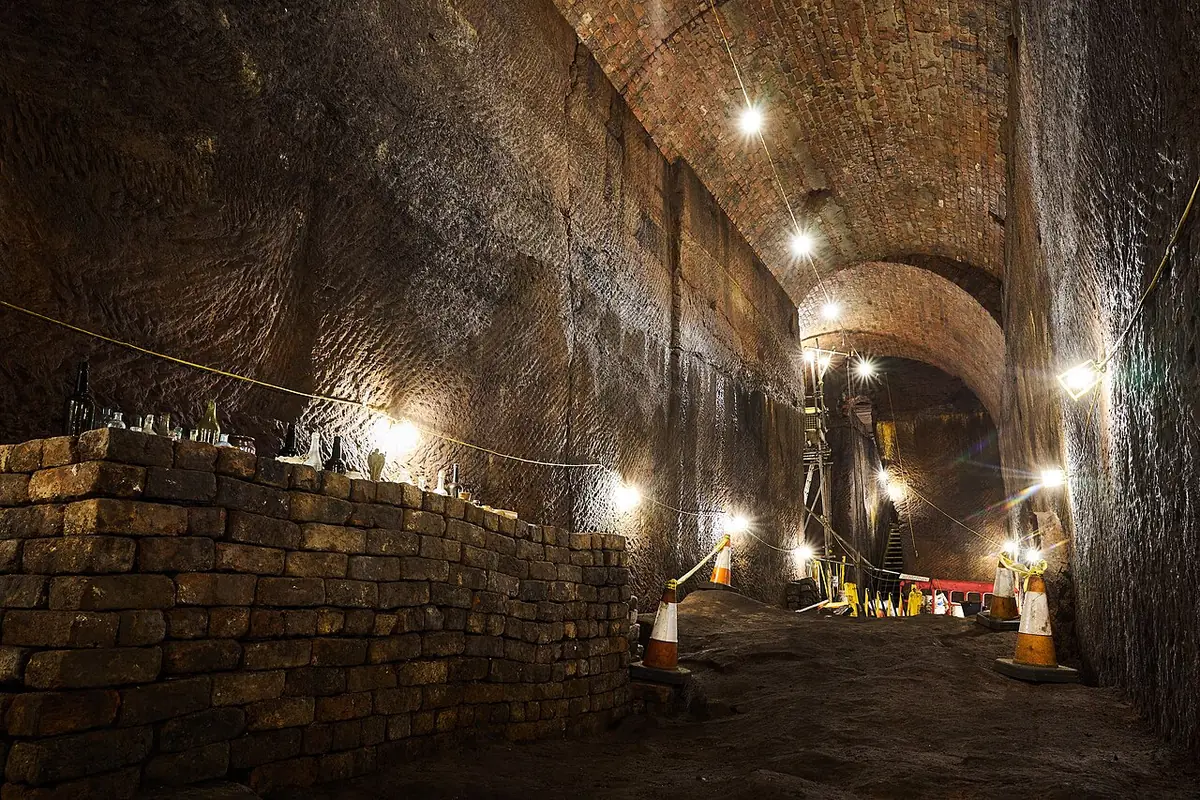
The Williamson Tunnels' brick passage, mid-restoration — Photo: Kyle J May · CC BY-SA 4.0 · Wikimedia Commons
Buying a property in Liverpool commits you to far more than an asset on a balance sheet. It is an anchor in a city with a strong cultural identity, an economy in the middle of reinventing itself and a spread of neighbourhoods that have to line up closely with what you want from daily life. If you have measured the financial constraints, accepted the peculiarities of the local building stock and confirmed that you will be on Merseyside for the medium term, then the lights are green.
Take the time to work through each stage methodically: talk to local professionals, view at different times of day and refuse to give in to the artificial pressure of a tight market. A good purchase in Liverpool rests on clear thinking, careful preparation and an intimate knowledge of the strengths and weaknesses of whichever residential area you have set your heart on.
Related questions
Which neighbourhoods are most sought after for buying a family house in Liverpool?
Mossley Hill, Aigburth, Woolton and Childwall have long been among the most prized areas for families, thanks to the quality of local schools, the quiet of their residential streets and easy reach of the city's big green spaces.
Can a non-resident foreign buyer purchase a property in Liverpool?
Yes. Buying property in the United Kingdom is open to international buyers with no restriction on nationality, although specific tax surcharges apply and lenders run enhanced checks on the source of funds.
What is the leasehold system compared with freehold in Liverpool?
Freehold gives you outright and permanent ownership of the building and the land it sits on, while leasehold grants you the use of the property for a fixed term (often many decades or even centuries) and carries an annual ground rent.
How long does a property transaction usually take in Liverpool?
Expect three to five months between the seller accepting your offer and getting the keys, time needed to complete the legal searches, the technical surveys and the release of mortgage funds.
What recurring local taxes apply after the purchase?
The main local tax is Council Tax, set by the city council according to the property's assessed value on 1 April 1991. It funds the full range of local public services, from bin collection to road maintenance.
Do you have to instruct a solicitor to buy in Liverpool?
A property lawyer (a solicitor or licensed conveyancer) is in practice essential and unavoidable: they secure the transfer of ownership, draft the sale contracts and carry out the official land searches.
How does the offer system work in the United Kingdom?
Offers made through estate agents are not legally binding until contracts are formally exchanged at the final stage, which means another buyer can still outbid you right up to that point.
What are the flood risks in Liverpool?
Some areas close to the Mersey or to smaller watercourses can be exposed to flooding. Always ask for a full environmental report during the legal searches so the site's vulnerability is precisely identified.
Is it easy to let the property out if you decide to leave Liverpool?
Liverpool's rental market is unusually active, helped by the university and hospital employment pools, so a property priced in line with the market generally lets quickly.
How can you assess the real state of insulation in an older property?
The Energy Performance Certificate (EPC) gives an initial rating from A to G, but it is strongly advisable to commission a further assessment from a surveyor to cost out loft and wall insulation work accurately.
Property review of ting
No ting properties in Liverpool yet
Be the first — share it on ting and it shows up right here.