Buying well in Philadelphia means understanding how the local market actually works, from period stock to new construction. This guide sets out the trade-offs you cannot avoid: which neighbourhood suits you, which ownership structure you are actually signing up for, and what the running costs really come to, so you can decide with a clear head.
Get the app
What nobody tells you.
Real prices, hidden costs and the traps to check before you commit.
Buying an apartment in Philadelphia: the trade-off between historic character and structural reality
Scroll
Buying an apartment in Philadelphia: the trade-off between historic character and structural reality
Buying well in Philadelphia means understanding how the local market actually works, from period stock to new construction. This guide sets out the trade-offs you cannot avoid: which neighbourhood suits you, which ownership structure you are actually signing up for, and what the running costs really come to, so you can decide with a clear head.
Written by the ting.ad editorial team ·
John F. Kennedy Boulevard, Philadelphia in Street View: drag to look around.
Beyond the physical characteristics of the building, your daily routine is what will really decide the neighbourhood.
Buying residential property in Philadelphia means looking past the red brick facades that define the historic neighbourhoods. The local market constantly sets older buildings with irreplaceable architectural character against modern condominiums whose costs are easier to control but whose character can feel uniform. Understanding that basic trade-off is what keeps you from the financial surprises that come with the heavy renovation work older stock so often needs. Every part of the city has its own unwritten rules about structure, insulation and how buildings are collectively run. The pairs below set out the reality of what is available depending on the area you target.
The historic character of brownstones and rowhousesvsThe hidden cost of bringing a building up to code
Older properties win you over straight away with their original woodwork and their ceiling heights. They also frequently come with outdated wiring, insufficient insulation, and strict rules imposed by the local historic commissions on what you may change.
The predictability of newer constructionvsArchitectural sameness and distance from the centre
Choosing a new development gets you energy performance that meets current standards and condo fees you can forecast for the first few years. In exchange, these properties usually sit further from the historic core and lack the individuality many buyers are looking for.
The centrality of the dense neighbourhoodsvsScarce parking and street noise
Living in the middle of the busy districts cuts your daily travel time sharply and puts services right on your doorstep. The mechanical consequence is a recurring absence of private parking, heavy traffic, and a real need for soundproofing indoors.
Which Philadelphia neighbourhood actually matches your daily life and your working pattern?
Buying here from abroad also means taking on a set of administrative and cultural habits that will be new to you.
Whether a Philadelphia purchase works out depends closely on how well your working life fits the character of the neighbourhood you choose. Local dynamics change radically from one area to the next, whether that is how easily public transport moves you, how much green space is on hand, or how lively the evenings are. Reading your own situation against the options below will help you target the right area from the very start of your search.
Leafy residential neighbourhoods
The outer residential areas, and the quieter stretches near the parks, give you the space and the calm you need to work from home properly. You get more living space for the same budget while keeping local shops within walking distance. The trade-off is a longer journey on the days you do need to be in the business district for meetings in person. This suits buyers who value air quality and greenery over immediate urban energy.
A well-connected urban core
Buying close to the main transport lines and the busy hubs changes your daily logistics completely. You give up surplus square metres in exchange for a centrality that removes the need for a car altogether. Services, restaurants and cultural venues sit a few minutes' walk from your front door. In return, the market here is markedly tighter, with high prices per m2 and properties that demand an immediate response when they come up.
Family and institutional areas
Focusing your search on areas known for settled communities and good schools protects your investment over the long run. These neighbourhoods have a more consistent housing stock, often family townhouses or larger apartments with several bedrooms. Local shops and parks laid out for children set the rhythm of the area. The trade-off is a larger sum up front and a narrower pool of properties to choose from.
Property in Philadelphia: what genuinely differs from the market you are arriving from
Every Philadelphia neighbourhood has its own face and calls for a different buying strategy.
How a property transaction is handled, and how ownership works day to day, differ sharply in the United States from what buyers arriving from elsewhere are used to. From the structure of the service charges to the protections you get at purchase, the American system rests on specific contractual mechanisms you need to understand to protect your money. The table below sets common expectations from abroad against what you will actually meet on the ground in Philadelphia.
From abroad
Statutory builder warranties and strong legal recourse after completion
Philadelphia
An 'as is' baseline, tempered by the inspection period
In the United States the buyer carries out a thorough technical inspection before removing contingencies, because the seller's liability after the sale is extremely limited outside proven concealed defects.
From abroad
Service charges apportioned by a fixed share of the building's floor area
Philadelphia
'Condo fees' or 'HOA dues' covering a variable bundle of services
The monthly charge often covers common area upkeep, waste collection and sometimes the building's own insurance, but it can climb quickly depending on the financial health of the association.
From abroad
A single public officer drafting and authenticating the deed as a matter of course
Philadelphia
A title company and an escrow agent underwriting the transaction
Clean legal title is assured by a specialist firm that checks for liens or undisclosed mortgages before releasing the funds securely.
From abroad
Separate occupier and owner taxes depending on who lives in the property
Philadelphia
A single local property tax paid annually by the owner
This local property tax is a substantial recurring line in the budget and has to be built into your yield calculation or your monthly repayment capacity from the outset.
How do you choose between Philadelphia neighbourhoods according to your priorities?
Before you commit to a specific area, an honest look at how prices are structured is essential.
Philadelphia breaks down into micro-markets with strongly defined identities. Picking the right area is not a question of prestige or historic standing, but of the fit between your budget, how you need to get around and how you live. The neighbourhood profiles below summarise the trade-offs built into each part of the city.
The historic and commercial core
Constant activity, steady foot traffic and immediate access to the main transport lines.
Suits
Working buyers who want to be close to the office and want a rich cultural life on hand.
Trade-off
High prices per m2, smaller floor areas and a chronic shortage of parking spaces.
Leafy residential neighbourhoods to the west
Quiet, tree-lined streets, strong architecture and a village feel.
Suits
Families and buyers seeking calm who have the budget for larger properties.
Trade-off
Relative distance from the main business districts and a reliance on public transport for going out.
Changing areas and the university districts
A young atmosphere, independent shops and the energy the student population brings.
Suits
Investors looking for rental yield and first-time buyers working to a measured budget.
Trade-off
Marked variation from one street to the next, and resale that can be more volatile in the short term.
What are the realistic price ranges for buying an apartment in Philadelphia?
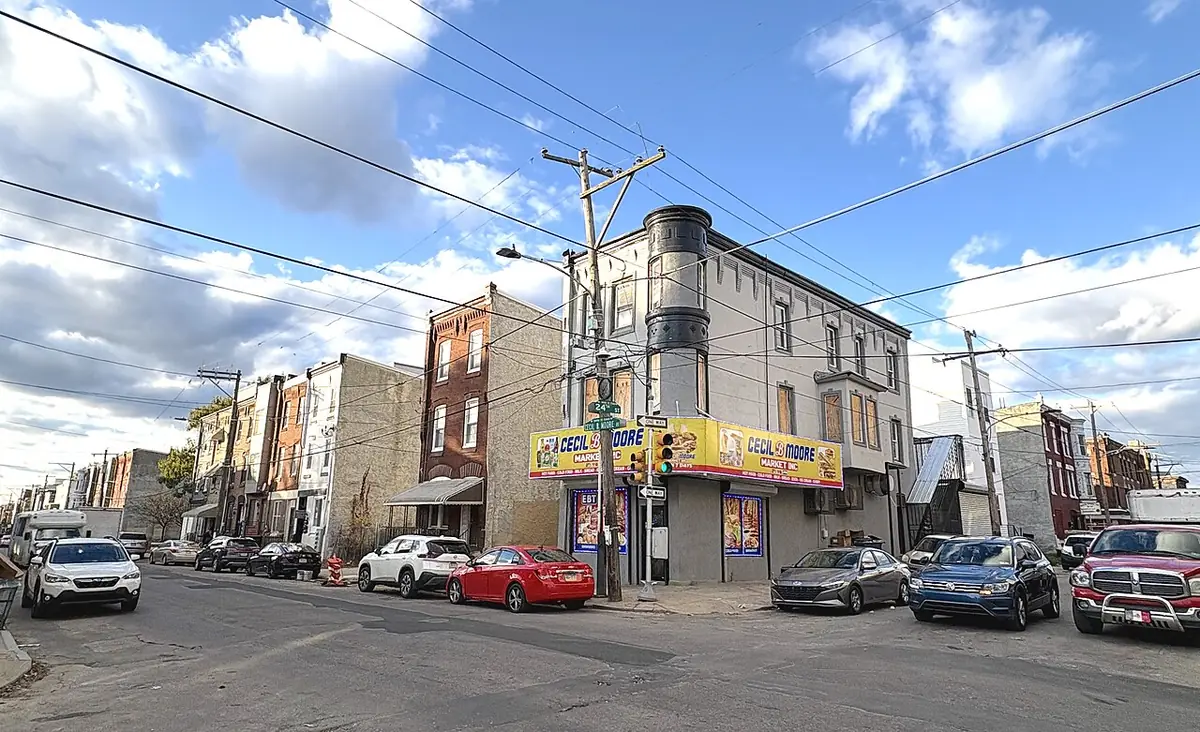
A lively commercial street lined with rowhouses and shopfronts — Photo: Moriah Levin · CC BY-SA 4.0 · Wikimedia Commons
Beyond the headline figure, what you legally own is worth examining closely.
The Philadelphia market shows wide price variation depending on the age of the building, the quality of the finish and the exact location. There is no single price, but a set of sub-markets each responding to local supply and demand. The table below pulls together the broad budget patterns observed on the ground, expressed as indicative ranges to guide your financial planning.
philadelphiaFor saleApartmentestimate
Median price / m²US$2,945Half the apartments sell below this
Median priceUS$280kthe average is 14% higher — a few very large properties pull it up
Most common2 bedrooms40 % of listings
Average size90 m²
By number of bedrooms
Bedrooms
Share of market
Avg price
Price / m²
Avg size
1
32 %
US$214k
US$3,565 +15 %
60 m²
2most common
40 %
US$279k
US$3,100
90 m²
3
20 %
US$357k
US$2,852 −8 %
125 m²
4
8 %
US$450k
US$2,728best value / m²
165 m²
Each row is an average, compared against the area average of US$3,100 / m². These are indicative estimates of a typical local market, not a measured sample of live listings. Check current listings before relying on them.
Shared ownership or outright ownership: what can you actually hold in Philadelphia?
Once the legal framework is clear, the transaction itself follows a strict sequence you should not try to rush.
The legal structure of shared ownership in the United States directly affects how freely you can manage the property and what you pay each month. Rather than one unified model, the American market draws a sharp distinction between several forms of ownership that carry very different rights and duties. Comparing the two main models below lets you weigh what your choice will mean for your future freedom of action.
The condominium
You buy outright ownership of your own unit together with an undivided share of the building's common areas. The building is run by a condo association whose members elect a board, with rules set out in bylaws that are often strict about renting out units and about alterations.
What it changesYou get more flexibility to resell or to let the property, while carrying collective management fees that cover structural upkeep and the building's shared systems.
The housing cooperative (co-op)
You are not buying real property as such, but shares in a corporation that owns the whole building, paired with a proprietary lease giving you exclusive occupancy of your apartment. The co-op board has final say over whether each new buyer is accepted and over how the building's finances are run.
What it changesThe system delivers careful screening of residents and financial stability for the building, at the cost of heavy administrative requirements and a resale that can be more tightly controlled.
The critical timeline of a purchase: from the opening offer to settlement
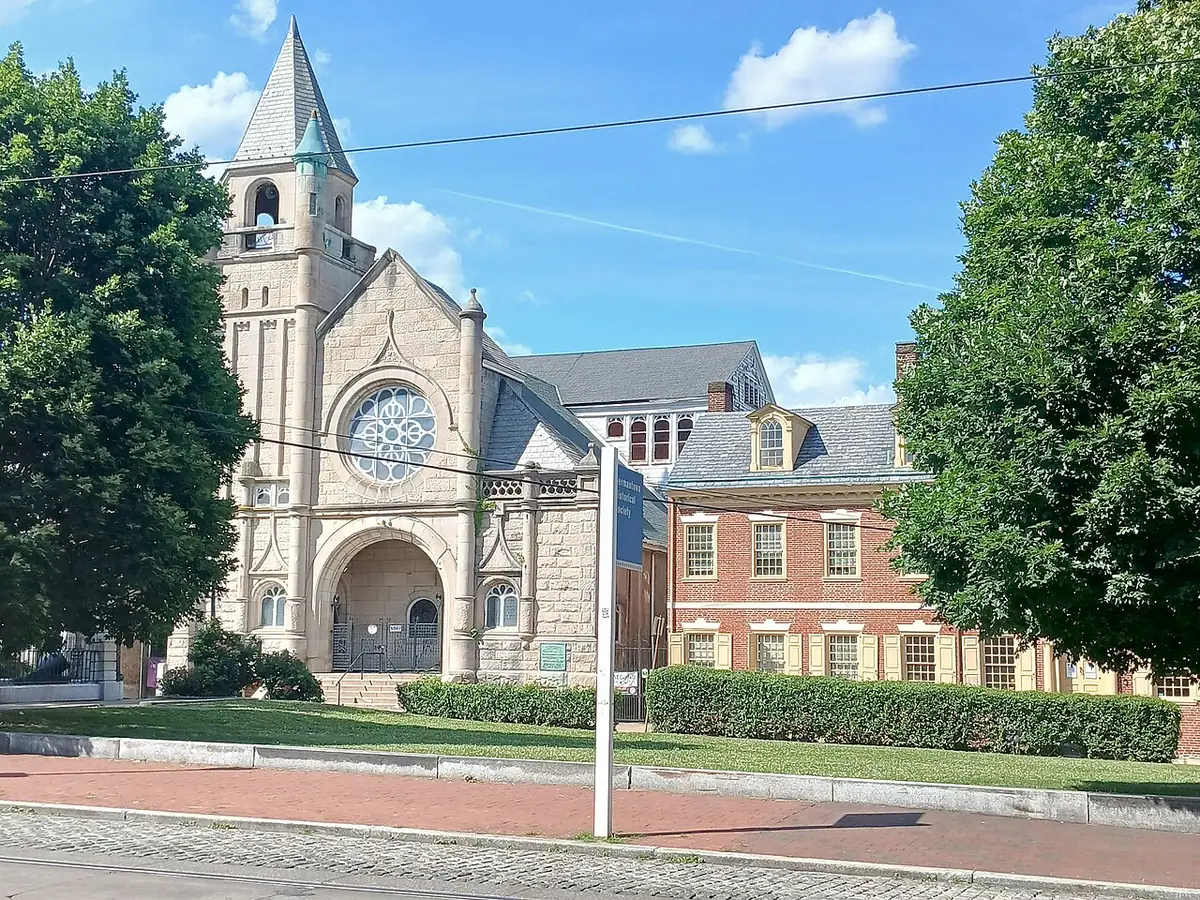
Market Square in Germantown, a historic corner of the city — Photo: Kreuz und quer · CC0 · Wikimedia Commons
Getting through that sequence smoothly comes down to how well you coordinate the local professionals involved.
Signing an offer in the United States binds the buyer on strict terms, well away from the informality of an early expression of interest elsewhere. Each stage of the transaction is paced by the removal of specific contingencies and by the work of independent professionals. The chain below sets out the logical order of a purchase that goes well in Philadelphia.
Confirming your financing capacity and obtaining a mortgage pre-approval
Drafting and submitting a formal purchase offer through a licensed real estate agent
Paying the earnest money deposit into a dedicated escrow account
Carrying out the full building inspections and reviewing the condo association's history
Removing the contingencies once the due diligence period ends and the loan is finally approved
Closing with the title company, with formal transfer of title
Who does what in a Philadelphia transaction: the role of each party
The American property system rests on a clear division of labour between professionals with well-defined remits. Rather than centring the transaction on a single legal officer, a Philadelphia purchase involves several independent parties who between them secure the money and the title. The sequence below identifies the key players and exactly what each one does at each stage.
The buyer's agentRepresentation and negotiationThe buyer's agent works only for you while you search, runs the comparative market analysis and negotiates the price, at no extra cost to you since the commission comes out of the amount paid by the seller.
The home inspectorStructural and safety auditEngaged by you, the inspector goes carefully over the structure, the roof, the wiring, the plumbing and the heating system, and writes a detailed report that becomes the basis for any price renegotiation.
The mortgage brokerStructuring the financingThe broker compares offers from different lenders to get you the best terms available for your profile, whether you are a resident or a non-resident.
The title companySecuring the legal sideThe title company runs the title search to confirm there are no debts or legal claims on the property, prepares the deed and runs the closing itself.
The property managerOngoing operationsA property manager comes in after the purchase if you decide to let your apartment, handling the tenant relationship, routine maintenance and compliance with the condo association's rules.
Apartment or house in Philadelphia: which one suits the way you live?
Now that you have weighed the condo against the house, it is worth looking closely at the financial reality of the purchase.
Choosing between an apartment held as a condo, the usual term here, and a traditional red brick terraced house, the Philadelphia rowhouse, shapes both your daily life and your long-term budget. Condominiums in the modern towers of Center City or in the newer Fishtown buildings offer turnkey comfort: a lift, a front desk, a gym on site, and above all no roof or facade work for you to organise yourself. Those conveniences carry a high recurring cost in the form of monthly condo fees, which rise steadily year after year and can weigh heavily on what you are able to save.
Buying a typical townhouse in South Philadelphia or in the residential streets of Mount Airy, by contrast, makes you the sole decision-maker on your property, with no monthly payment to an outside association. You usually get a small patio or a private back yard for gardening or a barbecue, along with living space spread over several floors that gives you genuine acoustic separation from the neighbours on either side. In exchange, the full structural upkeep of the building rests entirely on you, whether that means re-insulating the flat roof, replacing the gas heating system or dealing with the rising damp typical of the city's older stock.
The choice also depends on your own tolerance for the unexpected and on how much time you have to supervise local trades during the renovation work that older properties inevitably need. Condos suit buyers who travel frequently, work long hours on site, or dread above all having to coordinate a facade repair with reluctant fellow owners. Houses appeal more to those drawn to historic architecture who want to preserve original pine floorboards and period mouldings, and who want complete freedom to reconfigure the interior without seeking approval from a general meeting of owners.
Finally, how easily each type resells varies noticeably with local economic cycles and with the mortgage rates American banks are offering. Well-placed apartments near major transport lines or the university campuses let and resell quickly to young professionals and to institutional investors looking for a straightforward rental proposition. Well-maintained single-family houses in neighbourhoods with strong catchment public schools, meanwhile, enjoy very solid structural demand from families looking to put down roots in Philadelphia for the long term.
What overall budget and what recurring costs should you plan for in Philadelphia?
With that budget framework established, it is worth seeing what a typical week actually looks like for someone living in the city.
Buying in Philadelphia never comes down to the mortgage payment alone. Your financial plan has to take in the local property taxes, the specific home insurance cover you will need, and the preventive maintenance costs that come with the American market. A realistic overall view from day one is what saves you from unpleasant budget surprises once you have closed on the property.
Monthly cost structure for a typical apartment or house in Philadelphia
Cost item
Estimated amount (low to high)
Nature and variability of the cost
Mortgage repayment (principal and interest)
$1,400 to $2,600
Fixed over 30 years depending on your down payment and the rate you negotiate.
Real Estate Tax
$250 to $600
Assessed by the city and liable to change when assessments are revised.
Condo / HOA fees
$0 to $550
Applies only to apartments and condominiums with shared services.
Home insurance and liability cover
$100 to $250
Covers property damage and the required personal liability cover.
These estimates assume properties valued between $300,000 and $600,000, the median range seen in Philadelphia's sought-after residential neighbourhoods.
Everyday running and maintenance costs for the household
Type of service
Average monthly cost
Main factors involved
Electricity and natural gas (PECO)
$150 to $350
Driven heavily by air conditioning in summer and gas heating in winter.
Water, sewer and waste collection
$70 to $130
Billed by the Philadelphia Water Department on actual consumption.
Broadband internet and connections
$65 to $110
Varies with the provider (fibre or the local cable networks).
Reserve fund for unplanned work
$200 to $400
Essential for anticipating repairs to the roof, the boiler or the plumbing.
Energy bills can double between the July peaks and the January cold snaps, because insulation in the older stock varies so much.
Health, schools, transport: what does an ordinary Tuesday look like living in Philadelphia?
St. Helena Catholic Church anchoring its Philadelphia block — Photo: Farragutful · CC BY-SA 4.0 · Wikimedia Commons
Behind that apparent ease sit geographic and administrative realities the brochures never mention.
Living in Philadelphia means fitting in with the particular rhythms of the SEPTA transport network and with how local services are organised. From the morning journey into the Center City business district to the end-of-day shopping in the historic markets, each part of the day shows you how well your location actually works. Here is how an ordinary Tuesday unfolds for a settled resident.
07:30Residential neighbourhood, setting outWaking up at home and getting ready, with the quiet of the tree-lined streets before the working day picks up.
08:15SEPTA subway or trolley stopA quick commute into Center City on the Market-Frankford or Broad Street subway lines, or on the historic trolley routes.
09:00Arriving at the office or a coworking spaceSettling into one of the downtown business hubs, connected to the region's large technology, legal and medical employers.
12:30Lunch in a busy districtA break in a traditional covered market such as Reading Terminal Market, or in the independent places around the shopping streets.
17:30Local shops on the way homeA stop at the independent wine merchants, bakers and grocers in your neighbourhood to put dinner together with fresh local produce.
19:00Time out in an urban green spaceA walk or a run along the landscaped paths on the banks of the Schuylkill River, or through the shaded historic parks.
21:00Back home and winding downA restful evening in your living room, with the night-time quiet of a typical Philadelphia residential street.
What the listing will never tell you about daily reality in Philadelphia
These technical subtleties lead straight to the classic misjudgements inexperienced buyers make in their first year.
The polished photographs on the property portals show off the light in newly renovated rooms while saying nothing about the physical and regulatory constraints of the site. Understanding these invisible factors in advance saves you from serious disappointment after the deed is signed. Here are the things buyers usually discover too late.
Residential parking and the daily hunt for a space
In dense neighbourhoods such as Graduate Hospital or Queen Village, finding free street parking after 7pm is a real ordeal. A residential parking permit from the Philadelphia Parking Authority is required, but it in no way guarantees you a space anywhere near your front door.
The strict rules of the Philadelphia Historical Commission
If your future home sits in a protected historic district, the smallest change visible from the street, whether the colour of the front door, the replacement of wooden windows or the fitting of solar panels, requires slow administrative approvals and compliant materials that cost a great deal more.
The complicated business of assessments and the property tax abatement
Some new or renovated properties carry a partial property tax exemption that tapers off over ten years, the well-known tax abatement. When that exemption period ends, your annual property tax bill can jump sharply from one year to the next, changing your monthly budget completely.
Uneven street cleaning and refuse collection
How clean the streets are and how reliably household waste is collected vary considerably from one part of the city to another, depending on how the municipal budget is allocated. Some busy residential blocks regularly suffer from illegal dumping and a clear shortage of public bins that the city actually maintains.
Noise from the major roads and the bridges
The city's grid layout and the proximity of elevated motorways such as I-95 or I-76 generate constant noise that you simply cannot detect on a quick Sunday afternoon viewing. Checking the glazing and the sound insulation carefully is absolutely essential.
The traps and buying mistakes you only discover six months in
Given those technical and financial demands, it is just as important to work out honestly whether this way of living really suits you.
Looked likeA charming older house, tastefully renovated throughout by a quick-turnaround investor
Turned outPoor workmanship concealed behind new partitions, including rainwater drainage problems and wiring that did not meet current safety standards.
Would have caught itAlways engaging an independent home inspector certified by ASHI before you remove the contingencies on your offer.
Looked likeA fast-improving neighbourhood with a run of new cafes
Turned outLiving alongside permanent construction sites, with dust, deafening noise from 7am and roads clogged completely.
Would have caught itChecking the city's planning records to find every building permit issued or pending within a three-block radius.
Looked likeA very affordable apartment in a large central apartment building
Turned outA steep increase in condo fees, voted through urgently to fund the brick facade repairs the city had ordered.
Would have caught itInsisting on a careful read of the minutes of the last three condo association meetings to spot major work still outstanding.
Looked likeA quiet, family residential area, ideal for raising young children in peace
Turned outReal isolation from the heavy rail transport network, making two cars in the household absolutely essential day to day.
Would have caught itTesting your commute yourself at rush hour on a weekday before you commit to settlement.
Poor fits: who really should not buy property in Philadelphia?
It is time now to lay the ground for your final decision by weighing all of these factors clearly.
Buying in a dense, historic city like Philadelphia is not a universal answer that fits every plan. Some buyers set themselves up for disappointment because of a deep mismatch between what they expect and what the city actually is. Here are the cases where it is better not to buy.
The passive investor looking for immediate rental yield with no hands-on management
→A quick purchase of small units for short-term furnished letting
City regulation places tight limits on short-term rentals of the Airbnb type and imposes heavy specific taxes, which cut the net return well below what was hoped for without a constant local presence.
The household set on the absolute quiet of a green suburban development
→A terraced house in the dense central neighbourhoods or in South Philadelphia
The urban density, the nightlife, the traffic and the closeness that comes with rowhouses generate a constant background noise level that cannot be reconciled with a real need for country quiet.
The buyer working to a rigidly fixed budget with no room to move
→An older property that needs upgrading to current energy standards
Rising material costs and the shortage of skilled trades in the region almost always lead to unforeseen overruns that a tight budget cannot absorb without putting the household finances at risk.
The committed driver who will not use public transport at all
→Living right in Center City or in the densest neighbourhoods
Traffic saturation at peak hours and the chronic shortage of parking turn daily car use into a constant source of stress and expense.
So, are you ready to go ahead with buying in Philadelphia?
The Betsy Ross Bridge crossing the Delaware River — Photo: SnowFire · CC BY 4.0 · Wikimedia Commons
At the end of this look at the Philadelphia market, you have what you need to decide objectively whether buying in Pennsylvania really matches what you are after. Buying an apartment or a house in this historic city is not an abstract financial calculation but a way of life, rooted in a lively cultural community with a strong civic identity. If you have accepted that owning an older property means paying close attention to it and budgeting for regular maintenance, you are on the right path to making the purchase work over the long term.
Success here rests above all on arranging your financing before you start, surrounding yourself with honest and competent professionals, and never giving in to the pressure to rush a viewing. Take the time to walk the neighbourhoods at different points in the week, talk to your future neighbours and check every technical detail of the building before you sign anything. The care you take in preparing now is what will make the decades ahead as an owner in Philadelphia comfortable ones.
Related questions
What do property taxes typically come to for an apartment in Philadelphia?
Property tax follows the assessment set by the City of Philadelphia, at a rate generally around 1.398% of the assessed value of the property. On an apartment assessed at $400,000, the annual bill therefore lands around $5,600, or roughly $470 a month, payable on the schedule the city sets.
Do you have to hire a home inspector before buying an older property?
The law does not strictly compel it, but bringing in a certified inspector is a standard and effectively unavoidable step in any US property transaction. The inspector goes over the roof, the framing, the plumbing, the wiring and any sign of hidden defects or asbestos, which gives you legitimate grounds to renegotiate the price or walk away.
How do condo charges work in Philadelphia?
Condo fees, also called HOA fees, cover maintenance of the common areas, the lift, security, the building insurance and sometimes services such as heating or water. The amount varies enormously with what the building actually provides, and you should always read it against the association's financial statements and budget.
What is the tax abatement, and does it still exist in Philadelphia?
The tax abatement is a partial property tax exemption on new construction and heavy renovation, designed to encourage investment in the city's housing stock. Its exact terms have shifted with reforms passed by City Council to taper the benefit down over ten years, but many properties still carry it on a temporary basis.
Which neighbourhoods are most sought after for buying an apartment or a rowhouse?
The most in-demand areas include Center City for its cultural energy, Rittenhouse Square for its architecture, Society Hill for its preserved historic character, and Fishtown or Northern Liberties for their creative scene and the newer modern developments aimed at young professionals.
Is it easy to resell a property bought in Philadelphia quickly?
How quickly a property sells depends closely on its exact location, its general condition and how its price compares with recent sales nearby. Homes in lively neighbourhoods with good public transport links usually find a buyer within a few weeks, provided the asking price is properly aligned with the market.
What closing costs should you budget for when buying?
Closing costs generally represent between 2% and 5% of the total purchase price. They include the realty transfer taxes collected by the city and the state, the title company's fees, document and settlement charges, mortgage-related guarantees, and the property tax proration paid to the seller on the day of settlement.
How easy is it to get around on public transport from residential neighbourhoods?
The SEPTA network offers effective coverage, combining heavy rail lines running east to west and north to south across the city with a wide range of buses and the historic trolleys. It is worth testing your daily connections in practice before you settle on the exact location of your future home.
Are older Philadelphia homes likely to contain lead or asbestos?
Given the age of the city's housing stock, many properties built before the 1970s do contain lead paint on the woodwork or asbestos-based insulation in the basement. A specialist environmental assessment is strongly advised so you can identify these materials and plan for their safe removal if needed.
Should you choose a fixed or a variable interest rate on your mortgage?
In the US mortgage market, the large majority of buyers take a thirty-year fixed-rate mortgage, which protects the household budget for the long term against any future rise in Federal Reserve policy rates and gives you a payment you can count on.
Property review of ting
No ting properties in Philadelphia yet
Be the first — share it on ting and it shows up right here.