Valuing a house in Philadelphia calls for a close reading of local market dynamics, the city's tax particularities and the legal rules that apply block by block. This analytical guide sets out the steps that let you build a defensible figure with clear eyes, well away from marketing talk.
Get the app
What nobody tells you.
Real prices, hidden costs and the traps to check before you commit.
What a Philadelphia house valuation is really measuring
Scroll
What a Philadelphia house valuation is really measuring
Valuing a house in Philadelphia calls for a close reading of local market dynamics, the city's tax particularities and the legal rules that apply block by block. This analytical guide sets out the steps that let you build a defensible figure with clear eyes, well away from marketing talk.
Written by the ting.ad editorial team ·
John F. Kennedy Boulevard, Philadelphia in Street View: drag to look around.
Beyond these physical contradictions, the figure you should be chasing depends on why you are asking for it at all.
Valuing a property in Philadelphia is not a matter of counting square metres. It means reading a dense housing market in which each neighbourhood sets its own planning rules, its own local tax burden and its own pace of life. Between the specifics of the property tax and the upkeep of the older structures typical of the city, the number that survives contact with a buyer sits some distance from the idealised picture. You have to look coldly at what each dollar of value is actually resting on: comfort, constraint and long-term potential.
The appeal of red brick facades and historic charactervsThe structural reality of old foundations and period insulation
The undeniable architectural charm of many districts often masks considerable energy and plumbing upgrade costs, and a valuer will subtract them from the headline figure, so it pays to price them in before you anchor on a number.
The promise of quick access to major routes and the business districtvsCongested streets and the permanent difficulty of residential parking
Having a garage or a private space changes the value of the property outright, whereas a house dependent on street parking carries a discount that comparable sales on the same block will show you plainly.
Complete freedom to alter the property and no condominium duesvsSole financial responsibility for every roof or facade repair
Unlike a condominium apartment where charges are shared, a house leaves you alone with technical surprises, so deferred maintenance shows up as a direct deduction rather than being absorbed by a collective budget.
Immediate entry into an established and lively neighbourhoodvsDirect exposure to swings in local safety and street-level activity
Micro-location is decisive in Philadelphia: two adjacent streets can present radically different profiles of quiet and street life, which is why a credible valuation draws its comparables from the closest possible blocks.
Which kind of owner are you when you ask what your Philadelphia house is worth?
Your reading of the figure will also sharpen once you measure the gap between the valuation habits you arrived with and how the process works here.
Each Philadelphia neighbourhood answers to profoundly distinct expectations, and so does each reason for wanting a valuation. Between the cultural energy of the dense urban districts and the relative calm of the outlying residential areas, the figure that is useful to you follows from a clear-eyed look at how the property is actually lived in. Asking for a suburban-style number in the heart of the city, or the reverse, leads inevitably to a valuation you cannot defend. Here is how personal priorities line up with what the market will confirm.
The remote worker weighing space against location
Working from home in Philadelphia puts particular weight on room layout and acoustic insulation, especially in older terraced houses, and both feed directly into a valuation. Leafy or slightly set-back districts deliver more generous floor areas, so a dedicated work room does not come out of your living space, and comparables in those streets reflect that. Against that, the relative distance from major transport hubs and busy restaurant streets is a factor that pulls the figure back down.
It is also worth confirming that internet connectivity is sound, since some historic districts are served by ageing cable networks, and a buyer who discovers that late will use it to argue the price down.
The family valuation built on logistics and schools
For families, what a house is worth is not confined to habitable square metres; it takes in the whole weekly logistics. Neighbourhoods with a well-regarded school offer and safe green space show firmer valuations and remarkable stability, which is why school catchment is one of the first filters a valuer applies. You are trading immediate proximity to urban amenities against the comfort of a private garden where children can play safely, and the market prices that trade differently street by street.
Parking and proximity to school transport then become the leading criteria, and in a large American metropolis the traffic constraints around them are visible in the comparable sales.
The central and investment-led valuation
If your aim is to sit at the heart of the action while building a solid asset, transitional areas and dynamic central districts make the case themselves. You accept potentially smaller floor areas and pronounced party-wall living in exchange for walking distance to restaurants, cultural venues and employment centres, and that walkability is one of the clearest premiums in the local comparables.
The valuation still has to carry the other side of that: heavy urban density, the noise inherent in city living and a property tax burden that is often higher than in the outer ring of the metropolitan area.
Valuing property in Philadelphia: what changes if you have valued homes elsewhere
Once those reference points are in place, the central question of urban geography arises: which neighbourhood do your comparables come from?
Carrying valuation habits formed in another country into the Philadelphia market exposes you to deep cultural and regulatory surprises. The American system of ownership, governed by high local property taxes, its own distinct mechanisms for assessing properties and a streamlined but unfamiliar conveyancing practice, unsettles every assumption. Understanding these structural divergences keeps you from serious errors of judgement when you work out what a property is worth to hold as well as to sell.
From abroad
Property tax treated as a moderate charge, smoothed out at national level
Philadelphia
High local property taxes, reassessed periodically by the city
The recurring cost of ownership weighs heavily on the annual budget and has to be built into any long-term view of what the property is worth to hold, not just what it would fetch.
From abroad
Tightly regulated leases and eviction procedures heavily weighted towards the tenant
Philadelphia
A legal framework favouring freedom of contract but demanding close attention to the clauses
Letting rules and landlord obligations follow strict local regulations, and you need to master them before you value any part of the property on the income it could produce.
From abroad
A single public official involved at every step to secure the transaction
Philadelphia
Title companies and specialist attorneys handling the transfer of ownership
The closing process is faster but rests on a meticulous check of title to rule out any earlier dispute or hidden lien, and an unresolved lien will change the net figure an owner actually realises.
From abroad
Standardised, uniform thermal insulation ratings issued for every property
Philadelphia
Wide variation in energy performance depending on the age of the building and the work done to it
Energy bills (electricity, gas, air conditioning) can vary considerably from one house to another, which makes a thorough thermal audit indispensable before you commit to a figure.
From abroad
Strong administrative centralisation and nationally set planning rules
Philadelphia
Significant decision-making power vested in neighbourhood associations and municipal zoning rules
Any external alteration, extension or change of use requires rigorous local approval, so the development potential you might be pricing in has to be verified before it can be counted.
Mapping Philadelphia's neighbourhoods: where character, budget and services set the value
This map of local lifestyles takes on its full meaning once you look closely at the prices actually being achieved on the ground.
Reading a neighbourhood in Philadelphia means balancing accessibility, safety, local atmosphere and long-term appreciation. Each area has its own identity, its own infrastructure and its own price curve, which is why a valuation drawn from the wrong district will be wrong by a wide margin. A sound figure rests on identifying the neighbourhood whose trajectory matches your own time horizon, whether that is a lasting family base or a medium-term holding.
Center City and the central historic districts
Constant urban activity, a steady flow of pedestrians, theatres, museums and the main business centres immediately to hand.
Suits
Valuations anchored on walkability, where buyers are urban professionals and enthusiasts of an intense cultural life who want to do everything on foot or by public transport.
Trade-off
Prices per square metre among the highest in the city, and a smaller habitable area for the same money, so floor area alone will mislead you here.
Fairmount and the tree-lined residential areas
The atmosphere of an urban village, the Philadelphia Museum of Art and the riverside parks close by, relative calm during the week.
Suits
Valuations for families and couples looking for a balance between park greenery and the vitality of the metropolis.
Trade-off
Heightened competition for the properties that do come up and pressure on residential parking at peak times, both of which push figures around from one sale to the next.
South Philadelphia and its traditional neighbourhoods
A strong community identity, long-established local shops, streets lined with the characteristic terraced houses.
Suits
Mid-budget valuations where authentic neighbourhood life and strong room for growth are what the comparables are pricing.
Trade-off
A patchwork of micro-neighbourhoods that demands close knowledge of each street, since a comparable two blocks away may be poorly served or cut off and not comparable at all.
West Philadelphia and the university districts
A cosmopolitan, intellectual atmosphere set by university life, large landscaped spaces and remarkable Victorian architecture.
Suits
Valuations resting on durable rental demand and a stable employment base, for academics, researchers and investors.
Trade-off
Marked disparities from one block to the next in safety and local commercial activity, which makes block-level comparables essential.
Philadelphia property prices and running costs at a glance
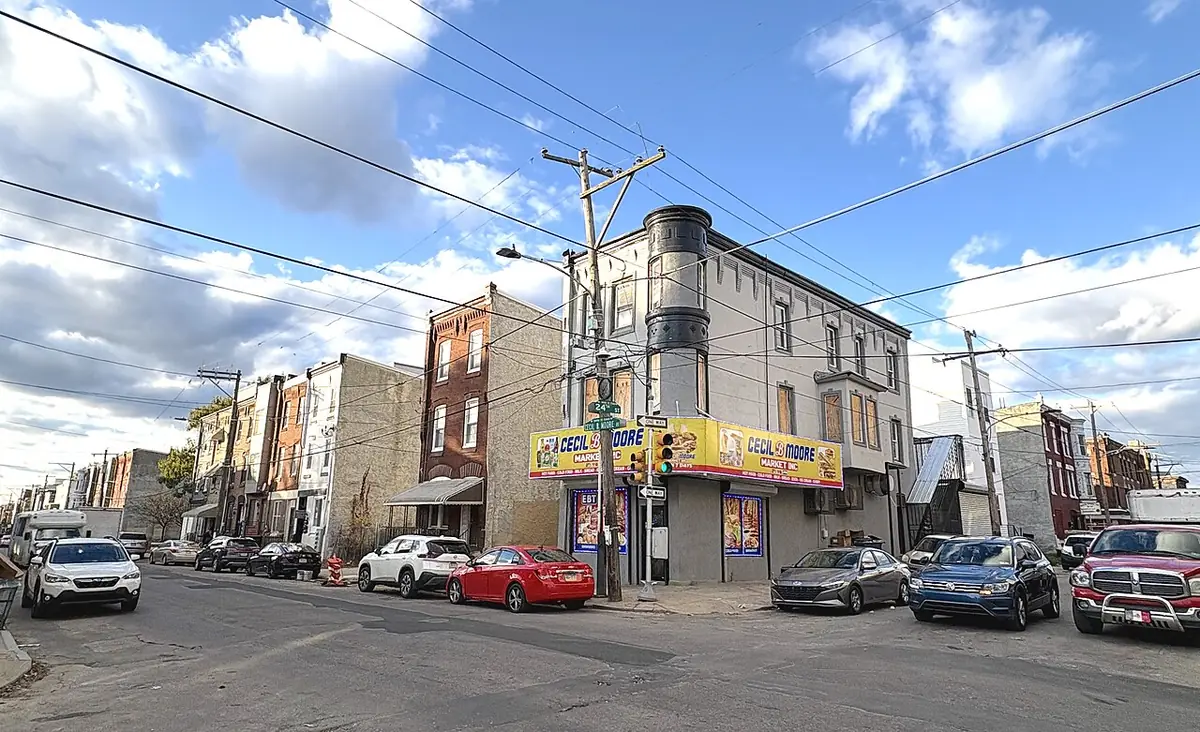
A lively commercial street lined with rowhouses and shopfronts — Photo: Moriah Levin · CC BY-SA 4.0 · Wikimedia Commons
Beyond the headline amounts, the legal nature of what is being valued deserves rigorous examination.
Putting a value on a property in Philadelphia does not stop at the headline price shown on the listing portals. The market shows striking disparities depending on the exact location, the structural condition of the property and whether or not a private parking space is included. The tables below set out the orders of magnitude observed, so that you can anchor a figure on evidence rather than on guesswork.
philadelphiaFor saleHouseestimate
Median price / m²US$2,415Half the apartments sell below this
Median priceUS$400kthe average is 14% higher — a few very large properties pull it up
Most common2 bedrooms59 % of listings
Average size158 m²
By number of bedrooms
Bedrooms
Share of market
Avg price
Price / m²
Avg size
2most common
59 %
US$400k
US$2,542
158 m²
3
29 %
US$512k
US$2,339 −8 %
219 m²
4
12 %
US$646k
US$2,237best value / m²
289 m²
Each row is an average, compared against the area average of US$2,542 / m². These are indicative estimates of a typical local market, not a measured sample of live listings. Check current listings before relying on them.
Outright ownership versus association-run schemes: what is actually being valued
To keep your figure defensible all the way to a signature, one fundamental rule has to be fully absorbed.
Ownership in Philadelphia draws a clear line between outright individual ownership of a single-family house and shared forms of ownership governed by collective rules. Each carries different financial and legal responsibilities, and each is valued on a different basis, so the distinction is worth clarifying before you rely on a number, if only to avoid surprises over the management and upkeep of common areas.
You own both the building and the land it stands on, with no collective dues and no external owners' association. You alone decide the schedule of works, the aesthetic choices for the facade and how maintenance is handled, and the land itself carries measurable value.
What it changesThat complete freedom does mean you bear the full cost of any structural damage, roof replacement or drainage upgrade with no possibility of sharing it, so a valuer treats deferred work as a straight deduction from the figure.
Ownership within a managed residential scheme (HOA or townhouse community)
Your house forms part of a scheme with shared spaces, private internal roads or collective services run by a homeowners association. Compulsory monthly contributions fund those shared services.
What it changesWhile this arrangement guarantees visual consistency and the upkeep of shared areas, it imposes rules that are sometimes very strict (restrictions on paint colours, on parking) and carries a risk of rising contributions, both of which a buyer will capitalise into a lower offer.
The critical sequence behind a valuation: knowing where the figure comes from
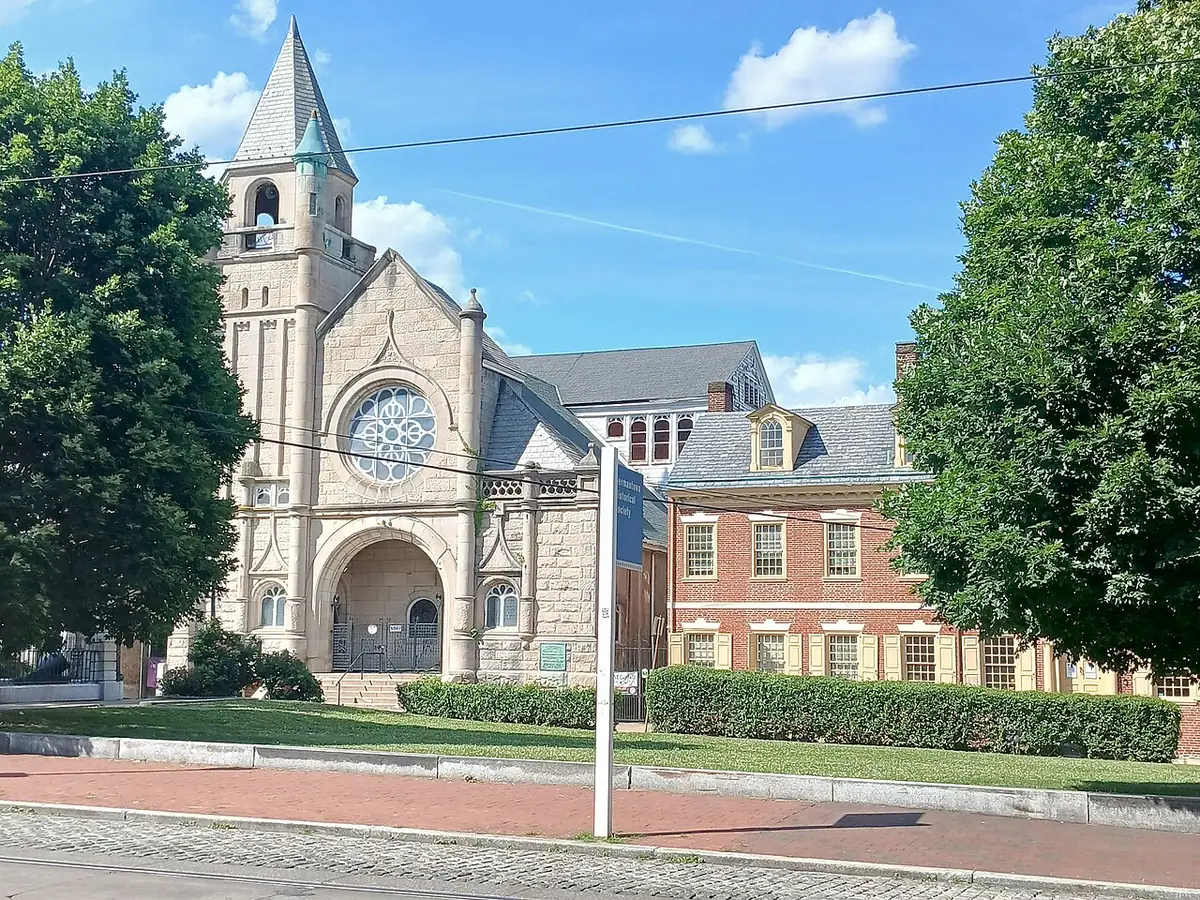
Market Square in Germantown, a historic corner of the city — Photo: Kreuz und quer · CC0 · Wikimedia Commons
Now that the legal and financial framework is set, here is how the sequence plays out in practice, professional by professional.
Property transactions in the United States follow a strict procedural chain in which each stage is governed by binding contracts from the moment an offer is accepted (purchase agreement). A valuation that is never tested against that chain is only an opinion: the figure has to survive an inspection, a lender's appraisal and a title search before anyone will pay it. A methodical reading of the sequence is essential.
Assembling the evidence, tax history, past inspection reports and recent nearby sales, with your real estate agent or attorney
The agent's comparative market analysis, drawing on closed sales on the nearest comparable streets rather than on asking prices.
A full technical inspection (inspection period), typically 7 to 14 days, to audit the real condition of the building and quantify the condition adjustments.
The lender's own valuation, carried out by a licensed appraiser, which either confirms the figure or caps what a buyer can borrow against it.
The title search carried out by the title company to confirm there are no hidden liens or earlier land disputes that would erode the net value.
A closing figure that has been tested from three directions and can be defended line by line
Who touches the figure, step by step, in a Philadelphia valuation
In conclusion, a sound valuation in Philadelphia rests on preparation, method and a clear-eyed reading of local realities.
Arriving at a defensible value for a Philadelphia house means coordinating several professionals within a tight timetable. From the first viewing through to closing day, each participant plays a precise role, and knowing who checks what lets you steer the process rather than be carried along by it.
The ownerGathering the financial and documentary evidence before anyone is asked for a figureThis indispensable first step, tax history, works invoices, permits and floor areas, shows professionals that your request is serious and sets the factual base every later number is built on.
The real estate agentThe comparative market analysis and the selection of genuine comparablesYour local adviser filters the listings, analyses the neighbourhood's price history and adjusts for lot, age and condition, producing a figure grounded in what has actually sold nearby.
The home inspectorA full technical audit of the structure and the installationsEssential for uncovering hidden defects and establishing the state of the roof, the plumbing and the electrical system, this specialist produces the detailed report that justifies each condition adjustment.
The title companyVerifying that the title itself is soundIt confirms the property is sold free of hidden debt or inheritance dispute, since an undisclosed lien reduces what the value is actually worth to the owner.
The lenderThe formal appraisal and the release of fundsThe bank instructs an independent licensed appraiser to confirm that the market value of the property matches the amount of the transaction before releasing the final funds, which is the sternest test any figure faces.
The settlement agentSigning the final deed and recording it publiclyOn closing day you sign the full set of legal documents, transfer the remaining funds and formally record the title with the city, at which point the agreed figure becomes a comparable for the next valuation on the street.
House or apartment in Philadelphia: how the two are valued, and why the gap is wider than it looks
Once the type of property is settled, the full running-cost picture has to be analysed in detail.
A single-family house in Philadelphia carries complete sovereignty over the place you live, with no board deciding the fate of the facade or the roof, and a valuer prices that autonomy in. Residential neighbourhoods such as Mount Airy and Chestnut Hill are full of these red brick and schist stone houses where every renovation decision rests with the owner. That architectural and spatial freedom has an invisible cost, though: managing every breakdown yourself, from the boiler to the foundations by way of insulation against Pennsylvania's hard winters. Private driveways and gardens are won at the price of a substantial weekly maintenance burden, and where that burden has been neglected the deduction shows up immediately in the figure.
An apartment held in condominium, whether in a converted historic building in Center City or a recent development in Northern Liberties, moves the centre of gravity towards collective management, and with it the basis of the valuation. Condominium charges, known here as condo fees, cover the upkeep of common areas, security and sometimes even heating or water, which greatly simplifies life for the resident owner but has to be capitalised as a permanent deduction when you compare the two on value. That peace of mind is also paid for with strict adherence to condominium rules that may limit short-term letting, restrict pets or commit the building to major works without your individual agreement. The initial financial trade reads in the ratio between the gross purchase price and those recurring charges, which build no capital at all.
Philadelphia's urban form sharpens this duality between the traditional terraced house, the celebrated rowhouse, and the apartment in a tall building. The rowhouse offers reassuring thermal performance from its party walls while keeping a wholly independent street entrance, sparing owners the compromises of a large anonymous condominium, and that combination sustains a premium in the comparables. The verticality of these historic homes, however, often spread over three or four floors with steep stairs, can quickly become an obstacle when small children arrive or as owners age, and buyers price that in. The modern apartment, level and secure, removes those physical constraints but dilutes any sense of territorial belonging within a larger and sometimes impersonal scheme.
Which of the two is easier to value therefore depends on your tolerance for technical risk and your availability to manage local contractors when something fails. If you are content to capitalise on the value of the underlying land while accepting the hazards of independent ownership, the house makes obvious long-term economic sense and its land component gives the figure a firm floor. If your absolute priority is control over your own time, immediate proximity to cultural life and no outdoor chores, the condominium apartment is the more rational option, and its value tracks the building's collective accounts as much as its own four walls.
The real running costs to net out of a Philadelphia house valuation
These financial charges take concrete shape in the way an ordinary week is organised across the metropolis.
What a house in Philadelphia is worth to you is not the number written on the agreement of sale or the monthly repayment on your mortgage. You have to fold in a distinctive local tax burden, notably the City and County of Philadelphia property tax, along with insurance against local climate risks. The figures below set out the orders of magnitude observed in the residential market for a standard house in good general condition.
Recurring cost lines and annual property taxes
Cost line
Observed budget range
Frequency and payment terms
Property tax (real estate tax)
1.3998% of the value assessed by the city
Annual, paid directly to the City of Philadelphia
Homeowners insurance
$1,200 to $2,500 per year
Annual, depending on the area and claims history
Preventive maintenance and routine repairs
1% to 2% of the purchase value per year
Variable, set aside monthly
Assessed values are recalibrated periodically by Philadelphia's Office of Property Assessment, so an old assessment is a weak proxy for current market value.
Transaction costs and transition charges
Type of transaction cost
Percentage or average amount
Effect on what the owner nets
Real estate transfer tax
4.279% of the total sale price
Generally shared between buyer and seller
Loan arrangement and processing fees (closing costs)
2% to 4% of the amount borrowed
Payable in full on the day of settlement
Philadelphia's transfer tax is among the highest of the major American metropolitan areas, which weighs heavily on short-term liquidity and on the gap between a valuation and the money an owner keeps.
Health, schools and travel: what an ordinary Tuesday in Philadelphia looks like
St. Helena Catholic Church anchoring its Philadelphia block — Photo: Farragutful · CC BY-SA 4.0 · Wikimedia Commons
Beyond this well-oiled routine, a number of things invisible on a sales brochure deserve your attention.
Living in Philadelphia means learning the traffic flows and absorbing the geography of the public transport network run by SEPTA. A typical Tuesday reveals how your time really divides between work obligations, school logistics and access to first-rate health services, and each of those proximities is something the market pays for. This chronological picture avoids marketing illusions and describes the day of a resident involved in local life.
07:30Leaving home and the school runDropping children at the neighbourhood school or setting out for the private and charter schools of Center City while avoiding the congested routes; catchment and school access are among the first things a valuation adjusts for.
08:45The commute by SEPTA Regional Rail or the Market-Frankford LineConnections to the business districts of Center City or University City, with an average journey time of between twenty and thirty minutes, which is why walking distance to a station carries a measurable premium.
12:30Lunch break and proximity to health servicesQuick access to internationally renowned medical institutions such as the University of Pennsylvania Health System and Thomas Jefferson University Hospital, a proximity that supports values across the surrounding blocks.
17:30Back to the neighbourhood and local shoppingA stop at local shops, a pass through the historic covered markets or the nearby stores for the evening's supplies; a street with active retail values differently from one without.
19:00Downtime in the city's green spacesMaking use of the local parks along the Schuylkill River or the historic squares for some exercise at the end of the day, before the quiet of the evening sets in.
What the listing will never tell you about the value of your Philadelphia street
These blind spots explain why some valuations look generous right up to the moment a buyer walks the street.
Property descriptions are an art of omission, praising the light and the character while passing over the structural realities of the surrounding streets and infrastructure. Exploring what the brochures leave unsaid lets you anticipate noise, future development schemes and the particularities of Philadelphia's subsoil, all of which a serious valuation has to price. Here are the factors that generally escape a guided viewing.
The acoustic impact of major traffic routes and railway lines
Many of Philadelphia's cobbled streets and busy arteries amplify road noise and horns at peak times. Check the sound insulation of older windows systematically during daytime viewings, because a buyer who notices it will discount for it.
Proximity to building sites and the pace of urban densification
The momentum of certain neighbourhoods brings the demolition of old workshops in favour of contemporary buildings. That means years of construction noise, dust and parking pressure, which suppresses values while the work lasts even as it lifts them afterwards.
The condition of the drains and localised flood risk
The city's older sewer network can be overwhelmed by heavy summer thunderstorms. Some low-lying basements require a sump pump as a matter of necessity, and the cost of installing one comes straight off the figure.
Residential parking policy and the growing scarcity of spaces
Owning a vehicle without a private space or garage turns every evening return into a test of patience, and the gap between a house with off-street parking and one without is one of the largest single adjustments on a Philadelphia street.
The valuation mistakes owners only discover six months later
Faced with these structural risks, it is fair to ask whether this kind of valuation exercise really suits your situation.
Looked likeA charming older house, freshly repainted throughout with impeccable finishes at a spring viewing
Turned outA coat of paint applied to hide chronic damp seeping through porous brick walls
Would have caught itInsisting on an independent building inspector who specialises in Philadelphia's older housing stock, to confirm the absence of salt efflorescence and check the state of the pointing before the figure is set.
Looked likeA fast-rising neighbourhood with exceptional appreciation potential and a lively atmosphere
Turned outA transitional area where night-time noise and residual insecurity spoil the calm once darkness falls
Would have caught itVisiting the neighbourhood at several times of day, particularly late on a weekday evening and at the weekend, to gauge the real level of activity on the adjacent streets before you trust an optimistic comparable.
Looked likeAn attractive property tax figure based on an old assessment of the property
Turned outAn immediate reassessment by the city following the sale, causing a sharp rise in the total monthly cost
Would have caught itConsulting the municipal tax services to model the exact tax due after acquisition, based on your real purchase price rather than on the historic assessment.
Looked likeA modern fitted kitchen requiring no further work
Turned outElectrical installations that fall short of code and lead plumbing needing costly remediation
Would have caught itAsking for the full history of works invoices and checking that the installations meet the latest local building code, since both are adjustments a licensed appraiser will make without being asked.
Who should not act on a Philadelphia house valuation right now?
It is time to weigh the arguments properly and settle your position with full awareness.
A valuation in Philadelphia is often presented as the obvious first step towards financial stability. Yet some owners expose themselves to severe financial and personal disappointment by acting on a figure that the rigidity of the local market and the upkeep burden will not support. Looking at the profiles for whom the exercise misleads avoids costly errors of direction.
The owner or investor expecting to move on for work within a short horizon
→To treat a headline valuation as money in hand on a property held for less than five years
High transfer taxes and closing costs absorb the whole of any potential gain over a short period, so the figure that matters is the one left after those costs, not the one on the valuation.
The household with no appetite for maintenance and no safety savings
→To put every last saving into the deposit without keeping a cash reserve
The slightest major roof or heating failure in winter demands immediate funds, and a valuation that assumes good condition quietly assumes you can pay to keep it that way.
The remote worker who needs absolute quiet and reliable parking
→To settle in a dense, lively neighbourhood with no private parking space attached
Living alongside the urban bustle, the constant deliveries and the daily hunt for a space will quickly exhaust your peace of mind, however well the valuation reads on paper.
So can you actually trust the figure on your Philadelphia house?
The Betsy Ross Bridge crossing the Delaware River — Photo: SnowFire · CC BY 4.0 · Wikimedia Commons
Deciding what a property in Philadelphia is worth means looking past the promotional images and measuring your own position coldly. Between the cultural energy of the city and the weight of its property taxation, every owner has to line up an ambition for the asset with a realistic view of the administrative and financial stamina required to realise it. A house here is not a passive holding, and its value is not a passive number: both sit inside the living fabric of a historic American city with demanding rules.
If you have a long-term view, accept the constraints that come with maintaining an older building and have built a contingency fund adequate for the unexpected, Philadelphia offers an exceptional and genuine setting, and a valuation grounded in nearby closed sales will hold up. The city's neighbourhoods reveal their worth to those who take the time to understand them and become involved in them for the long run. Your figure will then carry both economic and human sense in this distinctive urban ground.
If not, if your time horizon is uncertain or if managing technical surprises causes you stress rather than stimulation, renting remains a perfectly honourable and economically rational alternative, and there is no urgency to convert a valuation into a decision. The local market will still be open when your circumstances have settled. Take the time to check every figure, consult trusted local experts and decide with a clear conscience.
Related questions
What closing and transfer costs should a valuation figure be measured against in Philadelphia?
Closing costs and transfer taxes together represent roughly 6% to 8% of the total purchase price. The combined city and state transfer tax alone comes to 4.279%, which is a substantial line item to subtract when you translate a headline valuation into the money that would actually reach you.
How is the property tax on a Philadelphia house calculated, and how does it relate to value?
The property tax is calculated by applying a single rate of 1.3998% to the market value the city's Office of Property Assessment has set for the property. That assessment is updated periodically and can move quickly after renovation work or a recent sale, so it is a useful cross-check on, but not a substitute for, a market valuation.
Is an inspection of an older house worth commissioning before settling on a value?
Bringing in an independent certified inspector for a full home inspection is strongly recommended before you fix a figure. It establishes the condition of the structure, the roof, the electrics and any water ingress, which are exactly the items that drive condition adjustments up or down.
Which neighbourhoods hold their value best for a family house?
Residential areas such as Chestnut Hill, Mount Airy and Society Hill, along with fast-changing districts such as Fishtown, attract different buyer profiles depending on whether green space, historic character or proximity to the business district is the priority, and those preferences show up directly in comparable sales.
How does SEPTA public transport factor into a house valuation?
SEPTA runs a full network of subway lines, trolleys, buses and Regional Rail services. Because that system connects outlying residential neighbourhoods to the heart of Center City in under half an hour for most journeys, walking distance to a station is a measurable component of value.
Which climate risks should be weighed when valuing a property in the region?
Philadelphia's climate combines cold winters with snowfall that demands suitable equipment and hot, humid summers. Some low-lying areas are also prone to water pooling during heavy thunderstorms, and that exposure is reflected in both insurance costs and value.
How much of the asking price on the local market is negotiable?
The negotiating margin depends directly on the condition of the property, how long it has been listed and how tight the market is in that particular neighbourhood. In highly sought-after areas, correctly priced properties find a buyer quickly with no meaningful room for reduction, which tells you the valuation was sound.
How do a condominium and a single-family house differ in the charges a valuation has to account for?
A condominium carries monthly charges covering the upkeep of common areas and building services, whereas the owner of a single-family house manages and funds every maintenance expense directly with no intermediary. Those recurring charges have to be netted out when the two are compared on value.
What effect do public schools have on local property values?
The reputation of local public schools strongly shapes the appeal of the different residential areas and feeds directly into the price per square metre of family houses located within those school catchments.
Which documents should an owner gather before a valuation?
It is worth assembling the property tax history, any earlier technical inspection reports, any building permits issued in the immediate vicinity, and the condominium or neighbourhood association rules where they apply.
Property review of ting
No ting properties in Philadelphia yet
Be the first — share it on ting and it shows up right here.