Buying a villa in Chiang Mai gives you an exceptional setting and a rare amount of space, but it calls for a thorough understanding of the local land rules. This guide sets out the realities of the market, the legal traps to avoid and the essential steps for carrying out your property purchase safely.
Tell us about your life. Ex: I’m relocating to Nice next year
Attach file
Get the app
Buy Villas Chiang Mai
Buying a villa in Chiang Mai gives you an exceptional setting and a rare amount of space, but it calls for a thorough understanding of the local land rules. This guide sets out the realities of the market, the legal traps to avoid and the essential steps for carrying out your property purchase safely.
What you really get when you buy a villa in Chiang Mai
Scroll
What you really get when you buy a villa in Chiang Mai
Buying a villa in Chiang Mai gives you an exceptional setting and a rare amount of space, but it calls for a thorough understanding of the local land rules. This guide sets out the realities of the market, the legal traps to avoid and the essential steps for carrying out your property purchase safely.
Written by the ting.ad editorial team ·
Chiang Mai in Street View: drag to look around.
Buying a villa in this part of northern Thailand permanently changes the relationship between living space and the money you put in. Unlike dense European cities, every square metre bought here comes with considerable air, greenery and private outdoor space. Yet this apparently favourable equation brings structural and legal constraints that deserve an honest look. Understanding the reality of this market means taking the initial promise of space apart and examining what it means day to day, along with the legal limits you cannot get around.
Living space and land with no European equivalentvsA complex legal framework for land ownership
For a budget that would buy a cramped studio in a major capital, you get a large home with a garden and pool here. Thai law, however, prohibits foreigners from owning land in their own name, so the purchase has to be structured through a long lease or a properly regulated company.
A tropical, outdoor-oriented way of lifevsHeavier upkeep and maintenance demands
Designs open to nature encourage natural ventilation and a much sought-after way of living. In return, the tropical climate, humidity and rainy season put materials under heavy strain, requiring constant vigilance and regular maintenance budgets.
Residential independence surrounded by unspoilt naturevsPotential distance from central city amenities
Settling in the outlying residential areas gives you complete peace and sweeping views of the surrounding mountains. It does, however, mean relying heavily on transport to reach business districts, international schools or leading medical facilities.
Attractive building costs per square metrevsBig differences in quality from one developer to another
Plentiful local labour lets you afford made-to-measure finishes at competitive prices. Still, the lack of strict standards comparable with European regulations means you must rigorously check the quality of the foundations, the services and the thermal insulation.
Does this place really suit your lifestyle and your expectations?
Once your profile is clear, it is worth measuring the cultural and practical gap between your usual daily life and the local reality.
Choosing where to settle is not just a financial calculation or a search for pure returns; it shapes your entire daily life. Rhythms of life, the demands of remote work, family structure and how you handle cultural isolation all lead in very different directions. What is a dream opportunity for a nomadic or retired profile can prove complicated for a family that needs firm institutional reference points. It is therefore essential to weigh your personal situation against local realities to avoid disappointment after the purchase.
The creative digital nomad
You are looking for a large, light-filled workspace, where the cost of living lets you keep overheads down while enjoying fast internet and a lively expat community. In Chiang Mai you will find a rare balance between productivity and an easy pace of life, provided you accept the time difference with your clients back home and the paperwork involved in renewing long-stay visas. The villa then becomes an open-air office, but isolation can creep in if you do not quickly build ties with the local community.
The permanent or seasonal resident
Your main goal is to get the most out of your property capital while enjoying a mild climate and highly regarded healthcare. You want the tranquillity of a large garden, time relaxing by the water and a calm social life. However, distance from your home country, adapting to Thai cultural codes and being far from family all demand real emotional maturity. Buying a villa here is part of a long-term life plan, not a simple holiday escape.
The wealth-building investor
You see buying a villa as a way to diversify your assets, targeting wealthy tourists or long-stay residents looking for a high standard. The Chiang Mai property market offers worthwhile growth on well-located homes, but villas remain less liquid than city apartments. Managing a rental from a distance needs reliable local providers to handle upkeep, tenant turnover and tax compliance, which inevitably eats into the headline gross yield.
The family making a fresh start
You want to give your children international cultural exposure and a safe setting close to nature. The city's excellent international schools are a major asset for your plans. On the other hand, managing the daily school run between your residential area and the schools can be time-consuming because of rush-hour traffic. Daily life calls for careful organisation to balance everyone's expectations in this new environment.
Living here when you come from abroad: what fundamentally changes
The ruined stupa of Wat Chedi Luang, at the heart of the old city — Photo: mohigan · CC BY-SA 3.0 · Wikimedia Commons
Moving to northern Thailand straight from home brings a shock of scale, both in how the city is laid out and in how people behave. The legal, social and climatic reference points you were used to no longer apply in the same way. Understanding these structural differences helps you anticipate everyday friction and adopt the right habits from the moment you arrive. From the pace of administrative procedures to the way public space is used, here is what really shifts in your daily routine.
From abroad
A strict, protective but heavily taxed regulatory framework back home
Chiang Mai
Flexible local contracts combined with a favourable tax regime
You gain freedom of action and net purchasing power, but you lose the institutional safety nets you had back home, which means taking out private insurance with great care.
From abroad
Concentrated urban density and well-organised public transport back home
Chiang Mai
Leafy residential sprawl and complete dependence on your own vehicle
Walking and urban public transport give way to a scooter or a car, changing your relationship with distance and with spontaneous outings.
From abroad
A formal, codified approach to neighbours and service relationships back home
Chiang Mai
A culture of keeping relationships calm ("jai yen") and avoiding conflict
Everyday tensions are not resolved through verbal confrontation or strict appeals to the law, but through calm, a smile and indirect negotiation, which takes some cultural learning.
From abroad
A universal, centralised public health system back home
Chiang Mai
Access to high-performing international private clinics that you pay for
The quality of care is exceptional for common conditions and emergencies, but it means paying in full for international health cover or facing large bills.
Which Chiang Mai neighbourhood should you target for your property purchase?
Chiang Mai is organised around a strong historic centre, ringed by a moat, and a belt of residential neighbourhoods stretching towards the mountain foothills. Each area has its own identity, microclimate, population and relative strengths in terms of infrastructure. Where you place your villa determines not only your everyday surroundings but also the long-term value of your investment. Here are the key areas to focus your search on the ground.
Hang Dong
A popular, green and quiet residential area, known for its large secure estates and a high concentration of international schools.
Suits
Families looking for plenty of space, peace and quiet, and close proximity to the region's well-regarded school campuses.
Trade-off
A long way from the historic centre, meaning long car journeys at rush hour to reach the heart of the city.
San Kamphaeng
An authentic, fast-growing area known for its craft traditions, rice-field landscapes and modern upmarket homes.
Suits
Buyers looking for authenticity, complete calm and contemporary villas on large plots at reasonable prices.
Trade-off
Fewer local services and leading medical facilities than in the west of the city.
Nimman and Superhighway (outskirts)
A lively, trendy and well-connected urban hub, where coworking spaces, speciality cafés and modern shopping centres sit side by side.
Suits
Investors looking for strong rental demand and residents who prefer walking and a busy city life.
Trade-off
Detached villas with large gardens are rare, replaced by more compact properties, and there is more exposure to urban noise.
How much does a property in this region really cost?
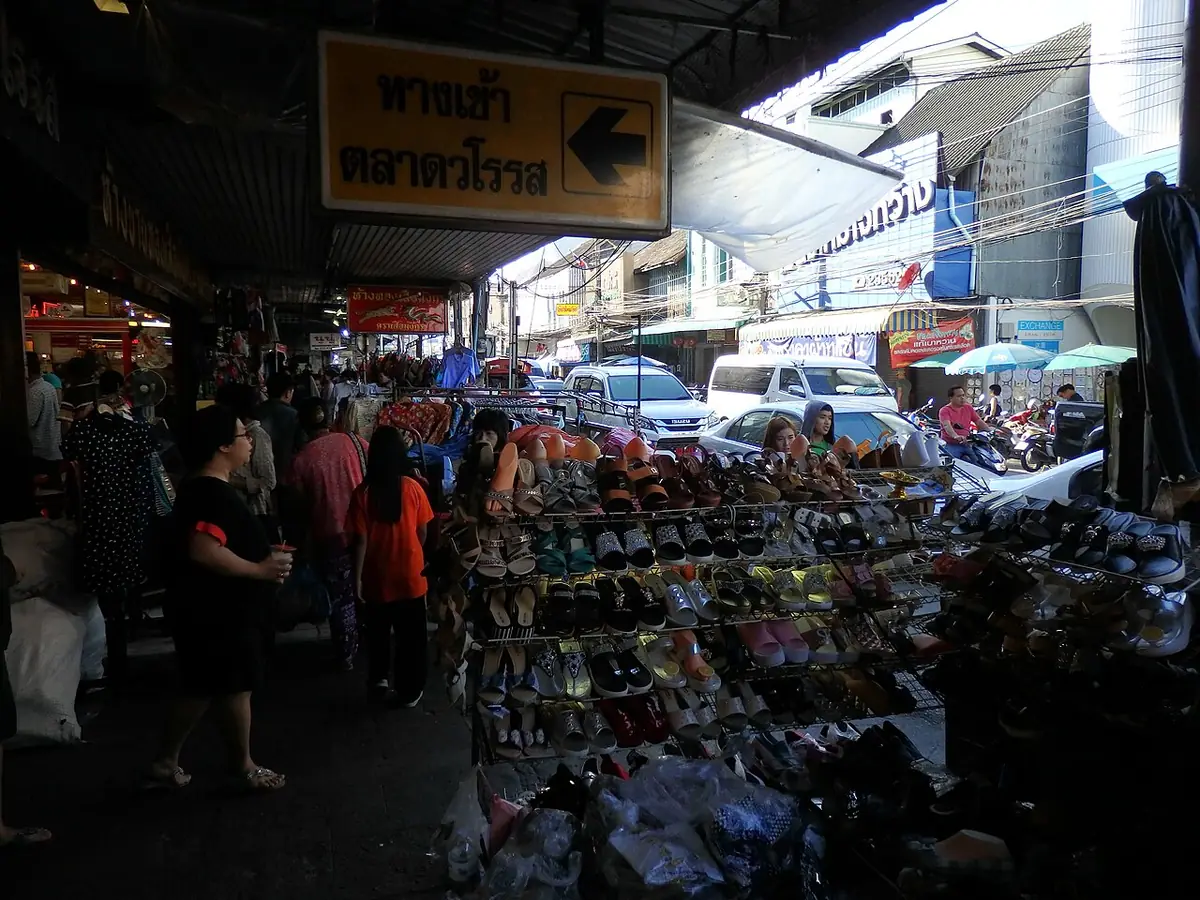
Chiang Mai's street markets, part of daily life in the old city — Photo: mohigan · CC BY-SA 3.0 · Wikimedia Commons
Beyond the headline purchase amounts, the exact nature of the ownership rights you acquire deserves close examination.
Assessing the cost of a property in Thailand means looking beyond the asking price to include the extra fees, legal structures and maintenance costs. Price ranges vary considerably with the precise location, the quality of materials and the age of the building. Far from unrealistic speculation, the local market offers opportunities in proportion to what is on offer, provided you keep control of the overall financial balance of the deal.
Chiang MaiFor saleVillaestimate
Median price / m²THB 52,972Half the apartments sell below this
Median priceTHB 4.39mthe average is 14% higher — a few very large properties pull it up
Most common2 bedrooms69 % of listings
Average size79 m²
By number of bedrooms
Bedrooms
Share of market
Avg price
Price / m²
Avg size
2most common
69 %
THB 5.55m
THB 54,645
102 m²
3
25 %
THB 8.53m
THB 51,299best value / m²
166 m²
4
6 %
THB 13m
THB 52,972 −5 %
245 m²
Each row is an average, compared against the area average of THB 55,760 / m². These are indicative estimates of a typical local market, not a measured sample of live listings. Check current listings before relying on them.
What you can actually own as a foreign buyer
Land ownership is the cornerstone of any property purchase in Thailand for a foreign national. National law fiercely protects land ownership, prohibiting non-residents from buying it directly in their own name. However, perfectly legal and well-tested mechanisms let you secure your investment over the long term. It is vital to distinguish what you own outright from what is a right of use or a regulated company arrangement.
Direct ownership of the building
As a foreigner, you can own 100% of the villa's physical structure (the walls, the roof, the interior fittings). This ownership is officially registered with the local land office (Land Department) on a title separate from that of the land.
What it changesYou have full rights over the building, allowing you to sell it, leave it to your heirs or alter it, regardless of the legal status of the plot beneath.
Secure use of the land (lease or company)
Since you cannot own the land, it is usually secured by an officially registered long-term lease (generally 30 years, renewable), or through a Thai company whose voting rights you control under strict rules.
What it changesThis secures your long-term occupation and the overall resale value of your property, provided each arrangement is checked by an independent specialist legal adviser.
The fundamental rule to understand before paying any deposit
Once these legal precautions are in place, the transaction itself follows a precise timeline that should be respected step by step.
The most common mistake foreign buyers make is rushing to pay a deposit before the whole chain of documents has been checked. Under Thai property law, money paid without a rigorous sale agreement, drawn up in both languages and with protective conditions precedent, is extremely hard to recover in a dispute. Understanding the exact order of checks protects you against outright financial loss.
Finding the property and making a conditional offer
Drawing up a reservation agreement ("Reservation Agreement") with a limited escrow and conditions precedent.
A full legal audit ("Due Diligence") by an independent lawyer to check the history of the title deed (Chanote) and the planning rules.
Validating the contractual structure of the lease or the purchasing company to secure your land rights over the long term.
Transferring the funds from abroad in foreign currency and obtaining the essential official FET form ("Foreign Exchange Transaction form").
Final signing of the deed of sale at the Land Department and registration of the transfers.
How a property transaction works, step by step
Buying a property in Thailand involves several institutional and professional players who need to be coordinated methodically. From the first contact with the agency or developer through to the handover registered at the land office, each party plays a specific role in securing your investment. Knowing this sequence lets you steer your purchase calmly and avoid opportunistic middlemen.
The buyerSetting the brief and shortlisting propertiesYou define your precise criteria for location, budget and type of villa, ruling out unrealistic or incomplete offers.
The independent lawyerTitle deed audit and check for encumbrancesThe lawyer examines the validity of the land title, confirms there is no hidden mortgage and checks that the building permits are in order.
The notary / Land DepartmentDrawing up the sale contract and the leasesDrafting the legal documents that accurately reflect how rights are split between the building and the use of the land.
The sending bankInternational transfer of funds and obtaining the FETBringing the funds in from abroad as converted currency, with the mandatory bank document certifying where the money came from.
The local authoritiesSigning the final deed and paying the taxesAn in-person appointment at the land office to sign the official registers, pay the transfer taxes and record the change of ownership.
Apartment or villa in Chiang Mai: weighing a city condominium against a freehold home in the green
Once this first structural choice is made, you need to look closely at the overall budget required to carry out your purchase.
Choosing between a condominium apartment and a villa with a garden in Chiang Mai directly shapes your everyday way of life. City condominiums, clustered around Nimman or along the Ping River, offer turnkey security, shared facilities such as pools and gyms, and simpler rental management when you are away. This option suits buyers who value operational simplicity and being right next to the city's cafés, coworking spaces and shopping centres.
Choosing a villa or detached house, on the other hand, means moving a little way out of the centre, towards the residential areas of Hang Dong, Mae Rim or San Sai. Here the scale of the property changes completely: you have private land, generous living space and real independence from any owners' committee. It is the obvious choice for families and pet owners who want peace and quiet and direct contact with the tropical nature of northern Thailand.
Legally and financially, the two types of property follow fundamentally different land rules that should never be underestimated. A foreigner can own a condominium apartment outright, provided the building's overall foreign quota does not exceed forty-nine per cent of the total floor area. Buying a villa, by contrast, generally means separating the building from the land, which is most often leased long term or held within a Thai company structure closely supervised by a legal adviser.
Running costs and resale liquidity also differ significantly between these two markets. An apartment's service charges cover upkeep of the building, security and shared facilities, making the budget pleasingly predictable. A villa, however, demands constant vigilance against the rainy season, fast-growing tropical vegetation and the upkeep of a private pool, work that requires building a network of trusted local contractors.
Your final decision should therefore rest on your time horizon, your tolerance for administrative constraints and your own definition of comfort. If you want a base with no management worries, the apartment wins hands down. If you want to put down roots in a spacious private living space, a villa in Chiang Mai is a far more rewarding alternative, provided you accept the complexity that comes with its legal structure.
What overall budget do you need to buy and live comfortably in a villa in Chiang Mai?
Once the financial framework is in place, it is essential to picture the practical side of daily life to understand a resident's rhythm.
Budgeting for a property purchase in Chiang Mai goes well beyond the villa's headline price. It includes transfer costs, the cost of setting up the legal structure, and the recurring expenses of maintaining the property and of daily living. A careful look at each spending item helps you avoid unpleasant surprises and keeps your move financially sustainable over the long term.
Investment ranges for buying a villa in Chiang Mai
Property range
Initial investment in THB
Approximate equivalent in EUR
Features and location
Compact standard villa
THB 3,500,000 to 6,000,000
€90,000 to €155,000
120 to 180 m², in a gated village (moobaan) in San Sai or Hang Dong.
Contemporary villa with private pool
THB 7,000,000 to 15,000,000
€180,000 to €390,000
200 to 300 m², quality finishes, 400 m² private plot, in sought-after Mae Rim.
Exceptional property and large estate
THB 16,000,000 to 35,000,000+
€415,000 to 900,000+ THB
Bespoke architecture, extensive wooded grounds, complete privacy, exclusive areas in the foothills.
Purchase prices vary considerably with distance from the historic centre and the quality of the gated estate's facilities.
Monthly running and living budget for a couple of owners
Expense item
Monthly range in THB
Equivalent in EUR
What is included
Villa and garden upkeep
THB 3,000 to 8,000
€80 to €210
Garden maintenance, pool upkeep and regular minor technical repairs.
Service charges (moobaan)
THB 1,000 to 3,500
€25 to €90
24-hour security, lighting of shared areas, rubbish collection and road upkeep.
Utilities (electricity, water, internet)
THB 3,500 to 8,000
€90 to €210
Heavy air-conditioning use in the hot season, water consumption and a high-speed fibre subscription.
Home and health insurance
THB 4,000 to 12,000
€105 to €315
Comprehensive home insurance and suitable local or international health cover.
The cost of living in Chiang Mai remains well below that of major European capitals or southern Thai beach resorts such as Phuket.
Healthcare, schools and getting around: what does an ordinary Tuesday in Chiang Mai actually look like?
While daily life paints an idyllic picture, a savvy investor also needs to look beyond developers' marketing promises.
Getting to know a foreign place starts with watching its daily routine. In Chiang Mai, smooth access to leading medical facilities, a wide choice of international schools and relatively easy travel make it a particularly practical place to live. An ordinary Tuesday shows clearly how foreign residents juggle their work, family and personal commitments in a relaxed environment.
07:30Hang Dong residential neighbourhoodAn early start to drop the children at one of the excellent international schools in the south of the city, avoiding its busiest roads.
09:00Coworking space or private office in NimmanSettling in for the morning work session in a highly connected setting, surrounded by speciality cafés known for the quality of their roasting.
12:30Local neighbourhood restaurantA lunch break enjoying authentic regional specialities such as khao soi, on a modest budget and in a friendly atmosphere.
15:00International hospital in Chiang Mai (Bangkok Hospital or Chiang Mai Ram)A routine check-up or a quick specialist appointment with highly qualified, internationally trained English-speaking doctors.
17:00Rim Ping or Mae Hia fresh marketShopping for fresh produce and delicacies for dinner, with a range that combines local products and Western grocery staples.
19:00Villa terrace in San SaiA quiet evening in the landscaped garden, enjoying the gentle night breeze coming down from the green slopes of Doi Suthep.
What sales brochures and estate agents consistently fail to tell you
These administrative and climatic grey areas lead straight to the classic traps that hurried new buyers fall into all too often.
Buying a villa in Chiang Mai comes with practical and environmental realities that promotional brochures carefully avoid. Understanding these factors, invisible at first glance, is essential to protecting the value of your property and your peace of mind. Here are the decisive points that people usually only discover through experience on the ground.
The agricultural burning season and spring air quality
Between February and April, the Chiang Mai basin suffers bouts of intense air pollution caused by agricultural burning across the region. Many foreign residents choose to travel during this critical period, and you need to plan ahead by fitting powerful air purifiers in every room of the villa.
The real legal complexity of the long lease (leasehold)
Renewing a thirty-year land lease is not an automatic right guaranteed by Thai law, despite sellers' verbal promises. The contract clauses must be drafted by an independent law firm to make sure the rights actually pass to your heirs in the event of your death.
The formidable impact of the monsoon on buildings
Intense tropical humidity and torrential rain during the wet months put roof waterproofing and exterior rendering to a severe test. Without rigorous annual preventive maintenance, leaks and mould can quickly spoil the look and condition of the villa.
Strict rules on bringing in foreign capital (Tor.Tor.3)
To buy property legally in Thailand, the funds must come from abroad in foreign currency and be converted into baht by an authorised Thai bank. Without the proper official bank certificate, registration of the property at the land department is blocked for good.
The reality of liquidity on the villa resale market
Unlike condominiums in high-demand neighbourhoods, reselling a detached villa at a good price takes time and patience. The pool of foreign buyers who can pay is small, and a quick sale often means accepting a significant discount on the original purchase price.
The classic property investment traps you bitterly regret six months later
Faced with these major structural risks, it is just as important to ask who this property purchase would be completely wrong for.
Looked likeAn ultra-stylish off-plan villa from an unknown developer with sky-high, unrealistic guaranteed rental returns.
Turned outA building site abandoned partway through after the builder ran into cash-flow problems, leaving the investor with no effective legal recourse.
Would have caught itAlways ask for the developer's full track record, visit developments completed several years ago and turn down any guaranteed-return scheme.
Looked likeA beautiful, very cheap isolated plot deep in the countryside, perfect for building your dream home.
Turned outIt proved impossible to get official connections to the public electricity grid, and there was no mains water supply or road access at all.
Would have caught itCheck the exact type of title deed (Chanote) with the Land Department and get written confirmation of access to utilities before paying any deposit.
Looked likeA quick villa purchase registered in the name of an existing Thai company, offered as a turnkey package by the estate agent.
Turned outAn opaque legal set-up riddled with illegal nominee shareholders, putting the foreign buyer in serious criminal breach of investment laws.
Would have caught itInstruct an independent international law firm to audit the company structure and opt for fully transparent, compliant legal arrangements.
Looked likeSigning a sale agreement written only in Thai, with a rough verbal translation by the intermediary.
Turned outHidden, one-sided penalty clauses stating that the entire reservation deposit would be forfeited if the international funds arrived late.
Would have caught itNever sign a contract without a certified translation into English or your own language and the formal approval of your own legal adviser.
The buyers who make a serious mistake by settling long term in Chiang Mai
Now it is time to bring all these factors together to help you make your final decision with full awareness.
Buying a villa in Chiang Mai is not a one-size-fits-all solution for every kind of expat or international investor. Some lifestyles, professional expectations and psychological tolerances clash directly with the structural realities of northern Thailand. Clearly identifying the profiles it does not suit helps avoid major personal and financial disappointment.
The investor fixated on short-term speculative gains
→Buys several off-plan villas in outlying areas, hoping to resell quickly at a double-digit profit within the first year.
Chiang Mai's residential property market is about long-term use value, with low liquidity and slow, measured capital growth.
The hyperactive expat who depends on big-city energy
→Moves into a large, isolated villa deep in the countryside, far from city life, assuming they will easily adapt to solitude.
Chiang Mai offers a deeply relaxed, provincial way of life that can quickly create a sense of cultural and social isolation for people who need constant buzz.
The buyer allergic to administrative and cultural subtleties
→Agrees to sign complex legal arrangements that get around the land rules, out of impatience or a refusal to delegate to professionals.
The Thai legal system demands absolute rigour, unshakeable institutional patience and full respect for legal procedures if you are to protect your assets over time.
The digital nomad seeking complete geographical freedom
→Invests heavily in a large villa while changing country every six months as contracts come and go.
A villa is a heavy anchor that brings high transaction costs and rental management complexity incompatible with a nomadic lifestyle.
So, are you ready to take the plunge and buy property in Chiang Mai?
Buying a villa in Chiang Mai is far more than a financial transaction: it is a radical lifestyle choice that redefines your relationship with time, space and everyday comfort. If you have taken the measure of the climatic constraints, accepted the complexity of leasehold arrangements and embraced the need to commit for the long term, this move offers unmatched rewards. Northern Thailand provides a rarely serene way of life, combining first-rate medical and school facilities with remarkably moderate running costs.
This project does, however, demand constant intellectual and practical rigour. It requires you to turn your back on the mirage of guaranteed returns and illegal legal shortcuts, and to surround yourself with honest, independent professionals. Every buying decision should be guided by the use value of the property and by a genuine wish to become part of local life, far from the short-term speculative thinking that always ends up destroying value.
Take the time to make several extended stays, to experience different seasons, including the spring burning period, and to rent before you commit to buying. This period of active observation is the only real safeguard against future regret. Once you have found the right balance between the peace of a tropical garden and the practicality of a lively cultural city, going ahead with your property purchase in Chiang Mai will feel like a natural, carefully considered decision.
Related questions
Can a foreigner legally own a villa outright in Chiang Mai?
Thai law expressly prohibits foreign nationals from holding title to land directly in their own name. It is, however, perfectly legal to own the villa building itself while leasing the land beneath it through a renewable thirty-year long lease, or to structure the purchase through a Thai company whose governance has been rigorously audited.
What notary fees and taxes apply when buying a property?
Property transactions in Thailand do not involve a traditional notary; they are registered directly with the local Land Department. Total transfer costs generally come to between 2% and 6% of the property's official appraised value, covering the transfer fee, stamp duty or the specific business tax, and are traditionally split in part between buyer and seller by negotiation.
How does renewing a land lease (leasehold) actually work?
The initial long lease is granted for a legal maximum of thirty years and must be registered at the official land office to be enforceable against third parties. Although contracts often include promises to renew for further thirty-year periods, these clauses are not an automatic right guaranteed by law and need extremely careful drafting by a specialist lawyer.
What are the average service charges for a villa in a gated village?
Villas in gated, secure housing estates, known locally as moobaan, carry monthly or annual service charges that pay for 24-hour security, lighting on the shared roads, upkeep of the communal green spaces and rubbish collection. These fees generally range from 1,000 to 3,500 baht a month, depending on the standard of the development and the extent of the facilities provided.
Is it easy to resell a villa in Chiang Mai if your circumstances change?
The resale market for detached villas aimed at foreign buyers is far less liquid than the market for city condominiums in high-demand neighbourhoods. Selling a villa generally takes several months, sometimes a year, and requires pricing the property realistically in line with local market forces to attract buyers who can actually pay.
What is the quality of healthcare and hospitals in Chiang Mai like?
Chiang Mai has a network of private hospitals of an excellent international standard, comparable with the best European and Singaporean facilities. Well-known institutions such as Bangkok Hospital Chiang Mai and Chiang Mai Ram offer state-of-the-art equipment, 24-hour emergency departments and highly qualified English-speaking doctors, which is fully reassuring for foreign residents.
How do you cope with the spring air pollution season in northern Thailand?
Every year between February and April, the Chiang Mai basin goes through bouts of air pollution caused by agricultural burning and dry-season weather conditions. To get through this period calmly, experienced residents fit powerful air purifiers with HEPA filters in every room of the villa and often choose to travel to the south of the country or abroad during the worst weeks.
Which are the best residential areas to settle in around Chiang Mai?
The right area depends closely on your lifestyle and on where your children go to school. The southern district of Hang Dong is especially popular for its international schools and large, leafy housing estates, while the northern area of Mae Rim appeals to those who love rolling hills and privacy, and Nimman remains the cosmopolitan heart of the city.
What documents do you need to bring purchase funds in from abroad?
For a foreigner to buy property legally in Thailand, it is essential to obtain an official document issued by the receiving local bank confirming that the foreign currency funds were transferred from abroad and converted into Thai baht. This document, issued in your name and indispensable at final registration with the Land Department, is officially called the Foreign Exchange Transaction Form, or Tor.Tor.3 certificate.
Can you rent out your villa short term when you are away from Chiang Mai?
Holiday or short-term Airbnb-style letting in Thai gated estates or condominiums is tightly regulated, and is in fact prohibited outright by local law for stays of under thirty days without a specific hotel licence. It is therefore vital to check the rules of the condominium or village before considering any tourist letting.
Property review of ting
No ting properties in Chiang Mai yet
Be the first — share it on ting and it shows up right here.