Buying residential property in Phoenix means understanding a fast growing market shaped by sprawling development and a demanding climate. This guide sets out the financial, practical and legal realities you need in order to approach a house purchase here with clear eyes.
Get the app
What nobody tells you.
Real prices, hidden costs and the traps to check before you commit.
Buying a house in Phoenix: generous space set against a demanding climate
Scroll
Buying a house in Phoenix: generous space set against a demanding climate
Buying residential property in Phoenix means understanding a fast growing market shaped by sprawling development and a demanding climate. This guide sets out the financial, practical and legal realities you need in order to approach a house purchase here with clear eyes.
Written by the ting.ad editorial team ·
North Central Avenue, Phoenix in Street View: drag to look around.
Beyond these physical characteristics, how well the city's daily reality fits your own rhythm of life deserves a close look.
Buying residential property in Phoenix forces you to look past the sunlit photographs and the generous interior volumes. The promise of an affordable price per m2 runs straight into specific geographic and climatic realities that need to be factored in from the very first viewing. Buyers quickly discover that living area and lot size tell only part of the overall financial story. Between the insulation you cannot do without, water management and the quirks of local planning, every advantage carries a direct economic counterweight that listings never put front and centre.
Very large living areasvsHigh summer energy bills
Single family houses often offer impressive volumes and comfortable lots at a cost per m2 below that of coastal metros. In exchange, keeping the inside temperature bearable through the hottest months takes powerful air conditioning that runs continuously and weighs heavily on the monthly budget.
A lifestyle built around the outdoorsvsDemanding and costly landscape upkeep
A pool and desert or tropical style landscaping transform daily life and add value to the property. These installations, however, require constant supervision, regular chemical treatment and water use governed by strict local rules that can change.
Homes set in structured subdivisionsvsRigid community and neighbourhood rules
Settling in a planned residential neighbourhood guarantees a consistent environment, maintained infrastructure and good shared services. Complying with neighbourhood rules on the exterior appearance of houses, parking and structural alterations does, however, sharply limit your freedom to make the place your own.
Quick access to a fast growing marketvsVolatile running costs and property taxes
The region's economic momentum attracts new residents and supports property values over the long term. But that appeal also means frequent reassessment of local property taxes and a steady rise in the cost of services tied to maintaining a home.
Does this place really match your way of life and your day to day expectations?
That question of location takes on a particular colour when you arrive with habits formed somewhere else entirely.
Buying a house is not simply a matter of optimising an asset over the long term. It is first of all about fitting into a sprawling urban fabric where distances are measured in driving time and where the shape of your days depends heavily on how neighbourhoods are laid out. Depending on your work, your family situation or your relationship with the weather, the experience of the city will vary enormously. Thinking through your own profile helps you avoid the disappointment that comes from choosing a location that does not match your real needs.
Remote work and the search for residential quiet
The outer neighbourhoods of Phoenix offer quiet, the space to set up a dedicated office and a bright setting that suits concentration. You get a large house for a reasonable budget without the burden of a daily commute. In exchange, the relative isolation of suburban tracts calls for real discipline to break the monotony and reach cultural amenities or coworking spaces.
On site work and commuting
Proximity to the major roads and urban freeways becomes the decisive criterion if you want to avoid spending hours a day behind the wheel. Houses in the middle ring cut journey times but carry higher purchase prices and are often more compact. You have to weigh the time saved in traffic against the size of the home you live in.
Family life and putting down roots in a community
Access to well regarded schools, landscaped public parks and safe leisure facilities dictates where you choose to buy. Subdivisions with active homeowners associations often provide community pools and supervised play areas, which makes daily life easier for parents. Those residential constraints come with a compulsory financial contribution towards maintaining the shared infrastructure.
A second home or a late career move
With no work constraints you can target quiet neighbourhoods oriented towards tranquillity, golf courses and seasonal outdoor activities. Managing the house remotely during the months you are away does mean entrusting security and maintenance to local providers you trust. Thermal comfort and neighbourhood safety then matter more than being close to the big employment centres.
Living here when you arrive from abroad: what changes radically in your daily life
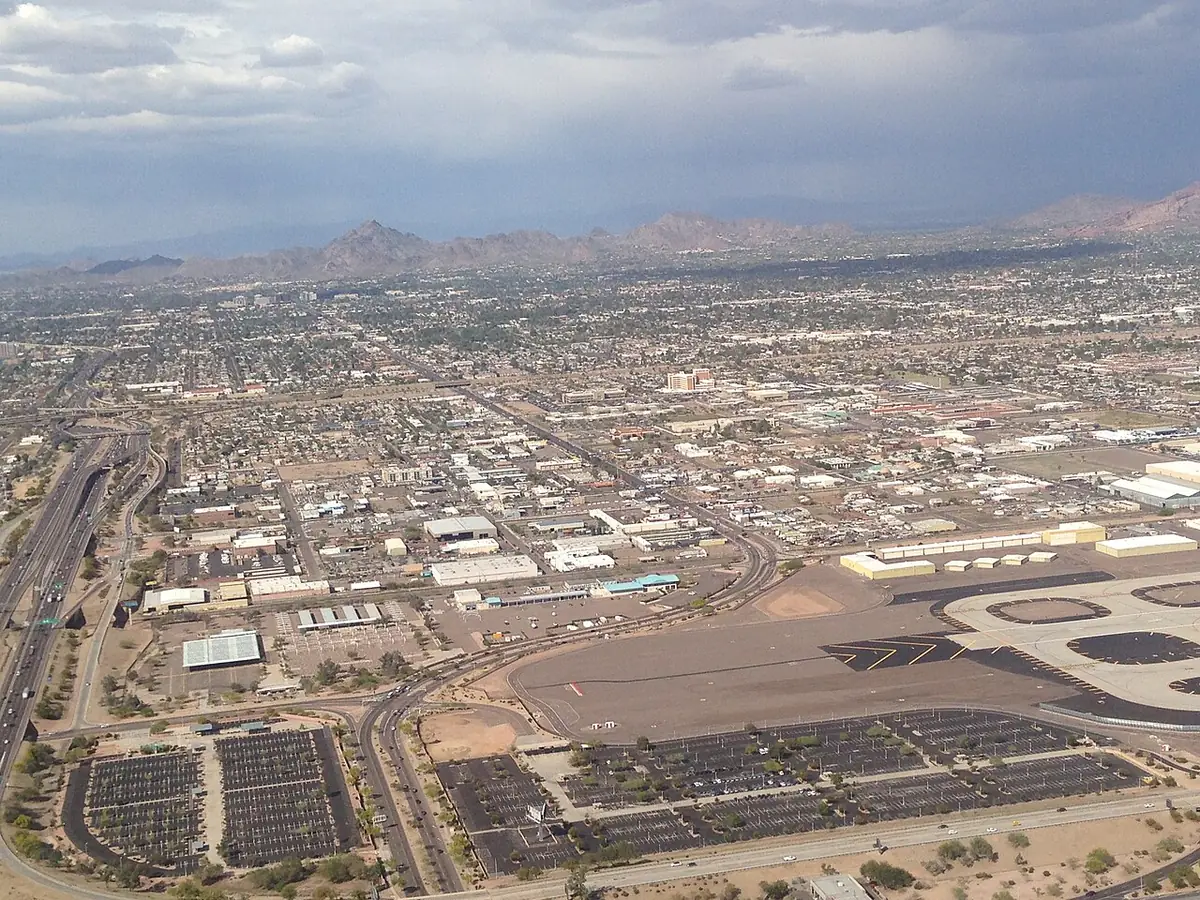
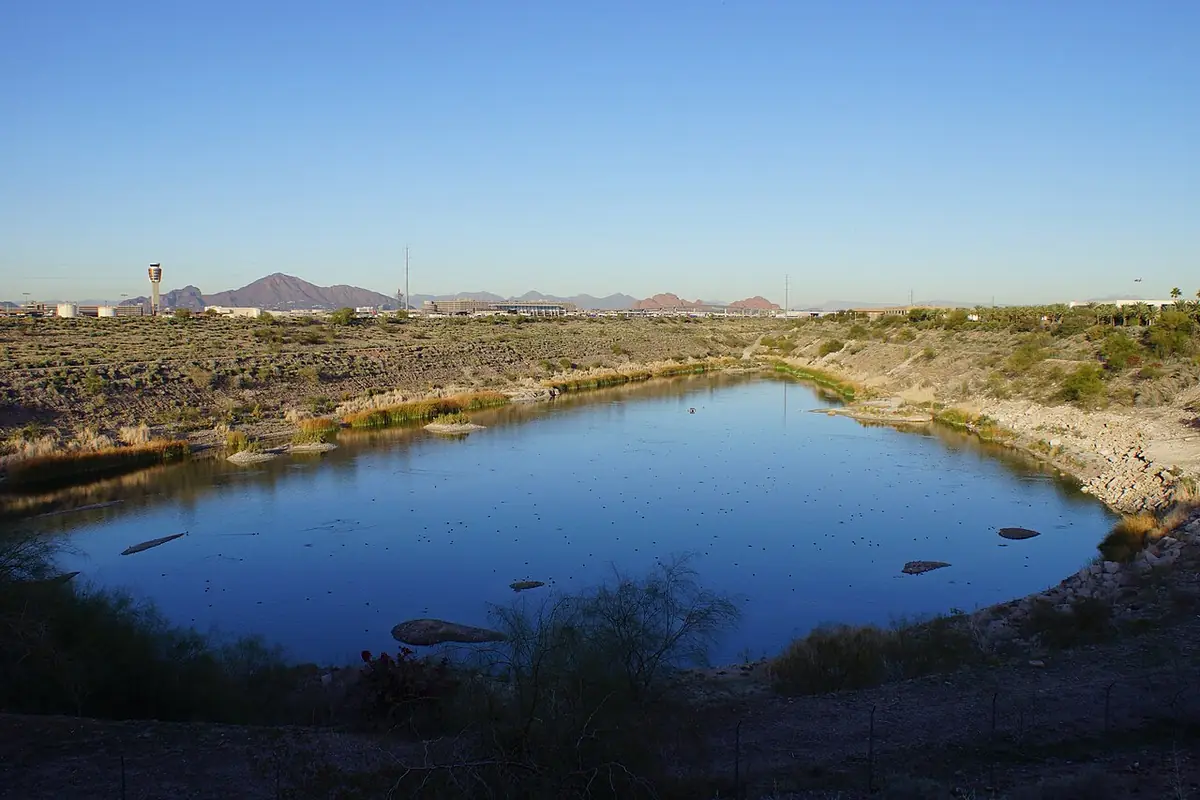
Phoenix spreads wide beneath its desert mountains — Photo: CyberXRef · CC BY-SA 3.0 · Wikimedia Commons
Looking at the different areas of the city helps sharpen these housing choices according to the atmosphere you are after.
The cultural and practical leap between an urban or suburban life abroad and settling in a large metropolis of the American West is considerable. Spatial reference points, the shape of the housing stock and social interaction all rest on different logics. Understanding these structural gaps keeps you out of the trap of hasty comparisons and lets you pick up the right habits quickly, without needless frustration.
From abroad
Dense, walkable city centres organised around local shops you can reach on foot
Phoenix
Sprawling development where a car is the indispensable tool for even the smallest errand
You give up buying fresh bread on impulse round the corner and fold a weekly big box shop into a carefully planned routine.
From abroad
Older homes with character, often terraced or arranged as vertical apartment buildings
Phoenix
Recent single family houses, built to code in timber frame or block with open plan interiors
Sound insulation between neighbours all but disappears, but maintaining the structure and meeting modern energy standards demands specific technical attention.
From abroad
Centralised, formalised dealings with administrations and institutions, all in writing
Phoenix
A system built on local contracts, private providers and homeowners association rules
Disputes and shared facilities are settled through contractual dialogue and strict compliance with the subdivision's own rulebook.
From abroad
A life paced by temperate seasons and traditional breaks in the calendar
Phoenix
A two mode climate where summer means living shut inside the air conditioning and winter invites you outdoors
The social and sporting calendar flips: outings concentrate from October to April, while the summer months feel like a period of climate confinement.
Which area should you target for your purchase, given your priorities?
These choices of location feed directly into the price grid observed on the local property market.
Phoenix covers a vast area made up of districts with strongly defined identities sitting side by side. Choosing a zone depends not only on your budget but on your tolerance for driving time, your appetite for urban life or, conversely, your absolute need for residential quiet. Each pole has its structural advantages and its economic trade offs, and they deserve a clear eyed look before you put an offer together.
Arcadia and the renovated central districts
An active urban feel, close to cultural venues, restaurants and public transport infrastructure.
Suits
Those who refuse to depend entirely on a car for their leisure and want a property with strong central location value.
Trade-off
Noticeably higher prices per m2, smaller lots and an older housing stock that sometimes needs bringing up to standard.
Established residential neighbourhoods in the north
Quiet streets lined with mature trees, well kept neighbourhood parks and strong architectural consistency.
Suits
Families and buyers looking for stability, safety and a carefully landscaped setting for their main home.
Trade-off
A marked distance from the main business centres, which means long daily journeys at peak times.
New subdivisions on the outskirts
Modern, spacious and energy efficient homes set in planned communities with recent amenities.
Suits
Those who want to maximise living area and thermal comfort without facing heavy renovation work in the short term.
Trade-off
A sometimes uniform streetscape, a lack of historic character and total dependence on outlying shopping centres for daily life.
What does buying and owning a property here really cost?
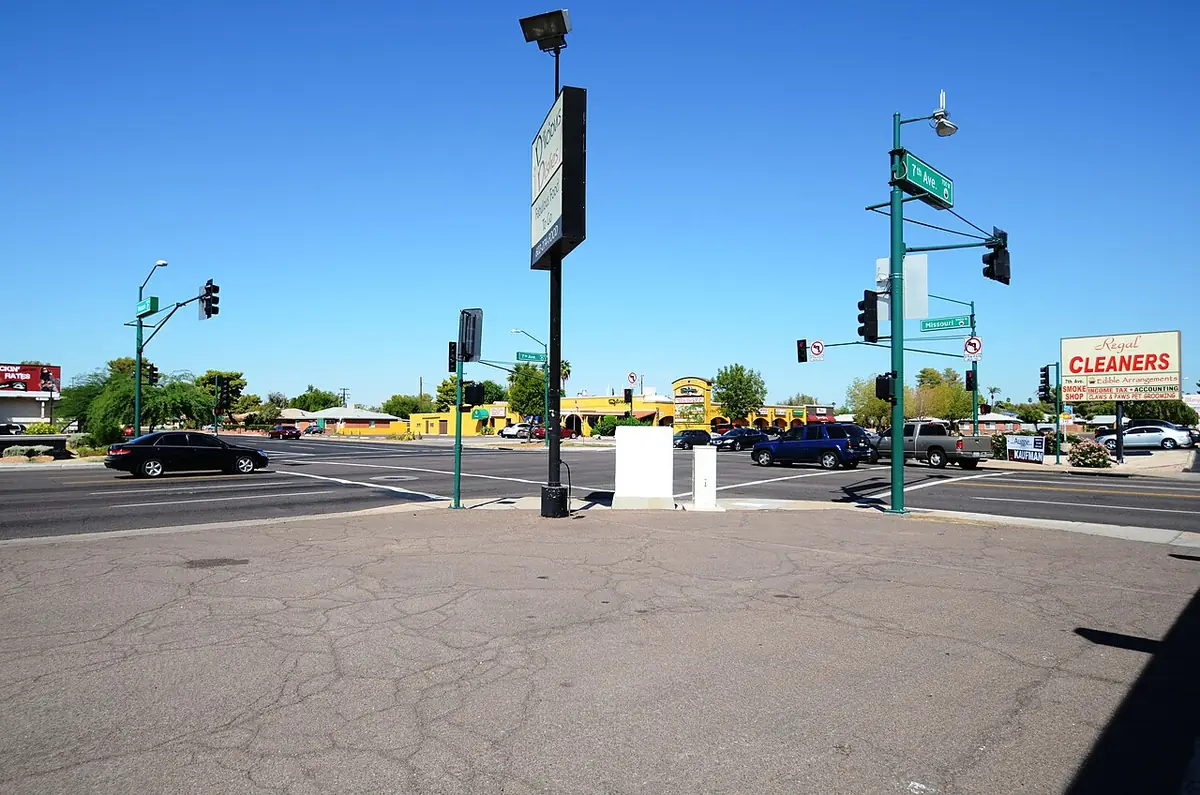
A busy Phoenix intersection on an ordinary day — Photo: Kabugenyo · CC BY-SA 3.0 · Wikimedia Commons
Beyond the headline financial value, the legal nature of ownership itself deserves sustained attention.
Working out the cost of buying in Phoenix should never stop at the headline price written into the purchase contract. Local property taxes, homeowners association dues and the running costs tied to air conditioning and lot maintenance shift the overall financial equation appreciably. Having a clear view of the price ranges by property type lets you set a realistic financing plan and avoid nasty surprises after signing.
phoenixFor saleHouseestimate
Median price / m²US$2,337Half the apartments sell below this
Median priceUS$581kthe average is 14% higher — a few very large properties pull it up
Most common3 bedrooms45 % of listings
Average size236 m²
By number of bedrooms
Bedrooms
Share of market
Avg price
Price / m²
Avg size
2
34 %
US$470k
US$2,558
184 m²
3most common
45 %
US$620k
US$2,362
263 m²
4
20 %
US$794k
US$2,214best value / m²
359 m²
Each row is an average, compared against the area average of US$2,460 / m². These are indicative estimates of a typical local market, not a measured sample of live listings. Check current listings before relying on them.
What you actually own: the land itself set against collective rules
To carry that purchase through properly, the transaction follows a precise legal sequence.
Accepting the rules that frame property ownership in the United States is a precondition for investing with peace of mind. Owning a house in a Phoenix subdivision means sharing the management of common space with private bodies that hold real enforcement powers. Understanding the line between what is entirely up to you and what is subject to collective approval prevents awkward legal and financial conflicts.
Full ownership of the structure and the land
You buy a clear title that includes the building and the lot it stands on, giving you the freedom to lay out the interior and to build extensions within municipal planning codes. That structural autonomy is the heart of the investment and guarantees your freedom of use day to day.
What it changesYou remain, however, responsible for funding every major roof, air conditioning and structural repair yourself, with no public help and nothing shared out.
Being subject to homeowners association (HOA) rules
The great majority of recent houses, and of houses in subdivisions, fall under a local association that sets strict aesthetic standards and manages shared green space, secondary roads and sometimes communal leisure facilities. That private governance keeps the neighbourhood clean and safe and protects the collective value of its properties.
What it changesYou must pay compulsory monthly or annual dues and submit any exterior alteration for prior approval by a committee of residents.
The basic rule to grasp before you put money down on a property
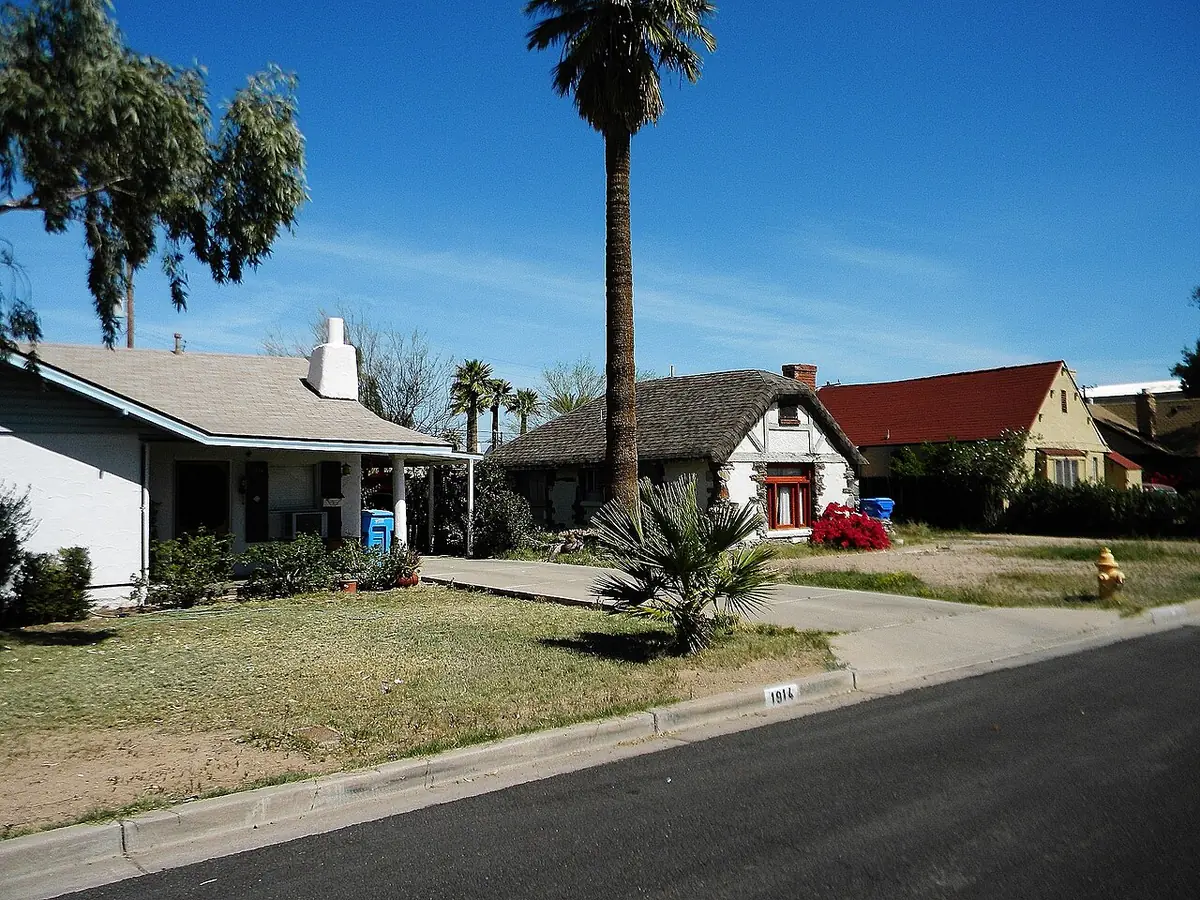
A quiet, historic residential corner of Phoenix — Photo: Kabugenyo · CC BY-SA 3.0 · Wikimedia Commons
The chronology of that procedure brings in several professionals working in coordination.
Buying property in Arizona rests on a rigorous contractual mechanism in which every stage engages the parties financially. A neutral escrow account and specific contingency clauses protect the buyer throughout the verification period. That said, missing a deadline or walking away from the transaction without cause once the contingencies have been released can mean losing the deposit paid at the outset.
Signing the purchase offer accepted by the seller
Paying the earnest money deposit into an escrow account held by an independent title company.
Opening the period for a thorough technical inspection of the building by a certified professional.
Careful review of the community or homeowners association documents and of any easements on the land.
Formal release of the contingencies once the condition of the property is confirmed and the loan is approved.
Signing the deed transferring ownership and handing over the keys
How does a property transaction unfold, step by step?
In conclusion, a successful purchase in Phoenix rests on careful preparation and a clear eyed acceptance of the local rules.
Seeing a purchase through to completion means working with professionals whose roles are strictly defined by local law. The work a public notary handles elsewhere is carried out here by companies that specialise in transferring title and holding the funds. Knowing when each of them steps in gives you full control over your moving timetable.
The buyerSetting the budget and obtaining a mortgage pre-approvalThis preliminary step shows sellers your offer is serious and speeds up negotiation in a competitive market.
The real estate agentShortlisting properties and drafting the contractual purchase offerThey guide neighbourhood viewings, analyse recent comparable sales and negotiate the clauses that protect you in the contract.
The home inspectorCarrying out the full assessment of the structure and its systemsThey go over the roof, the air conditioning, the plumbing and the insulation to identify hidden defects or urgent work.
The title companyConfirming that title is clear and handling the fundsIt makes sure no undisclosed mortgage or easement burdens the property and manages the escrow of the sums committed.
The lenderFinal underwriting of the loan file and release of fundsIt validates the borrower's financial standing and releases the capital on the day the sale officially closes.
The parties togetherClosing the sale and recording the title publiclySigning the final documents completes the transfer of ownership and allows the county land records to be updated.
House or apartment in Phoenix: give in to the single family home with a pool, or opt for a managed condo?
Once that fundamental choice between house and apartment is made, a rigorous look at the financial side and the running costs becomes the absolute priority if you want to avoid disappointment.
Buying property in Phoenix, in the heart of Arizona, means choosing between two radically different ways of living, dictated by local geography and the desert climate. On one side, the detached house, standalone or in a subdivision, embodies the classic American dream: a generous footprint, a private yard and, very often, a pool that is close to essential for getting through the summer months. On the other, the condo appeals through its turnkey formula, in which the upkeep of common areas, the roof and the exterior equipment is delegated entirely to a homeowners association. For a buyer used to dense European style cities, the sprawl of the Valley of the Sun can come as a surprise and completely redefine how the two options compare.
Day to day management proves decisive in that decision. A single family house in Phoenix offers total autonomy but demands constant vigilance, particularly in the face of extreme temperatures that punish outdoor installations, from the central air conditioning to the pool pumps and the tile roof. HOA fees are absent or minimal if you buy outside a managed subdivision, but every unforeseen repair falls to you directly and financially. Choosing an apartment or a condo run by an association, by contrast, means paying monthly dues that are sometimes high and that rise steadily over the years, but that free you from mowing, from maintaining the shared pool and from worrying about security while you are away.
Financially, the single family house has historically held its resale value better and offers greater land appreciation in sought after neighbourhoods such as Arcadia, Central Phoenix and the residential enclaves in the north. The land belongs entirely to the buyer, which allows long term flexibility, whether that means adding rooftop solar panels or creating a shaded outdoor living area (a patio). The apartment, meanwhile, often represents a more accessible financial entry point for a first purchase or a second home, with costs shared out, but its resale depends heavily on the overall financial health of the association and on how its reserve funds are managed by the board or its professional manager.
Finally, daily life settles the choice according to the make up of your household and your tolerance for local constraints. Families with children, and pet owners, overwhelmingly favour the house for the privacy of an enclosed yard and the absence of immediate neighbours sharing a party wall, a real asset for quiet and for working from home. Young professionals, investors targeting seasonal rentals and retirees looking for a low maintenance life gravitate more naturally towards the secure apartment, benefiting from a location that is often closer to activity centres, restaurants and the metro area's main freeways.
What overall budget do you really need to buy and live in a house in Phoenix?
With those budget estimates in place, it helps to picture the concrete rhythm of a typical day to understand how life is organised in these neighbourhoods.
Buying a house in Phoenix comes down to far more than the monthly mortgage payment to your bank. Total cost of ownership takes in local property taxes, home insurance priced for desert climate risk, energy bills that run particularly high in summer and possible association dues. Anticipating all of these lines from the start is essential if you want to secure your investment without strangling your day to day life in the valley.
Estimated purchase costs and recurring charges for a house in Phoenix
Cost item
Observed budget range
Frequency and terms
Median purchase price (single family house)
$420,000 to $550,000
One off initial outlay (mortgage or cash)
Property tax
0.6% to 0.8% of assessed value
Payable annually to Maricopa County
Homeowner insurance
$1,500 to $2,800 per year
Annual premium reflecting storm and heat risk
Electricity bill (summer air conditioning)
$250 to $500 per month
Peaks between June and September
HOA dues (in a managed subdivision)
$50 to $350 per month
Payable monthly for neighbourhood services
The figures shown rest on median averages observed across Maricopa County and can vary appreciably with the year of construction and the living area.
Projected budget for consumables and technical maintenance
Type of service
Estimated cost in dollars
Impact and frequency
Annual air conditioning service (HVAC tune-up)
$150 to $300
Essential technical visit before the hot season
Water and sewer (City of Phoenix)
$70 to $140 per month
Municipal billing including measured outdoor watering
Private pool maintenance (where applicable)
$100 to $180 per month
A professional service or buying chemicals yourself
Preventive pest control (termites and scorpions)
$40 to $80 per month
A maintenance contract is indispensable in the desert
Neglecting preventive air conditioning servicing or local pest control almost always leads to eye watering repair bills.
Health, schools, transport: what does an ordinary Tuesday actually look like in Phoenix?
Classic ranch-style houses line this Phoenix street — Photo: Jon Roanhaus · CC BY-SA 3.0 · Wikimedia Commons
Beyond that well oiled routine, buying property in Phoenix carries a set of hidden subtleties that agents generally omit to mention.
Living in Phoenix means learning the rhythm dictated by the climate and by the sheer size of the metro area. Getting around is done mostly by car along the major freeways (I-10, Loop 101, I-17), while managing the heat means scheduling outdoor activity for the coolest hours of the morning. Here is the precise run of an ordinary day for a resident settled in a residential neighbourhood.
06:30Residential street and outdoor patioThe day starts at first light, the ideal moment to enjoy a still mild temperature on the terrace before the heat builds through the morning.
07:45Boulevards and freeways (Loop 101 and I-10)The morning commute towards the employment centres of Downtown Phoenix or Scottsdale, with heavy but flowing traffic compared with the coastal megacities.
08:30School or neighbourhood campusDropping the children at district public schools or at local private and charter options, known for their modern sports facilities and after school programmes.
12:30Medical centre or local clinic (Banner Health)A routine appointment or a specialist consultation at one of the many ultra modern health hubs spread across the Arizona valley.
17:00Local supermarket (Fry's or Sprouts Farmers Market)End of day shopping in a large air conditioned store for fresh produce, bottled water and the weekly family restock.
19:30Inside the house, checking the air conditioningBack to family calm in a home held at a steady temperature by the central system, with a check on the day's energy use through a connected app.
What the listing will never tell you about buying a house in Phoenix
These administrative and technical blind spots explain why some buyers voice bitter regrets only months after moving in.
Glossy catalogue photographs and sunlit virtual tours reveal only a very superficial slice of the Phoenix property market. Behind the promise of an idyllic setting lie technical, environmental and administrative realities that any serious buyer must take on board before closing with the title company. Here are the crucial points people generally discover far too late.
The critical age of the central air conditioning system (HVAC)
A central air conditioning unit has a life of only 10 to 12 years in Arizona's burning climate. Replacing a failed system outright means an immediate bill of somewhere between $8,000 and $15,000, a major cost too often left out of the initial budget.
The draconian restrictions imposed by homeowners associations (HOA)
Many subdivisions impose fussy rules dictating the exact colour of your exterior paint, banning a work vehicle from the driveway or specifying the exact type of cactus allowed in your landscaping, on pain of steep fines.
Where the water actually comes from, and whether it will keep coming
Water management in the Arizona desert is under growing strain. Buying a house with a large natural lawn brings punitive municipal surcharges and exposes you to watering restrictions the city keeps tightening.
Direct exposure to urban heat islands and the absence of mature trees
Some recent neighbourhoods built on former farmland are painfully short of natural shade. In summer, heat held by the asphalt and metal roofing keeps night time temperatures stifling, which hits comfort directly.
Hidden defects tied to foundations on expansive clay soil
Sharp swings in moisture between the dry season and the monsoon cause ground movement that can crack concrete slabs and drywall, which is why a thorough structural inspection before purchase matters.
The traps and regrets people discover six months after buying a house in Phoenix
Faced with these avoidable disappointments, it is fair to ask whether buying in Phoenix really suits everyone, or whether some profiles should stay away.
Looked likeA splendid azure pool in the middle of a lush tropical garden.
Turned outA monthly money pit in electricity and chemicals, filled with needles from the neighbours' palms and unusable from June to August in the blazing heat.
Would have caught itInsisting on a full technical assessment of the pool, checking that the filtration system works properly and favouring a terrace with shade.
Looked likeA brand new residential neighbourhood, ultra quiet and immaculately kept.
Turned outA permanent building site as further phases of the subdivision go up, generating noise from dawn and monstrous congestion on the access roads.
Would have caught itConsulting the City of Phoenix planning and parcel records to identify future development zones around the lot you are targeting.
Looked likeA reasonable energy bill, as quoted by the selling agent.
Turned outElectricity bills that quadrupled in the first month of extreme heat because of poor insulation and single glazed windows.
Would have caught itAsking the local utility (APS or SRP) for the full twelve month history of electricity bills before making an offer.
Looked likeWide freedom to adapt and personalise the property.
Turned outNo way at all to install solar panels on the front elevation or to park a motorhome, because of the local HOA's fussy rulebook.
Would have caught itGoing through the community's CC&Rs (covenants, conditions, and restrictions) line by line before paying any deposit.
Who really should not buy a house in Phoenix right now?
With those warnings clearly set out, it is time to weigh the pros and cons and reach your final decision calmly.
Broad enthusiasm for the Arizona property market sometimes pushes ill suited buyers into purchases with heavy financial consequences. The climate, the structure of the local job market and the sheer distances involved demand a close fit between the buyer's way of life and the specifics of the Phoenix region. Here are the profiles that would do well to postpone or abandon a purchase in this area.
The investor chasing immediate short term rental yields
→Buying a property to let seasonally without a manager
Saturation in the furnished tourist rental market and rising interest rates cut net margins drastically, turning the venture into a money pit in the low season.
The dedicated lover of cool air, greenery and temperate climates
→Settling permanently in a single family house in the inner ring
Exposure to summer temperatures regularly above 40 degrees Celsius for more than three consecutive months produces a kind of climate isolation and seasonal cabin fever.
The buyer on an extremely tight budget with no emergency savings
→Putting every last saving into the down payment and closing costs
Having no cash available to cover an air conditioning failure or a structural repair exposes the owner to rapid foreclosure if anything goes wrong.
The urban nomad allergic to driving every day
→Buying a suburban house well outside the centre, out in the valley
The sheer sprawl of Phoenix and the chronic thinness of public transport outside downtown make a car completely indispensable for even the smallest trip.
So, are you ready to take the plunge and buy in Phoenix?
At the end of this close look at the Phoenix property market, the decision to buy a house or an apartment in the Valley of the Sun is no longer a matter of falling for a pretty picture but a considered life choice. Phoenix offers a dynamic economy, an undeniable quality of life for those who love open space and a housing stock with modern infrastructure. The harshness of the desert climate, the budget discipline that maintaining the equipment demands and the local regulatory constraints do, however, call for complete clarity from any prospective buyer.
If you have confirmed you can absorb the swings in summer energy bills, taken on board the constraints of homeowners associations and accepted daily car use in a sprawling urban environment, then the investment makes real sense. The Phoenix market rewards patience, rigorous inspections up front and a carefully chosen location. Every dollar invested methodically in this Arizona metro area turns into a solid asset, provided you go into it with your eyes open and the right information in hand.
Related questions
What is the best time of year to buy a house in Phoenix?
The stretch from late autumn to early spring (November to March) generally offers ideal conditions for viewing properties and negotiating, although competition is often sharper then because of the influx of seasonal buyers (snowbirds).
Is joining a homeowners association (HOA) compulsory in Phoenix?
No. It is perfectly possible to buy a house outside a managed subdivision (no-HOA), which frees you from monthly dues and fussy rulebooks but leaves you entirely responsible for the visual harmony and upkeep of your immediate surroundings.
How do property taxes work in Maricopa County?
Property taxes are calculated by the county on the basis of an assessment of the property's market value. The overall effective rate generally sits between 0.6% and 0.8%, which remains comparatively lower than in many other US states.
What should you budget to replace an air conditioning system in Phoenix?
Fully replacing a central air conditioning system (HVAC) sized for a standard house costs between $8,000 and $15,000 including parts and labour, depending on the capacity and the energy efficiency you are after.
Do private pools raise or lower a home's value?
In Phoenix, a well maintained pool is close to essential as a resale asset for family houses, even though it carries running costs that are far from trivial and can put off buyers watching their budget.
Which neighbourhoods are most sought after for buying property in Phoenix?
Areas such as Arcadia, Central Phoenix, the Biltmore area and the residential enclaves in the north of the city concentrate strong demand thanks to their architectural character, the quality of their schools and their proximity to employment centres.
Can you buy in Phoenix as a non-resident or a foreign investor?
Yes. Arizona law fully permits foreign investors to acquire real estate, provided they meet federal and local tax obligations, notably withholding requirements when the property is sold on.
What is the real impact of drought on Phoenix residential property?
Water scarcity is pushing municipalities to restrict the watering of grass lawns and to encourage desert planting (xeriscaping), which adds value to properties whose gardens have already been adapted to that context.
What checks are essential before signing a purchase offer?
A full technical inspection by a certified professional (home inspection) is imperative, covering the roof, the foundations, the plumbing and the air conditioning system tested in hot weather.
How long does a property transaction in Phoenix take on average?
Once the seller has accepted the offer, the full closing process orchestrated by the title company generally takes between 30 and 45 days to complete the legal checks and the financing.
Property review of ting
No ting properties in Phoenix yet
Be the first — share it on ting and it shows up right here.