Moving into a rented house in Phoenix means planning around a market shaped by urban sprawl and a desert climate. This guide walks you through choosing a neighbourhood, reading a lease and keeping control of your total monthly budget. Make the right calls from day one and your move to Arizona will go smoothly.
Get the app
What nobody tells you.
Real prices, hidden costs and the traps to check before you commit.
What renting a house in Phoenix really changes about daily life
Scroll
What renting a house in Phoenix really changes about daily life
Moving into a rented house in Phoenix means planning around a market shaped by urban sprawl and a desert climate. This guide walks you through choosing a neighbourhood, reading a lease and keeping control of your total monthly budget. Make the right calls from day one and your move to Arizona will go smoothly.
Written by the ting.ad editorial team ·
North Central Avenue, Phoenix in Street View: drag to look around.
That shift in heat and in scale changes deeply how each kind of household settles in and organises itself across the Valley of the Sun.
Renting a house in Phoenix, out in the Arizona desert, forces you to rethink your whole relationship with space, climate and getting around. Unlike dense cities where daily life happens on foot, here single-family housing sits inside a spread-out urban plan where the car is not an option but an extension of your living room. Constant air conditioning, water management and architecture built to keep the sun out redefine what domestic comfort means. This is not simply about finding a bigger roof over your head: it is about adopting a rhythm of life dictated by the seasonal swings in temperature. Between the promise of a large lot with a pool and the reality of demanding upkeep under extreme heat, the experience calls for methodical adaptation in the first few months.
The promise of a large living space with a private yard and unlimited parkingvsThe reality of a high energy bill and demanding upkeep outdoors
Generous floor areas mean large volumes to cool for seven months of the year. The cost of running the air conditioning weighs heavily on the monthly budget, well beyond the advertised rent alone.
Settling into a quiet, well-ordered, green residential neighbourhoodvsHaving to use a vehicle for every single purchase or errand
Phoenix is laid out around major arterial roads and gated or semi-open communities. Spontaneous walking is rare outside landscaped parks and the coolest hours of the day.
The freedom to arrange your home and live entirely independently in a single-family housevsStrict compliance with the local homeowners association rules
Even as a tenant, most houses fall under an HOA that sets precise rules on exterior appearance, street parking and the visible upkeep of yards.
Which kind of occupant are you, given what Phoenix demands?
Those personal trade-offs stand out sharply once you set the reference points you arrived with against how American cities are actually built.
Not everyone experiences Phoenix the same way: it depends on whether you work locally, work remotely for an employer overseas, or are looking for a transitional home. The absence of heavy public transport comparable to older, denser cities makes the location of your house a major strategic choice. Every household setup has to plan for distance, schooling where relevant, and coping with the summer heat. Working out how you actually live before you sign will spare you a quick disappointment when you meet the real driving distances and the quirks of the local rental market.
The family rental choice
Families generally favour areas with good school districts and quick access to neighbourhood parks. Renting a house here gives you spacious bedrooms and a secure outdoor space, ideal for children. You will, however, have to factor in driving time for after-school activities and plan for keeping everyone indoors during the hottest months, when the outdoors is barely usable in the middle of the day.
The remote work and flexibility option
Mobile professionals look above all for high-speed connectivity, a dedicated office space and a quiet setting for concentration. Single-family houses offer exactly that calm, away from the noise of apartment buildings. In exchange, you need to watch the quality of the sound and thermal insulation, as well as the lease's early termination terms should your assignment change quickly during the year.
Putting down long-term roots
Settling for the long haul means fitting into local life, understanding how the different neighbourhoods work and building relationships with neighbours. Long-term tenants value the stability of residential leases and the chance to make the place their own. This path does, however, demand full acceptance of the summer climate and real involvement in the local community or neighbourhood.
What changes most when you arrive from abroad to settle here
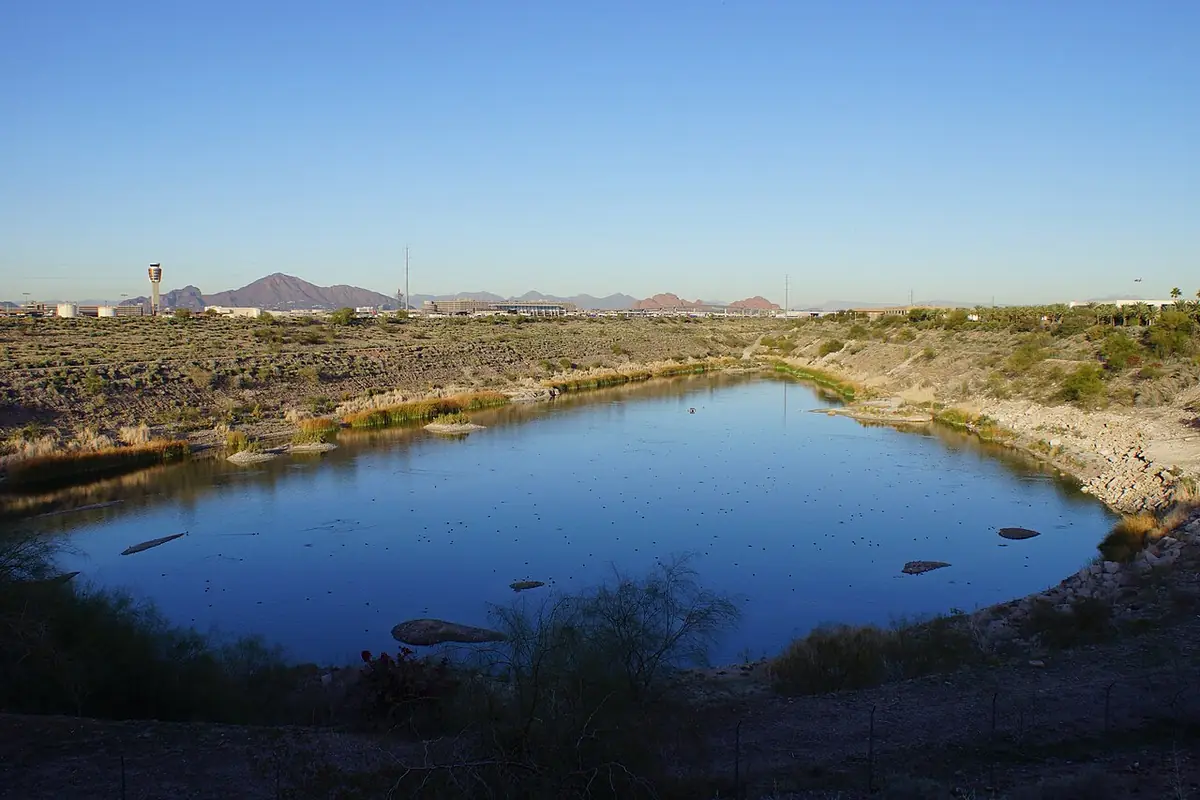
Phoenix spreads wide beneath its desert mountains — Photo: CyberXRef · CC BY-SA 3.0 · Wikimedia Commons
Once those reference points are in place, choosing the right area becomes the central question for a successful move.
The property culture shock is not only about language or distance: it is about building standards and the services attached to a home. In many countries, renting sits inside a highly protective legal framework and an urban setting built around shops within walking distance and public transport. In Phoenix, the detached house dominates, governed by specific lease contracts and local customs that can be disorienting for a newcomer. Understanding those structural differences keeps you from misjudging what you see at a viewing, or what the financial guarantees a landlord asks for really mean.
From abroad
A rental market tightly regulated by national law, with strict notice periods and strong tenant protections
Phoenix
An American contractual framework governed by Arizona state law, built around the specific clauses of the lease and the homeowners association rules
You have to read every line of the lease, especially on repairs you are responsible for and the conditions for getting your security deposit back at the end.
From abroad
Dense city centres where you shop on foot and public services are reachable without a car
Phoenix
An immense sprawl where each neighbourhood has its own open-air shopping centres ringed by vast parking lots
The shape of your daily routine changes: plan on buying or taking a long-term lease on a vehicle as soon as you arrive, or you will be completely stuck.
From abroad
Homes that are often terraced, in vertical apartment blocks or in renovated older buildings
Phoenix
Single-storey or two-storey detached houses, often timber-framed with specific insulation and central air conditioning
Assessing energy consumption becomes a decisive criterion when choosing a home, since how well the air conditioning performs drives your monthly budget directly.
From abroad
Guarantee arrangements based on a personal guarantor or an institutional rent guarantee scheme
Phoenix
A thorough check of your financial history, your local credit score and your gross monthly income by the management agency
Without an established American credit history, landlords frequently require a larger security deposit or several months of rent paid up front.
How do you find your way among the different residential areas of Phoenix?
Those geographic differences translate directly into significant price variation, which is worth analysing methodically.
The Phoenix urban area covers a vast territory with wildly varying atmospheres, from central historic neighbourhoods to the huge recent subdivisions on the edges. Each area has its own rhythm, amenities and neighbourhood profile. Choosing the right location depends as much on where you work, or work from home, as on whether you are after quiet or cultural energy. Here are the main options to structure your search and identify the setting that suits your daily life best.
The historic centre and its immediate surroundings
A lively, tree-lined urban neighbourhood with characterful houses carrying strong architectural detail from earlier decades.
Suits
Anyone who wants museums, good restaurants and accessible cultural life close by, with a minimum of driving.
Trade-off
Houses here are often older, need particular attention on insulation, and sit on smaller lots.
The residential neighbourhoods to the north and north-east
Quiet, rolling areas edged by desert hills, with wide avenues and large secure family subdivisions.
Suits
Families and lovers of wide open space who want calm, security and hiking trails nearby.
Trade-off
The distance from the business district means longer daily commutes at peak hours and noticeably higher rents.
The fast-moving areas to the east and the technology corridor
A modern, constantly evolving setting, marked by recent infrastructure and very well developed local services.
Suits
Working professionals who want economic energy, modern houses and first-rate shared amenities.
Trade-off
An atmosphere that can feel more impersonal, and heavy traffic on the main roads during office hours.
What rent ranges are seen for a house in Phoenix?
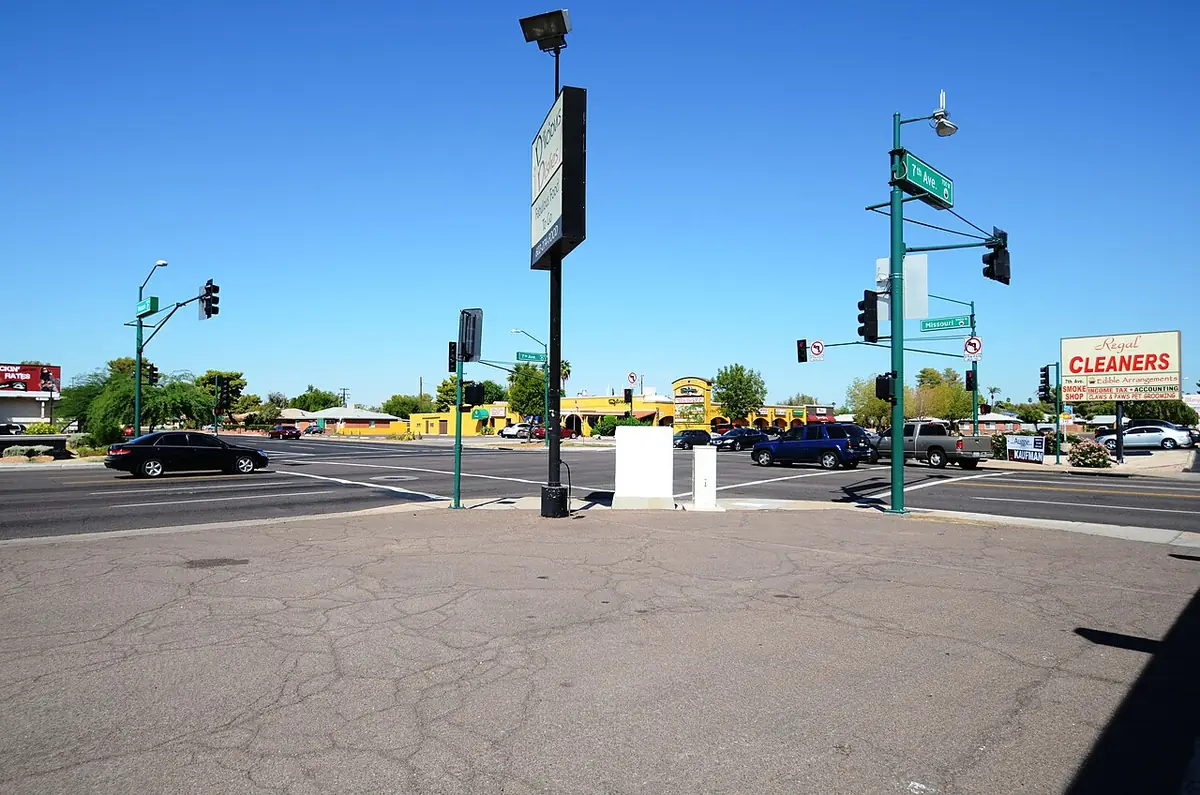
A busy Phoenix intersection on an ordinary day — Photo: Kabugenyo · CC BY-SA 3.0 · Wikimedia Commons
Beyond raw floor area, the exact nature of the property and who handles upkeep define what you temporarily hold as a tenant.
The Phoenix rental market reflects the region's strong appeal and the variety of its housing stock. Prices vary considerably with floor area, the presence of a private pool, the building's energy efficiency and, of course, the exact location. There is no single going rate, but there are clear trends across the different segments of the market. The figures below summarise the current orders of magnitude to help you calibrate your budget without nasty surprises.
phoenixTo rentHouseestimate
Median price / m²US$9Half the apartments sell below this
Median priceUS$2.31kthe average is 14% higher — a few very large properties pull it up
Most common3 bedrooms45 % of listings
Average size236 m²
By number of bedrooms
Bedrooms
Share of market
Avg price
Price / m²
Avg size
2
34 %
US$1.86k
US$10
184 m²
3most common
45 %
US$2.46k
US$9best value / m²
263 m²
4
20 %
US$3.15k
US$9best value / m²
359 m²
Each row is an average, compared against the area average of US$10 / m². These are indicative estimates of a typical local market, not a measured sample of live listings. Check current listings before relying on them.
A house in a managed community or a standalone property: which should you choose?
Once you have settled on the type of property, the contract stage calls for a grasp of the local legal fine print to secure your commitment.
The Phoenix rental market offers two broad kinds of single-family living that answer radically different philosophies. On one side, a house inside a homeowners association, which manages the visual harmony and the shared amenities of the neighbourhood. On the other, a more independent house that gives you greater freedom of use but leaves you alone to manage your immediate surroundings. Understanding that distinction spares you recurring friction with neighbours or with the association's administration.
The house in a managed community (HOA)
This kind of housing guarantees a consistent look, maintained shared spaces, added security and sometimes access to pools or neighbourhood parks reserved for residents. In exchange, you have to comply with strict rules governing exterior appearance, where vehicles are parked and how waste is handled.
What it changesYou get a clean, predictable setting, but you give up part of your independence over how you use your visible outdoor space.
The detached house outside a managed subdivision
This option offers total freedom over how you arrange your lot, where you park recreational vehicles and how you organise your daily life, without a neighbourhood committee scrutinising everything. General upkeep of the street and its immediate surroundings, on the other hand, rests entirely with the city and with your neighbours' good sense.
What it changesYou gain independence and flexibility, but you have to accept a more uneven look along your street.
The golden rule to understand before signing a lease in Arizona
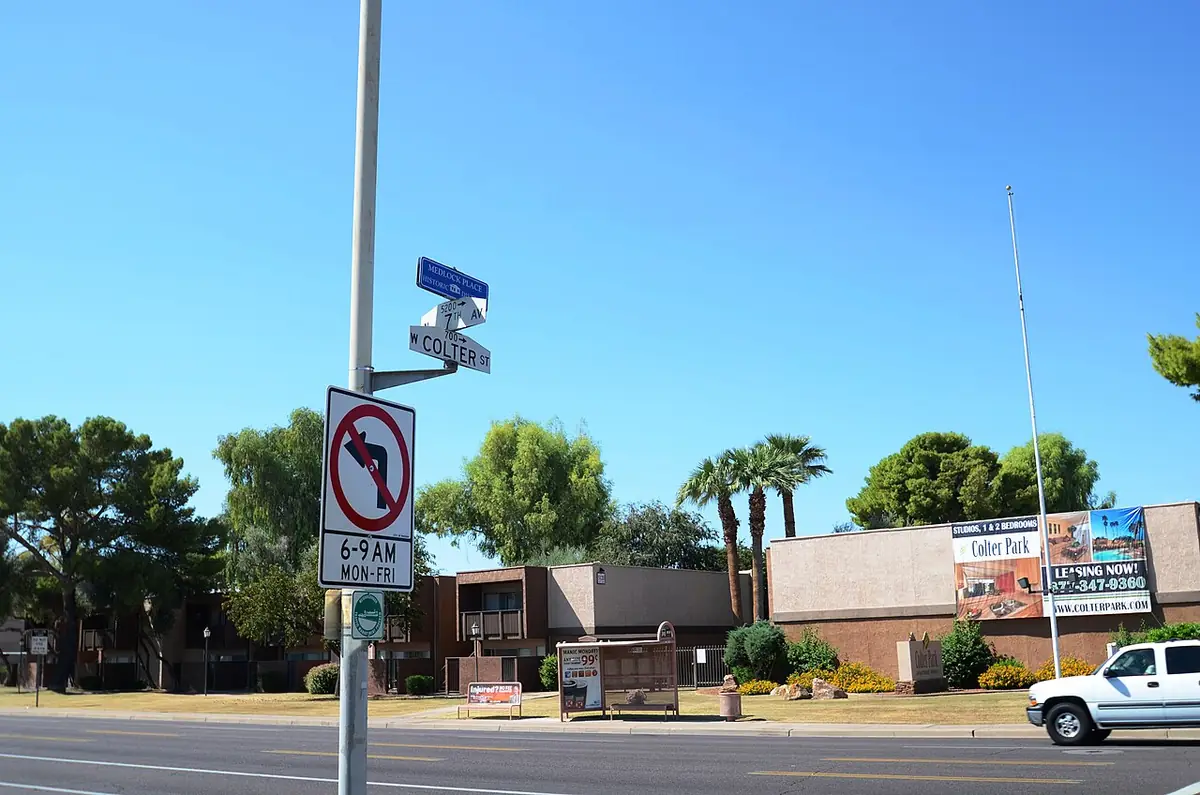
A quiet, historic residential corner of Phoenix — Photo: Kabugenyo · CC BY-SA 3.0 · Wikimedia Commons
That administrative rigour carries straight through into the order in which things happen when you actually move in.
Signing a lease in the United States follows strict federal and local rules that differ appreciably from practice elsewhere. In Arizona the lease is a binding legal document whose early termination clauses or division of maintenance costs can commit you heavily. Anticipating what management agencies want in terms of guarantees and background checks is essential if your application is not to be rejected at the last moment. Here is the logical chain of checks to run so you can approach this stage calmly.
You spot a house that matches your criteria and want to submit a formal rental application.
Assemble your complete financial file, including proof of income, bank statements and references from previous landlords.
Read the lease the manager proposes line by line, paying particular attention to the early exit clauses.
Check which routine repairs the landlord takes on, as opposed to the small everyday fixes left to the tenant.
Pay the security deposit into escrow and sign the contract electronically, following the procedures local agencies use.
You receive the keys to your new home along with a detailed move-in condition report, signed by both sides, that protects your rights when you leave.
How does the rental transaction actually unfold, step by step?
Follow this disciplined method and you turn the demands of an international move into a project you control.
Renting a house in Phoenix successfully means following a disciplined calendar, especially if you are arriving from overseas with no local banking history. From the first contact with the agent through to switching on the utility accounts, every party has a precise role that needs coordinating. This sequence sets out the phases of your move to guarantee a smooth, snag-free transition into your new American home.
The prospective tenantSet the budget and the search criteriaFix your overall financial envelope, including rent, deposit and the likely cost of summer utilities, before you start viewings.
The agent or property managerVirtual or in-person viewing and applicationVisit the shortlisted houses and file your complete application together with the screening fees local agencies normally charge.
The landlordReview of the application and choice of tenantAssessment of your ability to pay, and a check of your credit score or of alternative financial guarantees if you are arriving from overseas.
Both partiesLease signing and payment of the initial fundsConfirmation of the contract terms, payment of the first month's rent and of the security deposit into a secure escrow account.
The tenantOpening the electricity and water accountsTransfer the electricity (essential for the air conditioning), water and internet accounts into your name from the date the lease takes effect.
The inspector or property managerMove-in inspection and handover of the keysA detailed photographic report on the condition of the property before you actually move in, to protect your security deposit.
Renting a detached house in Phoenix, between space and the upkeep it demands
Moving from the theory of single-family living to the hard financial reality means looking closely at the total budget required.
Choosing to rent a detached house in Phoenix means accepting a very particular architectural and climatic reality, shaped by the sheer scale of urban Arizona. Unlike managed apartments with services built in, a house sets its own pace and demands direct involvement in the daily management of space. Tenants quickly discover that the indoor floor area comes with a substantial outdoor volume too, whether that is a gravel courtyard or a genuinely landscaped yard. That configuration changes how you live: total privacy and no immediate neighbours through the wall, which is a considerable luxury for families or for professionals after absolute quiet.
Being rooted in a house of your own, however, comes with responsibilities that go well beyond what a tenant is used to in a dense city elsewhere. Running the central air conditioning, essential for surviving the scorching summers of the Valley of the Sun, becomes a central budget line and a technical concern in its own right. A poorly insulated or badly oriented house turns the electricity bill into a money pit immediately, forcing constant vigilance over how well the equipment performs. On top of that, the outdoor space, even when landscaped with cacti and gravel to limit watering, needs regular attention to keep volunteer plants and local desert pests from taking over.
The relative distance between single-family neighbourhoods and the busiest employment hubs is the other side of this equation. Detached houses are concentrated mostly in sprawling subdivisions, often organised into homeowners associations with strict rules on exterior appearance and parking. Living in those areas means accepting near-exclusive use of the car for every trip, whether for groceries or leisure. Choosing a house in Phoenix is therefore a considered trade-off between the need for private space and the acceptance of a more solitary, logistically demanding daily routine.
What total budget do you really need to live in a house in Phoenix?
Once the financial picture is clear, it helps to picture a typical week and see what daily life really looks like.
Budgeting for a rented house in Phoenix cannot stop at the rent advertised on the property portals. You have to fold in all the running costs that come with living here, in particular the summer energy bill and routine upkeep of the yard. Seasonal swings in utility costs reshape a household's finances from one month to the next. Planning rigorously for those lines avoids unpleasant financial surprises as soon as the first heatwave arrives.
Estimated monthly cost lines for a house in Phoenix
Cost line
Low end
High end
Context
Monthly rent (3 bedrooms)
1,800 USD
2,800 USD
Varies sharply with how close you are to Scottsdale and with the age of the property.
Electricity and air conditioning
150 USD
450 USD
A dramatic peak between June and September because the cooling runs constantly.
Water, sewer and waste
60 USD
120 USD
Handled by the City of Phoenix, covering both consumption and treatment.
Yard and pool upkeep
0 USD
150 USD
Optional, depending on whether the tenant handles it or hires a service.
Amounts are in US dollars and reflect the averages observed on the Phoenix residential rental market.
Additional charges and initial move-in costs
Type of cost
Indicative amount
Frequency
Practical detail
Security deposit
1 to 1.5 months
One-off (move-in)
Capped by Arizona law and refundable at the end of the lease.
Renters insurance
15 USD
35 USD
Monthly, strongly advised to cover your belongings and your liability.
High-speed internet connection
60 USD
90 USD
Monthly, essential given how much remote work happens in the region.
Set aside extra cash for agency application fees and any background check.
What does an ordinary Tuesday look like for a Phoenix resident?
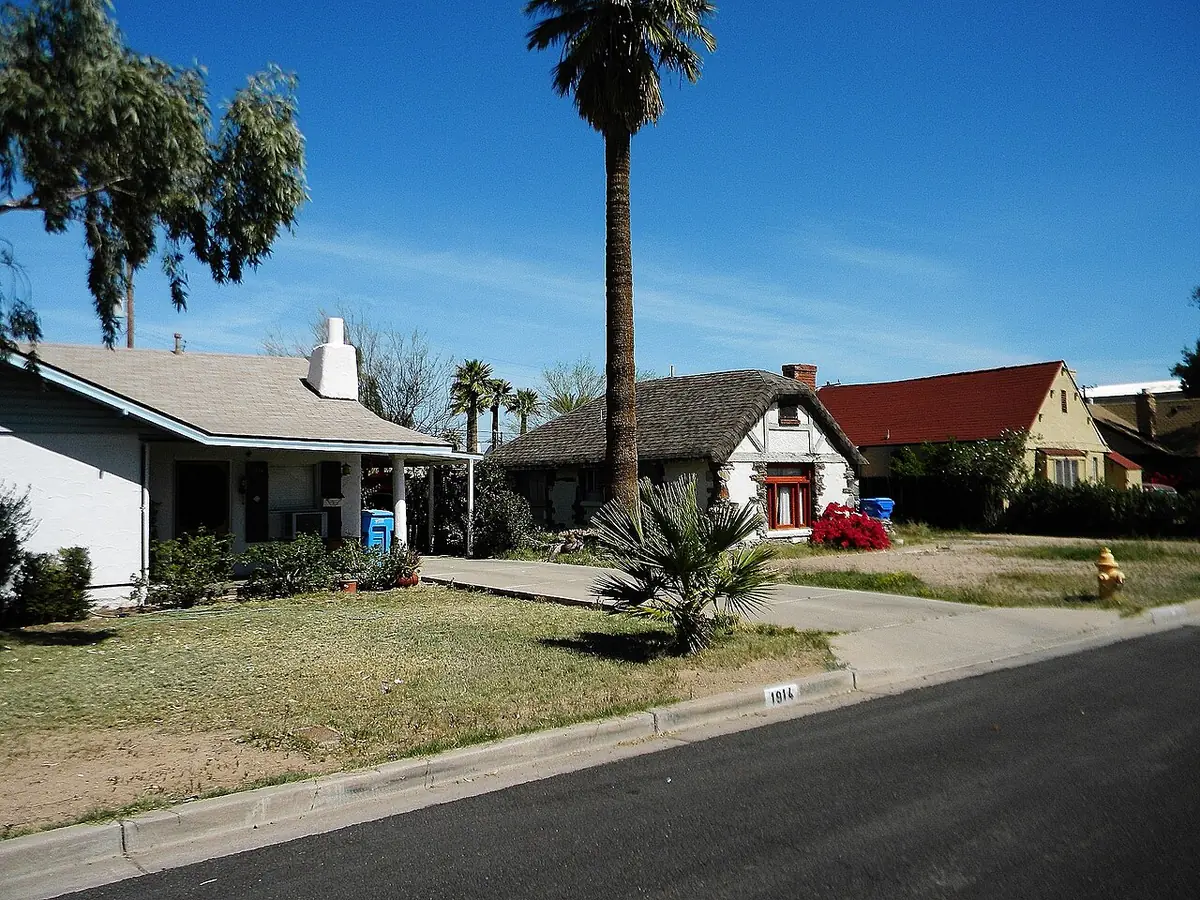
Classic ranch-style houses line this Phoenix street — Photo: Jon Roanhaus · CC BY-SA 3.0 · Wikimedia Commons
Beyond that well-oiled routine, several less visible aspects deserve scrutiny before you sign the lease.
The shape of a weekday in Phoenix is dictated by the climate and by the geographic spread of the metro area. Planning around the heat peaks and the traffic flows changes residents' schedules profoundly, whether they commute to an office or work from home. The rhythm builds around the milder early hours, a long pause in the middle of the day, and a return to activity in the evening. That division of the day is the key to adapting successfully to a desert environment.
06:30Outside the houseThe ideal window for exercise or a quick watering of the plants before the thermometer climbs.
08:30Home office or the drive into townThe working day begins, often in a closed, air-conditioned room to keep consumption down.
12:30Kitchen or a nearby shopThe midday break falls during the hottest hours, limiting any non-essential trips outdoors.
16:00Indoor living spaceChecking the air conditioning filters and handling household admin where it is cool.
18:30The residential neighbourhoodThe temperature drops enough for a trip out to buy groceries or take a short walk.
21:00Inside the homeClosing the shutters and programming the smart home systems to make the most of the night-time cool.
The invisible sides of a Phoenix home that listings leave out
Those hidden aspects lead inevitably to disappointment if you ignore certain warning signs while you are still searching.
Online rental platforms show bright interiors and immaculate outdoor spaces that often mask important structural realities. Between the constraints of homeowners association rules and how the materials really perform under the sun, there is no shortage of surprises. Understanding those blind spots lets you approach a viewing with a critical eye and ask the landlord or agent the right questions. Here are the decisive things people usually find out afterwards.
The strict rules of HOAs (homeowners associations)
Many subdivisions impose fussy rules on the colour of blinds, parking in the driveway or the height of plants, limiting what a tenant is free to do.
The age and real performance of the air conditioning unit
An ageing direct-expansion system uses twice as much electricity and risks failing in the middle of August, which can mean weeks of waiting for a repair.
Which way the main facade faces
A house facing due west takes the full force of the fierce afternoon sun, leaving some rooms overheated and pushing the energy bill up considerably.
The presence of insects and pests specific to the desert
Scorpions, termites and other desert pests in the yard call for regular preventive treatment contracts that the landlord does not always pay for.
The thermal insulation of the attic and the openings
A house thrown up quickly during the 2000s building boom often suffers from thin insulation, turning the walls into radiators.
What newcomers most often regret after six months renting in Phoenix
Given those demands, it matters just as much to identify honestly the people for whom this kind of home is a poor fit.
Looked likeA huge, bright house with large picture windows looking out over the desert.
Turned outA solar oven that has to be kept behind blackout curtains permanently, cancelling the view and pushing the cooling bill up.
Would have caught itAlways check for heat-rejecting double glazing and solar film on every window facing south and west.
Looked likeA peaceful, green residential neighbourhood well away from the bustle of downtown.
Turned outGeographic isolation that means a 40-minute drive for the smallest errand, and fatigue from the daily runs along the freeways.
Would have caught itMeasure the real peak-hour travel times between the house you are considering and the places you work or study.
Looked likeAn attractive rent for a very comfortable amount of living space by the standards you are used to.
Turned outAn astronomical summer electricity bill that swallows the entire saving made on the headline rent.
Would have caught itAsk the landlord or the agency for the last twelve months of electricity bills to see the real consumption in the hottest months.
Looked likeA maintenance-free outdoor space with decorative gravel to avoid the chore of mowing.
Turned outA heat trap that radiates the temperature back and turns the yard into a furnace, unusable half the year, with no natural cool spot at all.
Would have caught itMake sure there are mature trees shading the outdoor living areas, or a properly sized pergola.
Who should absolutely avoid renting a detached house in Phoenix?
It is time to pull these threads together and make a clear-headed decision.
The appeal of space and of the American way of life should not hide how poorly some people fit the residential reality of Phoenix. A detached house demands logistical self-sufficiency and a tolerance for the climate that not everyone has. Recognising those limits before committing to a long lease avoids costly broken contracts and inevitable daily frustration. Here are the situations in which a managed urban apartment makes far more sense.
People committed to walking and to car-free ways of getting around
→An apartment downtown or in a dense neighbourhood such as Downtown or Midtown
The single-family areas of Phoenix badly lack continuous pavements and shops within walking distance, which makes walking every day unpleasant and even dangerous in the sun.
People on a tight budget who cannot cope with variable bills
→A modern managed building with flat-rate charges, or a well-insulated apartment
The unpredictability of summer electricity bills driven by air conditioning endangers rigid budgets that cannot absorb swings of more than 300 dollars a month.
Highly mobile professionals, or anyone with no taste for DIY
→A managed home with a concierge service and maintenance included
Looking after a detached house, watching the equipment, changing filters and dealing with small technical problems takes a personal commitment that does not fit an overloaded schedule.
Newcomers looking for immediate social contact
→A lively apartment building or a mixed urban neighbourhood
Outlying single-family subdivisions often function as closed worlds, where interaction with neighbours is limited and social isolation can set in quickly.
So, are you really ready to move into a house in Phoenix?
Deciding to rent a detached house in Phoenix means accepting an implicit contract with an environment that is demanding but extremely rewarding if you come prepared. Space, freedom over how you organise your home and, once mastered, indoor comfort in the heat add up to an incomparable quality of life. This is not a path that tolerates guesswork, though: every logistical detail, from attic insulation to summer energy bills, weighs heavily on the household's daily balance. It is not simply about finding a roof over your head, but about adopting a way of life rooted deeply in the reality of Arizona.
If you have confirmed that you can handle extreme summer temperatures, that using a car every day will not hold you back, and that you have enough financial headroom to absorb swings in your bills, then the move is worth making. A detached house in Phoenix will give you the haven of quiet and privacy you were after, far from the noise of the big coastal cities. Take the time to view several properties and check the technical points set out above carefully, without letting the look of the online photos blind you.
If, on the other hand, the prospect of maintaining a gravel yard, watching fluctuating electricity bills or living away from the city's activity gives you legitimate pause, walk away without regret. Turn instead to managed developments or urban apartments, which offer a gentler transition and a simpler daily routine. The Phoenix property market is vast and varied; there is certainly a format of home that matches exactly what you want and what you can genuinely tolerate locally.
Related questions
When is the best time of year to rent a house in Phoenix?
The easiest window usually runs from autumn to early spring, when temperatures are mild and the choice of available homes is widest. In summer the market slows down because of the heat, which can sometimes let you negotiate the rent down with landlords who want to fill a house quickly.
Do you really need a car to live in a house in Phoenix?
Yes, almost without exception in single-family residential neighbourhoods. The metro area's sprawl and the lack of continuous pedestrian infrastructure in many subdivisions make walking or using public transport very impractical for everyday life.
How do house leases work in Arizona?
Leases usually run for one year and are renewable. State law sets firm limits on security deposits, which cannot exceed the equivalent of one and a half months' rent, and it spells out precisely what the landlord and the tenant each owe on repairs.
How high are summer electricity bills in Phoenix?
Because air conditioning runs constantly to hold a comfortable 22 to 24 degrees Celsius, electricity bills can easily triple between spring and the peak of summer, often landing between 300 and 500 dollars a month depending on floor area and insulation.
Are pets easily accepted in Phoenix rentals?
Many houses have a fenced yard that suits pets well, but landlords almost always ask for an extra pet deposit plus a monthly surcharge on the rent, known as pet rent. Some homeowners association rules also impose weight or breed restrictions.
What is an HOA and what does it mean for a tenant?
An HOA is a homeowners association that manages shared areas and enforces strict rules on the exterior appearance of houses, street parking and neighbourly conduct. The tenant has to follow those rules or face fines that the landlord passes straight on.
Can you rent a house with a pool in Phoenix without looking after it yourself?
Yes, many landlords write a weekly visit from a professional into the lease or bill it back as a flat monthly charge. Handling the chemical upkeep of a desert pool yourself is strongly discouraged without prior experience, because of algae and rapid evaporation.
Which residential neighbourhoods around Phoenix are most sought after?
Families and working professionals often target areas such as Paradise Valley, North Scottsdale, Arcadia, or the quieter parts of Gilbert and Chandler, for the quality of the schools and the calm of the residential setting.
How do you protect yourself against an air conditioning breakdown in midsummer?
Check the lease carefully for how fast the landlord is required to respond to an air conditioning failure, which counts as a life-threatening emergency in Arizona. Taking out a preventive maintenance contract and making sure the unit is recent are essential precautions.
Which utilities does a tenant have to pay in Arizona?
On top of the rent, the tenant normally pays electricity, water, gas where applicable, and internet and television subscriptions. Property taxes and the main homeowners association dues, by contrast, always remain the landlord's sole responsibility.
Property review of ting
No ting properties in Phoenix yet
Be the first — share it on ting and it shows up right here.