Finding an apartment to rent in Phoenix takes a careful read of the neighbourhoods, the climate and the contract rules specific to Arizona. This practical guide walks you through each step so you can structure your rental search calmly and land the right home without a misstep.
Get the app
What nobody tells you.
Real prices, hidden costs and the traps to check before you commit.
Renting an apartment in Phoenix: the promise of sunshine against the reality of a desert climate
Scroll
Renting an apartment in Phoenix: the promise of sunshine against the reality of a desert climate
Finding an apartment to rent in Phoenix takes a careful read of the neighbourhoods, the climate and the contract rules specific to Arizona. This practical guide walks you through each step so you can structure your rental search calmly and land the right home without a misstep.
Written by the ting.ad editorial team ·
North Central Avenue, Phoenix in Street View: drag to look around.
To pin down the location that suits your profile, you first have to look at how varied the neighbourhoods are and how well each one matches what you want.
Settling in the Valley of the Sun means accepting a stark trade-off between an outdoor lifestyle and an unavoidable adjustment to Arizona's heat. The central and residential neighbourhoods offer modern infrastructure and remarkable accessibility, but they force you to rethink your daily rhythm around summer temperatures. Renting an apartment here is not just a matter of finding a roof under a permanently blue sky: it means joining an urban system where the air conditioning, the insulation of the building and how close you are to the transport corridors decide your real quality of life. Tenants quickly discover that comfort is measured by whether the home can hold a steady temperature without sending the energy bill through the roof, which turns every neighbourhood choice into a strategic call between city energy and residential calm.
Exceptional, near constant sunshine that guarantees incomparable daylight all year round.vsAn intense summer heat that pushes you indoors or into air conditioning for several months in a row.
That duality means rethinking when you go out: mornings and evenings become the only windows suited to outdoor activity, while summer afternoons work like an inverted winter in which you go looking for the cool of an interior.
A modern rental stock, with communities often equipped with pools, gyms and well kept shared spaces.vsCommunity charges and summer electricity bills that weigh heavily on the overall monthly budget.
The shared amenities are an undeniable asset for coping with the heat, but heavy use of them feeds straight into the total cost of renting, which makes a precise estimate of the add-on charges essential before you sign.
A highly functional urban layout designed around the car, with wide arterial roads and parking as standard.vsA near total dependence on a personal vehicle, which complicates getting around for anyone without one.
Although the light rail and bus network keeps expanding, the sprawling shape of the metro area makes a car an essential tool for reaching the job hubs and the retail districts, and it changes how you read distances.
Sustained economic vitality carried by the pull of the Sun Belt and a steady inflow of new workers.vsReal competition for good quality homes in the most sought-after parts of the city.
The demographic momentum of the metro area stimulates supply but also supports prices, which obliges prospective tenants to move fast and to prepare a flawless application in order to land the right apartment.
Which part of Phoenix suits your working and personal situation?
That spread of locations feels even more distinctive when you arrive from a different housing system altogether.
The Phoenix rental market does not speak the same way to a young professional working in the tech hubs, to a family looking for quiet, or to a retiree after a settled pace. Every tenant profile has to weigh mobility needs, floor area requirements and budget together in order to target the right neighbourhood. The city's infrastructure varies considerably between the dense urban core, the leafy residential suburbs and the areas in the middle of gentrifying. Understanding those nuances helps you avoid the classic mistake of choosing a home from photographs alone, without measuring the real commute or the feel of the neighbourhood after dark.
Downtown and Midtown
The central neighbourhoods of Phoenix are the natural pick for tenants who want to do without a car for their leisure time and to enjoy a dense cultural offering. What you find here is mostly modern condominium apartments, converted lofts and new-build schemes set immediately alongside the light rail line. Life runs to the rhythm of the restaurants, cafes and coworking spaces, which makes for a lively daily routine but means accepting urban noise and, for the same rent, floor areas that are often more modest.
Arcadia and North Mountain
These residential areas offer a far greener setting, marked by wide tree-lined avenues, well laid out neighbourhood parks and a reputation for solid schools. The homes available to rent are more spacious, ranging from a high-end family apartment to a townhouse with a small private yard. The trade-off is a longer trip to the historic centre and an absolute need to use the family car for daily journeys, since the street layout here is built first and foremost around driving.
Camelback East and around
Sitting strategically between the job centres of the east valley and downtown, this area appeals to tenants who refuse to choose between working life and calm. The neighbourhood offers gated communities with fine pools and clear views of the surrounding hills. It is the ideal option for anyone with a comfortable budget who wants an optimised commute to the main employment centres of the metro area while living somewhere well kept and secure.
Renting in Arizona when you arrive from abroad: the changes that matter most
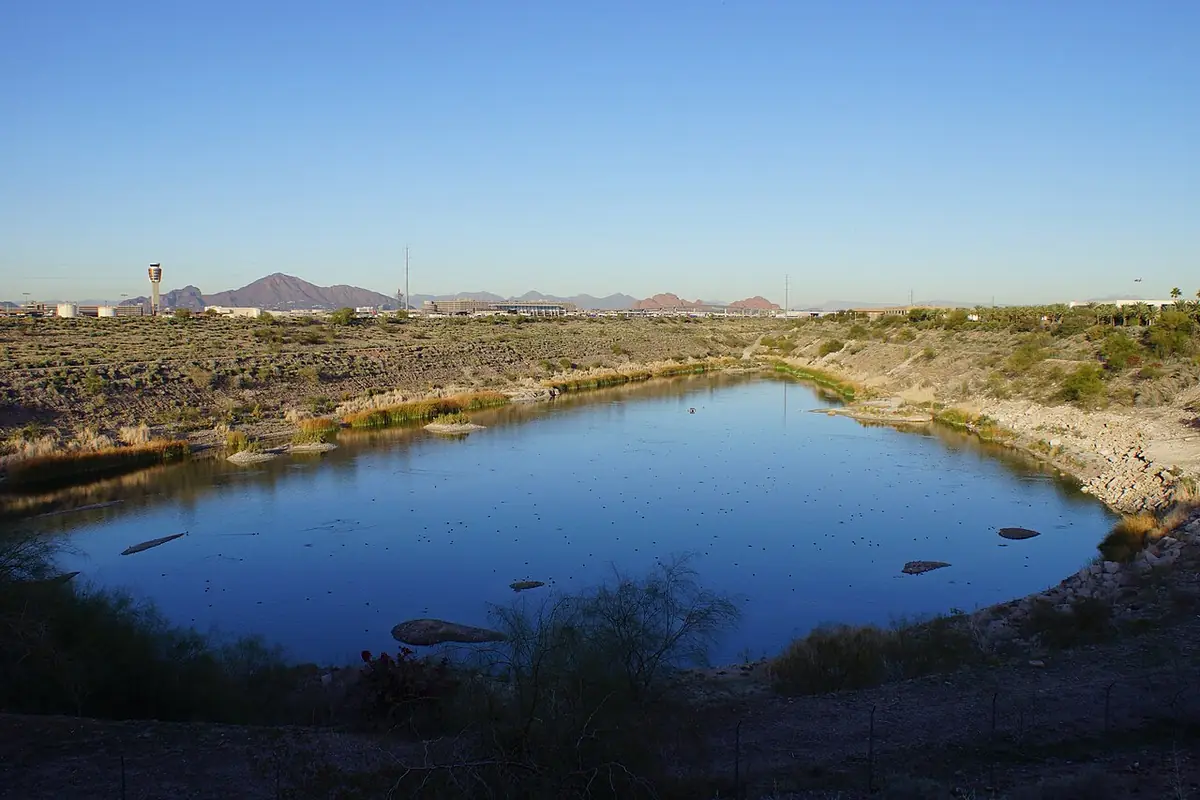
Phoenix spreads wide beneath its desert mountains — Photo: CyberXRef · CC BY-SA 3.0 · Wikimedia Commons
Once those administrative bearings are in place, the next step is to compare the city's various micro-markets in detail.
Moving from a rental market governed by protective but often rigid legislation to the rental system of Arizona takes real learning of the local customs. In the United States, the contractual relationship between landlord and tenant rests on standardised leases that are nonetheless extremely precise about financial obligations and about upkeep of the home. The criteria used to select applicants involve notions of solvency and credit history that differ sharply from the practice in many other countries. Grasping those cultural and administrative gaps from the outset spares you disappointment when you put your rental application together.
From abroad
Tightly regulated rents and very long eviction procedures where payments are missed.
Phoenix
Wide contractual freedom set by the lease, with fast and clearly stated termination clauses.
The tenant has to be absolutely disciplined about the budget and follow the terms of the contract to the letter in order to avoid a unilateral termination.
From abroad
A tradition of personal guarantors, parents or relatives, backing a young professional's application.
Phoenix
A requirement for a US credit history, or an increased and substantial security deposit instead.
New international arrivals should plan for that hurdle by offering solid bank guarantees or proof of income that is beyond question.
From abroad
Homes often let unfurnished, requiring you to buy and install the whole of the furniture.
Phoenix
A large share of communities offering fully equipped kitchens and in-unit laundry.
Settling in is made much easier by the heavy appliances included in the lease as standard, which cuts the cost of moving.
From abroad
Building charges included or handled directly by the managing agent with no tenant involvement.
Phoenix
Real responsibility placed on you for specific equipment such as the air conditioning or a private outdoor space.
The tenant becomes the first line of technical maintenance for the home and has to report or carry out upkeep according to the clauses of the lease.
Comparing residential areas in Phoenix: which neighbourhood strikes the best balance?
Those location choices translate into specific budget realities that are worth examining closely.
The Phoenix metro area sprawls across a vast territory in which every neighbourhood has its own identity, its own level of safety, its own retail life and its own price range. Choosing your apartment depends as much on the shape of the place as on your tolerance for travel time and on how you live. The comparison cards below set out the on-the-ground realities reported by tenants who live there, far from idealised tourist brochures. Working through them lets you narrow straight away to the areas that match your real priorities.
Downtown Phoenix
Urban energy marked by construction sites, students, professionals and a steady cultural buzz right through the week.
Suits
Young professionals, single people and anyone who wants city life on foot and by light rail.
Trade-off
Smaller living space for a high rent, and parking that is sometimes awkward to arrange.
Arcadia / Biltmore
An upmarket residential atmosphere, green and quiet, paced by golf courses and prestige shopping centres.
Suits
Senior executives, established families and anyone looking for a polished, reassuring setting.
Trade-off
A rental budget well above the metro average and a car dependence you simply accept.
North Phoenix / Desert Ridge
Modern suburban planning, characterised by large recent residential complexes, open space and complete quiet.
Suits
Families looking for large apartments, well regarded schools and quick access to the main routes north.
Trade-off
A marked distance from the historic centre and long journeys to reach the south of the metro area at peak times.
Budgeting your rental in Phoenix: a realistic picture of rents and charges
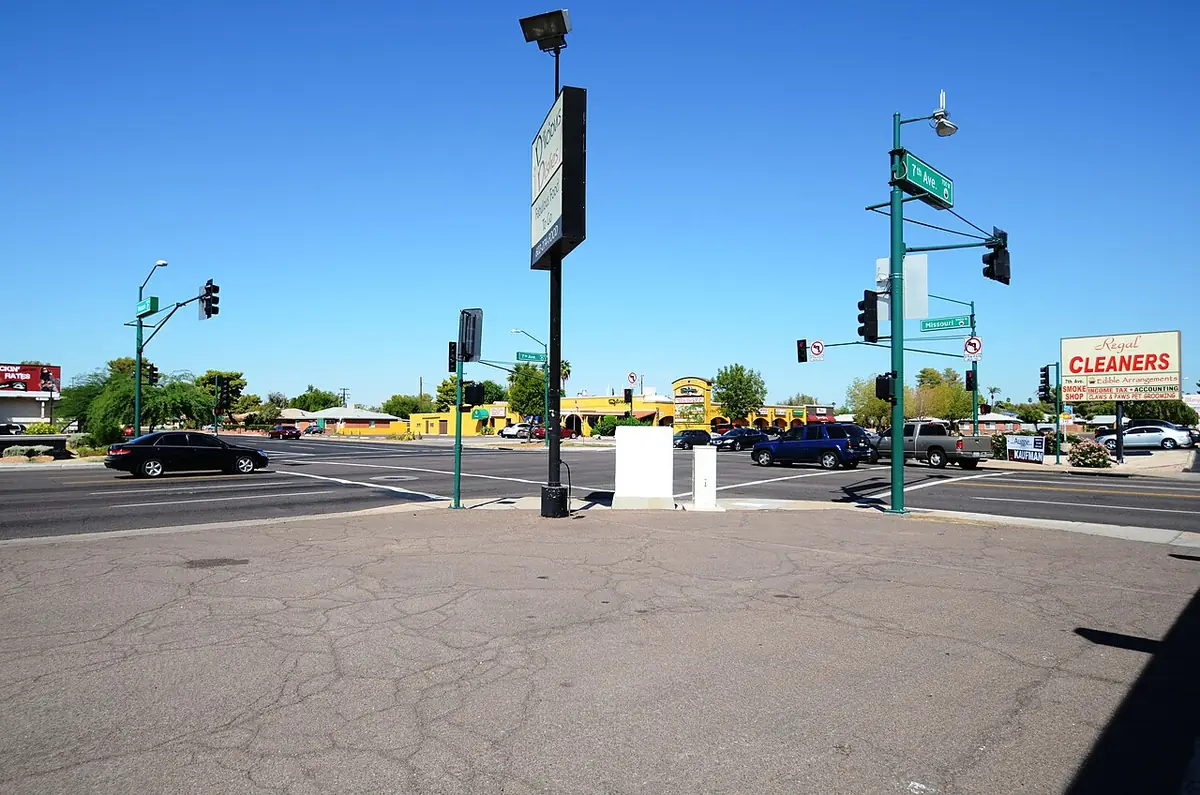
A busy Phoenix intersection on an ordinary day — Photo: Kabugenyo · CC BY-SA 3.0 · Wikimedia Commons
Beyond the purely financial side, the legal nature of the home you occupy deserves particular attention.
The Phoenix rental market has shifted noticeably in recent years, driven by the demographic pull of the region. Setting a working budget does not stop at the headline rent: you have to build in energy costs, summer air conditioning above all, along with application fees and any local taxes. The table below sets out the ranges observed for the most common types of home, reflecting the prices actually being paid rather than a polished version of them.
phoenixTo rentApartmentestimate
Median price / m²US$11Half the apartments sell below this
Median priceUS$1.6kthe average is 14% higher — a few very large properties pull it up
Most common3 bedrooms40 % of listings
Average size135 m²
By number of bedrooms
Bedrooms
Share of market
Avg price
Price / m²
Avg size
1
12 %
US$930
US$14 +17 %
65 m²
2
30 %
US$1.3k
US$12
105 m²
3most common
40 %
US$1.71k
US$11best value / m²
150 m²
4
18 %
US$2.2k
US$11best value / m²
205 m²
Each row is an average, compared against the area average of US$12 / m². These are indicative estimates of a typical local market, not a measured sample of live listings. Check current listings before relying on them.
Managed community or a house let privately: what can you realistically expect to occupy?
How your housing is organised leads straight to the rules that govern the signing of the lease itself.
The Phoenix rental stock divides fundamentally into two models: the large residential complexes run by professional firms, the apartment communities, and the individual or condominium homes let by private landlords. Each of those options shapes the tenant's daily life differently, along with your rights and your maintenance obligations. Understanding the distinction helps you avoid unpleasant surprises around community rules or around how quickly a technical fault gets fixed.
The large residential complexes (apartment communities)
Run by professional managers on site, these developments offer first-rate integrated services: a front desk, security, pools, gyms and coworking space. Signing the lease follows standardised procedures that are quick and transparent, with responsive technical maintenance handled by in-house teams. In return, the community rules are strict about pets, parking and the use of shared areas, and annual rent increases are applied as a matter of course in line with the market.
What it changesYou get turnkey comfort and high quality shared amenities, at the price of a certain standardisation of daily life and firm limits on what you may do in your own home.
Houses and apartments from private landlords
Renting from an individual owner generally offers more flexibility in negotiating the lease, more generous floor areas and more architectural character, particularly in the older neighbourhoods. The personal relationship counts for a lot, but how quickly a technical problem is dealt with depends entirely on the availability of the owner or of the agency they have appointed. The additional charges can be less standardised, and the legal side calls for extra vigilance around the end-of-lease clauses and the return of the security deposit.
What it changesYou gain independence and a space that feels your own, but you have to accept management that may be less institutional and upkeep arrangements that are sometimes more involved.
The golden rule to understand before you pay a deposit on a rental in Phoenix
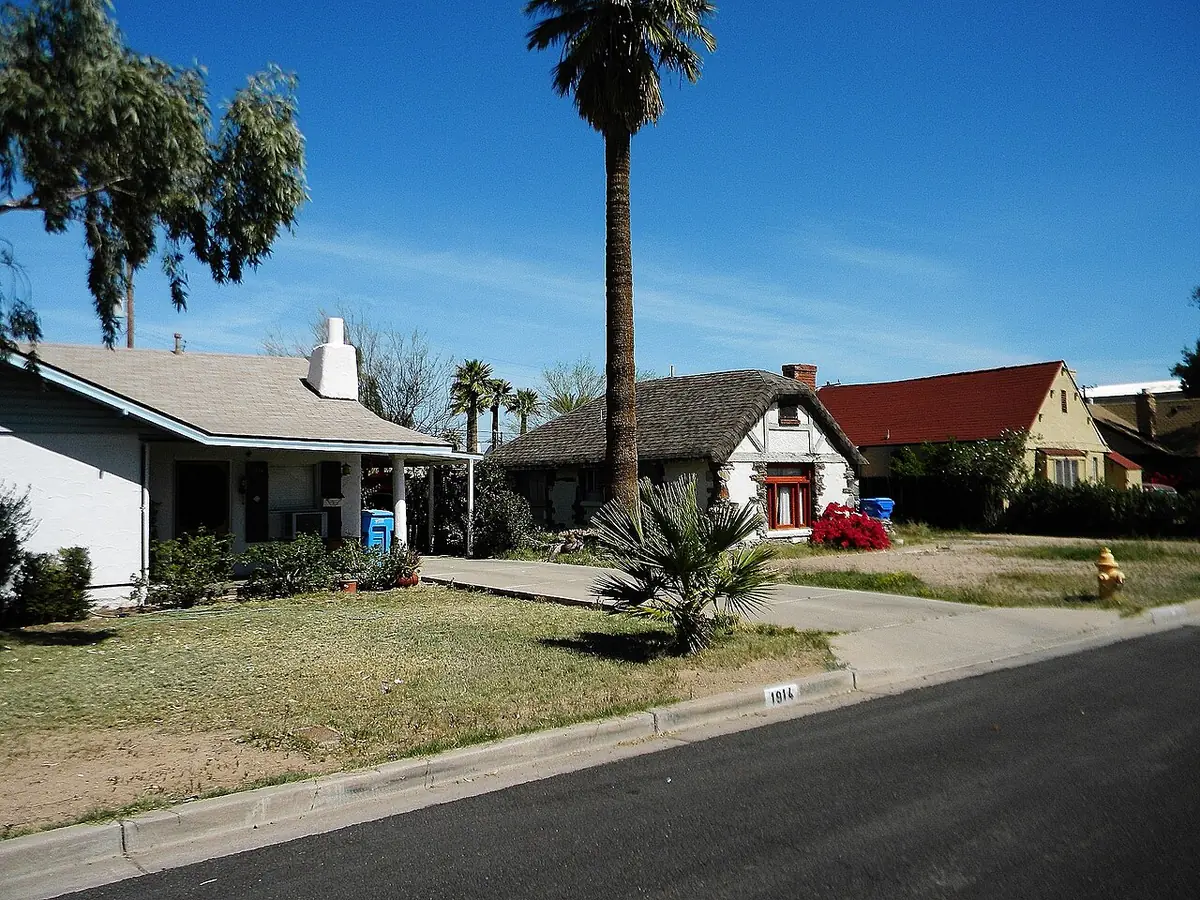
A quiet, historic residential corner of Phoenix — Photo: Kabugenyo · CC BY-SA 3.0 · Wikimedia Commons
Once that step is secure, the practical side of the transaction begins on a well established timetable.
On the American rental market, rushing is the tenant's worst enemy. From the first viewing to the handover of the keys, every stage follows a precise sequence in which sticking to the procedure protects your money. Scams built on fake online listings are a frequent reality in the attractive parts of the Sun Belt, so it is essential to clear every administrative checkpoint before you release a single payment. The chain below sets out the strict order to follow so that your move in carries no risk.
Spotting an online rental listing that matches your price and location criteria in Phoenix.
Insist on viewing the property in person, or failing that a live virtual tour led by an identified and verifiable professional.
Check the registration of the manager or the owner against the official registers of the state of Arizona.
Read the lease agreement closely and identify in particular the clauses on early termination and on pets.
Put together a complete financial file including proof of income, bank statements and references from previous tenancies.
Paying the funds into a secure escrow account and signing the lease electronically before any keys change hands.
How a rental actually comes together in Phoenix, step by step
Getting your rental set up in Phoenix means coordinating several key parties: the property manager, the utility companies, the administrative services and yourself. Structuring that path guarantees a smooth transition between your country of origin and your new home in Arizona. Following the sequence carefully prevents any gap in essential services on your first day in the property.
The prospective tenantAssembling and submitting the applicationGathering all the proof of income, identity documents and financial evidence required by the local agencies.
The landlord or the agencyReview and background checksAssessment of the application, a credit check and verification of the applicant's employment and rental references.
The property managerDrawing up and signing the leasePreparation of the standard rental contract including all the clauses required under the law of the state of Arizona, then electronic signature.
The tenantPaying the initial fundsPayment of the first month's rent and the security deposit by secure transfer or certified cheque.
The utility companiesOpening the service accountsActivating the electricity meters (Salt River Project or Arizona Public Service in particular) and the water service before you move in.
The tenant, at the condition reportMove-in inspectionCompleting the detailed condition report together, with photographs of every room, to record the state of the home at the start.
Apartment or a house of your own: which really makes sense to rent in Phoenix?
When you settle in Phoenix for the long term, the choice between renting an apartment in a managed community and renting a house in a residential suburb is not simply a matter of taste or of immediate comfort. It is above all a structural trade-off between actively handling day-to-day maintenance and joining a community with pooled services. Condominium buildings and horizontal schemes offer a setting in which the upkeep of the outdoor areas, the roof and shared equipment such as the pools is entirely delegated to a homeowners association, which frees up valuable time for working people. In return, that way of living imposes strict rules on what you may change, monthly charges that can be high, and a closeness to neighbours you have to be comfortable with.
Renting a house with a yard in Phoenix, by contrast, gives you far more freedom over how you use the space, no immediate neighbours on the other side of a wall, and room that is easier to plan a family life around. That freedom carries a significant hidden cost, however, both financial and in energy. Cooling large volumes, keeping the outdoor areas in order under an arid and demanding climate, and dealing with the unexpected on the fabric of the building all land, in a house let privately, largely on the occupant and on how the lease divides those duties. So the question is not which home is intrinsically better, but exactly how much logistical and financial burden you are willing to carry day to day in this region.
The central neighbourhoods of Phoenix are strongly weighted towards modern purpose-built schemes, suited to young professionals and to anyone who wants to be close to the job hubs and the transport corridors. Families looking for quiet and private outdoor space naturally turn to the outer rings, where the individual house remains the dominant form. That geographic balance draws two distinct rental markets, with very different dynamics in how quickly a home is snapped up and how much room there is to negotiate, and it is worth reading before you commit to any lease.
Finally, the climate plays a decisive part in this trade-off. A well insulated apartment in a recent building often holds its temperature better than a detached house standing in full sun, which mechanically reduces the summer energy bills. A house, on the other hand, generally comes with more scope to manage shade and airflow to suit exactly how you live. Your final decision therefore has to take in these technical parameters, invisible in the marketing brochures but formidable for your budget over the medium term.
What overall budget do you really need in order to live comfortably in Phoenix?
Setting a working budget for renting and for everyday life in Phoenix cannot stop at the monthly rent. You have to build in the unavoidable spending tied to the local climate, to the specific taxes of the state of Arizona and to the community or maintenance charges. The tables below break down the monthly and annual costs observed for a standard household living in the metro area, so that nothing catches you out after the lease is signed. The move-in figures in the second table are drawn from the average rents by unit size set out earlier in this guide, since the source costs on this page were framed around buying rather than renting.
Monthly outgoings for a household in Phoenix
Budget line
Estimated range
What drives it
Electricity and air conditioning
$150 - $350
Wide seasonal swing caused by the summer heat peaks, which call for air conditioning around the clock.
Community and amenity charges (HOA)
$200 - $500
Covers upkeep of the shared areas, security and sometimes water or shared cooling.
Renters insurance
$80 - $150
Varies with the value of what you are covering and with any specific cover added against storms.
Internet and telecoms
$70 - $120
Broadband service is essential given how widespread remote working is in the region.
The amounts shown are observed averages and can vary with the exact floor area and the year the building was completed.
Move-in funds and recurring annual costs for a tenant
Cost
Average amount
Effect on the overall budget
Move-in funds (first month's rent, plus the security deposit)
$930 - $2,200
Set by the average rent for your unit size, from a one-bedroom to a four-bedroom, and payable in full before the keys change hands.
Preventive air conditioning servicing
$200 - $400
A technical visit before summer, where the lease puts that upkeep on you, to avoid a major breakdown in the middle of a heatwave.
Car insurance (2 vehicles)
$1,800 - $2,500
Unavoidable given how spread out the metro area is and how much driving that requires.
Local taxation remains moderate compared with other US metro areas, but property tax rises steadily and feeds through into the rents that are set.
What does an ordinary Tuesday actually look like, between health services, schools and transport in Phoenix?
Classic ranch-style houses line this Phoenix street — Photo: Jon Roanhaus · CC BY-SA 3.0 · Wikimedia Commons
To judge whether a location in Phoenix works for you, nothing beats walking through a typical weekday hour by hour. Between the morning run along the main roads, access to the schools and how close the medical facilities are, each hour reveals where the area you are considering flows and where it snags. That picture in time lets you anticipate your journeys and the logistics of running your household.
07:30Leaving home and the school runTraffic builds quickly on the main routes linking the residential areas to the schools. Setting off fifteen minutes early is generally enough to miss the worst of the congestion.
08:45Arriving at work or at a coworking spaceMost employment centres have large parking areas, but access to light rail remains a real asset for residents of the neighbourhoods it serves.
12:30Lunch and everyday amenitiesThe business districts include places to eat and shops for daily essentials within walking distance, which removes the need to take the car in the middle of the day.
17:30Food shopping and health servicesNeighbourhood supermarkets and medical practices keep long opening hours, so the practical side of daily life can be handled at the end of the day without undue stress.
19:00Back home and looking after the propertyThe evening goes to unwinding and to checking the systems in the home, the air conditioning and the air filtration above all, which are essential in this environment.
21:00Residential calm and the end of the dayThe neighbourhoods of Phoenix are remarkably quiet in the evening, which makes for good rest well away from the noise of the main freeways.
What the listings and the viewing sheets deliberately leave out
Behind professional photography and flattering marketing copy, the Phoenix rental market carries technical and environmental realities that are often left unsaid. Understanding those invisible elements lets you approach a lease clear-eyed and avoid costly disappointment a few months after you move in. Here are the four critical points to examine before you make any offer on a home.
The real age and energy efficiency of the central air conditioning system
An ageing or badly sized compressor means an exorbitant electricity bill in summer and the risk of an outright breakdown, where an immediate replacement can run to several thousand dollars. Insist on seeing a recent servicing certificate.
The strict restrictions and community rules of the homeowners associations (HOA)
Many communities impose severe rules on the colour of the facades, the type of vehicle parked in the driveway or on listing the home on short-term rental platforms. Those constraints can drastically limit how freely you use the place.
The heat that direct sun puts into west-facing elevations
A home whose main living rooms face west takes on intense heat through the whole afternoon, which makes the space hard to live in without running the air conditioning constantly and fitting suitable blinds.
Planned urban development and road widening schemes nearby
A quiet plot today can find itself alongside a widened road within three years. Checking the City of Phoenix planning documents is an essential step before you tie yourself to an address.
The classic traps you only discover after six months of living there
Looked likeAn excellent deal on rent in an area in the middle of urban renewal
Turned outA district where poor sound insulation and overstretched schools make daily life hard going for a household with children.
Would have caught itVisiting the neighbourhood at different times, in the evening and at the weekend in particular, and asking current residents directly about noise.
Looked likeA large landscaped yard with green lawn and exotic planting
Turned outA money pit in water use and exhausting upkeep under a punishing sun, needing attention every week.
Would have caught itFavouring desert landscaping, which uses little water and is perfectly suited to the local climate, and checking who the lease makes responsible for it.
Looked likeAn ultra-modern open-plan kitchen with no partitions and large picture windows
Turned outA serious thermal weak point, letting direct solar heat in and pushing the summer energy bill up considerably.
Would have caught itChecking for high performance double glazing and the exact orientation of the openings relative to the path of the sun.
Looked likeAn unassigned outdoor parking space said to be always free
Turned outA permanent source of friction with the neighbours and no way at all to park calmly once the evening comes.
Would have caught itInsisting on an enclosed or covered private space, named explicitly in the lease for the apartment.
Unusual profiles: who should think twice before renting in Phoenix?
Renting in Phoenix follows economic and climatic logics that do not suit every profile. Recognising that a plan does not work in this territory saves you a straight financial loss from breaking a lease early. The situations below describe the profiles for whom it is better to hold off or to look at another form of housing altogether.
Someone treating a short stay as a way to test the market cheaply
→Hold off on signing a full lease for now
Application fees, the deposit and the cost of setting up utilities cancel out the saving over anything shorter than a standard lease term. Renting in Phoenix rewards a settled plan rather than a brief experiment.
The international remote worker on strictly offset working hours
→Look at ultra-central buildings or another metro area
A way of life largely built around the car, and the physical distance from the major international hubs, produce a sense of geographic isolation that is hard to live with day to day.
The tenant with no patience for the rules of a managed community
→Avoid the recent purpose-built complexes
Homeowners associations (HOA) are present in most of the residential developments in Phoenix and impose constant oversight of aesthetic and behavioural choices, which weighs heavily on individual freedom.
Taking stock: are you really ready to sign a lease in Phoenix?
Reaching the end of this analysis shows that your rental search in Phoenix goes well beyond falling for a set of photographs. You now have what you need to measure the real effect of the arid climate on your energy budget, to anticipate the invisible charges attached to managed communities, and to accept the logistics of life in a spread out metro area. The decision no longer rests on marketing assumptions but on financial and practical trade-offs you have thought through.
If your finances carry enough of a safety margin to absorb swings in running costs, and if you expect to stay put for more than a single lease term, the Phoenix rental market offers solid options and a particularly lively setting. If, on the other hand, there is any doubt about your job stability, or if the local climate would be an insurmountable strain on your daily balance, it may be wiser to start with a shorter commitment and test the ground without risk.
Take the time to view several homes with an independent professional, check every line of the community rules and ask for recent energy records before you sign anything. Your move to Phoenix will go well if it is the product of careful preparation and of complete clarity about the realities on the ground.
Related questions
How does property tax affect what you pay to rent an apartment in Phoenix?
Property tax generally runs between 0.6% and 0.8% of the value assessed by the local tax authorities. That rate is moderate compared with other US states, but it is reassessed regularly in line with the metropolitan property market. It is levied on the owner rather than the tenant, so it reaches you only through the rent that is set.
Do tenants in Phoenix have to follow homeowners association (HOA) rules?
The large majority of recent developments, whether condominium apartments or houses on a planned subdivision, come with mandatory HOA membership. That body maintains the shared spaces and enforces the community rules, and those rules apply to you as an occupant just as they apply to the owner.
How is the cost of air conditioning calculated over the summer months?
The energy cost is driven directly by the floor area of the home, how it faces the sun and how well it is insulated. For a standard apartment, the monthly electricity bill can easily double or triple between the mild months and the peak of the summer heat.
Which neighbourhoods are most sought after for a first rental?
Central areas such as Downtown and Midtown are the first choice for working people who want to be close to light rail and to the job hubs. The outer residential rings appeal more to families looking for quiet and for private outdoor space.
Should you budget separately for air conditioning servicing?
An annual preventive maintenance contract with a qualified technician is strongly advised wherever your lease puts that upkeep on you. It heads off major breakdowns during a heatwave and significantly extends the life of the equipment.
How long does it take to go from a search to the keys in this area?
The full process, from the start of your search through screening, lease signing and the handover of the keys, generally takes between thirty and forty-five days, subject to the technical checks on the home and to your credit and reference file clearing.
Is a car essential in order to live and work in Phoenix?
Although the light rail network serves some central corridors efficiently, the very spread out geography of the metro area makes a personal vehicle close to essential for daily journeys outside those corridors.
Is there any public help with housing costs?
Several housing support programmes are offered by local and federal authorities. They are aimed primarily at first-time buyers, subject to income limits and purchase price caps, so a tenant planning to buy later is the one most likely to benefit from them.
How will rents in the area hold up over the long term?
The steady demographic pull of the Phoenix region supports housing demand overall, but how easily a given home re-lets depends above all on its precise location, on the quality of the HOA's management and on its energy efficiency.
What checks should you insist on before signing the lease?
Beyond a full look at the structure of the building and the roof, it is essential to check for hidden defects in the plumbing and the air conditioning, along with the condition of the connections to the city's networks.
Property review of ting
No ting properties in Phoenix yet
Be the first — share it on ting and it shows up right here.