Investing in an apartment in Adelaide means understanding the dynamics particular to this regional Australian capital. Between choosing the neighbourhood, facing the reality of strata fees and getting to grips with local procedures, this guide gives you what you need to carry out your plan with your eyes open.
Get the app
What nobody tells you.
Real prices, hidden costs and the traps to check before you commit.
What buying an apartment in Adelaide says about the way you want to live in the city
Scroll
What buying an apartment in Adelaide says about the way you want to live in the city
Investing in an apartment in Adelaide means understanding the dynamics particular to this regional Australian capital. Between choosing the neighbourhood, facing the reality of strata fees and getting to grips with local procedures, this guide gives you what you need to carry out your plan with your eyes open.
Written by the ting.ad editorial team ·
Adelaide in Street View: drag to look around.
To grasp those nuances fully, you need to look at how your own profile fits the local geography.
Investing in an apartment in Adelaide is not just about acquiring square metres in a regional Australian capital. It is a choice for a city on a human scale, where density does not smother daily life. Between the city centre ringed by parkland and the neighbourhoods in transition, each area offers a different reading of property value. Understanding that fundamental trade-off avoids disappointment after the purchase and lets you adjust your expectations on returns and on quality of life.
The promise of everything close at handvsThe reality of a market with limited volumes
Buying near the centre gives you a remarkably walkable life for an Australian city, but the supply of quality properties remains structurally thin, which supports resale prices.
The appeal of new buildsvsManaging strata fees
Recent developments come with modern energy features and attractive shared spaces, but the strata management fees weigh on the cost of ownership for the long term.
The charm of heritage buildingsvsThe constraints of renovation and upkeep
Architectural character often comes at the price of strict heritage conservation requirements and more complex technical work on older structures.
What kind of buyer are you in the Adelaide property market?
Saint Ignatius Church and its twin towers in Norwood — Photo: Ashton 29 · CC BY-SA 4.0 · Wikimedia Commons
That personal positioning takes on a whole new dimension once you measure the cultural and technical gap with the practices you know from elsewhere.
Adelaide's residential market answers very different ways of life depending on whether you are arriving to work in the medical or university sectors or looking for a peaceful long-term base. Each situation calls for clear trade-offs on location, type of property and tolerance for urban noise. A successful property plan starts by clearly identifying how you will really use the home over the next five years.
The urban, connected option
You put being close to your workplace, the tram lines and cultural venues first. You accept compromises on living space in exchange for a considerable daily time saving. Apartments in the north-east quarter or around Hindmarsh Square match that search for efficiency perfectly, while ensuring excellent rental liquidity should your plans change.
The calm, residential option
You are looking for a secure, easy-to-maintain base that lets you enjoy the parks and amenities without the burden of a large block of land. Your attention naturally turns to the neighbourhoods bordering the inner city or to well-served coastal areas. Good sound insulation and a lift become non-negotiable criteria here for day-to-day comfort.
The rental and long-term wealth option
You target properties able to attract a stable working population, whether young professionals or university staff and students. Your analysis focuses on the ratio between purchase price, strata fees and real rental demand in the area. Being close to the campuses and the major hospitals is a valuable buffer against swings in the South Australian property market.
Property in Adelaide: what changes completely when you arrive from abroad
Once those reference points are in place, the fundamental question of choosing a neighbourhood remains.
The South Australian property system rests on legal and cultural foundations very different from what many overseas buyers are used to. From selling at auction to building requirements, each stage holds its share of surprises for a buyer from abroad. Anticipating these cultural gaps is the best protection against misjudgements when viewing properties and making offers.
From abroad
Private negotiation and advertised asking prices back home
Adelaide
Public auctions as the dominant practice, with indicative price guides
You need to get your finance pre-approval before you bid, because offers at auction are often made with no finance condition.
From abroad
Monthly service charges tightly regulated by law
Adelaide
Quarterly contributions to strata corporations, with reserve funds that vary
A close look at the general meeting minutes and the strata corporation's financial statements is essential to spot any structural works coming up.
From abroad
Stone and concrete almost everywhere in apartment buildings
Adelaide
A mix of construction methods, including lightweight structures and thermal requirements suited to the local climate
Energy performance and insulation against the intense summer heat call for particular technical attention when you view the property.
From abroad
Strong protection for sitting tenants in older properties
Adelaide
A flexible contractual framework allowing quick lease reviews and taking the property back for your own use
If you buy an apartment with a tenant in place, handling the change of occupancy follows strict notice rules that must be followed to the letter.
Mapping Adelaide's neighbourhoods: which area fits your goals?
That geographical choice bears directly on the financial reality of your purchase.
Adelaide is laid out around a historic central square surrounded by parkland, extended by residential neighbourhoods with strong identities. Choosing where to live means accepting a constant trade-off between urban buzz, residential calm and affordability. Each area has its own rhythm and attracts a distinct kind of resident.
Adelaide CBD (inner city)
Constant urban energy, driven by the flow of workers and students, with services and transport all within walking distance.
Suits
People who want a walkable lifestyle and excellent access to the capital's infrastructure.
Trade-off
A higher cost per square metre and often a more modest living space for the same budget.
North Adelaide
The feel of an upmarket residential village, with tree-lined streets, heritage buildings and plenty of greenery.
Suits
Buyers looking for architectural character, quiet and direct access to large green spaces and golf courses.
Trade-off
A scarce supply of older properties and some of the firmest prices in the metropolitan area.
Eastern and south-eastern suburbs (next to the Park Lands)
A careful balance between city life and residential quiet, much sought after for its closeness to the best schools and medical precincts.
Suits
Families and demanding professionals who want a peaceful neighbourhood life with quick access to the business district.
Trade-off
Stiffer competition for available properties and substantial upfront deposit requirements.
Budget reality and price ranges for an apartment in Adelaide
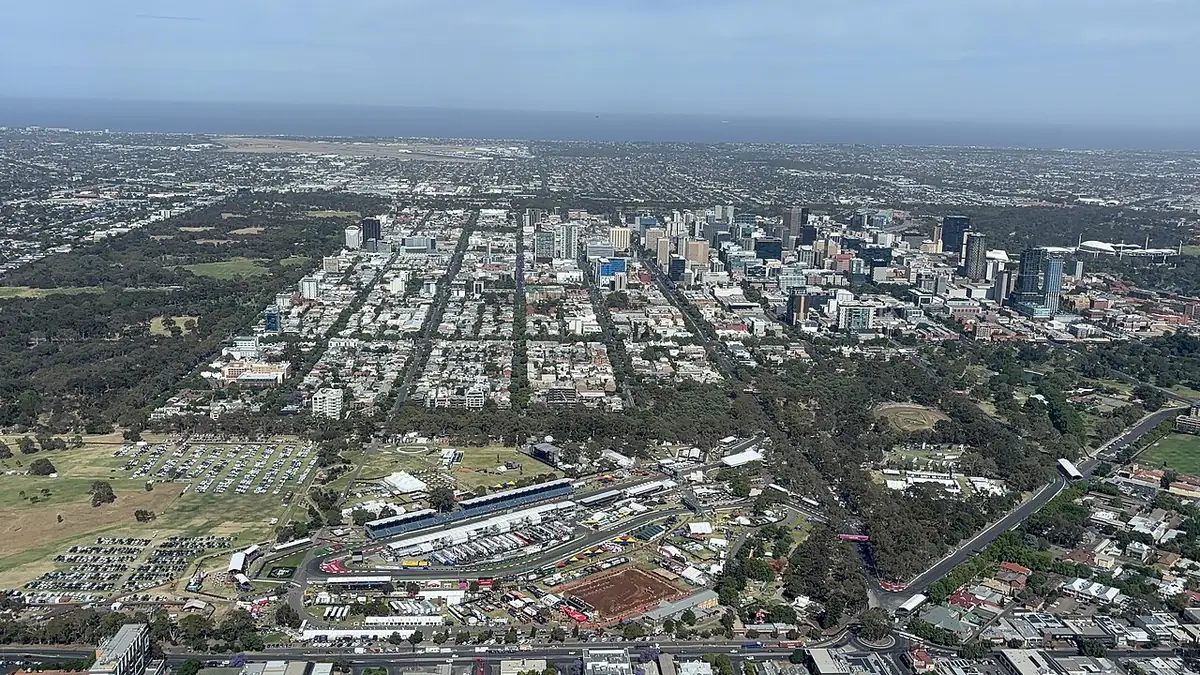
Adelaide from above, a grid city ringed by parklands and suburbs — Photo: Avatar5991 · CC BY-SA 4.0 · Wikimedia Commons
Beyond the price tag, the legal structure of what you own deserves constant attention.
Adelaide's property market has grown steadily in recent years while staying more affordable than Sydney or Melbourne. Even so, the gap in prices between the inner city and the surrounding rings calls for a careful reading of recent sales data. The figures below reflect the trends seen for properties with standard specifications.
AdelaideFor saleApartmentestimate
Median price / m²A$7,030Half the apartments sell below this
Median priceA$720kthe average is 14% higher — a few very large properties pull it up
Most common2 bedrooms34 % of listings
Average size105 m²
By number of bedrooms
Bedrooms
Share of market
Avg price
Price / m²
Avg size
1
18 %
A$440k
A$7,992 +8 %
55 m²
2most common
34 %
A$629k
A$7,400
85 m²
3
32 %
A$844k
A$7,030 −5 %
120 m²
4
16 %
A$1.16m
A$6,808best value / m²
170 m²
Each row is an average, compared against the area average of A$7,400 / m². These are indicative estimates of a typical local market, not a measured sample of live listings. Check current listings before relying on them.
What you really own: the legal nature of your property title
That legal rigour carries straight through into the timeline of the financial transaction.
Buying an apartment in South Australia brings you up against specific legal concepts that govern how common areas are managed and what your rights are as an owner. Contrary to a common belief, not all properties are equal when it comes to legal security and freedom to make changes. Understanding the distinction between the ownership regimes is essential to avoid disputes with neighbours and to protect the value of your asset.
Strata Title: the standard model for modern shared ownership
You buy the private space bounded by your walls, floors and ceilings, while holding an undivided share of the common property and the land. A strata corporation made up of the owners is set up to manage maintenance and shared insurance and to vote on the annual budget at general meetings.
What it changesYou benefit from a clear, protective legal framework, but you must comply with the by-laws, which can sometimes restrict certain uses, such as short-term letting or keeping pets.
Community Title: the flexibility of large estates and subdivisions
This more recent regime often applies to complex developments or mixed-use projects. It allows the land to be divided into community lots while managing shared infrastructure, internal roads or communal recreation areas in a decentralised way.
What it changesA careful review of the community plan and the financial obligations attached to it is essential, because the fees can include the upkeep of particular shared facilities you do not use directly.
The golden rule to understand before signing an offer in Adelaide
To run that sequence without a wrong note, here is the exact order of the people involved.
Buying property in South Australia follows a strict sequence in which every document you sign commits your financial responsibility for good. Unlike markets where a cooling-off period automatically protects the buyer, the South Australian framework calls for complete vigilance before you sign the Contract for Sale.
Finding a property that meets your criteria and obtaining the statutory disclosure statement (Form 1).
A thorough review of the Form 1 by a local legal adviser or conveyancer to check charges, easements and planning history.
Making the offer, either in writing with conditions or by bidding at a public auction with no conditions at all.
Paying the initial deposit (generally 10% of the sale price) into the trust account of the estate agent or legal representative.
Satisfying the finance and building inspection conditions one by one within the deadlines set in the contract.
Settlement day, when ownership is formally transferred on the South Australian land register.
How a property transaction in Adelaide unfolds, step by step
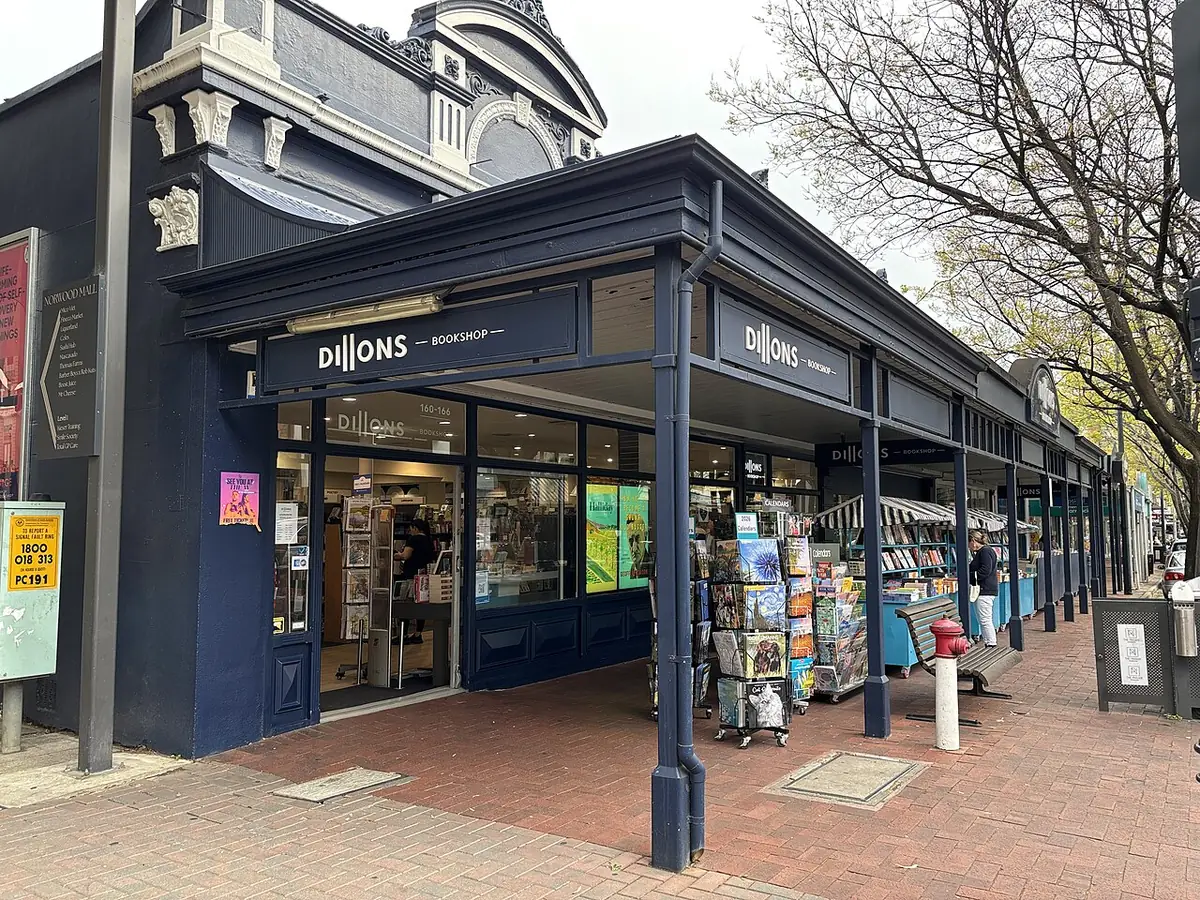
An independent bookshop under a shopfront verandah — Photo: Nick-D · CC BY-SA 4.0 · Wikimedia Commons
A successful property transaction in Adelaide depends on the smooth coordination of several professionals with strictly defined roles. From the first search to the handover of the keys, each one secures a technical, financial or legal part of the project. Knowing who plays which part avoids confusion and ensures the legal deadlines in force in South Australia are met.
You (the buyer)Setting the budget and securing financeGet pre-approval from a bank and set your bidding limit or firm offer, taking the extra costs into account.
The conveyancer (or lawyer)Legal review of the Form 1 and the titlesChecks for hidden administrative issues and restrictive easements, and oversees the legal side of the transfer.
The building inspectorTechnical and structural checkExamines the condition of the walls, insulation and plumbing and picks up any signs of damp or termites.
The estate agent (selling agent)Negotiating and formalising the offerPasses your offer to the seller and draws up the preliminary contract on the parties' instructions.
The bank (lender)Releasing funds for settlementConfirms the final valuation of the property and transfers the necessary funds when the sale officially closes.
Land Services SAFinal registration of the property titleUpdates the official South Australian land register to make your status as owner official.
Apartment or detached house: which is the better choice for living in Adelaide?
Once that fundamental choice between vertical city living and suburban space is made, the central question of financing and the structure of your spending comes to the fore.
Buying property in Adelaide means making a fundamental trade-off between vertical living in central areas such as North Adelaide or around Hindley Street in the business district, and the residential sprawl typical of leafy suburbs such as Burnside or Mitcham. An urban apartment puts you right next to public transport, notably the free tram along King William Street, and the cultural amenities of the South Australian capital. This option particularly suits buyers who put walking first, want shorter daily commutes and are happy to hand all exterior maintenance over to a strata manager, which frees up precious time for leisure and work.
A detached house on its own block, on the other hand, remains the dominant choice for families looking for space, quiet and a direct connection with the traditional Australian way of life. The neighbourhoods to the east and south-east of Adelaide, backing onto the foothills of the Mount Lofty Ranges, offer generous blocks where landscaping, pools and children's play areas redefine home comfort. However, this option brings regular and often unexpected maintenance costs, as well as a greater reliance on the car to reach the employment centres in the city, even if the road network flows fairly freely compared with Sydney or Melbourne.
Financially, the long-term growth in value differs noticeably between these two types of property. Detached houses generally see faster land appreciation, since land is the most solid store of value in South Australia. Apartments, while more affordable to buy and often offering higher gross rental yields for investors, face stronger competition at resale because of the growing number of new developments in dense urban areas. Buyers therefore need to weigh the opportunity cost between the liquidity of a well-located apartment and the long-term capital growth of a house with land.
Everyday lifestyle is the final arbiter of this complex decision. Living in an apartment in Adelaide means accepting strata rules, annual general meetings and strata fees, while enjoying greater security and often modern thermal insulation in recent buildings. Choosing a detached house requires full self-reliance in the face of the region's climate, marked by hot, dry summers that call for effective air conditioning and bushfire precautions in semi-rural areas. Each option shapes a very different daily life, and it should be aligned with your deeper personal aspirations before you sign any contract of sale.
What overall budget should you plan for buying and maintaining property in Adelaide?
With those budget figures in place, it helps to see what a typical week actually looks like for someone settled in Adelaide.
Buying an apartment or a house in Adelaide is not just about the price on the listing. The South Australian property market comes with specific taxes, notably stamp duty calculated on a sliding scale, as well as quarterly strata fees for shared buildings. Anticipating all of these outgoings avoids nasty surprises when you finalise your financing plan with a local lender.
Purchase costs and upfront taxes when buying property
Cost item
Basis of calculation
Estimated amount or rate
Stamp duty
Purchase value of the property
Sliding scale from 1% to 5.5% depending on the bracket
Legal and transfer fees (conveyancing)
Legal firm's services
Between AUD 1,500 and AUD 3,000
Building and pest inspection
Independent assessment of the building
Between AUD 400 and AUD 700
Mandatory lenders mortgage insurance (LMI)
If your deposit is below 20%
Varies with the risk profile and the lender
Stamp duty in South Australia is payable when the transfer of ownership is registered with Land Services SA.
Recurring charges and annual ownership costs
Type of charge
Frequency
Typical average amount
Strata fees
Quarterly
Between AUD 800 and AUD 1,500 per quarter
Council rates
Quarterly
Between AUD 350 and AUD 700 per quarter
Water and sewerage charges (SA Water)
Quarterly
Between AUD 250 and AUD 450 per quarter
Landlord or owner-occupier insurance
Annual
Between AUD 800 and AUD 2,000 per year
Strata fees vary widely depending on whether the building has upmarket shared facilities such as a pool, a lift or a gym.
Health care, schools and transport: what does an ordinary Tuesday in Adelaide look like?
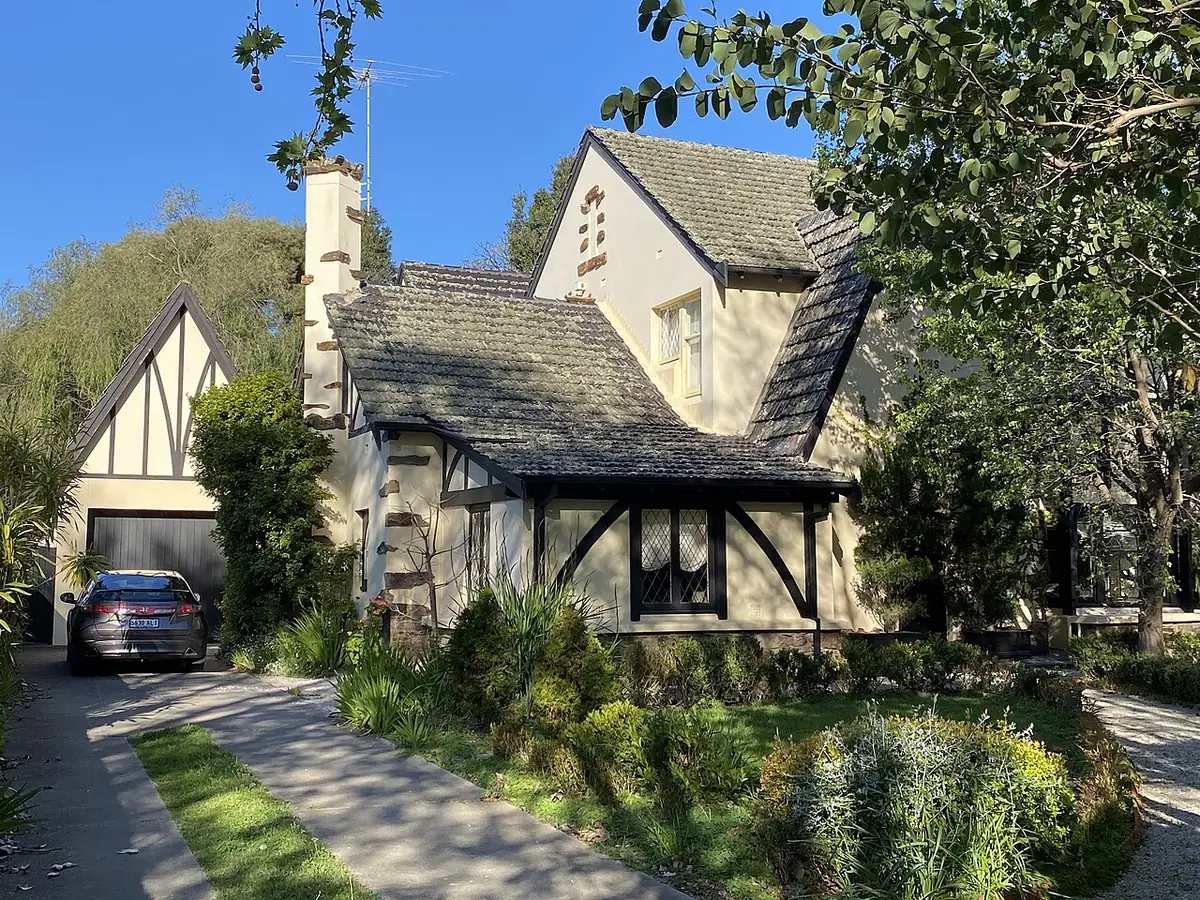
A Tudor Revival home with a leafy front garden in Adelaide — Photo: Ashton 29 · CC BY-SA 4.0 · Wikimedia Commons
Behind that apparent everyday calm lie regulatory and structural issues that the marketing brochures consistently leave out.
Getting a feel for a place means watching the movements and routines that shape its residents' week. In Adelaide, getting around is easy compared with the bustle of Australia's largest cities, which lets people fit work, health care and their children's schooling together smoothly within the same area.
07:30Residential neighbourhood or city centreThe day starts with a morning commute made easy by the tram network or the safe cycle paths that run across the metropolitan area.
08:45Local school or childcare centreDropping the children at local public or private schools, which often have large outdoor spaces and modern sports facilities.
09:30Workspace or office in the CBDSettling into a lively professional environment with fast internet and a bright place to work.
12:30Lunch break in the nearby parksMaking the most of the parks and squares that ring the city centre (the Park Lands), within walking distance of most offices for a break in the fresh air.
17:00Medical centre or local pharmacyEasy access to local health services (a general practitioner) for the family's regular check-ups and prescriptions.
18:15Local shops and open-air marketsBuying fresh produce at the Central Market or at the local supermarket to cook dinner in a peaceful residential setting.
What property listings and developers will not tell you about Adelaide
Those unspoken technical details lead straight to the regrets buyers most often express a few months after moving in.
Adelaide's property market has technical and regulatory quirks that agencies rarely highlight in their marketing. Understanding these grey areas helps you avoid financial and legal setbacks after settlement is handled by your conveyancer.
Strict restrictions on renovating heritage buildings (heritage listings)
Many properties in older areas such as North Adelaide or Prospect are subject to heritage listings that forbid any exterior changes to the facade or roof, limiting extensions and modern insulation.
The real cost and complexity of repairs linked to clay soils (reactive soils)
Much of the soil on the Adelaide Plains is reactive clay that shrinks in summer and swells in winter, causing structural cracks in foundations if drainage and watering around the building are not carefully maintained.
Strict strata rules on pets and short-term lets
Buying a strata-titled apartment does not give you complete freedom of use: many by-laws ban pets weighing more than ten kilos or strictly prohibit letting on platforms such as Airbnb.
The real impact of summer heat peaks on energy bills
Heatwaves in Adelaide send electricity use for air conditioning soaring, which makes an energy performance assessment and roof space insulation essential, as both are often neglected in buildings from the 1970s to the 1990s.
The buying mistakes you only discover after six months in Adelaide
Given those risks and the expertise they demand, it is just as important to work out who should give up on buying here.
Looked likeA charming older house with a large, tree-filled garden in a quiet, leafy suburb.
Turned outA money pit in garden upkeep, with old pipes invaded by the roots of local eucalyptus trees, causing regular blockages.
Would have caught itInsist on a full CCTV sewer inspection of the drains and check the condition of the sewerage system before removing any condition.
Looked likeA bright, modern apartment in the heart of the lively East End, close to restaurants and cafes.
Turned outRecurring noise at night from outdoor dining areas and early morning deliveries to the restaurants, making it hard to sleep with the windows open in summer.
Would have caught itView the property at different times of day and night, especially on Friday and Saturday evenings, and check the quality of the acoustic double glazing.
Looked likeA very profitable rental investment in a 1980s building with moderate strata fees.
Turned outAn urgent special levy voted through for facade restoration and bringing the lift up to standard, costing each owner several thousand dollars.
Would have caught itAlways read the minutes of the last three strata general meetings to identify approved works and the state of the reserve fund.
Looked likeA quick purchase with no thorough technical inspection, to beat other buyers in a tight market.
Turned outThe discovery of persistent damp and a roof needing complete replacement, with no equivalent of a ten-year builder's warranty of that kind in Australia.
Would have caught itNever sign a purchase contract without a condition making the sale subject to a full building and pest inspection by a licensed professional.
Buyer profiles: who should not invest in Adelaide property right now?
With those warnings set out, it is time to take stock and decide whether you are really ready to take the plunge.
Owning a home in Adelaide, while more accessible than in Sydney or Melbourne, is a heavy and inflexible financial commitment. Some personal or professional situations sit badly with the constraints of the local market, making renting or staying geographically mobile far more sensible.
Young professionals on an international posting or in an uncertain career change
→Put any purchase on hold and prefer flexible renting.
The upfront purchase costs (stamp duty and legal fees) are hard to recoup over less than five to seven years. Selling in a hurry because of a job change or a move back overseas exposes the buyer to a net loss of capital.
→Look at other asset classes or at other regional markets that deliver faster capital gains.
Adelaide's market is characterised by steady, moderate growth rather than spectacular speculative rises. Net yields are eaten into by local charges and the fees for agency-managed properties.
Households with savings that are too tight and no buffer for the unexpected
→Build up an emergency fund before putting down a deposit and taking out a variable-rate mortgage.
The lack of automatic ten-year builder cover and the need to maintain equipment yourself expose owners to financial shocks. A major air conditioning or roof failure you did not plan for can throw a stretched family budget off balance for a long time.
So, are you ready to go ahead with your property purchase in Adelaide?
Deciding to buy an apartment or a house in Adelaide is not a purely mathematical calculation, but a matter of aligning your life horizon with the concrete realities of the local market. If you plan to put down roots in the South Australian capital for at least five to seven years, if you have confirmed the financial strength of your application beyond the purchase price alone, and if you accept the constraints that come with strata living or maintaining a house, then everything points to starting your search.
Adelaide's property market offers an exceptional quality of life, combining a rich cultural scene, unspoilt natural spaces and an ease of getting around that is rare in Australia. Even so, the success of your plan depends entirely on how thoroughly you prepare: checking strata schemes, assessing clay soils, reading expert reports and anticipating recurring costs. Rushing is the only real enemy of a buyer in this region.
We recommend surrounding yourself with independent local professionals, whether conveyancers for legal security or building inspectors for technical compliance, before you submit any offer. A successful property investment in Adelaide is one made for the long term, fully aware of the compromises accepted and the particular features of the area. Take the time to visit, compare and confirm each step on your own terms.
Related questions
What transfer costs and taxes should you plan for when buying property in Adelaide?
Purchase costs in South Australia mainly consist of stamp duty, calculated on a sliding scale in proportion to the purchase price, plus the fees of the conveyancer who handles the legal side of the transfer, which generally come to between AUD 1,500 and AUD 3,000.
Do you have to get a building inspection before buying in Adelaide?
The law does not always require it, but it is strongly recommended to include a condition for a building and pest inspection. That check can uncover structural problems, damp getting in or termite damage.
How do strata fees work for an apartment in Adelaide?
Apartments and other shared-ownership properties are subject to quarterly charges known as strata fees or community fees. These contributions pay for upkeep of the common areas, building insurance and a reserve fund set aside for major future works voted on at the general meeting.
What are reactive soils in the Adelaide region?
Much of the Adelaide Plains sits on clay soils that swell in wet weather and shrink during dry spells. That shrink-swell movement can put significant stress on building foundations, which makes good drainage around the home essential.
What is the difference between a strata title and a Torrens title in Australia?
A Torrens title generally applies to detached houses and gives full ownership of the land and the building with no shared management. A strata title covers apartments and townhouses, involving a division of the property and shared spaces or facilities within a strata scheme.
Can non-resident foreigners buy property in Adelaide?
Property purchases by non-residents in Australia need prior approval from the federal Foreign Investment Review Board (FIRB). Strict restrictions generally apply, ruling out the purchase of established properties and limiting investment to new developments or construction projects.
Which neighbourhoods are most sought after for buying an apartment in Adelaide?
Adelaide's city centre (CBD), North Adelaide and the lively East End and Hindmarsh areas are particularly popular for their closeness to transport, universities, shops and the capital's cultural venues.
How do you get a mortgage as a buyer in Adelaide?
Getting a loan from an Australian bank or through a broker requires proof of stable income, a local credit history and a deposit of ideally at least 20% of the property's value to avoid mandatory lenders mortgage insurance (LMI).
What recurring local charges does an owner pay in Adelaide?
Owners pay local council rates every quarter to fund local public services, as well as charges to SA Water for water supply and sewerage.
How long does it usually take to complete a property transaction in South Australia?
Once the offer is accepted and contracts are exchanged, the standard settlement period generally runs between 30 and 60 days, giving conveyancers and lenders time to finish the legal checks and release the funds.
Property review of ting
No ting properties in Adelaide yet
Be the first — share it on ting and it shows up right here.