Settling in the capital of South Australia calls for careful preparation, given the particular features of the local market and the way people live here. This guide unpacks the key choices you need to make to carry your purchase through with peace of mind. You will see the mechanisms that actually make a property investment in this region succeed.
Get the app
What nobody tells you.
Real prices, hidden costs and the traps to check before you commit.
What buying a house in Adelaide really changes about your daily life
Scroll
What buying a house in Adelaide really changes about your daily life
Settling in the capital of South Australia calls for careful preparation, given the particular features of the local market and the way people live here. This guide unpacks the key choices you need to make to carry your purchase through with peace of mind. You will see the mechanisms that actually make a property investment in this region succeed.
Written by the ting.ad editorial team ·
Adelaide in Street View: drag to look around.
To work out whether this set-up matches what you want, it helps to look at your current habits against what local life demands.
Investing in bricks and mortar in this region means accepting a pace of life that is radically different from that of the big European capitals. The promise of a calm setting soon runs into the reality of long distances and urban sprawl, typical of South Australia's cities. Between the search for generous living space and the near-unavoidable reliance on a car, every property choice reshapes your relationship with time and place. It is not simply a matter of buying square metres, but of adopting a daily routine in which closeness to nature is paid for with greater distance from the centres of economic activity.
The dream of the big, secluded housevsThe reality of upkeep and distances
Properties often come with large blocks of land, but they demand a considerable personal investment of time and energy to maintain the outdoor areas, and they mean longer daily journeys into the centre.
The promise of residential peace and quietvsThe challenge of relative isolation away from the main roads
While the calm of the suburbs is a real asset for family life, it comes with total dependence on the road network and, at times, a limited choice of local shops.
The appeal of prices lower than in Sydney or MelbournevsThe need to factor in the hidden costs of renovation
The local market offers more affordable opportunities than the east coast cities, but many older homes need significant thermal and structural upgrades to be genuinely comfortable.
What kind of buyer are you in Adelaide's property market?
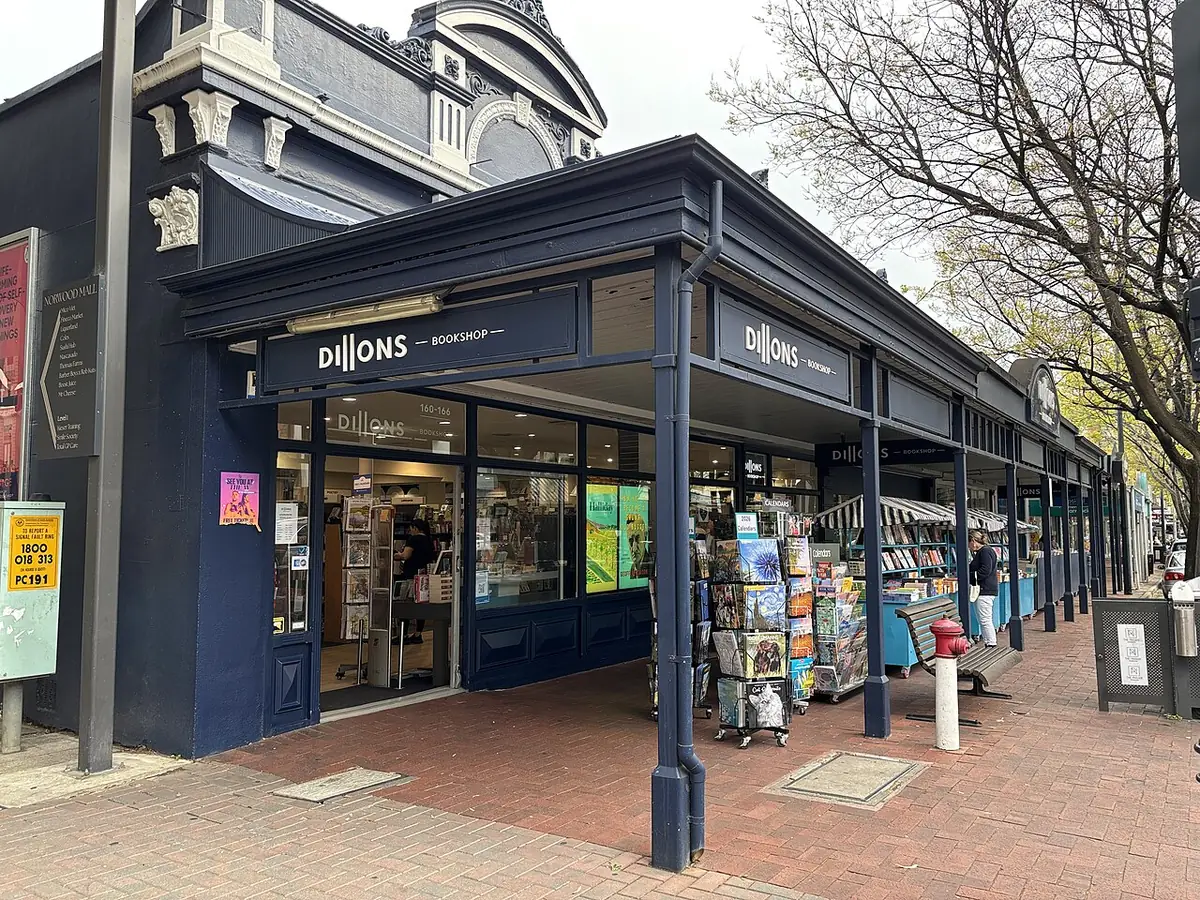
An independent bookshop under a shopfront verandah — Photo: Nick-D · CC BY-SA 4.0 · Wikimedia Commons
Moving from the reference points you grew up with to the South Australian reality deserves close attention on the practical and cultural side.
Whether a property project fits your daily reality is not measured by the purchase budget alone, but by how well your lifestyle matches the local infrastructure. Depending on whether you want to settle for the long term as a family, prepare a career move or build long-term wealth, the criteria for choosing a house vary widely. Each situation forces precise trade-offs between central location, living space and how well equipped the property is. Ignoring these behavioural factors leads to quick disappointment in the very first months after moving in.
Choosing stability for schooling and home life
Families generally favour the residential rings served by well-regarded schools and equipped with safe green spaces. This option means accepting longer journeys for parents who work in the business district. The compromise rests on the size of the block and the quality of home life, at the expense of a cultural life that is right on your doorstep and reachable on foot.
Looking for flexibility and a central location
Investors, or buyers wanting a gentler transition, lean towards properties closer to the centre or near busy transport corridors. This approach reduces outdoor upkeep but brings a higher purchase cost per square metre and stiffer competition for the homes available. Ease of resale becomes the deciding criterion here, ahead of the search for a large floor area.
Weighing single-level living, comfort and accessibility
For buyers preparing a long-term move without daily work commitments, the priority shifts to single-storey homes, moderate maintenance costs and being close to health services. The coastal suburbs and neighbouring councils offer that sought-after balance, provided you plan carefully for market swings and the particular features of the local climate.
Which reference points to reset when you move to Adelaide from abroad
Once these differences are absorbed, choosing where to live becomes the cornerstone of a successful purchase.
Moving to this region from a European country means unlearning many reflexes about housing, town planning and paperwork. Construction standards, the use of space and contractual relationships rest on distinctly Anglo-Saxon legal and cultural logic. What seems obvious back home about insulation, shared walls or the role of the legal professionals sometimes has surprising answers here for the uninitiated. Measuring these structural gaps before you sign any purchase document is essential to avoid disappointment.
From abroad
A culture of dense, terraced urban apartments
Adelaide
The overwhelming dominance of the detached suburban house
You need to take on full responsibility for the building envelope, the fences and the private garden, without a central owners' association to lean on for day-to-day decisions.
From abroad
Highly structured, walkable historic town centres
Adelaide
A geometric city plan ringed by parkland and widely spread out
Reliance on your own car, or on buses and the tram, shapes how your days are organised, making the location of the garage as important as that of the kitchen.
From abroad
Strict, protective oversight by a notary before the sale
Adelaide
A system of sales by auction or direct offers through agents
The speed of the process and the early commitment to firm financial terms require flawless legal and banking preparation before you even start viewing.
From abroad
Stringent, uniform insulation standards
Adelaide
Heritage or traditional builds with variable performance
You need to budget for upgrading the insulation of older homes to cope with big temperature swings in summer and winter without your energy bills soaring.
How to find your way among Adelaide's different residential areas
Looking at the geography leads naturally to the financial analysis and the budget realities of the market.
The city is organised around a historic centre surrounded by parkland, from which roads fan out to neighbourhoods with very different profiles. Deciding where to settle depends as much on your budget as on your tolerance for commuting and your taste for coastal or hills living. Each area has its own rhythm, its own schools and its own long-term pattern of value growth. Thinking about what daily life actually feels like in each of these settings helps you avoid the classic mistake of buying on photos alone or on an area's reputation.
The eastern suburbs and the hills foothills
A green, calm atmosphere, shaped by closeness to nature and the rolling hills.
Suits
Buyers looking for a prestigious setting, leafy blocks and generous family space.
Trade-off
Prices per square metre among the highest in the metropolitan area, and greater exposure to local environmental risks.
The western coastal suburbs
A pace set by the sea and the sandy beaches, with a holiday feel all year round.
Suits
People who put beachside living and outdoor activities at the top of their daily priorities.
Trade-off
Higher humidity, homes exposed to salt air that need regular upkeep, and heavy tourist pressure in summer.
The northern and southern rings
Lively residential areas in constant development, offering more affordable blocks of land.
Suits
First home buyers and families looking for the best floor area for the price, with good road access.
Trade-off
Longer daily commutes into the city centre at peak hours, and shops that can be some distance away.
What to expect from your property purchase budget in Adelaide
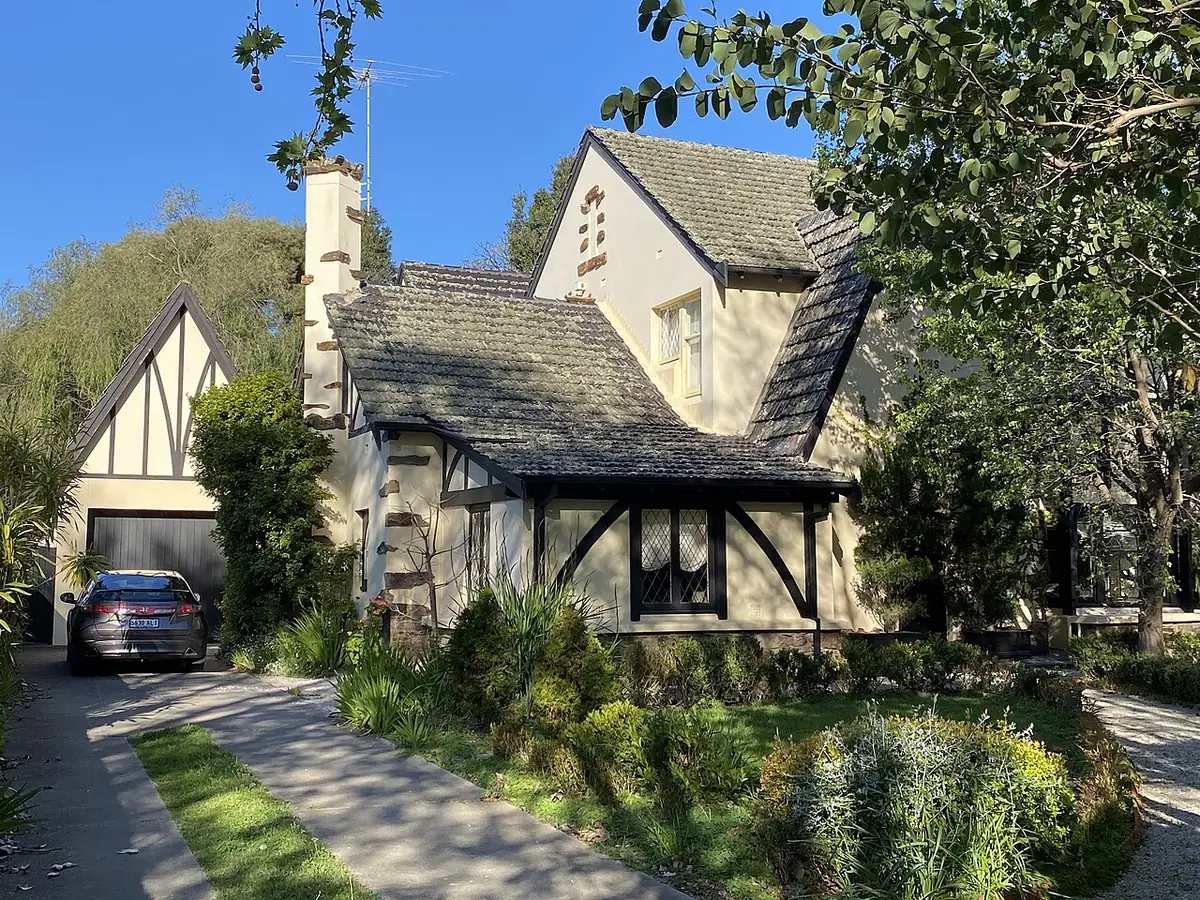
A Tudor Revival home with a leafy front garden in Adelaide — Photo: Ashton 29 · CC BY-SA 4.0 · Wikimedia Commons
Beyond the raw figures, the nature of property rights and the legal structure of each home deserve careful scrutiny.
Working out an accurate property budget does not stop at the price shown in the listing; it covers all the additional costs, local taxes and compliance upgrades as well. The region's market shows marked differences between renovated homes close to the centre and family houses needing structural work in the outer rings. Having a realistic view of price ranges lets you calibrate your finance application without unpleasant surprises from local lenders. The figures below summarise the trends observed to guide your offer strategy.
AdelaideFor saleHouseestimate
Median price / m²A$5,765Half the apartments sell below this
Median priceA$1.12mthe average is 14% higher — a few very large properties pull it up
Most common2 bedrooms42 % of listings
Average size184 m²
By number of bedrooms
Bedrooms
Share of market
Avg price
Price / m²
Avg size
2most common
42 %
A$903k
A$6,068
149 m²
3
39 %
A$1.21m
A$5,765
210 m²
4
20 %
A$1.66m
A$5,583best value / m²
298 m²
Each row is an average, compared against the area average of A$6,068 / m². These are indicative estimates of a typical local market, not a measured sample of live listings. Check current listings before relying on them.
The legal reality of property titles and land ownership
That legal security is earned by following the stages of a regulated transaction carefully and in order.
Property ownership in South Australia rests on precise legal distinctions that you must master before committing. Unlike some markets where shared ownership of buildings or estates follows uniform rules, local law draws a clear line between outright ownership of the land and arrangements where infrastructure is shared. Understanding exactly what the title documents and planning restrictions cover protects you against major setbacks over renovation rights or shared boundaries. A clear land title is what keeps your investment secure over the long term.
Outright land ownership (Torrens Title)
This registration system guarantees that you own both the building and the land it sits on, absolutely and indisputably, which greatly simplifies any future changes.
What it changesYou keep complete freedom over your outdoor space and the management of your asset, provided you respect local planning schemes and council by-laws.
Shared ownership or subdivision arrangements (Strata / Community Title)
These arrangements govern shared developments, gated estates and attached homes with common areas, which involve paying levies and following strict by-laws.
What it changesYou need to plan for the constraints of collective decision-making, the cost of sinking funds for maintaining common property and the community's prior approval for any visible change.
The fundamental rule to understand before paying a deposit
To handle all of these steps methodically, here is the typical sequence of the people involved throughout the process.
Buying property in this jurisdiction leaves no room for guesswork and follows a strict contractual timeline. From the moment you make an offer or take part in an auction, the buyer's financial commitment becomes binding and leaves little room for second thoughts. Knowing the exact order of technical checks, finance approval and contract conditions lets you move through the transaction calmly. Each step you clear confirms a little more that your plan to settle here is sound.
The stage of scouting available properties and shortlisting target areas according to your lifestyle criteria.
A thorough review of the vendor's disclosure statement (Form 1), which sets out the easements and legal constraints on the land.
An essential independent building inspection to detect any hidden defects or structural problems.
Securing firm, unconditional finance approval from your bank or specialist mortgage broker.
Signing the sale contract and paying the deposit into trust, which brings the terms of the agreement into effect.
Final settlement of the balance and the official transfer of the title into your name with the state land services.
How the buying journey actually unfolds, from the search to getting the keys
Saint Ignatius Church and its twin towers in Norwood — Photo: Ashton 29 · CC BY-SA 4.0 · Wikimedia Commons
Clearing all these steps carefully sets you up for a lasting and harmonious move into your new surroundings.
A successful property transaction depends on the smooth coordination of several professionals with clearly defined roles. From the agent appointed by the vendor to the conveyancer (the specialist in property transfers) and the building inspectors, each party secures one link in the decision chain. Understanding who is responsible for what keeps you from approaching the wrong person at the wrong time and makes communication easier. This final overview gives you a clear roadmap for bringing your home purchase in Adelaide to completion under the best conditions.
The buyerDefining the project and getting pre-approvalYou set your lifestyle priorities, confirm your overall budget and put your finance application together before any viewings.
The real estate agentShowing properties and initial negotiationThe agent represents the vendor's interests, arranges inspections, passes on offers and runs the private sale or the auction.
The building inspectorTechnical inspection and condition reportThe inspector examines the structural condition of the house, its weatherproofing and the roof in detail, and identifies any essential compliance work.
The conveyancer (legal adviser)Title checks and legal protectionThe conveyancer reviews the Form 1, drafts or approves the contract clauses, manages the trust funds and coordinates the official transfer of the land title.
The bank or lenderReleasing funds and finalising the loanThe lender confirms the mortgage security, releases the necessary funds on settlement day and completes the financial side of the deal.
The buyer and advisersHandover of keys and moving inA final inspection before settlement, transfer of the water and electricity accounts, and taking actual possession of your new home.
House or apartment in Adelaide: weighing up lifestyle and upkeep
Once the type of property is decided, the central question of financing and the cost of living comes straight to the fore.
Buying a detached house in Adelaide usually means heading for leafy residential suburbs such as Unley or Burnside, where the blocks of land offer considerable private outdoor space. This option appeals to families and to buyers who want architectural independence, but it brings a significant weekly maintenance load. Between mowing the lawn through the parching Australian summers and looking after the roof, the practical effort falls entirely on the owner, which often surprises first-time buyers from Europe who are used to living in apartment buildings.
Urban apartments, by contrast, are concentrated in Adelaide's CBD or along the tram line to Glenelg, offering more compact floor areas but outsourced maintenance. Strata levies cover the pool, security and upkeep of the common areas, giving ideal flexibility to young professionals or investors looking for an easy-to-let base. This option does, however, mean giving up a private garden and accepting the closeness of mid-range apartment blocks, where sound insulation varies considerably depending on the year the building went up.
The choice between these two property types comes down essentially to your tolerance for manual work and how you see your space in the long run. If you value complete quiet and the freedom to alter your home without asking a general meeting of owners, the detached house remains the ultimate safe haven in South Australia. If you prefer a central location, having the cafés of Rundle Street on your doorstep and no gardening to worry about, the apartment is a rational compromise despite fixed monthly costs you cannot avoid.
You also need to consider resale and liquidity in Adelaide's property market. Houses with their own land have historically held stronger capital growth because land is relatively scarce in the sought-after inner-ring areas. Apartments, on the other hand, sometimes face heavier competition when new developments are completed in the city centre, which can slow a quick sale during an economic slowdown or when official interest rates rise.
What overall budget to plan for living comfortably in a house in Adelaide
To understand what this cost of living means in practice, it helps to look at how a typical day actually unfolds in the city.
Drawing up a budget for buying a house in Adelaide does not stop at the mortgage amount and the headline price of the property. You also need to include local taxes, the bushfire insurance required in some outer areas, and energy bills that swing considerably with the climate. A careful look at recurring expenses prevents financial disappointment six months after settlement.
Costs involved in buying a house in Adelaide
Budget item
Typical range (AUD)
Frequency and impact
Transfer duty (stamp duty)
$30,000 to $50,000
Paid once on purchase, calculated on the South Australian scale.
Conveyancing and legal fees
$1,500 to $3,500
Conveyancing fees needed to secure the property title.
Home insurance (building and contents)
$2,200 to $4,000 a year
Essential cover including climate risks and local storms.
Council rates (municipal property taxes)
$1,800 to $3,200 a year
Paid quarterly to the local council for roads and services.
These amounts are indicative averages based on the scales in force in South Australia for a median-priced property.
Annual running budget for a family of four
Cost category
Estimated amount (AUD)
Comment
Electricity and gas
$2,400 to $3,800 a year
A large share goes on heavy air conditioning use in the summer months.
Water and sewerage
$1,100 to $1,600 a year
Billing combines fixed charges with household and garden water use.
Regular garden and pool maintenance
$1,500 to $3,000 a year
Cleaning products, pump servicing and tree pruning.
These items vary widely depending on the living area and the energy efficiency of the home you buy.
What daily life looks like between school, work and transport in Adelaide
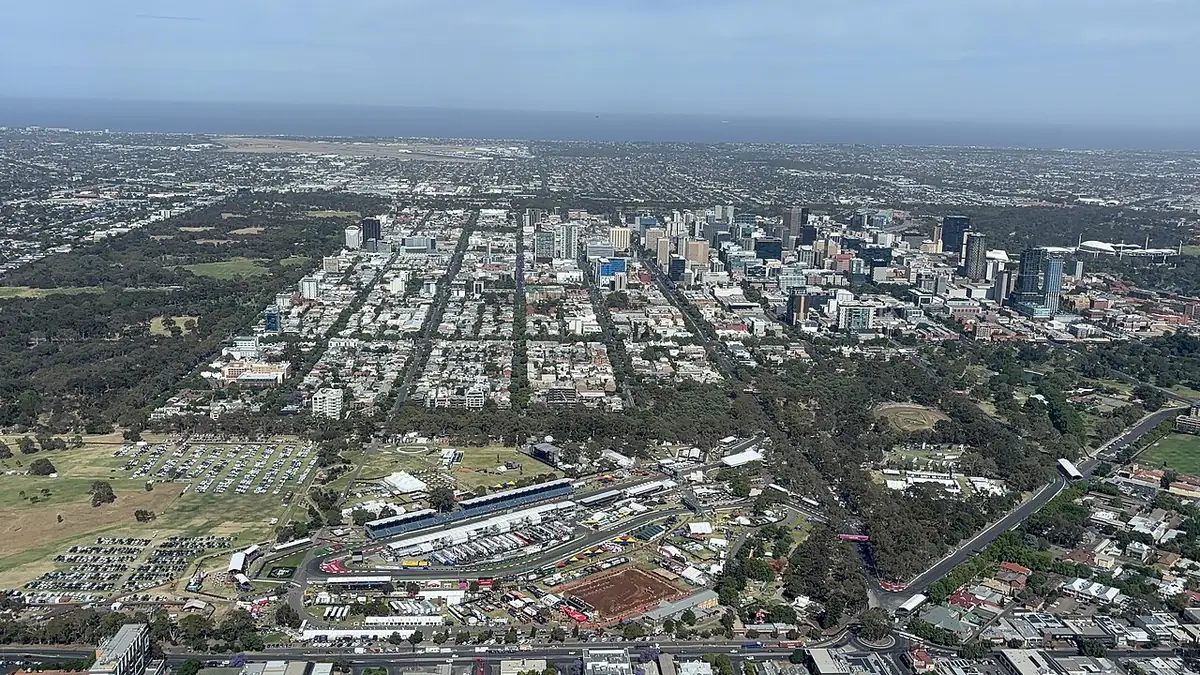
Adelaide from above, a grid city ringed by parklands and suburbs — Photo: Avatar5991 · CC BY-SA 4.0 · Wikimedia Commons
Beneath this apparently easy daily life, the market hides subtleties that sales brochures always leave out.
Life in Adelaide flows relatively smoothly compared with Sydney or Melbourne, provided you know your way around the main roads at peak hours. The transport network combines an efficient tram line to Glenelg, an extensive bus network and a well-structured road grid. This lets residents balance work and personal time without the chronic stress of the world's big cities.
07:30Residential neighbourhood (e.g. Unley)Getting ready in the morning and setting off by car or school bus to local schools.
08:30Adelaide CBD (King William Street)Arriving at work on the free city-centre tram, or parking.
12:30Rundle Mall or Leigh StreetLunch break in one of the many speciality cafés of South Australia's capital.
17:00Leaving the office and grocery shoppingA stop at a local supermarket (Coles or Woolworths) for fresh food for dinner.
18:30Back homeRelaxing in the garden or taking an evening stroll around the neighbourhood.
What Adelaide real estate agents don't tell you about soil conditions and services
These technical traps tie in with the most common behavioural mistakes newcomers make.
Buying property in South Australia follows strict legal rules, but some physical and environmental features of a home never make the front page of the listing. Knowing about these hidden aspects protects buyers from unexpected structural repair costs that can become very heavy in the medium term. A rigorous building inspection remains the only effective safeguard against these hidden defects.
Adelaide's expansive soils (reactive clay)
Much of the region sits on highly reactive clay that shrinks in summer and swells in winter. This natural movement regularly causes cracks in foundations and internal walls if the house was not built on suitable piers, which makes a geotechnical assessment essential before any firm offer.
Compliance with bushfire safety standards (bushfire ratings)
If you buy a property on the edge of the Adelaide Hills, the home must meet strict fire-resistance standards graded by BAL (Bushfire Attack Level). These requirements can force costly changes to glazing, gutters and the types of timber permitted for external framing.
Sewer connection and septic tanks
Some properties in semi-rural suburbs or older areas are not connected to the council sewer. A septic tank or on-site treatment system means regular health inspections and compliance costs that fall entirely on the new owner at the time of the sale.
Strict restrictions on removing protected trees
In South Australia, local environmental law fiercely protects certain native trees and gum trees. Even if a large tree is damaging your underground pipes or blocking your gutters, getting council permission to remove it can be a long and uncertain legal battle.
The big misjudgements people bitterly regret six months after moving in
These pitfalls raise the fundamental question of which buyers should simply give up on the plan.
Looked likeA charming older house full of character in a picturesque heritage neighbourhood.
Turned outA poorly insulated, draughty home with outdated lead plumbing and obsolete wiring needing a complete and very expensive upgrade to meet standards.
Would have caught itAlways insisting on a full independent building and pest inspection report before the contract conditions are lifted.
Looked likeA large, leafy block on the outskirts offering calm and complete serenity far from the bustle of the city.
Turned outA high-risk bushfire zone, bringing sky-high insurance premiums and drastic planning restrictions on any extension.
Would have caught itChecking the title plan and the council zoning classifications (Development Plan) to identify safety constraints before signing.
Looked likeAn affordable investment in a fast-growing suburb with strong potential for capital growth.
Turned outAn area poorly served by public transport and with no well-regarded schools nearby, which badly hurts any future resale or rental.
Would have caught itStudying the local demographics, planned public infrastructure projects and the quality of public and private schools in the area in detail.
Looked likeA quick purchase made without hard negotiation to beat other buyers in a tight market.
Turned outA property overpaid compared with recent comparable sales in the same street, leaving you in negative equity if you have to sell in a hurry.
Would have caught itAnalysing the history of recent comparable sales in the immediate neighbourhood from South Australia's official property databases.
Which buyers should seriously postpone or drop their plan to buy in Adelaide?
It is now time to pull all of this together and make a final call on your plan to settle here.
Becoming a homeowner in South Australia is a strong financial and geographical commitment that does not suit every personal situation. Given high transaction costs and a slow-moving local market, committing too quickly without a long-term view exposes buyers to the risk of having their capital badly locked up. Clearly identifying these warning signs avoids strategic mistakes.
The expat worker on a temporary visa with no prospect of permanent residency
→Carrying on renting a flexible home rather than buying.
Non-resident buyers face substantial surcharges (FIRB fees and higher transfer duty) and risk financial losses if they are forced to sell on an unplanned return to their home country.
The first home buyer with a budget that only just balances and no emergency savings
→Waiting to build a bigger deposit before entering the market.
Without a financial cushion to cover urgent repairs (a major air conditioning failure, foundation problems or a damaged roof), the buyer can end up defaulting on the mortgage.
The investor looking for an immediate, very high gross rental yield
→Turning to other metropolitan markets or other asset classes.
Adelaide is a stable market geared towards long-term capital growth, but it traditionally offers lower gross rental yields than some mining regions or the big eastern capitals.
So, are you really ready to take the plunge into Adelaide property?
Deciding to buy property in Adelaide means weighing the stability you want in your life against how rigorous your financial preparation is. If your working life is firmly anchored in South Australia and you accept the maintenance demands that come with the local housing stock, buying a house or an apartment gives you a solid and lasting foothold.
It is vital not to give in to short-term pressure or the fear of missing out (FOMO). Adelaide's property market rewards patience, careful checking of the technical aspects of the soil and strict adherence to your planned budget. Every step, from assessing the neighbourhood to the final structural inspection, should be carried out with a sharp critical eye to secure your investment for decades to come.
Ultimately, buying here is not just about signing a contract of sale; it is about choosing a pace of life, a relationship with nature and a community. If your finances cover all the hidden costs and your life plans are in step with the region's climate and practical realities, you have everything you need to settle in with complete peace of mind.
Related questions
What are the transfer duty and legal costs when buying property in Adelaide?
Transfer duty (stamp duty) in South Australia depends on the value of the property you buy, generally working out at between 4 and 6% of the purchase price. On top of that come the fees of a conveyancer or specialist lawyer, which usually sit between AUD 1,500 and AUD 3,500 to secure the whole transfer of ownership.
Is a building and pest inspection compulsory before buying?
Although South Australian law does not formally require this step in every situation, every professional strongly recommends including an inspection condition in the contract. It lets you uncover any termite damage or major structural weaknesses before the transaction becomes final.
How does the property auction system work in Adelaide?
Auctions are common for sought-after properties in Adelaide. Bidders must register beforehand and, if successful, pay a deposit on the spot (usually 10%) and sign a sale contract with no finance or inspection conditions at all.
Which neighbourhoods are most in demand for families settling in Adelaide?
Inner East suburbs such as Burnside, Unley, Dulwich and Norwood are especially popular for the quality of their public and private schools, their tree-lined parks and how close they are to the CBD. These areas do, however, show median prices well above the average for the metropolitan area.
Can non-resident foreigners freely buy property in South Australia?
Non-residents must obtain prior approval from the FIRB (Foreign Investment Review Board) before buying property in Australia. Approval is generally granted for new dwellings, but established homes are subject to strict restrictions.
What is reactive clay in Adelaide's soils?
Reactive clay is a soil type found widely across the Adelaide region that swells when it is wet and shrinks sharply in dry periods. These ground movements put considerable stress on building foundations, which is why suitable pier foundations are needed to prevent cracking.
How much are council rates on average?
The rates charged by local councils to fund roads, waste collection and public parks generally range from $1,800 to $3,200 a year for a standard detached house, payable in quarterly instalments.
How can I find out about the bushfire risk for a specific property?
The South Australian government publishes official bushfire hazard maps. They show whether a property sits in a sensitive zone, which brings specific construction standards (BAL ratings) and higher insurance premiums.
How long does it usually take to complete a property purchase in Adelaide?
In South Australia, the standard period between an accepted offer (or signing the contract) and final settlement (settlement day) is generally 30 to 60 days. That window gives conveyancers time to carry out all the title checks and lets the banks release the funds.
Is there government support for first home buyers in South Australia?
The South Australian government offers home ownership assistance from time to time (the First Home Owner Grant), subject to income conditions and price caps, for new properties. It is worth checking the eligibility criteria in force when you submit your finance application.
Property review of ting
No ting properties in Adelaide yet
Be the first — share it on ting and it shows up right here.