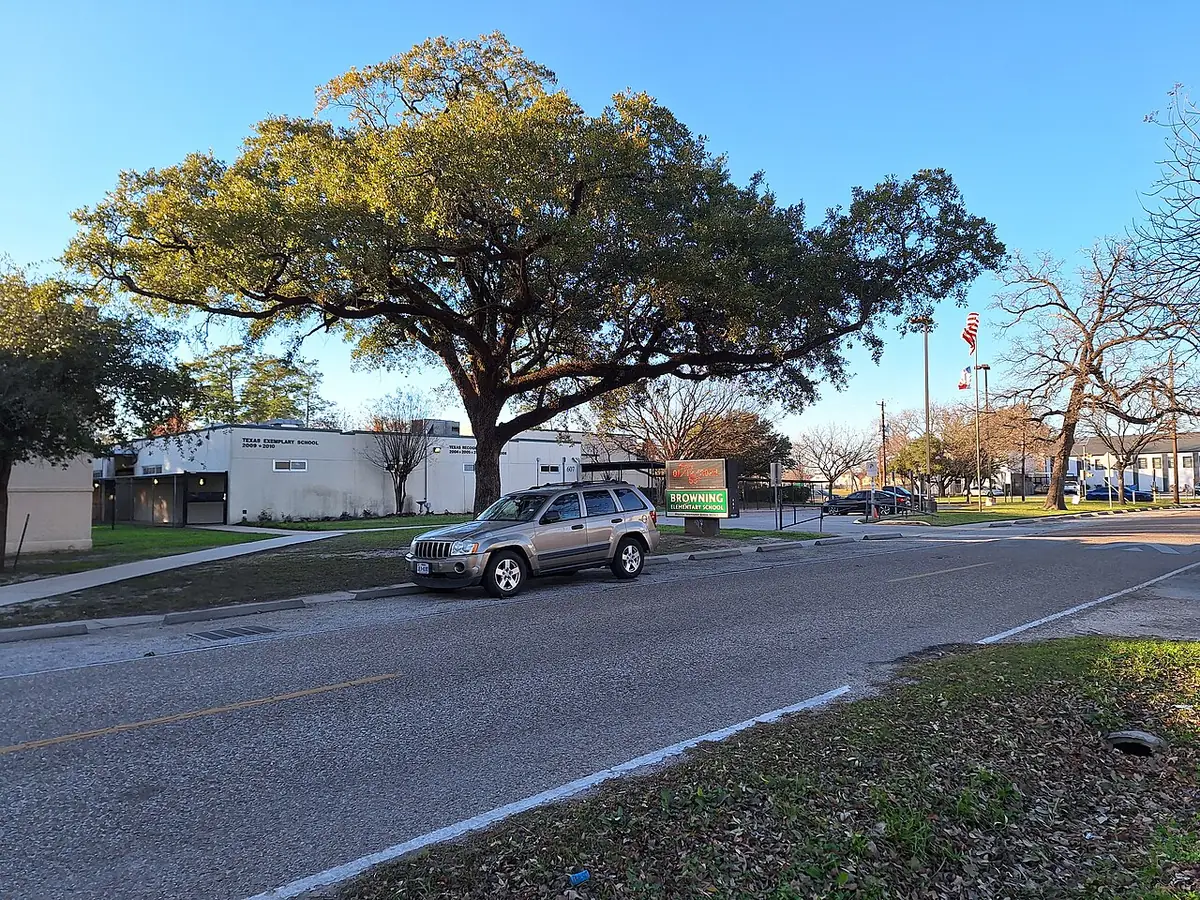
Moving into a house in Houston is a rare chance to buy yourself real space, as long as you adjust to the realities of a sprawling metropolis. This guide sets out what matters most, from picking a neighborhood to the particularities of the local rental market, so you can make the right call.
Get the app
What nobody tells you.
Real prices, hidden costs and the traps to check before you commit.
Renting a house in Houston: the tension between space and distance
Scroll
Renting a house in Houston: the tension between space and distance
Moving into a house in Houston is a rare chance to buy yourself real space, as long as you adjust to the realities of a sprawling metropolis. This guide sets out what matters most, from picking a neighborhood to the particularities of the local rental market, so you can make the right call.
Written by the ting.ad editorial team ·
Memorial Drive, Houston in Street View: drag to look around.
How that plays out on the ground depends on your work and family situation.
Renting a house in Houston means rethinking your relationship with domestic and urban space from scratch. The floor areas on the rental market bear no comparison with what most newcomers are used to, but they come with absolute dependence on the car. Every everyday trip is measured in minutes of freeway rather than in steps, which redefines what proximity even means. The trade is between the calm of a wide, low-density residential area and the time cost of getting to where the jobs are.
Generous space indoors and outdoorsvsTotal dependence on the freeway network and the fast arteries
Living area and a private lot are paid for with the absolute obligation to get behind the wheel for the smallest purchase or errand. Distances stretch out and end up shaping every day.
A deep and varied rental marketvsThe need to plan around gridlock at peak hours
Finding a spacious house is relatively easy thanks to how much gets built locally, but how smoothly you move around depends directly on where you sit relative to the ring roads.
A cost per square meter that is often more affordable than in the coastal US marketsvsEnergy and upkeep costs that scale with the size of the property
Rents stay moderate for what you get, but constant air conditioning and the upkeep of outdoor space add noticeably to what the household actually spends.
Which kind of tenant gets the most out of a house in Houston?
The gap between how cities are organized elsewhere and the Texan model deserves particular attention.
Houston's housing stock does not speak to every newcomer in the same way. Whether you are arriving as a family with children, as a couple working remotely or in the middle of a career move, the criteria that should drive your choice of area and of building differ radically. Looking honestly at your real daily routine is what stops you making the classic mistake of choosing on floor area alone.
The residential ring and the well-regarded school districts
You favor outer neighborhoods or the surrounding municipalities to reach good schools and a quiet setting. The trade is accepting longer daily school runs and a neighborhood life built entirely around the car. Houses there come with large fenced yards and safe play space, which matters with children.
Close to the main arteries and inside the inner loop
Your absolute priority is to cut the time spent in traffic on the I-610 or the I-10. You look at more compact houses, sometimes older ones, in central neighborhoods that are changing. The time saved on the commute outweighs lot size, and you get a livelier urban compromise.
Flexible space and the calm of the leafy suburbs
With no daily commute tying you down, you can settle further out where it is greener. You get a house with a room set aside as an office and a peaceful setting. Social life shifts towards the local amenities a few minutes away by car.
Living here when you arrive from abroad: what changes completely
Houston's skyline seen past the rooftops of a nearby neighbourhood — Photo: JAFactsDude · CC0 · Wikimedia Commons
With that framework in place, choosing the area becomes the decisive step in your plan.
Arriving in Houston from almost anywhere else upends the reference points you had for housing and getting around. The absence of a dense walkable downtown, the omnipresent central air conditioning and the legal shape of American leases all demand a quick adjustment. Understanding these structural differences is what spares you financial and practical surprises in the first months.
From abroad
Walkable neighborhood life with shops at the end of the street
Houston
A model of wide-open zoning where everything is done by car
You give up walking round the corner for bread and build the weekly big-box grocery run into how you organize the household.
From abroad
A rental market tightly framed by national housing law
Houston
Standardised leases, but governed by Texas law
The rules on ending a lease, on security deposits and on credit and background screening follow specific local practice that you need to study before signing.
From abroad
Older homes with rooms that can be cramped but full of character
Houston
Recent, large houses, often built in timber and brick
Sound and thermal insulation answer to a climate standard built around heavy air conditioning rather than around winter heating.
From abroad
A dense public transport network that shapes the city
Houston
A limited bus network and an oversized freeway system
Renting or immediately buying a personal vehicle is a non-negotiable condition for simply existing and moving around the city.
Which neighborhood should you put your bags down in?
Looking at the rents being asked across these areas is what lets you build a realistic budget.
Houston covers a huge area, taking in a multitude of neighborhoods and municipalities with very distinct characters. Between the cultural buzz of the central districts, the leafy calm of the well-off suburbs and the energy of the areas on the way up, every profile finds its balance. The area you choose dictates your daily quality of life and your travel times.
The Heights
A historic village feel, with tree-lined streets, raised timber houses and independent coffee shops within walking distance.
Suits
Couples and families after real architectural character and a lively neighborhood life without sitting in the financial core.
Trade-off
Rents run clearly above the metro average, sometimes for more modest floor areas.
Sugar Land or Katy
A planned residential environment, extremely quiet, with excellent school facilities and plenty of green space.
Suits
Families with children who put safety, parks and the quality of the public schools above everything else.
Trade-off
The distance from central Houston means significant daily travel times at peak hours.
Montrose / Museum District
A culturally rich and mixed area, combining museums, serious restaurants and immediate proximity to the big employment centers.
Suits
Working people without children, or anyone who wants a lively urban life and fewer unnecessary car trips.
Trade-off
Single-family houses are scarce here and heavily fought over, leaving the field to apartments and townhouses.
What does renting a house in Houston really cost?
A shaded street in Houston, oak trees overhead — Photo: WhisperToMe · CC0 · Wikimedia Commons
Beyond the raw figures, the legal and physical nature of what is available deserves a close look.
Houston's rental market offers a favorable space-to-price ratio compared with the big East and West Coast metros, but the gaps between areas remain wide. The headline rent is only part of the financial picture, which also takes in electricity, water and the upkeep of outdoor space. Reading the current ranges helps you calibrate the application you put in front of landlords.
houstonTo rentHouseestimate
Median price / m²US$12Half the apartments sell below this
Median priceUS$2.14kthe average is 14% higher — a few very large properties pull it up
Most common2 bedrooms68 % of listings
Average size168 m²
By number of bedrooms
Bedrooms
Share of market
Avg price
Price / m²
Avg size
2most common
68 %
US$2.22k
US$13
175 m²
3
27 %
US$2.82k
US$12 −8 %
236 m²
4
5 %
US$3.3k
US$11best value / m²
289 m²
Each row is an average, compared against the area average of US$13 / m². These are indicative estimates of a typical local market, not a measured sample of live listings. Check current listings before relying on them.
Single-family house or townhouse: what is actually on offer?
Turning your plan into a signed lease then follows strict rules and stages that are worth mastering.
Choosing what to rent in Houston mostly comes down to the traditional single-family house on its own lot versus the vertical townhouse built in the denser areas. Each of these two formats answers to radically different demands on how you live and what you have to look after. Weighing that choice against your daily routine is what stops the disappointment setting in after the lease is signed.
The single-family house with a lot
This format is the Texan way of living in its purest form: privacy, generous interior volumes and private outdoor space. In exchange, the yard, the outside maintenance and the relative isolation of some outer areas fall to the tenant, or call for regular visits from contractors.
What it changesYou get complete freedom and generous living space, at the cost of doing far more of the day-to-day work of running the property.
The vertical townhouse in the urban core
Often spread across three floors, the townhouse maximizes living space on a small footprint, which is typical of neighborhoods near the center. It frequently comes with an owners association that takes on outside maintenance of the common areas, which cuts the workload for the occupant accordingly.
What it changesYou gain in centrality and shed most of the outdoor upkeep, while accepting a lot of stairs and much closer neighbors.
The rule to understand before you put money down on a lease in Houston
A quiet garden path, a green pause in Houston — Photo: Safety Cap · CC BY 4.0 · Wikimedia Commons
Now let us look at how the transaction is sequenced in practice.
Renting property in Texas runs on formal, fast procedures that differ from what many newcomers know. An applicant's file is read through the lens of financial standing, credit history and professional references. Getting on top of that chain of requirements is what makes your approach to agents and landlords succeed.
You have decided to rent and you have spotted a property that matches your criteria.
Putting together a complete file, including proof of income (generally three times the rent) and your banking history.
Submitting the formal rental application together with the non-refundable application fee.
Screening by the landlord or their agent of your financial background, your employment and your rental history.
Signing the standard residential lease issued by the Texas Association of Realtors.
Paying the security deposit and the first rent to get the keys handed over and move in.
How a rental transaction in Houston unfolds, step by step
Renting a house in Houston brings in several parties who have to work in step to make the deal safe. From the initial search run by a realtor through to the move-in inspection, each of them plays a precise role under the local contracts. Knowing that sequence lets you approach your move to Texas calmly.
You (the tenant)Setting criteria and shortlisting propertiesYou work out what you need in terms of space, budget and area by going through the local MLS platforms.
Your real estate agentViewings and negotiating the lease termsYour realtor arranges targeted viewings and negotiates the specific terms of the lease with the landlord's representative.
The landlordFinancial screening and approval of your fileThey review your financial guarantees, your pay stubs or your assignment letter from your employer in order to approve your application.
The utility providersConnecting the utilities (electricity, water, gas)You need to sign up in advance with the local providers (electricity in Texas is a matter of choosing your own retailer) so the services are live the day you arrive.
The property managerMove-in inspection and handover of keysA detailed joint inventory is drawn up to record the condition of the property before your household actually moves in.
House or apartment in Houston: how to decide, given how you live
Once that first structural choice is settled, it pays to look closely at what daily life in this metro area actually costs.
Choosing between a single-family house and an apartment in Houston is not simply a question of floor area or taste; it shapes how you organize your days and what you spend over the length of a lease. In the Texan metro area, urban sprawl redefines what proximity means, which makes the choice between vertical living in the big central complexes and a house with a yard out on the edge unusually decisive for how you settle in. Apartments cluster heavily in the dense neighborhoods such as Downtown, Midtown or the Upper Kirby corridor, offering fast access to the business districts and shared amenities built into the rent: landscaped pools, gyms and staffed security. That option keeps your own maintenance to a minimum and appeals to mobile professionals who would rather not lose their weekends to logistics, in exchange for hearing your neighbors and for outdoor space that amounts to a balcony or a shared terrace.
Renting a single-family house in Houston instead, whether in the historic streets of The Heights, the residential blocks of Bellaire or further out in the suburbs of Sugar Land and Katy, changes your relationship with space and independence completely. You get a private lot, an enclosed garage that is essential given the local weather, and a home nobody is living above or below, but that autonomy has a direct cost in upkeep and in time. As a tenant of a house you have to plan around foundations sitting on demanding clay soils, air conditioning systems running flat out for much of the year, and a lawn that grows at a tropical rate and has to be cut. Which of these two ways of living suits you therefore comes down to your tolerance for household chores and your willingness to accept the travel times that go with Texan distances.
The overall financial effect of the choice goes well beyond the monthly rent advertised on the listing platforms and takes in every cost each type of property drags behind it. An apartment generally carries monthly association charges, known as HOA fees, covering common areas, security and sometimes part of the services, and where a lease passes them on they can rise unpredictably depending on the building's finances. With a house, the absence of formal association charges is often offset by the running costs the lease puts on the tenant, from yard care to renters insurance, while the landlord retains the property tax and the structural repairs; read the lease closely to see which side of that line the roof and the storm drainage fall on. So it is essential to model your real annual outgoings, including these invisible variables, before committing to a long lease.
Finally, the social and community dimension differs entirely between the two formats when you arrive in Houston. Vertical buildings encourage a low-key but constant sociability, helped along by shared spaces, centralised mailboxes and the events building management puts on for residents. Neighborhoods of single-family houses, by contrast, are organized around homeowners associations with strict rules governing exterior appearance, paint colors and parking on the street, which creates a regulated but extremely stable and reassuring setting for families whose children attend the well-regarded districts.
What overall budget do you need to live comfortably in Houston?
With the finances framed, it helps to understand what an ordinary day in a resident's life actually looks like.
Working out the cost of living in Houston cannot stop at the headline monthly rent landlords ask for a house. You have to fold in every unavoidable cost tied to energy, to the transport you cannot do without and to the incidental charges before the picture is realistic. The local market varies considerably depending on exactly where your property sits relative to the main freeways. Anticipating these variable lines will spare you financial surprises in the first months after you settle in the fourth-largest city in the United States.
Monthly budget lines for a house in Houston
Cost line
Estimated range
What drives it
Monthly rent (3-bedroom house)
$2,200 - $4,500
Varies sharply between the inside of the 610 loop and the far suburbs.
Electricity and air conditioning
$150 - $400
Wide seasonal swing tied to summer heatwaves and heavy use of air conditioning.
Home insurance (renters / hazard)
$80 - $250
Noticeably higher because of climate risk and tropical storms in the region.
Upkeep and yard care
$100 - $300
Covers the required landscaping and preventive maintenance of the home's equipment.
The amounts shown are averages observed for standard properties and can vary with the age of the building.
Incidental fees and indirect charges to plan for
Type of cost
Average amount
Effect on the overall budget
Broadband internet and services
$70 - $130
Necessary for the remote working that is common in the outer residential areas.
Water, sewer and waste
$60 - $120
Billed monthly by the city, including the water used on any outdoor irrigation.
Association dues (HOA where applicable)
$0 - $150
Absent for single-family houses outside recent developments, mandatory and strict in master-planned communities.
A transport budget has to be added to these figures, since running a personal vehicle is unavoidable in Houston.
Health, schools and transport: what does an ordinary Tuesday in Houston look like?
A community garden where Houstonians grow their own vegetables — Photo: Safety Cap · CC BY 4.0 · Wikimedia Commons
Beyond that well-oiled routine, some less visible aspects of the local market deserve your full attention.
Daily life in Houston is set to the rhythm of distance and of how traffic flows on the city's enormous freeways. To grasp what renting a house really involves, following an ordinary Tuesday from start to finish is what shows you how much location matters. Between school runs, work commitments and running the household, every hour of the day answers to a logistical logic you should not underestimate.
07:00Residential neighborhood (say Kingwood or Sugar Land)Early start and a check on the central air conditioning. Getting ready to leave in a house with bright living space and direct access to the enclosed garage.
08:00Local school or business parkDropping the children at the school in the designated district, often reachable by yellow school bus or after a short drive through the quiet residential development.
09:00Freeway run to the employment centerNavigating the Texan freeways (I-10, I-610 or US-59). How smoothly this goes depends entirely on when you set off and how far your house sits from the business district.
12:30Business district or a neighborhood coworking spaceLunch in a dense urban setting or at a nearby shopping center with plenty of quick food options and services.
17:30Main roads on the way homeEvening rush hour, which calls for patience on the fast roads. People living in houses use the space in their air-conditioned vehicle to stop off at a supermarket.
19:00The yard and private outdoor spaceHome again for a quiet evening on the patio. Time given over to watering the plants and to family, well away from the bustle of the city.
What the listings will not tell you about houses in Houston
These technical particularities explain why some newcomers are disappointed after a few months.
Agency listings put the generous floor areas, the fitted kitchens and the tree-filled parks front and center, but they frequently leave out major structural realities. In Houston, the humid subtropical climate and the specific nature of the soil impose technical constraints whose importance tenants tend to grasp too late. Knowing about them, since the marketing will not spell them out, is what lets you ask the right questions at a viewing.
Managing humidity and mold
Because the Texas coast is so humid, mold appearing in air conditioning ducts or behind poorly insulated walls is a permanent risk. Careful control of ventilation and diligent filter changes are essential to protect your health.
Foundation stability on clay soils
The soil around Houston is made up of expansive clays that shrink in drought and swell in heavy rain. That movement causes small shifts in the ground that can crack concrete slabs if the drainage around the house is not perfectly designed.
Zoning, or rather the absence of strict land-use planning
Houston is famous for having no traditional zoning, which means a commercial building or a warehouse can in theory go up right next to a peaceful residential development. Inspect the surrounding lots carefully before committing.
Homeowners association (HOA) restrictions
If you rent inside a planned community, the rules can be extremely fussy about parking vehicles in the driveway, the height of the lawn or installing anything outdoors, with fines that the landlord will pass on to you.
The misjudgments people discover six months after moving in
With those pitfalls in mind, it is fair to ask whether this way of living really suits everyone.
Looked likeAn idyllic, perfectly quiet suburb for the whole family
Turned outGeographic isolation that means many hours a week behind the wheel for the smallest school or work trip.
Would have caught itWorking out the real peak-hour travel times between the house you are considering and the places you go regularly, before you sign the lease.
Looked likeA reasonable electricity bill thanks to a recent system
Turned outEnergy spending that explodes over the summer months because of insufficient insulation and picture windows with no solar treatment.
Would have caught itAsking the landlord or the agency for the last twelve months of electricity bills so you can anticipate the summer peaks.
Looked likeA big private yard, easy enough to look after yourself
Turned outA lawn overrun by tropical growth that needs heavy equipment and constant effort in stifling heat.
Would have caught itChecking whether the lease includes a professional yard service, or budgeting for it in your monthly costs.
Looked likeQuick access to the metro area's main roads
Turned outDaily bottlenecks at the local freeway ramps that turn the morning trip into a test of patience.
Would have caught itDriving the route on a weekday at the exact times you will be traveling, to judge how the traffic really moves.
Unusual profiles: who should think twice about renting a house in Houston?
Now is the time to take stock and work out whether your plan is ready.
For all its advantages in space and family comfort, renting a single-family house in Houston is not a universal answer that fits every life. Some professionals and households are far better off in vertical housing downtown, or in more flexible arrangements. Identifying those counter-indications clearly is what keeps you out of heavy financial commitments that do not match what you actually want.
Young professionals without children who want city life
→An apartment in Midtown or Downtown instead
Life in a suburban house imposes a cultural and social isolation that does not sit with wanting to do everything on foot or to reach restaurants and nightlife immediately.
Professionals who travel frequently for work
→A managed building with services included
Looking after a single-family house (lawn, security, servicing the equipment) requires being there regularly, or managing it remotely at complicated expense.
Newcomers keen to keep their carbon footprint down
→Vertical housing close to the public transport network
How far out single-family houses sit forces total dependence on a private car for the smallest basic purchase or daily trip.
Taking stock: are you ready to settle in Houston?
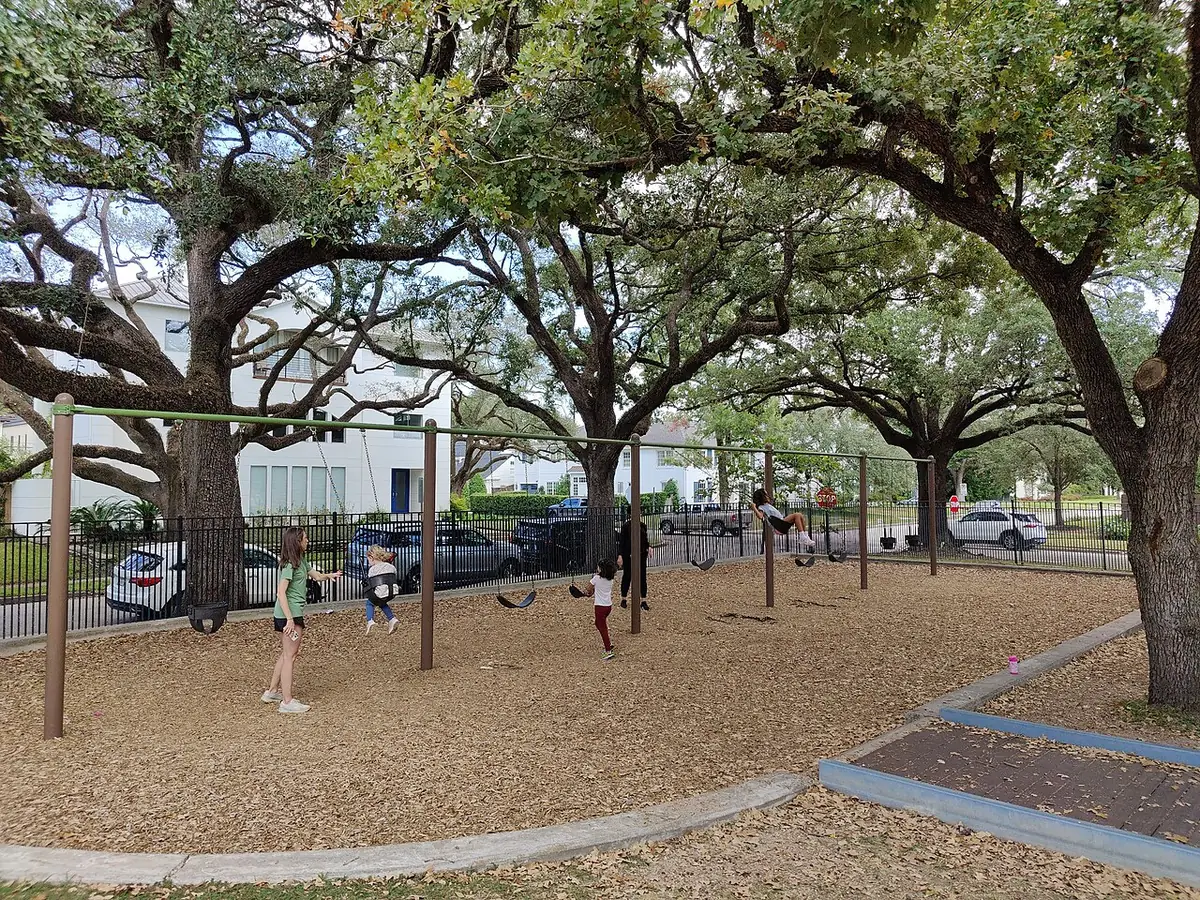
A shaded playground, popular with Houston families — Photo: EvanCarroll · CC BY-SA 4.0 · Wikimedia Commons
At the end of this analysis, your decision to move into a house in Houston should rest on a clear-eyed balance between the legitimate wish for space and the reality of the local logistics. Choosing to settle in the Texan metro area by renting a single-family house is a serious commitment that will change your travel habits, your energy budget and how you spend your free time. If you have taken on board the need to plan for the summer heat peaks, the demands of yard care and the unavoidable travel times on the region's enormous freeways, then you have everything you need to make the move work.
The Houston market rewards methodical preparation and punishes improvisation. Viewing properties with a critical eye on thermal insulation, the state of the foundations and how traffic really moves at peak hours turns a simple housing search into a genuine strategy for settling in well. Take the time to check every line of your projected budget and to read the specific clauses of your lease before you formalize anything with the landlord or the agency acting for them.
Whether you go for the wooded charm of The Heights, the family energy of the suburbs or the calm of the planned communities, your house in Houston will become the pivot of your new American life. Approach the move with pragmatism, curiosity and budgetary discipline, and make the most of the economic and cultural vitality that makes this southern Texan metropolis what it is.
Related questions
How long does it usually take to find and rent a house in Houston?
Searching for a house in Houston and signing the lease generally takes between three and six weeks. It is worth starting to track listings online about six weeks before your actual move-in date so that you have a decent range to choose from.
Do you really need a car to live in a house in Houston?
Yes, a personal vehicle is essential if you live in a house in Houston. The metro area is built around considerable sprawl, and public transport cannot carry your day-to-day trips from residential neighborhoods.
What running costs come on top of the rent on a house?
On top of the headline rent, a tenant renting a house in Houston pays the electricity bill, which climbs sharply in summer because of air conditioning, plus water, internet and, where the landlord does not cover it, the homeowners association (HOA) dues.
How does schooling work in residential neighborhoods?
Public schooling depends directly on the school district attached to your address. Before signing, check the reputation and the rating of the district that covers the house you are thinking of renting.
What effect does the weather have on looking after a house in Houston?
Houston's hot, humid subtropical climate calls for constant attention to ventilation so that mold does not take hold, and for regular servicing of air conditioning systems that run hard for most of the year.
Are pets easily accepted in rentals?
Many landlords accept pets in single-family houses with a yard, but that usually comes with an extra non-refundable deposit or a monthly charge known as pet rent, written into the lease.
What is a planned community or HOA in Houston?
A planned community is a residential development run by a homeowners association (HOA) that imposes strict rules on how homes look from the outside, how green space is maintained and how residents park, in order to protect the feel and the value of the neighborhood.
What documents do you need to rent a house as an expat?
Landlords generally ask for a valid passport, a work visa, recent proof of income (pay stubs or an offer letter from your employer), and bank references or a record of your previous tenancies if you have one.
How does central air conditioning work in Texan houses?
Central air conditioning is standard equipment and non-negotiable in every Houston house. It runs as a closed system and needs its air filters replaced monthly to stay efficient and to keep electricity use from running away.
Are house leases negotiable in Houston?
It is sometimes possible to negotiate parts of the contract, such as the length of the commitment, the landlord covering certain maintenance costs, or the size of the security deposit, depending on how tight the market is in the neighborhood you are targeting.
Property review of ting
No ting properties in Houston yet
Be the first — share it on ting and it shows up right here.