Investing in an apartment in Birmingham means getting to grips with the specifics of the local market, from the legal status of the lease to the dynamics of each district. This analytical guide takes you through it step by step, so you can secure your property project with clear eyes.
Get the app
What nobody tells you.
Real prices, hidden costs and the traps to check before you commit.
What do you actually gain by investing in a Birmingham apartment today?
Scroll
What do you actually gain by investing in a Birmingham apartment today?
Investing in an apartment in Birmingham means getting to grips with the specifics of the local market, from the legal status of the lease to the dynamics of each district. This analytical guide takes you through it step by step, so you can secure your property project with clear eyes.
Written by the ting.ad editorial team ·
Avenue Road, Birmingham in Street View: drag to look around.
That mixed reading of property value raises an immediate question about your buyer profile and how you would actually use the home.
Birmingham owes its growing appeal to a deep rebalancing between the economic reality of the UK regional cities and the financial saturation of the capital. Once you are willing to look beyond Greater London, you find a market where gross yield does not come at the expense of liquidity or of the depth of the employment pool. The common mistake is to judge the city purely as a cheaper alternative, when it is in fact a services, technology and infrastructure hub in constant transformation. Your decision should not rest on the initial cost difference alone, but on whether the asset can absorb the local economic cycles without losing its residential appeal.
Getting onto the ladder has historically been more affordable than in London or the South East of England.vsEven so, the price level calls for a careful look at service charges and at insulation requirements.
The apparent moderation of purchase prices can mask structural and maintenance costs specific to Victorian buildings or to the modernised large estates of the nineteen-seventies.
A powerful rental market driven by major universities and a diversified service sector.vsSharper competition in some segments, especially smaller units close to the stations and the main employment hubs.
Rental demand is not spread evenly across the conurbation; it concentrates where daily journey times are cut to a minimum.
Long-term urban regeneration prospects backed by public and private investment.vsA sometimes slow transition in the changing districts, creating micro-markets whose dynamics differ sharply from one street to the next.
It pays to look pragmatically at how far the big development schemes have actually progressed before assuming any automatic uplift in capital value.
An urban quality of life built around the waterways, the parks and the cultural third spaces.vsClear disparities between the settled residential pockets and the very busy traffic corridors that cut across the city.
Examining the immediate surroundings of the apartment always matters more than the broad promises made at district level.
Does this type of apartment really match your lifestyle and your plans?
Once your profile is clear, the next step is to measure the cultural and regulatory gap between your usual reference points and the reality of buying property here.
Buying an apartment is not simply a matter of optimising a budget per square metre; it reflects a daily trade-off between commuting time, the need for space and direct access to city amenities. Whether you approach this as a first home to live in, as a long-term investment or as a professional base, the type of property you should be looking for changes completely. Birmingham blocks come in extremely varied forms, from converted industrial lofts in the historic quarters to modern residential towers with services built in. Identifying your situation clearly stops you buying something the market likes but that does not suit what you actually want.
The young professional or couple after a central location
Your absolute priority is cutting daily journey times right down and staying close to stations such as New Street or Snow Hill. You should focus on compact one- and two-bedroom apartments in recent schemes or in the regeneration zones of the former industrial quarters. These properties resell well and stay liquid if your plans change in the medium term.
In exchange, you accept limited outdoor space, or none at all, and service charges that are often high because of lifts, concierge services and shared communal areas. Sound insulation and the energy performance of these recent buildings are essential points to check if you want to protect your day-to-day comfort.
The considered long-term investor
Your strategy targets the robustness of rental demand rather than a property you fall in love with. You will naturally look at firmly established areas, close to the university campuses or the major hospital hubs, where tenant turnover stays healthy and predictable. One-bedroom apartments generally offer the best balance between the initial purchase cost and the headline rent you can collect.
This approach demands absolute administrative rigour, particularly when reviewing any leases in place, the service charge history and compliance with UK energy performance rules. Neglecting these technical points at the purchase stage exposes you to unplanned spending that can erode your net return for years.
The part-time resident or working nomad
You value simplicity of use and the security of a managed development or one with a strict access system. The ideal apartment is in a recent city-centre building, where outsourced management of the communal parts and the services frees you from logistical worries while you are away. What you are really buying is headspace and complete peace of mind.
In exchange, the purchase cost per square metre is higher and there is often little room to negotiate, because demand in this particular segment is strong. The annual management costs, known as service charges, also weigh heavily on the overall cost of holding the asset.
Living here when you are arriving from abroad: what fundamentally changes in the transaction and in the home
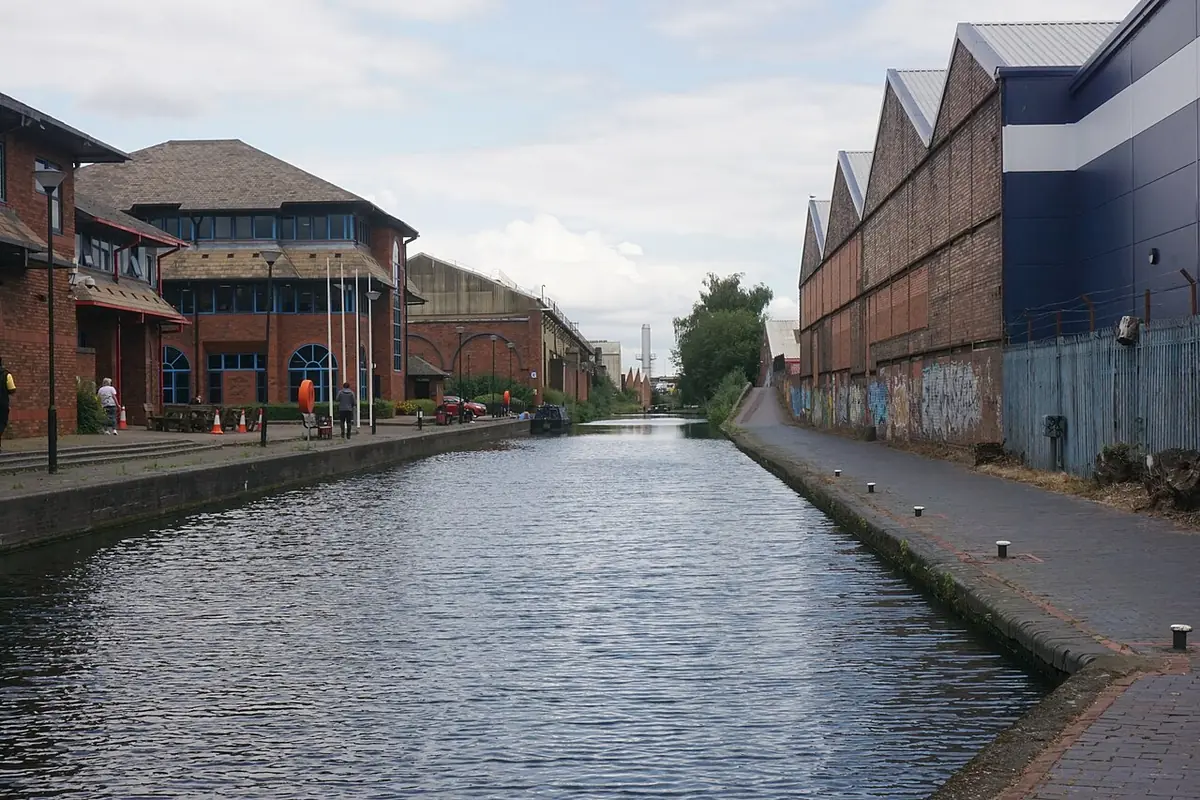
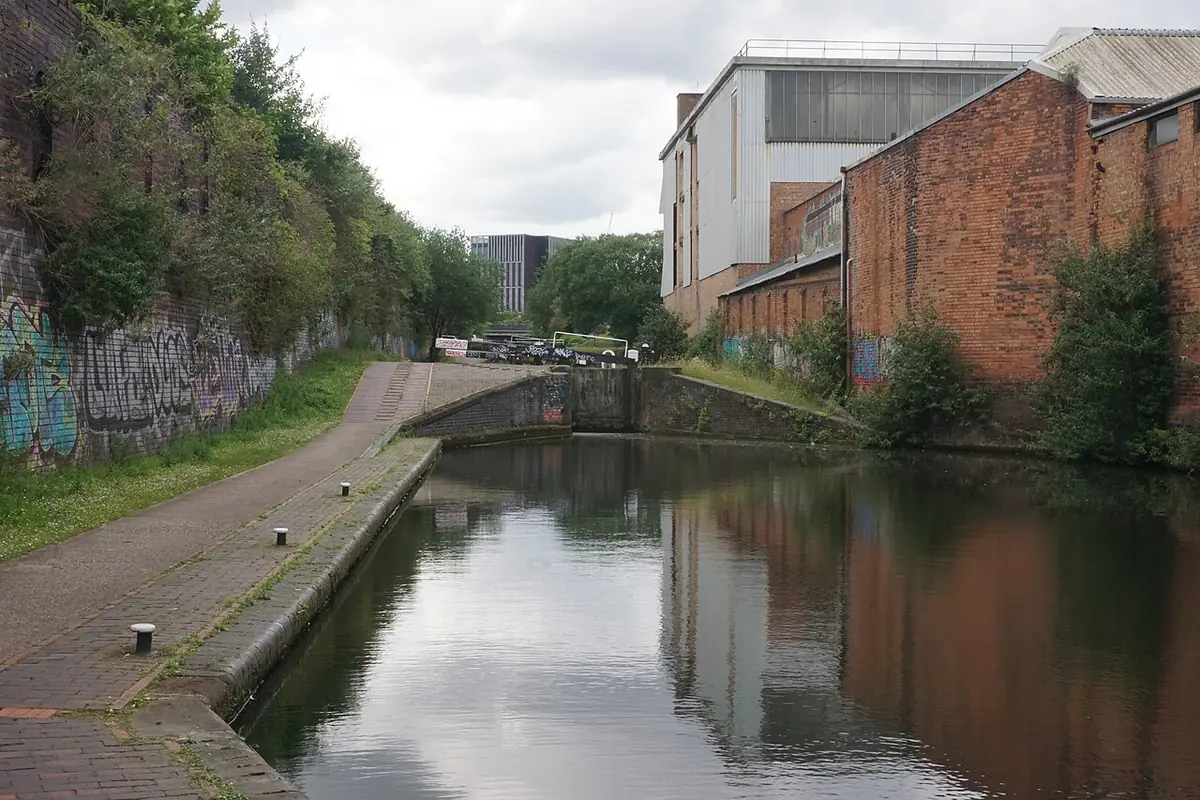
The canal towpath near Aston, part of daily life around the city's waterways — Photo: Bill Boaden · CC BY-SA 2.0 · Wikimedia Commons
This particular legal set-up shows up very concretely in the choice of district where you will put down your bags.
Buying property in the United Kingdom follows customary and legal rules that differ profoundly from the practices most overseas buyers are used to. Approaching the Birmingham market without understanding these mechanisms leaves you exposed to serious misunderstandings during negotiations or when assembling your file. From the notion of tenure (freehold versus leasehold) to the central role of solicitors, every step in the transaction chain rests on specific principles of English law. Knowing these markers before you commit lets you steer your project calmly and avoid the pitfalls that come with the local specifics of property law.
From abroad
The idea of perpetual, indivisible ownership of both the building and the ground beneath it.
Birmingham
The leasehold system (a long lease), which predominates for apartments.
You are buying the right to occupy the property for a fixed term (often several centuries), but the land belongs to a freeholder to whom you pay an annual charge (ground rent), which makes it essential to check carefully how many years are left on the lease before making any offer.
From abroad
A binding preliminary sale contract signed directly between the parties or through an agency.
Birmingham
The absence of any binding legal commitment until exchange of contracts.
Until that formal step, handled by the lawyers, buyer and seller alike can walk away without any significant financial penalty, which makes the negotiation and due diligence phase particularly tense and uncertain.
From abroad
A neutral public officer who drafts the deed and protects both parties at once.
Birmingham
The solicitor or conveyancer, instructed individually by each party to defend that party alone.
You must pay for your own legal adviser to audit the title, raise enquiries with the local authority and negotiate the terms of the purchase contract, which represents a cost and a delay you cannot compress in the timetable.
From abroad
Service charges worked out on simple ownership shares and run by a professional managing body.
Birmingham
A complex system of service charges and reserve funds run by managing agents.
The amounts can vary noticeably from one year to the next depending on the maintenance works voted through, so you need to look at the last three years of accounts to anticipate any exceptional demand for funds.
Which Birmingham district should you favour, given your priorities for living and getting around?
Looking at these different areas leads naturally to the financial reality of the prices being paid in the local market.
Birmingham is structured around a lively historic core and outlying districts with strong identities of their own, linked by a public transport network that keeps improving. Where you choose to settle determines not only the quality of your daily life but also how resilient your investment will be to market swings. Every area has its own rhythm, its own advantages in terms of amenities and its own trade-offs in terms of noise or purchase budget. A thorough visit at different times of day is indispensable if you want to confirm that the feel of a district matches what you personally need.
Colmore Business District and the core centre
A busy business atmosphere during the day, set by the flow of office workers, that quietens noticeably at the weekend in favour of the restaurants and cultural venues.
Suits
Working professionals who want immediate access to the offices, the main railway stations and high-end dining within walking distance.
Trade-off
Some of the highest prices per square metre in the city, and evening activity that can be limited outside the strictly commercial areas.
Brindleyplace and the canalside
A carefully kept waterside, pedestrian setting that combines converted industrial architecture with high-specification contemporary residential blocks.
Suits
Those who value attractive surroundings, canal-side walks on the doorstep and a district life that is lively but under control.
Trade-off
Strong pressure on available stock and high service charges linked to the quality of the facilities offered in the developments.
Jewellery Quarter
A creative, independent village feel shaped by the area's jewellery-making history, home to artists' studios, independent breweries and sought-after lofts.
Suits
Anyone drawn to period architectural character, red brick and relative quiet while staying ten minutes on foot from the very centre.
Trade-off
A mixed housing stock where listed historic buildings sit alongside new construction, calling for extra care over the condition of the structures.
Edgbaston
A green residential setting, marked by fine tree-lined avenues, landscaped parks and a very English calm.
Suits
Families or buyers looking for space, well-regarded schools nearby and a more residential way of life.
Trade-off
Relative distance from the main city-centre stations, which means regular use of public transport or the car.
What does an apartment in Birmingham really cost, by type and by location?
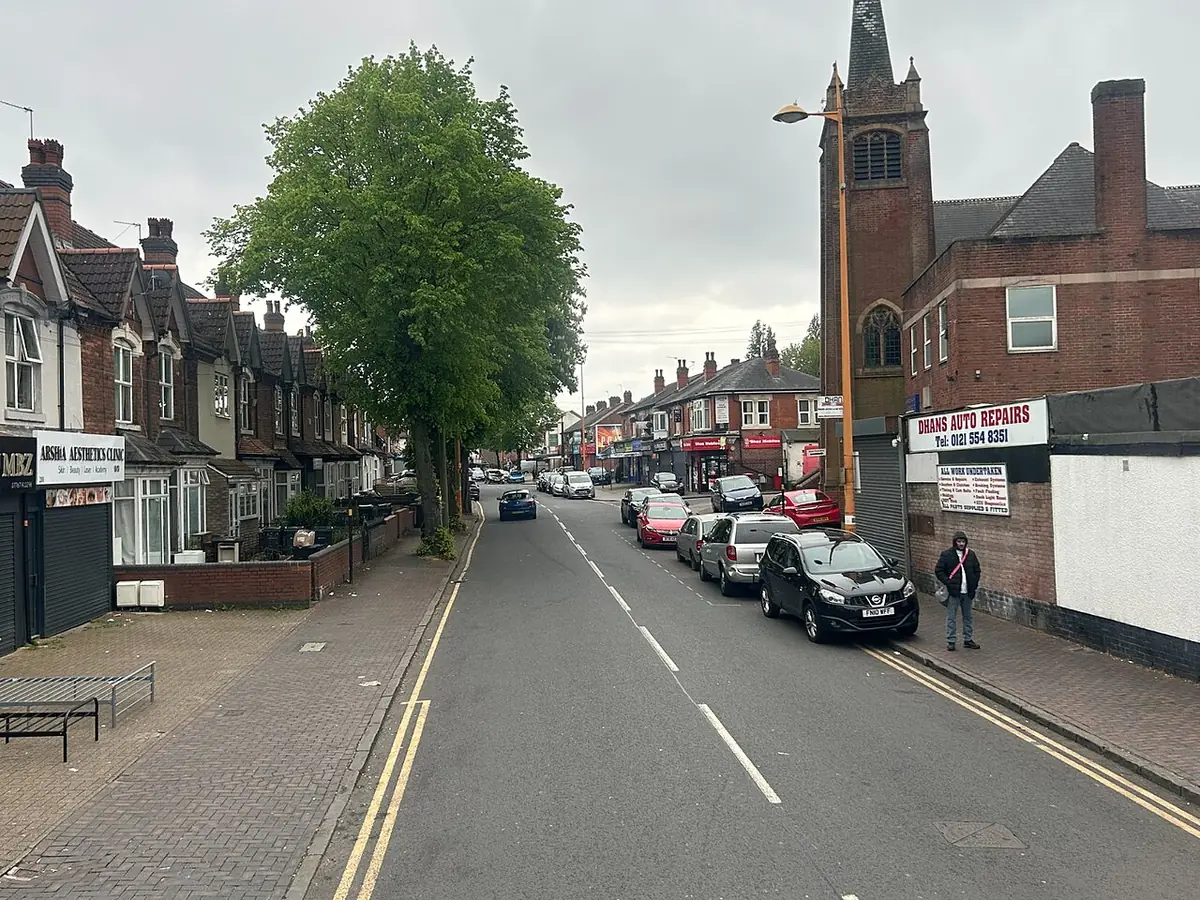
A typical Handsworth high street, shops below flats and houses nearby — Photo: Philip Halling · CC BY-SA 2.0 · Wikimedia Commons
Beyond the headline purchase cost, exactly what you own in legal terms deserves close examination.
Budgeting a property project in Birmingham means combining several indicators: the headline purchase price, the legal and conveyancing fees, the local taxes (Council Tax) and the recurring service charges. The local market shows noticeable gaps depending on how close a building is to the transport hubs and on its build quality. Rather than chasing an illusory average price, you should look at the ranges observed in the segments that interest you, so you can size your financing plan realistically and avoid unpleasant surprises when your mortgage comes through.
birminghamFor saleApartmentestimate
Median price / m²£2,850Half the apartments sell below this
Median price£195kthe average is 14% higher — a few very large properties pull it up
Most common2 bedrooms48 % of listings
Average size65 m²
By number of bedrooms
Bedrooms
Share of market
Avg price
Price / m²
Avg size
1
30 %
£146k
£3,240 +8 %
45 m²
2most common
48 %
£195k
£3,000
65 m²
3
18 %
£248k
£2,820 −6 %
88 m²
4
4 %
£317k
£2,760best value / m²
115 m²
Each row is an average, compared against the area average of £3,000 / m². These are indicative estimates of a typical local market, not a measured sample of live listings. Check current listings before relying on them.
What you can actually own: understanding the legal structure of your investment
Getting the legal framework straight leads directly to the chronology of a successful property transaction.
Under UK property law, buying an apartment almost never gives you absolute outright ownership of the land and the structure of the building. You become the owner of a defined volume and of a temporary right of occupation, governed by a complex lease. This separation between the bricks and the ground is the biggest single difference from the habits buyers bring with them from elsewhere. Ignoring the restrictive clauses in that lease, or overlooking how long it has left to run, can seriously undermine the resale value of your property in time, which is why your solicitor has to go through every line of the document with care.
The leasehold framework and its fixed-term lease
You are buying an exclusive right of occupation for an initial period often set at 125, 250 or 999 years. Every year that passes shortens the remaining term, and a lease that drops below the critical threshold of 80 years starts to lose market value and becomes harder to fund through a lender.
What it changesYou must insist that your solicitor checks the exact remaining term of the lease and assesses the likely cost of extending it in future with the owner of the land (the freeholder).
Collective control of management by the flat owners (share of freehold)
Some Birmingham blocks are organised as a collective company in which the flat owners also hold a share of the land and of the overall freehold of the building. This structure gives more control over decisions about works and removes the payment of abusive ground rents.
What it changesYou get more transparent governance and better management of the running costs, which is an extremely solid selling point over the long term.
The rule to understand before you pay a deposit and sign up to the purchase
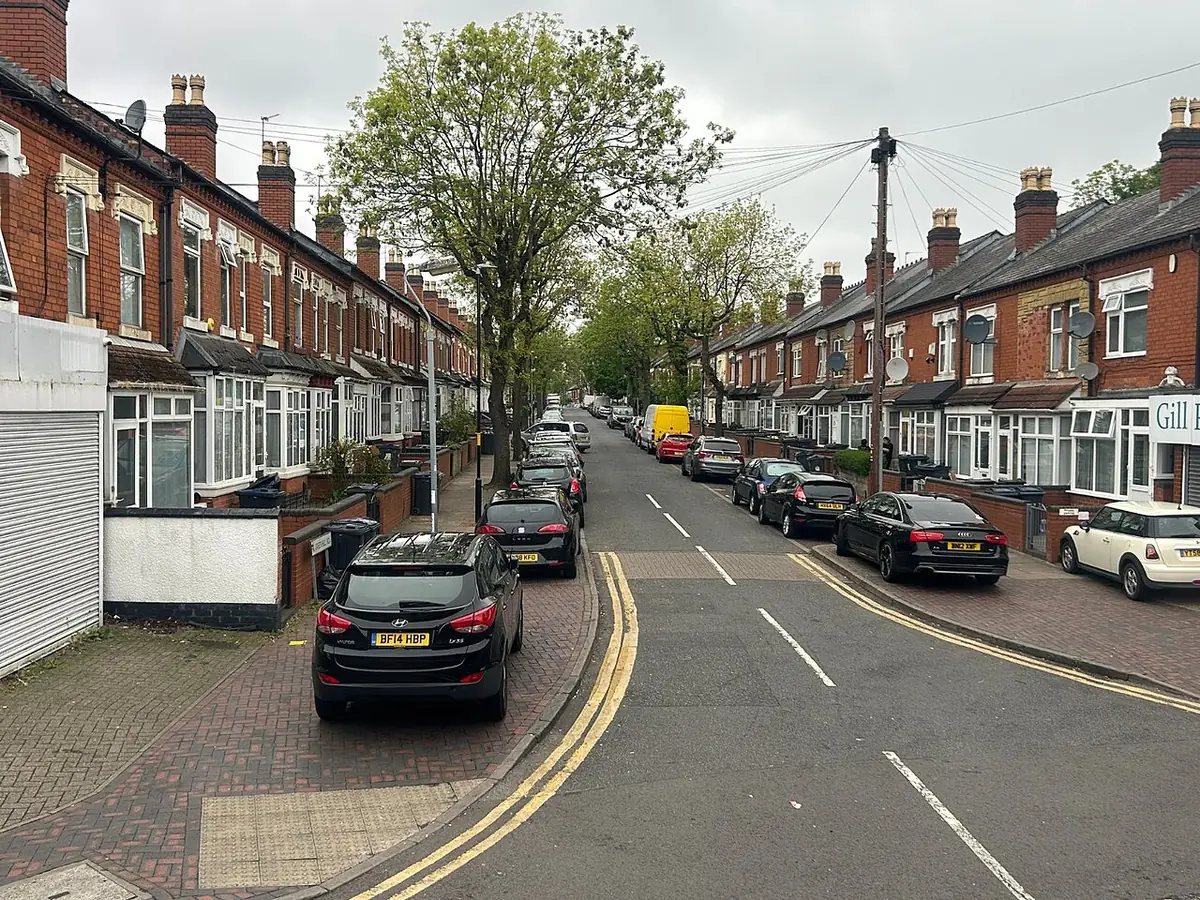
Terraced streets like this are the everyday housing stock across Birmingham — Photo: Philip Halling · CC BY-SA 2.0 · Wikimedia Commons
That procedural discipline carries straight through into coordinating the various people involved across the timetable.
Buying property in the United Kingdom is characterised by apparent flexibility at the start and complete rigidity at the end, when contracts are exchanged. Unlike systems where the commitment is virtually immediate as soon as a preliminary contract is signed, English law lets the parties negotiate, change their offers or walk away without penalty for weeks on end. Understanding this sequence stops you running up survey costs or legal fees too early in a deal that might never happen. Caution and method are your best allies for securing every stage of progress towards final signature.
You make a written offer to the estate agent representing the seller, setting out how you intend to finance the purchase.
The offer is accepted by the seller, which starts an informal period of exclusive negotiation that carries no absolute binding legal force.
You instruct your solicitor to start the detailed legal searches and to audit the administrative position, the title and the terms of the lease.
You commission an independent technical survey of the building (a home survey) to identify any hidden defects, damp problems or structural repairs needed.
You obtain your formal mortgage offer from your lender, once their underwriting team has validated your financial profile.
Exchange of contracts is carried out by the lawyers: the purchase becomes legally irrevocable, and you pay a deposit that is not refundable if you pull out.
How does a transaction unfold, step by step, through to handover of the keys?
That methodical discipline is what makes your investment durable in one of the most dynamic cities in the United Kingdom.
Seeing a property purchase in Birmingham through to the end means coordinating a number of professionals with strictly defined roles. From the estate agent who negotiates the price to the solicitor who secures the transfer of ownership, each one takes care of one precise facet of your project. Clear communication and respect for administrative deadlines determine how smoothly the transaction runs. By anticipating the paperwork required at each stage and keeping up a constant dialogue with your advisers, you will avoid the common blockages that needlessly delay the day you move in.
The buyerPutting the financing file together and choosing your professionalsYou gather your proof of income and your bank statements for recent months, and choose your solicitor and your mortgage broker.
The estate agentNegotiating the offer and passing it to the solicitorsThe agent puts your proposal to the seller and draws up the memorandum of sale that formalises the agreed terms.
The solicitorLegal due diligence and checking the leaseYour lawyer raises enquiries with the local authority, reviews the leasehold history and prepares the reports that confirm the property is in order.
The chartered surveyorTechnical inspection and survey reportThe surveyor assesses the structural condition of the apartment and the building, quantifying the works ahead so that you can renegotiate the price if need be.
The solicitorsExchange of contracts and setting the completion dateThe lawyers formally exchange the signed commitments and hold the deposit, fixing the definitive date for the transfer of ownership.
The buyer and the banksCompletion and handover of the keysThe remaining funds are sent by interbank transfer, title is registered with HM Land Registry, and you collect the keys.
Choosing between a city-centre apartment and a house on the edge of Birmingham
Buying property in Birmingham forces a structural choice between the vertical city of the recent central schemes and the horizontal calm of the residential districts. Apartments in areas such as Brindleyplace or the Jewellery Quarter put you next to the employment pools, public transport and a dense cultural life, but they come with service charges that can be high and outdoor space often reduced to a single balcony. For an investor or a young professional, this option maximises rental liquidity and minimises daily journeys, while exposing you to the price volatility typical of hyper-urban markets.
Conversely, choosing a detached or terraced house in districts such as Harborne, Moseley or Sutton Coldfield changes the equation entirely. You gain a private garden, more living space and the quiet that families look for, at the cost of longer commutes and greater dependence on suburban road or rail links. Maintaining the fabric of the building, from the roof to the garden, falls entirely on the owner, which calls for a stronger cash reserve than an apartment run by a management company.
Financially, long-term values respond to different economic drivers. Apartments in central Birmingham depend heavily on the pull of the city's technology and financial hubs, attracting a young and mobile population with little appetite for buying for the long haul. Suburban houses, by contrast, benefit from the strength of well-regarded school catchments and a local community fabric that keeps households in place for decades, steadying prices even when the cycle turns. Your way of life, your investment horizon and your tolerance for maintenance should guide this first decision, before you start looking at price tables.
What overall budget do you need to secure to settle in Birmingham for the long term?
Budgeting a property project in Birmingham does not stop at the asking price shown on the listing portals. You have to factor in the local council tax, the service charges for blocks of flats, and the conveyancing fees and stamp duty payable in England. A rigorous financial picture protects the buyer from unpleasant surprises in the very first year of occupation.
Property and everyday living costs in Birmingham
Budget item
Estimated range (GBP)
Frequency and notes
Purchase price (one- to two-bedroom apartment)
180,000 - 320,000 GBP
Varies considerably with proximity to the centre and the canals.
Council Tax
1,200 - 2,400 GBP
Annual, depending on the property's valuation band.
Service charge
1,500 - 3,500 GBP
Annual, covering upkeep of the communal areas and the lift.
Home insurance (buildings and contents)
250 - 600 GBP
Annual, required for any mortgage financing.
The amounts shown are based on the averages observed in the Birmingham property market for standard properties.
What does the day-to-day logistics of living in Birmingham actually look like?
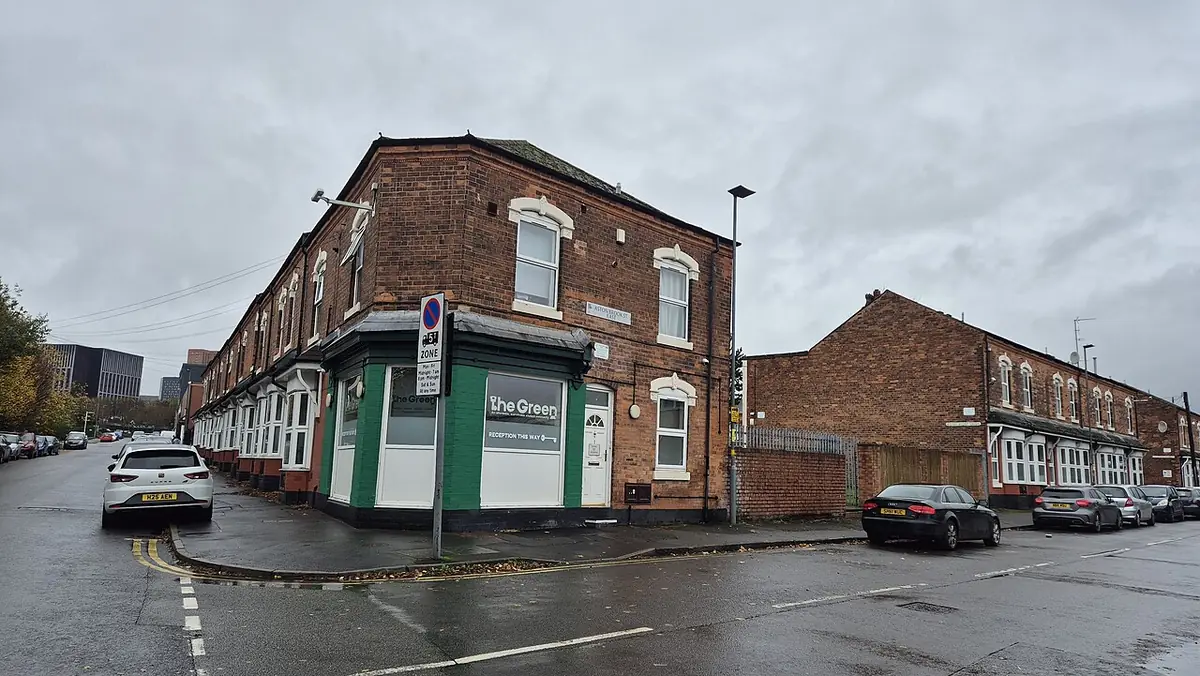
Corner pubs and terraced rows like this define Aston's streets — Photo: Paul Collins · CC BY-SA 2.0 · Wikimedia Commons
The rhythm of a typical day in Birmingham depends largely on where you land and on your working commitments. Between the commuter flows converging on New Street Station and access to first-rate healthcare, organising your day means planning around journey times. Here is the typical shape of an ordinary Tuesday for a working resident.
07:30Residential district or city centreLeaving home after checking traffic conditions on the main city routes.
08:15West Midlands Railway network or the Metro tramMorning journey towards the business district or the city's university hubs.
09:00Workspace or central officeArrival at work, marking the end of the first leg of the daily commute.
12:30City centre or local shopping streetsLunch break in one of the city's many restaurants or covered markets.
17:30Local schools or nurseriesPicking up the children from the education settings allocated to your area of residence.
19:00Home or local shopsLast-minute shopping and a quieter return to the neighbourhood before the evening.
The hidden sides of the Birmingham property market that the brochures leave out
Behind the developers' marketing brochures lie technical and administrative realities that any careful buyer should investigate before signing. The legal structure of long leases and the planning schemes under way have a deep effect on the future value of your investment.
The leasehold regime and ground rents
Many apartments in Birmingham are not sold freehold but on a long lease. You need to check the remaining term and the clauses that index the ground rent, because a lease of under 80 years makes a mortgage harder to obtain.
Infrastructure projects and temporary disruption
Birmingham is a city in permanent transformation, with major transport works under way. Knowing the route of future tram lines or the boundaries of low-emission zones stops you discovering serious noise or traffic diversions after you have moved in.
The real condition of the communal areas in older buildings
Victorian factory conversions have undeniable charm but sometimes house ageing installations. A thorough audit of the block's reserve fund is essential to anticipate exceptional demands for funds on the roof or the structure.
The real energy performance (EPC)
UK energy efficiency rules are tightening for landlords and owner-occupiers alike. A poorly rated property will need costly insulation work, which should be built into your initial offer.
The classic traps and the regrets people voice six months after buying in Birmingham
Looked likeA quiet district, perfectly served by public transport, on a Saturday afternoon viewing.
Turned outAn area gridlocked at weekday peak hours, with recurring parking difficulties for visitors.
Would have caught itVisiting the area around the property at different times, in particular on a weekday morning and a weekend evening.
Looked likeModerate, stable service charges as mentioned in the original listing.
Turned outAn unexpected increase voted through by the owners' meeting to fund bringing the lift up to standard.
Would have caught itAsking for the minutes of the last three general meetings to identify works voted through or under discussion.
Looked likeLocal shops and central green space right on the doorstep.
Turned outPersistent night-time noise from late-night venues immediately nearby.
Would have caught itChecking the local planning records and looking into the night-time commercial activity on the street.
Looked likeA turnkey property needing no significant cosmetic or structural work.
Turned outDamp problems masked by fresh paint at a viewing held during a dry spell.
Would have caught itInstructing an independent surveyor to carry out a thorough technical inspection before the conditions are lifted.
In which specific cases should you give up on buying an apartment in Birmingham?
Buying is not the right answer for every profile. Some professional or personal circumstances make renting far more sensible, preserving your financial and geographical flexibility for the years ahead.
The young professional moving between countries
→Flexible renting in the city centre
An uncertain short-term career horizon does not allow you to recover the legal and exit costs tied to a quick resale on the Birmingham market.
The investor after an immediate, hands-off yield
→Alternative financial investments
The regulatory constraints on the English rental sector and the level of service charges reduce the net return on small urban apartments.
The household with fluctuating income or no emergency savings
→Keeping their savings liquid
Being unable to absorb a rise in interest rates or unforeseen building works exposes the buyer to the risk of a forced sale at a low price.
Pulling it together and validating your Birmingham property purchase
Canal walks like this are part of daily routines near Aston — Photo: Bill Boaden · CC BY-SA 2.0 · Wikimedia Commons
At the end of this analysis, your plan to buy property in Birmingham should rest on factual criteria rather than on an impulse dictated by market pressure. Deciding to buy an apartment or a house in this fast-growing city means weighing the stability of your life plans against the financial and logistical constraints particular to each district. If your professional and personal horizons run to at least five to seven years, buying is a powerful lever for building wealth and securing the setting you live in.
The local specifics, whether long leases, local taxes or service charges, should not be seen as insurmountable obstacles but as variables to build into your overall financial equation. By setting the reality of prices per square metre against your borrowing capacity and your tolerance for maintenance work, you avoid the missteps and disappointments seen far too often among ill-prepared first-time buyers.
Take the time to view the properties you have shortlisted at different times of day, insist on transparency about the technical and financial state of the block, and surround yourself with independent professionals to validate each legal stage. Your investment in Birmingham should serve your day-to-day peace of mind, not become a constant source of stress. If all these lights are green, you now have the methodical grounding to take the step with confidence.
Related questions
Which districts are the most sought after for buying an apartment in Birmingham?
The most sought-after districts include the Jewellery Quarter for its historic character, Brindleyplace for its modern, lively waterside setting, and the Mailbox for buyers looking for high-end specification within immediate reach of the shops.
What is the leasehold system and why does it matter in Birmingham?
Leasehold means you are buying the right to occupy the property for a fixed period, while the land itself belongs to the owner of the ground (the freeholder). It is essential to check how many years are left on the lease, to avoid a discount on the value of the property and difficulties when you come to resell.
What additional costs should you budget for when buying a property in England?
On top of the purchase price, you need to budget for Stamp Duty Land Tax, legal fees (conveyancing fees), the cost of a technical survey, and any local taxes and first-year service charges.
How long does a property transaction in Birmingham usually take to complete?
On average, buying a property in England takes between three and five months from the seller accepting your offer to final completion, depending on how quickly the legal searches come back and the mortgage is granted.
Can you buy a property in Birmingham without being a UK resident?
Yes, non-residents can buy property in the United Kingdom, but they face stricter lending conditions from the banks and sometimes a stamp duty surcharge that applies to overseas buyers.
How does Council Tax work for apartments in Birmingham?
Council Tax is an annual tax calculated by the local authority based on the assessed value of the property as at 1 April 1991. It is split into bands (A to H) and funds local public services and the roads.
What are the long-term capital growth prospects in Birmingham?
Supported by investment in transport infrastructure such as the HS2 project and by the strength of the regional economy, Birmingham shows sustained prospects for capital growth, particularly in areas benefiting from urban regeneration programmes.
Do you have to use a solicitor to buy an apartment in England?
Yes, using a property lawyer (a solicitor or licensed conveyancer) is essential to carry out the legal checks, draw up the contracts and transfer the funds securely during the transaction.
What should guide the choice between an older apartment and a new-build scheme?
New-build schemes offer better energy performance and a developer warranty, but often carry a higher price per square metre. Older stock generally offers more generous proportions and established central locations, at the cost of maintenance charges that can be less predictable.
How can you check that a Birmingham block is in good financial health?
Through your solicitor, you should ask for a detailed statement of the block accounts, the amount held in the reserve fund and a summary of the works voted through or carried out over the last three years, so that you are not hit by a surprise demand for funds.
Property review of ting
No ting properties in Birmingham Gb yet
Be the first — share it on ting and it shows up right here.