Valuing an apartment in Singapore means turning a home into a figure on a market where transaction prices are public, yet where the remaining lease, the market segment and the profile of the likely buyer move the number sharply. This guide explains what a valuation actually measures, who produces it and how much confidence it deserves before you sell, keep, refinance or divide an estate.
Get the app
What nobody tells you.
Real prices, hidden costs and the traps to check before you commit.
What a Singapore apartment valuation really measures
Scroll
What a Singapore apartment valuation really measures
Valuing an apartment in Singapore means turning a home into a figure on a market where transaction prices are public, yet where the remaining lease, the market segment and the profile of the likely buyer move the number sharply. This guide explains what a valuation actually measures, who produces it and how much confidence it deserves before you sell, keep, refinance or divide an estate.
Written by the ting.ad editorial team ·
Valuation Apartment Singapore in Street View: drag to look around.
Valuing an apartment in Singapore is not a matter of multiplying floor area by an average price per square foot found on a listings portal. The market is one of the most transparent in Asia, since private transaction prices are published by URA, but that transparency creates a false impression of precision. The value of your unit depends on the remaining lease, the floor level, the condition of the development and, above all, on which buyer can still pay that price given stamp duties and financing rules. The same address can therefore carry several legitimate figures, depending on whether you mean market value, bank valuation or tax value. Before settling on an amount, you need to know which of those readings you are holding.
A public, verifiable pricevsA value specific to your unit
Published transactions give a solid benchmark for a development or an area. They say nothing about internal condition, outlook or works already voted through, all of which can move your apartment several percentage points away from the average.
Market value for a local buyervsThe figure the bank accepts
An agent reasons from what a motivated buyer might agree to pay in the coming weeks. A bank settles on a cautious figure that caps the loan, and that gap bears directly on the price a buyer can actually finance.
Value in use todayvsThe value of a lease that is shortening
Most developments sit on 99-year state leases, and every year that passes shortens the term handed to the next owner. The discount stays discreet at first and then accelerates, so a figure that is fair today can look optimistic in ten years.
The asking price in listingsvsThe price actually agreed
Portals display asking prices that usually build in room to negotiate. Only completed and published transactions carry weight, and those are what any serious valuer compares your property with.
Which reading of value fits the way you use your Singapore apartment?
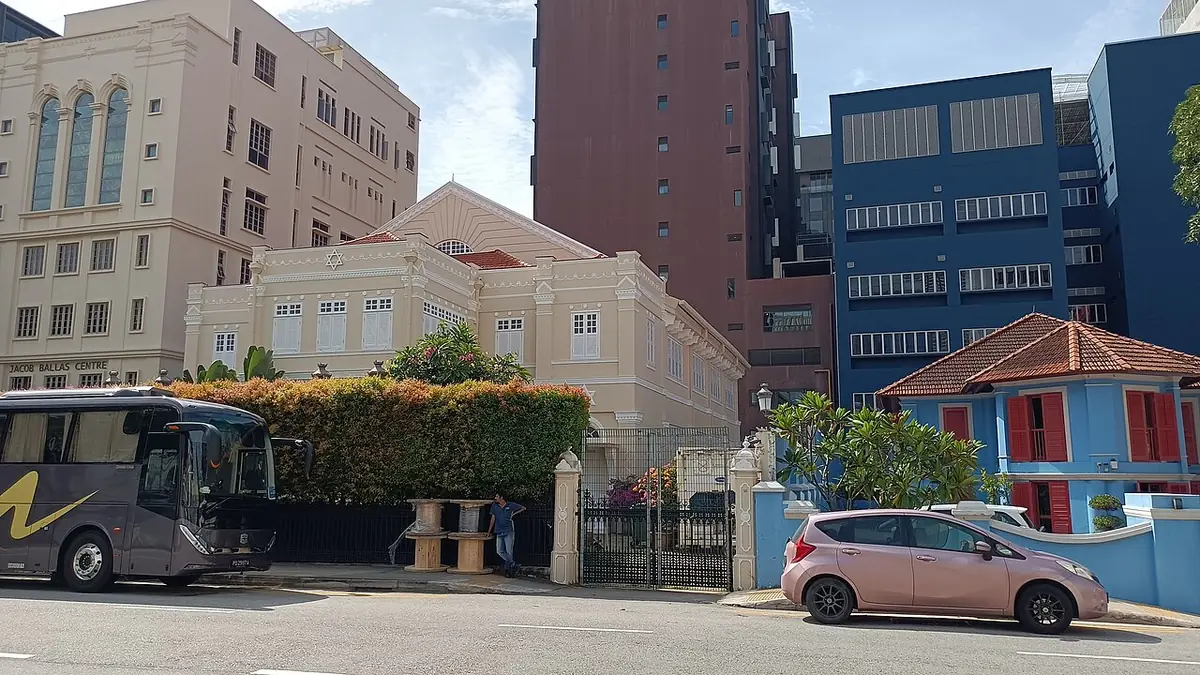
Old shophouses and new towers share this Singapore street — Photo: GoAheadFan95 · CC BY-SA 4.0 · Wikimedia Commons
A valuation only makes sense in relation to the decision it prepares. An owner thinking of selling within the next few months needs a realistic market value, tested against the most recent sales in their development. Someone keeping the property to let it out or to refinance cares more about the bank's figure and the rental yield. An estate, a gift or a division of jointly held property calls for a dated, documented figure that stands up to scrutiny, often in two countries at once. Here is how your situation shapes the reading of value and the kind of valuation to ask for.
Owner preparing to sell
Your main benchmark is market value: what a local buyer, citizen or permanent resident, would agree to pay today for a comparable unit. Test the opinions of two or three agents against the transactions URA has published for your project and for neighbouring developments of similar age. Check the date you became the owner as well, since seller's stamp duty can apply to a quick resale and reduce the net sum you receive. Finally, hold a range rather than a single figure, remembering that the buyer's bank will value the property on its own terms.
Landlord or borrower
For you, the figure that counts is the one the bank will accept, because it sets how much you can borrow or renegotiate. Lenders often provide an indicative valuation before any commitment, and it is worth comparing several. Rental value is the other relevant reading: the rent achieved, set against the assessed value, gives a gross yield that places your property against the wider market. Keep an eye on the remaining lease, which influences both the bank's figure and the appetite of future buyers.
Heir, donor or co-owner
What you need is a dated figure you can justify to a tax authority, a lawyer or the other parties. A report prepared by a valuer licensed in Singapore, citing the comparable transactions relied on, is the soundest basis. If you are tax resident in another country, the value will usually have to be declared there too, converted into that currency at the date the applicable rule requires. Have a lawyer or tax adviser confirm the valuation date and the accepted method, because a figure that is too low or too high can be challenged on either side.
Valuing a Singapore apartment from abroad: what works differently here
An owner used to valuations in a European market finds familiar tools in Singapore, but their logic differs on several decisive points. Public data is faster and more detailed, the unit of measurement is not the same, and the legal nature of the property weighs far more heavily on value. Tax rules aimed at foreign buyers also reshape demand, and therefore the achievable price. Understanding those gaps stops you judging a Singapore figure with imported reflexes. Here are the essential points where the two markets part company.
From abroad
Price databases published with several months of delay
Singapore
Private transactions published by URA, with project, date and floor range
You can compare your unit with very recent sales in the same development, which reduces the share of opinion in a valuation and makes a fanciful figure easier to spot.
From abroad
The price per square metre as the reference unit
Singapore
The square foot (psf) as the common language of agents and valuers
One square metre is about 10.76 square feet; convert systematically before comparing a Singapore price with a benchmark expressed per square metre.
From abroad
Outright ownership of the land, almost standard for an apartment
Singapore
99-year state leases under a large share of private developments
The remaining lease becomes a central variable of value, on a par with location, and two neighbouring buildings can diverge markedly for that reason alone.
From abroad
A free value opinion from an agency hoping to win the listing
Singapore
Comparable agent opinions, but a licensed valuer's report for any official use
An agent's opinion helps frame a range; for a bank, an estate or a dispute, only a report from a licensed valuer carries real weight.
From abroad
A foreign buyer facing the same costs as a domestic buyer
Singapore
A very heavy additional stamp duty for foreign buyers
The value of your property is set first by citizens and permanent residents; a figure that assumes strong international demand is probably overstated.
Which Singapore district sets the comparables for your apartment?
In Singapore, the private market is read through three broad segments tracked by URA: the Core Central Region (CCR), the Rest of Central Region (RCR) and the Outside Central Region (OCR). Each segment has its own buyers, its own levels per square foot and its own sensitivity to cooling measures. Within a single segment, walking distance to an MRT station, sought-after schools and the age of the building create further wide gaps. To value your apartment, you therefore need to identify the area whose transactions genuinely serve as comparables, rather than the island-wide average. Here is how value is formed in four representative areas.
Orchard and the Core Central Region (CCR)
Buyers here pay for a prestigious address, proximity to malls and offices, and a property that stays liquid among wealthy purchasers.
Suits
Recent units, freehold or on a long lease, where comparable sales are numerous and easy to read in the public data.
Trade-off
This segment leaned more on foreign demand, which makes its value more sensitive to stamp duties and to the gap between asking and agreed prices.
Tiong Bahru and the heritage districts
Value rests on the character of the area, its cafes, its low-rise architecture and a neighbourly life that appeals to locals and expatriates alike.
Suits
Apartments whose scarcity and location offset their age, where recent sales exist in genuinely comparable buildings.
Trade-off
Comparables are few and inconsistent, leases often further advanced, which widens the valuation range and calls for more caution.
East Coast and Marine Parade
Families come for the sea, the parks, more generous floor areas and the new stations on the Thomson-East Coast Line.
Suits
Three-bedroom family apartments, whose value reads clearly thanks to a steady volume of sales across developments of varying age.
Trade-off
The gap between freehold and 99-year leasehold developments is pronounced here, and real walking distance to the MRT weighs heavily on price.
Districts 9, 10 and 11 (River Valley, Bukit Timah)
The buyer pays for quiet avenues, closeness to sought-after schools and an upmarket residential setting near the centre.
Suits
Large floor areas and premium developments, for which an individual valuer's assessment is often justified.
Trade-off
High absolute amounts shrink the pool of buyers able to pay, which can lengthen timelines and make value more sensitive to financing.
What is an apartment in Singapore worth today?
The figures below give a starting point for placing the value of a private apartment in Singapore, expressed in Singapore dollars and per square metre to make comparison easier. They are an average benchmark rather than a valuation of your unit: the remaining lease, the floor level, the age of the development and the market segment can move value by tens of percent. Note that the price per square metre generally falls as floor area rises, which rules out applying the average mechanically to a large apartment. To convert to a square foot basis, divide the price per square metre by about 10.76. Then test these benchmarks against the recent transactions URA has published for your development.
SingaporeFor saleApartmentestimate
Median price / m²SGD 18,525Half the apartments sell below this
Median priceSGD 1.35mthe average is 14% higher — a few very large properties pull it up
Most common2 bedrooms34 % of listings
Average size90 m²
By number of bedrooms
Bedrooms
Share of market
Avg price
Price / m²
Avg size
1
22 %
SGD 1.05m
SGD 21,060 +8 %
50 m²
2most common
34 %
SGD 1.46m
SGD 19,500
75 m²
3
32 %
SGD 1.95m
SGD 18,525 −5 %
105 m²
4
12 %
SGD 2.51m
SGD 17,940best value / m²
140 m²
Each row is an average, compared against the area average of SGD 19,500 / m². These are indicative estimates of a typical local market, not a measured sample of live listings. Check current listings before relying on them.
What you actually hold in Singapore: 99-year lease or freehold, and what it does to value
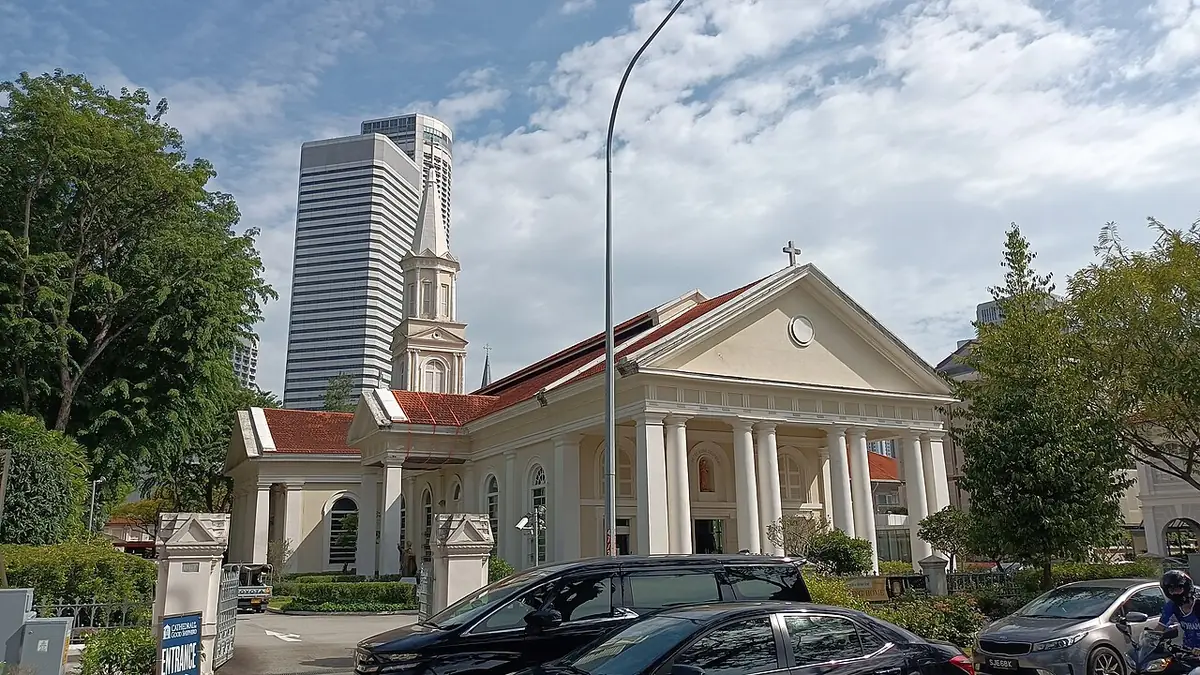
Heritage and modern Singapore side by side — Photo: GoAheadFan95 · CC BY-SA 4.0 · Wikimedia Commons
In Singapore, the legal nature of your unit counts almost as much as its address in the formation of value. Most private apartments are held under a strata title, meaning a private lot together with a share of the common property, but the underlying land may be owned outright or granted by the state for a limited term. That difference changes the value today, the way it will move, and how many buyers will be able to finance it tomorrow. Here are the two legal realities a valuation must separate before comparing anything.
A strata unit on a 99-year state lease
You hold your apartment and a share of the common property for the remaining term of a lease granted by the state, counted from the lease commencement date rather than from completion of the building. While several decades remain, the discount against an equivalent freehold property stays moderate and comparables are easy to read. As the lease runs down, relative value falls faster, banks become more restrictive, and some local buyers can no longer draw on their retirement savings to fund the purchase.
What it changesTo value such a unit, compare it first with developments whose leases started at a similar date; comparing a lease that has run for thirty years with a recent project mechanically overstates your apartment.
A freehold unit or one on a 999-year lease
The land is held without a time limit, or for a term so long that it has the same effect, which removes the erosion caused by the passing of time. These developments usually trade at a premium over comparable 99-year leasehold properties in the same area, a premium that varies with location and the age of the building. Their value remains exposed to the physical ageing of the block and the financial health of the management corporation, and collective sale potential can sit on top of value in use.
What it changesFreehold protects value from the passing of time, not from wear on the building: a poorly maintained older development can be worth less than a recent leasehold project, and your valuation has to reflect that.
The rule to grasp in Singapore before you take a figure as settled
In Singapore, a figure passes through several stages before it becomes a value you can rely on. An agent's opinion, a price displayed on a portal and even a written offer remain opinions as long as no money is committed. The local formality of the option, with a sum paid and then a window in which to exercise it, marks the real shift to a binding price. The transaction only becomes a comparable once it has completed and been published. Here is the chain that turns an estimate into a verifiable fact.
A figure put forward by an agent, a listings portal or a neighbour, which is still only an opinion about what your apartment is worth.
The asking price is tested against the transactions published for the same development and for neighbouring projects, which often pulls the first estimate back into a narrower range.
A buyer pays a sum to secure an Option to Purchase, typically in the order of 1 per cent of the price, which for the first time fixes a price both sides accept.
The buyer has the property valued by their bank and then exercises the option within the stated window, paying a further sum; a gap against the bank's figure can still cause the deal to fail or be renegotiated.
The sale is completed by the lawyers on both sides, stamp duties are paid and the transfer is registered with the land registry.
The agreed price appears in the URA transaction data and becomes, in turn, a comparable for neighbouring apartments, including yours.
How a Singapore apartment valuation is built, step by step
A reliable valuation comes from several successive viewpoints, each contributing something the others cannot supply. The owner gathers the facts about the unit, the land registry confirms what is actually held, the agent and the valuer test the property against comparables, the bank applies its own caution and the tax authority provides a separate reading. None of these parties delivers the value on their own: it is the way their figures corroborate one another that makes a number credible. Here is the order in which they act and what each one changes about the final figure.
You, the ownerGather the facts about the unitPull together the title, the lease commencement date, the strata area, the floor level, works carried out and the latest accounts of the management corporation. Without those elements, any valuation rests on assumptions that a buyer or a bank will correct downwards.
The land registry (SLA)Check the title and the lease termA title search confirms the nature of the property, the remaining lease term and any charges registered against it, such as a mortgage. It is the legal base on which every value rests.
The estate agentComparative market analysisThe agent, who must be registered with the Council for Estate Agencies, compares your unit with recent sales in the development and the surrounding area. Their opinion is useful for framing a range, but it can be coloured by the wish to win the listing.
The licensed valuerFormal valuation reportHolding a licence, the valuer inspects the property, selects and adjusts the comparables, then writes a dated, reasoned report. This is the document expected for an estate, a division of ownership or a dispute.
The bankThe figure accepted for financingThe buyer's bank, or your own, commissions its own valuation, often a cautious one, which caps the loan granted. In practice that bank figure limits the price the market can pay.
The tax authority (IRAS)Annual Value and stamp dutiesIRAS sets the Annual Value used for property tax and checks the base on which stamp duties are charged. These figures are not a market value, but a large gap against your own figure deserves an explanation.
Apartment or house in Singapore: how each type holds its value
Once the difference between condo value and house value is clear, what remains is to place your apartment against concrete price levels and the costs that separate a gross figure from the sum actually available.
Comparing the value of a strata apartment, the condo, with that of a detached home, known locally as landed property, in Singapore is not a matter of contrasting two floor areas or two lifestyles. The two categories follow different rules, address different owners and move at different speeds. For an owner trying to value an apartment, understanding that gap is useful twice over: it prevents trends observed on houses being transposed onto a condo, and it clarifies where the property really sits in the hierarchy of values in a city-state where land is the scarcest and most tightly governed resource.
The value of a condo is formed on a broad, liquid market. Transactions are numerous, published by project and by floor range, and a valuer can almost always find recent sales in the same development or in neighbouring blocks of the same generation. That depth makes valuation relatively precise, but it also exposes an apartment to direct competition from new launches: when a nearby project offers brand-new units, buyers weigh the choice and older developments have to justify their price through floor area, location or remaining lease. A condo's value also reflects the shared facilities and the maintenance charges, which support appeal as long as the reserves are healthy, but weigh on value as soon as major works loom.
Landed property follows another logic. Its acquisition by a foreigner is in principle subject to prior approval from the land authorities, rarely granted, which reserves this market largely for Singapore citizens. Many of these homes are freehold, with full control of the land, and their value rests more on the land than on the building, which explains their better resistance to the passing of time. In exchange, transactions are fewer and the properties highly varied, from terraces to semi-detached homes and bungalows, so that valuing a house rests more often on a valuer's individual judgement than on a straightforward reading of comparables.
For your apartment, the practical lesson is clear. Its value is read first against other condos of the same segment, the same age and the same lease type, not against movements in house prices, which answer to different demand and different constraints. A well-located freehold condo can approach the resilience of a land-backed asset, while an apartment on a lease already well advanced will see its relative value erode whatever the general trend. Remember too that a condo's liquidity is itself a component of value: a property that sells within weeks at a verifiable price supports a more reliable valuation than a rare asset whose price only appears at the moment of a sale.
Which price levels to compare your Singapore apartment with, and which costs come off the figure
A quiet forest walk in Bukit Timah Nature Reserve — Photo: LN9267 · CC BY-SA 4.0 · Wikimedia Commons
These price levels only make full sense once they are tied to what the buyer is really paying for: daily life around your apartment.
A valuation is always read at two levels: the gross value, compared with prices recorded in its market segment, and the net value, which is what would actually remain after a sale. The ranges below place the levels per square foot observed across the island's broad zones, for properties of common configuration. They have to be adjusted for the remaining lease, the floor level, the condition of the development and the distance to an MRT station. The second table lists the costs that come off the gross value, some of which depend on when you became the owner and on your tax situation. Rates and schedules change regularly and should be confirmed with IRAS, a lawyer and a tax adviser.
Benchmark price levels by market segment and apartment type
Zone / District
Property type
Indicative price per square foot (SGD)
Total value range (SGD)
Core Central Region (CCR - Districts 9, 10, 11)
New or recent two-bedroom apartment
2,500 to 3,500 SGD
2,200,000 to 3,500,000 SGD
Rest of Central Region (RCR - Districts 3, 12, 15)
Three-bedroom family apartment
1,800 to 2,500 SGD
1,600,000 to 2,400,000 SGD
Outside Central Region (OCR - Districts 19, 23, 27)
Three-bedroom apartment in the suburbs
1,300 to 1,800 SGD
1,100,000 to 1,600,000 SGD
These ranges are indicative benchmarks, to be tested against recent transactions in your own development. An apartment within walking distance of an MRT station usually holds its value better, while a short remaining lease or an ageing development argues for the lower end of the range.
Costs to deduct from the gross value to estimate the net sum available
Item
Basis of calculation
Rate or order of magnitude
Effect on net value
Estate agent's commission
Agreed sale price
Often in the order of 2 per cent, negotiable, plus GST
The most visible proportional item; the rate is not set by law and is negotiated before the agency agreement is signed.
Seller's Stamp Duty
Sale price, or market value if that is higher
Rate tapering with the holding period, nil beyond the statutory window applicable from your date of purchase
Decisive for a property held only a short time: it can absorb much of the gain; check the schedule on the IRAS website.
Legal fees, loan redemption and tax in your home country
Sale file, outstanding loan balance, gain realised
Fees on quotation; possible early repayment charges; taxation in your country of residence
Singapore does not generally tax the gain of an individual who is not trading in property, but a tax resident of another country may have to declare it there.
Property tax and maintenance charges remain payable up to the transfer date, then are apportioned. The cost of converting currency when repatriating the proceeds can also change the net value an owner living abroad actually receives.
Health, schools, transport: the ordinary Tuesday the buyer of your Singapore apartment is paying for
All those strengths can be read in prices, but other decisive factors escape the averages and appear in no headline figure.
The value of an apartment in Singapore does not come down to its floor area: the buyer is also paying for a typical day, made of short journeys, accessible schools and services close at hand. Every stop on this ordinary Tuesday matches a criterion that agents and valuers find again in the price gaps between two developments. Real walking distance to the MRT, a sought-after primary school or a health centre in the neighbourhood translate into a measurable premium or discount. Following the day through shows what supports the value of your apartment and what undermines it.
07:00Strata development (District 10)The day starts in an apartment whose orientation, floor level and outlook all count in the price per square foot. Shared facilities, pool and gym, support value as long as the management corporation maintains them properly.
07:40Neighbourhood primary schoolFor local families, living close to a sought-after primary school can make registering a child easier. That proximity supports demand and is often reflected in the value of nearby apartments.
08:15Nearest MRT stationThe walk to the station, ideally under sheltered walkways, is one of the first things a buyer checks. A few extra minutes on foot are enough to open a value gap between two otherwise comparable developments.
09:00Business district (Raffles Place / Marina Bay)Journey time to the main employment centres weighs on value, particularly for one- and two-bedroom apartments aimed at working professionals. A new line opening nearby can, conversely, lift an area that was until then off the map.
12:30Neighbourhood hawker centreHawker centres are part of daily life and of an area's appeal. Having one within walking distance is a quiet but real argument for the local buyer viewing your development.
17:30Polyclinic or local medical centreQuick access to healthcare matters to families and older residents, who make up a large share of buyers of family apartments. An area well served by health services holds its demand better over time.
20:00Common areas of the developmentIn the evening, the real state of the common areas reveals how well the development is managed. A tired pool or ageing lifts signal works to come that a buyer will deduct from their offer.
What a headline figure will never tell you about your Singapore apartment
These blind spots explain most valuation errors, which often only come to light months later.
An average per square foot, a quarterly index or an automated online estimate give a trend, but they ignore the details that make the real value of one particular unit. In Singapore, several of those details are specific to the local market: the way floor area is measured, the remaining lease, the financial health of the management corporation and the planned future of neighbouring plots. No portal displays them clearly, and yet the valuer acting for the buyer's bank will examine them. Here is what to check before settling on a figure for your apartment.
Strata area and what it includes
In many developments, especially older ones, the strata area can include space that is barely usable, such as air-conditioner ledges, planters or voids over double-height sections. Two apartments quoting the same area therefore do not offer the same living space, and an identical price per square foot can hide a real gap in value. Look at the lot plan before comparing.
The sinking fund and works voted by the management corporation
The development builds up a sinking fund for major works. If it is thin against the cost of renewing a facade, lifts or a pool, special levies will follow, and an informed buyer will deduct them from their offer. The accounts and minutes of recent general meetings often say more about value than the development's brochure.
The real lease commencement date
A 99-year lease runs from its commencement date, which can be several years earlier than completion of the building. A project presented as recent may therefore have a lease further advanced than you would think. Check that date on the title, because it determines the discount and the financing terms available to future buyers.
The planned use of neighbouring plots
The URA Master Plan sets out the intended use of surrounding land: housing, retail, community facilities or transport infrastructure. An open outlook today may be due to disappear, while a future MRT station can support value instead. Consult the plan to separate what is settled from what is only temporary.
The Singapore valuation mistakes that only surface six months later
Even when avoided, these mistakes are a reminder that a valuation is not a suitable basis for every owner, or for every moment.
Looked likeA flattering valuation based on the price per square foot of a new launch a few streets from the development.
Turned outBuyers compared the apartment, twenty years old and on a lease already running, with other developments of the same generation, and offers came in well below the figure held.
Would have caught itComparing the unit with recent sales in developments of similar age and lease term, treating new launches as a ceiling rather than as a reference.
Looked likeA value confirmed by the enthusiastic opinion of an agent promising more than their competitors.
Turned outThe property sat on the market for months, the banks of prospective buyers valued it lower, and the price had to be cut after the first wave of interest had gone.
Would have caught itSeeking several opinions, asking for the list of comparable transactions behind each figure, and obtaining an indicative bank valuation before setting a price.
Looked likeA substantial gain calculated from a recent valuation, for an apartment held for less than three years.
Turned outThe seller's stamp duty applicable to a quick resale absorbed much of the difference, and the net sum proved far below the gain expected.
Would have caught itChecking on the IRAS website the schedule applicable from your date of purchase and reasoning in net rather than gross value as a matter of course.
Looked likeA value lifted by the prospect of a collective sale raised at a meeting of owners.
Turned outThe required majority was never reached, the en bloc project was abandoned and prices in the development returned to their value-in-use level.
Would have caught itValuing the property on its use first and counting an en bloc premium only once the statutory majority has signed and the sale is genuinely under way.
Who should not act on a Singapore apartment valuation right now?
What remains is to judge how much confidence the figure you hold deserves, and what it takes to make it reliable.
A valuation, however rigorous, is not a suitable basis for every situation. In Singapore, stamp duties tied to the holding period, the uncertainty of a collective sale or the age of a figure can make a decision taken today more expensive than one deferred. For some owners, the right reflex is to wait, to complete the file or to commission a formal valuation before acting. Here are three profiles for whom the stated value should not yet trigger a decision.
The owner who bought recently and is considering a quick resale
→Waiting until the seller's stamp duty period has run, or costing that duty precisely before deciding.
While that duty applies, the gross value tells you almost nothing about the net sum received. An early sale can turn an apparent gain into a real loss once the costs are deducted.
Heirs or co-owners relying on a simple agent's opinion to divide the property
→Commissioning a dated report from a valuer licensed in Singapore before any division or declaration.
An agent's opinion carries no evidential weight before a tax authority or between beneficiaries. A value challenged later can lead to tax adjustments, in Singapore and in your country of residence, and reopen family disagreements.
The owner planning to refinance or sell on the strength of an old valuation or an en bloc premium
→Having the valuation updated against the latest transactions and obtaining a recent bank valuation before committing.
Singapore prices react quickly to cooling measures and to nearby launches. A figure more than six months old, or inflated by a collective sale that has not been voted through, exposes you to a lower bank valuation and reduced financing.
So how much confidence does the figure you hold for your Singapore apartment deserve?
At the end of this journey, a reliable valuation of a Singapore apartment can be recognised by a few simple signs. It states what it measures, whether market value, bank valuation or tax value, and at which date. It rests on recent, published transactions, chosen from developments of comparable age, segment and lease term. It takes account of the real strata area, the floor level, the condition of the development and the likely buyer, given stamp duties and financing rules. If your figure ticks those boxes, you can give it reasonable confidence; if it rests on an average or on one person's opinion, treat it as a hypothesis.
Confidence also depends on what you intend to use it for. To decide whether to keep the property or put it on the market, a range drawn from URA data and several agent opinions is often enough. To refinance, only the bank's valuation will settle the matter. For an estate, a gift or a division of ownership, a dated and reasoned report from a licensed valuer is the document to obtain, checking with a lawyer or tax adviser which date and method are expected in your country of residence. In every case, reason in net value, after commission, any stamp duty, legal fees, tax and currency conversion.
Your concrete next step is to gather the title, the lease commencement date and the accounts of the management corporation, then test the valuation you hold against the latest transactions published for your development. If the gap is small and the valuation recent, you can lean on it to decide. If the gap is wide, or the figure more than six months old, have it updated before acting: on a market as fast and as tightly governed as Singapore's, a current figure is worth more than a flattering one.
Related questions
How can I find the market value of an apartment in Singapore without going through an agent?
The Urban Redevelopment Authority (URA) publishes private residential transaction prices free of charge, searchable by project, by street and by period. Filtering on your own development, or on neighbouring schemes of similar age and lease type, gives you a first range per square foot. That reading stays crude: it says nothing about internal condition, outlook or works the management corporation has voted through. It is enough to check whether a figure quoted by an agent or a bank is plausible, but not enough to settle on a final value.
What is the difference between the Annual Value set by IRAS and the market value of my apartment?
Annual Value is the estimated annual rent the Singapore tax authority uses to calculate property tax, not a sale price. It is revised from observed rents and can move independently of transaction prices. Treating it as a capital value leads to crude errors in either direction. Use it only as an indication of the rental value IRAS recognises for your property.
Is the figure a bank accepts the true value of my apartment?
A bank commissions a valuation to decide how much it is willing to lend, and that figure is deliberately conservative. The loan limit applies to the lower of the agreed price and the bank's valuation, which pushes valuers towards the safest recent transactions. A gap below the owner's hoped-for figure is common when prices are rising quickly. For a sale, an estate division or a dispute, an independent valuer's report is the more suitable document.
How much does the remaining term of a 99-year lease weigh on the valuation?
The shorter the remaining lease, the lower the relative value of the property, and that discount is not linear: it accelerates markedly in the final decades. The land authorities use a reference curve, often called Bala's table, to calculate lease top-up premiums. Banks, and the rules governing the use of local retirement savings, also restrict financing once the remaining lease becomes short, which shrinks the pool of possible buyers. Two neighbouring apartments of the same size can therefore be worth very different amounts depending on whether they are freehold or sit on a lease already well advanced.
Do I need a licensed valuer to value my apartment in Singapore?
For a simple decision about keeping or selling, public data and the opinions of several agents are often enough to frame a range. For an estate division, a divorce, a gift or a dispute, a report signed by a valuer licensed in Singapore is the document that carries weight. Valuers work under a licensing regime overseen by IRAS and must document the comparables they rely on. The cost depends on the purpose and the length of the report, so ask for a written quote before instructing one.
Does the stamp duty paid by the buyer affect the value of my apartment?
Indirectly, yes. A foreign buyer pays a very high additional stamp duty on top of the progressive duty, which sharply reduces foreign demand and steers the market towards citizens and permanent residents. The value of your apartment therefore depends on what the most likely local buyer can pay, not on what an international investor might have offered before the rules were tightened. Check the rates in force on the IRAS website, as they have been revised several times in recent years.
Can a possible collective sale raise the valuation of my apartment?
An older development on a well-located site can interest a developer in a collective sale, known locally as an en bloc, and the price offered sometimes exceeds the individual value of the units. That premium stays hypothetical until a qualified majority of owners has signed and the sale has actually gone through. A serious valuation prices the property on its current use first, then mentions any collective sale potential separately. Building a decision on an en bloc premium that has not been voted through is one of the most expensive valuation mistakes on this market.
How do floor level and orientation change the value of an apartment in the same development?
Within the same tower, high floors with an open outlook usually trade at a higher price per square foot than low floors facing a road or a car park. Orientation matters too, as facades exposed to the afternoon sun are less sought after in this climate. These gaps can be read directly in the transactions published by URA, which state a floor range. Compare your unit with sales on nearby floors in the same project rather than with the average for the development.
How should an owner living abroad use a Singapore valuation?
The value of an apartment located in Singapore may be needed in your country of residence for an inheritance or gift declaration, for the calculation of a future gain, or for a wealth tax on property. Each use may require a value at a precise date, converted into your home currency at the rate applicable on that date. The tax treatment also depends on any double tax agreement between Singapore and your country of residence. Have a tax adviser or your own tax office confirm the valuation method and the date to be used.
How often should a Singapore apartment valuation be refreshed?
URA price indices are published every quarter, which sets a natural rhythm for review. Beyond the general trend, a new cooling measure, the opening of an MRT station or the launch of a nearby new project can shift the comparables within months. A valuation more than six months old deserves to be tested against the latest transactions in your area. Before any binding decision, have it dated and updated by the person who prepared it.
Property review of ting
No ting properties in Singapore yet
Be the first — share it on ting and it shows up right here.