Investing in an apartment in Ras Al Khaimah offers a rare balance between coastal living and attractive wealth-building opportunities. This guide works methodically through the districts, the real costs and the legal rules you need to secure your property project in this fast-growing emirate.
Get the app
What nobody tells you.
Real prices, hidden costs and the traps to check before you commit.
What you really get when you buy an apartment in Ras Al Khaimah
Scroll
What you really get when you buy an apartment in Ras Al Khaimah
Investing in an apartment in Ras Al Khaimah offers a rare balance between coastal living and attractive wealth-building opportunities. This guide works methodically through the districts, the real costs and the legal rules you need to secure your property project in this fast-growing emirate.
Written by the ting.ad editorial team ·
Ras Al Khaimah in Street View: drag to look around.
Understanding these basic trade-offs lets you judge whether your buyer profile matches the local reality.
Investing in property in Ras Al Khaimah is not simply a matter of buying square metres under permanent sunshine. It is a bet on a more measured way of living, away from the frantic bustle of the neighbouring hubs while still enjoying fast-improving modern infrastructure. Buyers come looking for entry prices that still make sense and generous living space that has become scarce elsewhere. That calm carries a structural cost, though, and it deserves a clear-eyed look before you sign the final sale contract.
A promise of space and quietvsGreater reliance on logistics
Floor areas on offer are markedly larger for the same budget, but the distance from the main business centres calls for disciplined daily organisation and journeys planned in advance.
Expanding tourism activityvsResale liquidity that can be slower
The arrival of large hotel complexes and further major projects to come is boosting rental appeal, but the secondary market remains narrower than in Dubai or Abu Dhabi.
An unspoilt natural setting between sea and mountainsvsA market in transition as supply fluctuates
Being right beside the Persian Gulf and the Hajar Mountains gives a landscape found nowhere else in the UAE, while leaving new-build schemes exposed to varying handover dates depending on the developer.
Does this place suit your way of life and your investment expectations?
Moving from a theoretical view to a concrete choice also means measuring the cultural gap with your home country.
Buying property abroad never follows a single formula. Whether you are looking for a winter base, a rental investment aimed at seasonal yield, or a long-term move, the criteria change completely. Every buyer profile has to test their own habits against the specific planning and climate realities of Ras Al Khaimah to avoid regrets after the purchase.
A holiday second home
For strictly seasonal use, a seafront apartment strikes an ideal balance between modern comfort and simple management from a distance. Managed developments include maintenance services that keep your property safe while you are away. You do need to plan for the service charges attached to those services, and for rental voids during the hottest summer months.
Rental and holiday-let investment
The Ras Al Khaimah rental market benefits directly from growth in short stays and from a broadening leisure offer. Betting on a well-placed studio or one-bedroom apartment near the coastal zones secures constant demand from visitors looking for quiet. The success of that strategy rests entirely on the quality of the managing agent and on picking a location that will hold up.
A main home and a lasting base
Settling permanently means assessing access to international schools, health facilities and local employment. The residential districts still being developed offer secure surroundings and spacious homes that suit family life well. Fitting into the local fabric does take time, however, as the emirate keeps a deeply traditional rhythm outside the tourist enclaves.
Living here when you have arrived from abroad: what changes day to day
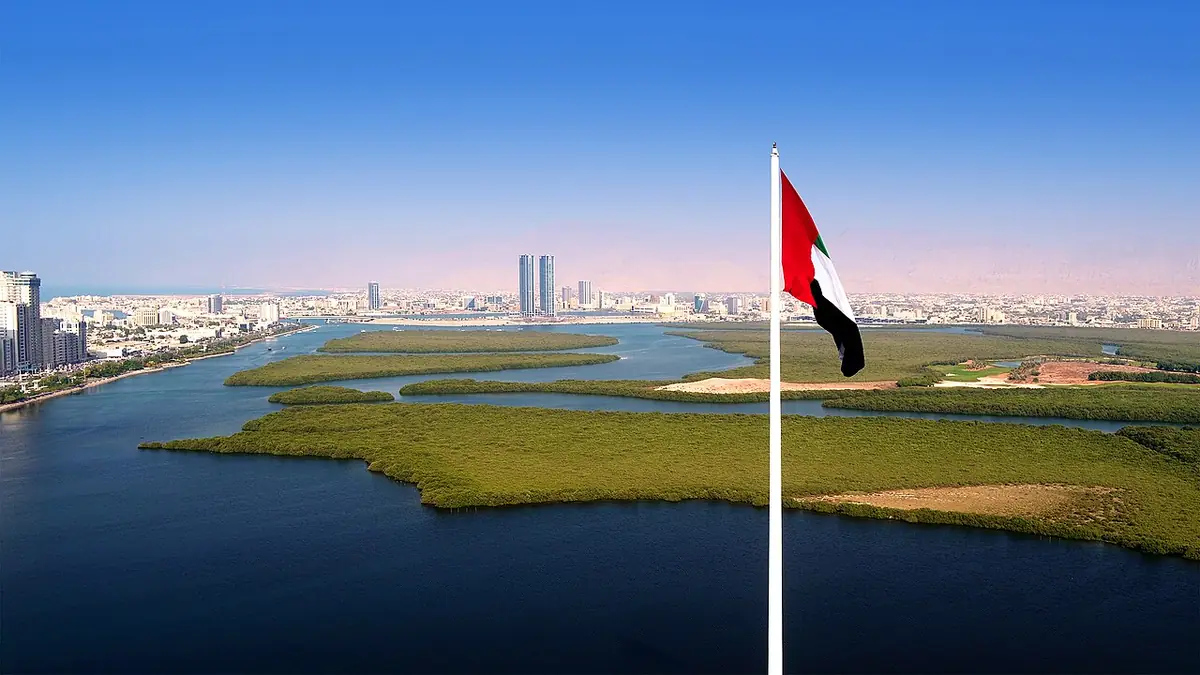
The Ras Al Khaimah skyline rising beside its lagoon — Photo: Stevenmccombe · CC BY-SA 4.0 · Wikimedia Commons
Once those reference points are clear, the central question of where to buy within the emirate becomes pressing.
Leaving your home country to buy property in a Gulf state puts you in front of legal, tax and social reference points that are entirely different. Habits formed elsewhere around tenant protection, local taxation or the running of shared buildings simply do not apply. Anticipating these structural differences is the precondition for approaching your purchase calmly and avoiding strategic missteps.
From abroad
A heavily taxed and tightly regulated tax system
Ras Al Khaimah
No income tax and no capital gains tax on property for individuals
Managing your assets brings immediate financial freedom, but the absence of the social protection that local taxes fund means you need solid private insurance.
From abroad
Shared buildings governed by strict law and formal general meetings
Ras Al Khaimah
Common areas managed by companies appointed by the developers or the authorities
Individual owners have less say in how buildings are run, which makes reading the building's rules in advance absolutely essential.
From abroad
A rental market that strongly protects the tenant when rent goes unpaid
Ras Al Khaimah
A flexible regulatory framework built around fast contractual procedures
Leases are drafted to protect the owner's rights first, while still requiring strict compliance with termination clauses on pain of penalties.
From abroad
Pervasive public services funded by taxation
Ras Al Khaimah
Largely privatised service provision, from utility networks to neighbourhood amenities
The cost of daily life includes private subscriptions and service fees that you must build into your recurring property upkeep budget.
Which district of Ras Al Khaimah should you target for your purchase?
These location choices translate straight into budget realities that are best examined through the market figures.
Ras Al Khaimah breaks down into micro-markets with sharply contrasting atmospheres and growth prospects. Between the island projects aimed at international tourism, the residential seafronts and the more traditional central areas, each zone attracts a specific type of buyer. Understanding what each district offers day to day lets you line your investment up with what you actually want, whether that is comfort or yield.
Al Hamra Village
An integrated resort feel with golf, marinas and direct access to landscaped beaches.
Suits
Investors after strong tourist rental demand, and retirees looking for peace and quiet.
Trade-off
Prices per square metre are generally higher and service charges track the premium facilities on offer.
Mina Al Arab
An island and lagoon setting built around nature, green space and coastal walks.
Suits
Families and buyers wanting a spacious home close to the water with strong capital growth potential.
Trade-off
The retail offer is still filling in, so you need a car for everyday errands.
Hayat Island
An ultra-modern hotel and residential hub, driven by major entertainment complexes about to open.
Suits
Speculative investors betting on strong tourism growth over the medium term.
Trade-off
Higher building density and a market still very dependent on developers' handover schedules.
Ras Al Khaimah city centre
An authentic urban setting, lively with local shops, markets and everyday city life.
Suits
Buyers who want a more accessible purchase price and genuine cultural immersion.
Trade-off
An older housing stock in places, and a possible discount on resale against the pull of the coastal schemes.
What does an apartment in Ras Al Khaimah actually cost today?
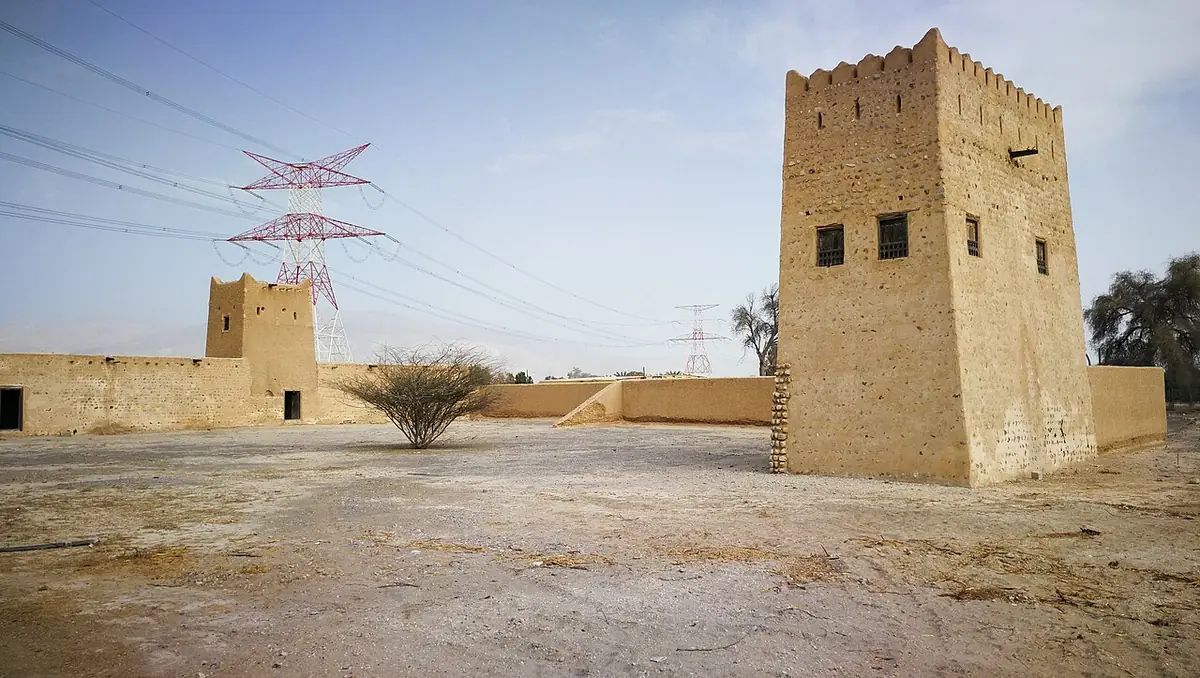
Al Falayah Fort, a preserved piece of the emirate's heritage — Photo: Ganeshvel2 · CC BY-SA 4.0 · Wikimedia Commons
Beyond the headline purchase figure, the nature of the ownership rights you actually hold is decisive.
Looking at property prices in Ras Al Khaimah reveals a marked financial appeal set against the Dubai or Abu Dhabi markets. The variations come mainly from how close the property is to the sea, the developer's reputation and the quality of the services built into the development. You must fold the transaction costs that come with any UAE purchase into your overall calculation.
ras-al-khaimahFor saleApartmentestimate
Median price / m²AED 10,450Half the apartments sell below this
Median priceAED 1.1mthe average is 14% higher — a few very large properties pull it up
Most common1 bedroom45 % of listings
Average size100 m²
By number of bedrooms
Bedrooms
Share of market
Avg price
Price / m²
Avg size
1most common
45 %
AED 764k
AED 12,320 +12 %
62 m²
2
35 %
AED 1.13m
AED 10,780
105 m²
3
15 %
AED 1.53m
AED 10,230best value / m²
150 m²
4
5 %
AED 2.14m
AED 10,450 −5 %
205 m²
Each row is an average, compared against the area average of AED 11,000 / m². These are indicative estimates of a typical local market, not a measured sample of live listings. Check current listings before relying on them.
What you can actually own: freehold and the land tenure regimes
That legal rigour has to apply from the very first payment, which means mastering the chronological steps of the transaction.
The legal security of a property investment rests entirely on understanding which ownership regimes are open to foreign nationals. In Ras Al Khaimah, specific zones designated as freehold allow outright ownership, while others are governed by usufruct rules or long leases. Knowing exactly what kind of title you hold is the only effective protection against unpleasant legal surprises.
Buying in a freehold zone (outright ownership)
In the designated zones, as Al Hamra Village and Mina Al Arab are, foreign buyers acquire outright ownership of the property together with an indefeasible share of the land it sits on. The title deed is officially registered with the local land department, giving the same rights as an Emirati citizen when it comes to reselling, passing the property on or letting it out.
What it changesYou hold a fully secured asset that you can pass to your heirs or sell freely on the market with no restriction on nationality.
Buying in non-freehold zones and long leases
Outside the areas opened to foreign buyers, purchases are governed by long leases or renewable usufruct rights, generally running for 99 years. These arrangements offer wide rights of use, but they do not confer permanent ownership of the land and call for meticulous legal checks on the renewal clauses.
What it changesIt is essential to have an independent legal adviser confirm that the land title is in order before you commit a single dirham to a scheme of this kind.
The golden rule to grasp before you pay any deposit
To get through this journey smoothly, it helps to picture precisely each party involved and each step of the transaction.
Buying property in the UAE follows strict protocols designed to protect both sides, but they demand constant vigilance from the buyer. Paying money without going through an official escrow account, or signing a badly drafted preliminary contract, exposes you to irreversible financial risk. The payment schedule has to be tied strictly to construction milestones or to the administrative transfer steps.
Signing the initial memorandum of understanding (MOU)
Careful verification of the seller's identity and of the validity of the original title deed against the land registry.
Payment of a deposit (generally 10%) held in the escrow account of the agency or of an accredited lawyer.
Drafting and approval of the conditions precedent that protect the buyer if an approval is refused or the property fails to comply.
Obtaining the no-objection certificate (NOC) issued by the master developer confirming that no service charges are outstanding.
Final transfer of ownership and official registration with the Ras Al Khaimah land department
How a property transaction unfolds, step by step
Buying a property in Ras Al Khaimah requires careful coordination between the agent, the developer, the land authorities and the buyer. Each party has a precise role that you should not delegate blindly if the transaction is to stay safe. A well-managed timeline avoids administrative delays and unexpected extra costs at final settlement.
The buyerChoosing the property and making an offerSetting the budget precisely, including transfer costs (registration fees are generally 2%), and drafting the formal offer to purchase.
The estate agentNegotiation and signing the memorandumAgreement on the conditions precedent, payment of the 10% deposit into a secure escrow account, and scheduling of the legal checks.
The developer and the building managerIssuing the no-objection certificate (NOC)The developer checks that all service charges have been paid and formally authorises the transfer of ownership into the new name.
The land departmentOfficial transfer of ownershipSettlement of the balance by bank cheque or certified transfer, signature before the registering officer and issue of the new title deed.
The buyer and the service providersHandover of keys and utility connectionsMove-in or handover inspection, opening the water and electricity accounts, and setting up management services if the property is to be let.
Seafront apartment or inland villa in Ras Al Khaimah: which should you choose to live in?
Once the type of property is settled, it is worth looking closely at the financial reality of your investment.
Choosing between an apartment facing the Persian Gulf and a villa in the more inland districts of Ras Al Khaimah shapes your daily life directly. The vertical schemes, whether aimed at investors or at permanent residents, are concentrated overwhelmingly on the islands of Mina Al Arab and along the corniche. They give immediate access to landscaped beaches, communal pools and built-in services that cut the logistical burden of upkeep considerably. In exchange, you have to live with service charges that can be high and with the closeness to neighbours that comes with the vertical format, even though local developers pay particular attention to sound insulation and to how balconies are arranged.
Turning instead to a house or villa in the developing estates or in the more traditional parts of the emirate gives you unmatched space for the same overall budget. Living areas double or triple, private gardens are perfect for families with children or pets, and the absence of strict building rules allows personalised outdoor work. That independence has a direct cost in time and money, though: maintaining the pool, the central air conditioning and the outdoor greenery falls entirely on the owner. In a climate as demanding as Ras Al Khaimah's, preventive maintenance of outdoor equipment forgives nothing, and neglect leads to expensive repairs.
The question of neighbours and general atmosphere weighs heavily on the decision. Apartment developments draw a cosmopolitan population, often young professionals, executives working remotely and European retirees looking for seaside calm without the constraints of a big city like Dubai. Life there is paced by comings and goings through air-conditioned lobbies and conversations around the shared pools. In the villa districts the demographic shifts towards families looking for a lasting base, creating a quieter social fabric that is rooted in the emirate's local life, close to the roads leading to the schools and the business zones.
On liquidity and resale, the two products do not react the same way to the cycles of the Emirati property market. Mid-sized apartments, particularly well-placed studios and one-bedroom units with a water view, have historically shown sustained rental demand from tourists and from professionals on temporary assignment. They let and resell quickly if the initial purchase price was sensible. Villas, scarcer in certain segments, attract end buyers looking for a permanent main home. Their sale cycle can be longer, but they hold solid long-term value, supported by the gradual scarcity of land along the Ras Al Khaimah coast.
What overall budget and what real running costs should you plan for an apartment in Ras Al Khaimah?
Beyond the raw figures on paper, let us look concretely at what the rhythm of a week here feels like.
Buying an apartment in Ras Al Khaimah is not just the price per square metre the agencies advertise. You have to fold in all the compulsory transaction costs, plus the recurring spend on service charges and utilities. Planning these lines carefully avoids budget surprises in your first year in the emirate.
Upfront purchase costs for an apartment
Cost item
Indicative rate or amount
Effect on your cash
Land registration fee (Ras Al Khaimah land department and municipality)
2% to 4% of the purchase value
Payable once, at the point of transfer of ownership before the competent authority.
Estate agency commission
2% of the sale price (excluding VAT)
The local market standard for having a licensed agent handle the transaction.
Bank arrangement and valuation fees
Between 2,500 and 5,000 AED
Applies only if you take a mortgage with a local bank.
These upfront costs must be funded from your own savings, because local banks generally do not roll the whole of the registration and agency fees into the mortgage amount granted to non-residents.
Annual and monthly running budget
Type of cost
Estimated amount
Frequency and payment method
Service charges
10 to 25 AED per square foot per year
Payable quarterly or annually for upkeep of the common areas, security and lifts.
Electricity and water bills (Etihad Water & Electricity)
400 to 900 AED per month
Varies sharply with how hard the air conditioning is worked during the summer months.
Compulsory home insurance
1,000 to 2,500 AED per year
Covers water damage, fire and the owner's or occupier's public liability.
The air conditioning bill is the largest variable line in your running budget between June and September, when outdoor temperatures keep the units running almost continuously.
What does a resident's day look like, between work, healthcare and getting around Ras Al Khaimah?
Behind the idyllic backdrop of the tourist brochures and sales presentations, some aspects deserve your full attention.
Living in Ras Al Khaimah offers a calm setting, far from the saturated buzz of the region's big financial hubs. Even so, daily life turns on modern infrastructure that is worth knowing about if you are to organise work journeys, the children's schooling and access to first-rate medical care.
07:30Leaving home and travelling to the business zonesMorning traffic stays light compared with Dubai or Abu Dhabi. Main routes such as Sheikh Mohammed Bin Salem Road get you to the emirate's various centres in under twenty minutes without any particular stress.
08:30Settling in at the office or a coworking spaceIncreasingly working remotely or based in the local free zones, residents enjoy very high-speed fibre internet and a working environment bathed in natural light.
12:30Lunch break and local shoppingLocal malls such as Al Hamra Mall and Manar Mall bring together international brands and well-stocked supermarkets carrying the full range of European and local food.
16:00School pickup and after-school activitiesThe emirate's international schools offer high-quality British and American curricula. Short journeys mean you can line up sports activities without losing hours in traffic.
18:30Unwinding on the corniche, or a trip to the health facilitiesLeading hospitals such as Sheikh Khalifa Specialist Hospital provide advanced medical care when it is needed, which reassures families settling here for the long term.
20:30Back to the quiet of your gated developmentThe evening ends in the complete calm of the coastal residential districts, where controlled access and peaceful outdoor spaces contrast pleasantly with the pace of the world's big cities.
What hidden details do the property brochures forget to mention in Ras Al Khaimah?
These technical subtleties lead straight to the misjudgements new buyers make most often.
Buying off-plan or in a recently completed development in Ras Al Khaimah comes with regulatory and technical subtleties that sales pitches often leave out. Knowing these realities on the ground lets you negotiate from a position of strength and avoid financial disappointment once the keys are in your hand.
The direct effect of summer humidity on materials
Close to the sea, humid salt air speeds up the corrosion of outdoor metalwork and demands rigorous servicing of the air conditioning to stop mould appearing in dark corners.
The strict rules of the homeowners associations (HOA)
Unlike some more relaxed European markets, the house rules often forbid any visible change to the exterior, from the type of balcony blind to the colour of a door, on pain of fines.
Reselling off-plan property quickly compared with the resale market
Selling an apartment on before construction is finished can prove complicated if the developer restricts contract assignments until a certain percentage of the total price has been paid.
Seasonal swings in tourist rental demand
If you are buying with Airbnb-style holiday letting in mind, be aware that rental income dips sharply during the hottest summer months, which calls for careful pricing management.
Which buying mistakes do investors bitterly regret six months in?
With those traps avoided, it remains to work out whether this investment profile genuinely matches your own situation.
Looked likeAn unobstructed view over the Persian Gulf from the living room, guaranteed for life
Turned outA vacant plot straight ahead sold to a developer to put up an even taller tower
Would have caught itAlways checking the master plan with the municipality to find out the development status of the surrounding plots.
Looked likeA net rental yield printed on glossy paper at close to 10% a year
Turned outAgency management fees and summer rental voids that cut the real return to 5%
Would have caught itInsisting on actual accounts for previous years and building a prudent two-month annual vacancy allowance into your figures.
Looked likeModern, quiet central air conditioning with no hidden costs
Turned outRepeated failures of the main compressor, calling for an emergency special levy voted by the owners
Would have caught itAsking for the minutes of the owners association meetings for the past three years to spot any major outstanding works.
Looked likeFixed, moderate service charges giving access to the pools and the gym
Turned outA unilateral increase in charges decided by the manager to cover arrears from other owners
Would have caught itExamining the service charge collection rate and the financial health of the building manager before signing the sale agreement.
Which kind of buyer should sit this one out and avoid buying an apartment in Ras Al Khaimah?
Now is the moment to take stock and make your decision with your eyes open.
Buying property in Ras Al Khaimah answers fairly specific goals around wealth and quality of life. Not everyone finds what they need in a market shifting towards luxury tourism and relaxed living. Identifying clearly the profiles that are heading for disappointment protects the capital of those whose strategy is not the right one.
The investor chasing very short-term speculative gains
→To buy off-plan and resell on handover, hoping for an immediate 30% gain
The Ras Al Khaimah market is one for core holdings and steady rental yield, not a speculative casino where prices double in a few months as they have in certain overheated pockets of Dubai.
The restless city dweller who depends on a dense metropolitan fabric
→To settle on the seafront expecting to find the nightlife and cultural offer of a major European capital
The emirate cultivates a resolutely calm, family-minded way of life turned towards nature, which can leave lovers of frenetic urban nightlife feeling isolated quite quickly.
The buyer on a tight budget with no safety savings
→To put their last funds into the deposit without keeping a cushion for health or maintenance costs
Unexpected weather events and maintenance demands call for cash to be available at all times, so that you never end up in default on your service charges.
So, are you ready to take the plunge and buy in Ras Al Khaimah?
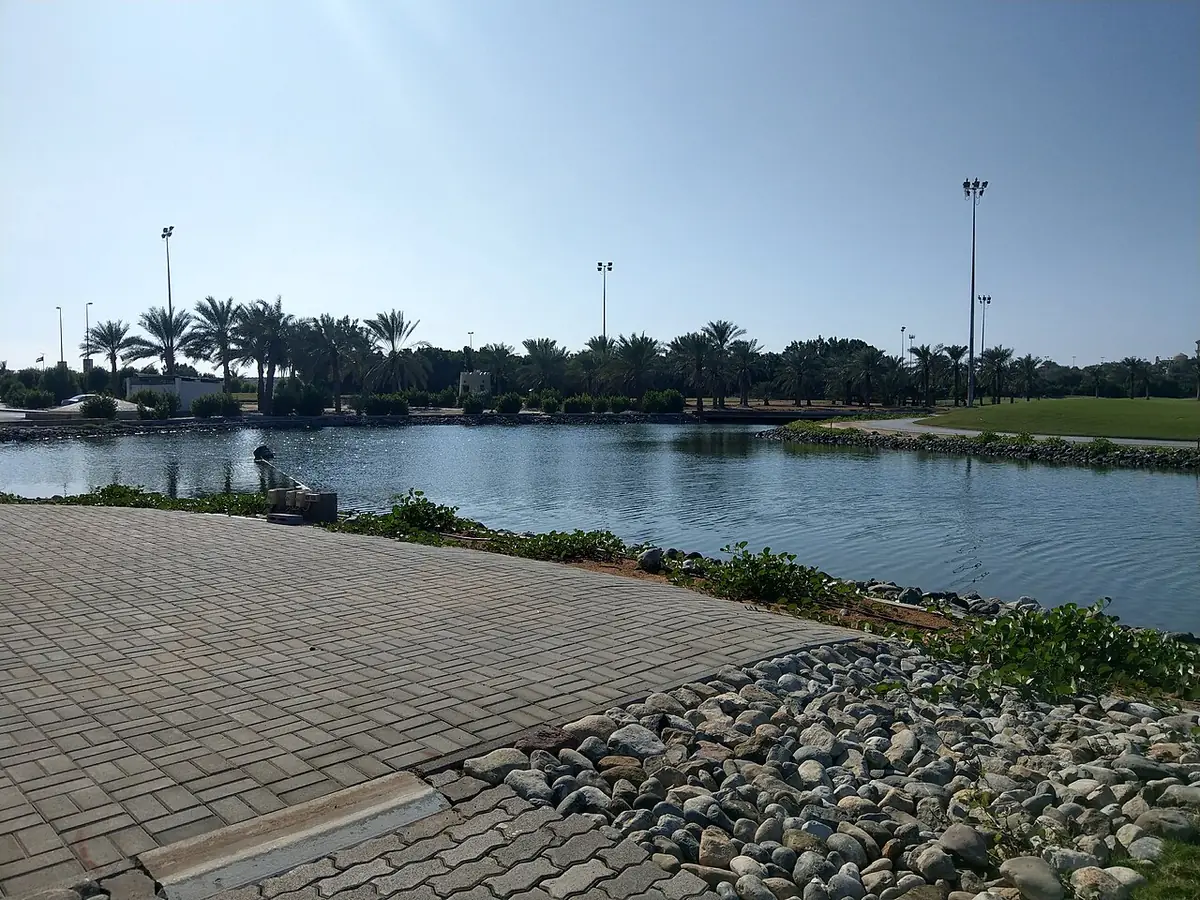
A palm-shaded path through a neighborhood park — Photo: ولد الامارات · CC0 · Wikimedia Commons
At the end of this analysis, buying an apartment in Ras Al Khaimah shows itself for what it is: a considered decision that demands a fine balance between the search for seaside calm and financial discipline. If you are looking for a sun-drenched second home, a sensible rental investment off the beaten Dubai track, or a peaceful setting for your family, the emirate offers sound, well-structured property opportunities. Prices per square metre remain markedly more accessible than in the other coastal emirates, while the infrastructure keeps improving.
That said, this is not a process that tolerates guesswork. It assumes you have checked every line of the associated costs, from local taxation to recurring service charges by way of maintaining equipment in a demanding climate. The local market rewards patience and the careful selection of schemes with impeccable professional management. Buying here is a bet on the long-term stability of a territory that is investing intelligently in sustainable tourism and controlled economic development.
Take the time to visit several developments at different times of day to feel the real atmosphere of each district, talk to residents already settled there, and have the legal documents audited by an independent adviser before you pay any deposit. If all those boxes are ticked and your investment horizon runs beyond five years, then buying an apartment in Ras Al Khaimah is an excellent long-term decision that will lastingly change the way you live or invest.
Related questions
Can a foreign national buy freehold property in Ras Al Khaimah?
Yes. Foreign nationals can acquire property on a full freehold basis in specific designated zones of the emirate, such as Mina Al Arab, Al Marjan Island or Al Hamra Village, with no restriction on nationality.
What registration and transfer fees apply on a purchase?
Registration fees payable to the local land authorities generally run between 2% and 4% of the total value of the property, on top of the standard agency commission of around 2%.
Does buying property in Ras Al Khaimah give you the right to a residence visa?
Yes. Buying a property worth at least the minimum set by the regulations in force (generally from one million dirhams upwards) allows the owner and their immediate family to apply for a renewable residence visa.
How does short-term holiday letting work for apartments in the emirate?
Airbnb-style letting is entirely legal provided you obtain the required tourism licences from Ras Al Khaimah's tourism regulator and comply with the building's own rules.
What do service charges typically cost per year?
Service charges generally range from 10 to 25 AED per square foot per year depending on what the development offers, including pool access, 24-hour security and upkeep of the common areas.
Which banks lend to non-residents for a mortgage?
Several large local and international banks present in the United Arab Emirates offer mortgage financing to non-residents, typically covering up to 50% or 60% of the property value.
Is there any property tax or tax on rental income in Ras Al Khaimah?
There is currently no recurring annual property tax and no income tax on rental income received by individual owners of property in the emirate of Ras Al Khaimah.
Which districts are most sought after for buying an apartment?
Al Marjan Island for its hotel projects and beaches, Mina Al Arab for its green setting and lagoons, and Al Hamra Village for its golf course and integrated marina are the three headline zones.
How is the final sale contract signed?
The transaction is formalised by signing a memorandum of understanding, followed by transfer of the funds into an escrow account and final registration with the emirate's land department.
How good are the medical and school facilities locally?
Ras Al Khaimah has modern hospitals working to international standards and leading private schools offering British and American curricula, which makes for a comfortable life for families.
Property review of ting
No ting properties in Ras Al Khaimah yet
Be the first — share it on ting and it shows up right here.