Valuing a house in Ras Al Khaimah is a piece of analysis, not a guess. This guide sets out what actually moves the figure, how comparable evidence is read in the emirate, where agent valuations and automated tools diverge, and what an owner should gather before asking anyone for a number.
Get the app
What nobody tells you.
Real prices, hidden costs and the traps to check before you commit.
What really sets the value of a house in Ras Al Khaimah
Scroll
What really sets the value of a house in Ras Al Khaimah
Valuing a house in Ras Al Khaimah is a piece of analysis, not a guess. This guide sets out what actually moves the figure, how comparable evidence is read in the emirate, where agent valuations and automated tools diverge, and what an owner should gather before asking anyone for a number.
Written by the ting.ad editorial team ·
Ras Al Khaimah in Street View: drag to look around.
This gap between headline space and practical running costs is exactly where an owner's own estimate and a buyer's offer start to diverge.
A house in Ras Al Khaimah is rarely worth what a per square metre headline suggests. Owners discover quickly that a local valuation combines generous floor areas with specific maintenance realities tied to sand, summer heat and either community service charges or the cost of maintaining a villa alone. Understanding those mechanisms before you ask anyone for a figure protects you from the disappointment that catches out unprepared sellers. Setting what you hope for against what the evidence supports is what turns a wish into a defensible valuation in this fast growing emirate.
An impressive built area for a budget that is often more accessible than Dubai or Abu DhabivsCooling costs, and the wear the climate inflicts on materials, that run far higher across the year than a buyer expects
The headline appeal of the square metre runs straight into a continuous energy bill. A buyer prices that in, so an owner should build it into the estimate from the first year of occupation rather than treat it as someone else's problem.
A calm setting between sea, mangroves and mountains, away from the pressure of the larger citiesvsAlmost total reliance on a car for every daily errand, because services are not within walking distance
The promise of a quiet haven translates into repeated trips for school, shopping and leisure. The shape of Ras Al Khaimah means drive times to schools and shops are a comparable factor, and two otherwise identical villas can value differently on that alone.
An attractive tax position, with no direct tax on income or on gains from a property salevsTransaction, maintenance and administrative costs that still require solid cash reserves
No local tax does not mean no cost. Transfer fees, agency commission and structural upkeep weigh heavily in the first years, and a valuation that ignores them overstates what an owner will actually clear.
Why you are valuing shapes the figure you should be looking for
Once your purpose is clear, it is worth understanding how valuation practice here differs from what an owner arriving from elsewhere is used to.
Every owner approaches the Ras Al Khaimah market with expectations shaped by their own circumstances. A family weighing a move, a remote investor testing a holding and a self-employed owner considering release of capital are not chasing the same number, and a good valuation says which number it is. This section sets out how your purpose changes the evidence you should ask for and the range you should accept.
Owner-occupier testing the market
Houses of a size that would be unattainable in a major European capital for the same budget sit at the heart of this market, and that space is what a valuer measures first. But distance from the international schools and the thinness of nearby cultural amenities pull in the other direction. Ask your agent to show the drive times used in the comparison, because a valuation of a family villa here rests as much on access as it does on square metres, and the outdoor, water and mountain lifestyle the plot supports.
Investor valuing a holding
The Ras Al Khaimah rental market draws a growing population of tourism workers, industrial managers and retirees seeking quiet, and demand for detached houses and gated community villas remains firm. For an investor the value is worked back from that income. Bear in mind that resale liquidity can be slower than in the tightest parts of Dubai, so a valuation for this purpose should state a realistic marketing period alongside the figure, on a medium to long term view that smooths seasonal swings.
Independent owner planning ahead
A spacious house that doubles as a workplace is valued on the same evidence as any other, but the features you rely on are worth documenting. Internet connectivity is generally excellent in the modern residential areas and is a genuine selling point. On the other side, the absence of a dense professional or networking scene keeps a certain type of buyer away, which narrows the pool. A lender's valuer will take the cautious end of the range, so treat an agent's optimistic figure as the ceiling rather than the answer.
Valuing a house in Ras Al Khaimah when you are used to another market
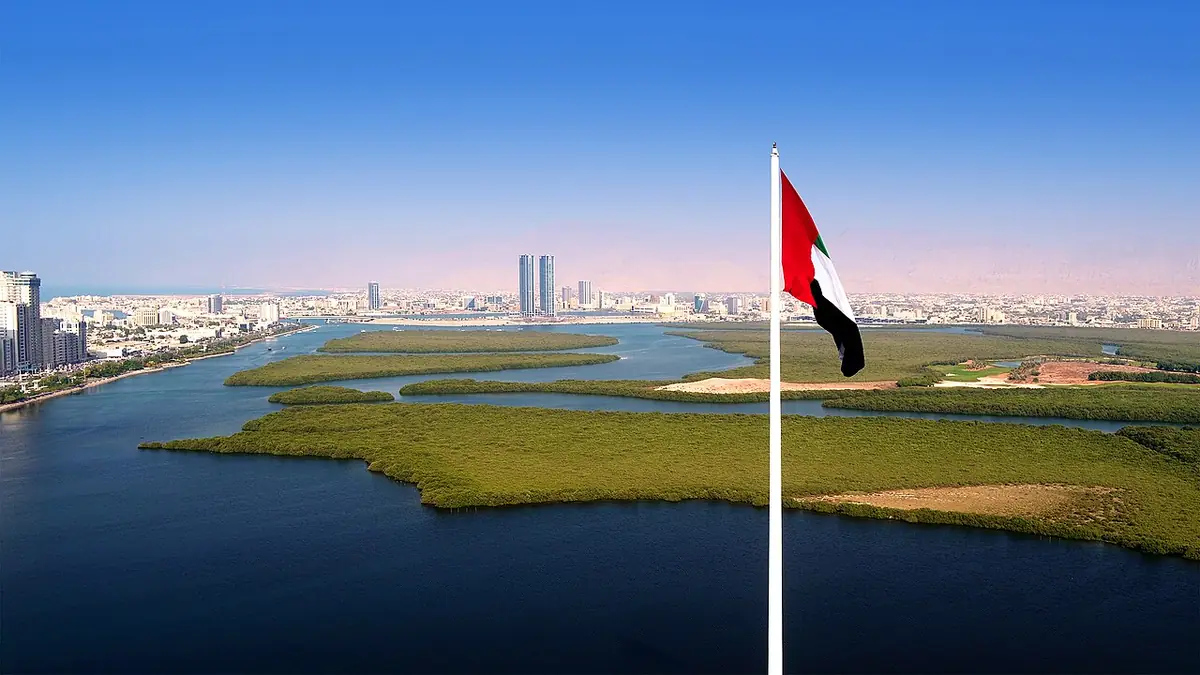
The Ras Al Khaimah skyline rising beside its lagoon — Photo: Stevenmccombe · CC BY-SA 4.0 · Wikimedia Commons
These structural differences become very concrete as soon as you start comparing one district of the emirate against another.
Owners arriving from abroad bring assumptions built over decades in another market, and several of them do not survive contact with Ras Al Khaimah. Whether it is the relationship to space, the handling of administrative procedures or a calendar dictated by heat, the local logic of value has to be learned rather than imported. The comparison below sets out the main differences so that you read a figure here for what it is.
From abroad
Dense urban housing, older apartments and walkable historic centres
Ras Al Khaimah
Large detached houses, often inside secure developments with services included
Comparable evidence is drawn from the community rather than from the street, so ask which development the comparables came from before you accept the figure.
From abroad
A temperate climate with four distinct seasons and cool winters
Ras Al Khaimah
Near permanent sunshine punctuated by extremely hot summer months, when life moves indoors under air conditioning
Cooling load, insulation and orientation are priced in here, so a house with poor thermal performance is discounted in a way it would not be elsewhere.
From abroad
A dense, formalised administrative system built on a long established civil code
Ras Al Khaimah
An agile regulatory environment oriented towards digital services and pragmatic commercial law
Registered transfer records are quick to obtain and are the best evidence behind a valuation, but private contract terms need closer reading than you may be used to.
From abroad
Travel made easy by public transport and a dense rail network
Ras Al Khaimah
Complete reliance on a private car for every journey, on wide and free flowing roads
Distance to schools, clinics and shops is measured in driving minutes, and that measure, not proximity to a station, is what separates one price band from the next.
Which part of Ras Al Khaimah your house sits in, and what that does to the figure
Comparing districts leads straight to the central question of the numbers themselves and the range the market currently supports.
Ras Al Khaimah is not one market. Each area has its own identity, its own distance from the waterfront, its own proximity to the industrial or tourist zones and its own level of service, and all four of those show up in the comparable evidence. Location determines both daily quality of life and the future capital value of the property. Here is how the main residential areas compare when a valuation is being built.
Mina Al Arab and the coastal areas
A permanent resort atmosphere, oriented towards the beaches, the lagoons and the landscaped waterfront walks.
Suits
Valuations supported by the strongest per square metre evidence in the emirate, and by demand from upmarket seasonal letting.
Trade-off
Prices per square metre are noticeably higher, but exposure to sea winds means facade condition is scrutinised closely and a tired exterior is adjusted for.
Al Hamra Village
An established, fully integrated development built around a golf course, a marina, shopping centres and international hotels.
Suits
Owners with plenty of like for like comparables nearby, since a mature community generates a steady flow of recorded transfers.
Trade-off
The setting is sometimes judged uniform, and the strict annual service charges have to be netted off before a yield based figure means anything.
Al Nakheel and the historic town centre
Genuine local activity, close to the traditional markets, the government offices and the emirate's historic commercial streets.
Suits
Owners of older, more affordable stock, where condition rather than postcode carries most of the adjustment.
Trade-off
The housing stock is often older, there is less greenery and denser traffic at peak times, all of which widen the valuation range rather than narrow it.
What the numbers actually say about house values in Ras Al Khaimah
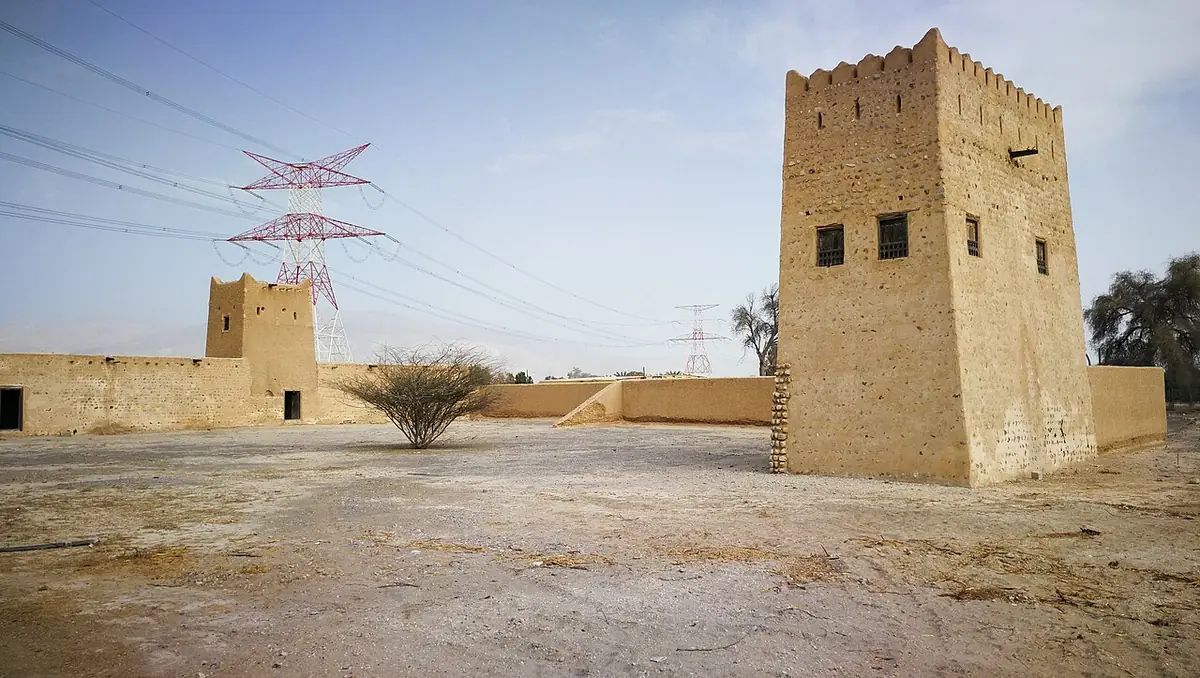
Al Falayah Fort, a preserved piece of the emirate's heritage — Photo: Ganeshvel2 · CC BY-SA 4.0 · Wikimedia Commons
Beyond the raw figures, what you legally own is what a valuer is valuing, and that deserves close attention.
A valuation in Ras Al Khaimah cannot stop at the asking prices shown on listing portals. Land registration fees, agency commission, any refurbishment needed and recurring service charges all sit between the headline and what an owner clears. The table below sets out the orders of magnitude observed in the market so that you have a transparent and realistic financial picture to test any figure against.
ras-al-khaimahFor saleHouseestimate
Median price / m²AED 8,569Half the apartments sell below this
Median priceAED 1.58mthe average is 14% higher — a few very large properties pull it up
Most common2 bedrooms64 % of listings
Average size175 m²
By number of bedrooms
Bedrooms
Share of market
Avg price
Price / m²
Avg size
2most common
64 %
AED 1.62m
AED 8,840
184 m²
3
27 %
AED 2.2m
AED 8,389best value / m²
263 m²
4
9 %
AED 3.07m
AED 8,569 −5 %
359 m²
Each row is an average, compared against the area average of AED 9,020 / m². These are indicative estimates of a typical local market, not a measured sample of live listings. Check current listings before relying on them.
Freehold or a right of use: what tenure does to a valuation
That legal precision applies at every stage, including the moment a first figure is put in front of you.
The value of a property in Ras Al Khaimah depends directly on the zone it stands in. Local law draws a clear line between freehold zones open to foreign investors and restricted zones. Understanding that distinction avoids legal confusion and, in valuation terms, explains why two comparable houses a short distance apart can be worth materially different amounts.
Freehold zones
In areas designated by the emirate's government, such as Al Hamra Village or Mina Al Arab, foreign nationals acquire full ownership of both the property and the land beneath it, with no time limit. The title deed is issued directly by the official Ras Al Khaimah land department, carrying the same inheritance and resale rights as for local citizens.
What it changesBecause you can let, sell, bequeath or mortgage the house freely, the valuation can be built on the full open market pool of buyers, which is the highest basis available.
Non-freehold zones and long leases
Outside the designated zones, acquisition by non-nationals may be subject to restrictions or to long leases, such as a usufruct or a renewable leasehold. These structures require careful reading of the original contracts to check the exact term, the renewal conditions and any restrictions on altering the building.
What it changesThe unexpired term becomes a valuation input in itself, so instruct an independent local legal adviser to audit the title before you rely on any figure.
The rule to understand before you trust any figure on your house
To work through that chain calmly, it helps to know exactly who does what, and in what order, when a property is valued.
In many international markets, enthusiasm beats caution the moment a flattering number appears. In Ras Al Khaimah, as across the Emirates, the discipline that protects you is the same one that protects a transaction: work from registered evidence, check that the agency and the developer are properly authorised, and treat escrow arrangements as the marker of a real, committed price. Here is the chain of consequences to master before you accept a valuation.
A first figure appears, whether from an online tool, a neighbour's asking price or a formal written offer set out in a memorandum of understanding.
Verify the registered owner's identity and the recorded title against the emirate's official land register, since a figure attached to the wrong title is worthless.
Separate asking prices from committed prices: the standardised MOU and the deposit, usually 10%, held by the licensed agent in escrow show what a buyer genuinely agreed to pay.
Obtain the no objection certificate from the developer or community manager confirming there are no arrears, because outstanding service charges come straight off the net figure.
Check the registration fees and the transfer process at the land department, since those costs sit between the agreed price and what the seller actually receives.
A figure you can defend, with the cost of the water, electricity and cooling accounts attached to it rather than left out of the picture.
How a house valuation is put together in Ras Al Khaimah, step by step
Valuing a house in Ras Al Khaimah follows a disciplined sequence that protects owner and buyer alike. Knowing precisely what each party contributes, and in what order the paperwork falls into place, lets you steer the exercise without unnecessary stress. Here is the chronological route local professional practice follows.
The ownerSet the purpose and assemble the property fileBe clear whether you need a marketing figure, a refinancing figure or a settlement figure, and gather the title, the plot area and the service charge statements before anyone visits.
The estate agentSelect comparables and inspect the propertyComparables should come from the same area (Al Hamra, Mina Al Arab), and the inspection should record the general condition of the house, its orientation and its build quality.
Both partiesAgree the adjustments and the rangeSettle in writing how condition, plot size, view and any works outstanding move the figure, and what marketing period the range assumes.
The developer or communityConfirm the service charge position and issue the no objection certificateThe community manager confirms that all service charges are paid, which both unlocks a transfer and fixes the deduction applied to the net figure.
The land departmentCheck the registered evidence and the transfer costRecorded transfers are the strongest evidence available, and the registration fees payable set the gap between the agreed price and the owner's proceeds.
House or apartment: how a villa and a shared building are valued differently in Ras Al Khaimah
The difference between valuing a detached house and valuing an apartment in Ras Al Khaimah comes down to three things: outdoor space, the maintenance burden under an arid climate, and how the property sits within the fabric of the emirate. Villas, whether on the island of Mina Al Arab or in the quiet developments of Khuzam, are valued on total independence, a private plot and generous internal volume, all of which appeal to families seeking quiet and all of which command a premium. That architectural freedom, however, carries a direct and frequently underestimated upkeep obligation, particularly for centralised air conditioning, the pool and roof waterproofing against dust storms and coastal humidity. A surveyor will price each of those against its remaining life. An apartment in the residential towers of Al Hamra Village or along the marina is valued on a different basis, because pooled service charges cover security, facade cleaning and access to the shared pools, so the maintenance risk sits with the community rather than the owner. That vertical model suits investors who want something easy to let and residents who do not want a garden to look after. It also carries constraints that show up in a valuation: sometimes strict community rules, restrictions on structural alteration and unavoidable noise transfer in corridors and shared parking. Your own figure has to weigh the immediate comfort of tower living against the long term land value embedded in a freehold villa.
Financially, the two options behave very differently depending on where in the emirate they sit. Villas in the freehold zones, where foreign nationals can own outright, carry higher entry costs but benefit from a structural scarcity of land that protects their resale value. Buildable plots along the coast are becoming rarer, which pushes detached house values upward, particularly in integrated developments offering private beaches and golf courses. That scarcity is one of the few factors a valuer will treat as durable rather than cyclical. Apartments, by contrast, offer a lower entry point for first time buyers or for investors chasing an attractive gross rental yield, often higher than that of larger properties, which means their value is more often derived from income than from land. Any income based figure has to net off the annual service charges, calculated per square foot, which can erode net return if community management proves weak or if reserve funds are too thin to cover future major repairs. So the question of horizon matters: a house valuation naturally assumes a long term owner-occupier buyer, while an apartment valuation assumes a market that reacts faster, both to resale and to seasonal letting.
Day to day life is the third pillar of the comparison, and it is not a soft factor: it is what a buyer is paying for. Owning a house means driving for every errand, since residential developments are rarely built for walking, with little shaded pavement and extreme summer temperatures. In return you get private shaded parking, direct access to your own front door without passing through common areas, and complete freedom to adapt the interior, all of which sustain the premium a villa commands. An apartment gives immediate access to built in amenities such as convenience stores, gyms and cafes at the foot of the building, which supports a different kind of demand and a shorter void period between tenants. That configuration suits couples without children and working professionals who are out all day and want a home that needs nothing on their return. In the end the figure on a Ras Al Khaimah property is a statement about a way of living, somewhere between the retired calm of a lagoon-side villa and the ordered energy of an integrated residential complex, and the valuation is only as good as its reading of which buyers are in the market for that.
The costs that sit between a valuation and what an owner actually clears
A valuation in Ras Al Khaimah is not the amount that reaches an owner's account, and it is not the amount a buyer will actually spend. The approach costs, the administrative fees and the recurring running expenses all have to be built in if the figure is to mean anything. The tables below set out the initial transaction costs and the estimated running charges for a household in the emirate. These figures reflect the pricing practices observed among licensed agencies and established local developers.
Transfer costs and initial fees behind a headline valuation
Cost item
Rate or estimated amount
How it is settled
Land registration fee (Municipality / Land Department)
2% to 4% of the purchase price
Payable in cash at the transfer appointment
Estate agency commission
2% of the purchase price (excluding VAT)
Due on effective transfer of title
Developer file fee (No Objection Certificate)
1,000 AED to 5,000 AED
Required to validate the change of owner
Connection and security deposits (electricity and water, FEWA)
2,000 AED to 4,000 AED
Held and refunded on resale
These additional costs generally represent between 5% and 7% of the net price to the seller and have to be funded from cash, since local banks refuse to include them within the mortgage.
Annual running budget for a detached house
Type of charge
Annual range
What makes it vary
Energy use (cooling and water, FEWA)
12,000 AED to 24,000 AED
Heavily driven by the summer months from June to September
Buildings and contents insurance
3,000 AED to 6,000 AED
Depends on the replacement value and the cover taken
Maintenance contracts (air conditioning, pool, garden)
5,000 AED to 12,000 AED
Essential to preserve the fabric of the building in this climate
Community fees or service charges (where applicable)
4,000 AED to 15,000 AED
Varies with what the gated development provides
Anticipating these items keeps the finances calm over the long term, since air conditioning failures are frequent and expensive where no preventive maintenance contract is in place, and a buyer who spots deferred maintenance will bid below the valuation.
Health, schools and travel: the ordinary Tuesday that a valuation is really pricing
Daily life in Ras Al Khaimah runs at a fluid pace, noticeably less congested than in Dubai or Abu Dhabi. Morning journeys pass without serious hold-ups on well proportioned roads, which makes it easy to combine work and family commitments. Because access times to schools, workplaces and clinics are among the strongest adjustments applied to any figure, it is worth walking through a typical weekday in the emirate, from dawn to evening.
07:00Khuzam residential districtAn early start in the light off the Gulf. Children ready and away to an international school ten minutes by car, without the chronic congestion of the larger regional capitals. That ten minute figure is exactly the kind of detail that supports a valuation.
08:15Business district or office in Al NakheelArrival at work after an easy run along the creek. Settling into an air conditioned workspace with high speed connectivity, another feature buyers pay for and valuers note.
13:00Manar Mall shopping centreA quick lunch break in a modern gallery with a varied international food offer, combined with a few last minute groceries in the adjoining supermarket.
16:30Specialist clinic or health centreA scheduled routine check-up or paediatric appointment at one of the emirate's modern health centres, where waiting times are short. Proximity to them is a recognised value factor for family houses.
18:00Mina Al Arab waterfrontUnwinding at the end of the day along the walkways or on the beach. Light exercise or a simple walk facing the sunset over the mangroves and the islets, the amenity that carries the coastal price premium.
20:00The family homeA quiet dinner at home, a check on the air conditioning systems and preparation for the next day, in a secure and silent setting. Well kept plant is what stops a survey from denting the figure.
What the sales brochures will never tell you about property values in Ras Al Khaimah
Behind the brochures showing azure lagoons and sun-drenched villas sit technical and regulatory realities that every informed owner should factor into a figure before agreeing one. Developers foreground the landscape and the ease of living, but rarely explain the maintenance constraints specific to the emirate's desert and coastal environment. Here are four points that usually surface only after someone has moved in, and each of them is an adjustment a careful valuer will make.
The corrosive effect of salt-laden humidity on metal
Close to the coast, damp sea air markedly accelerates oxidation of gates, external air conditioning units and aluminium window frames. A regular anti-corrosion treatment budget prevents premature replacement, and visible corrosion at inspection is one of the first deductions applied to a coastal villa.
What summer temperatures really do to the electricity bill
Between June and September outside temperatures approach or exceed 45 degrees Celsius, pushing air conditioning systems to run continuously around the clock. That load multiplies monthly electricity bills by three or four compared with the temperate months, and a buyer who runs those numbers will discount a poorly insulated house.
Strict planning rules on altering facades
Owning a villa in a gated development means you cannot change the colour of your facade, add an extension or alter your boundary walls without formal permission from the developer or the owners' association, on pain of heavy fines. Unauthorised works already carried out are a liability that comes off the figure.
How long secondary network connections actually take
On some newly delivered schemes on the outskirts, final connection to drainage or gas can take several weeks, forcing temporary reliance on provisional arrangements run by the builder. A property still on temporary services will not be valued as though it were fully connected.
The valuation mistakes owners regret bitterly six months later
Looked likeA superb isolated villa out in the desert offering absolute quiet, priced per square metre at a level nothing else in the local market could match.
Turned outA daily logistical nightmare, with recurring network outages, no street lighting and excessive drive times to supermarkets and international schools, so no buyer would meet the figure the owner had built their plans around.
Would have caught itChecking the ten year planning framework with the municipality as a matter of course, and giving weight to communities that have been serviced and occupied for at least three years, because that is where reliable comparable evidence exists.
Looked likeA turnkey rental investment in an off-plan scheme, with the sales team promising guaranteed double digit returns to justify the price.
Turned outA delivery delay of more than eighteen months, poor finishes at handover and a developer who could not be reached to enforce the completion warranties, leaving the property worth visibly less than the sum committed.
Would have caught itInsisting on a regulated official escrow account and refusing to pay instalments beyond the legally permitted percentage tied to genuine construction progress, so that what you have paid never runs ahead of what you own.
Looked likeA bright apartment with a huge west-facing window and an uninterrupted view of the sunset over the Gulf, marketed on that view alone.
Turned outAn unbearable heat trap in the afternoon that made the living room unusable without the blinds fully closed, and that overloaded the air conditioning compressor, so buyers priced the running cost rather than the view.
Would have caught itAnalysing the property's solar orientation, checking for thermally insulated double glazing and inspecting how well the solar films on the glass are performing before you settle on a figure.
Looked likeA quick sale agreed without a full technical inspection, in order to move faster than other parties in a market judged to be very tight.
Turned outMajor hidden defects in the water pipework and unsuspected water ingress in load-bearing walls after the rare episodes of heavy rain, none of which the headline figure had allowed for.
Would have caught itAlways instructing an independent surveying firm to carry out a full structural and thermal audit before the final transfer, and adjusting the valuation for what it finds.
Who should not rely on a headline valuation in Ras Al Khaimah
The tax position and the apparent ease of living in Ras Al Khaimah appeal broadly, but a single number does not serve every purpose, and some owners will be badly misled by one. A few profiles in particular are likely to be frustrated by the structural, administrative and cultural realities that sit underneath a figure here. An honest reading of what you actually need from a valuation will save you an inappropriate decision and a hurried exit.
The speculative investor looking for a quick short term gain
→Treats a current valuation as a resale price achievable the moment the structural works on an off-plan unit are finished.
Ras Al Khaimah is a market for building capital and for medium term rental return, with lower liquidity than Dubai, which makes short horizon speculative resales uncertain and often unprofitable once transfer costs are deducted. Any figure quoted here needs a realistic marketing period attached to it.
The buyer who wants dense city living and a busy night scene
→Reads a strong valuation on an outlying residential villa as proof it will hold the same appeal as property in a major European capital.
Ras Al Khaimah trades on quiet, nature, the mountains and the beaches. The emirate does not have a dense network of theatres, museums or nightlife districts, so the buyer pool for that expectation is thin here, and a figure built on the wrong pool of buyers will not be met.
The stretched first time owner with no contingency savings
→Takes the valuation at face value and commits every available liquid asset to the purchase, keeping no cash back.
Unforeseen maintenance costs, seasonal swings in energy bills and service charges require a financial cushion. A valuation states what the property is worth, not what it costs to keep, and confusing the two is how owners end up forced sellers.
So, do you now have a figure you can stand behind in Ras Al Khaimah?
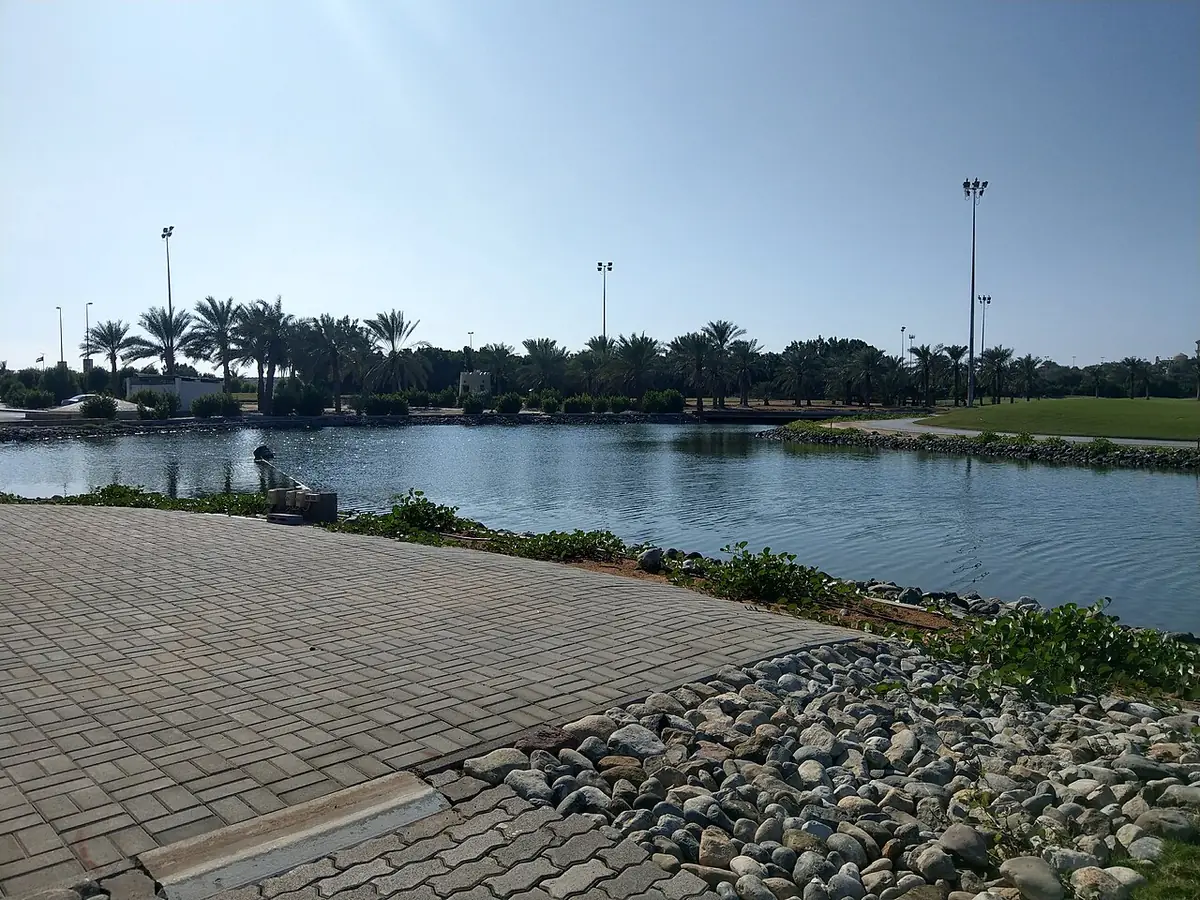
A palm-shaded path through a neighborhood park — Photo: ولد الامارات · CC0 · Wikimedia Commons
After working through the mechanics of the market, the real costs and the way of life in Ras Al Khaimah, the judgement is yours to make. A figure for a property in this emirate is not a matter of sentiment but of evidence: it combines a genuinely calm setting close to the sea and the Hajar mountains with the durable capital position that scarce coastal land creates. If you have accepted that the climate imposes technical constraints, that the fabric of a building demands a regular budget, and that the pace of the emirate favours calm over urban intensity, then the figure in front of you has solid ground beneath it.
Take the time to visit the relevant districts at different hours, talk to residents who have been settled for several years, and have any property independently surveyed before you commit to a number. The Ras Al Khaimah market rewards patience, legal rigour and financial clarity. Ask for the comparables in writing, ask which of them were recorded transfers rather than asking prices, and ask what marketing period the figure assumes. Build on those foundations and your valuation becomes a working tool rather than a hopeful guess, properly aligned with your plans for the years ahead.
Related questions
Can foreign nationals hold a property outright in Ras Al Khaimah, and does that affect its value?
Yes. Foreign nationals can acquire property on a freehold basis in areas specifically designated by the emirate's government, such as Mina Al Hamra and Mina Al Arab, with full and transferable ownership rights. That transferability is one of the strongest supports under a valuation.
What documents should an owner have ready before a valuation?
A valid passport, a UAE residence visa or evidence of visitor status, a recent proof of address, and the registered sale contract or title deed for the property. Certified funds records from the original purchase also help evidence what was actually paid.
What do service charges typically cost in the emirate, and how do they weigh on a valuation?
Service charges generally run between 8 AED and 20 AED per square foot per year, depending on the quality of what the community provides: security, landscaping, pools and common areas. A high charge for thin services is a visible drag on the figure a buyer will accept.
Does the availability of mortgage finance influence the figure?
It does, because it shapes the pool of buyers. Several local banks lend to non-residents, but they usually require a larger deposit, often between 25% and 50% of the property's market value, which narrows demand at the upper end of a valuation range.
How long does a transaction take once a figure is agreed?
A standard transaction between private parties generally takes four to six weeks, the time needed to obtain the developer's no objection certificate and to complete official registration with the municipal land department.
How are water and electricity handled, and do running costs matter to a valuation?
Connection is handled by the Federal Authority for Electricity and Water (FEWA). It requires opening a customer account, paying a refundable security deposit and presenting the registered sale contract. Buyers price in the running cost, so cooling load belongs in any honest estimate.
Are there recurring property taxes in Ras Al Khaimah?
There is no annual property tax and no recurring residence tax levied by local authorities on residential property, whether owner-occupied or let. That absence is a reason net yields, and therefore values, hold up well.
What warranties on a newly built home support its valuation?
Developers are required to provide a ten-year warranty covering structural defects in the building, plus a minimum one-year warranty on interior fittings and technical installations. A property still inside those periods carries less risk for a buyer.
Is a licensed agent required to obtain a valuation?
Using an agent is not strictly required in law, but it is strongly recommended, because licensed agencies hold the comparable evidence, understand the complex local administrative procedures and can defend a figure in writing.
How does the rental market feed into a valuation in Ras Al Khaimah?
Rental demand is supported by new residents drawn by industrial and tourism development, producing stable gross returns generally in the range of 6% to 8% a year. Investors work back from that yield, which sets a floor under sale values.
Property review of ting
No ting properties in Ras Al Khaimah yet
Be the first — share it on ting and it shows up right here.