Investing in property in Abu Dhabi offers an attractive tax position and a market with real momentum, provided you understand the local detail. This guide sets out how to choose an area, judge your budget and secure the purchase step by step.
Get the app
What nobody tells you.
Real prices, hidden costs and the traps to check before you commit.
What do you actually gain by buying an apartment in Abu Dhabi?
Scroll
What do you actually gain by buying an apartment in Abu Dhabi?
Investing in property in Abu Dhabi offers an attractive tax position and a market with real momentum, provided you understand the local detail. This guide sets out how to choose an area, judge your budget and secure the purchase step by step.
Written by the ting.ad editorial team ·
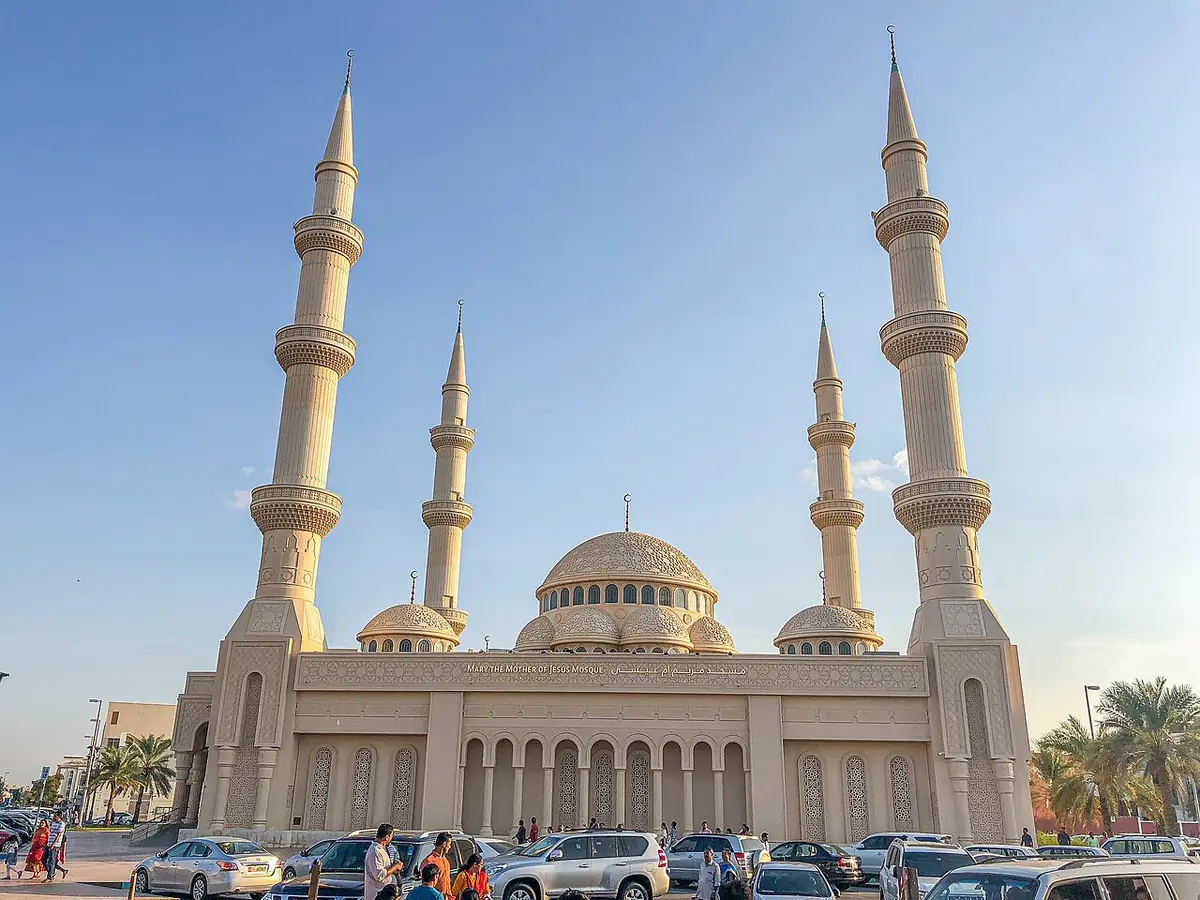
The minarets and courtyard of Mary, Mother of Jesus Mosque in Abu Dhabi — Photo: Clintonrebeiro · CC BY-SA 4.0 · Wikimedia Commons
To judge whether it fits what you are after, start by measuring your own buyer profile against local realities.
Buying property in the Emirati capital rests on an unusual balance between regulatory stability and gross rental yield. Unlike saturated European markets, Abu Dhabi offers a notably protective tax position for foreign investors, with no tax on rental income and none on capital gains. That apparent simplicity hides details worth working through methodically before signing anything. Between local registration fees and service charges that are routinely underestimated, the financial reality is measured over years of ownership, not at the point of purchase.
A very favourable direct tax positionvsUnavoidable up-front transaction costs
The absence of local tax is immediately appealing, but the registration duty collected by the Department of Municipalities and Transport is an immediate 2 per cent outlay that belongs in your net yield calculation from the start.
The freedom of the freehold zonesvsThe complexity of the regulated areas
Buying in a designated investment zone gives an expatriate inalienable freehold title, while other districts remain on long leases that change the nature of the asset entirely.
A rental market underpinned by institutionsvsExposure to global economic cycles
A heavy presence of energy companies and public administration guarantees steady demand for good-quality housing, though that same concentration ties the rental market to wider macroeconomic conditions.
Does this location genuinely fit how you live day to day?
That local adjustment shows up again in the contrast between your existing assumptions and how things are done in the Emirates.
Choosing an apartment in Abu Dhabi is not a matter of comparing floor areas or views over the Gulf. Each part of the city follows its own planning logic, shaped by daily journeys, proximity to international schools and access to leisure. An investor chasing immediate yield would not target the same buildings as an executive relocating with a family for several years. Being honest about your own rhythm avoids the classic mistake of buying somewhere beautiful and completely unsuited to the logistics of living here.
Downtown and the Corniche
Living in the heart of Abu Dhabi means accepting constant urban activity and recurring parking difficulties. Older apartments often offer generous proportions and a direct view over the waterfront, but frequently need work to bring them up to current energy standards. It suits professionals who want to cut daily travel sharply and enjoy the capital's cultural life without depending on a car for every outing.
Reem Island or Saadiyat Island
These modern islands offer integrated residential developments with pools, gyms and secure landscaped parks. Daily life is designed around families, with direct access to beaches and to major cultural institutions. In exchange, peak-hour traffic into the business district can be demanding, and school and work journeys need planning.
The outer districts and developing areas
Peripheral districts offer markedly lower prices per square metre and attract skilled workers looking for moderate rents. Gross yields there generally run above the main island average. Resale over the medium term, however, depends closely on the pace of public infrastructure and the extension of transport networks into those new sectors.
Living here when you arrive from abroad: what changes in practice
Once those reference points are reset, choosing the area becomes the decisive step.
Buying from overseas means unlearning some legal and administrative habits. The Emirati property system has its own conventions, from how service charges are handled to how you deal with developers. Understanding these structural differences prevents disappointment at handover and makes managing the asset, remotely or in person, far calmer.
From abroad
In many European markets, law tightly caps rent increases and gives a sitting tenant lasting protection.
Abu Dhabi
In Abu Dhabi, the local framework permits rent adjustments indexed to official figures set by the municipality.
Build in greater contractual flexibility and plan renewal negotiations with a qualified managing agent.
From abroad
Shared ownership is usually governed by statute, with tightly prescribed general meetings.
Abu Dhabi
Here, common parts are managed by property management companies appointed by the developer or the land authority.
Control of charges and of maintenance rests on the managing agent's transparency, so scrutinise the maintenance contracts closely.
From abroad
Compulsory technical surveys de-risk the transaction before a sale completes.
Abu Dhabi
Here, the condition of the property rests largely on an independent inspection that you commission yourself.
Never skip a full technical audit of the air-conditioning system and the waterproofing, or you will meet unplanned costs in the first year.
From abroad
Property transactions pass through a notary acting as a public officer.
Abu Dhabi
Here, transfers are made directly at the municipality's land registry or at approved service counters.
The process is extremely quick once funds are released, but it requires every legal document to be validated properly beforehand.
Which part of Abu Dhabi fits your strategy?
Geography now has to be paired with a clear view of what the market actually costs.
Abu Dhabi's property map is built around distinct hubs, each offering a different residential experience and yield profile. Whether you are looking for long-term appreciation driven by major cultural projects or a stable rental income from a high-end tenant base, the address determines how the investment performs. Here is a comparison of the main areas open to international buyers.
Corniche and Downtown
Constant urban activity, direct pedestrian access to the coastal parks and a high density of local shops.
Suits
Investors wanting steady rental demand, and buyers who want to live in the middle of the city.
Trade-off
Mostly older stock, needing particular attention to the state of the common parts and to parking.
Reem Island
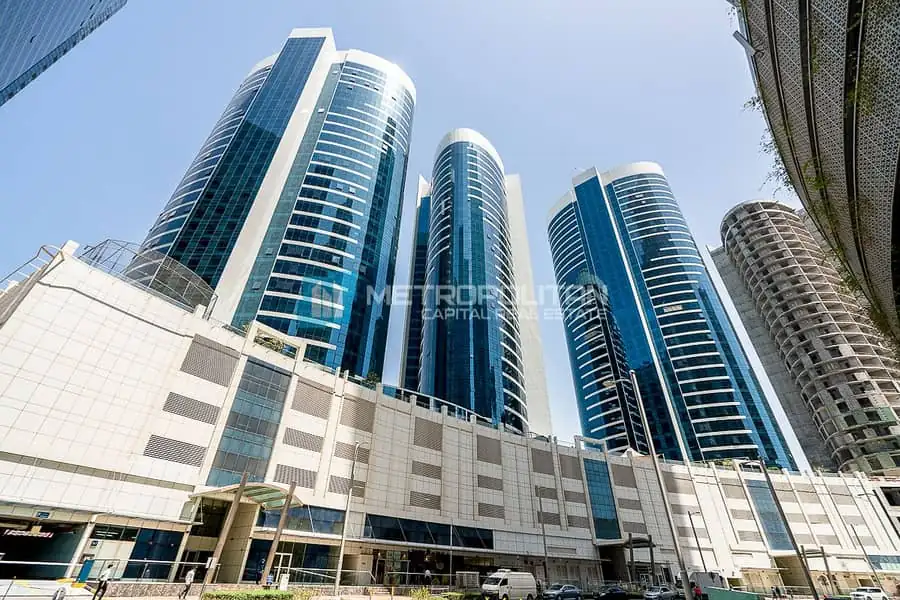
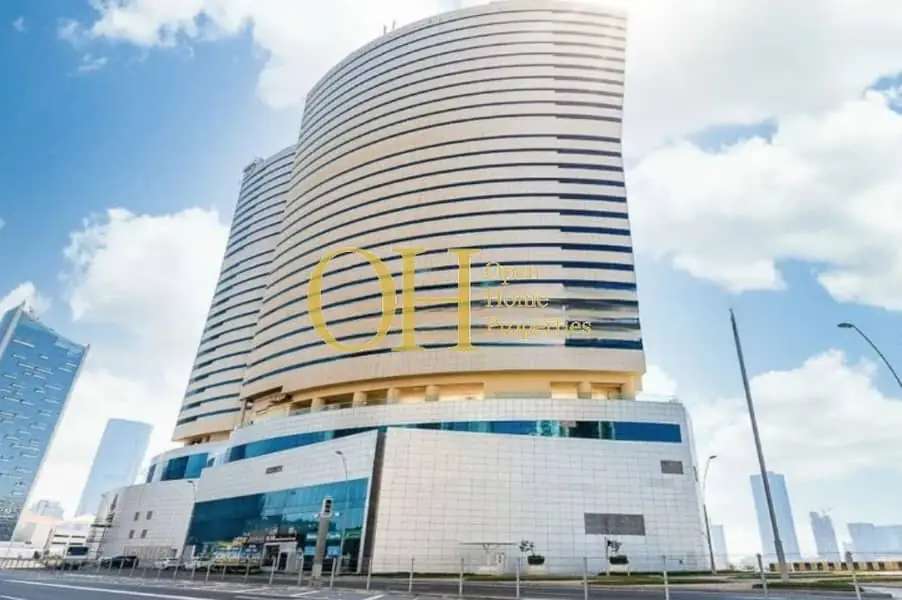
Slender towers linked by modern bridges, with integrated facilities and wide sea views.
Suits
Families and younger professionals who want modern comfort, with pools and gyms in the building.
Trade-off
Traffic congestion at peak times, and service charges that can run high.
Saadiyat Island
An exclusive, cultural atmosphere — fine sand beaches, world-class museums and low-density housing.
Suits
Building an exceptional asset, and long-term appreciation supported by continued cultural investment.
Trade-off
A markedly higher entry price and a more selective resale market, given the premium positioning.
Al Raha Beach
A relaxed waterfront setting, valued for its marina walks and proximity to the international airport.
Suits
Residents wanting a balance between coastal calm and quick access to the routes towards Dubai.
Trade-off
A somewhat uniform range of properties, and a longer distance from the historic centre.
What does an apartment in Abu Dhabi actually cost?
Beyond the headline figure, how you hold the property legally deserves close attention.
Abu Dhabi's market shows considerable price variation by location, quality of finish and the developer's reputation. Contrary to a common assumption, it is possible to buy in well-connected areas on a mid-range budget, provided you separate the headline price from the compulsory additional costs. The figures below give the ranges currently observed, so you can plan financing without surprises.
abu-dhabiFor saleApartmentestimate
Median price / m²AED 12,350Half the apartments sell below this
Median priceAED 1.55mthe average is 14% higher — a few very large properties pull it up
Most common2 bedrooms38 % of listings
Average size120 m²
By number of bedrooms
Bedrooms
Share of market
Avg price
Price / m²
Avg size
1
30 %
AED 1.07m
AED 14,300 +10 %
75 m²
2most common
38 %
AED 1.43m
AED 13,000
110 m²
3
22 %
AED 1.98m
AED 12,350best value / m²
160 m²
4
10 %
AED 2.86m
AED 13,000
220 m²
Each row is an average, compared against the area average of AED 13,000 / m². These are indicative estimates of a typical local market, not a measured sample of live listings. Check current listings before relying on them.
What you actually own: freehold against a right of use
With the legal position settled, the transaction itself follows a strict sequence.
The legal security of your investment rests entirely on the nature of the title the authorities issue. Not every part of the capital carries the same rights for a non-national buyer, and confusing the two regimes causes serious problems at resale or on inheritance.
Freehold
In the designated investment zones, a foreign buyer acquires perpetual freehold ownership of the property together with the corresponding share of the land. The title is recorded in the municipality's official register, giving full freedom to sell, let or pass it on with no time limit.
What it changesThis is the necessary option for any investor wanting maximum security of ownership and the best long-term liquidity.
Leasehold / Musataha
Some areas or property types can only be bought on a leasehold basis, granting a right to occupy and use for a fixed term, generally between 30 and 99 years. Although it can be assigned and, on conditions, renewed, it does not give you permanent ownership of the land beneath.
What it changesEstablish exactly how many years remain on the original lease before committing, or you will watch value erode as the term shortens.
The rule to understand before paying any deposit
To work through that sequence smoothly, here is who does what, and in what order.
In Abu Dhabi, signing a preliminary agreement binds both parties well before the final registration with the authorities. Paying money without securing the conditional clauses, or without using a protected escrow account, exposes you to real financial risk if either side withdraws or a dispute arises.
Making a written offer accompanied by a deposit, which starts a binding process.
Careful verification of the original title documents at the municipality's land department
Drafting the preliminary contract (MOU) with clear penalties and financing conditions included
Placing the deposit cheque, usually 10 per cent, with a licensed agent or in a blocked escrow account
Clearing any encumbrances and obtaining the No Objection Certificate (NOC) from the developer or the management company
Registration of the transfer and issue of the title in your name.
How a transaction runs, step by step
A successful purchase in Abu Dhabi means coordinating several local parties to a firm timetable. From the initial search to handover, each has a defined role that needs managing to avoid administrative delay.
The investorSetting the budget and shortlisting areasBuild a financing plan that includes acquisition costs, and select two or three districts that are eligible for freehold ownership.
The licensed agentViewings and selectionIdentify what is available, check the service charge history and negotiate the financial terms of the offer.
The lawyer or consultantLegal audit and drafting the MOUSecure the preliminary contract, confirm the title is in order and insert the necessary conditional clauses.
The developer or managerIssuing the No Objection CertificateConfirm the current owner is up to date on service charges and that there is no undisclosed mortgage over the property.
The land registryTransfer and registrationSettle the balance and the registration fee to receive the new official title immediately.
Apartment or house in Abu Dhabi: how to decide
Choosing between an apartment in the heart of the capital and a villa in the outer residential districts comes down to your relationship with time, with daily journeys and with maintaining the place you live. In Abu Dhabi, apartments are concentrated on the main island — along the Corniche, in Downtown and on the modern waterfront of Reem Island. That option suits working people who want to cut travel time sharply and reach cultural venues, restaurants and services on foot or in a few minutes by taxi. In exchange, you give up private outdoor space, larger volumes and the flexibility a detached house allows.
Choosing a villa or townhouse in a planned community such as Al Raha Gardens, Khalifa City or Saadiyat Island changes daily life completely. These properties offer considerable floor area, private landscaped gardens, sometimes a pool, and a calm environment that families with children particularly value. The cost of that is distance from the business district and near-total dependence on a car for every school run, commute and outing. The main roads are well maintained, but peak hours are pronounced and lengthen as the city expands.
Financially, an apartment carries service charges that are often high but predictable, covering the building's pools, gym, round-the-clock security and concierge. A villa has no collective charge, but you take on full and direct responsibility for the fabric of the building, the central air-conditioning, the roof and the grounds. Cooling costs between May and September are a budget line to model carefully against insulation and total floor area.
Finally, liquidity deserves a clear-eyed look before signing. Mid-market apartments on Reem Island or Al Maryah Island see steady demand from younger professionals and expatriates without children, which keeps occupancy high and resale straightforward. Large premium villas, though sought after by well-off families, address a narrower segment where market conditions can lengthen the time to sell. Your decision has to weigh the immediate comfort of peripheral space against the strategic centrality of an urban apartment.
What initial and monthly budget should you plan for?
Buying an apartment in Abu Dhabi is not the headline price shown on the portals. You need to include every up-front acquisition cost, the local administrative fees and the recurring running budget, or you will meet an unwelcome surprise in your first year. The figures below reflect the market as regulated by the emirate's Department of Municipalities and Transport.
Initial acquisition costs and administrative fees
Cost
Rate or estimated amount
When it is paid
Land registration fee (DMT)
2 per cent of the purchase price
On transfer of ownership
Estate agency fee
2 per cent of the purchase price, excluding VAT
On signature of the agreement or the deed
Notarisation and certification
Between AED 2,000 and AED 5,000
Fixed fees, according to complexity
Utilities deposit (ADDC)
AED 1,000 to 2,500, refundable
On opening the water and electricity account
These costs sit on top of the price agreed with the seller and must be funded from your own capital; local banks rarely lend against the incidental fees.
Monthly running budget for a standard apartment
Cost
Monthly range
What drives the variation
Service charge (maintenance fee)
AED 10 to 20 per square foot per year
The facilities provided in the development
Water and electricity (ADDC)
AED 600 to 1,500
Strong seasonality, driven by cooling
Broadband and television
AED 350 to 600
The package taken with the local provider
Home insurance
AED 80 to 200
Calculated on the reinstatement value
The energy bill peaks between June and September because of intensive air-conditioning use, and should be smoothed across your annual budget.
What an ordinary Tuesday looks like for an owner in Abu Dhabi
To judge whether buying here makes sense, nothing substitutes for watching an ordinary weekday unfold. From the morning commute to the evening shop, each stage shows both the quality of the infrastructure and the small logistical realities of life in a modern Gulf city.
07:00The apartment balconyThe day starts in the air-conditioned quiet of the flat, with early light on the glass façades of the surrounding towers. A glance out shows how the main arteries below are moving.
08:15The commute to the business districtThe drive or taxi to Al Maryah Island or Downtown runs on wide, well-signed roads. Congestion stays moderate by the standards of comparable cities, provided you cross the main bridges before the peak.
12:30Lunch in the commercial districtResidents have an extremely varied choice, from neighbourhood cafés to hotel restaurants — and it is where you notice how walkable the immediate area around the modern towers really is.
17:30Home, and the building's gymBack at the development, the rooftop pool and fitness room allow you to unwind without leaving the building. Facilities of this kind remove the need for outside memberships and support the value of the asset.
19:30The community supermarketFood shopping happens in the supermarkets built into the ground floor of the larger complexes or in the district malls. Supply of imported fresh produce is constant and reliable.
21:00An evening walk on the CornicheThe cooler night air invites a walk along the Corniche or the pedestrian quays on Reem Island. Visible public safety and well-kept public space are defining features of life here.
What the agent will never raise unprompted
Buying an apartment in Abu Dhabi follows specific customary and regulatory rules that frequently escape unadvised overseas investors. Between how common parts are really managed, the thermal effect of which way a façade faces, and noise from construction still under way, several points deserve proper investigation before any deposit is paid.
Which way the apartment faces, and the summer cooling bill
A flat facing due west or south takes extreme solar gain between May and October. Without high-quality double glazing and sound insulation, monthly energy bills can double against an equivalent north- or east-facing unit.
How well the owners' association is actually run
Not every tower is managed with the same financial and technical rigour. A weak owners' association, or a developer slow to hand over management of the common parts, leads to rapid deterioration of lifts, pools and shared space — and that feeds directly into resale value.
Whether the view will survive
Abu Dhabi's skyline changes quickly. An apartment with an uninterrupted view of the sea or a park today can be blocked by a new tower within three years, changing both the light and the value.
Strict rules on subletting and altering partitions
Emirati law tightly regulates internal structural changes and short-term letting. Removing a partition or listing the flat for short stays without prior approval exposes the owner to substantial administrative fines.
What buyers regret six months after moving in
Looked likeA bargain, at an exceptionally low price per square foot in a developing area.
Turned outStructural defects invisible on a quick viewing, and an emergency levy voted by the building to repair a failing central cooling system.
Would have caught itAlways commission a full technical audit of the building from an independent firm, and read the minutes of the last three annual general meetings before signing.
Looked likeA supposedly central location where everything would be walkable.
Turned outNo safe way to cross the fast boulevards nearby, turning every local errand into a car journey.
Would have caught itWalk the immediate area yourself at different times of day and night to test real pedestrian access and how the neighbourhood sounds.
Looked likeA gross yield above 9 per cent, quoted on a glossy brochure.
Turned outUnderestimated void periods, heavy management commissions and constant tenant turnover wearing out the fittings.
Would have caught itDiscount every yield forecast by a realistic 10 per cent void rate and deduct all management and annual maintenance costs.
Looked likeAn off-plan purchase made remotely on the strength of flattering 3D renders.
Turned outDisappointing finishes, real dimensions well below the contract plans, and a final view blocked by an electrical substation.
Would have caught itNever buy off-plan without a trusted representative on the ground, or without firm completion guarantees backed by an approved escrow account.
Who should not buy an apartment in Abu Dhabi
Buying is often presented as the obvious way to build personal wealth. Yet in Abu Dhabi specifically — a market shaped by high international mobility and by local regulatory particularities — buying an apartment can be a counterproductive choice for certain residents.
A resident on a short posting of under three years
→Buying quickly, prompted by a relocation allowance or by advice from colleagues.
Acquisition costs of roughly 4 per cent, combined with the costs of selling again, cannot be recovered over less than three or four years of ownership, and an early sale almost always produces a net capital loss.
An investor with no appetite for rental risk who wants a hands-off return
→An off-plan studio in a distant peripheral scheme promoted aggressively.
Managing a property remotely, or inside a complex building, demands close attention, the ability to absorb void periods and tolerance for price movement — none of which suits a cautious profile.
A household whose savings are stretched, with no cash reserve
→Using every available liquid asset for the deposit the bank requires.
With no financial cushion, any setback — unpaid charges, an urgent air-conditioning repair, a rise in variable mortgage rates — turns ownership into a squeeze immediately.
So are you genuinely ready to buy in Abu Dhabi?
At the end of this, the decision to buy an apartment in Abu Dhabi should no longer rest on intuition or on the enthusiasm a good brochure produces, but on a cold and structured calculation. If your horizon in the emirate comfortably exceeds five years, your professional position is settled, and you hold savings beyond the deposit itself, then buying is a durable and powerful way to build an asset.
The Abu Dhabi market offers solid legal protections, a secure setting that is among the most envied anywhere, and remarkable urban infrastructure. It nonetheless demands extreme selectivity about location, careful verification of the building's financial health, and a flat refusal to be drawn by illusory yields or by cheap prices concealing serious defects.
Take the time to view several properties at different hours, confirm your financing with established banks, and read the official guidance from the Department of Municipalities and Transport before signing anything. Your apartment here should be somewhere to live well or a quality asset — not a permanent source of financial stress.
Related questions
What are the costs of buying an apartment in Abu Dhabi?
Acquisition costs consist mainly of the land registration fee payable to the Department of Municipalities and Transport at 2 per cent of the sale price, plus agency fees generally set at 2 per cent excluding VAT. With minor administrative charges, the total comes to roughly 4 to 5 per cent of the price agreed with the seller.
Can a non-resident foreign national buy property in Abu Dhabi?
Yes. Foreign nationals can acquire freehold property, but only within specific areas designated by the emirate's government, such as Reem Island, Saadiyat Island, Yas Island and Al Raha Beach.
What do service charges typically cost?
Service charges generally run between AED 10 and 20 per square foot per year, depending on the standard of the development, the facilities provided such as pool and gym, and how well the owners' association is run.
How are the rental market and off-plan purchases regulated?
The market is regulated by the Department of Municipalities and Transport. For off-plan purchases, buyer payments must be made into audited escrow accounts, which exist to guarantee that developments are completed.
Should I budget separately for air-conditioning?
Yes. Cooling is the heaviest line in the energy bill, particularly between May and September. Water and electricity bills managed by ADDC can double or triple in summer against the milder winter months.
How long should I expect to hold the property?
Given the initial registration fees and the costs of selling, it is strongly advisable to plan on holding for at least four to five years to recover those costs and have a realistic prospect of a net gain.
Will local banks lend to expatriates?
Yes. The main commercial banks in the UAE offer mortgages to non-residents and to foreign residents, generally covering up to 75 or 80 per cent of value on a first purchase, subject to evidence of sufficient regular income.
Which areas work best for a rental investment?
Reem Island and Downtown Abu Dhabi are particularly sought after, with strong rental demand from younger professionals and families, which supports high occupancy and makes resale easier.
What mistakes do inexperienced buyers make most often?
The most common are failing to audit the real technical condition of the building, underestimating hidden cooling costs, buying off-plan without checking the developer, and holding no cash margin for the unexpected.
Can I let my apartment on a short-term basis?
Short-term letting is tightly regulated by the Department of Culture and Tourism. You must obtain a specific tourism licence and comply with the building's own rules before listing on any short-stay platform.