Buying an apartment in London is a major financial commitment that calls for a clear grasp of the legal and local particulars of the British market. Between managing leasehold tenure, choosing neighbourhoods strategically and following a strictly codified purchase procedure, every financial decision needs method behind it. This guide sets out the essential mechanics of getting a property purchase right in the heart of the British capital.
Get the app
What nobody tells you.
Real prices, hidden costs and the traps to check before you commit.
What you are really getting when you buy an apartment in London
Scroll
What you are really getting when you buy an apartment in London
Buying an apartment in London is a major financial commitment that calls for a clear grasp of the legal and local particulars of the British market. Between managing leasehold tenure, choosing neighbourhoods strategically and following a strictly codified purchase procedure, every financial decision needs method behind it. This guide sets out the essential mechanics of getting a property purchase right in the heart of the British capital.
Written by the ting.ad editorial team ·
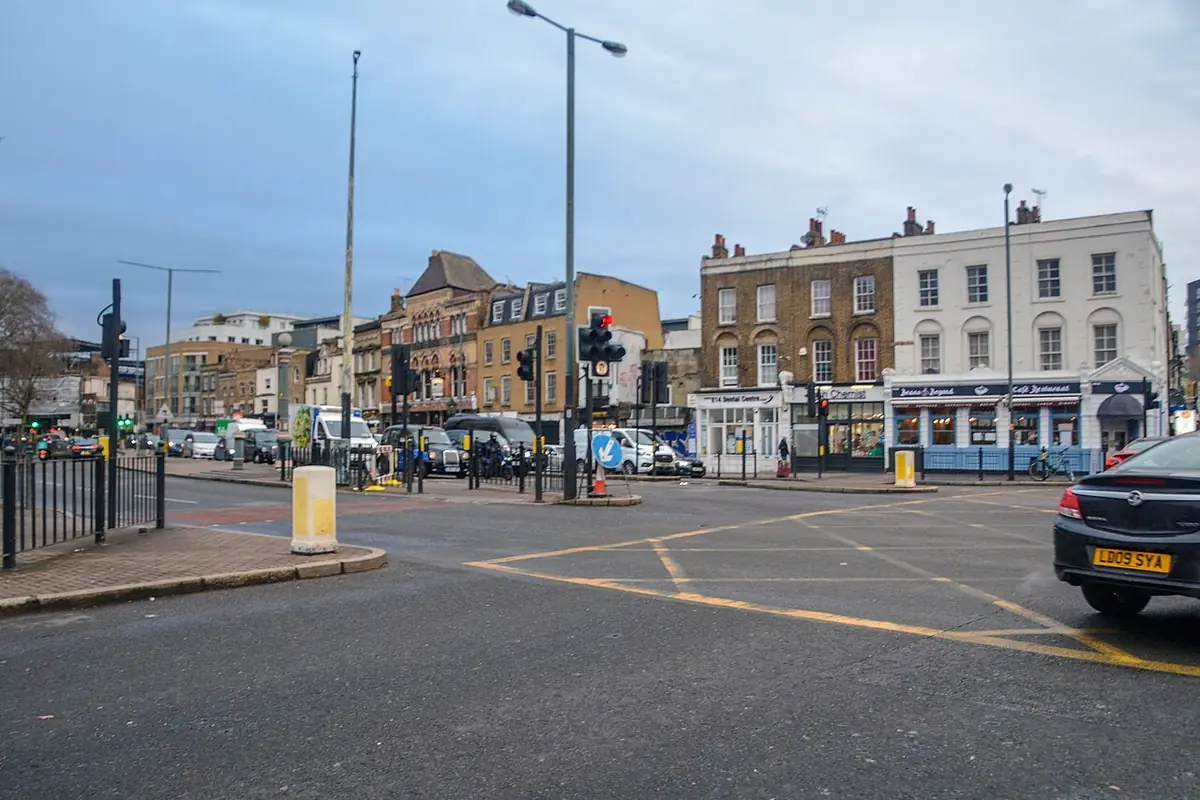
East Street, London in Street View: drag to look around.
Understanding how London ownership is structured legally is only the first step in working out whether this market suits your daily life.
Buying bricks and mortar in London is not simply a matter of acquiring square metres in one of the world's most dynamic capitals. It means exposing yourself to a market governed by complex historic rules, where the value of a property depends as much on how it is held as on its exact address. Between the structural scarcity of land and the demand for constant renovation, the reality of buying in London requires looking past the shop window. Working out what you actually own is what stops the financial disappointments arriving in the first months of ownership.
The promise of permanent global liquidityvsThe reality of a local market shaped by strict regulatory cycles
The British capital does attract capital from around the world, but reselling a standard apartment depends largely on local demand, on Bank of England interest rates and on the borrowing capacity of resident buyers. Liquidity varies sharply by property type.
The illusion of perpetual outright ownership of the landvsThe dominance of leasehold, which requires careful management of the lease
A large share of London apartments are sold as leasehold, meaning you are buying the right to occupy the property for a fixed term. Value erodes as the lease shortens, forcing costly steps to extend it.
The prestige of a smart central addressvsThe hidden cost of service charges and local taxes
Owning in the central zones means very high service charges, administered by third party companies, plus a council tax that varies considerably by borough and by the property's assessed value band.
The certainty of continuous capital appreciationvsThe need to factor in maintenance costs and planning restrictions
Constraints tied to listed buildings or to building management rules limit how quickly a property can be transformed. Capital gains are earned over the long run and depend heavily on the intrinsic quality of the building.
Which London lifestyle matches your buyer profile?
Green squares offer a quiet break from city life — Photo: Matt Brown · CC BY 2.0 · Wikimedia Commons
Once your profile is clear, the next thing to measure is the practical and cultural gap between the habits you arrive with and the way the British market works.
The London property market does not speak to you in the same way depending on whether you are looking for an urban base, a main home to live in year round or a long term rental investment. Each buyer profile has to work around demanding constraints of transport, working rhythm and residential expectations. The success of your project depends on how well you can align your daily habits with the geographic reality of the city's different neighbourhoods.
The part time resident or international investor
For a buyer who spends part of the year outside the United Kingdom, the absolute priority is remote management and building security. Apartments in managed developments with a concierge offer real peace of mind, even though the annual charges cut into the net return.
You also need to anticipate the tax rules that apply specifically to non-residents, along with the rules governing short lets if you plan to rent the property out while you are away. Being within immediate walking distance of an Underground station on a main line then becomes a non-negotiable criterion for keeping journeys manageable.
The permanent resident with children
Settling in London as a family means thinking first about school catchments and access to green space, well ahead of raw floor area. Family apartments with three bedrooms or more are scarce in the central zones and command particularly high prices per square metre.
Buyers generally turn to outer or residential boroughs with good transport links, where parks and neighbourhood facilities make daily life easier. That choice means accepting longer journeys into the business districts, offset by a calmer setting.
The income and capital investor
For a purely financial investment, chasing high gross yields gives way to seeking stability and preservation of capital. Studios and one bedroom apartments near universities or technology hubs guarantee sustained rental demand.
That said, British tenancy law, the potential for rent controls and the rising requirements on building energy performance all demand rigorous selection. A poorly insulated property, or one needing heavy energy upgrades, will quickly weigh on your overall return.
Buying in London when you are arriving from abroad: what really changes
With that adjustment made, the choice of location becomes the decisive factor in your purchase.
Approaching a London transaction with the instincts formed in another property system leads to serious practical and administrative mismatches. The British legal system, built on common law, neither protects nor structures a purchase the way civil law jurisdictions do. From the opening negotiation to the handover of the keys, each stage follows specific conventions that must be absorbed to avoid an expensive misstep.
From abroad
Signing a mutually binding preliminary contract with a deposit paid straight away
London
Exchange of contracts, which happens late, after weeks of legal checks
In many countries you are committed from the moment you sign the preliminary contract, subject only to stated conditions. In London either party can walk away freely right up to formal exchange of contracts, which creates a long window of legal uncertainty and gives rise to the practice known as gazumping.
From abroad
A single neutral public officer who draws up the deed and holds the funds
London
Independent conveyancing solicitors acting for each side to negotiate and check title
There is no single official guaranteeing the fairness of the sale. Buyer and seller each instruct their own conveyancing solicitor, whose thoroughness and responsiveness set the pace of the transaction, usually billed by the hour or as a fixed fee.
From abroad
Shared ownership of a building governed by a strict statute and a universal professional building administrator
London
The leasehold or share of freehold system, run by managing agents
Running the building often rests on agreements between owners or on private companies. Disputes over the upkeep of common parts or over exceptional demands for funds mean getting to grips with the complex rules of the specialist property tribunals.
From abroad
A compulsory standardised technical survey attached to the deed
London
The principle of caveat emptor (the buyer alone is responsible for checking) and an independent RICS survey
The seller has no legal duty to volunteer a list of hidden defects. It is on you to commission a thorough inspection of the building to identify structural problems, damp or the presence of asbestos.
Which London area should you target for your expectations and budget?
With those geographic markers in place, it is time to look at the financial reality of prices in the current market.
London is a mosaic of interconnected villages, each with its own rhythm, social makeup and market dynamic. Trying to settle or invest without mapping these micro markets precisely leads inevitably to poor choices. The comparison cards below set out the trade-offs built into each of the capital's main zones.
Kensington and Chelsea
A hushed atmosphere, immaculate Victorian facades, prestigious parks and a wealthy international population.
Suits
Investors seeking absolute preservation of capital and buyers with very large budgets.
Trade-off
Stratospheric prices per square metre, very low gross rental yields and service charges that are particularly off-putting.
Islington and Hackney
Constant cultural energy, designer markets, streets lined with refurbished pubs and a strong presence of young professionals.
Suits
Buyers after lively neighbourhood life, medium term growth potential and properties with character.
Trade-off
Fierce competition for family properties, advanced gentrification pushing prices up, and marked differences from one street to the next.
Tower Hamlets and Canary Wharf
Modern glass towers, waterside plazas, a global financial hub and fast transport connections.
Suits
Investors focused on gross rental yield and young professionals working in finance or tech.
Trade-off
An atmosphere that can feel impersonal at weekends, an oversupply of similar new-build apartments, and a possible discount if you need to resell quickly.
Wandsworth and Hammersmith
Residential streets along the Thames, excellent schools and a fine balance between calm and energy.
Suits
Families settling in London for the long term who want a green setting without cutting themselves off from the centre.
Trade-off
An extremely tight market where good properties go within days, often above the asking price.
What does buying an apartment in London really cost?
Knowing the prices is not enough; you also need to understand exactly what kind of ownership right you are signing for.
Advertised property prices in London never reflect the full cost of the transaction. Between Stamp Duty Land Tax (the transfer tax), legal fees, survey costs and local taxes, the overall budget has to be worked out with real precision. The ranges below show the orders of magnitude observed for different apartment types across the capital's zones.
londonFor saleApartmentestimate
Median price / m²£7,600Half the apartments sell below this
Median price£540kthe average is 14% higher — a few very large properties pull it up
Most common2 bedrooms41 % of listings
Average size68 m²
By number of bedrooms
Bedrooms
Share of market
Avg price
Price / m²
Avg size
1
35 %
£442k
£9,200 +15 %
48 m²
2most common
41 %
£555k
£8,160
68 m²
3
18 %
£677k
£7,520 −6 %
90 m²
4
6 %
£824k
£7,360best value / m²
112 m²
Each row is an average, compared against the area average of £8,000 / m². These are indicative estimates of a typical local market, not a measured sample of live listings. Check current listings before relying on them.
What you can actually own: leasehold versus freehold
Once that legal framework is clear, what remains is to understand how a British transaction unfolds in time.
The structure of property ownership in London often disorients buyers used to universal outright ownership. The distinction between the right to occupy a home for a fixed term and owning the land underneath governs the long term value of your investment. Looking closely at the two main regimes that apply to apartments is what reveals the hidden risks tied to how the building will be run in future.
The classic leasehold regime
You buy a temporary right of occupation granted by the owner of the land (the freeholder) for an initial term often set at 99, 125 or 999 years. As the number of years remaining falls below 80, the value of the apartment drops steeply and the cost of renewing the lease climbs sharply.
What it changesYou must check the remaining lease term before making any offer and budget for the potential cost of a statutory extension from the freeholder.
The share of freehold regime
The flat owners in the building collectively hold, through a dedicated company, the freehold of the land and the structure. Each resident holds a long lease on their own apartment while directly controlling maintenance decisions, the choice of contractors and the level of charges.
What it changesThis arrangement gives far more control over how the building is run and removes the conflicts caused by abusive ground rent increases, which is a real asset when you come to resell.
The fundamental rule to understand before paying any deposit in London
Let us now look at how the operational timetable of a successful purchase is organised in practice, from beginning to end.
The British property market runs on the principle of the chain, where each sale is dependent on several others. A delay or a withdrawal at one link weakens every transaction attached to it. Mastering this invisible sequence protects a buyer against last minute administrative and financial blockages.
Putting a written offer to the estate agent instructed by the seller.
Acceptance of the offer by the seller (often marked Under Offer), which is not yet a firm legal commitment.
Instructing your conveyancing solicitor to begin the preliminary legal searches and the audit of title.
Commissioning an independent survey (RICS Home Survey) to detect hidden defects or structural problems.
Securing your final mortgage offer and putting the funds needed for the deposit in place.
Exchange of contracts and payment of the non-refundable deposit, which definitively binds both parties.
How a London property transaction unfolds, step by step
Buying property in London follows a formal process closely marked out by local professional practice. From the first viewing to the actual handover of keys, the coordinated involvement of several parties is what makes the transaction legally safe. Following this sequence carefully lets you anticipate administrative timescales that are often longer than elsewhere in Europe.
The buyerFinancial preparation and agreement in principleObtain a Mortgage in Principle from a lender and instruct a conveyancing solicitor before you even start viewing properties.
The estate agentShortlisting properties and targeted viewingsView the shortlisted apartments, assessing the condition of the building as a whole and the remaining lease term where applicable.
The buyerSubmitting the offerPut a formal written offer through the agent, supported by evidence of your financing.
The solicitorLegal checks and searchesExamine the title deeds, raise searches with the local authority and check the service charges currently being levied.
The RICS surveyorSurvey of the buildingCarry out a thorough assessment of the structure, the insulation and the compliance of the internal installations.
The solicitorsExchange of contracts and payment of the depositSign the sale contracts binding both parties irrevocably, with payment of a 10% deposit.
The buyer and the sellerCompletion (finalising and handing over the keys)Transfer the balance of the purchase price, settle the taxes due and collect the keys from the estate agent.
Apartment or house in London: which should you actually choose?
Once the type of property is settled, the crucial question of the total cost of ownership and the purchase budget follows immediately.
Choosing between a converted Victorian apartment and a Georgian terraced house in London is not simply a matter of aesthetic preference between period and modern. Apartments often bring the advantage of a more central location, letting you live minutes from Underground stations and the busy streets of zones 1 or 2, but they mean living with the constraints of long leasehold tenure and service charges that can be very heavy indeed. Those maintenance costs for common parts and roofs are decided collectively, which can slow down decisions on insulation or on repairing the facade and create friction between owners who let their flats and those who live in them.
Buying a house in London instead, whether a Victorian terraced house or a 1930s cottage in zone 3 or 4, removes most external management charges because you generally own the land and the structure outright, that is, freehold. That architectural independence carries a direct and immediate cost, though: the full upkeep of the roof, the foundations and the water services falls entirely on the single owner, with no shared reserve fund to cushion the shock if dry rot or major structural cracking is discovered.
In terms of living space and layout, the London apartment frequently suffers from a lack of private outdoor space, offering at best a small balcony or access to a shared square whose use is regulated by the local committee. A house, even a modest one in floor area, almost always comes with a garden, often no more than a paved yard in the central boroughs, but still an invaluable space to breathe in a city as dense and as built up as the British capital.
Finally, how easily a property resells varies considerably with the legal nature of the title and the precise location within Greater London. Leasehold apartments whose lease drops below the critical 80 year mark take a brutal discount on the market and need a complex, expensive renegotiation with the owner of the land. Freehold houses, although more expensive to buy for an equivalent floor area, hold a far steadier store of value and hold their appeal longer for local and international families looking to settle for good.
What budget do you really need to buy and live in London?
Terraced houses and corner shops along a typical London street — Photo: Lewis Clarke · CC BY-SA 2.0 · Wikimedia Commons
These fixed and variable costs sit inside a daily rhythm whose practical organisation deserves a closer look.
Building a financing plan for a London purchase means allowing for very specific acquisition taxes and monthly running costs on a different scale from continental norms. Beyond the headline price shown on the property portals, a buyer has to provide for the progressive transfer tax known as Stamp Duty Land Tax, whose bands fall heavily on second home owners and non-resident foreign investors. Conveyancing costs, combined with survey fees and the lender's valuation, make up a cash requirement that cannot be rolled into a standard mortgage.
Estimated upfront purchase costs in London
Cost item
Order of magnitude for a GBP 600,000 property
Nature of the charge
Stamp Duty Land Tax (main residence)
GBP 17,500 to GBP 20,000 depending on the rates in force
Compulsory government tax paid on the day of completion
Conveyancing and legal fees
GBP 2,000 to GBP 4,500 before VAT
Payment for the legal advice needed to check title
Building survey report
GBP 800 to GBP 1,500
Detailed inspection of structural condition and hidden defects
Mortgage arrangement fee
GBP 1,000 to GBP 2,000
Fee charged by the lender for issuing the loan
The figures above exclude the 2% surcharge that may apply to buyers resident outside the United Kingdom for more than 183 days a year.
Recurring charges and annual local taxes
Type of recurring charge
Average amount observed in London
Impact on the household budget
Council Tax (local property tax)
GBP 1,200 to GBP 3,000 a year depending on borough and band
Payable in 10 or 12 monthly instalments to the borough council
Service charges (apartments)
GBP 2,500 to GBP 6,000 a year
Covers upkeep of common parts, the lift and on-site staff
Buildings and contents insurance
GBP 450 to GBP 900 a year
Essential to cover the risks tied to ageing services
Ground rent and sinking fund
GBP 300 to GBP 1,500 a year
Provision for major building works to come
Council Tax can vary threefold depending on whether the property sits in a smart central borough or in an outer zone.
Health, schools and transport: what does an ordinary Tuesday in London look like?
Behind the postcard of this well-oiled daily routine lie technical and legal realities that sales brochures carefully leave out.
Living in London means synchronising your daily journeys with one of the densest but also one of the most crowded public transport networks in the world. Between changes on the Tube, the red double-decker buses and the zonal fares paid through an Oyster card or contactless, every trip needs planning. Access to local healthcare through the public National Health Service depends entirely on registering in advance with a local General Practitioner, the GP, whose waiting list can hold a few surprises.
07:30Local bus stop or Underground station (zone 2 or 3)An early start to avoid the 8:15 crush. The bus network offers an unbeatable view of the city but remains at the mercy of London's legendary traffic.
08:15Local primary school, rated by OfstedDropping the children at a state school whose inspection rating weighs heavily on property values in the surrounding streets. Being near a highly rated school often dictates which area a family chooses.
09:00Coworking space or office in central LondonArriving at work after a multi-leg journey combining a walk, an Underground train and a quick change. The monthly Travelcard is an unavoidable line in the budget.
12:30The high street and local shopsA midday break for top-up shopping in the nearby chains or at the local market. It is the ideal moment to watch the local bustle and the variety of independent traders.
17:00Neighbourhood NHS GP surgeryA routine visit or an appointment booked several weeks in advance. The British public health system rests entirely on the central, gatekeeping role of the local general practitioner.
19:00Traditional pub or neighbourhood parkWinding down at the local pub to catch up with the neighbours, or a walk in one of the many royal parks and green spaces threaded through the capital.
What agents and listings will never tell you in London
Ignoring these warning signs during the purchase is what leads, inevitably, to the bitter disappointments that surface a few months later.
The London market is known for the speed of its transactions, which sometimes pushes buyers in a hurry to skip fundamental checks on the real condition of the property they want. Wide-angle photographs and softened descriptions published on the major portals regularly mask major structural defects or heavy development plans in the immediate neighbourhood. Understanding what sits behind the standard phrases used by British estate agents is what saves you from severe financial disappointment after the keys change hands.
The trap of the remaining lease term (leasehold length)
A listing often fails to mention that the lease expires in under 80 years. Renewing that lease with the freeholder proves extremely expensive and legally complex, wiping out the return on the original investment overnight.
Invisible noise from neighbours and transport
A viewing arranged on a sunny Sunday morning tells you nothing about the deafening noise of an overhead railway line or a congested main road at weekday rush hour, which weighs heavily on quality of life.
Nearby development plans (planning applications)
An open outlook today may be only temporary. A planning application lodged with the borough to put up a modern block opposite your windows will destroy the natural light and the resale value of the property.
The real state of the water and electrical services (Victorian plumbing)
Behind freshly painted interiors you frequently find Victorian era lead pipework, electrical installations that fall short of current standards, and chronic problems with rising damp and condensation.
The strict rules of conservation areas
If the property sits inside a protected heritage boundary, the smallest change of window, front door or facade colour will need a slow and uncertain consent from the council.
The buying mistakes you only discover after six months in London
These setbacks show that buying property in London does not suit every buyer profile, international or local.
Looked likeA charming Victorian apartment full of period character in a lively, fashionable area
Turned outA poorly insulated property with astronomical energy bills, overrun by noise from the neighbours above because the period timber floors have no acoustic insulation at all
Would have caught itInsisting on a detailed EPC (Energy Performance Certificate) and going back for a targeted second viewing on a weekday evening to test the real sound insulation between floors.
Looked likeAn exceptional financial opportunity in a rapidly gentrifying area with an Underground station nearby
Turned outA district that empties out after dark, badly short of food shops open late, with a rate of petty crime above the city average
Would have caught itWalking the surrounding streets after nightfall several times before making an offer, and checking the local crime figures published online by the Metropolitan Police.
Looked likeModerate service charges quoted by the estate agent at the first viewing
Turned outA hefty balancing charge after emergency facade repairs voted through at an extraordinary general meeting, on top of an unpredictable rise in the managing agent's fees
Would have caught itGoing carefully through the minutes of the last three years of owners' meetings to identify ongoing disputes and structural works the building has been deferring.
Looked likeEasy on-street parking outside the house, with a residents' permit that looked simple to obtain
Turned outComplete saturation of the available parking spaces and a prohibitive cost for a second vehicle, coupled with the steady expansion of restricted and charged traffic zones
Would have caught itAsking the relevant borough's highways department directly about waiting times for residents' parking permits and about the rates charged for petrol and diesel vehicles.
Who should absolutely not buy property in London?
These hard trade-offs lead naturally to the final question: are you genuinely ready to buy in London?
Contrary to the received wisdom that treats London property as an unshakeable store of wealth, buying is not the universal answer for every personal and professional situation. Taking on a long term mortgage in the British capital brings structural rigidities that do not sit well with unsettled or mobile life plans. Identifying clearly the profiles for whom this step is a major financial risk is what prevents heavy capital losses on a hurried resale.
The professional on a short posting or facing uncertain international mobility within five years
→Not to buy, and to rent a flexible furnished apartment instead
Very high upfront purchase costs, combined with agency commission on resale and tax on capital gains, cannot be recovered over a holding period of less than five years in the London market.
The investor looking for an immediate, high net rental yield
→To avoid London's residential market in favour of other British regional cities or European ones
Purchase prices per square metre in the London boroughs are so high that net rents, after charges, local taxes and income tax on rental income, produce gross yields often below 3 or 4 percent.
The household with a thin deposit and no emergency savings
→To wait and keep building solid savings before taking on a purchase
Without a financial cushion to absorb unexpected technical problems, roof repairs or a sharp rise in Bank of England base rates, an owner is exposed to the risk of repossession.
The buyer with no tolerance for complex legal and administrative processes
→To look at simpler markets or to opt for a long term tenancy
The complexity of English property law, the slowness of conveyancing between solicitors and the demanding rules attached to leasehold buildings call for a patience and a steadiness that sit badly with a need for simplicity.
So, are you really ready to go ahead and buy in London?
Making the final decision to buy an apartment or a house in London means setting aside speculative excitement and the constant talk of eternally rising British property values. If your horizon in the capital runs beyond seven to ten years, if you have taken on board the reality of service charges and local taxes, and if you accept the inevitable compromises on space or distance from the centre, then the London market offers a depth and a liquidity with no equal in Europe.
The success of your purchase does not lie in the illusory search for the perfect property or the miraculous bargain, but in the absolute rigour of your legal and technical checks. By surrounding yourself with a good independent solicitor specialising in conveyancing and a qualified surveyor to inspect every corner of the structure, you turn a risky operation into a sound, well-managed long term asset.
Keep firmly in mind that London is a mosaic of villages set side by side, where every street has its own dynamic, its schools, its shops and its particular atmosphere. Viewing in the rain, checking the borough's planning applications and working out your cost of living with all the hidden taxes included are the real markers of a successful and unhurried purchase in one of the most stimulating cities in the world.
In the end, buying in London is a commitment to a demanding but deeply rewarding way of life for anyone who understands the local rules of the game in advance. If your finances are sound, your deposit secured and your expectations matched to conditions on the ground, you now have everything you need to see your property project through in the British capital.
Related questions
Can a non-resident foreign buyer purchase property in London easily?
Yes. There is no legal restriction preventing a foreign national from buying property in the United Kingdom. Non-residents do, however, pay a 2% Stamp Duty Land Tax surcharge and face stricter mortgage lending criteria from British banks, which generally require a larger deposit.
What is the fundamental difference between freehold and leasehold in London?
Freehold means you own both the building and the land it stands on, permanently and outright. Leasehold means you are buying only the right to occupy the property for a fixed term set by a lease, with the land remaining the property of a third party to whom you pay an annual ground rent.
How does the local property tax known as Council Tax work?
Council Tax is an annual charge collected by the local borough council to fund neighbourhood services such as refuse collection, libraries and road maintenance. The amount is based on the property's assessed value as at 1 April 1991, sorted into bands running from A to H.
How long does a property transaction take on average from offer to signing?
A standard London transaction usually takes three to five months from acceptance of the offer through to final signing and exchange of contracts. The timeline reflects the complexity of the legal checks run by each side's solicitors and the time needed to put bank financing in place.
What is the Ofsted school rating system and how does it affect property?
Ofsted is the government body responsible for inspecting and rating the quality of schools in the United Kingdom on a scale running from 'Outstanding' to 'Inadequate'. A primary or secondary school rated 'Outstanding' in a given catchment has a direct and pronounced upward effect on property prices in the surrounding streets.
What additional costs should be budgeted on top of the purchase price?
On top of the purchase price, a buyer should budget for the government Stamp Duty Land Tax, conveyancing solicitors' fees, the cost of the building survey, the lender's mortgage arrangement fee, and moving costs plus any work needed to bring the property up to standard.
Is it possible to negotiate the asking price of an apartment or house in London?
Yes. Negotiation is a normal part of the British property culture. Asking prices set by agencies often build in room for discussion, and the final figure depends on how tight the local market is, how long the property has been listed and how urgently the seller wants to complete.
What is a Conservation Area in London?
A Conservation Area is a district designated by the local authority because of its particular architectural or historic interest. Properties inside these boundaries are subject to extremely strict planning rules that limit any visible external alteration in order to preserve the character of the area.
Why is the remaining term of a leasehold so critical?
Once a lease drops below 80 years, the cost of extending it with the freeholder rises steeply because of an additional payment known as marriage value. Lenders also frequently refuse to finance the purchase of a property whose lease has become too short.
How can you check how quiet a neighbourhood is at night before buying?
It is strongly advised to visit several times at different hours, particularly on a weekday evening and at the weekend, to gauge the real level of traffic, how close the property is to noisy pubs or restaurants, and the general feel of the street before committing.