Buying a house in the British capital is a major life project that rewards methodical preparation. Between the character of individual neighbourhoods, the legal complexity of tenure and a rigorous reading of market prices, every decision shapes the future of your assets. This practical guide walks you through the real mechanics of the London property market step by step so you can secure your investment.
Get the app
What nobody tells you.
Real prices, hidden costs and the traps to check before you commit.
What you are really buying when you buy a house in London
Scroll
What you are really buying when you buy a house in London
Buying a house in the British capital is a major life project that rewards methodical preparation. Between the character of individual neighbourhoods, the legal complexity of tenure and a rigorous reading of market prices, every decision shapes the future of your assets. This practical guide walks you through the real mechanics of the London property market step by step so you can secure your investment.
Written by the ting.ad editorial team ·
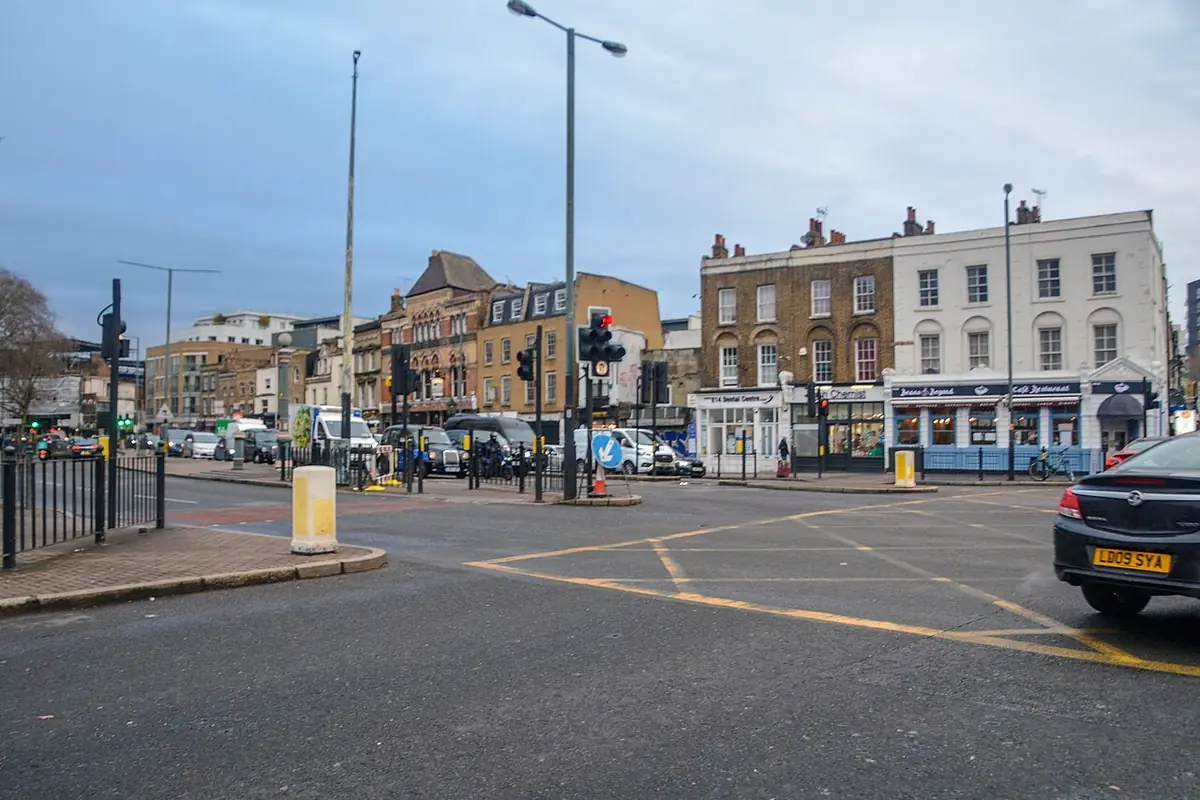
East Street, London in Street View: drag to look around.
Understanding these fundamental trade-offs makes it far easier to work out whether your daily life and the available stock actually match.
Buying bricks and mortar in London means working with structural realities that the online listings never mention. Between the value of location and the scarcity of land, living space is priced per square metre in a way that completely redraws the usual criteria. You are buying less a floor area than a precise geographic position and direct access to first-rate infrastructure that supports value over the long term. This permanent tension between the desire for space and closeness to the capital's nerve centres shapes the whole residential market.
Floor area and the number of roomsvsBeing a short walk from transport and from where the jobs are
On the same budget you constantly trade extra square metres further out against the centrality of a more compact home plugged straight into the London transport network.
The architectural charm of a period propertyvsEnergy performance and no immediate works to fund
Victorian and Edwardian houses are seductive for their character, but they often demand considerable spending to bring thermal standards and insulation up to date.
Having private outdoor space of your ownvsAccess to public parks and gated neighbourhood squares
A private garden in London is a rare luxury that carries a steep premium, while being a minute from a square or a royal park is the common alternative buyers accept instead.
The residential quiet of a calm neighbourhoodvsThe cultural life and mix of dense urban areas
Residential districts further out give families the calm they want, but at the cost of a lively street scene and easy access to the theatres and museums.
Does this location really suit how you live day to day?
Terraced houses and corner shops along a typical London street — Photo: Lewis Clarke · CC BY-SA 2.0 · Wikimedia Commons
Moving into the London way of doing things also means absorbing administrative and cultural reference points you have never used before.
The London rhythm does not forgive a bad choice of location. Whether you work on site in the City, run your own business or have school-age children, the shape of your days depends entirely on which micro-neighbourhood you pick. Journey times, the spread of local shops and access to schools redefine your priorities long before the exact size of the living room does. So it is worth analysing your daily profile to identify the area that will not turn every journey into a permanent constraint.
The urban professional
Professionals with demanding hours generally favour areas well served by the main Underground lines or the Elizabeth Line. In that context, buying a terraced house with a small patio often makes more sense than a large property further out. You cut out the fatigue of multiple changes and make full use of the cultural offer after work. That centrality has a direct cost on the purchase price, but it protects a valuable balance in a dense city.
The residential family buyer
Families naturally look to residential areas further out, or to quiet neighbourhoods with good state or independent schools. Here a detached or semi-detached house with a private garden becomes the standard target, giving children a secure space to grow up in. The compromise is a longer journey into the business districts, offset by a calm setting, parks within walking distance and strong local community life.
The self-employed or remote worker
Hybrid work has profoundly changed what buyers want, with extra rooms needed to work from home properly. Older houses on several floors let you carve out a study upstairs or fit out a garden room as a separate workspace. That lets you move slightly further from the very centre to gain square metres while staying connected through the high-speed fibre now rolled out across the vast majority of London neighbourhoods.
Living here when you have moved from abroad: what actually changes
Once these institutional quirks are understood, everything comes down to choosing your neighbourhood carefully.
Moving to London is not simply a change of country: it means adopting a legal system, administrative habits and building standards that work quite differently from what you know. The reference points you arrived with tend to fall apart in the first few weeks, whether the subject is how a building is managed, the condition of the older housing stock or your contractual relationship with the various professionals involved. Anticipating these gaps will spare you financial surprises and make settling into your new neighbourhood far easier.
From abroad
A market run on a public land register, with tightly codified protections for tenants and owners
London
A complex tenure system split between freehold (outright ownership) and leasehold (a long lease)
You must check how many years are left on a leasehold before you buy, because a short lease can destroy the value of your property and generate ruinous extension costs.
From abroad
Recent or refurbished building standards held to strict thermal rules, with an energy rating certificate at the centre of it
London
An older housing stock often characterised by uninsulated walls and Energy Performance Certificates (EPC) with plenty of room for improvement
Always set aside a specific works budget to improve insulation, replace single-glazed windows and modernise the gas or electric heating.
From abroad
Strong administrative centralisation through clearly identified town halls and state services
London
Local administration run by boroughs with highly autonomous tax and planning policies
The council tax bill varies considerably from one borough to the next and weighs heavily on an owner's recurring budget.
From abroad
Property transactions framed by statutory cooling-off periods and a notary attending as a matter of course
London
A buying process (conveyancing) run by specialist solicitors, with no firm commitment before exchange of contracts
The risk of gazumping (a seller accepting a higher last-minute offer before contracts are signed) remains a legal reality you need to counter with your solicitor's help.
Which neighbourhood suits your priorities and your budget?
Weighing up neighbourhood character leads straight to the central question of value and the prices actually being paid.
Every part of London has its own identity, rhythm, market and social character. Expecting to be perfectly central and to have a large tree-lined garden in the most dynamic areas is mathematical fantasy. The sensible approach is to map the different types of neighbourhood by the atmosphere they offer, the day-to-day advantages they bring and the financial or logistical price of their location.
The historic central neighbourhoods (Zone 1)
Constant buzz, very quick journeys and an exceptional concentration of cultural and dining options.
Suits
Buyers without children, or with very large budgets, who put pure urban energy ahead of floor area.
Trade-off
Stratospheric prices per square metre, often cramped houses, almost no parking and constant exposure to big-city noise.
The residential boroughs of the west (Zones 2 and 3)
A green setting, tree-lined streets, superb parks and a well-established international community.
Suits
Well-off families and senior professionals looking for stability, excellent schools and well-preserved period housing.
Trade-off
Extremely high purchase prices and fierce competition between buyers for every good property that comes to market.
The regenerating areas of east London
A creative, fashionable atmosphere, converted industrial space, independent cafes and strong urban momentum.
Suits
First-time buyers and bolder profiles who want a promising long-term investment in areas with real growth potential.
Trade-off
Social contrasts that are still sharp from street to street, and school or transport provision that can be uneven between micro-areas.
What does buying a house in London really cost?
Beyond the raw budget figures, the legal structure of ownership deserves very close attention.
The London property market cannot be reduced to a misleading single average; it splits into sharply contrasting price bands by geographic zone, property type and the legal nature of the title. Building a solid budget means factoring in not just the headline purchase price but also local taxes and the unavoidable additional costs. The market data below reflects that need for precision so nothing catches you out at signing.
londonFor saleHouseestimate
Median price / m²£6,232Half the apartments sell below this
Median price£781kthe average is 14% higher — a few very large properties pull it up
Most common2 bedrooms63 % of listings
Average size119 m²
By number of bedrooms
Bedrooms
Share of market
Avg price
Price / m²
Avg size
2most common
63 %
£796k
£6,691
119 m²
3
28 %
£971k
£6,166 −6 %
158 m²
4
9 %
£1.18m
£6,035best value / m²
196 m²
Each row is an average, compared against the area average of £6,560 / m². These are indicative estimates of a typical local market, not a measured sample of live listings. Check current listings before relying on them.
What you can actually own: freehold versus leasehold
Green squares offer a quiet break from city life — Photo: Matt Brown · CC BY 2.0 · Wikimedia Commons
With that legal groundwork in place, the chronology of a British property transaction holds plenty of surprises of its own.
In Britain, the nature of your ownership right directly determines your freedom of action and the long-term security of your investment. In many countries outright ownership is the near-absolute rule, whereas the British system draws a clear line between owning the building and owning the ground. Grasping that distinction protects you against unexpected falls in value and complex disputes with institutional or private freeholders.
Freehold: outright ownership with no strings
Holding a property freehold means you own both the physical structure of the house and the land it stands on, with no time limit. It is the ideal status for a standard detached or terraced house, because it gives you full autonomy to extend, to alter the facade (within local planning rules) and to pass the property on without any recurring ground payment.
What it changesYou get maximum legal security and the best long-term growth on your capital.
Leasehold: temporary ownership under a lease
With a leasehold, you buy the right to occupy the house for a period set by the original contract (often 99, 125 or 999 years), while a third party (the freeholder) still owns the land. You then have to pay annual ground rent and contribute to the upkeep of communal areas or the external structure if the property forms part of a managed development.
What it changesYou must check how many years remain on the lease before making any offer, because a lease under 80 years becomes very expensive to extend.
The legal rule to understand before you hand over any deposit
Mastering these legal stages lets you approach the practical timeline of your purchase with confidence.
Buying property in the United Kingdom follows a very particular chronology that often surprises overseas buyers. In many countries an accepted offer and a preliminary contract bind both parties quickly, whereas the British transaction stays informal and revocable through most of the administrative and legal work. Understanding this sequence of progressive commitment is essential if you want to avoid an expensive disappointment.
Viewing the property and putting in an initial offer through the estate agent.
The seller formally accepting your offer, which in practice starts an exclusive negotiation but carries no binding legal force.
Solicitors (conveyancers) instructed by each side stepping in to run the legal searches, check title and review any charges on the property.
The technical inspection of the building (a HomeBuyer Report or a Building Survey) to identify hidden defects or urgent works.
Final confirmation of your mortgage offer if you are funding the purchase with a loan.
The crucial exchange of contracts, the precise moment when the sale becomes legally irrevocable ahead of completion.
How a property transaction unfolds, step by step
Carrying a London purchase through to completion means coordinating a range of specialist professionals. Each of them plays a precise part in securing your investment, from first identifying the property to the day you move in. Following this operational sequence carefully keeps a dense process moving smoothly, and it is a process well signposted by British market convention.
You and your adviserDefining the project and targeting areasSet out your budget and geographic criteria clearly, and visit several target neighbourhoods to sharpen your feel for the local market.
The estate agentSelecting properties and making offersView the available properties, weigh up the selling points and put in a written offer supported by proof of funding.
Your conveyancing solicitorLegal due diligence and land searchesYour solicitor examines the title history, checks for restrictive easements and confirms that extensions built by previous owners were properly consented.
The independent chartered surveyorTechnical inspection of the buildingCommission a full technical report assessing the state of the timbers, the roof, the electrical installation and the plumbing.
The solicitors for both partiesExchange of contractsThe deposit (usually 10% of the purchase price) is paid into the solicitor's client account: the transaction becomes firm and binding on both sides.
Everyone involvedCompletion and handover of the keysThe remaining funds are transferred, the transfer tax is paid and you collect the keys from the estate agent to move into your new home.
House or flat in London: weighing period character against residential pragmatism
Once you have settled on the type of property, the unavoidable question of financing and real costs faces every buyer settling in London.
Buying in London almost always begins with a dilemma of architecture and long-term value that commits not only your budget but your daily quality of life. On one side, the Victorian or Edwardian house, often laid out over several floors, embodies traditional British charm with its bay windows, its exposed brick fireplaces and, further out, the precious use of a private garden. These older properties do, however, demand constant attention to thermal and structural renovation, since period insulation standards are notoriously inadequate against the capital's damp winters.
A flat, by contrast, whether tucked into a converted Georgian building or high up a contemporary tower in Canary Wharf, offers a far more pragmatic approach to urban ownership. Service charges, high though they sometimes are, pool the maintenance of the roof, the facades and the communal areas, while stronger security and the presence of a concierge appeal to buyers with demanding schedules. So the central question is not only aesthetic but functional: do you accept the burden of heavy maintenance to keep space and a private outdoor area, or give up a few square metres to gain operational peace of mind?
Financially, the way value builds differs noticeably by property type across London. Single-family houses, now extremely scarce in central and intermediate zones, benefit from a structural rarity that supports their price aggressively over the long term. Flats, on the other hand, sometimes face competition from new-build schemes delivered in volume, which can moderate their short-term appreciation while offering higher gross rental yields should you let the property later. Your choice therefore depends directly on your time horizon and your tolerance for the risk that comes with renovation work.
Finally, the choice between a house and a flat in London has to take in the reality of transport and how close local amenities are. Houses are more readily found in the residential areas of Outer London, which means longer journeys into the business districts of the City or the West End. Flats occupy the vibrant cores of the central boroughs, putting Underground stations and shops a few minutes away on foot, at the price of denser neighbours and no direct private green space at all. It is a permanent trade between the seclusion you want at home and full immersion in the pace of the metropolis.
What total budget should you really plan for to settle in London for the long term?
Beyond the raw figures and the taxes, it is the shape of your days and the practical logistics of London life that will decide how well you settle.
Buying a property in London never comes down to the asking price shown on the online portals. Between transfer duty, recurring local taxes and the hidden costs of a managed building, the real bill often exceeds what overseas buyers first estimated. It pays to work through each budget line methodically so nothing surprises you when you sign with your conveyancing solicitor.
Acquisition costs and upfront taxes in London
Cost item
Estimated range (GBP)
How it applies
Stamp Duty Land Tax (SDLT)
2% to 12% of the purchase price
Progressive scale including the 2% non-resident surcharge
Solicitor's fees
GBP 1,500 to GBP 3,500
Varies with the legal complexity of the title (freehold or leasehold)
Survey report
GBP 600 to GBP 1,800
Needed to identify hidden defects and assess the state of the structure
Acquisition costs generally represent between 4% and 8% of the total price of the property depending on its value.
Recurring charges and annual running costs
Type of charge
Average annual amount
Notes and variations
Council tax
GBP 1,200 to GBP 3,500
Depends on the band set by the borough and on the size of the property
Ground rent and service charge
GBP 1,500 to GBP 5,000+
Leasehold properties only; trending upwards in new-build developments
Home insurance (buildings and contents)
GBP 400 to GBP 900
Essential to cover risks tied to ageing fabric and to bad weather
These running costs need to be provisioned rigorously in your monthly budget to protect your capacity to save.
What an ordinary Tuesday in London actually looks like, between transport, schools and errands
This well-oiled routine should not hide the legal subtleties and administrative traps that property listings carefully leave out.
Living in London means absorbing a dense urban rhythm, orchestrated by a multimodal transport network that is extremely effective but demanding. From the morning school run through the British school system to the end-of-day shopping, every stretch of the day follows a finely tuned pattern. Here is what a typical day in the British capital looks like.
07:30A residential neighbourhood (Ealing or Wandsworth, for example)Waking and getting ready in the calm of a green outer area, before taking on the buzz of the city.
08:30The local primary or secondary schoolDropping the children off on foot or by school bus, in the middle of a parent community closely involved in neighbourhood life.
09:15An Underground or Overground stationThe commute into the business district, set to the legendary fluidity of the TfL network despite the rush-hour crowds.
13:00Local shops (the high street or a Sainsbury's Local)A quick lunch break and top-up shopping in the nearby stores or the independent food markets.
18:00A traditional pub or the local gymThe unmissable social moment with neighbours or colleagues before heading back home to the family.
20:00Home in LondonA quiet evening, running the household and getting the paperwork ready for the next day.
What those glossy London agency photos leave out
Misjudging these invisible factors leads straight to the bitter regrets that many buyers admit to six months after moving in.
The London property market has its own unwritten rules, and they are often disconcerting for international buyers. Behind the flattering staging of professional photography sit complex technical and legal realities that directly shape the future value of your asset and your day-to-day comfort. Decoding them before you make an offer is essential.
Leasehold status and the number of years left on the lease
Buying a leasehold flat means you own the property but not the land. If the lease drops below 80 years, extending it becomes extremely expensive and complicated, which badly damages resale.
The real impact of emissions restrictions (ULEZ)
Almost all of London is subject to strict charges on polluting vehicles. If you own a car, that means considerable additional daily costs that have to go into your transport budget.
Partial double glazing everywhere, and damp problems
Because of strict heritage protection law (listed buildings), changing windows or insulating facades from the outside turns into a bureaucratic obstacle course.
The complexity of property chains
The British system allows transactions to be interdependent. If one link in the financial chain withdraws at the last moment, the whole operation collapses, adding more than six months to the timeline.
Planning permissions and urban development schemes
A vacant plot or a low building near your future home can quickly be granted permission for a modern tower, radically changing your view and your light.
Post-purchase disappointments: what buyers discover six months after settling in London
Faced with these technical and financial demands, it is just as important to ask honestly whether this kind of investment really suits you.
Looked likeA charming, quiet neighbourhood perfectly served by public transport, seen on a Saturday afternoon viewing.
Turned outAn area saturated by night-time noise during the week, with bus routes completely overwhelmed at office hours.
Would have caught itVisiting the property several times, including on a Monday morning at rush hour and a Friday night after 10pm, to judge the real atmosphere.
Looked likeReasonable service charges quoted by the estate agent for upkeep of the building and the lift.
Turned outA sharp rise in contributions after fire safety compliance works were voted through by all the leaseholders.
Would have caught itInsisting through your solicitor on the full record of the last three years of owners' meetings, to spot major works still pending.
Looked likeDecent thermal insulation, confirmed by the Energy Performance Certificate (EPC) supplied in the sale pack.
Turned outEnormous energy bills through the winter months because of invisible thermal bridges and persistent draughts.
Would have caught itAlways instructing an independent surveyor for a RICS Level 3 home survey including a thermal analysis with an infrared camera.
Looked likeA private parking space, apparently included, right in front of the Victorian house.
Turned outNo official right to park at all, the street being under a strict and oversubscribed paid resident permit scheme.
Would have caught itChecking precisely with the local council how resident parking permit quotas are allocated to the property.
Unusual profiles: who should firmly decide against buying property in London?
If you have looked at these obstacles clearly and your plan still stands, it is time to make your final decision.
Buying property in London is often presented as the beginning and end of building wealth. Yet for certain households and career profiles, committing to London bricks and mortar is a major strategic mistake, given how rigid the market is and what else that capital could be doing. It is healthy to recognise objectively whether your personal situation fits the structural constraints of the city.
The professional on an open-ended posting that is likely to last under five years
→Renting at the upper end of the market in a lively neighbourhood
Acquisition costs in London (SDLT, professional fees, exit costs) are so high that it takes five to seven years of price growth on average to absorb them, which makes buying pointless for a short stay.
The investor chasing immediate, high rental yields
→Directing capital towards other British regional cities (Manchester, Birmingham) or European ones
Prices per square metre in London are so high that the net rental yield rarely exceeds 3% to 4%, squeezed by property taxes and the cost of services.
The household on a tight budget refusing any compromise on space or location
→Keeping their savings liquid and staying in the rental market for now
Insisting on buying centrally with an undersized budget inevitably leads to a heavily discounted property that is hard to resell and needs ruinous structural work.
The buyer with no tolerance for legal uncertainty or administrative delay
→Investing in more liquid financial products or other movable assets
The administrative weight of the English legal system (conveyancing) and the length of property chains test buyers' nerves for months on end.
Conclusion: are you genuinely ready to buy a home in London?
To take your thinking further, the answers to the frequently asked questions below will fill in the remaining gaps.
Reaching the end of this analysis shows that your approach to buying in London goes beyond an aesthetic infatuation and rests instead on a carefully considered view of long-term value. Buying a house in the British capital is not just signing a deed; it means accepting a way of life, working with rigorous administrative demands and taking the long view on one of the most dynamic and competitive markets in the world. If you have measured the reality of service charges, allowed for exchange rate movements and confirmed that the neighbourhood matches your family's hopes, you now hold every card you need.
The key to success is keeping a critical eye on what the market throws at you and surrounding yourself with the best local professionals, whether that is your conveyancing solicitor or an independent surveyor instructed for the survey. Never give in to manufactured urgency or agency marketing; every decision should be guided by hard facts and by a strict match between your plans for life and the reality of the property in front of you. London always rewards patience, methodical rigour and financial clear-sightedness in those who settle here deliberately.
In the end, becoming an owner in London is a commitment that lastingly changes your relationship with the city, anchoring your own path in the story of one of the most fascinating economic and cultural crossroads on the planet. Take the time to check your budget one final time, consult the institutional sources to verify the transaction history in your target area, and move forward confident that you have made an informed choice, free of romantic illusion and grounded in the reality on the ground.
Related questions
What conveyancing costs and taxes should you budget for when buying property in London?
Acquisition costs in London are dominated by Stamp Duty Land Tax (SDLT), which is charged on a progressive scale and includes a surcharge for non-residents, alongside your conveyancing solicitor's fees and the cost of a technical survey report. In total, expect between 4% and 8% in additional costs on top of the advertised purchase price.
What is the fundamental difference between freehold and leasehold in London?
Freehold means you own both the building and the land it stands on, which is the usual arrangement for houses. Leasehold means you are buying only the right to occupy the property for a fixed term (the lease), while the land belongs to a freeholder, which means paying ground rent regularly along with service charges.
How long does a property transaction in London take on average?
The legal buying process, known as conveyancing, generally takes between three and six months in London. That timeline can stretch considerably where there are complex property chains and several interdependent transactions have to complete together.
Can a non-resident buy property in London?
Yes, foreign and non-resident buyers can acquire property in the United Kingdom without any major legal restriction. They do, however, pay a 2% SDLT surcharge on the transfer duty and face stricter mortgage lending criteria from British banks.
How does council tax work on London homes?
Council tax is a recurring local tax collected by each borough to fund local public services and roads. The annual amount generally runs between GBP 1,200 and GBP 3,500 depending on the council tax band assigned to the property based on its assessed 1991 value.
Which London neighbourhoods work best for a family buying a home?
Families traditionally favour residential areas of Outer London and Inner London that offer excellent state schools and generous green space, such as Ealing, Wandsworth, Richmond or Dulwich, which combine residential quality of life with access to the centre.
How does the ULEZ zone affect your choice of car and of home?
Almost all of Greater London is covered by the ultra low emission zone (ULEZ), which means vehicles that do not meet the strict environmental standards have to pay a daily charge of GBP 12.50. It is therefore essential to check whether your home comes with parking and whether your vehicles are compliant.
Why should you always commission a RICS home survey before buying?
London's housing stock is old, and many hidden defects tied to damp, foundations or the roof are invisible on a simple viewing. A technical report produced by a member of the Royal Institution of Chartered Surveyors (RICS) identifies those risks and lets you negotiate the purchase price accordingly.
What is a property chain and how can it block your purchase?
A property chain is a run of interdependent transactions in which each seller is also buying another property. If a single buyer in the middle of the chain pulls out or has their financing refused, the whole chain collapses, and your own purchase is cancelled or postponed indefinitely.
What rental yield can you expect from a London property investment?
Gross rental yields in London generally sit between 3% and 5% depending on the borough and the type of property. Long-term capital growth has historically been strong, but the immediate rental yield stays modest because of high purchase prices and the tax burden.