Buying a house in India's financial capital is a major undertaking that calls for a close understanding of how things really work locally. Between choosing a neighbourhood, untangling land titles and adjusting to the pace of the megacity, here are the essentials for securing your property investment with peace of mind.
Get the app
What nobody tells you.
Real prices, hidden costs and the traps to check before you commit.
Buying a house in Mumbai: the promise of space versus the reality of urban density
Scroll
Buying a house in Mumbai: the promise of space versus the reality of urban density
Buying a house in India's financial capital is a major undertaking that calls for a close understanding of how things really work locally. Between choosing a neighbourhood, untangling land titles and adjusting to the pace of the megacity, here are the essentials for securing your property investment with peace of mind.
Written by the ting.ad editorial team ·
Mumbai in Street View: drag to look around.
Before you start looking for a property, it is worth taking a hard look at your own profile and what you really expect from life at the city's pace.
Buying a house in this Indian megacity is a considerable financial and practical commitment that redefines the very idea of domestic comfort. Behind the appeal of more living space than the apartments in residential towers lies a constant trade-off between peace and quiet and a central location. Buyers quickly discover that owning a standalone home in such a dense urban fabric means accepting unusual neighbourhood dynamics and specific upkeep demands. This tension shapes the whole local property market, where every square metre commands a premium for its accessibility.
Living space and independencevsNoise and shared party walls
Owning a standalone house lets you escape the strict rules of high-rise housing societies and arrange the space exactly as you need. In return, shared walls in historic or dense areas mean that noise from the street and the immediate surroundings becomes part of daily life, calling for significant spending on insulation.
Structural independencevsFull responsibility for maintenance
Unlike an apartment run by a residents' association that oversees the upkeep of common areas, a standalone house makes you solely responsible for the roof, waterproofing during the monsoon and the plumbing. That administrative freedom comes with a technical and financial management load that you need to plan for.
Roots in a historic neighbourhoodvsLimited access to modern, secure amenities
The houses available are often in long-established neighbourhoods, with undeniable architectural charm and a genuine local community. However, they sometimes lack the built-in amenities of modern residential complexes, such as secure underground parking or centralised backup generators.
Scope for architectural personalisationvsStrict regulatory and planning constraints
Buying a house gives you the freedom to rethink the interior layout and create private outdoor space, which is rare in the metropolis. Even so, changes to the façade or extensions require complex administrative permits and local planning rules that must be followed scrupulously.
Does this urban lifestyle in Mumbai match what you expect from daily life?
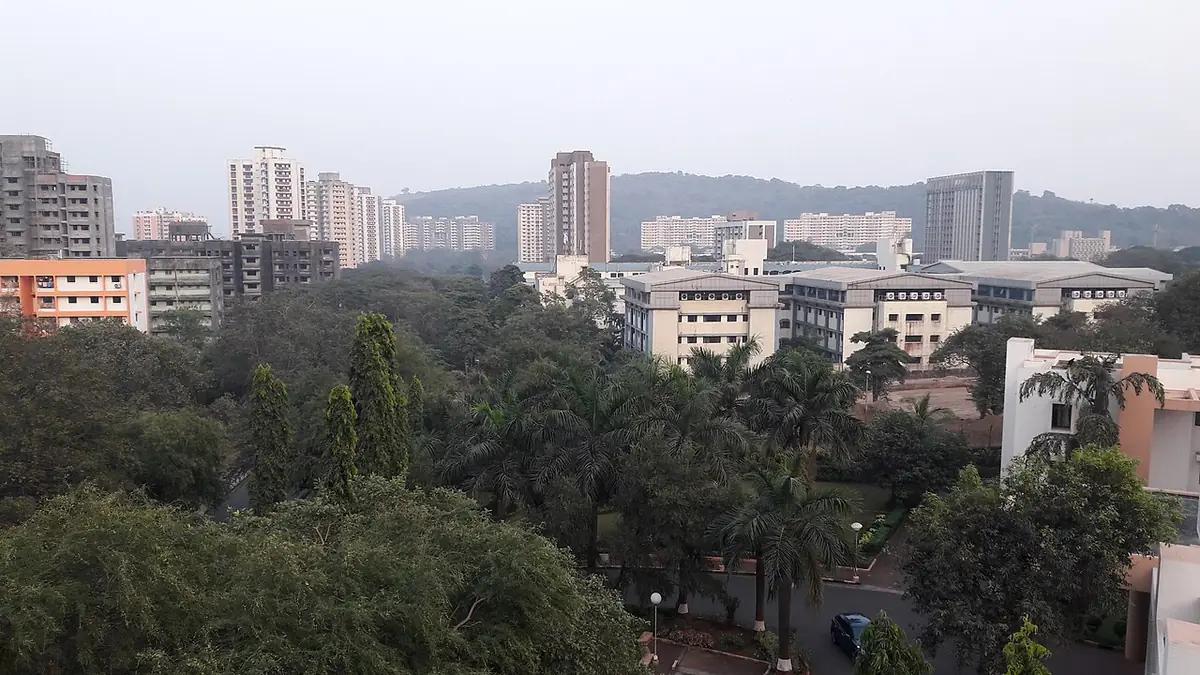
Apartment towers among the trees in Anushakti Nagar — Photo: arunpnair_787 · CC BY-SA 4.0 · Wikimedia Commons
Your sense of comfort and space is also shaped by the culture you come from and the reference points you are used to.
A successful property investment rests above all on how well your habits fit the day-to-day reality of the neighbourhood you choose. Between commuting at rush hour, managing household help and finding a personal balance, each type of buyer will face different trade-offs. Thinking honestly about your tolerance for urban noise and bustle, and how much calm you need, will help you avoid the most common wrong turns.
The remote worker or freelancer
If your work does not require you to cross the whole city twice a day at rush hour, you can favour quieter, more residential neighbourhoods with more generous space. Your days will follow the relative calm of your street, but you will need to make sure your internet connection and power supply are fully reliable to cope with occasional outages.
The family with children
For a household with children, being close to schools, healthcare facilities and safe places to play matters more than a property's architectural character. Buying a house means working out daily journey times to after-school activities precisely, because the metropolis's heavy traffic can quickly turn short distances into an obstacle course.
The professional at the heart of the business district
If you need to get to business districts such as Bandra Kurla Complex or Nariman Point every day, every kilometre counts in your property equation. Choosing a well-located house will save you hours lost in transit, but it will expose you to much higher prices per square metre and a louder urban environment.
The long-term investor
If the goal is to build wealth you can pass on, buying an independent property on its own land offers solid resale value because land is so scarce in the city. You do, however, have to accept potentially lower liquidity than standard apartments, and letting management that demands more of your involvement.
Living here when you arrive from abroad: what changes radically in your daily life
Once those reference points are in place, choosing the neighbourhood becomes the defining decision of your move.
Moving from a Western way of life to the bustle of India's financial capital is about far more than a change of scenery. From how you run your home to how you deal with local services, familiar habits quickly fall away, replaced by an organisation that is far more fluid but demanding. Understanding how this adjustment works is the key to settling into local life calmly without suffering the full force of culture shock.
From abroad
Managing home services and domestic staff
Mumbai
Daily household tasks largely handed to others and built into the routine
Back home, running a household usually relies on doing things yourself with the help of household appliances. In Mumbai, employing staff for cleaning and cooking is an integral part of the lifestyle, which changes your sense of privacy and calls for everyday management skills.
From abroad
The expectation of silence and soundproofing
Mumbai
A constant, dense and colourful soundscape
Where a home back home generally has regulated insulation that guarantees quiet, Mumbai's sound environment treats street noise, festivities and traffic as a permanent backdrop. You need to learn to filter out that stimulation or invest heavily in suitable double glazing.
From abroad
Getting around and distance measured in time
Mumbai
A sense of space dictated by how the traffic is moving
Many newcomers measure journeys in kilometres; in Mumbai, they are counted in minutes depending on the time of day and the monsoon. This reality means rethinking your appointments, shopping and leisure around smaller, more self-contained zones of daily life.
From abroad
Centralised access to water and electricity networks
Mumbai
Proactive management of resources and backup equipment
Urban infrastructure often calls for private stopgap solutions, such as individual water tanks and inverters or generators. Your role as an owner shifts towards that of a watchful manager of your home's essential supplies.
From abroad
Relations with neighbours and local community life
Mumbai
Close local solidarity and neighbours who know each other well
Neighbourliness in India goes well beyond a polite hello on the landing; it forms an essential network of mutual help and social awareness. Fitting in means embracing local codes of hospitality and taking part in the life of your street's community.
Which neighbourhood should you target to settle down and buy your house?
These geographic nuances translate directly into financial realities that are worth examining methodically.
The diversity of Mumbai's property micro-markets calls for careful selection based on your priorities in life. Between tree-lined historic residential areas and fast-growing modern hubs, each area offers a different promise in terms of atmosphere, accessibility and services. Getting a feel for daily life in each of them will spare you disappointment when you are commuting or trying to unwind.
Bandra West and Khar
A cosmopolitan, artistic atmosphere, set to the rhythm of trendy cafés, seafront promenades and a strong community of expats and creatives.
Suits
Those looking for a lively lifestyle built around culture, dining out and easy walks to amenities.
Trade-off
Prices per square metre among the highest in the city and an extremely limited supply of standalone houses.
Juhu and Versova
A residential setting close to the beaches, combining superb homes, a relaxed atmosphere tied to the film world and more open space.
Suits
Buyers who want a semi-coastal lifestyle that feels relaxed while staying connected to the business hubs further north.
Trade-off
Marked exposure to the sea-driven monsoon and heavily congested roads at weekends.
South Mumbai (Colaba, Malabar Hill)
The architectural elegance of the colonial era, leafy avenues, prestigious institutions and a rare, stately calm.
Suits
Lovers of history, fine old buildings and a prestigious way of life at the heart of the historic and financial centre.
Trade-off
An extremely closed property market, often older properties needing heavy renovation, and elite prices.
Andheri West and beyond
An urban hub in constant motion, mixing changing residential areas, local shops and business hubs.
Suits
Professionals looking for a pragmatic compromise between a central location, modern transport and a more varied choice of properties.
Trade-off
Heavy visual and noise density, with frequent construction work constantly reshaping the cityscape.
What does buying a property in Mumbai really cost?
Beyond the price tag itself, the legal structure of ownership deserves very close attention.
Mumbai's property market shows valuations that reflect the extreme scarcity of land on this urban peninsula. Prices vary considerably depending on the exact location, the age of the building and the legal status of the land. It is essential to build into your financing plan not just the headline purchase price, but also all local taxes, registration fees and the budget for any necessary upgrades.
MumbaiFor saleHouseestimate
Median price / m²₹190,855Half the apartments sell below this
Median price₹28.1mthe average is 14% higher — a few very large properties pull it up
Most common2 bedrooms65 % of listings
Average size140 m²
By number of bedrooms
Bedrooms
Share of market
Avg price
Price / m²
Avg size
2most common
65 %
₹24.6m
₹200,900
123 m²
3
27 %
₹35.1m
₹190,855 −5 %
184 m²
4
8 %
₹48.5m
₹184,828best value / m²
263 m²
Each row is an average, compared against the area average of ₹200,900 / m². These are indicative estimates of a typical local market, not a measured sample of live listings. Check current listings before relying on them.
What you can actually own: understanding land ownership
That legal vigilance needs to apply at every stage of the transaction, from the first offer to the final signature.
The security of a property investment in India depends fundamentally on clear title and on the legal distinction between the building and the land beneath it. In a city with such a complex land history, expert legal advice is not optional but an absolute necessity. The two forms of ownership below show the fundamental gaps that can exist between how a property looks and its legal reality.
Full ownership with direct land title (Freehold)
Buying a property 'freehold' means you own both the building and the land it stands on, with a clear title that can be passed on without any major administrative ambiguity. This model offers the strongest legal security and ensures the best long-term growth in value on the local market.
What it changesYou have complete freedom to restructure, rebuild or pass on your property, which justifies a higher initial price and secures your family investment for the long term.
Long lease or complex usage rights (Leasehold)
Many properties in the metropolis sit on leases granted by public authorities or trusts for fixed terms, often 99 years and renewable. This arrangement calls for rigorous checks on the renewal history, transfer clauses and the administrative fees attached to each transaction.
What it changesYou need to plan ahead for renewal dates and look closely at the restrictions imposed by the institutional lessor, because they directly affect how easily you can sell the property in future.
The fundamental rule to understand before paying a single rupee of deposit
To carry this out properly, it helps to break down the chronological flow of a typical transaction.
The property buying process in India follows strict procedural rules, where each step locks in an irreversible legal commitment. Paying deposits too early or checking a property's background only superficially exposes the buyer to long and complex disputes. Following a rigorous chain of checks is the only way to keep your capital safe.
The search stage and an informal expression of interest in a chosen property.
A full title audit by an independent local lawyer specialising in Mumbai property law.
Checking the land registry records to confirm there are no inheritance disputes or hidden mortgages.
Signing a preliminary Agreement to Sell that sets out the conditions precedent and the payment schedule.
Paying the initial deposit securely into a dedicated escrow account overseen by your legal advisers.
Signing the final Sale Deed and registering it officially with the relevant authorities.
How a property transaction actually works, step by step
Buying a house in Mumbai involves several institutional and professional players whose coordination keeps the transaction above board. From the first negotiation to handing over the keys, each one plays a specific role that you need to coordinate with your advisers. The table below sets out the responsibilities and actions at each milestone of the buying timeline.
The buyer and their lawyerTitle audit and due diligenceA thorough review of the chain of title over the last thirty years to rule out any risk of future challenges from third parties.
The parties and the agentsNegotiating the memorandum of understandingDrafting and signing the memorandum of understanding that fixes the final price, the payment schedule and the penalties if either side withdraws.
The technical surveyorStructural inspection of the buildingA detailed check of the foundations, roof and water systems to cost any upgrade work that may be needed.
The notary or lawyerPaying taxes and registrationCalculating and paying stamp duty and registration fees at the relevant sub-registrar's office of the State of Maharashtra.
The buyer and the sellerSigning the final sale deedFinal exchange of consent, release of the escrowed funds and actual transfer of legal ownership of the property.
The buyerTransferring utility accountsTransferring the electricity and water supply contracts and the municipal property taxes into the new owner's name.
A standalone house or an apartment in Mumbai: the big trade-off
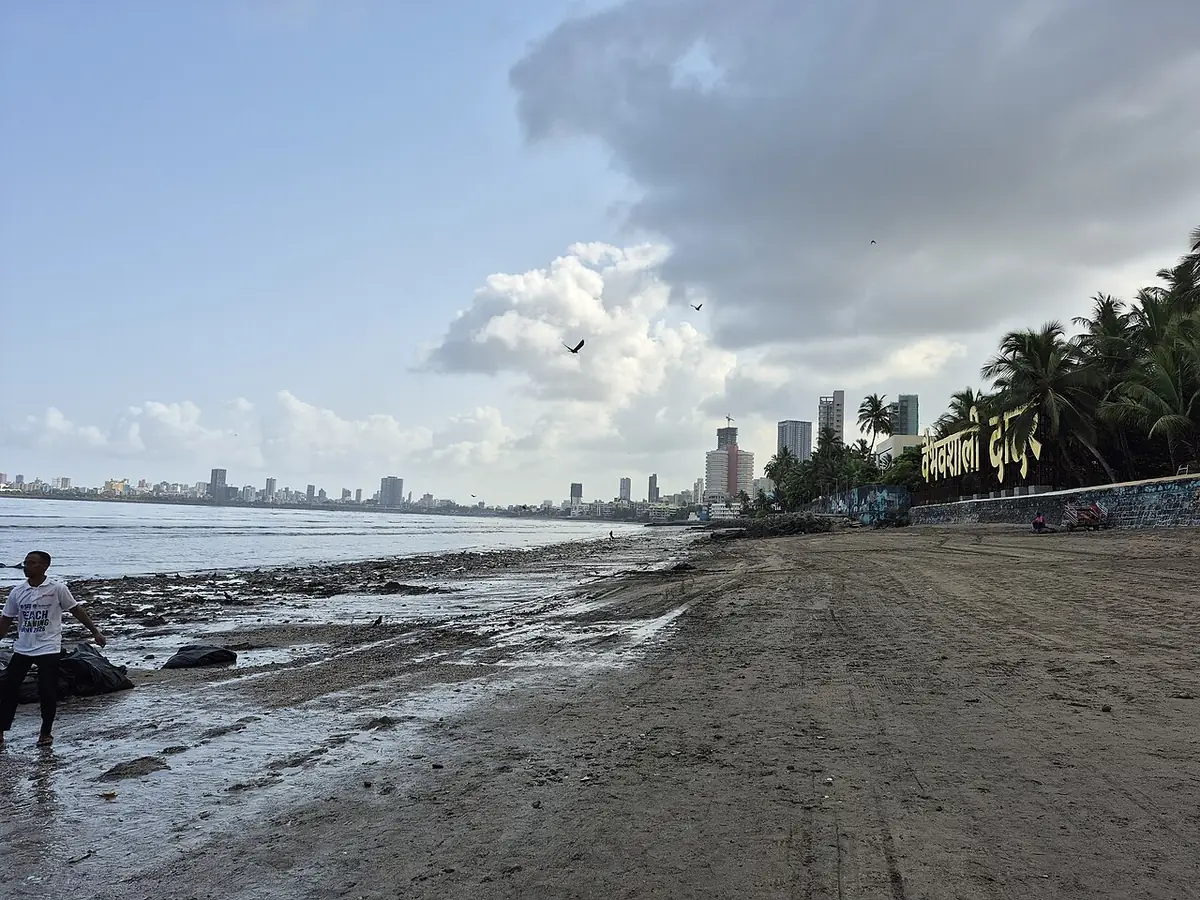
Dadar Chowpatty, where the city skyline meets the sea — Photo: Suraj Digrase · CC0 · Wikimedia Commons
Once that first structural choice is settled, it is worth analysing the financial reality of your investment in detail.
Buying property in Mumbai forces a stark choice from the outset between two ways of living that could hardly be more different: the standalone house, often called a bungalow in the few enclaves where they survive, and the apartment in a high-rise housing society, which overwhelmingly dominates the city's skyline. This decision is not just about personal comfort or social standing; it has a deep effect on how you manage your time, your maintenance budget and your relationship with urban density. In a megacity where every square metre commands a premium, the financial and practical implications of that choice completely reshape your daily life.
Choosing a house in Mumbai means accepting that you will be searching in very specific neighbourhoods such as Juhu, Bandra West or the northern suburbs like Malad and Borivali, where a few low-rise buildings still remain. The advantages lie in complete independence from a society committee, no shared monthly maintenance charges, which can be exorbitant in upmarket towers, and the enjoyment of a private plot of land. Yet the scarcity of this kind of property drives astronomical purchase costs and direct exposure to the weather, especially during the monsoon, when upkeep of the roof, waterproofing and foundations falls entirely on the owner.
An apartment in a housing society, by contrast, is the absolute norm and the most rational solution for the vast majority of buyers, whether investors or permanent residents. Modern residential towers, whether in Lower Parel, Worli or along the Kandivali and Thane corridors, offer shared infrastructure that is hard to match: round-the-clock security, backup lifts, generators that are essential during occasional power cuts, underground parking and built-in leisure facilities such as gyms and swimming pools. Living in an apartment in Mumbai means joining a community run by a society, which provides a reassuring framework but also means abiding by house rules that can be strict.
The final choice therefore depends on how you weigh the architectural freedom of a house against the logistical security of an apartment. If you value independence and have the capital to buy and maintain a rare property, a house offers a haven of peace you will not find high up in a tower. If you are looking for efficiency, proximity to business hubs and simpler day-to-day management in a city that never stops, an apartment is the obvious choice.
What budget do you really need to live and settle long term in Mumbai?
Beyond the raw figures, it is the practical shape of a typical day that will reveal whether your future address is the right one.
Buying property in Mumbai is never just about the price per square metre shown on listing portals. Between local taxes, registration fees, maintenance charges and the everyday cost of living in the different districts, the overall budget needs careful planning. Market data shows considerable gaps depending on whether you target the island city or the northern extensions along the suburban railway line.
Indicative purchase prices and associated charges by area
Area
Average price per square foot (INR)
Average monthly charges (INR)
Taxes and registration fees
South Mumbai (Colaba, Cuffe Parade)
35,000 to 60,000+
15,000 to 35,000
Registration 6% + GST depending on construction stage
Central Suburbs (Bandra, Khar, Santacruz)
25,000 to 45,000
10,000 to 25,000
Registration 6% + local stamp duty
Western Suburbs (Andheri, Goregaon, Malad)
15,000 to 28,000
6,000 to 15,000
Registration 6% + processing fees
Extended Suburbs (Thane, Borivali, Mira Road)
8,000 to 16,000
3,000 to 8,000
Registration 6% + applicable VAT
The prices shown are averages observed across new-build and renovated resale properties. They exclude brokerage and legal fees.
Estimated monthly budget for a household of four
Main expense
Lower range (Northern suburbs)
Upper range (South/Central Mumbai)
What makes it vary
Food and household products
INR 30,000
INR 70,000
Local markets versus supermarkets stocking imported goods
Schooling per child (international schools)
INR 150,000
INR 450,000
Annual admission fees and IB/Cambridge programmes
Transport (private driver or taxis/ride-hailing)
INR 20,000
INR 60,000
Daily use of the toll expressways (Eastern/Western Express)
Utilities (electricity, water, internet, gas)
INR 5,000
INR 15,000
Heavy air-conditioning use during the summer and the monsoon
These estimates reflect a standard lifestyle for senior professionals or expats settled in Mumbai.
Health, education, transport: anatomy of an ordinary Tuesday in Mumbai
Yet this apparent smoothness hides administrative and structural realities that the sales brochures forget to mention.
To judge whether buying property in Mumbai makes sense, admiring the view from the living room is not enough. You need to look at how an ordinary day unfolds, shaped by the commute, your children's schooling and access to healthcare. Each neighbourhood sets its own tempo and radically changes the level of daily stress for the people who live there.
07:30Home (e.g. Andheri West)The day starts with a check on the society's services and the arrival of the domestic staff. Fresh grocery deliveries are handled through local apps.
08:30International school (e.g. Bandra or Juhu)The school run by school bus or private car. How smoothly the traffic flows depends entirely on how far you are from major roads such as the Western Express Highway.
10:00Business hub (Bandra-Kurla Complex or Lower Parel)Arrival at the office after a journey that takes anywhere from twenty minutes to over an hour, depending on traffic and whether you can use the new metro lines.
13:00Nearby medical centre (e.g. Lilavati Hospital or Hinduja)A routine medical appointment or dealing with a paediatric emergency. Having world-class hospitals less than fifteen minutes away is an absolute buying criterion.
17:00After-school activities and neighbourhood marketsPicking up the children and stopping at local shopping streets for fresh produce. Well-planned neighbourhoods have walkable pavements and well-kept parks.
20:30Back home to unwindThe day ends in the apartment. The tower's soundproofing and good ventilation keep things calm despite the constant bustle of the street below.
What sales brochures and estate agents leave out
These grey areas explain why some buyers quickly become disillusioned after getting the keys.
Mumbai's property market has its own codes, unwritten traditions and grey areas that developers are careful not to highlight during viewings. Behind the superb 3D renderings and promises of quick returns lie technical, legal and climate realities that you must anticipate before signing any sale agreement.
Complex water management and supply cuts
Even in recent buildings, the municipal water supply is intermittent. Societies have to pay for booster pumps and huge storage tanks and, in the dry season, call in private water tankers, the cost of which is passed on in residents' monthly charges.
The formidable impact of the monsoon on façades
Between June and September, torrential rain and sea winds attack building materials. A poorly waterproofed building will quickly suffer water ingress, persistent mould and extraordinary façade repair costs voted through urgently by the society.
Resale restrictions and society rules
Some housing cooperatives in Mumbai impose strict criteria on prospective buyers, including character checks, restrictions on short-term letting or bans relating to certain diets, potentially reducing how easily you can sell in future.
Infrastructure projects and future disruption
Mumbai is one vast, permanent construction site (elevated metros, sea bridges, motorway widening). An apartment with an open view and relative calm today can find itself, two years later, surrounded by the vibration and noise of a new transit line.
The legal history of property titles (Clear Title)
A lot of land in Mumbai sits on complex long leases (MHADA, Collector Land, Trust Property) whose renewal or legal clarity requires specialist lawyers to avoid endless land disputes.
The post-purchase disappointments you discover six months after moving in
Given these risks, it is just as crucial to know whether your personal profile really fits the demands of this market.
Looked likeA highly profitable, effortless buy-to-let investment in an up-and-coming trendy neighbourhood.
Turned outNet yields eaten away by ever-rising maintenance charges, heavy local taxes and tenants demanding constant maintenance.
Would have caught itWorking out the real net return, including all taxes, void periods and letting agent fees, before going ahead with the purchase.
Looked likeA perfectly manageable daily commute to the business district thanks to a major arterial road.
Turned outA daily traffic nightmare at rush hour, turning a theoretical twenty-minute journey into a ninety-minute ordeal because of urban bottlenecks.
Would have caught itTesting the real journey at the exact rush hours you will be travelling, on a Tuesday and a Thursday, before signing the final deed.
Looked likeAbsolute peace and quiet in a modern tower high above the city's bustle.
Turned outUnexpected night-time noise from neighbouring construction sites permitted to work late and a constant stream of delivery vehicles.
Would have caught itChecking for vacant plots or unbuilt projects within five hundred metres of the building to anticipate future disruption.
Looked likeLiving space perfectly laid out to house the whole family in comfort.
Turned outA severe lack of built-in storage, poor natural ventilation in some rooms and badly maintained common areas in the building.
Would have caught itHiring an independent architect or technical expert to review the floor plan and the actual condition of the risers and common areas.
High-risk profiles: who should definitely not buy in Mumbai?
It is time to bring all of this together so you can make your decision with clear eyes.
Buying property in Mumbai is often presented as the ultimate, unquestionable wealth-building move. Yet the city's economic reality and pace of life make this investment completely unsuitable for some profiles. Taking on a long-term loan or tying up substantial savings without the necessary flexibility exposes the buyer to major financial and personal disappointment.
The first-time buyer on a strictly fixed income with no emergency savings
→Borrowing to the maximum of their capacity to buy whatever one-bedroom flat is available in the outer suburbs.
The slightest change in interest rates, an unexpected medical bill or a career change would immediately threaten the household's solvency, leading to default with inflexible banks.
The international investor looking for immediate liquidity
→Buying a high-end residential property with a view to selling it quickly for a speculative gain.
Mumbai's property market is highly cyclical and illiquid; selling a property often takes many months, even years, and transaction costs wipe out the hoped-for profits over a short period.
The professional whose international postings are frequent or uncertain
→Committing to buy a main residence when their time in the Indian metropolis is limited to two or three years.
Purchase costs (registration taxes, legal fees, commissions) and resale costs far exceed the total of equivalent rent over the same period, producing a certain net loss.
So, are you ready to take the step and buy property in Mumbai?
At the end of this analysis, buying property in Mumbai appears for what it really is: a major strategic decision that calls for a fine balance between wealth-building ambition and practical realism. It is neither a risk-free speculative El Dorado nor an impossible journey, but a demanding market that rewards careful preparation, financial clarity and an intimate knowledge of the neighbourhoods you are targeting.
If you have an investment horizon of more than seven years, solid emergency savings covering several months of costs and a stable life plan rooted in the momentum of India's financial capital, then buying a carefully chosen apartment or house makes good sense. You will build a tangible asset while enjoying the unique cultural, economic and social energy of this fascinating metropolis.
If not, if your professional situation remains uncertain, if your budget is so tight it cannot absorb any surprises, or if the frantic pace of getting around Mumbai already weighs on you, the wise choice is to rent. Renting gives you the freedom to try out different neighbourhoods, watch how infrastructure projects progress and refine your criteria without the risk of being locked into an asset that is hard to sell.
Take the time to visit, to question society committees, to check that property titles are legally clear and to test the journeys at rush hour. Your future home in Mumbai deserves to have every doubt cleared up before you put your signature on the final deed.
Related questions
Can a foreigner or a non-resident Indian (NRI) buy property in Mumbai?
Non-resident Indians (NRIs) and persons of Indian origin (PIOs) have very broad rights to acquire residential and commercial property in Mumbai, with the exception of agricultural land. Foreign nationals without OCI or PIO status, however, face strict regulatory restrictions set by the Reserve Bank of India, and generally need permanent resident status or prior approval from the relevant authorities.
What additional costs should I budget for when buying an apartment in Mumbai?
Buying property in Mumbai brings significant administrative and tax costs that must be built into your overall budget. Stamp duty is generally 6% of the market value or the purchase price under the Maharashtra state guidelines, plus around 1% in registration fees, your lawyer's fees and agency commissions.
How can I make sure the title to a property in Mumbai is completely clear?
The title search is the most critical step in the transaction. You need to appoint a specialist lawyer to review the property's history over the last thirty years, check the local sub-registrar's records, confirm there is no hidden mortgage and make sure the developer or seller holds every required legal approval (CC, OC).
What is the occupancy certificate (OC) and why is it essential?
The Occupancy Certificate is the official document issued by the Municipal Corporation of Greater Mumbai (MCGM) confirming that the building was constructed in line with the approved plans and safety standards. Buying an apartment without an OC exposes the buyer to the risk of demolition, tax penalties and being unable to obtain official water and electricity connections.
What are average maintenance charges in Mumbai?
The monthly maintenance charges paid to the society vary widely depending on the standard of the building, its location and the amenities on offer. In a standard suburban building they range from 3 to 8 INR per square foot, while in luxury towers in South Mumbai or Bandra with concierge services and swimming pools they can easily reach 15 to 30 INR per square foot.
What impact are the metro and infrastructure projects having on Mumbai property?
The extensive network of metro lines under construction in Mumbai is profoundly changing the value and appeal of property. Homes right next to stations see a noticeable rise in value and better liquidity, although you have to live with temporary construction disruption and rapid densification of the surrounding area.
How does bank financing or a home loan work in India?
Indian and international banks offer home loans that generally cover up to 75% or 80% of the property's value, subject to a thorough assessment of the borrower's creditworthiness. Interest rates, often linked to policy rates, can be fixed or floating, and you will need to provide detailed proof of income covering several years.
Which Mumbai neighbourhoods are best for a long-term family investment?
Families have traditionally favoured Western Suburbs neighbourhoods such as Bandra West, Khar, Santacruz West, Juhu and Goregaon West, or some quieter parts of Central Mumbai such as Matunga and Dadar. These areas strike an excellent balance between proximity to international schools, good healthcare facilities and access to green space.
How can I protect myself against developer delays when buying off-plan (under construction)?
For properties under construction, India's RERA (Real Estate Regulatory Authority) legislation provides a protective framework by requiring developers to register their projects, hold a large share of the funds in dedicated escrow accounts and pay penalties if handover is delayed. It is vital to check the RERA registration number before committing to anything.
How does the monsoon affect the overall condition of residential buildings in Mumbai?
The monsoon puts Mumbai's buildings under heavy strain because of persistent humidity and rain getting in, both inside and out. When inspecting a property, it is essential to check the waterproofing of the roof slab, the condition of the building's rainwater drainage and any cracks or signs of water ingress on the exterior walls.