Buying property in Mumbai means balancing the economic energy of a global metropolis against the complicated reality of its land. This guide sets out the key criteria for choosing, the local legal specifics and the methodical steps you need to take to protect your investment.
Get the app
What nobody tells you.
Real prices, hidden costs and the traps to check before you commit.
Why buying a house in Mumbai calls for a clear-eyed view of space
Scroll
Why buying a house in Mumbai calls for a clear-eyed view of space
Buying property in Mumbai means balancing the economic energy of a global metropolis against the complicated reality of its land. This guide sets out the key criteria for choosing, the local legal specifics and the methodical steps you need to take to protect your investment.
Written by the ting.ad editorial team ·
Sale House Mumbai in Street View: drag to look around.
This tension between historic centrality and comfort on the edges completely changes how you should assess your day-to-day life in the Indian metropolis.
Investing in residential property in Mumbai, and especially in a house or a large home, confronts the buyer straight away with a unique physical and economic reality. On one side, a prestigious address in one of the world's most dynamic economic hubs brings undeniable status and a solid foothold as an asset. On the other, the extreme scarcity of available land forces deep structural compromises that every investor has to weigh before committing. Understanding this basic tension between the wish for space and the reality of an ultra-dense market is the first step towards a successful purchase without disappointment.
The prestige of a central addressvsCramped floor space and congestion
Historic neighbourhoods such as Colaba and Malabar Hill offer unrivalled centrality and robust long-term value, but that comes with limited space, older buildings that are often costly to renovate and constant traffic that weighs on daily life. You are paying for the rarity of the location at the direct expense of room to live.
The growth of residential suburbsvsDistance and commuting times
Moving out to areas such as Bandra West, Juhu or further north to the newer developments gets you more generous floor areas and secure complexes with services. In return, dependence on transport infrastructure and chronic road congestion turn every work trip into a logistical challenge.
The security of gated complexesvsUniform architecture and high charges
Choosing a modern complex run by professional management guarantees rigorous maintenance, running water at constant pressure and round-the-clock security. However, it standardises the living environment and brings high monthly management fees that add permanently to the cost of owning the property.
What kind of buyer are you, given the demands of daily life in Mumbai?
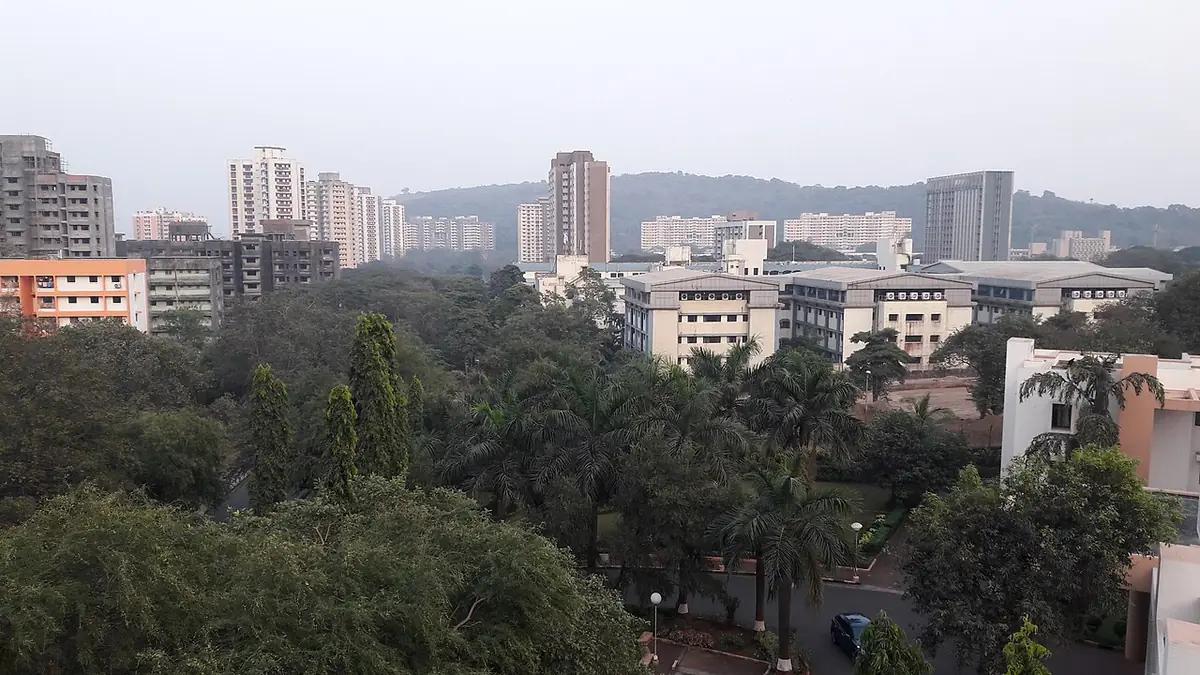
Apartment towers among the trees in Anushakti Nagar — Photo: arunpnair_787 · CC BY-SA 4.0 · Wikimedia Commons
Weighing these demands against your own profile helps you avoid the classic mistake of bringing criteria from back home into a market that follows completely different urban logic.
Whether a property purchase fits daily reality is not measured only by the number of bedrooms or the quality of the finishes. The city imposes its own pace, constant sensory stimulation and organisational constraints that directly affect residents' quality of life. Whether you are moving for a long-term job, a late-career transition or to build family wealth to pass on, the geographical trade-off looks radically different. Every type of buyer has to test their habits against local specifics to find the area and property type that will not wear them out quickly.
Close to business districts and tech hubs
If your days revolve around meetings in the business districts of Lower Parel, Bandra-Kurla Complex (BKC) or Nariman Point, every minute spent commuting takes a toll. Prioritise buildings less than thirty minutes from your workplace, even if that means accepting a more compact home. Quick access to the main roads and concierge services in the building are not unnecessary luxuries but absolute necessities for protecting your personal time and energy.
Green space, safety and good schools nearby
For a household with children, the search naturally turns to quiet residential neighbourhoods with well-regarded international schools and safe places to play. Areas such as Juhu, Khar and certain protected enclaves offer houses or large apartments in gated complexes. Even if the commute to the financial centre at rush hour is longer, the quality of the immediate surroundings, the parks and access to an international community make long-term integration much easier.
Strong demand and a central location for easier resale
When the main goal is preserving capital and generating steady rental income, looks take second place to how easily the asset can be sold. Properties in areas in high demand from local and international senior professionals offer the best prospects for medium-term growth. In that case, favour well-kept small and mid-sized units in buildings with impeccable professional management, as these are the easiest to let or resell without a major discount on the resale market.
What changes fundamentally in the way you think about a home when you move from abroad
Once these cultural reference points are in place, choosing the neighbourhood becomes the most strategic geographical decision of your purchase.
Settling for the long term in India's economic capital after buying property back home means unlearning some habits and accepting new realities. In many countries, urban life rests on strict administrative standards, predictable public services and a reassuringly standardised approach to ownership. In Mumbai, the relationship with space, neighbours and the daily running of buildings is shaped by overflowing collective energy, often informal organisation and heavy reliance on domestic help. Analysing these cultural and practical gaps will let you approach your purchase with the right mental framework.
From abroad
Back home, building standards, mandatory surveys and transparent conveyancing govern almost every aspect of a transaction.
Mumbai
In Mumbai, verifying title, the history of inheritances and the validity of municipal approvals requires a rigorous, independent legal audit.
You must hand the legal review of the property to a specialist lawyer with a strong local reputation, because defects in the title of older land can seriously undermine your investment.
From abroad
Back home, running the building and maintaining common areas is typically handled by professional managing agents within a clear legal framework.
Mumbai
In Mumbai, housing societies operate as small self-governing communities with strict and sometimes fussy internal rules.
The energy and financial health of the building's managing committee matter as much as the physical condition of your own home in protecting the value of your asset.
From abroad
Back home, thermal and sound insulation and reliable utilities (water, electricity) are often non-negotiable regulatory standards.
Mumbai
In Mumbai, exposure to the monsoon, damp control and continuity of services (generators, water tanks) take priority over traditional insulation standards.
Focus first on how structurally sound the building is against tropical weather and how robust its backup equipment is.
From abroad
Back home, households are largely self-sufficient when it comes to cleaning and everyday chores.
Mumbai
In Mumbai, homes are designed to accommodate domestic staff easily, with service routes and dedicated spaces in larger properties.
This layout affects the interior design of properties and the structure of the charges, so you need to factor it in from the moment you start shortlisting homes.
Mapping the residential micro-markets: which Mumbai neighbourhood matches your ambitions?
Once you have narrowed down the area according to your priorities, you need to test your expectations against local market prices.
The Mumbai peninsula is not a single property market but a mosaic of micro-neighbourhoods with very distinct identities, only a few kilometres apart yet worlds apart in lifestyle. Choosing where to settle is not a simple financial calculation but a personal trade-off between being right next to the city's nerve centres and finding a calm refuge from the urban bustle. The cards below compare the options most sought after by discerning buyers, showing what each area really offers day to day and the compromise that comes with it.
Bandra West and Khar
A cosmopolitan, artistic atmosphere, with tree-lined streets, independent cafés and a large community of international residents and creative people.
Suits
Buyers looking for a trendy, walkable urban lifestyle with a lively social scene, while staying connected to the north of the city and the BKC business district.
Trade-off
Pressure on land is extreme, which means prices per square metre are among the highest in the city and spacious family homes are chronically scarce.
Juhu and Versova
A more open setting facing the Arabian Sea, with broad residential avenues, a relaxed seaside feel and large secure complexes.
Suits
Families and people working in entertainment or tech who value being near the ocean, having parks nearby and living in modern buildings with upmarket amenities.
Trade-off
Direct exposure to salt spray demands rigorous upkeep of facades and structures, while coastal roads clog up quickly at rush hour.
Malabar Hill and Colaba
Mumbai's historic and institutional heritage on show, with grand colonial residences, stunning views over the bay and a rare institutional calm.
Suits
Investors and long-term buyers drawn to the symbolism of historic addresses and to being right next to the financial and political institutions of the south of the city.
Trade-off
The housing stock is ageing, buying opportunities are extremely rare and new modern developments are almost impossible to find because there is so little land available.
Lower Parel and Worli
The city's vertical transformation, where former industrial sites have given way to ultra-modern residential towers with spectacular skyline views.
Suits
Fans of contemporary architecture and built-in hotel-style services (sky pools, 24-hour concierge) who want direct access to the regenerated economic heart of the city.
Trade-off
Very dense concrete surroundings, streetscapes still unfinished in some neighbouring roads and greater exposure to disruption from major building works.
Budget benchmarks and observed price ranges in Mumbai's property market
Beyond the prices per square metre, the very nature of what you are allowed to own as a buyer deserves careful legal scrutiny.
Working out the budget needed to buy a property in Mumbai means looking past overall averages, which hide spectacular differences from one neighbourhood to the next. The city's property market follows valuation rules in which the rarity of the location matters far more than gross floor area or year of construction. The figures below summarise the price ranges observed on the resale market and in high-end new builds, giving you a realistic basis for structuring your financing plan rather than relying on estimates disconnected from reality on the ground.
MumbaiFor saleHouseestimate
Median price / m²₹190,855Half the apartments sell below this
Median price₹28.1mthe average is 14% higher — a few very large properties pull it up
Most common2 bedrooms65 % of listings
Average size140 m²
By number of bedrooms
Bedrooms
Share of market
Avg price
Price / m²
Avg size
2most common
65 %
₹24.6m
₹200,900
123 m²
3
27 %
₹35.1m
₹190,855 −5 %
184 m²
4
8 %
₹48.5m
₹184,828best value / m²
263 m²
Each row is an average, compared against the area average of ₹200,900 / m². These are indicative estimates of a typical local market, not a measured sample of live listings. Check current listings before relying on them.
Freehold versus long leasehold: what you can actually own
The same essential legal rigour applies just as strongly to the step-by-step financial and administrative process of the transaction.
The legal structure of property ownership in India follows historical distinctions inherited from British law and adapted by national and local legislation. For an unwary buyer, confusing freehold with long leasehold can create major risks when selling or passing the property on. Understanding exactly what kind of land title comes with the property you want is the only effective protection against administrative surprises. The two basic legal regimes that shape the Mumbai market call for constant vigilance.
Freehold
With a freehold property, the buyer owns both the building or unit and the share of the underlying land in perpetuity, with no periodic ground rent owed to any public or private party. This status offers the strongest legal security, the best long-term capital growth and simpler inheritance. However, this type of title is extremely rare in Mumbai's historic central neighbourhoods, where most of the land has long belonged to the state, charitable trusts or port authorities.
What it changesChoose this regime whenever it is available, as it removes the risks tied to lease renewal and offers better liquidity on the resale market.
Long leasehold
Most urban properties in Mumbai sit on long leases of 99 or 999 years granted by public bodies or institutional trusts. The buyer acquires the right to occupy and sell the building for the remaining term, sometimes in return for annual ground rent and prior consent from the landowner for alterations or resale. When the remaining term drops below a critical threshold (often under 30 years), the property's value falls quickly and getting a mortgage on it becomes complicated.
What it changesAlways check how many years remain on the original lease and the exact renewal terms before signing any agreement to sell.
The fundamental rule to understand before paying any deposit
Once this legal discipline is second nature, you need to map out precisely who is involved and the concrete steps of the process.
In Mumbai's property transaction system, it is tempting to move fast to secure a rare property ahead of competing local buyers. That haste is exactly where the most serious financial risks lie for an international buyer. The local habit of upfront deposits and unregistered private agreements does not protect the buyer unless it is backed by a strict legal framework and a careful check of the property's origin. Following a methodical chain of checks, step by step, is the only way to safeguard your capital until final registration.
Finding the ideal property and putting an initial offer in writing.
A full legal due diligence by an independent lawyer to audit the title history over the past thirty years.
Checking with Mumbai's land registry office that there are no inheritance disputes or hidden mortgages.
Negotiating and signing an Agreement to Sell setting out the conditions precedent and the payment schedule.
Paying funds into a dedicated escrow or segregated account, avoiding any direct transfer to the seller's personal account before registration.
Official registration of the final Sale Deed with the Maharashtra state revenue authorities and the actual transfer of ownership.
How a property transaction in Mumbai actually works, step by step
This methodical approach ensures your property investment in Mumbai rests on a lasting, secure and fully controlled long-term footing.
Buying property in Mumbai involves coordinating several professionals with clearly defined roles: the registered estate agent, the lawyer specialising in property law, the banker for financing where needed, and the state registration officer. Knowing each person's role and the exact order of operations lets you steer your project with confidence and leave no room for administrative improvisation. The steps below set out, in order, the seven key stages from initial selection to getting the keys.
The buyer and their adviserChoosing the property and making an Expression of InterestDefining the search area, viewing shortlisted properties in depth and submitting a written offer with conditions that make the commitment subject to the legal audit.
The specialist lawyerTitle audit and publication of public noticesSearching public records and publishing legal notices in the local press to identify any claims or third-party objections to the property.
The parties and the solicitorSigning the Agreement to Sell and paying the depositPaying a deposit, usually 10% of the purchase price, into escrow, locking in the conditions precedent and the withdrawal penalties for both parties.
The technical surveyorPhysical inspection and assessment of the building's conditionChecking waterproofing against the monsoon, the compliance of electrical installations, water pressure and the structural soundness of the common areas.
The tax authoritiesPaying stamp duty and registration feesCalculating and paying transfer duty and registration fees to the Maharashtra department based on the official ready reckoner rate.
The registration officerSigning and biometric registration of the Sale DeedThe parties appear in person or through a representative at the registration office for identity checks, digital signature and official registration.
The housing societyTransfer of society shares and handover of keysFormal notification of the change of owner to the building's managing committee (Housing Society), transfer of the share certificates and actual possession of the home.
House or apartment in Mumbai: weighing the security of a complex against owning the land
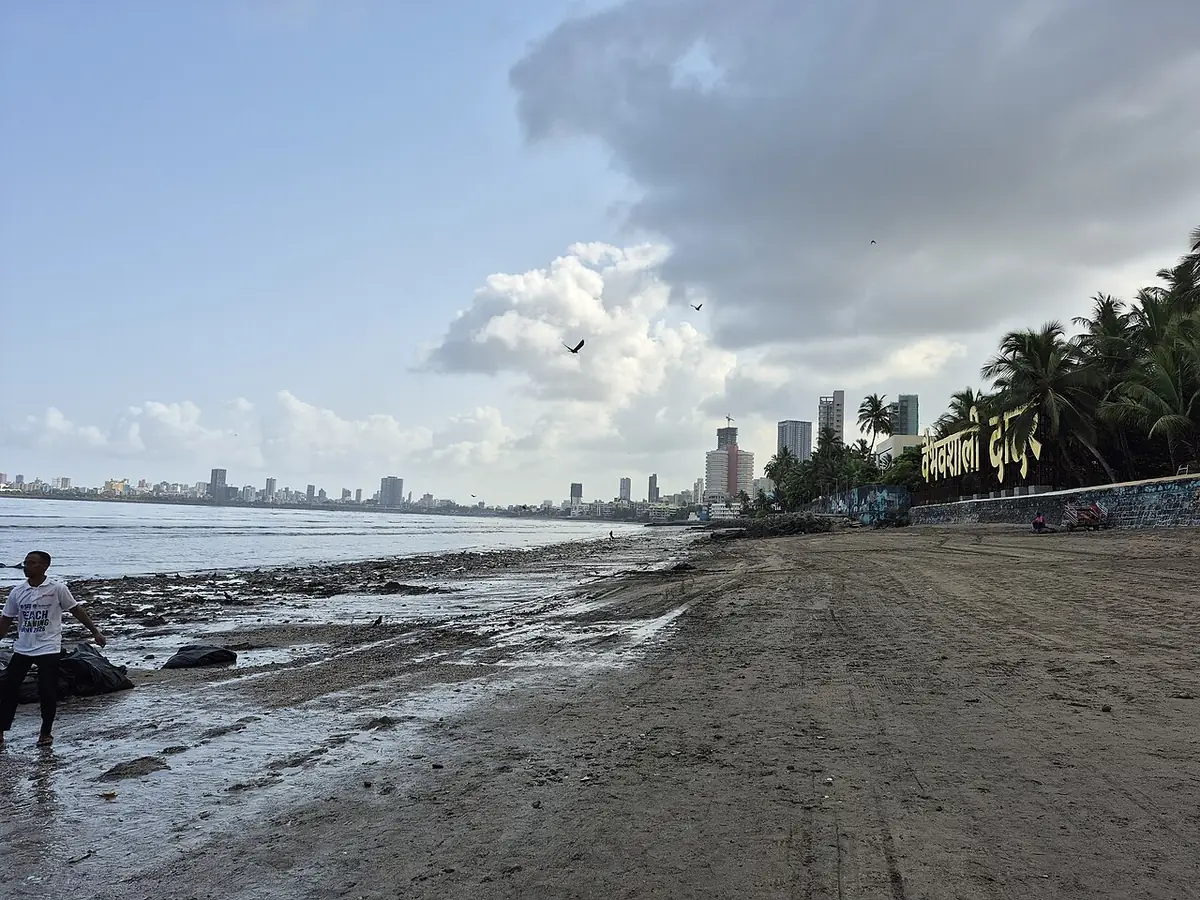
Dadar Chowpatty, where the city skyline meets the sea — Photo: Suraj Digrase · CC0 · Wikimedia Commons
Once this basic choice is made, you need to look closely at the financial structure required to make your plan happen.
Buying property in Mumbai forces you to choose straight away between two radically different ways of living: an apartment in a vertical complex, often in a secure modern tower, or a detached or semi-detached house, rarer and woven into the megacity's dense urban fabric. This decision is not just about comfort or looks; it affects your financial security, your commute and your exposure to the monsoon. Upmarket complexes offer shared infrastructure such as powerful generators, water filtration systems and permanent security guards, all essential in the face of the city's daily logistical challenges.
By contrast, buying a house, especially in established residential neighbourhoods such as Juhu, Bandra or the northern extensions towards Borivali, offers rare independence and outright ownership of the land. That independence, however, comes with high running costs, since the owner has to handle roof waterproofing, flood pump maintenance and perimeter security personally. Complexes absorb these burdens through maintenance charges, known as maintenance dues, which pool the cost of major repairs and ensure professional management of common areas despite the accelerated wear caused by the tropical climate.
As an asset, an apartment in a tower offers better liquidity and easier resale thanks to strong rental demand from senior professionals and expats. Detached houses are becoming ever rarer, eaten away by vertical development and urban redevelopment projects led by local developers. Those who choose a house are looking to pass on a rare piece of land on a saturated peninsula, accepting frequent renovation costs and specific local taxes linked to owning land directly in return.
Finally, the choice between the two depends directly on your tolerance for noise and your need for private green space. Residential towers cut out street noise above a certain floor and offer open views over the Arabian Sea or the vast cityscape, while a house lets you retreat into an inner courtyard but leaves you directly exposed to the bustle of local traffic. Your initial financial analysis should therefore take into account not only the purchase price per square foot but also the likely growth in charges and how hard it might be to resell ten years down the line.
What real budget do you need to settle in Mumbai for the long term without nasty surprises?
Beyond the raw figures, it is the rhythm of a typical day that decides whether your move will really work.
Buying property in Mumbai means building a complex budget that goes well beyond the price advertised by agencies. Transfer duties, local registration taxes, legal fees and recurring maintenance charges absorb a substantial share of the initial investment. To navigate this financial landscape calmly, break down every cost item according to the type of property and its exact location in the city.
Estimated upfront and tax costs on purchase
Cost item
Average rate or amount
Impact on the overall budget
Stamp duty
5% to 6% of market value
Mandatory tax paid to the state of Maharashtra on registration.
Registration fees
1% of the property price (capped)
Administrative fees for formally recording the title.
Legal fees and due diligence
0.5% to 1% of the amount
Essential for auditing the chain of title and confirming there are no disputes.
Estate agent's commission
1% to 2% of the transaction
Paid to the local estate agent for support and negotiation.
These taxes vary slightly depending on the buyer's gender and temporary state tax incentives.
Recurring charges and ongoing ownership costs
Type of charge
Frequency
Estimated cost and purpose
Maintenance charges
Monthly
Between INR 8 and INR 20 per square foot for upkeep of lifts, security and common areas.
Municipal property tax
Annual
Calculated by the BMC (Brihanmumbai Municipal Corporation) based on floor area and indicative rental value.
Comprehensive home insurance
Annual
Cover against monsoon water damage, fire and electrical risks.
Sinking fund for major works
One-off
Contribution requested by the society for facade renovation or foundation repairs.
Planning for these costs keeps your investment sustainable in the face of local inflation.
Healthcare, schools and transport: what does an ordinary Tuesday look like as a homeowner in Mumbai?
Behind the glossy property listings lie legal and technical realities that newcomers often overlook.
Living in Mumbai means dealing every day with exceptional urban density and an overloaded transport network. To gauge what your future home will really be like, nothing beats walking through an ordinary Tuesday, from dawn to late evening. Each stage highlights the logistical challenges of getting around locally, reaching good schools and managing work journeys through the city's legendary congestion.
07:00Residential neighbourhood and immediate surroundingsYou wake to the sounds of the neighbourhood and early deliveries of newspapers and fresh milk. This is the time to walk to nearby shops before the heat and traffic build up.
08:30School run or leaving for workGetting the children to international or local schools takes precise planning to avoid peak-hour jams. Private school buses or auto-rickshaws cover the route in the areas where they are allowed.
10:00Office or co-working spaceArriving at work, whether in the BKC (Bandra Kurla Complex) business district or historic Nariman Point in the south. Reliable internet and constant air conditioning are absolute musts.
13:30Business lunch or local breakA good moment to sample local food or take a break somewhere air-conditioned. Home-cooked meals delivered by the dabbawalas show off the city's uniquely precise logistics.
17:00Grocery shopping and the local marketA stop at a delicatessen or fresh vegetable sellers to prepare dinner. Having a good market nearby makes daily life far more comfortable without long car journeys.
19:30Heading home and family timeThe evening commute calls for patience and flexibility amid widespread slowdowns on main roads such as the Western Express Highway. Returning to the secure complex finally brings the calm you were looking for.
21:30Winding down and getting ready for tomorrowChecking household equipment, switching off non-essential systems and preparing for the next day. Residents enjoy the relative cool of the night to chat with neighbours.
What the glossy marketing brochures will never tell you about property in Mumbai
Vigilance does not stop at signing: several classic pitfalls still catch new buyers out six months later.
Mumbai's property market has its own codes, customs and grey areas that sales brochures are careful not to reveal. Between the administrative complexity of land titles, coastal planning constraints and the realities of the monsoon, every buyer needs a sharp critical eye. Here are the key things people usually only discover after signing the sale agreement.
The real history of the chain of title
Much of Mumbai's land rests on old, complex long leases or contested family inheritances. A thorough legal audit by an independent lawyer is essential to avoid years of ruinous litigation.
The real flood risk during a heavy monsoon
Some well-regarded neighbourhoods have vulnerable low points where stormwater drainage fails when high tides coincide with heavy rain. Checking the flood history of the exact street keeps your ground floor from turning into a swimming pool.
Coastal Regulation Zone (CRZ) restrictions
Buying a property with a sea view does not always guarantee nothing will be built in front of your window. Coastal planning rules change, and redevelopment projects can radically alter your view.
The actual capacity and reliability of the complex's generator
Power cuts, though less frequent than they used to be, still happen during summer heat peaks. A generator able to run the air conditioning and lifts is a major factor in a property's value.
The real occupancy rate of the units and tenant turnover
A building made up mostly of absentee investors often sees common areas deteriorate quickly because too few people volunteer for the managing committee. Favour complexes where the owners live on site.
The misjudgements you only discover six months after moving in
These lessons from experience make it clear which buyers should steer clear of this market.
Looked likeAn extremely attractive rental or purchase offer in a fast-growing neighbourhood in the north of the city.
Turned outComplete geographical isolation, with hellish daily commutes to the main business centres.
Would have caught itTest the exact journey at rush hour on a Tuesday and a Thursday before signing any purchase agreement.
Looked likeA bright, modern apartment with superb picture windows and no particular sun protection.
Turned outAn unbearable heat trap in the afternoons, needing constant air conditioning and sending the electricity bill soaring.
Would have caught itCheck which way the property faces and whether it has double glazing or certified solar control film.
Looked likeVery low initial maintenance charges offered by the developer to attract buyers.
Turned outA sudden surge in those charges from the second year to cover the maintenance shortfall and pay the security contractors.
Would have caught itAsk for the minutes of previous general meetings and check that a solid sinking fund has been built up.
Looked likeA calm, peaceful neighbourhood with quaint, low-key local shops.
Turned outPlanning permission granted for a thirty-storey tower next door, putting an end to the peace and natural light for good.
Would have caught itConsult the municipality's Development Plan to identify buildable plots nearby.
Which buyers is property in Mumbai absolutely not right for?
Now it is time to take stock and decide whether you have everything you need to succeed.
Investing in property in Mumbai requires solid financial resources, a high tolerance for urban stress and a long-term view. Not every would-be owner has the psychological and financial profile needed to thrive in this demanding megacity. Identifying the profiles it does not suit avoids costly disappointment and painful financial failures.
The investor seeking immediate, high rental yields
→Holds off on buying residential property in Mumbai's central neighbourhoods.
Gross rental yields in Mumbai are generally around 2% to 3%, which does not cover the opportunity cost of capital once taxes and local inflation are deducted.
The impatient first-time buyer who cannot stand administrative delays
→Opts for long-term renting or postpones the purchase.
The complexity of the chain of title and slow registration procedures demand strong nerves and constant availability.
The full-time remote worker seeking total silence and nature
→Leaves the Mumbai metropolitan area for a hill station or a smaller city.
Population density, constant construction and urban noise make Mumbai the exact opposite of a peaceful rural retreat.
So, are you truly ready to take the plunge and buy property in Mumbai?
At the end of this analysis, buying property in Mumbai shows itself for what it is: a major strategic decision that demands clear thinking, legal rigour and financial strength. It is in no way an impulse buy driven by urgency or by a slick advertisement. The people who settle successfully in this megacity are those who took the time to audit every detail, check the stability of the housing society and accept the compromises that come with living in one of Asia's most dynamic economies.
If your plan is long term, you have a solid safety cushion to cover the unexpected and you have tested every commute at rush hour, then Mumbai's property market is open to you. Support from independent professionals, whether lawyers specialising in property law or neutral investment advisers, is your best shield against market uncertainty.
Taking the time to weigh the pros and cons, examine the title history and assess the real quality of the construction will let you turn a complex transaction into a solid long-term asset. Mumbai rewards methodical buyers and punishes haste severely. Your decision should now rest on these hard facts, far from the empty promises of the sales brochures.
Related questions
Which legal documents must be checked before buying a property in Mumbai?
You must examine the title going back thirty years (Title Search Report), the Occupation Certificate, the BMC approval of the building plan, and confirm there are no disputes pending before the relevant courts.
How much is stamp duty on a property purchase in Maharashtra?
Stamp duty is generally between 5% and 6% of the market value of the property or the price stated in the sale deed, depending on the type of property and its exact location within the municipality.
Can a non-resident buy residential property in Mumbai?
Non-resident Indian citizens (NRIs) and persons of Indian origin (PIOs) can buy residential and commercial property in India without special permission, with the exception of agricultural land and plantations.
How are maintenance charges calculated in Mumbai's modern towers?
Maintenance charges are based on the usable area of the property, usually expressed in rupees per square foot per month, and cover security, lift upkeep and shared facilities.
What real impact does the monsoon have on the value and upkeep of homes in Mumbai?
The monsoon brings recurring costs for waterproofing and facade repairs. Properties in areas prone to waterlogging can sell at a discount if the drainage is not up to standard.
Which Mumbai neighbourhoods offer the best balance between quality of life and accessibility?
Areas such as Bandra West, Juhu, Andheri West and parts of Thane and Borivali offer varied atmospheres, combining proximity to business districts with good schools and medical facilities.
Why are gross rental yields generally low in Mumbai?
Purchase prices per square foot in sought-after areas have risen faster than rents, which keeps gross yields at around 2% to 3% a year for residential apartments.
What is the Occupation Certificate (OC) and why does it matter so much?
The Occupation Certificate is issued by the municipal authority to confirm that the building complies with the approved plans and is fit to live in. Buying without it exposes the owner to penalties and makes resale difficult.
What role does the developer play after handover?
Once the units are sold, the developer must hand management of the building over to a housing society elected by the residents. Checking the developer's track record on past deliveries is a major safeguard.
How can you accurately gauge the commute from a future home to the business district?
Do real test journeys by taxi or public transport during the morning and evening rush hours, because maps on their own seriously underestimate local congestion.