Buying a prestige property in the British capital calls for a close understanding of its legal machinery, its local particularities and its tax system. This analytical guide walks through each step so you can secure your investment with a clear head, away from received ideas and the market's rough approximations.
Tell us about your life. Ex: I’m relocating to Nice next year
Attach file
Get the app
Buy Villas London
Buying a prestige property in the British capital calls for a close understanding of its legal machinery, its local particularities and its tax system. This analytical guide walks through each step so you can secure your investment with a clear head, away from received ideas and the market's rough approximations.
Buying villas in London: between historic prestige and structural constraints
Scroll
Buying villas in London: between historic prestige and structural constraints
Buying a prestige property in the British capital calls for a close understanding of its legal machinery, its local particularities and its tax system. This analytical guide walks through each step so you can secure your investment with a clear head, away from received ideas and the market's rough approximations.
Written by the ting.ad editorial team ·
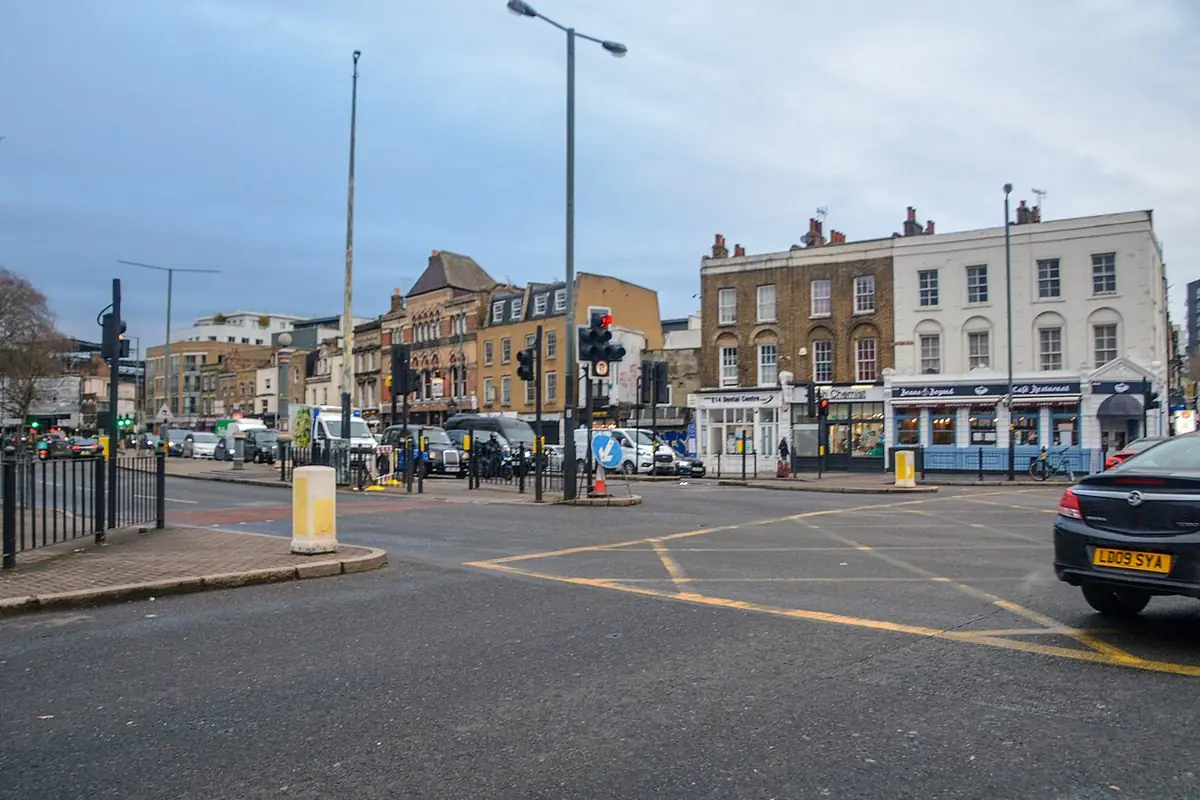
East Street, London in Street View: drag to look around.
These fundamental trade-offs shape how you will live day to day in your future home.
Investing in London's high-end property is not simply about acquiring square metres in one of the world's most dynamic capitals. It means entering a rigorous legal system in which every neighbourhood sets its own planning rules, taxes and maintenance demands. Between the conservation of listed heritage and the expectations of international buyers, the reality of London bricks and mortar calls for a clear-eyed analysis that goes well beyond the postcard.
Prestige and centralityvsConservation constraints
Buying a historic residence in the heart of the capital guarantees undeniable heritage value and absolute scarcity of land. However, strict rules on preserving facades and structures bring considerable renovation costs and often very long administrative delays.
Space and greeneryvsDistance from the business districts
Choosing a villa with a garden in the outer residential areas offers a remarkable quality of life, rare in a dense city. In return, daily commutes to the financial hubs grow significantly longer, changing how the property is actually used over the week.
International liquidityvsSensitivity to macroeconomic swings
The London villa market attracts global capital, which has traditionally ensured sustained long-term demand. Even so, that openness exposes transactions directly to exchange-rate movements, changes in non-resident taxation and global economic cycles.
What kind of London life are you really looking for?
Understanding these local dynamics lets you measure the gap between your current habits and daily life in London.
Choosing a villa in London depends not only on your purchase budget but on how closely your daily rhythm matches the shape of the city. The different boroughs make for radically different daily lives, whether in terms of children's schooling, work travel or leisure habits. Every buyer profile has to test its expectations against the real logistical constraints of the British metropolis.
The central, connected option
Central neighbourhoods drastically cut daily travel times, a major asset for busy schedules. On the other hand, villas with a genuine private garden are extremely rare there and change hands at very high prices. You trade floor space and greenery for absolute centrality, which transforms your relationship with time and with city life.
The residential, family option
The western and north-western boroughs offer large homes surrounded by green space and first-rate schools. This choice does, however, mean longer journeys into the business district and greater reliance on main roads or suburban rail lines. The pace of life is calmer, centred on community and parks.
The pure wealth-preservation option
Certain neighbourhoods traditionally favoured by institutional and family investors offer remarkable resilience when the market turns. Properties there lose less value in a slowdown, but they demand very high entry prices and significant running costs. Immediate rental yield gives way here to preserving capital.
Buying an exceptional property: what changes radically compared with back home
Once these legal differences are absorbed, choosing the location becomes the central question.
The British property system runs on legal and administrative rules that can differ profoundly from what you are used to back home. Forget the idea of a standard preliminary sale agreement or a single central notary handling everything. In London, negotiation, the role of your advisers and the order of commitments call for constant vigilance to avoid the classic pitfalls of a cross-border transaction.
From abroad
A central, neutral notary who drafts the authenticated deed
London
Conveyancing solicitors acting exclusively for each party
There is no single notary securing the sale for everyone. Each buyer must instruct their own specialist lawyer, whose investigation of title deeds and easements determines the legal safety of the deal.
From abroad
Quickly signing a preliminary agreement with standard conditions precedent
London
A prolonged negotiation period (subject to contract) with no binding force
Until the formal exchange of contracts, either party can walk away without any major financial penalty. This uncertain phase takes strong nerves and immediate responsiveness from your advisers.
From abroad
Universal outright ownership, with 'land and building inseparable'
London
The fundamental distinction between Freehold (outright ownership) and Leasehold (long lease)
Many London villas and townhouses are held on a long lease. You must check how many years remain on the lease before making any offer, or risk seeing the property's value melt away quickly.
From abroad
Uniform, predictable transfer duties and registration taxes
London
The progressive Stamp Duty Land Tax scale, adjusted according to tax status
Tax on purchase includes high bands, with a surcharge for non-resident buyers. Failing to plan for this tax can weigh heavily on your overall budget from the moment you sign.
Mapping the neighbourhoods: where to settle according to your priorities
With these geographical markers in place, it is time to examine the financial reality of such a purchase.
London is not a uniform city but an archipelago of villages with strong identities, linked by a dense transport network. Choosing the right neighbourhood for your main or second home depends on your tolerance for urban noise, your need for green space and your overall budget. Each area strikes its own balance between cultural buzz and residential calm.
Kensington & Chelsea
Timeless elegance set to the rhythm of white Victorian facades, world-famous museums and immaculately kept private garden squares.
Suits
Buyers seeking absolute prestige, centrality and a highly secure environment for their family.
Trade-off
A price per square metre among the highest on the planet, and an extremely limited supply of large detached villas.
St John's Wood & Regents Park
The hushed atmosphere of a leafy village on the edge of the very centre, dominated by superb historic homes behind brick walls.
Suits
Those who insist on large private outdoor spaces while staying ten minutes by Tube from the business districts.
Trade-off
Fierce competition among international buyers for the rare properties offered off-market.
Richmond & Wimbledon
A way of life firmly turned towards nature, vast royal parks and the quiet banks of the Thames, far from the urban bustle.
Suits
Families with school-age children who value calm, top schools and an unrivalled residential quality of life.
Trade-off
Noticeably longer daily journeys to reach the City or the West End at rush hour.
Notting Hill & Holland Park
An artistic, cosmopolitan energy, marked by pastel-coloured houses, lively markets and a magnificent tree-lined park.
Suits
Buyers who love neighbourhood life, independent cafés and architecture full of character.
Trade-off
Heavy foot traffic at weekends, and properties that frequently need major interior modernisation.
Budget overview: decoding the real costs of buying in London
Terraced houses and corner shops along a typical London street — Photo: Lewis Clarke · CC BY-SA 2.0 · Wikimedia Commons
Beyond the figures, the exact legal nature of your ownership deserves the closest attention.
A property investment in London never stops at the price shown on the listing. The cost structure includes specific taxes, legal fees and maintenance charges that buyers from abroad often underestimate. A rigorous reading of each item of expenditure helps you avoid unpleasant financial surprises and adjust your bidding strategy with full transparency.
LondonFor saleVillaestimate
Median price / m²£6,232Half the apartments sell below this
Median price£781kthe average is 14% higher — a few very large properties pull it up
Most common2 bedrooms63 % of listings
Average size119 m²
By number of bedrooms
Bedrooms
Share of market
Avg price
Price / m²
Avg size
2most common
63 %
£796k
£6,691
119 m²
3
28 %
£971k
£6,166 −6 %
158 m²
4
9 %
£1.18m
£6,035best value / m²
196 m²
Each row is an average, compared against the area average of £6,560 / m². These are indicative estimates of a typical local market, not a measured sample of live listings. Check current listings before relying on them.
Outright ownership or long lease: separating fact from fiction
The same legal rigour applies to every chronological step of the transaction.
Property ownership in the United Kingdom rests on a fundamental legal distinction that often surprises foreign investors. Whether you are buying the walls and the ground, or merely a long-term right of occupation, radically changes the long-term value of your assets and how freely you can manage the property day to day.
Freehold: outright ownership, no compromise
Buying Freehold means you own both the building and the land it stands on, with no time limit and no ground charge owed to a third party. It is the holy grail of London residential property, guaranteeing complete autonomy over renovation decisions and a simpler transfer of assets to heirs.
What it changesAs a result, Freehold properties are extremely rare in the most central areas, which translates into very high initial valuations and fierce competition every time one comes to market.
Leasehold: regulated long-term tenure
Under this system, you buy the right to occupy the property for a fixed period (often 125, 250 or 999 years) from the owner of the land (the Freeholder), while paying an annual charge known as ground rent. Once the remaining term drops below 80 years, the property's value falls quickly and extending the lease becomes complex and expensive.
What it changesIt is therefore essential to have your solicitor audit the exact length of the lease and its review clauses before making any offer.
The critical timeline: understanding commitment before any money changes hands
Once the commitment is sealed, the operational process of completion follows a precise timetable.
In the English legal system, making an offer (subject to contract) is not a definitive legal commitment. Unlike in many other countries, both buyer and seller can pull out without penalty at any point before the formal exchange of contracts. This transitional period demands iron discipline and perfect coordination between your legal and technical advisers.
You make a written offer through the estate agent.
The seller accepts the offer, opening the so-called 'subject to contract' period, which has no immediate binding force.
Your solicitors start in-depth legal checks (local searches) to identify any easements or planning projects.
An independent surveyor carries out a full technical inspection (building survey) to uncover any hidden defects or urgent structural work.
Both parties give final approval to the contract terms and set the date for the formal exchange.
Contracts are exchanged: the 10% deposit is paid and the sale becomes legally irrevocable.
The operational path: who does what, and in exactly what order?
Mastering these steps methodically is what makes your property project in the capital succeed.
Successfully buying a villa in London requires careful coordination between several professionals with strictly defined roles. From choosing a buying agent through to the handover of the keys on the day of final signing (completion), each one steps in at a precise moment to protect your interests and confirm the deal is compliant.
The Buying AgentSearch and shortlistingIdentifies properties that match your criteria, including off-market ones, and negotiates the initial financial terms on your behalf.
The SolicitorLegal and title auditReviews the property's history, checks there are no land disputes and drafts the specific clauses of the purchase contract.
The Chartered SurveyorTechnical survey of the buildingWrites a detailed report on the condition of the structure, roof and installations to identify future renovation costs.
The Mortgage BrokerArranging the financingStructures your financing plan with international private banks suited to non-resident buyer profiles.
The respective SolicitorsExchange of contractsCarry out the simultaneous exchange of signed documents and confirm the transfer of the deposit into escrow.
The Notary / SolicitorCompletionArranges the transfer of the balance of the purchase price, pays the transfer tax (SDLT) and officially registers the title with the Land Registry.
Living in a villa in London: between Georgian homes and modern houses
Buying a villa in London means choosing between the heritage authenticity of Georgian or Victorian homes and the clean-lined comfort of contemporary builds, often located in the outer areas or in exclusive private enclaves. Wealthy buyers face this architectural dilemma straight away, and it shapes the entire high-end market of the British capital.
Period houses, whether tucked away in Kensington, Chelsea or Islington, win people over with their weathered brick facades, soaring ceilings and preserved original features. However, these properties often demand considerable renovation budgets to meet today's energy standards, all while working within strict planning constraints tied to heritage listings.
By contrast, contemporary villas built in areas such as Hampstead, Wimbledon or along the Thames offer open-plan volumes, natural light maximised by large glazed walls and impeccable thermal performance. These properties come with advanced home automation, underground parking and landscaped outdoor spaces designed for modern living.
The final choice fundamentally depends on your relationship with time and comfort. Do you prefer the history-laden soul of a century-old home that you will shape patiently, or the immediacy of a turnkey architectural haven built for the 21st century? Each option redefines your London life in a radical and committing way.
What real budget should you plan for buying and maintaining a villa in London?
Buying a villa in London is not just about the purchase price shown on property portals. You have to factor in a complex local tax system, including Stamp Duty Land Tax and council taxes, as well as the recurring maintenance costs specific to London's housing stock. This financial structure calls for rigorous planning to avoid any budget disappointment after signing.
Unavoidable expenses for buying and owning a villa
Budget item
Order of magnitude or rate
Impact on cash flow
Stamp Duty Land Tax (SDLT)
Progressive scale up to 15% for non-residents
A large immediate outlay at the time of the transaction.
Council Tax (Bands H / I)
Between GBP 3,000 and GBP 4,500 a year depending on the borough
An unavoidable recurring annual tax charge.
Structural maintenance costs
1% to 2% of the property's value a year
An essential budget to preserve the value of older or complex properties.
High-end home insurance
From GBP 5,000 to more than GBP 15,000 a year
Essential cover for high-value properties and their fittings.
The amounts shown are averages observed in the prime London market and vary with the exact location and the living area.
Pace of life and daily logistics: an ordinary Tuesday in a London villa
Living in a villa in London calls for finely tuned logistics, split between morning runs to elite schools, managing home services and getting to the employment hubs of the City or Mayfair. The pace is brisk and requires constant anticipation of the city's traffic flows.
07:00Residential neighbourhood (Kensington / Hampstead)Waking up in the calm of a leafy residential enclave, away from the central bustle, while staying connected to the main routes.
08:15International or private schoolDropping the children off at one of the prestigious independent schools in west or north London.
09:30Workplace or business districtArriving at the office after an efficient journey by Tube or in a chauffeur-driven car.
13:00Business lunch in MayfairA professional meeting at a private members' club or a fine-dining restaurant in the centre of the capital.
17:30Local shops and wine merchantsPicking up fresh produce from local delicatessens before heading back to the family home.
19:30Relaxing in the garden or at a sports clubEnding the day in the villa's private landscaped garden or with a workout at a private club in the neighbourhood.
What property listings always leave out about London villas
Behind the superb photographs on property portals lie technical and administrative realities that only experienced residents discover after buying. Knowing about these invisible aspects spares you dramatic financial setbacks and insurmountable administrative deadlocks.
The draconian restrictions of Conservation Areas
Changing the facade, felling a tree or replacing the window frames of a historic villa requires planning permissions that are extremely complex and slow to obtain from the council.
The real condition of underground pipework and foundations
Many older properties suffer from ageing lead or cast-iron pipes and structural damp problems that simple cosmetic refreshes cannot hide.
The complexity of Leasehold arrangements for some plots
Although most villas are sold Freehold, some outbuildings or shared accesses fall under long-lease arrangements that require ground rent payments.
The noise and visual impact of neighbouring basement works
The fashion for 'iceberg homes' in London means your neighbours will probably undertake monumental basement excavations, generating noise and dust for years.
Common regrets of foreign buyers six months after moving in
Looked likeAn exceptional property opportunity with strong potential for a quick capital gain in the heart of London.
Turned outA property with very low liquidity in reality, because it sits in an ultra-niche segment, ruling out any quick resale.
Would have caught itStudy the neighbourhood's transaction history over the last ten years in detail and consult an independent, non-commissioned expert.
Looked likeA charming, tree-filled private garden offering a perfectly secluded haven of peace.
Turned outA green space needing costly horticultural upkeep and suffering constant noise from nearby flight paths or roads.
Would have caught itVisit the property at different times of day, especially at rush hour, to measure the real noise level objectively.
Looked likeA charming period house with original fireplaces and old parquet floors.
Turned outA draughty, energy-hungry house whose winter heating bills weigh heavily on the annual running budget.
Would have caught itInsist on a full energy performance certificate and budget for the necessary insulation work immediately, before signing.
Looked likeA lively central neighbourhood where you can do everything on foot or by bike.
Turned outA saturated area where residential parking is almost impossible to find and daily traffic becomes an obstacle course.
Would have caught itTest the commute yourself at rush hour and check the parking permits allocated to the property.
Buyer profiles: who should definitely avoid buying a villa in London?
Investing in a London villa does not suit every wealth profile or every lifestyle. Some buyers underestimate the rigidity of the British market and the operational constraints of managing a property of international standing.
The investor looking for immediate liquidity
→Turns to highly speculative property assets or liquid financial investments.
The prestige villa market in London has long resale cycles, which can stretch over several months or even years depending on the macroeconomic climate.
The owner allergic to administrative constraints
→Favours more flexible jurisdictions or new-build properties with no heritage history.
Local planning regulations and the authorities' requirements on architectural preservation make every alteration cumbersome and complex.
The buyer whose budget is calibrated down to the last penny
→Buys a more modestly sized property or opts for a high-end apartment with shared service charges.
The unpredictable maintenance costs of an older villa expose you to major financial risk if large structural repairs are needed.
Decision summary: are you really ready to take the plunge?
Buying a villa in London is far more than a simple financial transaction: it is a life commitment that redefines where you are rooted, geographically and financially. If you have weighed the real maintenance costs, accepted the planning constraints and confirmed that the property fits your family's rhythm, then the move makes complete sense.
Bear in mind that London property rewards patience and a long-term view. Short-term economic jolts generally fade against the structural scarcity of large, well-located properties in the capital's most sought-after boroughs. Your decision should rest on deep personal conviction and unquestionable financial strength.
Take the time to surround yourself with independent experts, whether legal advisers specialising in English property law or architects familiar with local requirements. Every detail confirmed upfront is a guarantee of peace of mind for the decades ahead in your new London home.
Related questions
What fees and taxes should I expect when buying a villa in London?
Purchase costs mainly consist of Stamp Duty Land Tax, whose rate depends on the transaction amount and your residency status, plus the fees of solicitors and building surveyors.
Can I buy a villa in London as a non-resident?
Yes, international buyers can purchase property in the United Kingdom, but they must pay a specific surcharge on transfer tax and go through strict financial compliance checks.
What is the difference between Freehold and Leasehold for a house in London?
Freehold gives you outright, perpetual ownership of both the building and the land, whereas Leasehold means holding the property for a fixed term, with a landowner to whom you pay ground rent.
How long does buying a property in London take on average?
The whole process, from offer acceptance to final signing and handover of the keys, usually takes between two and four months, provided the technical surveys are completed.
What is a Conservation Area and how does it affect building work?
It is a protected zone recognised for its architectural or historic interest. Any exterior change, whether to the roof or the windows, requires special permission from the local council.
What does it cost on average each year to maintain a period villa in London?
It is wise to budget between 1% and 2% of the property's market value every year to cover preventive maintenance, roof repairs and bringing installations up to standard.
Do British banks readily lend to foreign buyers?
London's banks do finance non-residents, but they require very robust wealth profiles, proof of the source of funds and deposits that often exceed 35%.
How does Council Tax work for large London villas?
Council Tax is an annual local tax based on the property's estimated value in 1991. The most luxurious villas generally fall into the highest bands, H and I.
Is it mandatory to instruct a RICS surveyor before buying?
While not strictly required by law, it is strongly recommended to commission a thorough technical survey from a member of the Royal Institution of Chartered Surveyors to uncover hidden defects.
Which neighbourhoods are most sought after for buying villas in London?
Kensington, Chelsea, Notting Hill, Hampstead and Wimbledon remain the most prized locations for buying villas with private outdoor space.