Buying a house in Vancouver calls for a firm grasp of local particulars, from the geography of the neighbourhoods to the legal requirements of British Columbia. This guide sets out the groundwork you need to structure your purchase clearly, without giving in to the pressures of a complicated market.
Get the app
What nobody tells you.
Real prices, hidden costs and the traps to check before you commit.
Why does the Vancouver housing market force a permanent trade-off between space and mobility?
Scroll
Why does the Vancouver housing market force a permanent trade-off between space and mobility?
Buying a house in Vancouver calls for a firm grasp of local particulars, from the geography of the neighbourhoods to the legal requirements of British Columbia. This guide sets out the groundwork you need to structure your purchase clearly, without giving in to the pressures of a complicated market.
Written by the ting.ad editorial team ·
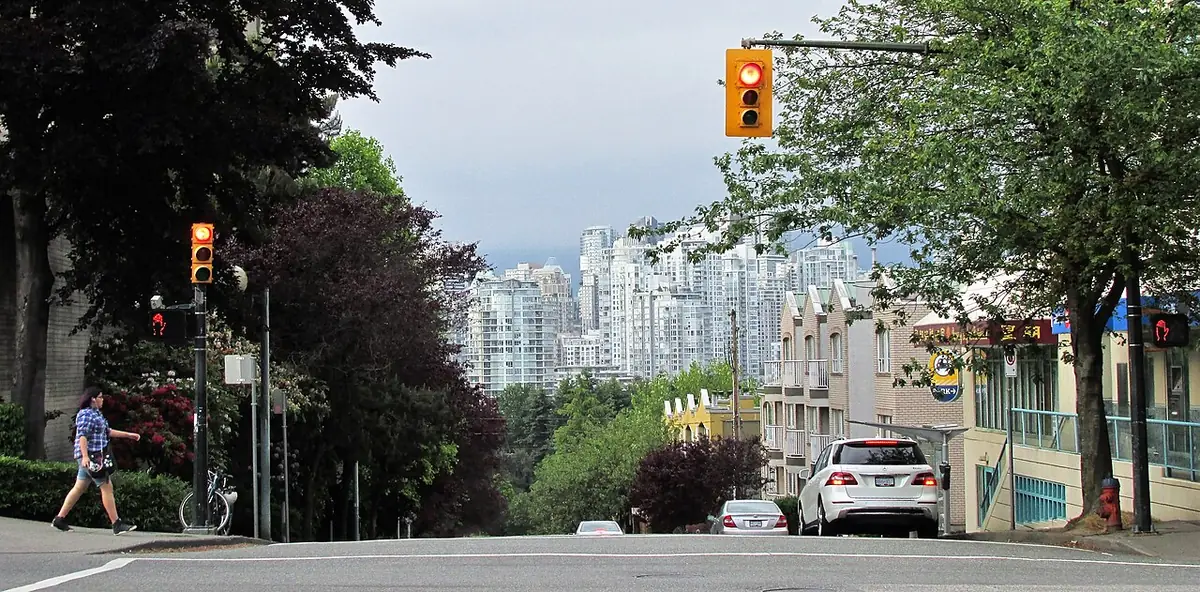
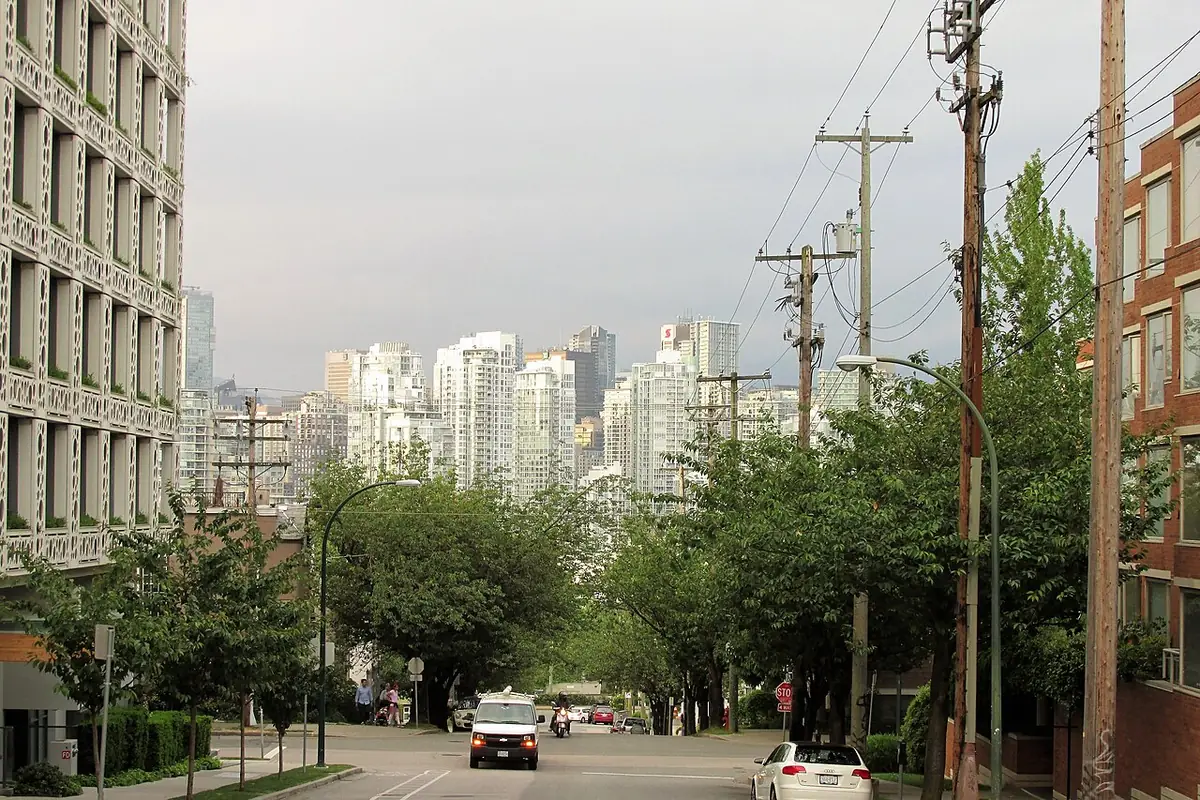
Laurel Street, Vancouver in Street View: drag to look around.
That constraint of geography and space shows up directly in daily life, and how it shows up depends on the kind of buyer you are.
Buying a house in Vancouver means arbitrating between being close to downtown and having liveable floor area for a household. The region's unusual geography, hemmed in by the ocean and the mountains, limits urban expansion and concentrates demand on a small number of areas. That scarcity of land shapes a market in which every square metre commands a high price, pushing buyers to redefine their priorities between city life and residential quiet. Understanding this basic tension prevents disappointment during the search and lets you set a budget that matches the way you actually live.
Aiming for the central neighbourhoodsvsAccepting smaller floor areas or properties that need work
Central areas such as Mount Pleasant or Kitsilano offer quick access to amenities and public transport, but detached houses there are extremely rare and often priced out of reach. Buyers generally have to settle for more modest surfaces or plan for heavy renovation.
Moving out to the Fraser Valley municipalities or North VancouvervsTaking on long daily journeys into the economic core
Settling in Burnaby, Coquitlam or further out lets you buy a family house with a comfortable lot at a more accessible cost per square metre. In exchange, peak-hour travel across the bridges and along the main road corridors demands careful planning.
Betting on an older house with potentialvsHandling high costs to bring it up to standard and keep it there
The residential housing stock includes many buildings from the 1950s to the 1970s that often need major work on insulation, plumbing or wiring. An apparently reasonable initial outlay is quickly topped up by a substantial renovation budget.
Which part of Vancouver really matches your daily rhythm and your travel patterns?
Settling in this region also means navigating administrative and tax practices that differ sharply from the ones you may be used to.
Greater Vancouver is made up of sharply contrasting micro-markets where the texture of daily life can change completely as you cross a single street. Between the bustle of the fashionable districts, the residential calm of the leafy suburbs and immediate access to nature for outdoor types, each area answers a particular set of hopes. Looking closely at your daily routine, your work constraints and your leisure time will point you to the neighbourhood or municipality that offers you the best quality of life over the long run.
North Vancouver or West Vancouver
These municipalities on the north side of Burrard Inlet appeal through their immediate closeness to hiking trails and ski areas, while offering peaceful residential streets and large parks. The market there is dominated by detached houses surrounded by greenery, ideal for families who want a life built around the outdoors. That said, the road links into downtown across the bridges at peak hours impose a logistical constraint you have to build into your daily planning.
Prices per square metre are among the highest in the metropolitan region, reflecting the scarcity of buildable land and strong demand for this exceptional setting. Schools and local services are particularly well developed, which means a self-sufficient level of comfort for residents who feel no need to travel into the heart of Vancouver every day.
East Vancouver or Hastings-Sunrise
East Vancouver offers a livelier and more varied urban fabric, with tree-lined streets, independent shops and a rich cultural life. The houses are more mixed, ranging from renovated older buildings to more recent infill projects. This area suits buyers who want to keep quick access to the SkyTrain lines and the bike routes so they can get to work without a car of their own.
Demand is particularly strong, which keeps prices high despite housing stock that is often older. Living in these neighbourhoods means accepting a more pronounced urban density and an architectural mix that gives this part of the city its charm and its identity.
Vancouver's West Side (Kitsilano, Dunbar, Kerrisdale)
Vancouver's West Side is the blue-chip choice in residential property, home to the most highly regarded schools and to upmarket residential streets. Houses there generally sit on larger lots and have been carefully maintained by successive owners. It is the preferred option for buyers with substantial capital who want the security of a durable long-term holding.
The entry ticket is the highest in all of British Columbia, and competition between buyers for single-family houses remains fierce. Planning rules are strict, which protects the quiet of the area but limits any radical architectural transformation.
Living here when you arrive from abroad: what changes radically about buying a home
Once those rules are absorbed, a close look at the different kinds of neighbourhood will let you target the area that matches what you want.
For a buyer used to tightly regulated systems elsewhere, the British Columbia housing market holds several notable breaks in method. From the way offers are structured to the technical checks that come first, and through the central role of agents and the local taxes, the familiar landmarks shift considerably. Adapting quickly to local practice prevents misjudgements during negotiation and keeps the transaction legally sound from start to finish.
From abroad
A single official at the centre of the conveyance, and slow administrative procedures
Vancouver
Specialist lawyers or notaries public, and a very fast digital land registration system
Transactions in Vancouver often close within a few weeks thanks to a computerised land title system (the Land Title Office). The lawyers or notaries acting for both parties handle the transfer of funds and the check on charges very smoothly, which demands an immediate response from the buyer as soon as conditions are removed.
From abroad
Fixed asking prices, or traditional negotiating margins expressed as a percentage
Vancouver
The system of multiple sealed offers and frequent bidding wars
The asking price does not necessarily reflect the final transaction value in a tight market. Buyers have to be ready to analyse recent comparable sales in order to frame a fair offer, often with no conditions attached in the most sought-after areas.
From abroad
A statutory builder's warranty and unified national standards
Vancouver
The crucial importance of independent private inspections and of the renovation history
There is no direct equivalent of a long statutory builder's warranty for older houses. A detailed building inspection by a certified professional is essential to identify hidden defects, the possible presence of asbestos, the state of the roof and the drainage systems.
From abroad
Local taxation resting essentially on a straightforward annual property tax
Vancouver
A layered tax picture including the provincial Property Transfer Tax and speculation taxes
The purchase budget has to include transfer taxes levied at the point of purchase, along with specific municipal taxes if the property is vacant or held by non-residents. These levies feed directly into the overall cost of holding the property.
Which Vancouver neighbourhood offers the best balance between quality of life and investment?
Beyond the feel of a neighbourhood, it is the structure of prices and side costs that decides whether the project is financially feasible.
Every area of the Vancouver region has its own identity, its own infrastructure and its own pattern of property appreciation. Between the prized coastal neighbourhoods, the zones in the middle of gentrifying and the family-oriented outer municipalities, what is on offer answers very different ways of living. Weighing the advantages and the counterparts of each option lets you target precisely the area that will secure both your day-to-day wellbeing and your capital over the long run.
Kitsilano and the western beaches
A relaxed, active atmosphere, set to the rhythm of seaside walks, neighbourhood cafes and parks right on the doorstep.
Suits
Buyers after an urban seaside lifestyle, lively and built around outdoor activity, without leaving the city.
Trade-off
An extremely competitive market with prices per square metre among the highest in the province and houses that are often compact.
East Vancouver (Commercial Drive / Strathcona)
A strong community spirit, artistic and multicultural, with a wide range of small shops, independent restaurants and green spaces.
Suits
Those who enjoy urban activity, social and cultural mix, and a warm, engaged neighbourhood fabric.
Trade-off
A very mixed stock of available properties, requiring extra attention to the general condition of houses and to how the surrounding area is being redeveloped.
North Vancouver (Lonsdale / Delbrook)
A green, mountain-backed setting where nature is everywhere, offering a welcome break at the end of the working day.
Suits
Families and outdoor enthusiasts (hiking, mountain biking, skiing) who put liveable space and residential quiet first.
Trade-off
Longer daily journeys, because reaching downtown at peak hours means crossing the bridges.
What does buying a detached house in Vancouver really cost?
That financial reality raises the question of what exactly, in legal terms, you acquire on Canadian soil.
The Vancouver housing market is marked by high financial entry thresholds that demand rigorous and realistic budget preparation. Beyond the headline purchase price of the house, a buyer has to factor in a series of unavoidable costs, including the provincial transfer tax, legal fees and inspection costs. A clear view of these items avoids nasty surprises at the point of signing the final documents with the lawyer or notary.
vancouverFor saleHouseestimate
Median price / m²CA$8,958Half the apartments sell below this
Median priceCA$1.21mthe average is 14% higher — a few very large properties pull it up
Most common2 bedrooms65 % of listings
Average size128 m²
By number of bedrooms
Bedrooms
Share of market
Avg price
Price / m²
Avg size
2most common
65 %
CA$1.27m
CA$9,336
137 m²
3
29 %
CA$1.63m
CA$8,864best value / m²
184 m²
4
7 %
CA$2.31m
CA$9,430
245 m²
Each row is an average, compared against the area average of CA$9,430 / m². These are indicative estimates of a typical local market, not a measured sample of live listings. Check current listings before relying on them.
Outright ownership or long leasehold: what do you actually hold?
Once the type of property and its legal status are settled, the buying process follows a very strict sequence.
In Canadian property law, the distinction between outright ownership of the land and alternative forms of holding matters enormously to the security of your investment. While the great majority of detached houses are bought freehold, certain specific areas or First Nations lands follow different contractual rules. Knowing precisely the legal status of the land protects your assets against the risk of depreciation or of long-term restrictions on use.
Freehold ownership
You own both the building and the land it stands on, absolutely and without any time limit. This is the safest and most sought-after form of holding on Vancouver's residential market, guaranteeing complete freedom to renovate (within municipal planning rules) and a straightforward transfer to your heirs.
What it changesYou capture in full the land value created over the years by the scarcity of sites across the metropolitan region.
Leasehold
The land belongs to a third party (often a municipality, a university or a First Nation) which grants you the use of it for a set period, generally between 60 and 99 years. Although the initial purchase price may look more attractive than freehold, the value of the property tends to fall as the end of the lease approaches, which can also complicate getting bank finance.
What it changesYou need to look carefully at the lease expiry date and the renewal terms before committing financially.
The golden rule to understand before you put down a deposit on a house in Vancouver
To carry this complex sequence through without incident, the coordinated involvement of several local professionals is indispensable.
The system of offers to purchase in British Columbia rests on a contractual commitment of formidable rigour that leaves no room for approximation. Once the offer is accepted and the conditions removed, the transaction becomes legally irrevocable, exposing a buyer who fails to complete to major financial claims. Mastering each critical step in validating the offer protects your interests and keeps your money safe.
The decision to make a formal offer on a property you have identified after several viewings.
The drafting of the offer by your agent (Realtor), including the subject clauses (building inspection, obtaining bank finance and verification of title).
The condition review period (generally 5 to 7 business days), during which the professionals you have engaged carry out their technical and financial checks.
The formal removal of conditions in writing, which instantly turns the conditional offer into a firm and binding contract of purchase.
The payment of a deposit, generally in the order of 5% to 10% of the purchase price, paid into the brokerage's trust account.
The completion date, with the transfer of the final funds by the lawyer or notary and the formal handover of the keys.
How does a property transaction in Vancouver unfold, step by step?
Buying successfully in Vancouver means following a rigorous method involving people with well defined and complementary roles. From putting your finances together at the start to actually moving into your new house, each participant secures one technical or legal facet of the transaction. Anticipating that chain of events lets you meet the strict deadlines set by British Columbia law.
The buyerMortgage pre-approvalObtain a pre-approval letter from a Canadian financial institution so you know precisely how much you can actually borrow.
The real estate agentShortlisting and viewingsAnalyse the MLS (Multiple Listing Service) data and view the houses that match the criteria set out beforehand.
The building inspectorDetailed technical inspectionExamine the structure, the roof, the plumbing and the insulation of the house closely, to detect any hidden defects.
The lawyer or notary publicTitle and charges searchConfirm that the title is free of any liens and prepare the legal transfer documents.
The bank or lenderRelease of fundsTransfer the mortgage funds directly into the trust account of the buyer's lawyer or notary on the completion date.
The buyerMoving in and registrationTake possession once ownership has been formally registered at the Land Title Office.
Detached house or strata property in Vancouver: should you give in to the lure of your own plot of land?
Once that basic choice between building upwards and spreading outwards is settled, it is worth examining the precise budget reality of one of the tightest housing markets in North America.
Buying a single-family house in Vancouver is the culmination of a housing journey often idealised from afar, but this quest for architectural independence runs straight into an unforgiving reality: the absolute scarcity of land on a peninsula ringed by the Pacific Ocean and the Coast Mountains. Unlike large European cities where building upwards is the historic norm, Vancouver has structured its recent growth around targeted densification along transport corridors, while preserving historic low-rise neighbourhoods in which detached houses are becoming steadily rarer. This unusual geography turns every parcel of land into a highly speculative asset, decoupling the market value of a property from its simple usefulness as somewhere to live.
Choosing a house in Vancouver means accepting a considerable financial and practical burden that goes well beyond repaying the loan taken out with a Canadian financial institution. Roofs have to withstand the intense rain of the British Columbia autumn and winter, foundations sit in the constant damp of silty ground, and looking after the outdoor space demands a serious weekly commitment, unless you delegate it to local contractors whose rates reflect the region's high cost of living. An apartment in a strata, by contrast, relieves the buyer of those structural worries while exposing them to the sometimes stormy decisions of the strata council, where managing the contingency reserve fund for facade work or energy upgrades can trigger the special levies everyone dreads.
The trade-off between these two ways of living in Vancouver is therefore not simply an aesthetic preference between a private garden and a panoramic view from an upper floor: it is an overall strategic choice about how you manage your savings and your available time. Families with young children often prefer the space and autonomy of residential neighbourhoods such as Dunbar or Kerrisdale, while younger professionals and investors opt for the urban ease of Yaletown or the West End, where being right next to the SkyTrain network compensates for the absence of private outdoor space. The decision deserves careful thought in the light of your investment horizon, because the liquidity of a house with land is structurally different from that of a standardised apartment in a reinforced concrete tower.
It is also worth weighing the effect of constantly evolving municipal rules, in particular the densification policies of the Vancouver Plan, which now allow multiple homes to be built on lots once reserved for single-family houses. That planning shift is changing the very nature of low-rise neighbourhoods, introducing a sometimes uneasy coexistence between long-standing residents and developers. Buying a house today in those zones no longer guarantees the pastoral quiet of the past, but it does open the door to very long-term land value opportunities through future sales to builder groups.
What budget do you really need to buy and maintain a property in Vancouver?
Getting these figures straight lets you approach with confidence the daily reality of a household settled in Vancouver, set to the rhythm of its infrastructure and its urban journeys.
Buying a property in Vancouver never stops at the asking price negotiated with the seller or their agent. Buyers must factor in a series of mandatory side costs and specific local taxes that significantly increase the total sum needed to complete the transaction properly under provincial rules.
Acquisition costs and taxes payable at purchase
Cost item
Approximate basis of calculation
Estimated budget impact
Property Transfer Tax (PTT)
1 percent on the first 200k CAD, 2 percent up to 2M CAD, and 3 percent above that
Between 15,000 CAD and 50,000 CAD depending on the value of the property
Conveyancing and registration fees
Legal fees for the title search and the transfer of ownership
1,500 CAD to 3,000 CAD payable in cash at signing
Prior technical inspection
A certified inspector's report on structural condition and hidden defects
600 CAD to 1,200 CAD depending on the size and age of the building
Mortgage brokerage fees
Generally covered by the lenders, but fees are possible on complex files
0 CAD to 1,500 CAD for unusual or non-resident financing arrangements
These amounts have to be available immediately as liquid funds of your own, because they cannot be folded directly into the principal of the mortgage granted by Canadian financial institutions.
Recurring annual costs for a resident owner
Type of cost
Payment frequency
Average annual amount observed
Municipal property tax (City Property Tax)
Annual (payment generally due in July)
3,500 CAD to 8,000 CAD depending on the value assessed by BC Assessment
Strata fees
Monthly (applies only to apartments and townhouses)
4,200 CAD to 9,600 CAD spread over the calendar year
Homeowner's comprehensive insurance
Annual (varies with the age and location of the property)
1,200 CAD to 2,800 CAD for full cover including water damage
Contingency reserve and preventive maintenance
Variable with the seasons and with unexpected breakdowns
2,000 CAD to 5,000 CAD set aside for routine upkeep
Owners also need to watch the Bank of Canada's policy rate, because the mandatory five-year mortgage renewal can change the net monthly payment abruptly.
What does a Vancouver resident's weekday actually look like?
Beyond that well-oiled routine, sales brochures deliberately leave out crucial technical matters that only long-standing residents end up discovering the hard way.
An ordinary day in Vancouver tests the efficiency of the transport infrastructure and the geographical spread of essential public services. Between commuting across the major bridges and heavy use of the SkyTrain network, each stretch of the day shows how strategically important the choice of neighbourhood is relative to where you actually work.
07:30Residential neighbourhood (for example Kitsilano or Mount Pleasant)Waking up and getting the family ready. Parents plan the school run around a morning that is often wet, while the children put on the waterproofs they need to walk to the local school.
08:30Transit station or main road corridorsThe journey downtown. Those who use the TransLink network get a frequent and reliable service, while drivers face the chronic congestion of the Burrard Bridge or the George Massey Tunnel depending on where they set out from.
09:15Workplace or shared office downtownArrival at the office. Professionals work in a busy service-sector environment concentrated around Burrard Inlet, where the morning coffee break happens in one of the many independent places that give the city its culinary reputation.
12:30Local shops and health servicesA midday break spent on quick errands or a routine medical check. The density of walk-in clinics makes it possible to deal with minor health matters, although getting a family doctor of your own remains a well documented challenge across the province.
17:00Schools and daycareCollecting the children after the school day or after after-school care. This moment marks the start of the evening migration back to the outer residential areas or to central neighbourhoods in full transition.
18:30Urban park or natural space (Stanley Park or False Creek)Time outdoors or the near-obligatory exercise local residents build in, whether a run along the Seawall or a walk after dinner facing the snow-covered mountains that rise above the bay.
21:00HomeWinding down at home. Catching up on local news, checking the utility bills (BC Hydro, FortisBC) and organising the next day, in a general climate of safety that residents greatly appreciate.
What the glossy developer brochures in Vancouver leave out
Ignoring these invisible factors exposes a buyer to major financial and personal disappointments that can fortunately be anticipated by listening to those who have been through it.
The Vancouver development industry pours considerable visual marketing into attracting local and international investors, foregrounding breathtaking views and luxurious interior finishes. Even so, several major structural and climatic realities are systematically passed over in the official sales material handed out at viewings.
The complex and costly management of building envelopes on older stock
Many buildings put up in past decades suffer water-tightness defects linked to the persistent rain of the west coast. Strata corporations have to set aside enormous sums to redo the exterior insulation, which translates into special levies of several tens of thousands of dollars per owner.
The restrictive effect of the short-term rental rules
The City of Vancouver applies extremely restrictive legislation to platforms of the Airbnb type. Renting out a furnished property on a short-term basis is tightly framed by mandatory licences and deterrent fines, which makes any hope of a high rental yield based on passing tourism illusory.
The recognised seismic vulnerability of the Cascadia region
British Columbia sits on an active subduction zone subject to major earthquakes. Buyers must check that structures meet earthquake standards, particularly for older strata buildings, and take out specific insurance whose deductibles in the event of a claim are very high.
The rapid pace of planning and densification projects next door
Buying an apartment with an open view or a quiet house guarantees nothing about the future. Municipal rezonings can permit a residential tower to be built directly opposite your property, radically changing your daylight and the market value of your investment.
The strict constraints of strata bylaws on daily life
The bylaws of some buildings prohibit large pets outright, restrict renting to family members or set strict hours for the use of common areas, considerably reducing how freely you can use what you bought.
The regrets buyers typically voice six months after settling in Vancouver
These sour disappointments show that ownership in this Canadian city does not suit every kind of buyer.
Looked likeAn excellent deal in an up-and-coming neighbourhood with strong potential for a quick gain in value.
Turned outAn area poorly served by rapid transit, producing exhausting daily journeys and a relative loss of value against competing central districts.
Would have caught itStudying the municipal ten-year planning documents in detail and testing real journey times at peak hours before signing an irrevocable commitment to buy.
Looked likeA modern strata building showing extremely low and attractive monthly fees for first-time buyers.
Turned outA reserve fund left underfunded by the original developer, which required a huge special levy in the very first year to repair defects in the ventilation system.
Would have caught itInsisting on the full minutes of the general meetings for the past three years and having the strata's financial health audited by an independent specialist.
Looked likeA charming older house full of character with a large mature garden in a smart residential neighbourhood.
Turned outA permanent drain on energy, requiring complete replacement of the oil heating system, insulation of the loft and an upgrade of the ageing electrical installation.
Would have caught itAlways engaging a certified building inspector with no ties to the real estate agent, to obtain a full diagnosis of the compliance work required.
Looked likeA compact studio ideally placed in the heart of downtown to make the most of the nightlife and cultural scene.
Turned outA cramped space that became hard to live in through the long months of winter rain, made worse by recurring night-time noise and no outdoor storage at all.
Would have caught itRenting the same type of property through the wettest season of the year, to test how far your own household really tolerates tight space and being shut indoors.
At what point, given your finances and your circumstances, is it better not to buy in Vancouver?
Once these warnings are absorbed and your own profile confirmed, the moment has come to decide definitively about your housing plans.
Home ownership in Vancouver is treated as an absolute social article of faith, yet rational economic calculation shows it to be a strategic mistake for several categories of household. Insisting on buying in a market this expensive without the right structural conditions leads inevitably to financial suffocation or to savings locked up for many years.
The young professional early in a mobile career
→Carrying on renting a flexible apartment rather than taking on twenty-five years of debt.
The upfront transaction costs (transfer taxes, legal fees, brokerage) are so high that they need at least five to seven continuous years in the same property to be recovered. A career move to another Canadian province would immediately destroy any prospect of a return.
The investor looking for an immediate, high net rental yield
→Putting their capital into international financial markets rather than into Vancouver bricks and mortar.
The ratio between astronomical purchase prices and rents regulated by the province's Residential Tenancy Branch produces historically weak gross yields, often below 3 percent before tax and strata fees.
The household with an insufficient or fragile down payment
→Keeping their savings in secure accounts while renting somewhere suitable.
Trying to buy with too small a down payment forces you into expensive mandatory mortgage insurance (such as CMHC cover) and leaves the household exposed to the slightest turn in interest rates or drop in income.
The buyer with no tolerance for administration and shared ownership
→Staying a tenant, so that all maintenance risk stays with the landlord.
The complexity of the laws governing strata property in British Columbia, and having to live alongside neighbours with varying demands, turns managing what you bought into a permanent source of stress that sits badly with a search for peace and quiet.
So, are you ready to take the plunge into Vancouver property despite the obstacles?
Deciding to buy a property in Vancouver means setting aside speculative excitement and the ambient talk of prices only ever rising. This market is for buyers who can project their way of living over a long horizon, generally more than ten years, and who have the financial depth to absorb swings in Canadian interest rates without flinching. If your plan rests on the hope of a quick capital gain or the illusion of a risk-free investment, this British Columbia city will prove merciless.
Conversely, if you see buying your house or your apartment as putting down your household's permanent anchor in an exceptional natural and urban setting, the local financial and regulatory constraints start to make sense. Owning a base or a main home along the Pacific has to be earned: it means accepting compromises on floor area, budgeting rigorously for upkeep, and taking an active part in your strata or your neighbourhood. The soundness of your decision will lie in your ability to live happily in your home, whatever the future ups and downs of published property values.
Your next step is to work out precisely the funds you have available, to consult an independent mortgage broker who is not tied to a single large Canadian bank in order to get a realistic pre-approval, and to walk the neighbourhoods you have in mind methodically, in the rain as well as in the sun. Property in Vancouver forgives neither approximation nor impulsive haste, but it rewards those who approach a purchase with clear eyes, a method, and a full understanding of the local rules of the game.
Related questions
What is the Property Transfer Tax (PTT) in British Columbia?
The Property Transfer Tax is a mandatory provincial tax collected when any change of property ownership is registered. The rate is 1 percent on the portion up to 200,000 CAD, 2 percent on the portion between 200,000 CAD and 2 million CAD, and 3 percent on any value above 2 million CAD. Partial exemptions exist for first-time buyers who meet strict residency criteria.
How do strata fees work in Vancouver?
Strata fees, the Canadian term for shared ownership charges, are paid monthly by every owner of an apartment or of a house held in a strata (a townhouse). They fund the day-to-day upkeep of the common areas, cleaning, waste collection, the building's insurance and the mandatory contributions to the contingency reserve fund set aside for major future work.
Can a non-resident buy property in Vancouver?
Property purchases by non-residents of Canada are subject to strict federal restrictions that temporarily prohibit non-resident foreign investors from buying certain types of residential housing. Specific provincial taxes also apply, designed to discourage international speculation in the local market.
What is the BC Assessment report on a property?
BC Assessment is the official provincial body that values every property in British Columbia each year. That public valuation is the basis on which the annual municipal property tax owed by owners in the region is calculated.
What are the inspection obligations before a purchase?
While a technical inspection is not strictly required by legislation, every serious professional in the sector strongly recommends one. It uncovers hidden defects, water ingress problems, the presence of asbestos or worn-out electrical and plumbing systems before the conditions on the offer are removed.
How is short-term rental of the Airbnb type regulated in Vancouver?
The City of Vancouver applies extremely strict rules that prohibit short-term rental in any home that is not the operator's principal residence. A valid municipal business licence is mandatory, and breaches are subject to automated monitoring and very heavy financial penalties.
What is the five-year mortgage renewal in Canada?
Unlike the long fixed-rate loans found in some European countries, Canadian mortgages generally run on a total amortisation period of 25 years but must be renewed with the lending institution every three or five years, exposing the borrower to whatever interest rates prevail on that date.
Where can current planning projects in Vancouver be consulted?
The City of Vancouver publishes on its official digital portal (vancouver.ca) the full set of neighbourhood plans, pending building permit applications and proposed rezonings under the municipal master plan, so that residents can inform themselves in advance.
What effect does the Cascadia seismic zone have on buildings?
Because the Vancouver region sits on an active subduction zone, the building rules (BC Building Code) impose rigorous earthquake standards, particularly for reinforced concrete residential towers. Buyers of older properties should check that their building has been brought up to structural standard.
How does the Residential Tenancy Branch (RTB) work in British Columbia?
The Residential Tenancy Branch is the provincial body responsible for regulating relations between landlords and tenants. It sets the rules on the maximum annual rent increase allowed and on the conditions for ending a tenancy, and it arbitrates disputes through an official administrative procedure.
Property review of ting
No ting properties in Vancouver yet
Be the first — share it on ting and it shows up right here.