Buying a house in New York is a major financial commitment, and it asks you to set aside the assumptions you brought with you and work by the rules of a market that behaves like no other. This guide sets out the hidden realities of the neighbourhoods, the true structure of the costs and the procedural steps you need in order to secure your purchase without blind spots.
Get the app
What nobody tells you.
Real prices, hidden costs and the traps to check before you commit.
Buying a house in New York: between the dream of space and the New York reality
Scroll
Buying a house in New York: between the dream of space and the New York reality
Buying a house in New York is a major financial commitment, and it asks you to set aside the assumptions you brought with you and work by the rules of a market that behaves like no other. This guide sets out the hidden realities of the neighbourhoods, the true structure of the costs and the procedural steps you need in order to secure your purchase without blind spots.
Written by the ting.ad editorial team ·
Park Avenue, New York in Street View: drag to look around.
Understanding what you are really buying leads naturally to the question of whether this way of living fits your daily routine.
Buying a house in New York involves an architectural paradox that many buyers underestimate. While the popular image ties home ownership to seclusion and open air, the reality of the city forces complicated trade-offs between density, living space and location. Accepting that from the outset spares you the disappointment that comes with hidden costs and the particular upkeep that older properties demand. Buyers quickly discover that every square metre is paid for dearly, not only at purchase but also in the daily effort required to keep the property in good order in a demanding climate.
The illusion of the detached single-family housevsParty walls and neighbours immediately next door
Even in the residential parts of Brooklyn or Queens, houses often share party walls or sit on extremely small lots, which rules out the complete privacy you might expect further out in the suburbs.
The promise of private outdoor spacevsThe demanding upkeep of a small urban garden
Owning a patch of land in New York is a rare luxury, but dealing with fallen leaves, winter snow and strict municipal rules on keeping the frontage clear quickly turns the haven of peace into a source of regular work.
The architectural freedom that comes with ownershipvsThe severe restrictions imposed by the planning commissions
Changing the facade, installing solar panels or altering the structure of a house means finding your way through a bureaucratic maze, particularly if the property sits in a protected historic district.
The appearance of financial independencevsThe continuing burden of local property taxes
Unlike markets where property tax stays modest, taxes in New York rise regularly and weigh heavily on the annual budget, whether or not the mortgage has been paid off in full.
Does this place match your way of living and your day-to-day ambitions?
Your own profile determines how you will experience the cultural and geographic move from your home country to this city.
Choosing a house rather than an apartment in New York completely redefines your daily logistics, your journeys and your relationship with your neighbours. Depending on whether you work remotely, are raising children or are looking for a lively base in the city, the effect on your schedule varies considerably. This is not simply a matter of picking somewhere bigger: it means accepting a way of life that demands more logistical involvement, particularly around transport and running the home yourself.
The remote worker in search of space
Houses in the more residential areas offer the floor area you need to set up a genuine office away from the noise of the main street. The relative isolation can, however, make impromptu lunches and professional encounters harder to arrange. You gain concentration and square metres, but you lose the spontaneity of very dense neighbourhood life. You also need to check the quality of the internet connection and the sound insulation if the street is busy.
The family with children
This is the profile for which buying a house in New York makes the most sense, particularly in certain parts of Brooklyn or Queens. Having direct access to the outdoors and not depending on a lift for the pushchair changes daily life completely. In exchange, the pressure on local public school places is intense, and managing the school run at peak times takes rigorous organisation given how unpredictable transport can be.
The frequent traveller
Owning a whole house while travelling a great deal carries real logistical risks around security and maintenance. Unlike an apartment in a managed building where staff keep an eye on deliveries and anything unexpected, you have to hand over parcel handling, winter snow clearance and monitoring of the heating systems to an outside company. That choice takes heavier administrative set-up and brings additional management costs.
Living here when you have come from abroad: what fundamentally changes
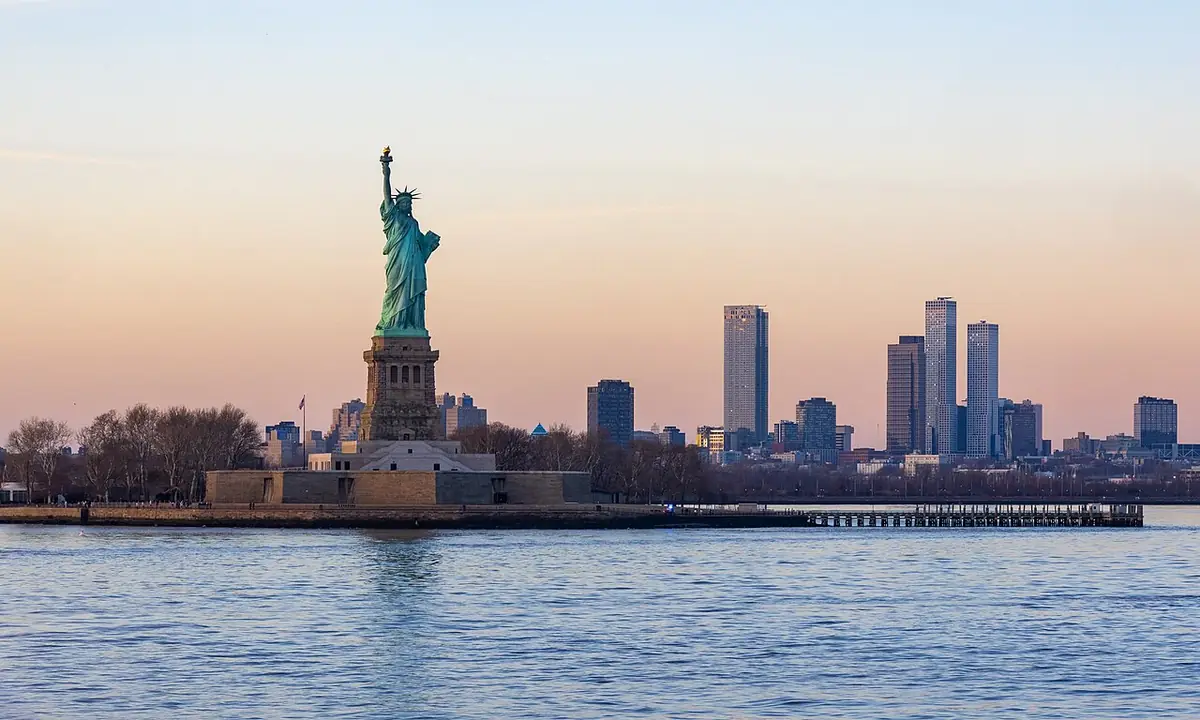
The city's most famous view, Liberty and the skyline together at dusk — Photo: Dillan Payne · CC BY-SA 4.0 · Wikimedia Commons
Once these cultural differences have sunk in, the choice of neighbourhood becomes the most decisive decision for your investment.
Moving to New York as a property buyer unsettles the reference points you built up elsewhere, whether that means the legal structure of ownership, construction standards or your relationship with the neighbours. Ideas of comfort, warranty and responsibility do not rest on the same cultural and legal foundations. Anticipating these gaps prevents you from misjudging what you see on a viewing and misreading the purchase documents, which are often far more complex than the ones you are used to.
From abroad
Strong statutory protection for tenants and owners under a civil code
New York
Very strict American contract law based on case law and local rules
Every clause in the purchase contract or the building's governing documents has to be read with extreme care, because the law does less to protect a buyer from their own omissions than you may be used to.
From abroad
Thermal and acoustic insulation standardised by strict and recent regulations
New York
An often older housing stock built to a variety of historic construction standards
The cost of heating and air conditioning can surprise a buyer accustomed to modern energy standards, and often calls for upgrade work.
From abroad
Building service charges that are regulated and predictable in shared blocks
New York
No building service charges at all on a single-family house, but very high property taxes
You look after your own roof and your own pipes, with no shared reserve fund, while paying a local property tax pegged to the city's assessed value.
From abroad
Systematic use of a single neutral public notary to secure the transaction
New York
Real estate attorneys acting for each party in the transaction
The system is adversarial: your attorney defends your interests alone, facing the seller's attorney, so you need a clear understanding of that role and of the fees involved.
Which New York neighbourhood should you target, given your priorities?
The choice of neighbourhood bears directly on the price structure and on the overall budget you will need to put together.
The geography of New York is not confined to Manhattan: the great majority of single-family houses sit in the outer boroughs, notably Brooklyn, Queens and Staten Island. Each area has its own identity, its own journey times to the business districts and its own level of gentrification. Weighing the trade-off between transport access, residential calm and long-term potential for appreciation is essential before you put in an offer.
Park Slope and Carroll Gardens (Brooklyn)
A sophisticated village atmosphere with leafy parks, independent cafes and a strong community of families.
Suits
Buyers looking for the ideal compromise between lively neighbourhood life, excellent schools and direct access to Manhattan in under thirty minutes.
Trade-off
An extremely competitive market where good properties are becoming scarce and reach some of the highest valuations in the city.
Astoria and Sunnyside (Queens)
A multicultural energy marked by a rich food scene, peaceful residential streets and a strong community spirit.
Suits
First-time buyers and working households looking for more affordable floor area while staying connected to the express subway network.
Trade-off
A more mixed architectural fabric and occasional noise from the elevated subway lines or from being close to the bridges.
Riverdale (Bronx)
A hilly green retreat with the feel of a comfortable residential suburb, looking out over the Hudson River with large wooded spaces.
Suits
Those who insist on large gardens, absolute quiet and prestigious homes while technically staying within the limits of New York.
Trade-off
A noticeable distance from central Manhattan and greater dependence on the commuter rail lines (Metro-North) or on buses.
What does buying a house in New York really cost?
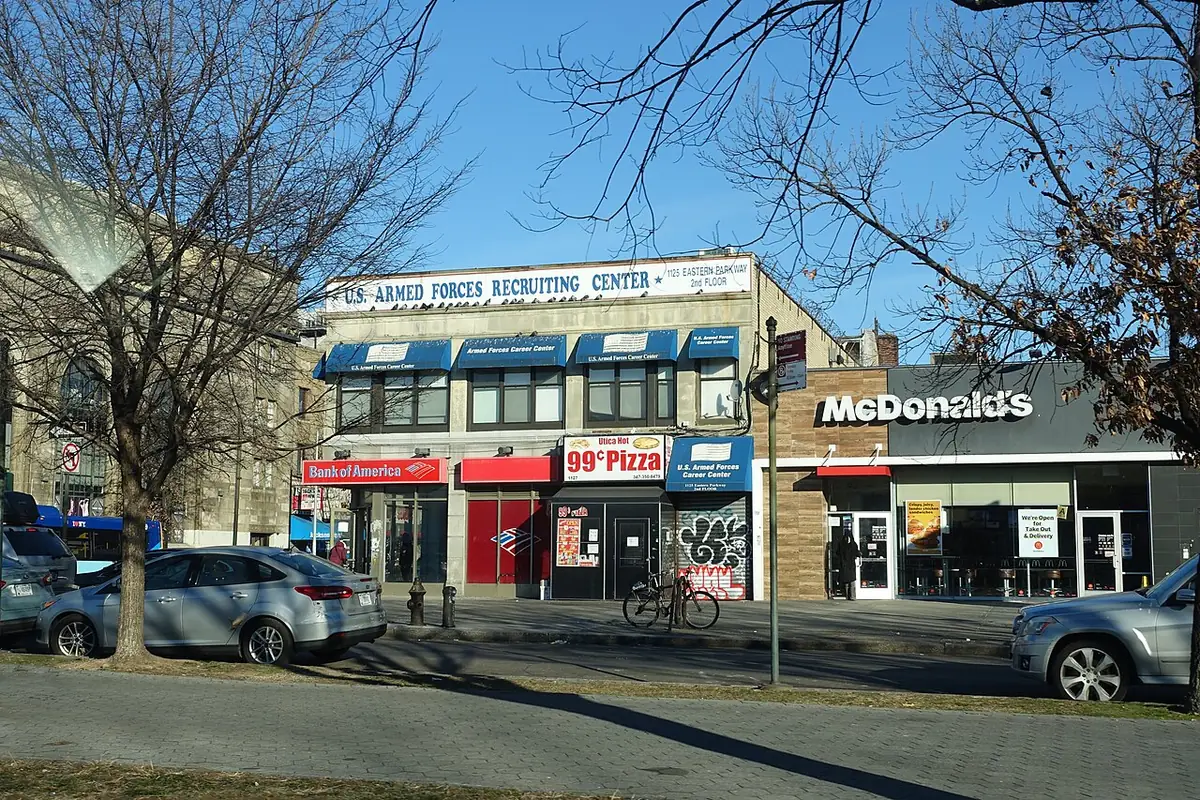
Avenues like this carry the daily mix of shops New Yorkers rely on — Photo: Tdorante10 · CC BY-SA 4.0 · Wikimedia Commons
Beyond the financial capacity, the legal structure of ownership sets strict limits on what you can actually own.
The New York property market is characterised by an extreme spread of prices depending on the borough, the condition of the property and how close it is to public transport. There is no meaningful average price across the whole city, but rather a set of tightly separated micro-markets. Beyond the headline purchase price, a buyer absolutely must budget for transaction costs, local taxes and a provision for bringing the property up to standard, which is often unavoidable in older stock.
new-yorkFor saleHouseestimate
Median price / m²US$7,790Half the apartments sell below this
Median priceUS$1.15mthe average is 14% higher — a few very large properties pull it up
Most common2 bedrooms55 % of listings
Average size140 m²
By number of bedrooms
Bedrooms
Share of market
Avg price
Price / m²
Avg size
2most common
55 %
US$1.09m
US$8,200
133 m²
3
33 %
US$1.4m
US$7,790best value / m²
180 m²
4
12 %
US$2.12m
US$8,200
259 m²
Each row is an average, compared against the area average of US$8,200 / m². These are indicative estimates of a typical local market, not a measured sample of live listings. Check current listings before relying on them.
What you can actually hold: outright ownership versus shared ownership
This grasp of the legal framework leads straight into the critical stages of the buying process, where every procedural detail counts.
The legal structure of ownership in New York determines how much autonomy you have and which administrative constraints you will face day to day. Where in many countries the line between a shared building and a single-family house is clear, the American system introduces complex legal subtleties, notably the forms of ownership known as condo, co-op and fee simple for independent houses. Understanding these statuses spares you disappointment at resale or when you plan alterations.
You own both the building and the land it stands on, with no board and no approval from co-owners for work on the exterior. This form of ownership offers maximum freedom, close to the classic detached house model, but it leaves you alone with the whole of the structural risk and the heavy maintenance.
What it changesYou decide on every intervention and carry 100% of the renovation costs, while taking the full benefit of any land value gain at resale.
Collective structures and association rules (HOA and planned communities)
Some groups of single-family houses in gated developments or horizontal condominium schemes operate under a homeowners association (HOA). It imposes strict rules on the exterior appearance of the houses, paint colours, parking and landscaping, in exchange for shared management of the common areas and the roads.
What it changesYou gain the peace of mind of shared upkeep, but you lose part of your aesthetic sovereignty and pay monthly dues you cannot avoid.
The rule to understand before you put a deposit down on a property
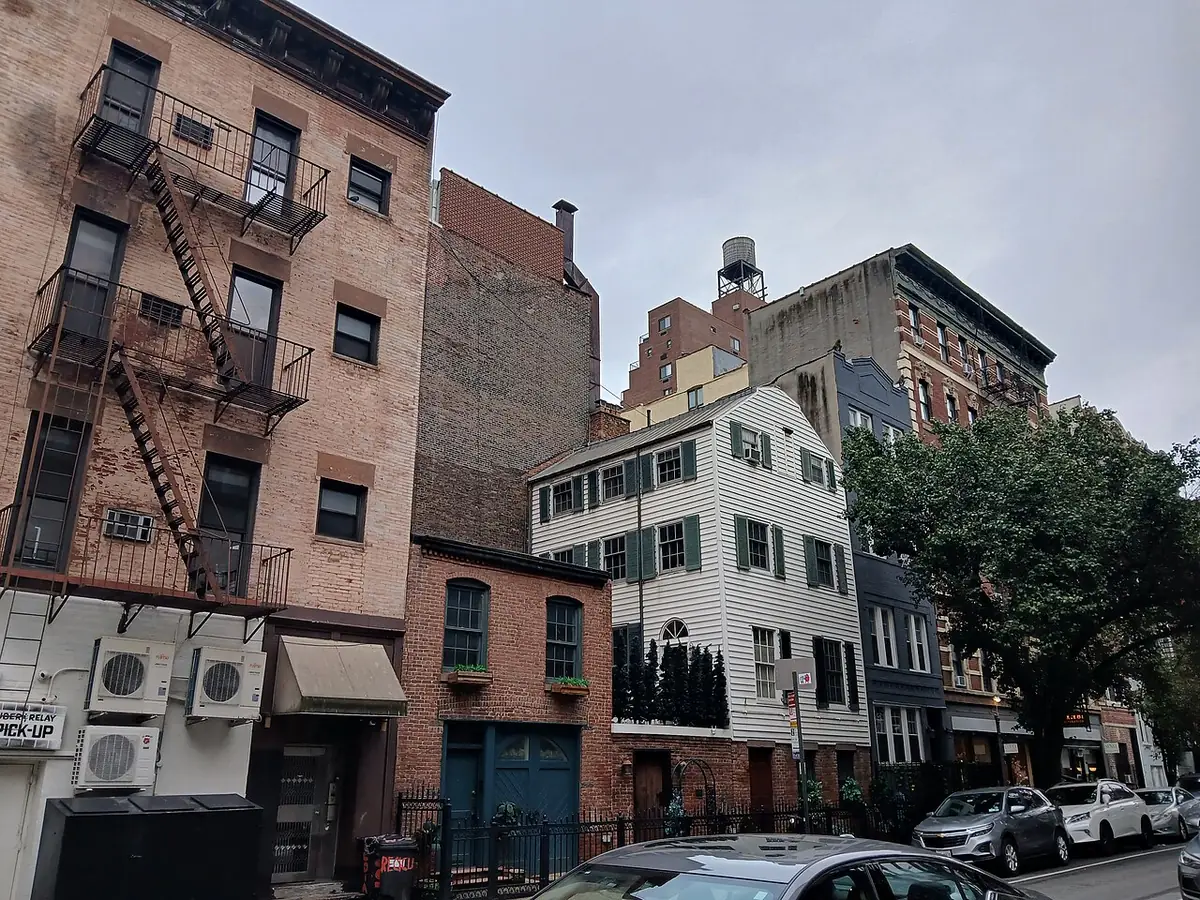
Fire escapes and brick walk-ups like these define classic New York blocks — Photo: Epicgenius · CC BY-SA 4.0 · Wikimedia Commons
Once these legal rules have been absorbed, the next step is to map out exactly how a property transaction unfolds over time.
Buying property in New York involves contractual subtleties that regularly surprise international buyers. Unlike jurisdictions where an accepted offer quickly binds both parties, the American system rests on a rigorous exchange of contracts overseen by attorneys. Until the contract has been signed by both sides and the deposit is held in escrow, the seller legally keeps the right to sell to another buyer who bids higher.
Viewing the property and making an initial verbal offer through your agent.
Formal acceptance of the offer by the seller, which marks the start of the period in which the attorneys negotiate the terms of the contract.
A thorough technical inspection of the building by an independent professional to uncover hidden defects or necessary structural work.
Careful drafting and review of the contract of sale by the buyer's attorney, so that the essential protective clauses are included.
Actual signature of the contract and simultaneous payment of the customary deposit (usually 10%) into the escrow account of the seller's attorney.
Final confirmation of the bank financing and signature of the deed of sale (the closing).
How a property transaction unfolds, step by step
Seeing a property purchase through in New York means coordinating a long list of participants with tightly defined roles: buyer's agents, advising attorneys, building inspectors and mortgage lenders. The calendar generally stretches over several months, with each phase needing rigorous sign-off before the next can begin. Knowing this sequence keeps you from being overwhelmed by the paperwork and helps you meet the deadlines sellers impose.
The buyer and their brokerAssembling the financial file and obtaining pre-approval from a bankNo serious offer can be submitted without a pre-approval letter issued by a financial institution recognised on the American market.
The building inspectorThe full technical audit of the structure and the systemsThis stage establishes the condition of the roof, the foundations, the plumbing and the electrical system, so that any price adjustment can be negotiated.
The respective attorneysNegotiating and finalising the contract of saleThe legal advisers make sure there are no liens or ongoing disputes attached to the title of the property in question.
The lenderThe independent appraisal and the processing of the loanThe bank sends a valuer to confirm that the market value of the property genuinely matches the amount of the proposed transaction.
All the parties togetherThe closing of the transaction and the transfer of fundsSignature of the final deed, public recording with the city and the formal handover of the keys to your new property.
House or apartment: weighing vertical space in New York against horizontal city living
Once that fundamental choice between vertical and horizontal has been settled, it is time to face the accounting reality of the outgoings.
Buying a house in New York is close to a mythical quest, so scarce and fiercely contested is horizontal space, particularly in the historic enclaves of Brooklyn such as Park Slope or in preserved sections of Queens and Staten Island. Opting for a detached house or an attached brownstone means accepting the whole structural burden, from the roof to the brown stone foundations, without the safety net of a board or a doorman to take in the deliveries. That is the price of architectural independence in a vertical city where every square metre of land is negotiated dearly, and in exchange you get a private garden and nobody at all living directly above your ceiling.
Conversely, the apartment held as a condominium (condo) or a cooperative (co-op) is the dominant form of housing and sits smoothly within the fabric of New York, concentrated along the main axes of Manhattan and in the neighbourhoods densifying fastest. Choosing an apartment means submitting to board rules that can be draconian, notably on strict financial ratios and permission for alterations, but it hands the upkeep of the common areas, the management of security and the maintenance of the heavy equipment to a professional structure. It is the pragmatic answer for anyone wanting to settle quickly into the working life of the city without the logistical grief of a slate roof that leaks on a winter storm night.
The financial trade-off between the two options goes well beyond the headline price per square metre quoted at the first viewing. An older house in New York often holds structural surprises tied to its age, calling for considerable electrical and plumbing upgrades that can quickly add tens of thousands of dollars to the initial budget. On the other hand, the monthly charges demanded in buildings with a lift and a doorman (common charges or maintenance fees) accumulate over the years, forming a recurring outflow that, compounded over a decade, sometimes equals the cost of building an extension on a house.
Your daily way of living largely dictates whether your property choice will hold up over the long run in the New York urban jungle. If you work unusual hours, own two family vehicles and long for absolute quiet at the weekend, the house in a residential suburb or an outer neighbourhood makes its own case, despite the longer journeys by public transport. If instead your days are paced by impromptu meetings in Manhattan, late dinners in the restaurants of the Lower East Side and exclusive use of subway lines running around the clock, an apartment in the middle of the action remains the only option consistent with your rhythm.
Ultimately, buying property in New York is not only a wealth allocation or a tax shelter: it is the adoption of a system of constraints and freedoms that you need to accept with your eyes open. The buyers who make the transition successfully are the ones who assess coolly how much compromise they can tolerate: accepting the narrow staircases and the high charges of a Manhattan co-op for the immediate proximity of Central Park, or agreeing to an hour of morning commuting in return for the silence of a wooden porch and a square of lawn in Prospect Park South.
What budget do you really need to plan for the cost of daily life in New York?
With this financial picture in place, the next thing to understand is how a typical day in this vast city is actually organised.
Drawing up a working budget for settling in New York for the long term means allowing for recurring costs that buyers arriving from elsewhere routinely underestimate. Beyond the mortgage repayment and the local property taxes, the expense of basic services, food and transport turns every month into an exercise in rigorous management. The tables below set out the ranges observed for the essential items of New York life, reflecting the economic reality of the current year without marketing gloss.
Unavoidable outgoings and fixed monthly charges for a resident household
Item of expenditure
Low end (USD)
High end (USD)
Context
Property tax
600
2,500
Varies with the borough, the type of property and the local tax reductions available.
Common charges or maintenance fees
800
3,500
Climbs steeply in buildings with plenty of services such as a gym, a doorman and a roof terrace.
Home insurance (homeowners or condo)
50
200
The annual premium spread monthly, covering the specific risks of flood zones or coastal storms.
Public transport pass (MetroCard or OMNY)
132
264
Budget for one or two working adults using the MTA network daily to reach Manhattan.
These amounts leave out the mortgage payments themselves, which depend entirely on your down payment and on the interest rate you negotiate.
Everyday spending and personal services
Category
Estimated monthly cost
Factors that shift the figure
Food and neighbourhood markets
$600 - $1,200
Varies considerably depending on whether you favour specialist organic shops or the large discount supermarkets.
Energy (electricity and natural gas)
$150 - $450
A considerable peak in summer with heavy air conditioning use, and in winter for heating in older, poorly insulated buildings.
Telecoms and high-speed internet
$90 - $180
Local monopolies limit competition on fibre offers and family mobile bundles.
Health and pharmacy (excluding your main insurance)
$200 - $600
Copayments and compulsory medical deductibles remain payable even with good coverage.
Always allow a safety margin of 15% on these estimates to absorb local inflation and unexpected rises in municipal charges.
What does an ordinary Tuesday in the New York routine actually look like?
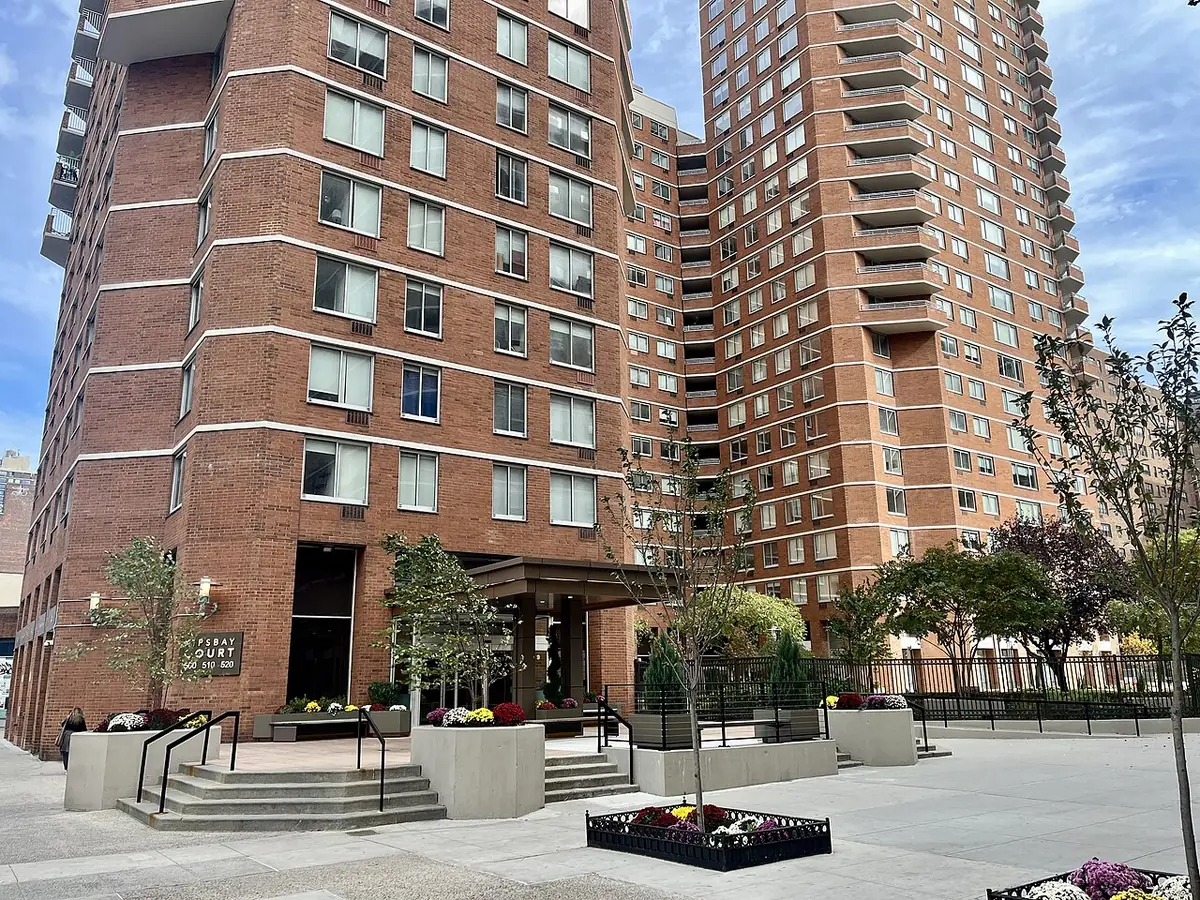
Tower complexes like this are a major part of the city's housing stock — Photo: Transpoman · CC BY-SA 4.0 · Wikimedia Commons
Behind that apparent smoothness sit regulatory and technical matters that ordinary viewings consistently leave out.
To gauge whether a purchase fits the life you will lead, nothing beats walking through an ordinary Tuesday hour by hour, far from the tourist postcards. Journey times, dealing with local services, access to schools and the reality of traffic flows redefine what comfort means day to day. Each stage of this typical day highlights the small decisions that shape the balance of a household settled in New York, and reveals the true nature of the location you have chosen.
07:15Residential neighbourhood (leaving home)An early start to avoid crowded pavements and to drop the children at the local school before the bell.
08:05Local MTA subway stationDown to the platform for a train that is often packed, hoping there are no technical incidents on the main line.
09:00Office or coworking space in ManhattanArrival at work after a journey of 35 to 50 minutes, marking the real start of the working day.
12:30Neighbourhood deli or a quick lunch breakPicking up lunch on the go at a local shop, paced by speed of service and city prices.
18:30Supermarket or local delicatessenA last-minute shop for dinner, taking advantage of the fresh produce counters before they close for the evening.
20:00Home again, and dealing with building mattersGoing through the post, reading the notices from the building's managing agent and getting the logistics of tomorrow in order.
What the agency brochures deliberately leave out
These administrative and technical blind spots often carry through into the regrets newcomers voice six months after moving in.
The business of selling property in New York rests on aggressive visual presentation that smooths away the technical and financial rough edges inherent in the local building stock. Wide-angle photographs and flattering descriptions mask structural realities that weigh heavily on resale value and on the daily comfort of the occupants. Decoding these invisible elements is essential if your emotional investment is not to become an unforeseen money pit in the very first year.
Special assessments for building works
On top of your regular monthly charges, the board can vote a special assessment of tens of thousands of dollars per owner to fund a facade restoration or the replacement of the boilers. Overlooking that liability when you buy exposes you to an immediate bill you will have no way to contest.
The true condition of the underground infrastructure and the foundations
Many older buildings suffer from advanced corrosion in their sewer and drinking water pipes. A thorough technical audit (an engineering report) is essential in order to anticipate the full replacement of the vertical plumbing, which often falls to the whole building.
Municipal energy regulations (Local Law 97)
The City of New York now penalises energy-hungry buildings that emit too much greenhouse gas. Older, unrenovated buildings will face enormous fines passed straight through to residents' charges, reducing both the appeal and the resale value of the property.
Strict restrictions on short-term rentals
New York law prohibits Airbnb-style letting for stays of under 30 days without the owner being present at the same time. Counting on that supplementary rental income to make your mortgage budget work is a direct breach of the law and carries heavy financial penalties.
The disappointments people discover six months after signing the deed
Faced with these structural and psychological risks, it is worth asking who should turn back.
Looked likeA bohemian, fashionable neighbourhood in full gentrification with an independent cafe on every corner.
Turned outAn area that is permanently noisy, overrun by delivery trucks from dawn and short of basic services such as a pharmacy open at night.
Would have caught itVisiting the streets around the property at three different times of the week, notably a Friday at 11pm and a Sunday at 7am.
Looked likeA bright top-floor apartment with an open view over the red brick rooftops.
Turned outAn unbearable furnace in summer under a poorly insulated roof, and repeated breakdowns of the building's single ageing lift.
Would have caught itInsisting on the full service history of the lift and checking the rated capacity of any air conditioning system you could install.
Looked likeA welcoming, self-managed building with unusually low monthly charges.
Turned outA completely empty reserve fund and a board paralysed by neighbour disputes that blocked every urgent renovation decision.
Would have caught itGoing carefully through the minutes of the last three years of general meetings to spot the hidden tensions.
Looked likeA reasonable journey time to the Manhattan business district on a direct line.
Turned outVast works on the local subway line scheduled to last five years, turning the daily journey into a misery of bus connections.
Would have caught itChecking the official works alerts from the Metropolitan Transportation Authority (MTA) before signing anything.
The buyer profiles that are making a mistake by investing in New York
If you have come through all these stages without recognising yourself in these risk profiles, it is time to conclude on how prepared you are.
Getting onto the property ladder in New York is often presented as the supreme conclusion of a housing journey, a doctrine to be followed blindly. Yet the economic and tax structure of the city makes buying disastrous for certain households, who would gain far more from the flexibility of a long-term rental. Looking at these counter-examples spares you a major error of allocation that is hard to escape without real losses.
The mobile professional whose international career can move from one city to another in under three years
→A quick purchase of a studio or a small one-bedroom so as not to 'throw money away on rent'
Transaction costs on buying and reselling in New York easily reach 6% to 9% of the price of the property, notably because of the transfer taxes and the mansion tax. Selling again after thirty-six months mathematically guarantees a net financial loss, since the market has not had time to absorb costs on that scale.
The household whose budget is calibrated to the last dollar and which has no emergency savings after the purchase
→Committing to a property that needs renovation while relying solely on current income
The slightest technical failure or rise in building charges tips the household straight into default. In the New York system, unpaid charges quickly lead to fast-moving enforcement proceedings by the board.
The investor looking for an immediate, high net rental yield
→Buying an apartment in a high-end building with a doorman and premium services
Exorbitant building charges and voracious property taxes absorb almost all of the gross rental income generated. New York is a market for preserving capital and appreciating over the very long term, never an El Dorado of immediate rental cash flow.
So, are you objectively ready to take the step and buy in New York?
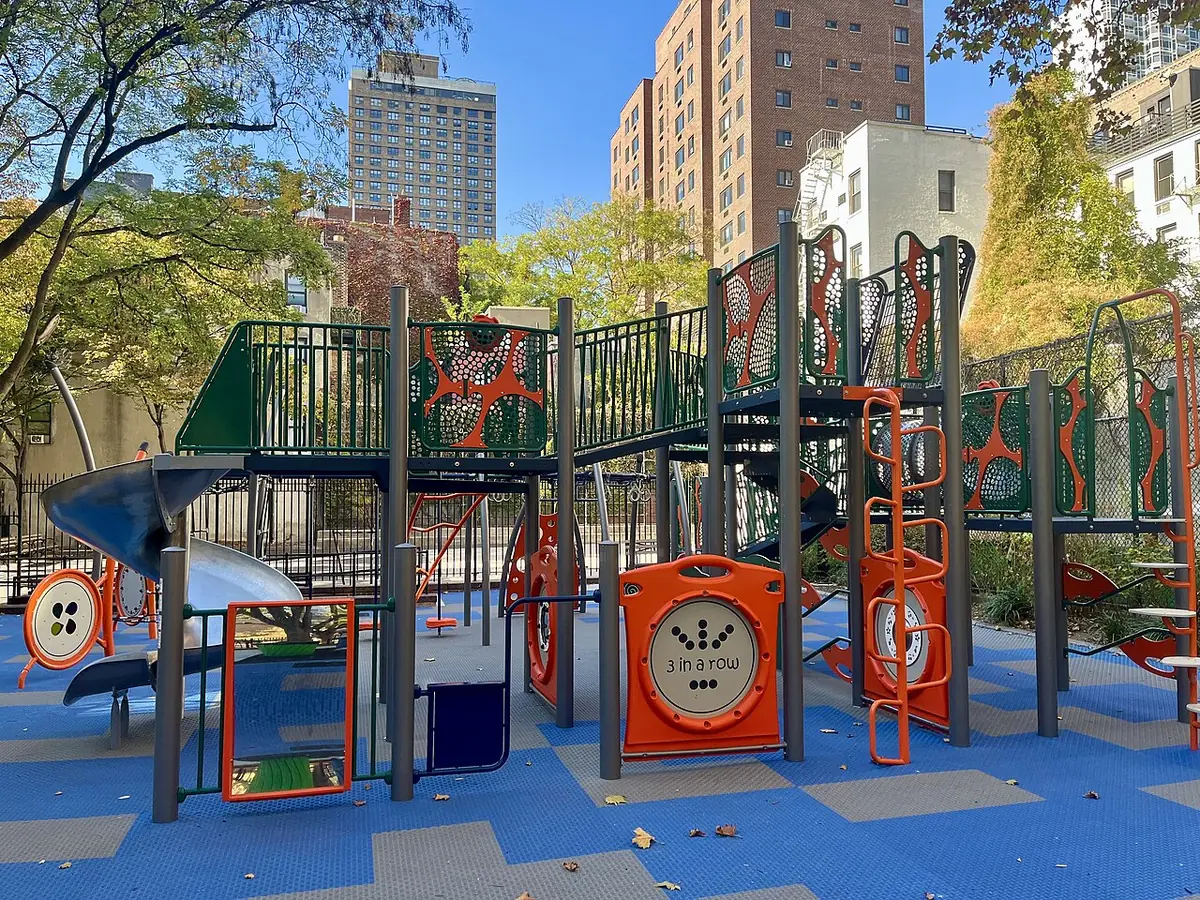
Playgrounds tucked between buildings like this are part of everyday city life — Photo: Transpoman · CC BY-SA 4.0 · Wikimedia Commons
Deciding to buy property in New York means giving up the illusion of absolute certainty and embracing a reality that is complex, demanding and heavily regulated. If you have accepted that your first purchase will not be the perfect home of your dreams but an intelligent compromise between location, floor area and financial constraints, you have the psychological maturity you need to succeed in this city. Property here forgives neither improvisation nor financial wishful thinking, but it rewards the rigour of those who study a building's accounts as attentively as they study the view from the living room.
Your ability to ride out the regulatory storms, whether that means the draconian requirements of a co-op board or the new municipal environmental laws, depends entirely on the strength of your savings cushion. A well-prepared buyer always keeps the equivalent of twelve months of charges and mortgage payments in a secure account, entirely separate from the down payment. It is that invisible reserve which turns potential stress into a manageable administrative nuisance when a boiler fails badly or an unforeseen assessment lands.
You also need to take on board that putting down roots in New York through property is a long-term commitment, designed to pay for itself over seven to ten years at the very least. Local property cycles go through phases of stagnation and abrupt correction that nobody can time precisely; only time smooths out the swings of the cycle and absorbs the upfront transfer costs. If your personal or professional horizon is shorter than that, a well-negotiated lease remains by far the more rational and protective strategy for your finances.
In the end, becoming an owner in New York is as much an existential act as an economic one, a way of anchoring your life in the fabric of a city that never stops. If, having read these lines, you feel not anxiety but a methodical clarity about the checks to run and the trade-offs to accept, then you are ready to walk through the door of a New York real estate attorney's office. Get your calculators out, insist on certified accounts, and approach every viewing with the critical eye of a clear-headed investor rather than the racing heart of a naive buyer.
Related questions
Can a foreign buyer purchase property in New York easily?
Yes. New York law imposes no nationality restriction on buying property. Foreign buyers do, however, face extremely strict source-of-funds checks from the banks and are often asked for a larger down payment, generally somewhere between 40% and 50% of the purchase price.
What is the fundamental difference between a condo and a co-op in New York?
Buying a condominium (condo) gives you a conventional real property title with a deed of full ownership, while buying into a cooperative (co-op) means acquiring shares in the corporation that owns the building, together with a proprietary lease. Co-ops make up roughly 75% of the Manhattan market and apply far tougher financial admission criteria than condos.
What closing costs and additional taxes should you budget for when buying in New York?
Transaction costs on a purchase are traditionally borne in large part by the buyer and generally represent between 2% and 5% of the purchase price for a condo, including the state and city transfer taxes as well as the fees of the real estate attorney, whose role is filled in many other countries by a notary.
Do you have to use a lawyer to buy an apartment in New York?
Unlike jurisdictions where a notary handles the deed centrally, the legal system of New York State requires a real estate attorney for each side, to draft and negotiate the contract of sale, run the title searches and secure the transaction.
How do monthly charges work in New York buildings?
In a condo they are called common charges, and they cover upkeep of the shared areas and the building staff. In a co-op they are called maintenance fees, and they additionally include your share of the building's overall property tax and of the repayment of the building's underlying mortgage, where one exists.
Can you rent your apartment on Airbnb as an owner in New York?
New York State law expressly prohibits short-term furnished rentals of under 30 days in multiple dwellings, unless the owner is living in the home throughout the stay. On top of that, building house rules almost always ban short-term subletting outright.
How long does it usually take from accepted offer to final signing in New York?
The full process generally takes between 60 and 90 days. It covers negotiating and signing the contract of sale (roughly 2 to 4 weeks), assembling the financing file and getting the bank's approval (30 to 45 days) and, in the case of a co-op, obtaining the board's consent after a formal interview.
What is the 'board package' in a New York property purchase?
It is an exhaustive and highly intrusive application file demanded by cooperative boards. It contains personal and professional reference letters, the last two years of tax returns, detailed bank statements and complete transparency on all of the buyer's assets and liabilities.
Are property taxes negotiable, and can they rise quickly?
Property taxes are calculated by the City of New York on an assessed value, not on the price you actually paid. They rise regularly by decision of the Department of Finance and cannot be negotiated individually, although certain tax reductions exist for primary residences (the STAR program).
Is it better to buy an older property or new construction in New York?
Older stock offers architectural character that is hard to match, generous ceiling heights and often central locations, but frequently needs a renovation budget. New construction guarantees modern energy performance and fittings built to current standards, but sells at a clearly higher price per square metre and sometimes carries a risk of defects in the first few years.