Renting a house in New York transforms your experience of the city, but it demands methodical preparation in the face of a complex and unforgiving market. This guide breaks down the financial realities, the character of individual neighbourhoods and the administrative traps to avoid, so you can unpack your bags with your eyes open. Set aside the romantic cliches and look instead at the concrete mechanics that govern renting in New York City.
Get the app
What nobody tells you.
Real prices, hidden costs and the traps to check before you commit.
Renting a house in New York: the promise of space against the reality of the market
Scroll
Renting a house in New York: the promise of space against the reality of the market
Renting a house in New York transforms your experience of the city, but it demands methodical preparation in the face of a complex and unforgiving market. This guide breaks down the financial realities, the character of individual neighbourhoods and the administrative traps to avoid, so you can unpack your bags with your eyes open. Set aside the romantic cliches and look instead at the concrete mechanics that govern renting in New York City.
Written by the ting.ad editorial team ·
Park Avenue, New York in Street View: drag to look around.
Renting a house in New York is a very different search from hunting for a standard apartment, because it means juggling scarce supply against very large expectations. In a city where every square metre is fought over, finding a self-contained home changes your daily life, but it requires complete clarity about the financial and logistical trade-offs. Listings often promise a haven of calm away from the urban churn, while the operational reality demands a careful reading of neighbourhoods and hidden costs. Before you sign any lease, it is worth understanding what really sits behind those red brick facades and historic brownstones. Our analysis unpacks the paradoxes of this market so you can decide with clear eyes, far from the romantic cliches of television.
The illusion of a peaceful neighbourhood lifevsThe reality of noise and permanent construction work
Even on the quietest residential streets of Brooklyn or Queens, renovation sites and the passage of city services are a constant reminder that you are in one of the densest cities on the planet.
The promise of generous living spacevsThe demanding upkeep of often old building stock
Rented houses do offer real volume, but their older structure requires constant attention to heating, insulation and plumbing, frequently handled by the tenant under the terms of the lease.
The apparent independence of a standalone homevsThe strict constraints of homeowner associations and neighbourhood rules
Renting a house does not mean doing as you please: neighbourhood associations and strict city regulations govern the smallest exterior change and the upkeep of the grounds.
The myth of easy, free parkingvsThe daily, costly business of New York kerbside parking
A garage or a private space is a rare luxury; most of the time you will be working around alternate side street cleaning and the obsessive hunt for a spot.
Does this kind of home really match how you live in New York?
Choosing a house in New York is not only a question of budget but of a deep fit between how your days are organised and how the city is laid out. Depending on whether you work remotely, are raising children or rely on public transport to reach Manhattan, the renting experience differs completely. Poorly matched tenants quickly find themselves isolated or worn down by disproportionate commutes, while those who targeted the right area enjoy a quality of life that is hard to match. We have set out several typical profiles to help you place your own search and anticipate the inevitable friction with the local environment. Take the time to work through these paths before you start viewing, because the wrong geographic choice is paid for dearly in fatigue and transport costs.
The remote worker looking for floor space
Renting a house offers the rare chance in New York to set aside a whole room as an office, away from the corridor noise of a multi-unit building. Do check the quality of the broadband connection and the sound insulation from the street, though, because traffic noise can disrupt your work calls. This way of living suits outlying residential neighbourhoods where rent per square metre is a little kinder, letting you gain precious space.
The family with school-age children
Access to a private yard or garden changes the parenting experience in New York, providing an essential decompression space after school. In exchange, you must factor in the public school districts, which determine where your children study, along with proximity to parks and leisure facilities. Houses in areas with good schools carry markedly higher rents and fierce competition between applicants.
The working professional at the heart of the action
If your days are dictated by demanding hours and late meetings in midtown or downtown Manhattan, renting a house far out can quickly become a logistical nightmare despite its charm. The few houses available in Manhattan itself or in the best-connected parts of the neighbouring boroughs demand enormous budgets and often come with rigorous building or association rules. This choice suits people whose income can absorb the premium attached to location and who value prestige over raw floor area.
The newcomer discovering the American market
For a new arrival, renting a house is a formidable administrative obstacle course, with landlords demanding heavy financial guarantees and a local credit history you almost certainly do not have. You will need to compensate for that missing file with months of rent paid in advance or substantial bank guarantees, while navigating a complex body of rental law that varies by state and by city. Expect to lean on professionals so you do not make a legal misstep when the lease is drawn up.
Living here when you arrive from abroad: what changes radically in your daily life
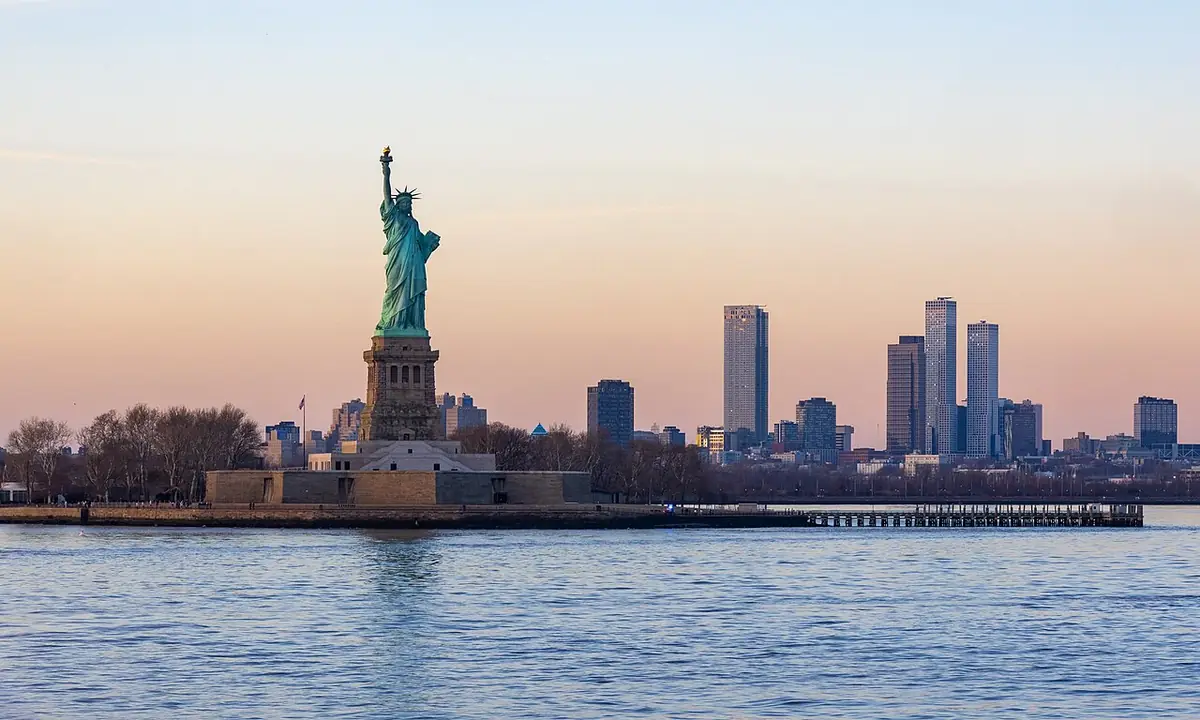
The city's most famous view, Liberty and the skyline together at dusk — Photo: Dillan Payne · CC BY-SA 4.0 · Wikimedia Commons
Moving countries brings plenty of cultural and practical surprises to tenants used to a protective, heavily regulated rental market. Between disconcerting affordability tests, leases with strict clauses and a completely different relationship with the landlord, the familiar landmarks fall away from the first steps. In many countries the law strongly protects a sitting tenant and tightly frames rent increases and notice conditions. In New York, rental law leans much further towards the landlord's freedom of contract, which translates into extraordinary financial guarantee requirements and maintenance duties often transferred to the occupant. Understanding these structural differences is the best defence against the financial shocks and cultural misreadings that await any new arrival.
From abroad
Tight rent control and protective termination procedures
New York
Almost total freedom of contract for the landlord, with annual renewable leases
You have to anticipate a potential rent reset every year and watch the conditions under which the lease may not be renewed, because the landlord has far wider legal room to manoeuvre. Rent stabilised homes are the exception rather than the rule.
From abroad
Rental applications built on payslips and a guarantee from parents or an institution
New York
An absolute creditworthiness test measured by the American credit score, plus substantial cash in the bank
If you arrive from abroad with no US credit history, prepare to lock up the equivalent of several months of rent in an escrow account or to provide extensive proof of assets.
From abroad
The landlord carrying major works and bringing the home up to energy standards
New York
Routine maintenance and running costs frequently passed to the tenant of a house
Check precisely in the lease who pays for repairing the boiler, servicing the air conditioning and clearing snow from the property, because those costs add up fast on top of the monthly budget.
From abroad
Moderate agency fees, strictly capped by law for the tenant
New York
Broker and letting fees that can be very steep and are left to the tenant
Agency commission can amount to a month's rent, or a significant share of the annual rent, which weighs heavily on the money you need up front.
Which neighbourhood should you target to find the right balance?
The neighbourhood you choose determines whether your move to New York succeeds far more than the floor area of your future house. Between the historic charm of century-old brownstones, the artistic energy of changing districts and the residential calm of leafier areas still inside the city, each part of town has its own identity and its own transport constraints. Journey times to the main business districts, the density of local shops and the feel of the streets are all criteria to weigh against your family and working situation. The cards below compare the most sought-after options to guide your geographic choice, highlighting what daily life actually feels like in these different corners of the city.
Park Slope, Brooklyn
A leafy family village lined with superb Victorian houses and paved streets, where you pass strollers by the hundred and independent food shops on every block.
Suits
Families with children looking for a safe setting, excellent local schools and immediate access to the magnificent Prospect Park.
Trade-off
Rents among the highest in the outer boroughs and fierce competition for anything that comes on the market.
Astoria, Queens
A cosmopolitan, energetic neighbourhood where a Mediterranean atmosphere meets New York drive, paced by cafe terraces and busy local markets.
Suits
Young professionals and couples who want a slightly more reasonable rent while staying under twenty minutes by subway from Manhattan.
Trade-off
A smaller stock of standalone houses, dominated by attached homes, and particularly difficult on-street parking.
Riverdale, Bronx
A residential enclave on the heights of the Bronx, marked by large houses surrounded by trees, offering complete quiet and spectacular views over the Hudson.
Suits
Those who need genuine private green space, large rooms and the deep calm of a well-off suburb while remaining inside the city limits.
Trade-off
Relative isolation from the busy centre of Manhattan and noticeably longer daily journeys to reach the business hubs.
Staten Island (Historic Richmondtown)
The illusion of a small American town, with open space, generous private gardens and a rural atmosphere you would not expect to find in New York.
Suits
Lovers of open space, complete tranquillity and houses with real land, working to a measured budget compared with the other boroughs.
Trade-off
Total dependence on the ferry or on tolled bridges to reach the rest of the city, turning every trip into a logistical expedition.
What does renting a house in New York actually cost?
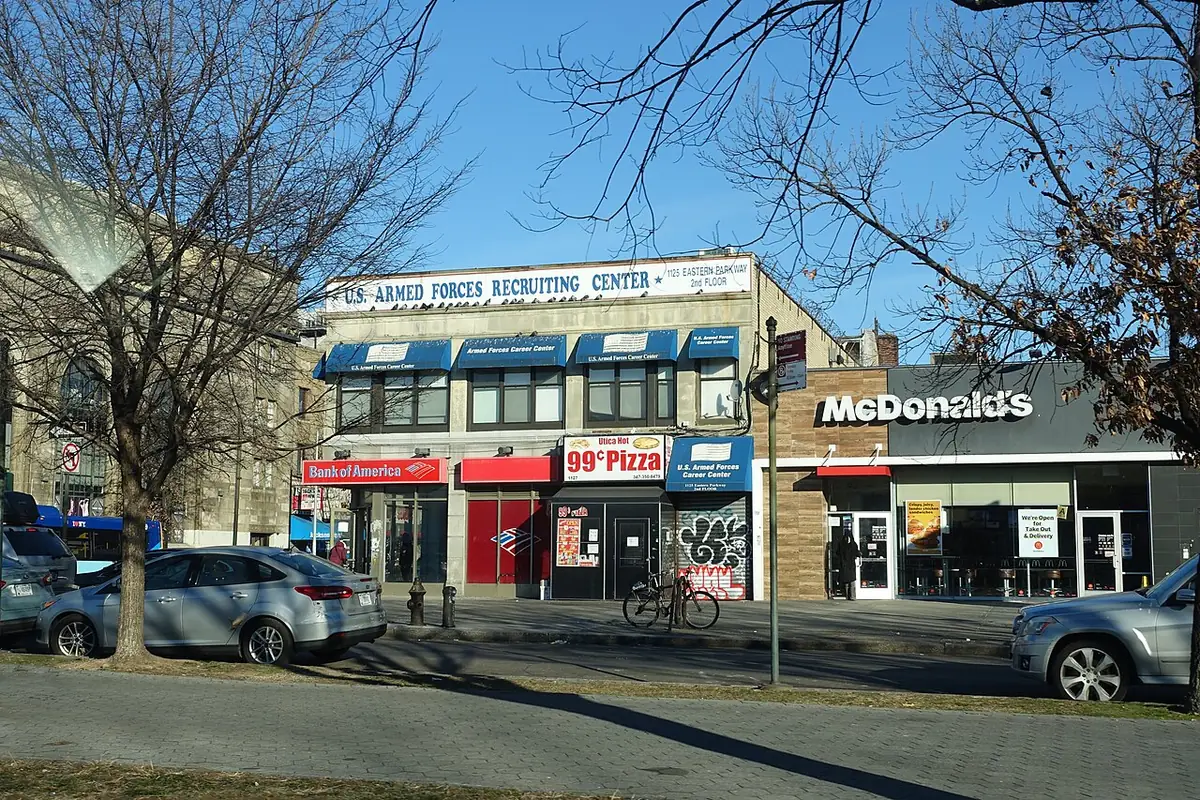
Avenues like this carry the daily mix of shops New Yorkers rely on — Photo: Tdorante10 · CC BY-SA 4.0 · Wikimedia Commons
Beyond the advertised rents, the full cost of settling in has to include every compulsory additional charge.
Approaching the money side of renting in New York calls for real rigour, because the advertised rent is never more than the visible tip of the budget. On top of the base monthly payment come local taxes, sometimes considerable broker fees, specific insurance policies and energy bills that are often high given the variable insulation of older houses. The tables below summarise the orders of magnitude seen in the current market so you can calibrate your financing plan transparently. Never forget that in the United States landlords require your gross annual income to be at least forty times the monthly rent, an inescapable arithmetic rule that filters access to properties.
new-yorkTo rentHouseestimate
Median price / m²US$37Half the apartments sell below this
Median priceUS$5.51kthe average is 14% higher — a few very large properties pull it up
Most common2 bedrooms55 % of listings
Average size140 m²
By number of bedrooms
Bedrooms
Share of market
Avg price
Price / m²
Avg size
2most common
55 %
US$5.23k
US$39
133 m²
3
33 %
US$6.74k
US$37best value / m²
180 m²
4
12 %
US$10.2k
US$39
259 m²
Each row is an average, compared against the area average of US$39 / m². These are indicative estimates of a typical local market, not a measured sample of live listings. Check current listings before relying on them.
What you can really hold: the ownership myth against the reality of renting
The question of owning property in New York attracts every fantasy, swinging between the desire to put down roots and caution in the face of a highly speculative market. Renting a house offers valuable flexibility in a city in permanent flux, whereas buying commits you for decades with formidable property taxes. Working through this dilemma reveals the deep structure of the New York market, where renting remains the majority choice even for households on very comfortable incomes. The two competing views deserve to be laid out side by side so you can align your housing strategy with your long-term personal and professional ambitions.
Renting for the long term: flexibility in the service of agility
Renting a house in New York spares you from tying up a huge amount of capital and from carrying the risk of a sharp correction in the local property market. You stay in control of your own geographic timetable, which lets you change neighbourhood or borough if your work or family situation changes. It is the ideal way to test life in New York without chaining yourself to a crushing loan and unpredictable building charges.
What it changesYou accept paying substantial rent every month without building housing equity directly, betting that savings invested elsewhere will earn a better return.
Buying your own home: putting down roots despite the costs
Owning a house in New York protects your budget against rent inflation and lets you build on the long-run value of New York property. It is a strong statement of intent, showing a will to settle into the social fabric of the city and to pass on a tangible asset. In exchange, you take on all the risks of maintaining the building and the city property taxes that keep rising.
What it changesYou tie up a major share of your wealth and submit yourself to the demanding requirements of American banks and of local co-op and condo boards.
The golden rule to understand before you hand over any money on a lease
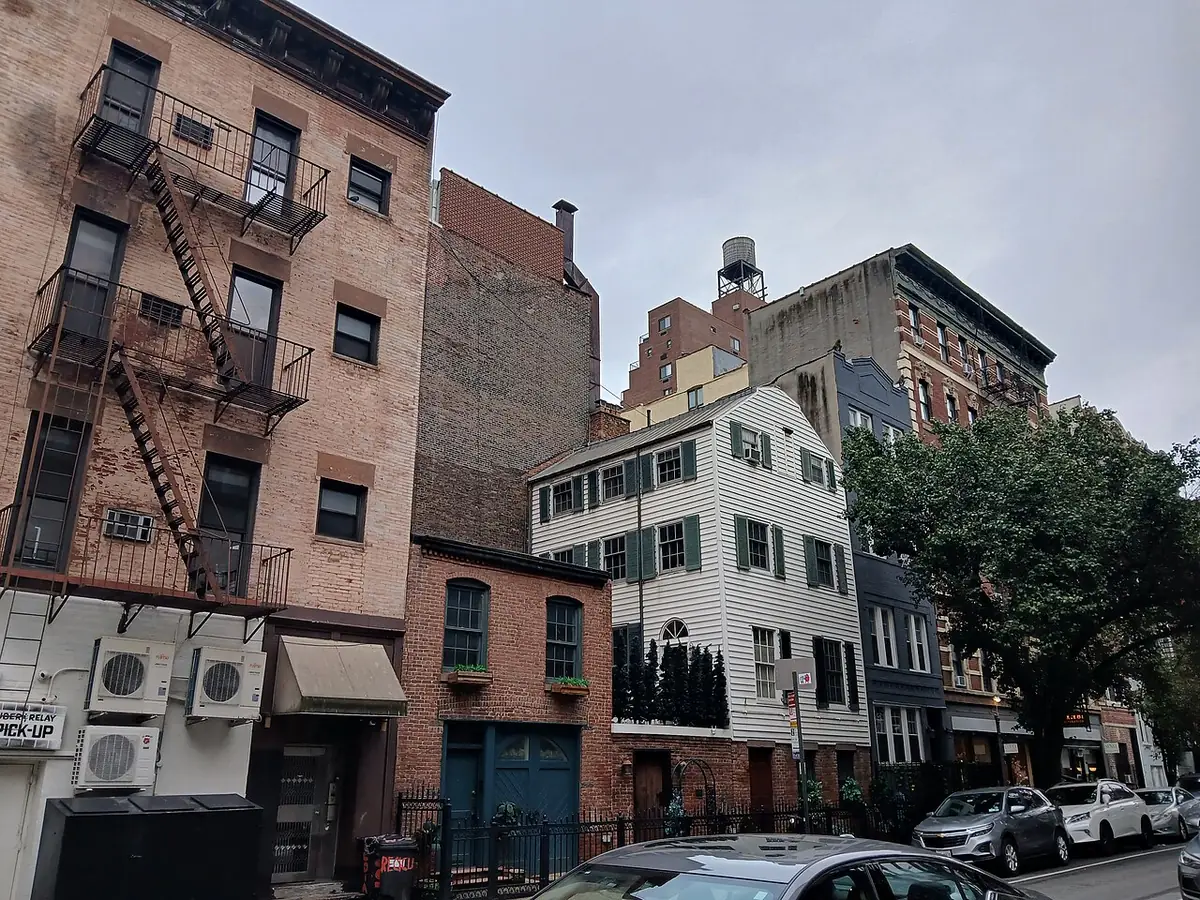
Fire escapes and brick walk-ups like these define classic New York blocks — Photo: Epicgenius · CC BY-SA 4.0 · Wikimedia Commons
Once these rules are absorbed, the process follows a precise chronological order that carries the rental through to completion.
Renting in New York follows customary and legal rules of formidable rigour that regularly catch applicants off guard. An incomplete or badly prepared file is rejected immediately in favour of a quicker competitor, because demand far outstrips supply in the sought-after segments. From the first viewing through to the handover of keys, taking in the careful reading of every lease clause, each stage is dotted with financial and administrative traps you need to identify in advance. This chain of consequences shows how a small approximation in assembling your file can ruin weeks of searching and cost you the home you wanted.
You spot a house that matches your criteria exactly in your target neighbourhood.
You submit a complete application including your tax returns, proof of income and your credit report.
The landlord or the broker runs an unforgiving financial analysis of your overall creditworthiness.
You pay an initial security deposit, often the equivalent of one to two months' rent.
You read the standard lease clauses with a critical eye, particularly on repairs and renewal.
You sign the final contract and settle the broker fee along with the first rent due.
You move into your new New York house having secured your legal and financial position.
How a New York rental proceeds, step by step
Planning the calendar of your move to New York is the key to avoiding the stress of a rushed relocation. The New York market moves at a frantic pace, with good properties taken within days or even hours of going online. To avoid being left behind, you need to structure your search and bring in the right people at the right moment. The table below sets out chronologically each actor, their precise role and the points to watch, so you can get through this period calmly.
The brokerShortlisting and targeted viewingsThey show you the houses available and organise group or individual viewings, while representing the interests of the landlord.
You (the tenant)Assembling and submitting the applicationYou gather every supporting document required and send it through immediately to demonstrate that you are financially serious.
Your accountant or your employerOfficial confirmation of your income and stabilityThey provide the employment letters and financial statements needed to satisfy the forty times rent ratio.
The landlord or their agentCareful review of the file and approvalThey validate your financial profile and give the green light for the lease to be drawn up formally.
The attorney or the property managerDrafting and signing the leaseThey draft the legal clauses of the contract, fold in any negotiated riders and organise the formal signing.
The moving companyThe move-in inspection and the move itselfYou carry out a careful move-in inspection, collect the keys and complete the move coordinated with the rules of the street.
House or apartment in New York: how do you decide, given how you live?
Once that fundamental choice between the verticality of an apartment and the independence of a house is settled, the money question presses hard against the realities of the local market.
Renting a house in New York is a radical choice that pulls you out of the frantic rhythm of the big buildings of Manhattan and Brooklyn. Contrary to received wisdom, this kind of home genuinely exists in the outer boroughs such as Queens, the Bronx and certain residential pockets of Staten Island and Brooklyn. Opting for a detached or attached house means saying goodbye to fussy building meetings, lifts out of order on a Sunday morning and the footsteps of the neighbours above you at three in the morning. It is direct access to a patch of land, a private entrance and a level of privacy that is rare in this crowded city, but it is paid for in logistical constraints and often longer journeys to the places where things happen.
The urban apartment, by contrast, is the essence of New York life, placing you at the heart of the cultural energy, the dense transport network and everything reachable on foot within minutes. Condo and co-op buildings handle exterior maintenance for you, security through a doorman and sometimes amenities such as a roof terrace or a built-in gym. That vertical life does mean living with strict house rules, very close neighbours and a complete absence of private outdoor space, unless you are willing to pay stratospheric rents. Choosing between the two options is therefore not a simple matter of taste but a deep trade-off between your need for personal space and your tolerance for the constraints of getting around the city.
The compromise between these two ways of living often sits in townhouses or small historic brownstone buildings, which offer an appealing middle ground that is heavily fought over. These homes combine period architectural charm, remarkable ceiling heights and sometimes a small garden, while staying anchored in dense neighbourhoods well served by the subway. Unfortunately, their scarcity on the rental market pushes prices up and demands exceptional speed at viewings. Tenants therefore have to weigh what each option really costs day to day, not only in dollars but in mental fatigue, time lost in transit and overall quality of life at the end of a punishing working day.
The other major dimension to weigh is maintenance and the legal responsibility attached to each type of New York home. In an apartment, major breakdowns, roof leaks and facade work fall to the owner or the building manager, shielding you from sudden financial shocks. In a house, even as a tenant, you often find yourself on the front line for snow clearing, keeping the grounds in order, pest control and sometimes small structural repairs that the landlord passes to you by contract. That extra autonomy appeals to families looking for freedom, but it can quickly become a permanent source of stress for city dwellers used to the comfort of a building with staff on hand.
Ultimately, the decision to rent a house rather than an apartment in New York should be guided by the make-up of your household and how settled your working plans are over the medium term. If you have young children, pets that need to run around and a firmly established remote working pattern that cuts your weekly trips to the office, the house is the obvious answer. If instead you value spontaneous cultural outings, short daily journeys and a full social life without heavy upkeep, the apartment remains the way to live this city's energy to the full.
What overall budget should you plan for settling in New York?
Mastering these broad financial balances makes it easier to face the concrete reality of organising your days in this extraordinary city.
Building a budget for renting a house in New York cannot stop at the headline monthly rent. The city's rental market imposes strict financial rules, including high guarantees, broker fees usually borne by the tenant and running costs that vary sharply by neighbourhood. Prospective residents therefore need to anticipate every compulsory line of spending to avoid unpleasant surprises in the first months in their new home.
Estimated upfront move-in costs for a house in New York
Cost item
Estimated amount or rule
Context
Security deposit
1 to 2 months' rent
A strict legal cap set by New York State law for residential lettings.
First month's rent
1 full month
Due at lease signing or on handover of the keys, depending on the landlord.
Broker fee
8% to 15% of the annual rent
A cost traditionally carried by the tenant in New York, and a very substantial sum.
These upfront costs add up quickly and call for solid savings in hand before you even start searching.
Monthly running costs for a standalone house
Type of cost
Monthly range observed
What drives the variation
Electricity and gas (ConEdison)
$250 to $500
Heavily affected by air conditioning in summer and individual heating in winter.
Internet and broadband
$70 to $130
Depends on the provider chosen and whether fibre is available in the neighbourhood.
Renters insurance
$30 to $70
Varies with the estimated value of the contents insured and the area.
Unlike some condo and co-op apartments, standalone houses leave every utility bill directly with the tenant.
Health, schools, transport: what does an ordinary Tuesday look like renting a house in New York?
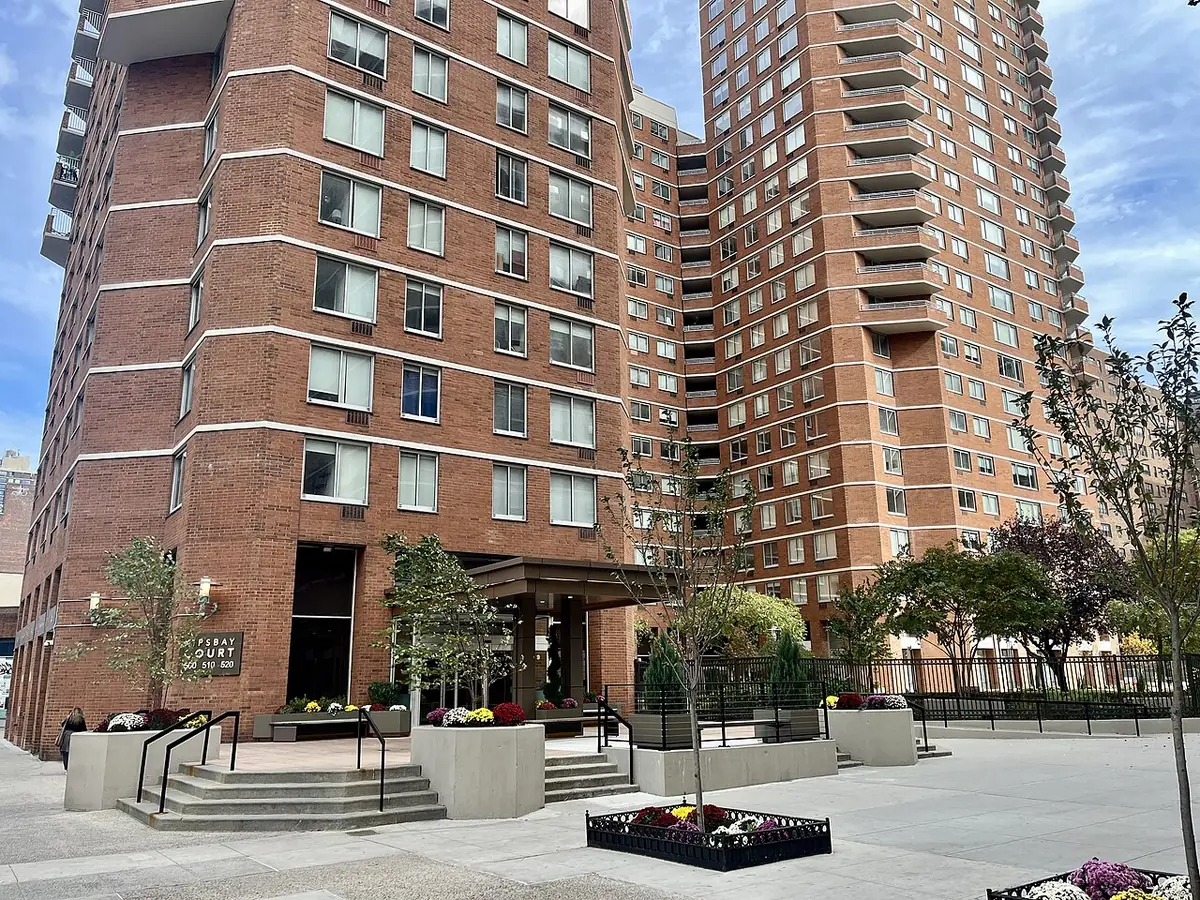
Tower complexes like this are a major part of the city's housing stock — Photo: Transpoman · CC BY-SA 4.0 · Wikimedia Commons
Beyond this well-oiled daily routine, many hidden aspects of the New York rental market deserve close attention.
Living in a house in New York changes the shape of your days compared with the stereotype of the city dweller in a Manhattan studio. Morning routines involve managing a larger space, school runs more firmly rooted in neighbourhood life and a transport logic that needs planning. This hour-by-hour account of an ordinary Tuesday illustrates the geographic and practical trade-offs that come with residential life in the outer boroughs.
07:00The kitchen of the houseAn early start and breakfast in a bright kitchen with direct access to the private garden, a rare luxury.
08:15The local public schoolDropping the children off on foot or by stroller at the neighbourhood school, which speeds up integration into the local community.
09:00The local subway stationA ten minute walk to reach the express subway line heading for the business districts of Manhattan or Brooklyn.
12:30The coworking space or officeA working day paced by meetings, with a lunch break in an independent cafe near the office.
18:00The neighbourhood shopping avenueLast-minute food shopping with the independent local traders (butcher, greengrocer, artisan bakery).
19:30The family living roomA quiet family dinner away from the noise of the busy street, followed by a relaxed evening in the spacious living room.
What the listing will never tell you about renting a house in New York
These hidden aspects underline how treacherous renting can be if you ignore the classic mistakes made by new arrivals.
New York listings excel at making spaces look larger and at softening the geographic or technical reality of the homes on offer. Behind flattering wide-angle photographs there are often structural, regulatory or environmental realities that agencies are careful not to mention unprompted. To avoid disillusion after moving in, you have to decode these silences and question landlords systematically on these crucial points.
Period sound and thermal insulation
Many older houses have timber frames and single glazing that let the bitter winter cold through and push up the heating bill, while also letting street noise filter in.
The potential presence of urban pests
Having a garden or a crawl space under the house mathematically increases the risk of the rodents typical of the city if the building is not rigorously sealed and maintained.
The draconian on-street parking rules
Owning a car alongside a house means living with alternate side parking for street cleaning, moving your vehicle several times a week or facing a steep fine.
The history of basement flooding
During heavy tropical rain or violent storms, many New York ground floors and basements suffer water coming back up because the city sewer network is saturated.
The misjudgements you only discover after six months in your New York house
With those disappointments avoided, it is worth asking the fundamental question of whether this kind of home really suits your profile.
Looked likeA golden opportunity, with surprisingly low rent for a large house in a rapidly gentrifying neighbourhood.
Turned outAn area poorly served by transport at night, subject to industrial noise or close to loud infrastructure invisible on a map.
Would have caught itVisiting the neighbourhood at different times, especially late in the evening and at the weekend, and asking future neighbours directly how quiet it is.
Looked likeA friendly landlord happy to delegate all the small renovation and improvement work to the tenant in exchange for lower rent.
Turned outA legal trap in which the tenant ends up responsible for hidden structural defects and costly repairs never provided for in the lease.
Would have caught itRequiring in writing that every major job stays strictly with the landlord, and refusing any structural work without formal agreement.
Looked likeNo broker fee at all, thanks to a private listing found online on a forum or a classified ads site.
Turned outA classic fake rental scam or an illegal letting with no formal lease, leading to sudden eviction by the authorities or by the real owner.
Would have caught itSystematically checking the owner's identity against the city's property register (ACRIS) and refusing any transfer of money before signing in person.
Looked likeA green, extremely quiet residential neighbourhood, ideal for raising children away from the bustle of Manhattan.
Turned outComplete geographic isolation, making every cultural outing or work trip excessively long and tiring after a few months.
Would have caught itTesting the real home to work journey at rush hour before signing the lease and measuring precisely what that distance does to your social life.
Who should absolutely not rent a house in New York?
With those warnings set out, it is time to take a final view of your own readiness to take the step.
The dream of a single-family house with a garden in New York appeals to many people considering a move, but it is a false good idea for several kinds of tenant. The logistical, financial and time constraints attached to this kind of home demand a particular way of living that not everyone can or wants to take on. Identifying these contraindications saves precious months of searching and avoids leases that are quickly regretted.
The young professional plugged into Manhattan nightlife
→A loft or a modern apartment in the lively parts of Brooklyn or the East Village.
Moving out to a residential house for the sake of a few extra square metres will destroy their social life overnight and force them into long journeys home at night.
The professional who travels frequently and at short notice
→A condo apartment with a doorman and managed package handling and maintenance.
Not being there to handle snow clearing, take in deliveries or look after a garden makes renting a standalone house unmanageable day to day.
The household on a tight budget with no real savings buffer
→A more modest apartment or a good quality shared flat in a well-connected area.
Unpredictable utility bills and the cost of minor repairs in a house risk pushing the household into the red very quickly.
So, are you ready to rent a house in New York?
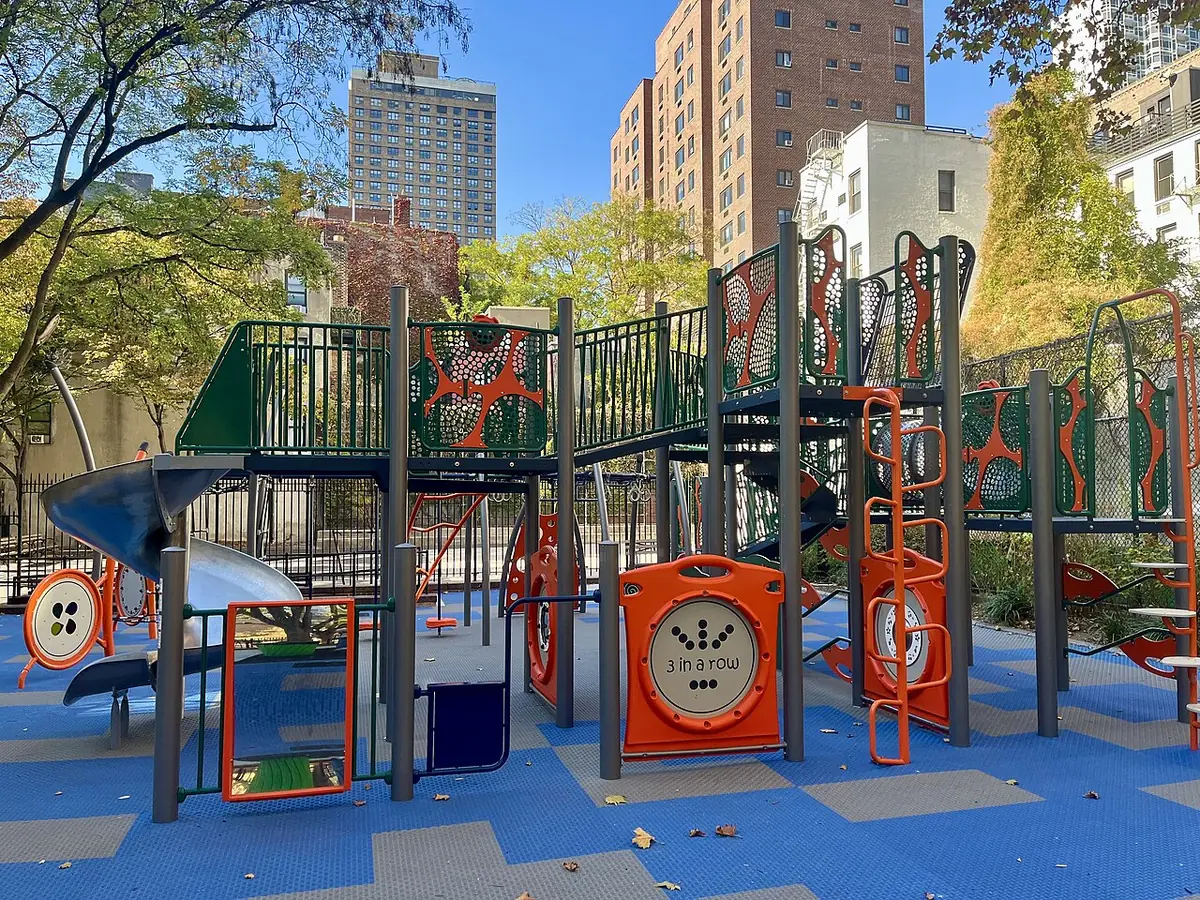
Playgrounds tucked between buildings like this are part of everyday city life — Photo: Transpoman · CC BY-SA 4.0 · Wikimedia Commons
Moving into a house in New York is far more than a simple property transaction: it is a firm commitment to a particular way of living, made of constant contrasts between the energy of a world city and the quiet refuge of your own home. Having weighed the advantages of that space against the verticality of traditional apartments, measured the financial reality of upfront costs and running charges, and taken the full measure of the daily logistics, the moment of decision has arrived. This is a bold choice that tolerates neither approximation nor haste, because the New York rental market punishes badly prepared plans immediately.
If your deeper motivation rests on providing a stable setting for your family, on cultivating a private garden in the middle of the city and on accepting the responsibilities that come with maintaining an older building, then the lights are green. You have the maturity and the resilience needed to get past the small administrative irritations and the sometimes demanding journeys that characterise life in the outer boroughs. If instead the prospect of clearing snow, dealing with a broken boiler or living further out already weighs on you, turn without hesitation to the urban apartment, which will satisfy your appetite for freedom and spontaneity.
The New York market will keep offering fascinating opportunities to those who know what they are looking for and who search with method, rigour and clear judgement. Take the time to view several homes, to sound out neighbourhoods at different hours and to check every line of your future lease before you put your name to it. Your new home in New York is waiting for you, provided you walk into it with your eyes wide open, ready to take on this city in all its complexity and singular beauty.
Related questions
Is it possible to find houses to rent in Manhattan itself?
Traditional single-family houses are extremely rare and extremely expensive in Manhattan, confined almost entirely to a handful of historic pockets such as Greenwich Village or Roosevelt Island. The vast majority of houses available to rent sit in the other boroughs, above all in Brooklyn, Queens and the Bronx.
What do broker fees typically cost on a New York rental?
Broker fees traditionally run between 8% and 15% of the annual rent, a considerable sum that under local market custom is most often borne by the tenant alone. It is essential to build that one-off cost into your budget from the very first calculation.
What financial guarantees do New York landlords ask for?
Landlords generally require gross annual income of at least 40 times the monthly rent, on top of a spotless credit file (a high credit score). If you are arriving from abroad with no US credit history, you will often be asked for a creditworthy local guarantor or for several months of rent paid up front.
Are pets accepted in rented houses?
Many house landlords accept pets more readily than the boards running condo and co-op buildings in Manhattan, because a house comes with direct access to the outdoors. That said, an additional pet deposit or extra monthly rent is frequently written into the lease.
How does heating work in New York houses?
Unlike large multi-unit buildings, which are bound by strict city rules on heating dates, individual houses generally have their own gas or oil heating system. The tenant controls the boiler directly but takes on the entire energy bill that goes with it.
Which neighbourhoods are best for renting a house with children?
Residential neighbourhoods such as Park Slope, Bay Ridge or Dyker Heights in Brooklyn, along with leafier parts of Queens such as Forest Hills, are particularly sought after. They offer quiet streets, good parks and well-regarded schools while staying connected to the subway network.
Do you need a car if you rent a house outside Manhattan?
It is not strictly necessary if your house sits within easy walking distance of a subway station, but a vehicle makes family shopping and moving around the wider residential areas far easier. You do have to live with severe on-street parking constraints and alternate side street cleaning.
How do you protect yourself against fake rental listings online?
Never hand over a cent in deposit or holding money before you have physically viewed the property and signed a proper lease. Always verify who legally owns the home through the city's property records (ACRIS).
What insurance is required of a house tenant in New York?
Renters insurance is almost always required by landlords, covering water damage, fire and personal liability. It is an indispensable protection whose modest monthly cost heads off serious financial trouble if something goes wrong.
How long does it take to find a house and move in?
The New York rental market moves extremely fast and good properties are taken within days. Start searching actively 30 to 45 days before your target move-in date, with all your financial documents already prepared and scanned.