Buying a villa in Dubai is a major decision about your wealth, and it calls for method and sound judgement. This guide unpacks the realities of the local market, from choosing a neighbourhood to the legal and financial side, to walk you step by step towards your investment.
Tell us about your life. Ex: I’m relocating to Nice next year
Attach file
Get the app
Buy Villas Dubai
Buying a villa in Dubai is a major decision about your wealth, and it calls for method and sound judgement. This guide unpacks the realities of the local market, from choosing a neighbourhood to the legal and financial side, to walk you step by step towards your investment.
What you really get when you buy a villa in Dubai
Scroll
What you really get when you buy a villa in Dubai
Buying a villa in Dubai is a major decision about your wealth, and it calls for method and sound judgement. This guide unpacks the realities of the local market, from choosing a neighbourhood to the legal and financial side, to walk you step by step towards your investment.
Written by the ting.ad editorial team ·
Dubai in Street View: drag to look around.
Investing in a villa in Dubai is about more than buying square metres under year-round sunshine. It gives you access to secure private infrastructure, designed to maximise peace and quiet in the middle of a city that never stops. Generous outdoor space and high-end finishes redefine everyday comfort at home. Yet that promise of calm comes with demanding practical realities that you should plan for from the moment you sign. Between service charges for the upkeep of shared areas and running your own private equipment, every detail counts in protecting the value of the property.
Spectacular living space and open-plan volumesvsSubstantial air conditioning and outdoor maintenance costs
Large, light-filled spaces demand careful temperature management and regular technical servicing to keep the installations in perfect working order all year round.
A secure gated community with built-in servicesvsStrict rules governing alterations and the use of shared areas
Living in a private residential community guarantees peace and security for your household, but you must follow precise guidelines for even the smallest landscaping or structural change.
The prospect of attractive long-term rental yieldsvsDirect exposure to the local property market's economic cycles
Strong demand for high-end family homes supports prices, but choosing the location carefully is essential to protect yourself against market swings.
Does this type of property really suit the way you live?
Moving from buyer profiles to the geography on the ground shows the gap between the way you live now and life here.
Choosing a villa in Dubai shapes your family and working life for years. Whether you favour an active life in the heart of the city or the calm of a community on the outskirts, the impact on your journeys and habits will be radically different. It is essential to weigh up your daily priorities before committing. Every kind of buyer can find the right answer here, as long as they properly measure the trade-offs that come with each location and each type of property.
Family with children
Gated residential communities offer a secure environment, shaded parks and international schools close by. Your children enjoy a rewarding setting with first-class sports facilities right on your doorstep. The flip side is that rush-hour journeys to the business districts can be long and need good daily planning to avoid the traffic.
Senior executive or entrepreneur
Owning a spacious villa lets you host partners in an exceptional setting while keeping a private, luxurious retreat away from the bustle of the city. Being close to the main roads makes for quick links to business districts such as DIFC or Downtown. You do, however, have to accept high maintenance costs and the need to hand day-to-day management entirely to specialist providers.
Long-term investor
Buying a villa in an area still being developed is a solid safe haven against global economic uncertainty. Dubai's property market has shown remarkable resilience, supported by dynamic population growth and steady capital inflows. Your attention should go first to build quality and the developer's reputation, to secure lasting capital growth.
Living there when you come from abroad: what changes day to day
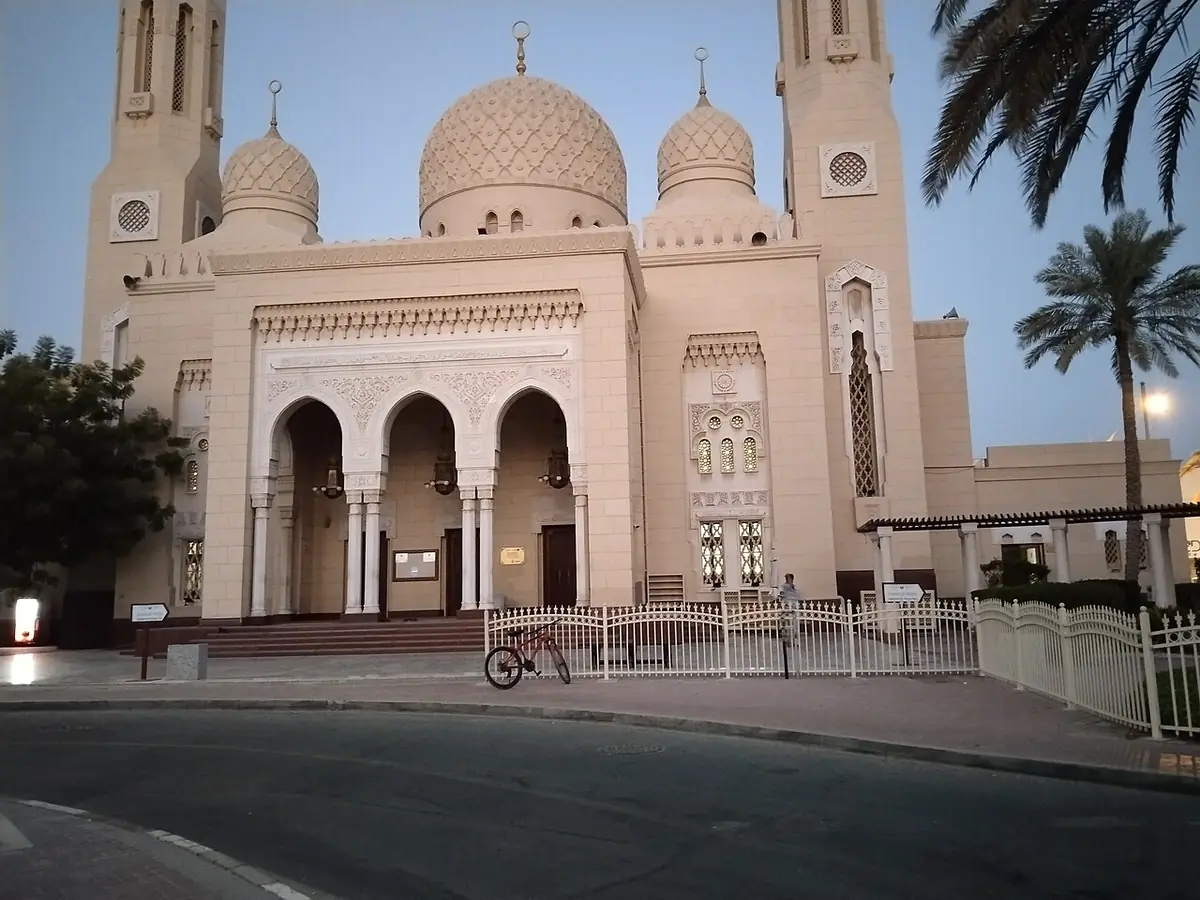
Jumeirah Mosque, a well-known landmark in Dubai — Photo: ZI Jony · CC BY-SA 4.0 · Wikimedia Commons
With those markers in place, the crucial question of exactly where your future villa should be comes into sharp focus.
Settling in Dubai from abroad means getting used to a new pace, a radically different climate and a transformed relationship with space. While modern comfort and safety are a pleasant surprise from the very first days, other aspects call for real cultural and practical adjustment. Understanding these contrasts helps you avoid disappointment in the first months and settle more quickly into this cosmopolitan city.
From abroad
The dense, compartmentalised urban housing of big cities back home
Dubai
Generous volumes, open to the outdoors and air-conditioned around the clock
You gain visual comfort and freedom in how you arrange your home, but discover a total dependence on central air conditioning to keep the temperature bearable.
From abroad
Public transport and walking at the centre of getting around
Dubai
An almost complete dependence on the car for even the shortest trip
Even though the road infrastructure is exceptional, the car becomes an extension of your home and every outing has to be planned around traffic flows.
From abroad
A social life rooted in public spaces and local shops
Dubai
A life organised around residential complexes, private clubs and shopping malls
Social contact takes a more proactive approach, often made easier by sports clubs, residents' associations and activities organised within your community.
From abroad
A dense administrative framework governed by civil law
Dubai
A liberal system focused on digital efficiency and simplified procedures
Paperwork is dealt with quickly through dedicated apps, making visas and contract management remarkably smooth.
Which neighbourhood should you choose to settle in Dubai?
The neighbourhood you choose determines the quality of your days and the future value of your investment. Each community has its own identity, practical advantages and constraints that need to be assessed objectively. Whether you prioritise being near the beaches, lush greenery or the buzz of the major hubs, you need a precise picture before you sign.
Established, leafy communities
A tree-lined haven of complete calm with a strong residential village feel.
Suits
Families looking for security, large green spaces and top schools nearby.
Trade-off
Older properties that sometimes need renovation, and high purchase prices.
New sustainable eco-communities
An ultra-modern environment built around green technology, energy efficiency and low-impact mobility.
Suits
Buyers who care about environmental and technological issues and want cutting-edge features.
Trade-off
An often more remote location and surrounding infrastructure that is still being developed.
Enclaves close to the business corridors
A dynamic pace, quick links to the centre and resolutely contemporary architecture.
Suits
Busy professionals who want to keep daily commutes short while enjoying real comfort.
Trade-off
Greater urban density and outdoor privacy that is sometimes more limited than on the outskirts.
What does it really cost to buy and own a villa here?
Once the financial framework is settled, you need to understand exactly what you are buying in legal terms.
Property investment in Dubai appeals because there is no income tax and no tax on property capital gains. Even so, buying a villa involves unavoidable upfront costs and an annual running budget that should be planned precisely. The tables below set out the financial structure of your project so there are no surprises when you come to complete the transaction.
DubaiFor saleVillaestimate
Median price / m²AED 11,685Half the apartments sell below this
Median priceAED 2.26mthe average is 14% higher — a few very large properties pull it up
Most common2 bedrooms58 % of listings
Average size184 m²
By number of bedrooms
Bedrooms
Share of market
Avg price
Price / m²
Avg size
2most common
58 %
AED 2.24m
AED 12,177
184 m²
3
31 %
AED 2.83m
AED 11,562best value / m²
245 m²
4
11 %
AED 4.29m
AED 12,915 +5 %
333 m²
Each row is an average, compared against the area average of AED 12,300 / m². These are indicative estimates of a typical local market, not a measured sample of live listings. Check current listings before relying on them.
What you can actually own as a foreign buyer
Dubai's property market has opened up to international investors through specific, clearly defined zones. Knowing the legal nature of your title is the first guarantee of a worry-free investment. Between freehold ownership and long-term usage rights, the legal subtleties deserve close attention before you sign any commitment.
Freehold ownership
This arrangement lets investors of any nationality buy the property and its land outright, with no time limit. You hold an official title deed issued by the government authorities, giving you the right to let, sell or pass on your property freely.
What it changesYou build secure wealth that can be passed on, in line with the most demanding international legal standards.
Long-term leasehold
In certain specific areas, the purchase takes the form of a long lease, generally lasting between 30 and 99 years. You own the building and have full use of the property throughout that period, but the land remains the property of a developer or a state entity.
What it changesThis option calls for particular care over how much of the lease remains when you buy, to protect the property's future resale value.
The rule to understand before paying any deposit
Securing the funds and the contracts leads naturally to a step-by-step look at how a transaction unfolds.
Committing money to Dubai property follows strict procedures designed to protect the buyer. Following each regulatory step carefully keeps your capital safe. Ignoring these safeguards exposes you to avoidable risks, from misused funds to late handovers with no compensation.
Preliminary check of the legal and financial status of the property you want
Ask for the official registration certificate and verify the exact identity of the selling owner with the land registry.
Make sure the official escrow account is used for any deposit paid on a property under construction.
Draw up a memorandum of understanding (MOU) setting out the conditions precedent and penalties in detail.
Final signing of the sale and official transfer of the title deed
How a property transaction works, step by step
A well-run property transaction in Dubai stands out for its speed and how far it has gone digital. From the initial offer to the final handover of the keys, each party plays a precise role in keeping the process smooth. Here is the exact sequence of steps you will go through with your adviser.
The buyerMaking a formal offerDrafting and signing the offer form (Form F) setting out the proposed price, deadlines and conditions precedent.
The partiesSigning the memorandum of understanding (MOU)Payment of a secured deposit (generally ten per cent), held in escrow by the agency until the transfer.
The brokerObtaining the No Objection Certificate (NOC)The developer or community management confirms that no unpaid service charges are outstanding on the property.
The authoritiesOfficial transfer at the registration officeFinal approval of the transaction, payment of the balance and immediate issue of the new title deed.
The buyerTaking possession and connecting utilitiesActivating water and electricity accounts and setting up your new villa.
Villa or apartment in Dubai: weighing space against a central location
Once that fundamental choice is made, it pays to look very closely at the reality of everyday spending to size your investment.
Choosing between a villa and an apartment in Dubai is not simply a matter of living space or upfront budget. It commits you to a completely different way of life, dictated by the emirate's urban layout and by the distance between residential areas and the major business districts such as Downtown or DIFC. Choosing a villa means accepting a daily life lived outdoors, with a private garden, a pool and often a secure gated community, but the price is an almost complete dependence on the car for every school run or trip to work.
By contrast, opting for a high-end apartment in vertical neighbourhoods such as Dubai Marina, Palm Jumeirah or Downtown Dubai frees you from the daily traffic jams on major highways like Sheikh Zayed Road. The buildings offer built-in hotel-style services, a 24-hour concierge, gyms, rooftop infinity pools and direct access to transport, including the elevated metro. However, that central location comes at a price per square metre and means compromises on privacy, with buildings often overlooking one another and no private green space for families with children or pets.
In terms of long-term value, villas have historically held up better in market downturns because buildable land is scarce in mature areas. Apartments, on the other hand, face stronger competition from the large volume of new off-plan projects delivered by local developers such as Emaar or Nakheel. That temporary oversupply of similar properties can weigh on how easily they resell, which makes the choice of location and architectural quality absolutely critical to preserving your capital over the long term.
Finally, service charges significantly change the overall financial picture depending on the type of property you choose. For a villa in a gated community, these fees cover the upkeep of shared areas, security and sometimes landscaping, while for a high-end apartment they climb quickly because of the many shared amenities and concierge services. You therefore need to build these recurring costs into your purchase calculations before making a final choice between the two ways of living.
What real budget should you plan to live in and own a villa in Dubai?
To understand how these financial choices play out in everyday life, let us follow a typical day in the life of a resident.
Buying a villa in Dubai comes with a specific cost structure that needs to be analysed carefully to avoid unpleasant budget surprises. Beyond the headline purchase price per square metre, upfront transaction costs and recurring maintenance charges weigh heavily on yield and on the overall cost of ownership. The figures below summarise the orders of magnitude seen in the emirate's current residential market for properties of comparable standing. These amounts take into account local specifics such as administrative fees and subscriptions to essential utilities.
Purchase costs and upfront charges when buying a villa
Cost item
Estimated rate or amount
Payment terms and notes
DLD registration fee
4% of the purchase price
Paid to the Dubai Land Department on transfer of ownership, split or not depending on negotiation.
Estate agency fees
2% of the purchase price
Standard commission paid to the RERA-licensed intermediary when the sale agreement is signed.
Conveyancing and survey fees
AED 5,000 to 10,000
Payment for the conveyancer and an independent technical survey of the building before the final transaction.
DEWA security deposit
AED 2,000 to 4,000
Refundable deposit to open the water and electricity meters with the public utility.
Total purchase costs therefore come to around 6.5% to 7% of the property's listed price.
Annual running budget for a family villa
Type of charge
Average annual amount
What is included
HOA service charges
AED 15,000 to 45,000
Upkeep of shared landscaped areas, 24/7 security and roads within the gated community.
Water and electricity bills
AED 18,000 to 30,000
Heavy consumption from central air conditioning and running the pool pumps.
Annual maintenance contract
AED 5,000 to 12,000
Preventive visits for air conditioning, plumbing, electrical systems, doors and windows.
The annual cost of owning a villa calls for a solid cash reserve, regardless of any bank loan.
What does an ordinary Tuesday actually look like when you live in a villa in Dubai?
Behind this idyllic, well-oiled picture, though, lie realities on the ground that the marketing brochures carefully leave out.
Living in a villa in one of the residential communities on the outskirts radically changes the rhythm of the day compared with life in the city centre. Between the morning school run, running the house and work commitments, every hour is carefully timed to avoid congestion on the main roads. This hour-by-hour account highlights the practical reality of daily life for residents of the emirate's outlying neighbourhoods. The car is an unavoidable part of every minute spent away from home, and it shapes the whole day.
06:45Residential community (Arabian Ranches or Damac Hills)An early start in the calm of the gated community. Getting the children ready and checking school bags before leaving.
07:30Main road (E311 or E611)Driving the family SUV along the outer highways to drop the children at a well-regarded international school.
08:45Business district (DIFC or Downtown Dubai)Arriving at the office after a busy drive that stays fluid if you left home before the worst of the rush hour.
13:00Local shopping centreA quick lunch break and a top-up food shop at a local supermarket such as Spinneys or Waitrose within the community.
17:30Roads back to the suburbsThe drive home against the main traffic flow, marking the switch from the intensity of work to the calm of home.
19:00Villa garden and terraceRelaxing as a family by the private pool, enjoying the cooler evening air and the complete absence of city noise.
What developers' brochures leave out about villas in Dubai
These technical and planning issues tie in directly with the regrets investors most often express six months after moving in.
Dubai developers' marketing materials excel at presenting flattering architectural renderings and extremely appealing rental yields. Yet the experience of seasoned buyers reveals a number of technical and legal grey areas that deserve your full attention before you sign any reservation contract. These elements, invisible on the 3D plans, have a direct and measurable impact on the long-term value of your asset and on your everyday comfort. Ignoring them exposes you to major financial disappointment from the very first year of ownership.
The real quality of building materials and original finishes
Many projects delivered in a hurry suffer from defects that are not visible at first glance, notably failing waterproofing on roof terraces and thermal insulation problems that send the air conditioning bill soaring in summer. It is essential to hire an independent technical survey firm to carry out a thorough inspection before the handover of the keys.
Changes to the surrounding master plan and future construction
The desert around your future villa today will very probably turn into a huge building site for new roads or residential projects within eighteen months. That rapid densification removes the open view promised by the seller and brings constant noise for years.
The legal complexity of long leases and community rules
The rules issued by homeowners' associations (HOA) strictly govern the use of your own plot, sometimes banning you from building a carport, changing the colour of the facade or letting an annexe as a holiday rental. Breaking these community rules immediately leads to heavy fines.
The rapid depreciation of the original fittings and built-in kitchens
Ambient humidity and heavy use of air conditioning cause premature wear to the fixed furniture and appliances supplied by the developer. Setting aside a renovation budget from the fifth year is an absolute necessity to maintain the property's rental or market value.
The classic traps and buyer regrets you discover six months after purchase
Faced with these unvarnished findings, it is fair to ask whether buying a villa in Dubai is really for everyone.
Looked likeA highly profitable buy-to-let opportunity promising net yields above 8% a year.
Turned outUnexpected management fees, empty periods between tenancies and unpaid rent handled through complex local procedures.
Would have caught itAsk for certified accounts from the community management company and apply a cautious 10% vacancy allowance in your initial financial forecast.
Looked likeA spacious villa in a quiet, fully mature community with all services open.
Turned outConstant construction on neighbouring plots, shared amenities left unfinished by the developer and access roads jammed at rush hour.
Would have caught itVisit the neighbourhood at different times of day and check with the Dubai Land Department exactly which building permits have been issued within a one-kilometre radius.
Looked likeAn all-inclusive maintenance contract signed without a second look with the developer's subsidiary.
Turned outClear overcharging for emergency call-outs and unacceptably slow response during major air conditioning breakdowns in the middle of August.
Would have caught itGet quotes from independent local providers and negotiate strict late-response penalties in the clauses of the annual preventive maintenance contract.
Looked likeA quick, guaranteed profit on resale thanks to the emirate's legendary property market.
Turned outFar less real liquidity than expected, blocking a quick resale unless you accept a substantial discount on the asking price.
Would have caught itInvest with a medium- to long-term view of at least five to seven years, to absorb the upfront purchase costs and ride out market cycles.
Buyer profiles: who really should not buy a villa in Dubai today?
Now it is time to bring all these factors together so you can make your decision with full knowledge of the facts.
The media excitement around Dubai's property market too often hides the fact that buying property is never right for every kind of expat or investor. Committing to a villa purchase requires a personal and professional stability that does not fit some transitional stages of life. The profiles below illustrate the cases where flexible renting or investing in liquid financial assets are far wiser and safer choices for your savings.
The new expat who arrived in the emirate less than six months ago
→Put any property purchase on hold for at least two years.
Discovering how you really live, identifying the neighbourhoods that suit you and understanding the local market takes essential time on the ground, so you do not make an irreversible wrong turn.
The professional on a fixed-term assignment or employment contract
→Stay a tenant on a flexible annual lease.
Upfront transaction costs of around 7%, combined with the time it takes to resell a property, make any early exit within four or five years financially destructive for the capital invested.
The investor looking for a completely passive, hassle-free investment
→Prefer property investment funds, listed index funds or managed buy-to-let back home.
Looking after the physical upkeep of a villa, overseeing air conditioning repairs and settling tenancy disputes remotely in Dubai demands significant personal involvement or high management fees.
So, are you really ready to take the step of buying property in Dubai?
Below you will find answers to the most frequently asked questions about buying residential property in the emirate.
At the end of this careful analysis, the decision to buy a villa in Dubai is no longer a matter of impulse or the visual appeal of marketing brochures, but a carefully considered choice about your wealth. If your working life is set to stay in the emirate for the next five to ten years, if your finances can comfortably absorb the costs of ownership and if you fully accept the practical constraints of life in a residential suburb, then buying is an excellent strategic decision for anchoring your wealth.
If, on the other hand, there is the slightest doubt about how long you will stay in the emirate, or if you are wary of the technical upkeep and the capital tied up in a large villa, the wise choice is a high-end rental. Dubai's rental market offers remarkable flexibility and very high standards of service, letting you enjoy the local quality of life without carrying the risk on land values and the upfront transaction costs.
Take the time to validate each step with independent advisers, refuse to give in to the artificial urgency often created by people selling in this sector, and insist on complete transparency over the legal and technical documents. Your future peace of mind and the preservation of your capital depend entirely on the rigour and judgement with which you lay each stone of your property project in Dubai.
Related questions
What are the legal and registration fees for buying a villa in Dubai?
Dubai has no traditional notary in the sense many buyers know from back home. The transfer of ownership is made official directly with the Dubai Land Department (DLD), which charges a registration fee equal to 4% of the purchase price. That fee is often split equally between buyer and seller, although market practice frequently leaves the buyer paying all of it, depending on how competitive the market is at the time.
Can a non-resident buy a villa freehold in Dubai?
Yes. Any foreign national, whether tax resident in the United Arab Emirates or not, can buy property freehold in the zones specifically designated by the emirate's government. Those zones cover almost all of the sought-after residential communities, such as Arabian Ranches, Emirates Living and Palm Jumeirah, and grant the same ownership rights as local citizens enjoy.
What are average service charges for a villa?
Service charges vary widely depending on the standing of the gated community, the size of the plot and the amenities available to residents. For a standard family villa, these annual fees generally range from 3 to 10 dirhams per square foot, which means a yearly budget from AED 15,000 to more than AED 45,000, payable to the homeowners' association (HOA).
Do you need to use an estate agent to buy in Dubai?
It is strongly recommended to work with an estate agent licensed by RERA, Dubai's real estate regulator. A qualified professional secures the transaction by checking that there is no outstanding mortgage on the property, drafting the standard Form F contract and coordinating all the paperwork up to the actual transfer of title at the Dubai Land Department.
Can a foreigner get a mortgage in Dubai?
Local and international banks based in Dubai offer mortgage finance to non-residents and to resident expats. For a non-resident, the maximum loan-to-value allowed by the central bank is generally 50% or 60% of the property's value, while it can reach 80% for residents who can show a stable income paid in the United Arab Emirates.
What is a NOC certificate in a property transaction?
The No Objection Certificate (NOC) is a mandatory document issued by the developer or the community management association before the final transfer of ownership can go ahead at the Dubai Land Department. It confirms that the current owner has paid all service charges in full and that no arrears or disputes stand in the way of the sale.
What taxes apply to property capital gains in Dubai?
The emirate of Dubai's tax system is defined by the complete absence of personal income tax, recurring property tax and tax on capital gains made when reselling a property. That attractive tax neutrality is one of the main drivers of property investment in Dubai.
Can you let your villa as a holiday rental in Dubai?
Holiday or short-term rentals of the Airbnb kind are tightly regulated in Dubai by the Department of Economy and Tourism (DET). To operate legally, the owner must obtain a specific licence, either managing the property themselves if they are resident, or handing it to a licensed holiday home operator that will pass on the tourism fees collected.
How does air conditioning work in Dubai villas?
Most modern villas have ducted central air conditioning or independent split units in each room. When buying, it is crucial to check whether the system is standalone or connected to a district cooling network, whose fixed subscription and usage charges can add up to a significant monthly budget.
How long does it take on average to complete a villa purchase in Dubai?
For a sale of a completed (ready) property between private parties, the average time from signing the sale agreement (Form F) to the final transfer of title at the DLD office is 30 to 45 days. That period allows the developer's NOC to be obtained and any bank or mortgage checks to be completed.