

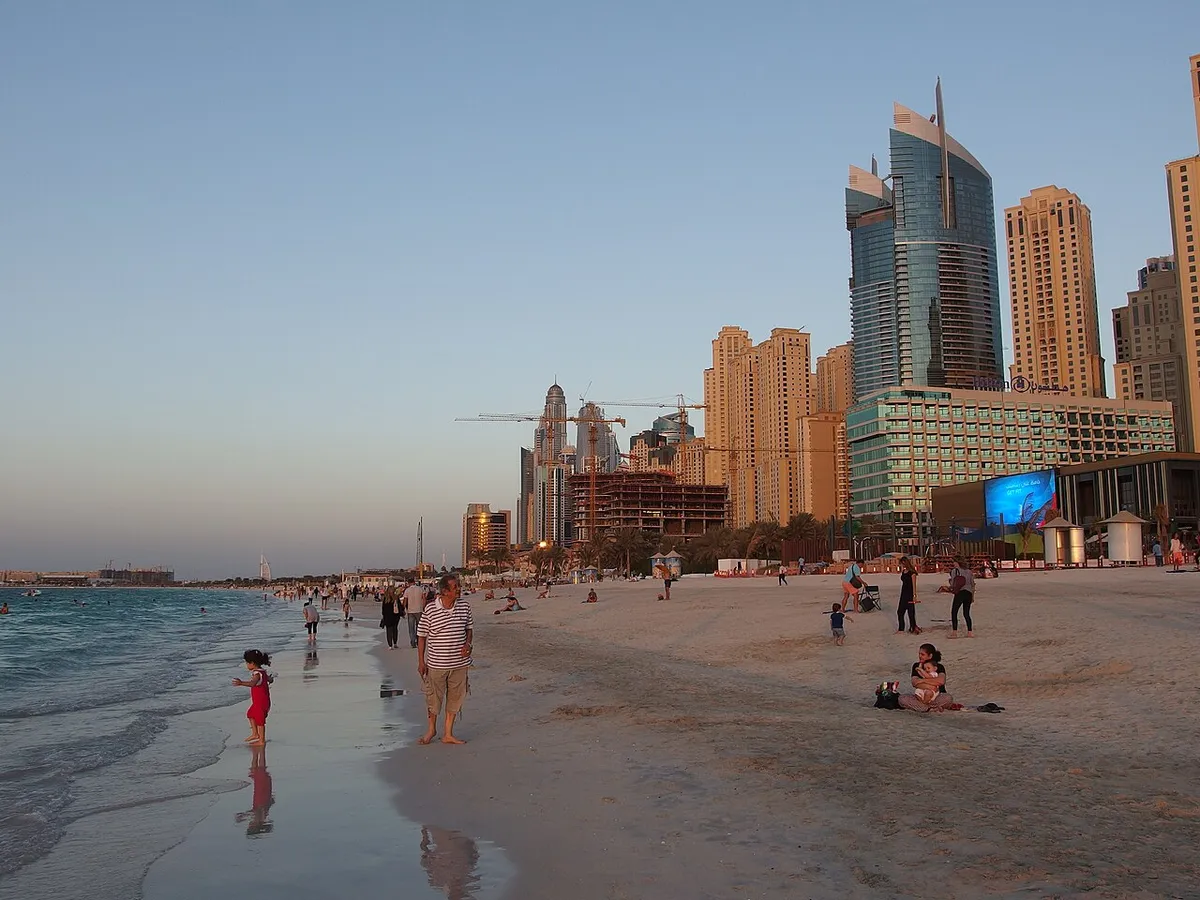
The vibe
JBR is structured across 40 towers grouped into six residential clusters — Shams, Amwaj, Rimal, Bahar, Sadaf, and Murjan — housing nearly 7,000 apartments and well over 15,000 residents. The community is dense by Dubai standards, and that density is the point: the energy here is constant. The Walk is lined with cafés, restaurants, boutiques, and hotels, while The Beach open-air mall adds a Roxy cinema, more F&B, and direct sand access. Weekends bring crowds; weekday mornings are genuinely peaceful by comparison.
The resident mix is cosmopolitan — young professionals, families, long-term expats, and a healthy short-term rental population. It's not a quiet suburban enclave, and if you're after that, this isn't your place. But for people who feed off urban energy with a coastal backdrop, it's hard to beat.
Property and rents
This is a high-end market. Average property prices sit around AED 5.36 million, with the range running from AED 1.13 million for a compact studio up to AED 28 million for a penthouse. Those entry-level studios have compressed in price — you can find something in the low AED 900K range at the right moment — but most buyers are looking at two- and three-bedroom apartments in the AED 2–5 million bracket. Annual rents average around AED 254,000, which reflects the premium waterfront positioning.
Investment yields average roughly 6%, with one- and two-bed furnished units performing best for short-term and holiday rental strategies. JBR is a freehold community, so foreign buyers have full ownership rights. Price growth has been steady at 9–11% annually in recent years, and the stabilisation after the post-pandemic surge makes 2025 a reasonable entry point for long-term holders rather than a frothy speculative bet.
Getting around
JBR has two tram stations — JBR Tram Station 1 and 2 — connecting directly to the Dubai Metro at DMCC. That link gives you Downtown Dubai and DIFC without touching Sheikh Zayed Road. Dubai International Airport is roughly a 30-minute drive. The Palm and Dubai Marina are minutes away by tram or foot.
The honest trade-off: parking is a persistent headache. Street parking is mostly paid, and on weekends the surrounding roads fill quickly. If you rely on a car daily and don't have allocated building parking, budget for frustration. For those who walk or use public transport, the connectivity story is strong.
Amenities and daily life
Residents have direct beach access, building pools, gyms, and children's play areas as standard. The Walk and The Beach cover everyday dining and casual retail. For larger grocery runs, there are supermarkets within the community, and Dubai Marina Mall is a short walk or tram ride away. The Roxy Cinema at The Beach handles film nights without leaving the neighbourhood. Healthcare clinics and pharmacies are accessible in the Marina district. Schools and nurseries require a short drive — families with children in primary or secondary school typically commute to JBR rather than living there full-time, though it works well for those with younger kids who value the outdoor lifestyle.
Who it suits
JBR works best for professionals and couples who want energy, convenience, and prestige in one address — and who don't mind paying for it. Young families can absolutely live here, especially those with beach-loving kids and a tolerance for busy weekends. Investors targeting holiday rentals and short-term leases will find strong occupancy driven by tourists and business travellers drawn to the beachfront location. It's less suited to people who prize quiet, those on tighter budgets, or anyone who heavily depends on a car in daily life.
I've covered Dubai's residential market for eight years — JBR is one of those places that consistently delivers on its promise, as long as you go in with eyes open.
FAQ
What is the average apartment price in JBR?
Average property prices in JBR are around AED 5.36 million, though you can find studios from around AED 1.13 million and prices extend to AED 28 million for premium penthouses.
Is JBR freehold for foreign buyers?
Yes. JBR is a designated freehold area, meaning non-UAE nationals can purchase properties with full ownership rights.
What are rental costs in JBR?
Annual rents average around AED 254,000. Studios and one-beds command a premium per square foot relative to other Dubai communities due to the beachfront location.
How do you get around from JBR without a car?
JBR has two Dubai Tram stations that connect to the Dubai Metro at DMCC, giving solid access to the rest of the city. The Marina and Palm are also walkable or a quick tram ride away.
Is JBR good for families?
It works for families who value outdoor lifestyle and beach access — kids thrive near The Walk and beach areas. However, schools require a drive, and weekends are busy. Families who want a quieter community typically prefer areas like Jumeirah or Arabian Ranches.
What are the main downsides of living in JBR?
Parking is genuinely challenging and often expensive. Weekend crowds make the area noisy and congested. Service charges are on the higher side given the beachfront positioning.
Post review of ting
 Diet partners 😂 (opens in a new tab)


.jpg)
 sdfg marthak
 Diet partners 😂
 Photo by Yacht Rental Dubai on August 24, 2017. (opens in a new tab)
  Ting - Dubai