

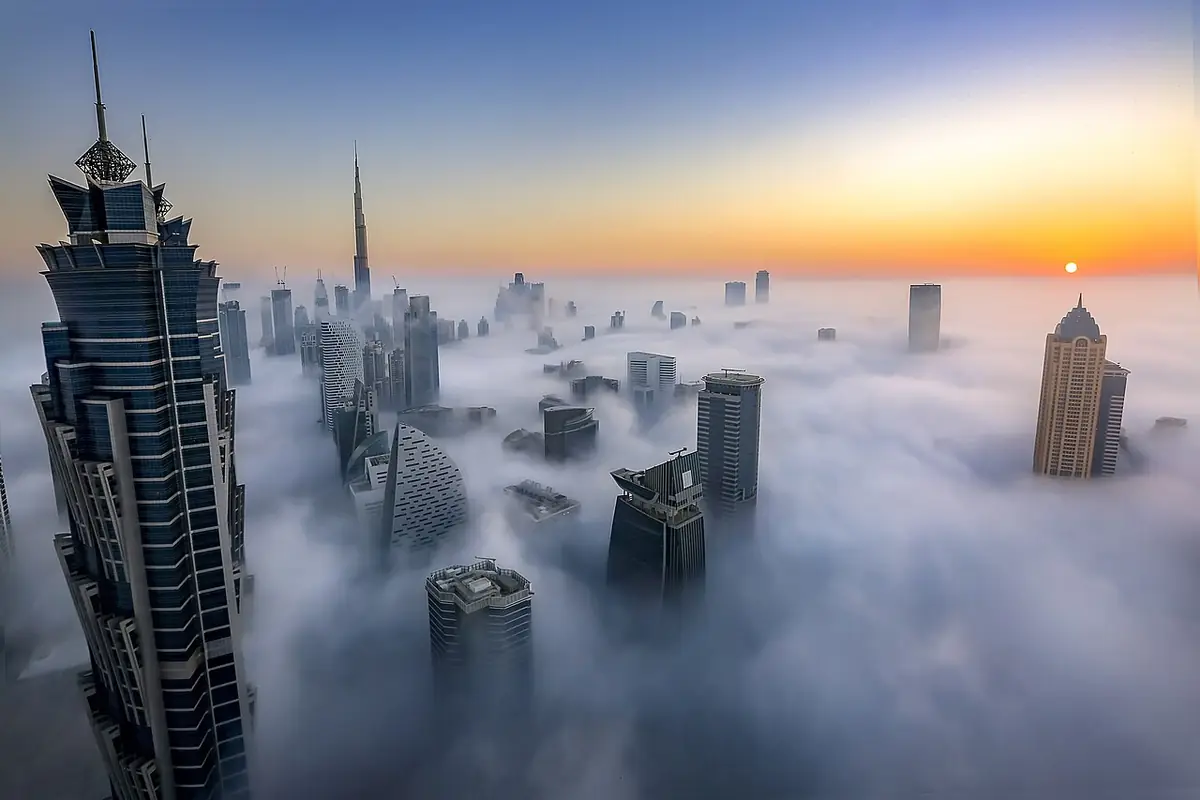
The vibe
Dubai Hills Estate is a 2,700-acre Emaar development that genuinely delivers on its promise of green, community-focused living. Tree-lined boulevards, dedicated cycling and jogging tracks, and a 180,000 sqm central park give it a rhythm that's a world away from the dense urban grids of Downtown or JBR. It attracts a mix of young families, long-term Dubai residents who've upgraded from apartments, and executives who want space without sacrificing city access. Weekend mornings you'll find the park packed with joggers, cyclists, and kids — it has that rare quality of actually feeling lived-in rather than staged.
The commercial side has matured well. Dubai Hills Mall anchors the retail offering with a solid mix of dining, cinemas, and everyday essentials. A handful of clinics, pharmacies, and nurseries operate within the community, so day-to-day errands rarely require leaving the neighbourhood.
Property and rents
The market here is high-end by design. Average sale prices sit around AED 2,388 per sqft as of mid-2025, and the overall average transaction price across the community is approximately AED 7.3 million — driven upward by the larger villas and golf-front plots. Apartments are the more accessible entry point, with studios and one-bedrooms starting from roughly AED 1 million and two-bedrooms from AED 1.3–1.6 million. Townhouses begin around AED 3.5 million, while villas range from AED 6 million upward; golf-front or park-facing plots can clear AED 25–30 million.
Rents have moved sharply over the past three years — villa rents up 66%, apartments up 52% since 2022 — and the average annual rent across all unit types is around AED 316,000, which tells you this is not a budget rental market. Rental yields are healthy for a premium community, typically 5–8%, making it attractive for investors as well as end-users. The honest caveat: service charges and maintenance fees are on the higher side, so factor those into any buy-versus-rent calculation.
Schools and families
Three established GEMS schools operate within or immediately adjacent to the community: GEMS Wellington Academy (British curriculum), GEMS International School (IB), and GEMS New Millennium School (CBSE). Having quality schooling within a short drive — or in some sub-clusters, a short walk — is one of the clearest draws for families and goes a long way toward explaining the sustained rental demand. Several nurseries and early-childhood centres also operate inside the development for younger children.
Beyond schooling, the park, the cycling infrastructure, and the general sense of safety and space make this one of the more convincing family communities in Dubai. It's not a lock-up-and-travel kind of place; it works best for people who actually want to be here regularly.
Getting around
The honest truth about Dubai Hills Estate is that you need a car. There's no metro station within the community — the nearest one is in Al Barsha, roughly 10–11 minutes away by road. That said, the road connections are well-designed: direct access onto Al Khail Road and Hessa Street puts Downtown Dubai around 15–20 minutes away and Dubai Marina around 20–25 minutes, traffic permitting. The school-run crunch is the main pinch point — morning drop-off and afternoon pick-up hours can back up the internal roads significantly, which is worth knowing if you're commuting to an office at the same time.
Who it suits
Dubai Hills Estate is a strong fit for families with school-age children who want quality outdoor space and a neighbourhood feel without moving to the outer fringes of the city. It also works well for professionals who value the golf course lifestyle and are happy to drive rather than metro-commute. Investors buying for rental income will find reliable tenant demand and solid yields, though the entry cost is meaningfully higher than comparable areas. If you're looking for a buzzing nightlife scene, easy walkability to a beach, or a bargain, this isn't your spot — but if quiet, green, and well-run is the brief, few communities in Dubai match it.
I cover Dubai communities from the perspective of someone who actually has to live in them — the commute, the school run, the weekend park, and what the service charge statement looks like.
FAQ
What is the average property price in Dubai Hills Estate?
The average sale price across all property types is approximately AED 7.3 million, though entry-level apartments start from around AED 1 million and larger golf-front villas can exceed AED 25–30 million.
What are typical rents in Dubai Hills Estate?
The average annual rent is around AED 316,000. Studios and one-bedrooms typically rent from AED 70,000–100,000 per year, while three-bedroom villas can command AED 300,000–500,000 or more depending on size and location within the community.
Is there a metro station in Dubai Hills Estate?
No. There is no metro station within the community. The nearest stations are in Al Barsha, roughly 10–11 minutes by car. A personal vehicle is effectively required for daily life.
Which schools are in Dubai Hills Estate?
GEMS Wellington Academy (British curriculum), GEMS International School (IB curriculum), and GEMS New Millennium School (CBSE curriculum) are all located within or immediately adjacent to the community.
Is Dubai Hills Estate a good investment?
Generally yes — rental yields range from 5–8%, tenant demand is strong and consistent, and the community's infrastructure is fully built out. The main risk is the higher entry price point and above-average service charges, particularly on larger units.
What is daily life like in Dubai Hills Estate?
Quiet and green by Dubai standards. The central park, cycling tracks, golf course, and Dubai Hills Mall handle most lifestyle needs. It's a car-dependent community but well-connected to the rest of the city via Al Khail Road and Hessa Street.
Post review of ting
 change background colour (opens in a new tab)


change background colour
 hello (opens in a new tab)
  yaam
yaam hello
 Dear Grandma — (opens in a new tab) yaam
 Dear Grandma —
 Dubai - United Arab Emirates (opens in a new tab)
  sdfg marthak
 Dubai - United Arab Emirates
 Enjoy the videos and music that you love, upload original content and… (opens in a new tab) sdfg marthak
 Enjoy the videos and music that you love, upload original content and…
 #keşfet #fyppppppppppppppppppppppppppppppppppppppppppppppppppppppppppp… (opens in a new tab) sdfg marthak
 #keşfet #fyppppppppppppppppppppppppppppppppppppppppppppppppppppppppppp…
 Kabab and cake eating challenge 🤣😂 (opens in a new tab) sdfg marthak
 Kabab and cake eating challenge 🤣😂
 hungerarena on August 27, 2026: "Aisa bhi hota h kya 🤡… (opens in a new tab) sdfg marthak