

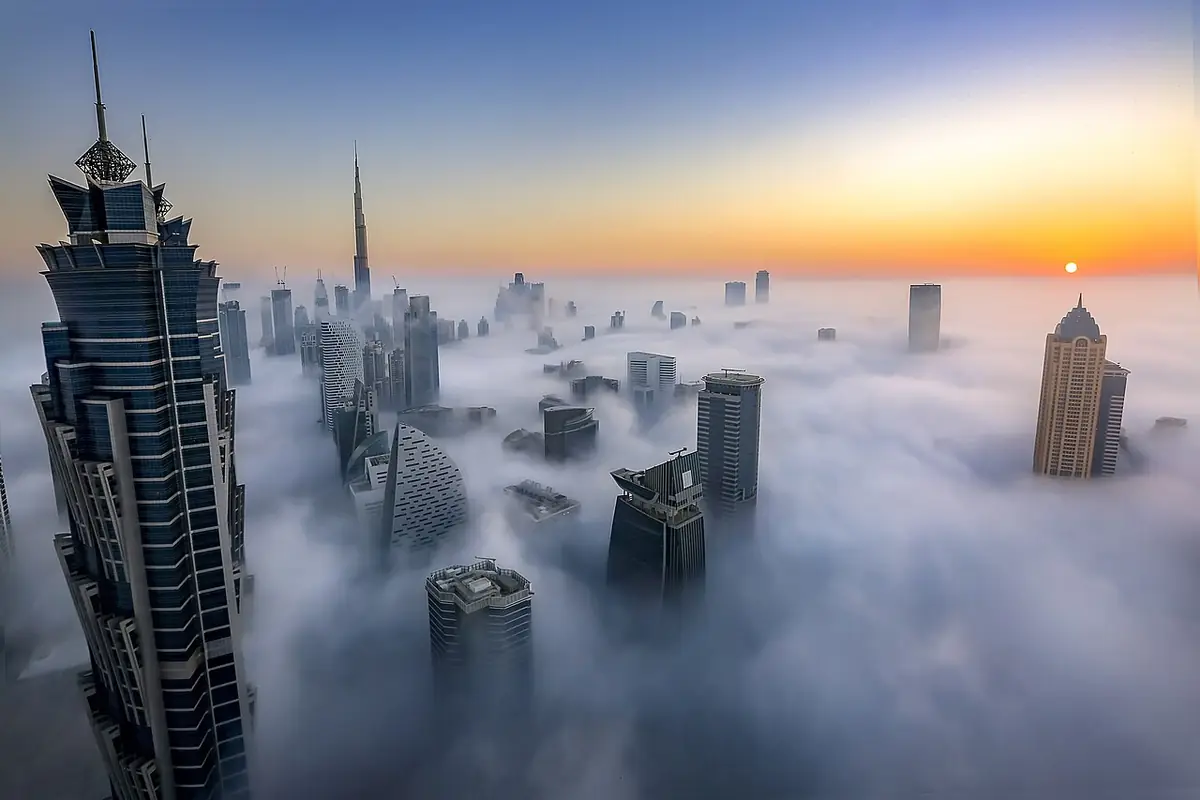
The vibe
DIFC operates as a distinct urban village within Dubai. The Gate Building anchors the district architecturally, Gate Avenue is the primary retail and dining promenade, and Gate Village — a collection of low-rise galleries and cafés set around the main tower — gives the area a cultural dimension that most financial districts in the world conspicuously lack. The Ritz-Carlton and Waldorf Astoria are the social anchors for residents who entertain; Art Nights, seasonal exhibitions, and curated cultural events at Gate Village make the district active and engaged in ways you wouldn't expect from an office-dominated address.
The resident community skews heavily toward finance, law, and tech professionals — a concentrated, high-earning international crowd. The social life here tends to revolve around restaurant and bar culture rather than family activities, and the evenings in DIFC are genuinely lively in ways that the broader city often isn't on weeknights. The 96 to 99% occupancy rate of residential buildings tells you something about the demand profile: people who move here tend to stay.
Property and rents
DIFC is a high price-category market and prices reflect that classification honestly. The average property price sits at around AED 3.91 million, with the bottom of the market starting at approximately AED 1.13 million for compact units and the ceiling reaching AED 40 million for premium penthouses. Rental prices are similarly premium: independent research shows studios renting from AED 80,000 to AED 110,000 annually, rising to AED 300,000 to AED 500,000 for three-bedroom units.
Average annual rents across the active market are around AED 178,000. Property values have been appreciating strongly — prices grew 12% in 2024, with a further 15 to 20% projected growth by 2026. Net rental yields for ready properties run at 4.8 to 6.2%, rising to 6.5 to 7.5% for off-plan. The 100% foreign ownership, zero-tax free zone structure, and full profit repatriation rights make DIFC a particularly attractive investment address for international capital.
Getting around
This is DIFC's strongest practical card. Three metro stations serve the district: Emirates Towers, Financial Centre, and World Trade Centre on the Red Line. Downtown Dubai is 10 minutes by car; Dubai Marina is 20 minutes; Dubai International Airport is around 15 minutes. The district itself is designed for pedestrian movement — shaded walkways connect residences, offices, and dining areas, which is a rarity in Dubai's built environment.
The honest caveats: Sheikh Zayed Road runs along the edge of DIFC and peak-hour traffic can make getting in and out of the area slow, even with multiple exit points. Parking within the district is adequate but not generous, and road access during rush hours adds meaningful time to any journey that crosses the main highway. That said, for residents who can walk to their office and rely on metro for wider city access, the commute situation is genuinely excellent.
Lifestyle, dining and culture
DIFC has the highest concentration of high-end restaurants, bars, and lounges per square kilometre of any area in Dubai. Zuma, Coya, La Petite Maison, Gaia, and dozens of comparable venues are either within or immediately adjacent to the district. Gate Avenue's retail offering covers luxury goods and high-street brands for day-to-day needs.
The cultural programming is genuinely notable: DIFC Art Nights draw the city's creative community into the district regularly, and the gallery spaces in Gate Village make this the most art-active financial district address in the Gulf. For residents who want culture, dining, and a sense of urban sophistication rather than suburban family amenities, DIFC delivers in ways that few other Dubai addresses can match.
Who it suits
DIFC suits finance, legal, and tech professionals who work within or near the district and want to minimise the commute; residents who prefer apartment living with walkable amenities over villa space with a car; international investors looking for a zero-tax, fully-foreign-ownership-eligible premium property; and anyone who values the urban energy and cultural programming of a genuinely cosmopolitan district over suburban quiet.
It's less suited to families needing space, outdoor play areas, or budget-friendly schooling — DIFC housing is predominantly studio to two-bedroom, with three-bed units hard to find and very expensive when available. The noise of Sheikh Zayed Road is a constant background presence for lower floors. And the premium pricing — AED 3.91 million average — means it requires real financial commitment, with rents at the top end of any Dubai district.
I've covered Dubai's premium residential markets for a decade, and DIFC remains the one address where urban living and financial-district energy genuinely converge in this city.
FAQ
What is the average property price in DIFC?
The average property price in DIFC is approximately AED 3.91 million. The market starts at around AED 1.13 million for compact units, rising to AED 40 million for premium penthouses. It is a high price-category market.
How much does it cost to rent in DIFC?
Studios rent from AED 80,000 to AED 110,000 annually. One and two-bedroom apartments are typically in the AED 130,000 to AED 250,000 range. Three-bedroom units cost AED 300,000 to AED 500,000 per year. Average rents across the market are around AED 178,000 annually.
Is DIFC good for investment?
Yes — it offers 100% foreign ownership, zero tax for 50 years, full profit repatriation, and one of the strongest occupancy rates in Dubai at 96 to 99%. Net yields for ready properties run 4.8 to 6.2%, with off-plan at 6.5 to 7.5%. Capital appreciation was 12% in 2024.
Is DIFC connected by metro?
Yes — three Red Line metro stations serve the district: Emirates Towers, Financial Centre, and World Trade Centre. Downtown Dubai is 10 minutes by car or a short metro ride, and the airport is approximately 15 minutes by road.
Is DIFC suitable for families?
It is not primarily a family-oriented community. Housing is predominantly studios to two-bedroom apartments, with three-bedroom units scarce and very expensive. There are no schools within DIFC itself, limited outdoor space for children, and the overall lifestyle skews toward professionals rather than family households.
What are the main downsides of living in DIFC?
High cost — both purchase prices and rents are at the top of the Dubai market. Limited housing options for families or anyone wanting larger space. Peak-hour traffic on Sheikh Zayed Road can make vehicle access slow. Noise from the highway affects lower floor apartments. Parking can be tight during busy evenings.
Post review of ting
 hello (opens in a new tab)


hello
 dubaisdf (opens in a new tab)