

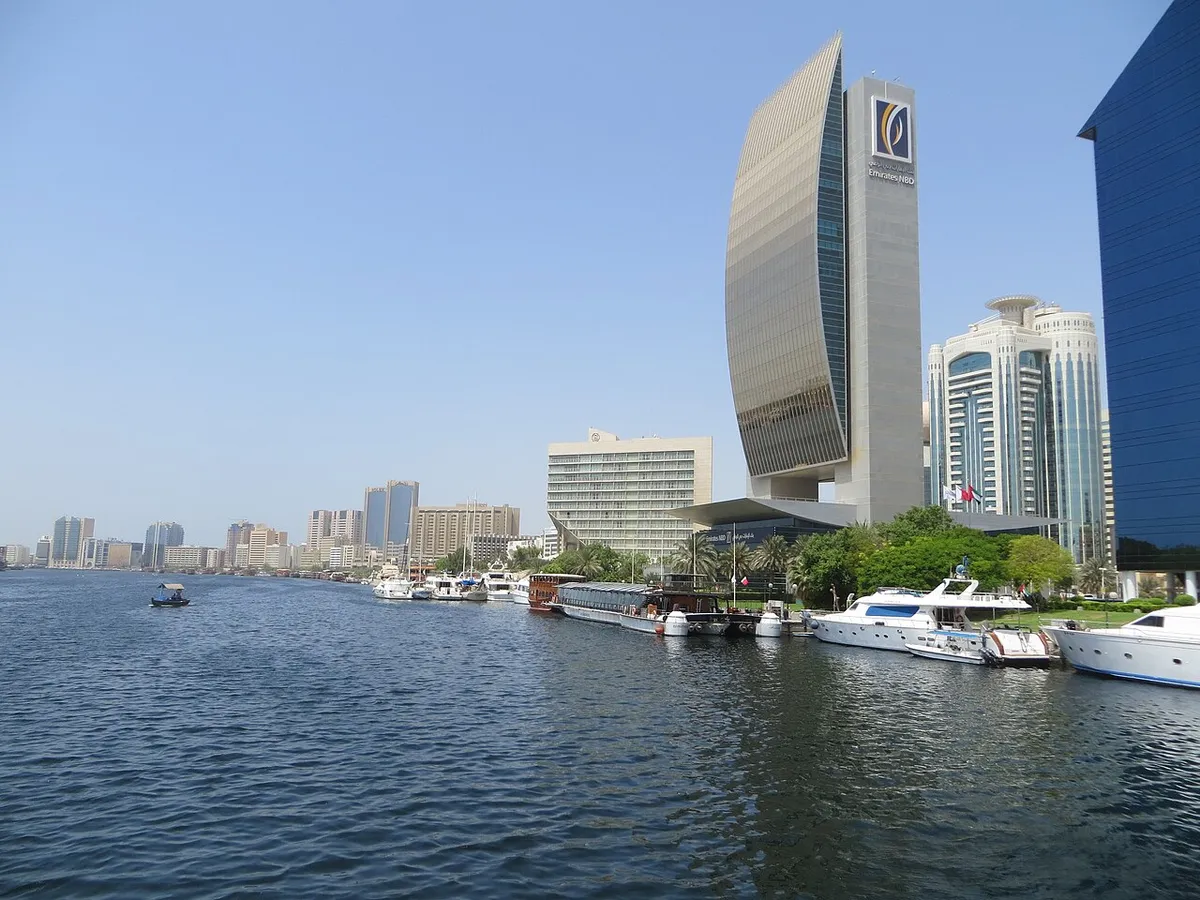
The vibe
Deira is genuinely multicultural in a way that few parts of Dubai can claim. You'll hear a dozen languages on a short walk, the streets are busy from early morning to late evening, and the traditional souks are a working part of daily life rather than a tourist attraction with a velvet rope. Sub-communities like Al Rigga, Port Saeed, Naif, and Abu Hail each have their own character, but all share that unpolished, high-energy urban feel.
This is not a manicured, master-planned community. Buildings are older, maintenance standards vary, and heavy road traffic is a constant. But the density and the life it creates are exactly what draws a certain type of resident who finds newer Dubai too sanitised.
Property and rents
The numbers here are striking at first glance. The average sits at AED 17.2 million, but that's skewed by a handful of high-value listings at the upper end — the market actually spans from AED 1.4 million at entry level through to AED 110 million for premium waterfront or commercial assets. For the vast majority of buyers and tenants, Deira is one of Dubai's more accessible addresses.
Annual rents average AED 175,010, which is roughly 30% below Downtown Dubai equivalents for comparable space. Rental prices for two-bedroom apartments saw some of the sharper rises in the 2025 market — up around 21% year-on-year — reflecting sustained tenant demand even as supply elsewhere expanded. If you're renting, locking in a multi-year agreement now is worth considering.
Getting around
Deira is among the best-connected areas in Dubai for public transport. The Green Line metro serves the district with stations including Abu Baker Al Siddique, Al Ras, and Union — the latter being the interchange with the Red Line. Dubai Marina is reachable for around AED 4.50 on the metro. Water taxis (Abra) across the Creek to Bur Dubai add another low-cost option that's also one of Dubai's nicer commutes.
Road traffic inside Deira itself can be frustrating — narrow streets and high commercial activity mean driving at peak times is slow. Most residents who work in central Dubai find the metro far more efficient.
Daily life and amenities
Al Ghurair Centre is the district's main mall, a long-established retail anchor that handles most shopping needs. For produce, spices, and fresh goods, the traditional souks — Gold Souk, Spice Souk, Fish Market, and the broader covered markets — are hard to beat on variety and price. Restaurants and cafes are plentiful and span every budget and cuisine.
Healthcare is covered by a number of hospitals and clinics. The school picture is less strong — Deira is not a primary destination for families seeking premium international schools, and that's a genuine limitation for households with school-age children.
Who it suits
Deira works best for professionals and couples who want affordable, metro-connected living in the heart of a genuine city neighbourhood. It suits people who appreciate cultural texture and don't need a community pool or a tennis court outside the door. Budget-conscious renters will find strong value here. Families with children will need to factor in the school situation and the absence of the quiet, safe-road environment that newer communities provide. Investors are drawn by the long-term redevelopment potential — several large-scale waterfront and commercial projects are in the pipeline for the wider Deira waterfront corridor.
I've covered Dubai real estate for a decade — Deira is the area I'd always show someone who wanted to understand what Dubai actually is, beyond the towers and the mall facades.
FAQ
Is Deira affordable to live in?
Yes. Deira is consistently one of Dubai's more affordable rental markets, with rents roughly 30% below Downtown Dubai for comparable space. Expect strong competition for well-maintained units.
What is the average rent in Deira, Dubai?
Annual rents average around AED 175,010, though this varies significantly by sub-area, apartment size, and building age.
Is Deira well connected by metro?
Yes. The Green Line serves Deira with multiple stations, and Union Station provides interchange with the Red Line. Most of central Dubai is accessible without a car.
Is Deira good for families?
It depends on priorities. Deira is lively and affordable but lacks premium international schools in the immediate area, and the dense urban environment isn't for every family. Families with young children often prefer quieter communities.
What are the main sub-areas within Deira?
Al Rigga, Port Saeed, Naif, Abu Hail, Deira Riggat Al Buteen, and Al Murur are the main residential sub-areas, each with slightly different character and price points.
Is Deira property a good investment?
Deira has long-term redevelopment potential, strong rental demand from budget-conscious tenants, and metro connectivity. Entry-level prices are competitive. The risk is older building stock and slower capital appreciation compared to master-planned communities.
Post review of ting
 यह हरमिना रेजिडेंस दुबई आइलैंड्स वाटरफ्रंट प्रॉपर्टी है। (opens in a new tab)


.jpg)
 Ting - Dubai