

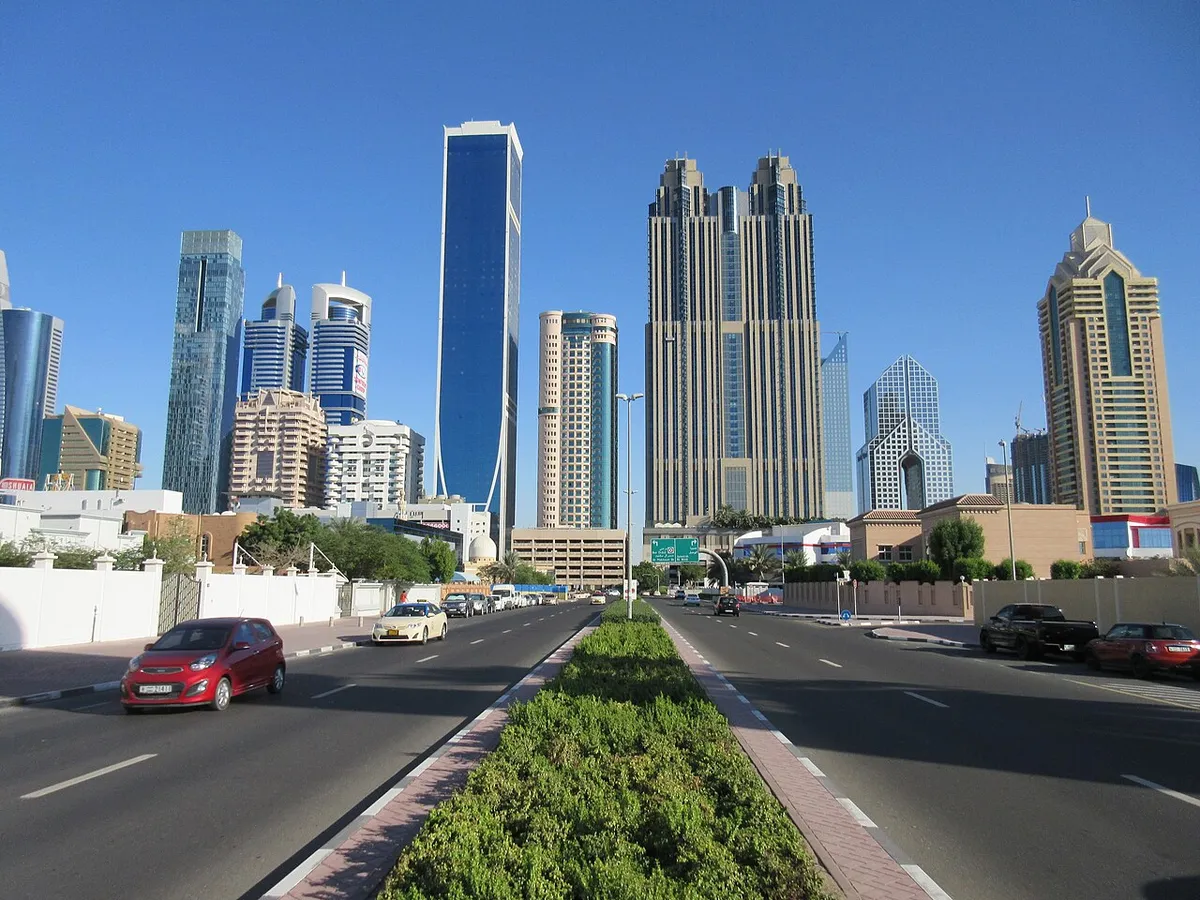
The vibe
Al Satwa is alive in a way that newer master-planned communities simply aren't. Its streets are a dense weave of tailors, grocery shops, restaurants, hardware vendors, and tea houses that have been there for decades. It's earned the nickname 'Mini Manila' from its large Filipino community, but the demographics are genuinely international — South Asian, Arab, African, European — all folded into a neighbourhood that feels like a functioning, organic city rather than a development product.
Evenings are particularly vibrant: families gather at local cafés, street-food vendors do strong business, and the low-rise streetscape creates a walkable, human-scale environment rare in Dubai. That said, this is an old neighbourhood, and it shows in some of the building stock — elevators are slow, parking is tight, and common areas in older blocks are often dated. New development like Hyde Walk Residences (opening late 2025) is starting to inject modern stock into the mix.
Property and rents
Al Satwa sits in the medium price category with properties averaging AED 2,846,510 — a wide range from entry-level studios at around AED 1,362,529 up to larger units and newer builds reaching AED 18,000,000. The price-per-square-foot average of AED 1,024 is notably lower than nearby Downtown Dubai and DIFC, reflecting the older building stock and the neighbourhood's positioning.
Annual rents average around AED 138,343, with one-bedroom apartments typically starting from AED 52,000–56,000 per year — genuinely competitive for this central a location. Gross rental yields run at approximately 6–7%, which is strong for Dubai's inner city. For investors, the combination of central location, Metro connectivity, and below-average psqft pricing makes Al Satwa worth serious consideration, particularly as urban renewal continues to push values upward.
Getting around
Al Satwa's transport credentials are strong by Dubai standards. Trade Centre Metro Station is the closest stop, giving residents direct access to the Red Line — Dubai's main Metro artery — connecting to Union, DIFC, Mall of the Emirates, Dubai Marina, and beyond without touching a car. Al Jafliya and ADCB stations also sit within range, providing options.
Dubai Mall is the nearest major retail and leisure destination, with the Burj Khalifa functioning as the defining landmark on the doorstep. The honest caveat is traffic: rush-hour congestion on the Sheikh Zayed Road approaches can add 20–30 minutes to journeys that look short on a map. Metro use during peak hours is genuinely advisable.
Daily life and amenities
Day-to-day shopping is easy and cheap in Al Satwa — local grocers, butchers, and retail are plentiful and priced well below the supermarket chains in premium areas. For bigger shops, Dubai Mall is close. The neighbourhood's tailoring strip is something of a local institution: affordable, skilled, and fast. Healthcare is well served by nearby facilities, and schools in surrounding areas cater to most international curricula.
Safety is not a significant concern — Dubai Police data consistently shows Al Satwa registering below-average crime rates for a central urban district, and walking at night is normal practice for most residents.
Who it suits
Al Satwa works best for people who want central Dubai access without the premium of Downtown, DIFC, or Jumeirah — professionals who use the Metro, families comfortable with an urban rather than suburban lifestyle, and investors looking for yield in a location with genuine long-term development tailwinds. It's also an honest choice for those who actually enjoy living in a neighbourhood with character, noise, and energy rather than manicured silence.
The honest trade-offs: older building stock in much of the area, tight parking, and the fact that Al Satwa is in genuine transition — some blocks are well-maintained, others less so. Inspect carefully before committing to a specific building.
I've covered Dubai's property market for over a decade. Al Satwa is one of those areas that rewards people who look past the surface.
FAQ
What is the average property price in Al Satwa?
Properties in Al Satwa average around AED 2,846,510, with a range from approximately AED 1,362,529 for entry-level units up to AED 18,000,000 for premium or newer developments.
What are typical annual rents in Al Satwa?
Annual rents average around AED 138,343. One-bedroom apartments typically start from AED 52,000–56,000 per year, making Al Satwa one of the more affordable options for central Dubai.
Which Metro station serves Al Satwa?
Trade Centre Metro Station is the nearest, with Al Jafliya and ADCB stations also accessible. All are on the Red Line, connecting directly to key business and lifestyle destinations across Dubai.
Is Al Satwa safe?
Yes. Dubai Police data consistently shows below-average crime rates for a central urban district. Walking at night is normal and common practice.
What is the price per square foot in Al Satwa?
The average is approximately AED 1,024 per square foot — notably lower than Downtown Dubai or DIFC, reflecting the older building stock and the area's position in Dubai's urban hierarchy.
Is Al Satwa a good investment?
Rental yields of approximately 6–7% are strong for central Dubai, and the combination of Metro access, proximity to the Burj Khalifa and Dubai Mall, and ongoing urban renewal activity makes it a credible long-term investment area. Building quality varies, so due diligence on individual units is important.
Post review of ting
 chyc (opens in a new tab)


 sdfg marthak