

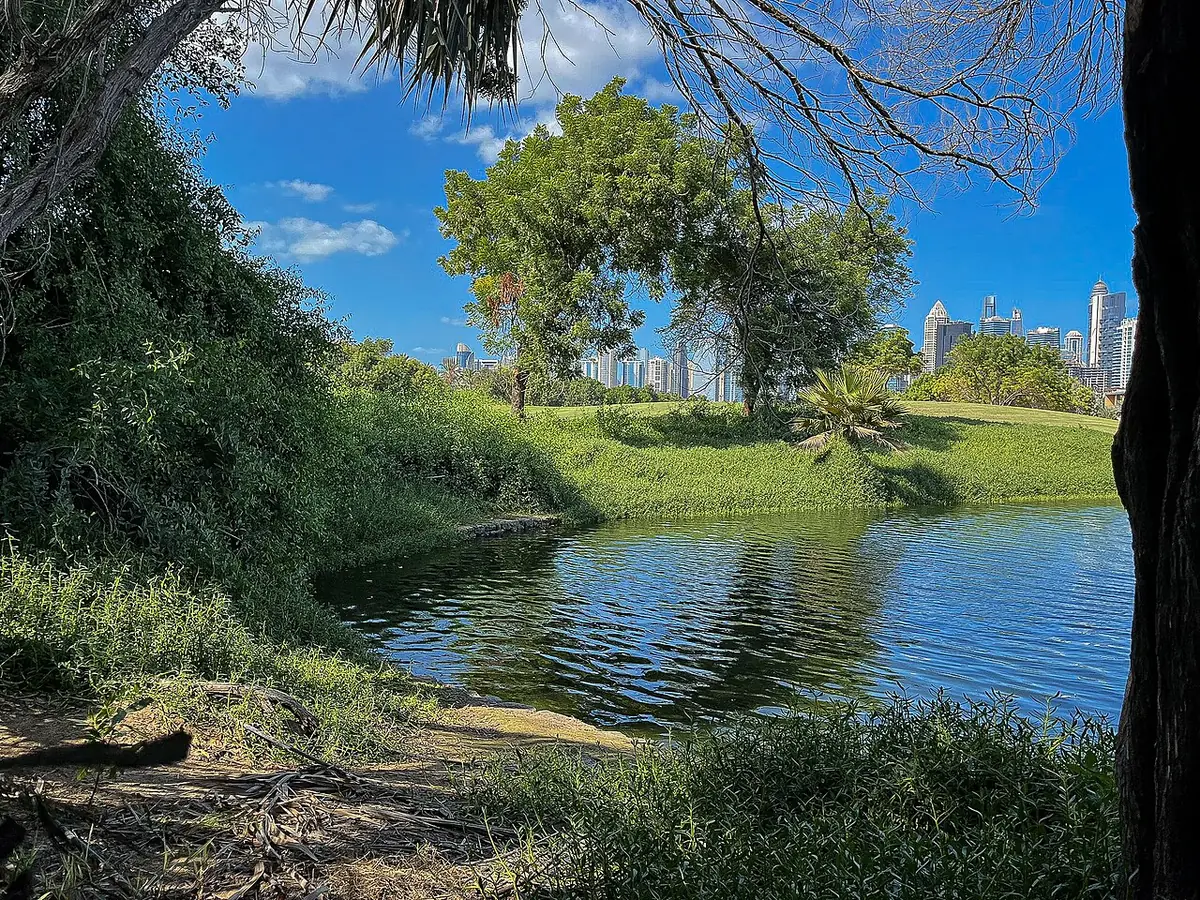
The vibe
JLT is structured across 26 clusters — labelled A through Z — each with three towers built around a shared courtyard with retail, dining, and ground-level activity. Four interconnected lakes run through the community with jogging and cycling paths along the waterfront, parks, and seating areas that fill up on cooler evenings. The atmosphere is urban and active — this is a place where people work, live, and socialise in proximity, and the DMCC free zone means many residents literally work in the same buildings they live in.
The community is diverse and cosmopolitan — young professionals, couples, families, and a significant population of SME owners and startup founders who use JLT's office towers. It's more energetic than it is quiet, but the lakeside parts of the development offer genuine breathing room. Weekday mornings on the promenade are a proper community moment.
Property and rents
JLT is classified as a medium price-category community, with average property prices around AED 1.76 million. The range is broad — from AED 415,000 for entry-level studio units up to AED 40 million for premium penthouses — but the bulk of the market sits in the AED 800K to AED 3 million range for one- and two-bedroom apartments. Annual rents average AED 116,236, with studios starting lower and larger units pushing higher.
The investment case is strong. Rental yields in JLT average 7–8%, comfortably above the Dubai average, with short-term rentals potentially delivering 9–11%. That's driven by consistent demand from professionals working in DMCC (23,000+ registered companies), DIFC, and Dubai Internet City. Capital growth projections of 8–10% per year through 2026 add to the picture. With 898 active listings, there's reasonable liquidity — buyers have genuine choice and sellers aren't operating in a vacuum.
Getting around
JLT has two Dubai Metro stations — DMCC and Sobha Realty (formerly JLT Metro) — which are among the most useful in new Dubai. You can reach Downtown Dubai, DIFC, Mall of the Emirates, and Dubai International Airport without getting in a car. Sheikh Zayed Road runs along the eastern edge of the community, and Dubai Marina is directly adjacent. For those who do drive, the location is well-connected, though Sheikh Zayed Road congestion at peak hours is a daily reality.
Amenities and daily life
JLT's ground-floor retail across the clusters means there's a reasonable density of cafés, restaurants, supermarkets, pharmacies, and service providers within walking distance of most buildings. The lakeside promenades are genuinely pleasant for morning runs and evening walks. Most towers have building gyms and pools. Dubai Marina Mall is a short walk across the pedestrian bridge, adding a full retail and dining experience to the immediate catchment.
For families, JLT has nurseries and after-school centres within the community, and schools in Dubai Marina and JBR area are accessible. It works for families, though it's not as family-centric as purpose-built villa communities. For single professionals and couples, it's close to ideal.
Who it suits
JLT is one of the best all-round choices in Dubai for young professionals, couples, and investors seeking yield. The metro access, affordability relative to Marina, and strong rental demand make it compelling for first-time buyers and investors alike. Families can live here comfortably — the lakeside environment is family-friendly — though those with multiple children or who want more outdoor space often move to villa communities as families grow. Anyone who works in DMCC or nearby free zones should seriously consider JLT as a first port of call.
I've tracked JLT's evolution from messy construction site to one of Dubai's most functional communities — it's earned its reputation, and the numbers back it up.
FAQ
What is the average property price in JLT?
Average prices are around AED 1.76 million. Studios start from AED 415,000 and the range extends to AED 40 million for top penthouses, but most transactions are in the AED 800K–AED 3M bracket.
What are rental yields like in JLT?
JLT delivers some of the strongest yields in Dubai — 7 to 8% gross for standard residential units, with short-term rental strategies potentially reaching 9–11%. This is well above the Dubai average of 5–6%.
Does JLT have Metro access?
Yes — two Metro stations serve JLT: DMCC and Sobha Realty. This is one of JLT's strongest cards, giving residents car-free access to most of the city.
Is JLT a good area for families?
Yes, with some caveats. The lakeside environment and parks are family-friendly, and nurseries and schools are accessible. However, families wanting more outdoor space or quieter surroundings often prefer nearby communities like Jumeirah Heights or villa communities further out.
How does JLT compare to Dubai Marina for property buyers?
JLT prices are roughly 20–25% lower than Dubai Marina for comparable apartment sizes, with higher rental yields. Marina has more prestige and waterfront appeal; JLT offers better value and metro connectivity. Many buyers consider both before deciding.
What is the DMCC free zone and why does it matter for JLT?
DMCC (Dubai Multi Commodities Centre) is one of the world's largest free zones, headquartered in JLT with over 23,000 registered companies. It generates constant demand for JLT's residential and commercial space from professionals and business owners, supporting rental occupancy and yields.
Post review of ting
 change background colour (opens in a new tab)


change background colour
 change background colour (opens in a new tab)
 change background colour
 Own a Premium Address in Silicon Oasis, Dubai! 🏙️✨ Discover this… (opens in a new tab)
  Ting - Dubai
 Own a Premium Address in Silicon Oasis, Dubai! 🏙️✨ Discover this…
 They say racing is 90% preparation, but sometimes the remaining 10%… (opens in a new tab) Ting - Dubai
 They say racing is 90% preparation, but sometimes the remaining 10%…
 hello (opens in a new tab)
  yaam
yaam hello
 On teste l’un des meilleurs burger du champions burger à Paris : le… (opens in a new tab) yaam
 On teste l’un des meilleurs burger du champions burger à Paris : le…
 Dear Grandma — (opens in a new tab) yaam
 Dear Grandma —
 SDASCF (opens in a new tab)